Is There Really a Free Roof Grant?
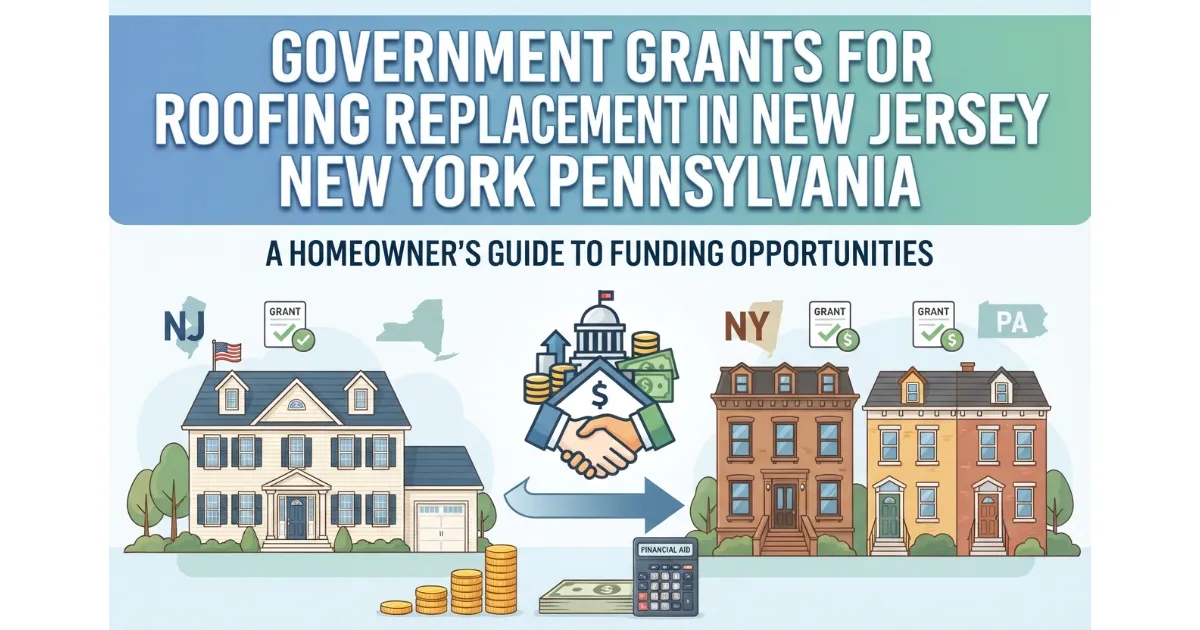 When storms strike or wear and tear takes over, homeowners often search for a “free roof grant” to cover hefty repair bills. The straightforward reality is that federal or state programs do not hand out direct, unconditional cash grants strictly for roof replacements. However, financial assistance, low-interest loans, and specialized aid programs do exist for eligible property owners.
No Single Free Roof Grant Exists But Help Is Available
While a magical government check labeled exclusively for a new roof is a myth, structured funding options can significantly reduce your out-of-pocket costs. Homeowners in states like New York, New Jersey, and Pennsylvania can leverage specific regional housing initiatives to fund critical home repairs.
- Federal & State Programs: Government grants and low-interest loans are often channeled through community development departments rather than direct national roofing funds.
- Targeted Eligibility: Assistance programs frequently prioritize low-income households, senior homeowners, and individuals living with disabilities.
- Alternative Relief: Homeowners insurance payouts and local non-profit weatherization initiatives often serve as the most practical routes to covering repair expenses.
Navigating these financial avenues requires knowing which specific programs match your demographic and location. Evaluating local housing authorities and state-backed revitalization funds is the most reliable step toward securing legitimate financial assistance for your roof.
Federal Programs Available in NJ NY & PA
While direct, unconditional national grants for roof replacements do not exist, several federal initiatives provide structured financial pathways for homeowners. Property owners across New Jersey, New York, and Pennsylvania can leverage specific regional frameworks and low-cost funding options to handle critical home repairs.
USDA Section 504 Home Repair Program Grants up to $10,000 + Loans up to $40,000
The USDA Section 504 Home Repair Program stands as the closest federal equivalent to a direct roof grant. It provides up to $10,000 in outright grants specifically designated for removing health and safety hazards, alongside low-interest financing.
- Maximum Grant Cap: Up to $10,000 for qualifying senior homeowners, which does not require repayment if you stay in the home for three years.
- Low-Interest Loans: Up to $40,000 available at a fixed 1% interest rate with a 20-year repayment term for comprehensive modernization.
- Combined Maximum Funding: Eligible applicants meeting both criteria can access up to $50,000 in total assistance to address major structural defects like a failing or leaking roof.
Who Qualifies Age 62+ Very-Low-Income Rural Area Requirement
Accessing the Section 504 grant and loan components requires meeting strict federal parameters regarding demographics and property location. General qualification standards include the following benchmarks:
- Age Requirement: Grants are exclusively reserved for very-low-income homeowners who are age 62 or older and unable to repay a standard loan.
- Income Thresholds: Household income must not exceed 50% of the median area income for your specific county within NJ, NY, or PA.
- Rural Eligibility Map: The property must be situated inside a designated rural eligibility map zone, meaning suburban and dense urban pockets of New York City or Philadelphia typically do not qualify.
Weatherization Assistance Program WAP Indirect Roof Help
The Weatherization Assistance Program (WAP) is a federally funded initiative managed at the state level to improve energy efficiency for lower-income families. While WAP rarely covers a full structural roof replacement from scratch, it frequently finances critical attic insulation, roof ventilation upgrades, and structural repairs required to safely seal a home.
- Energy Efficiency Focus: Targets heat loss reduction, lowering utility burdens for qualifying households across the Tri-State area.
- Prerequisite Repairs: If a roof leak compromises insulation materials, minor structural remediation may be cleared prior to weatherization work.
- State Implementation: Administered separately through New Jersey, New York, and Pennsylvania state energy offices with specific local agency guidelines.
Community Development Block Grant CDBG Local Funding Route
Community Development Block Grants (CDBG) are federal funds distributed directly to municipal governments, counties, and local townships to revitalize aging housing stock. Local housing authorities use CDBG allotments to run targeted emergency home repair programs, which occasionally feature roof replacement grants for low-to-moderate-income residents.
- Local Administration: Availability depends entirely on your specific township, city, or county government budgeting cycle.
- Health and Safety Mandates: Projects prioritizing active health and safety hazards—such as collapsing roofs or severe structural water infiltration—receive priority review.
- Application Process: Homeowners must apply directly through their local municipal community development office rather than a federal portal.
New Jersey Roof Replacement Assistance Programs
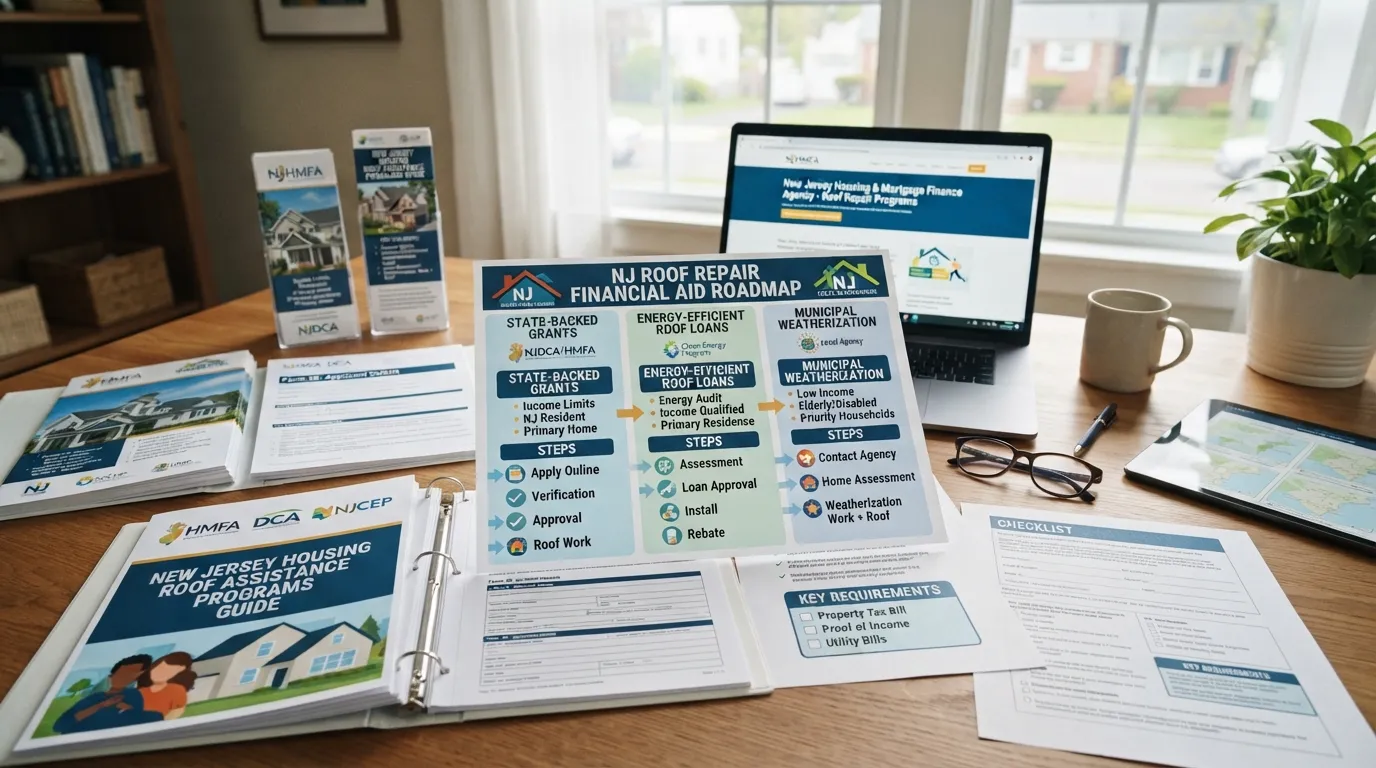 Homeowners navigating property repairs in New Jersey face unique regional housing costs, making state and municipal support vital. While New Jersey lacks a single statewide cash giveaway for roofing, several specialized county and local initiatives bridge the gap through forgivable loans and deferred funding structures.
County-Level 0% Interest Deferred Loans for Major Replacements
Many New Jersey counties and townships utilize federal Community Development Block Grants (CDBG) or affordable housing trust funds to run local Housing Rehabilitation Programs. These programs routinely target essential structural upgrades like roof replacements.
- Forgivable Loan Structure: Funds are typically issued as 0% interest, no-monthly-payment loans that convert into complete grants (forgiven) if you stay in the home for 10 years.
- Coverage Caps: Depending on the specific municipality or county agency, assistance limits frequently range between $10,000 and $25,000 per housing unit.
- Core Conditions: Homes must require critical code violation corrections or safety fixes, and household income must fall under local median thresholds.
Is There a $10,000 Grant for Home Improvement in NJ?
Direct marketing campaigns often advertise a “$10,000 home improvement grant in NJ,” leading many to expect an easy payout. The clear reality is that no universal, blanket $10,000 cash grant is available to every resident regardless of income.
- Program Specificity: The figures cited in advertisements usually refer to max caps under federal USDA Section 504 grants (restricted strictly to rural areas and seniors 62+) or specific municipal housing rehab grants.
- Application Constraints: These funds are heavily restricted by strict county median income limits, application backlogs, and mandatory physical inspection proofs.
- Supplemental Strategy: Most homeowners successfully combine small local grants or deferred loans with low-cost contractor financing to fully cover roof replacement costs.
How to Find Your Local NJ Housing Office
Because New Jersey housing assistance is decentralized, tracking down the right local office is the most crucial step for applicants. Centralized state departments delegate distribution to local authorities.
- County Offices on Aging: Senior citizens looking for emergency repair pools should start by contacting their specific county Office on Aging or Department of Senior Services.
- Municipal Community Development: City or township town halls maintain direct administrative oversight over local CDBG home improvement programs and housing rehabilitation funds.
- State Administered Networks: Reviewing regional guidelines through the New Jersey Department of Community Affairs (DCA) portal helps direct applicants to active local community action agencies.
New York Roof Replacement Assistance Programs
New York homeowners facing severe roof damage can take advantage of robust state-level programs managed through NY Homes and Community Renewal (HCR). While universal free grants do not exist, New York provides specialized funding tracks tailored explicitly for senior citizens and low-to-moderate-income residents.
RESTORE Program Up to $20,000 for Seniors 60+
The RESTORE (Residential Emergency Services to Offer Repairs to the Elderly) program provides financial assistance to senior homeowners who cannot afford emergency repairs. A failing or leaking roof that poses an immediate threat to health and safety is a prime candidate for RESTORE funding.
- Maximum Assistance: Provides up to $20,000 per property for emergency home repairs, with strict requirements on fund utilization.
- Senior Eligibility: Applicants must be at least 60 years of age and own a single-family home requiring urgent remediation.
- Local Administration: Funds are distributed via local municipalities, non-profits, and housing organizations that apply for state allocations on behalf of residents.
T-HIP Pilot Grant Up to $40,000 for Critical Repairs
The Targeted Home Improvement Program (T-HIP) pilot provides deeper financial assistance for substantial structural repairs in designated communities across New York. It is designed to tackle extensive property deterioration that standard weatherization or small grants cannot cover.
- High Funding Cap: Offers up to $40,000 in assistance to address heavy structural degradation, foundation flaws, and compromised roofing systems.
- Targeted Communities: Availability depends entirely on regional pilot zones designated by the state housing authority.
- Income Standards: Applicants must meet regional low-to-moderate-income guidelines set by local administrators.
NYC HomeFix Up to $60,000 for Eligible City Residents
For residents living within the five boroughs of New York City, the NYC HomeFix program offers comprehensive support for critical home repairs. Administered through local housing partnerships, it targets low- and moderate-income homeowners who need major system overhauls.
- Significant Financial Support: Provides up to $60,000 in low-cost or forgivable financing structures to fix roofs, plumbing, and electrical hazards.
- Borough Coverage: Open to qualifying homeowners across Brooklyn, Queens, Manhattan, the Bronx, and Staten Island.
- Asset Protection: Helps long-term homeowners maintain their properties safely without facing predatory lending or forced displacement.
RESTORE vs T-HIP vs HomeFix Which One Applies to You
Pennsylvania Roof Replacement Assistance Programs
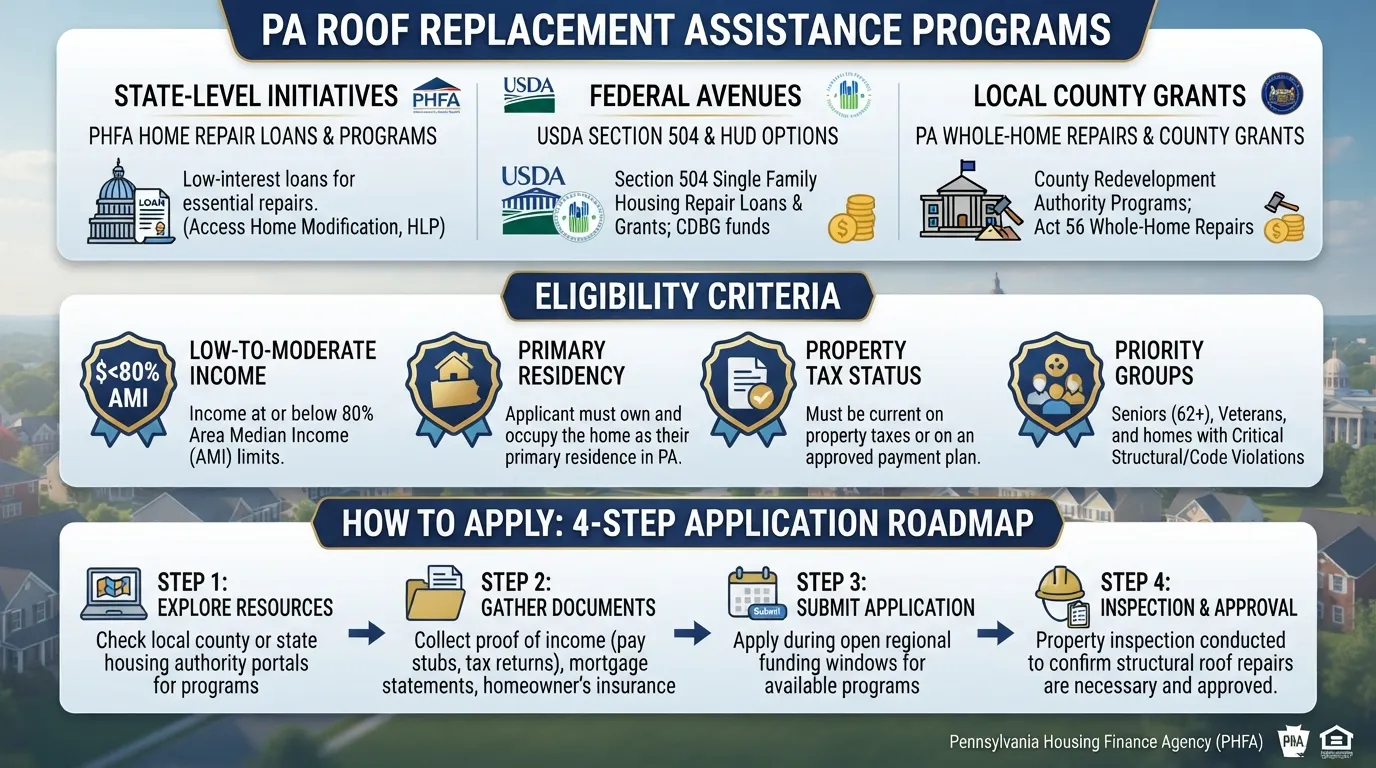 Homeowners across Pennsylvania can access various state-backed and municipal funding sources to handle expensive home maintenance. While outright cash grants for roofing remain rare, structured financing programs, low-interest loans, and urban revitalization funds provide significant financial relief.
PHFA HEELP 1% Low-Interest Loans Not a Direct Grant
The Pennsylvania Housing Finance Agency (PHFA) administers the Homeownership Energy Efficiency Loan Program (HEELP), which serves as a vital resource for homeowners needing critical repairs. Although it is a low-interest loan rather than a free grant, its financial terms make major projects manageable.
- Affordable Financing: Offers fixed-interest loans at just 1% for qualifying homeowners to tackle necessary roof repairs, HVAC overhauls, or energy-saving upgrades.
- Loan Amounts: Provides borrowing capacities ranging from $1,000 up to $10,000 with predictable monthly repayment terms.
- Income Caps: Applicants must meet maximum household income thresholds established by the PHFA based on county residency.
County & City Community Development Block Grant CDBG Access
Local municipal governments throughout Pennsylvania receive federal Community Development Block Grants (CDBG) designed to upgrade deteriorating housing stock. Cities and townships distribute these funds through localized housing rehabilitation programs.
- Local Discretion: Specific eligibility requirements, waitlists, and funding caps are managed entirely by individual county or municipal housing departments.
- Emergency Repair Tracks: Many local CDBG programs prioritize health and safety emergencies, such as active roof leaks or structural collapse risks.
- Forgivable Options: Depending on the local jurisdiction, assistance is frequently structured as a deferred loan that is forgiven after a set period of owner-occupancy.
Philadelphia-Specific Home Repair Assistance
Residents within the city of Philadelphia encounter unique urban housing challenges, prompting specialized local initiatives. Programs like the Built to Last or basic systems repair initiatives help lower-income homeowners fix aging roofs without incurring massive debt.
- Targeted City Support: Philadelphia manages dedicated repair programs focused on fixing structural defects, plumbing, electrical issues, and compromised roofing systems.
- Qualifying Criteria: Applicants must own and occupy their home in Philadelphia, stay current on property taxes or enroll in a payment agreement, and meet strict low-income limits.
- Application Channels: Homeowners can apply directly through the Philadelphia Division of Housing and Community Development (DHCD) or designated local housing counseling agencies.
Grants vs. Loans vs. Forgivable Liens What’s the Real Difference?
Homeowners often get confused by the financial terminology used in housing assistance programs. Understanding the fundamental differences between outright grants, low-interest loans, and forgivable liens ensures you choose the right funding path without unexpected financial surprises down the road.
Outright Grants No Repayment
An outright grant is essentially free financial assistance provided by a government agency or non-profit organization to cover specific repair costs. You do not have to pay back the principal amount or interest, provided you meet all program compliance rules.
- Zero Financial Liability: Funds are yours to keep, meaning no monthly payments or debt added to your household balance sheet.
- Strict Qualifying Standards: Because free money is heavily sought after, eligibility is restricted to very-low-income brackets, seniors, or emergency hazard cases.
- Low Funding Caps: Outright grants rarely cover a complete luxury overhaul, typically capping out between $10,000 and $20,000 per project.
Low-Interest Loans Must Be Repaid
Low-interest loans provide necessary capital upfront to complete extensive roof replacements, but the funds must be repaid over a defined schedule. Programs like the USDA Section 504 loan or PHFA HEELP fall into this category.
- Predictable Repayment: Low fixed interest rates (often between 1% and 3%) make monthly installments affordable compared to commercial credit cards or personal loans.
- Higher Borrowing Limits: Loans typically allow access to larger sums (up to $40,000 or more), making them ideal for complete structural tear-offs and replacements.
- Ongoing Debt Obligation: Homeowners must factor the monthly payment into their budget and maintain homeownership to avoid default penalties.
Forgivable Liens Conditional Forgiveness Over Time
A forgivable lien (or deferred payment loan) is a hybrid funding model commonly used by state and county housing programs. A silent second mortgage is placed on your property title, but the balance amortizes and disappears over time.
- Conditional Forgiveness: The loan balance decreases or is entirely forgiven over a set occupancy period—usually ranging from 5 to 10 years of continuous residency.
- No Monthly Bills: There are no monthly payments required while you live in the home and fulfill the agreement terms.
- Early Repayment Trigger: If you sell, rent out, or move out of the property before the forgiveness period expires, you must repay the remaining prorated balance.
Comparison Table Federal vs State vs Local Programs
Who Actually Qualifies? Full Eligibility Breakdown
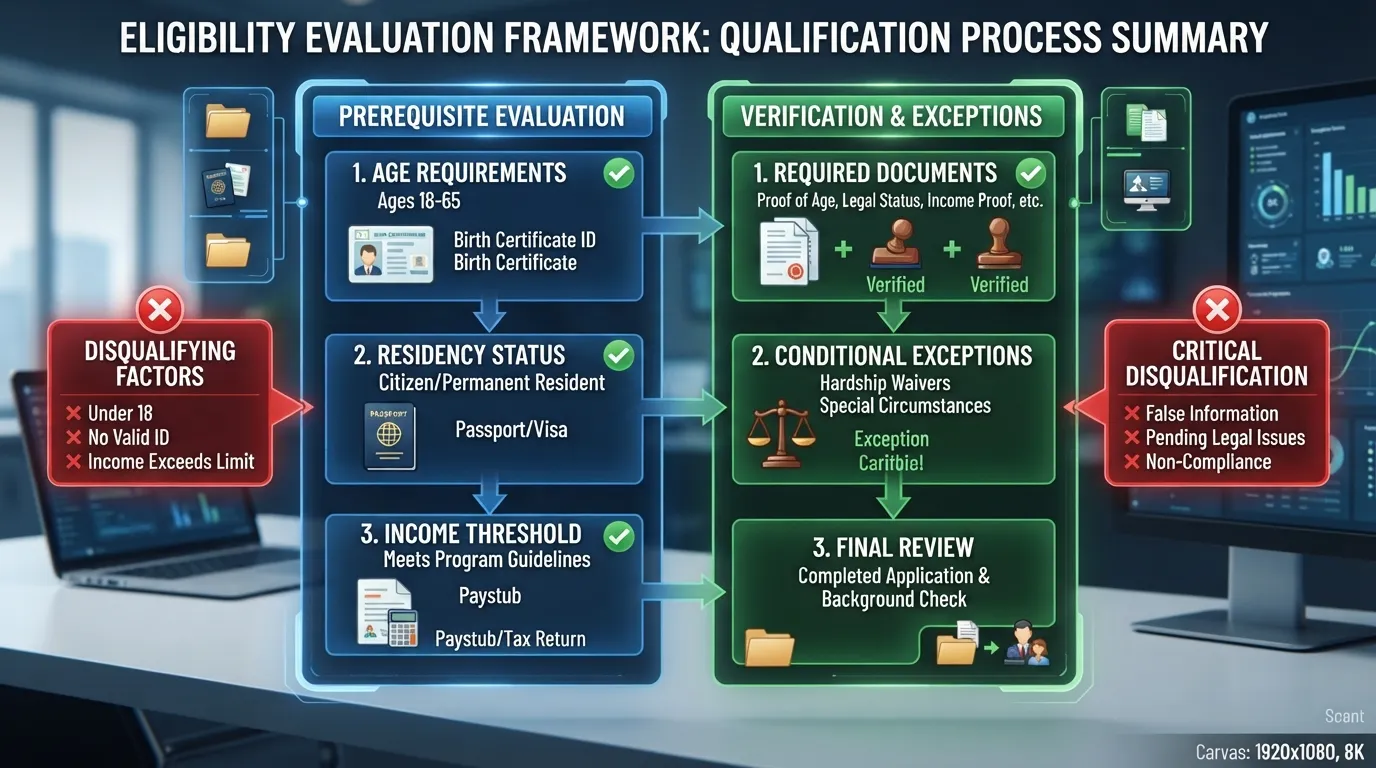 Qualifying for government-backed roof repair assistance depends on meeting specific statutory guidelines. Program administrators enforce rigorous vetting processes to ensure funds reach homeowners facing genuine financial hardship and structural emergencies.
Income Limits by County Very-Low vs Low-Income Thresholds
Most housing assistance programs measure applicant financial eligibility against the Area Median Income (AMI) determined by federal housing data for your specific county. Income thresholds vary dramatically between rural Pennsylvania counties and high-cost suburban areas in New York or New Jersey.
- Very-Low-Income Cap: Outright grants usually require household earnings to sit at or below 50% of the local AMI.
- Low-to-Moderate Income Cap: Loan and deferred assistance programs typically accept applicants earning up to 80% of the county AMI.
- Household Size Adjustments: Income limits scale upward depending on how many individuals reside permanently in the home.
Age & Senior Citizen Requirements 62+60+
Senior citizens receive priority consideration across nearly all major emergency housing funds because fixed incomes make managing sudden capital expenses nearly impossible. Age requirements vary slightly depending on the specific administrative framework.
- Federal Senior Threshold: Programs like USDA Section 504 strictly reserve grant funding for homeowners aged 62 and older.
- State Senior Threshold: New York’s RESTORE program qualifies senior citizens starting at age 60 for emergency repair assistance.
- Vulnerability Exceptions: Some local municipal funds accelerate processing times for seniors facing severe health or safety hazards due to roof leaks.
Veterans & Military Spouse Specific Assistance
Military veterans and surviving spouses navigating property degradation have access to specialized housing resources outside of civilian municipal programs. Organizations like the Veterans of Foreign Wars (VFW) and federal VA grants offer targeted support.
- VA Specially Adapted Housing (SAH): Provides grants to veterans with service-connected disabilities to modify or repair their homes, which can include structural roof remediation.
- Non-Profit Veteran Build Initiatives: Organizations such as Rebuilding Together partner with military-focused charities to execute no-cost critical home repairs for veterans.
- Surviving Spouse Eligibility: Qualified surviving spouses of military members often maintain eligibility for specific veteran housing assistance programs.
Documentation You’ll Need to Apply
Applying for government home repair assistance requires extensive paperwork to verify eligibility. Gathering these documents beforehand prevents unnecessary delays in application processing.
- Proof of Ownership: A valid deed proving you are the legal homeowner and primary occupant of the property.
- Income Verification: Recent tax returns, W-2 forms, Social Security benefit statements, or pension documentation for all household earners.
- Identification & Home Insurance: Government-issued photo ID and proof that your homeowner’s insurance policy is current and active.
Step by Step Application Process
Applying for government-backed home repair assistance requires careful adherence to bureaucratic procedures. Following a structured roadmap ensures your application moves smoothly through regional housing authorities without unnecessary rejections or delays.
Step 1 — Confirm Your Area’s Eligibility
Before filling out complex paperwork, verify that your property is located within an approved jurisdiction. Federal and state programs have strict geographical boundaries that determine funding availability.
- Rural vs. Urban Mapping: Check online eligibility locators for USDA programs to ensure your property sits within a designated rural zone.
- County and Municipal Boundaries: Review local housing authority websites to confirm whether your specific township or city participates in CDBG programs.
- Targeted Pilot Zones: Ensure your neighborhood aligns with active state-backed revitalization or pilot grant areas like New York’s T-HIP zones.
Step 2 — Gather Required Documents
Missing paperwork is the leading cause of application rejection or long processing delays. Compiling a complete financial and legal binder beforehand streamlines the entire submission phase.
- Financial Records: Collect recent federal tax returns, pay stubs, Social Security statements, and bank account summaries for every adult in the household.
- Property Documentation: Keep your property deed, mortgage statement, and active homeowner’s insurance policy readily accessible.
- Repair Estimates: Obtain professional contractor bids or clear photo evidence detailing the safety hazards of your current roof.
Step 3 — Contact Your Local County Housing Office
Most housing grants are decentralized, meaning you must apply through local administrative bodies rather than a central federal website. Reaching out directly to the correct office connects you with intake coordinators.
- County Community Development: Submit inquiries to your local county department of planning or community development for regional loan programs.
- Area Agency on Aging: Senior citizens should contact local aging services for direct referrals to emergency grant programs like RESTORE.
- Non-Profit Housing Partners: Local housing counseling agencies often act as intermediaries to help process municipal repair applications.
Step 4 — Submit Application & Wait Times
Government funding programs operate on strict fiscal cycles and budgeting limits, making patience a necessity. Setting realistic expectations prevents frustration during the review process.
- Application Backlogs: High demand and limited funding pools mean review cycles can take anywhere from several weeks to multiple months.
- Mandatory Inspections: An official housing inspector will typically visit your property to verify that the roof damage constitutes a genuine health or safety hazard.
- Fund Disbursement: Approved funds are usually paid directly to licensed contractors upon project completion rather than handed to the homeowner as cash.
What If You Don’t Qualify? Alternative Ways to Pay
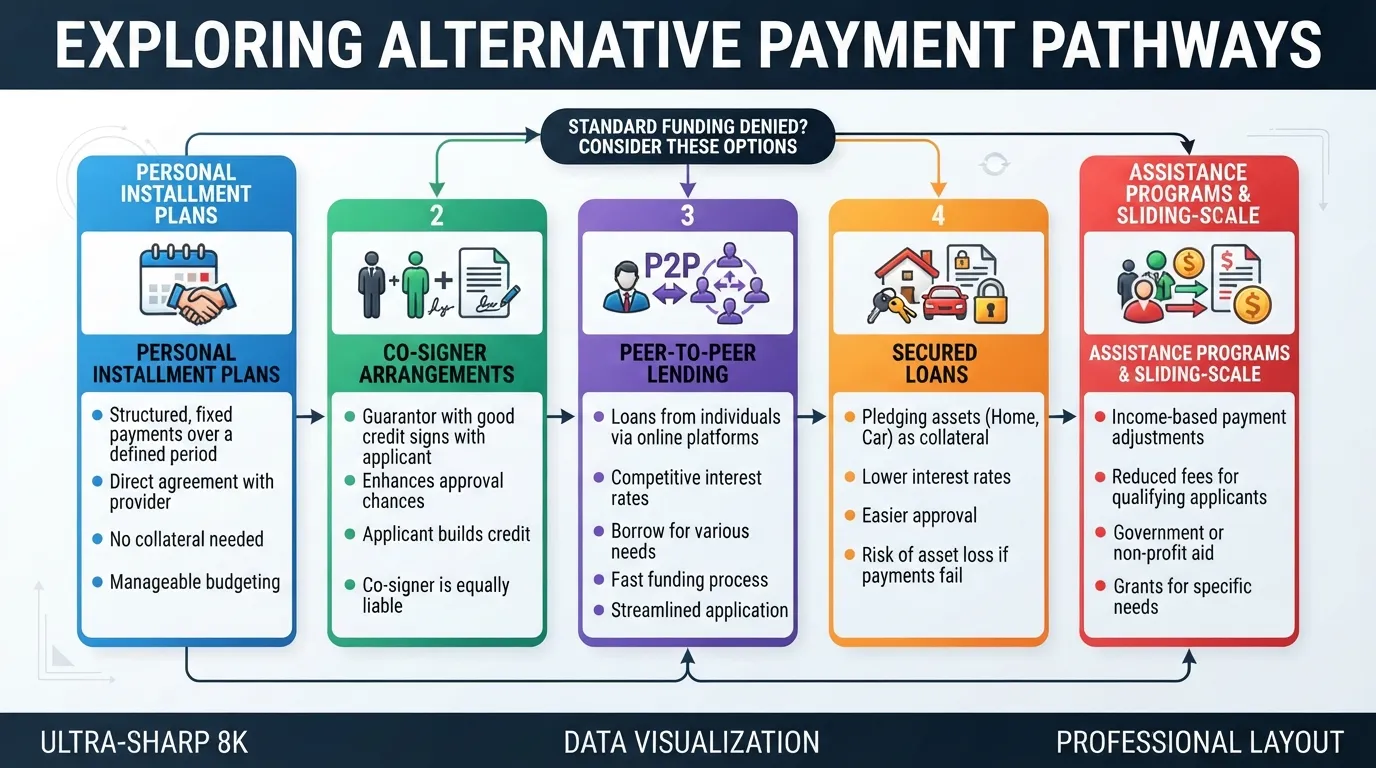 Failing to meet strict government grant thresholds does not mean you are out of options. When public assistance programs deny funding due to income limits or regional restrictions, alternative financial avenues can help you secure a necessary roof replacement without breaking your budget.
Homeowners Insurance Claims Storm Wind Damage
Many homeowners overlook standard insurance policies as the primary vehicle for funding roof repairs. If your roof sustained damage from severe weather, wind, hail, or falling trees, your insurance company may cover a substantial portion of the replacement cost.
- Peril Coverage: Standard HO-3 homeowner policies typically cover sudden, accidental damage caused by windstorms, hail, or severe storms.
- Deductible Management: You will be responsible for paying your policy deductible, but the insurer covers the remaining balance minus depreciation.
- Professional Inspection: Hire an independent, licensed roofing contractor to perform a pre-inspection before filing a claim to document storm evidence thoroughly.
Contractor Financing & Payment Plans
Most reputable roofing companies offer flexible financing options through third-party lenders. These plans allow homeowners to spread out heavy capital expenses over manageable monthly installments.
- Promotional 0% APR Periods: Many lenders provide zero-interest introductory windows ranging from 12 to 18 months if the balance is paid in full.
- Unsecured Home Improvement Loans: Fixed-rate installment loans allow you to borrow funds quickly without using your home as collateral.
- Flexible Terms: Extended repayment plans spanning 5 to 10 years keep monthly payments low, though long-term interest charges will apply.
Nonprofit Assistance Habitat for Humanity & Local Charities
When government agencies and commercial lenders are unavailable, charitable organizations and non-profit networks frequently step in to assist vulnerable homeowners with critical repairs.
- Habitat for Humanity: Many local chapters run “Aging in Place” or community repair programs designed to fix critical structural safety issues like leaking roofs.
- Rebuilding Together: A nationwide non-profit network that coordinates volunteers and donations to complete free home modifications and emergency roof fixes.
- Faith-Based & Local Charities: Regional religious organizations and community outreach groups often maintain emergency funds specifically earmarked for local housing repairs.
FAQs People Also Ask + Quora Insights
Homeowners exploring roof replacement assistance frequently have specific, urgent questions regarding eligibility, funding amounts, and application processes. Review these direct answers designed to clarify common misconceptions and help you navigate financial assistance options.
How to Qualify for Free Roof Replacement?
No unconditional “free” roof replacement grants exist, but you can qualify for government-backed grants, forgivable loans, or low-interest financing by meeting specific criteria. Most programs require you to be the legal homeowner, occupy the property as your primary residence, fall below local area median income limits, and demonstrate an urgent health or safety hazard caused by roof damage.
Is There a $10,000 Grant Available for Home Improvement in New Jersey?
There is no universal, statewide $10,000 cash grant available to every New Jersey resident. The “$10,000 grant” figure commonly refers to maximum funding caps under federal programs like the USDA Section 504 Home Repair program, which is strictly restricted to very-low-income senior homeowners in designated rural areas.
Are There Free Roof Replacement Grants for Seniors in New York?
Yes, New York offers specialized assistance for older adults, most notably through the RESTORE (Residential Emergency Services to Offer Repairs to the Elderly) program. This initiative provides up to $20,000 in emergency repair funds for qualifying homeowners aged 60 and older who face severe structural hazards like a failing roof.
How Do I Get a New Roof If I Can’t Afford It?
If you cannot afford a new roof and do not qualify for government grants, you can explore several reliable financial alternatives. Options include filing an insurance claim for storm or wind damage, applying for low-interest contractor financing plans, or reaching out to local non-profit organizations like Habitat for Humanity and Rebuilding Together.
What Is the Best Time of Year for Roof Replacement?
The ideal time for a roof replacement is during late spring, summer, or early autumn when weather conditions are stable and temperatures consistently stay above 45 degrees Fahrenheit. Mild weather allows roofing materials like asphalt shingles and sealants to properly cure and adhere without weather-related delays.
Can a Military Spouse or Veteran Get Home Repair Assistance?
Yes, military veterans and surviving spouses can access specialized housing assistance through programs like the VA’s Specially Adapted Housing (SAH) grants for service-connected disabilities. Additionally, various veterans’ charities and non-profit volunteer groups offer dedicated home repair programs to help those who have served.
Conclusion + Next Steps
Navigating home repairs can feel overwhelming, especially when confronting costly projects like roof replacements. While an unconditional, direct cash grant specifically for roofing is largely a myth, structured public assistance, low-interest funding, and localized community programs offer practical pathways to bridge financial gaps.
Key Takeaways
- No Free Cash Handouts: Federal and state programs do not issue direct, unconditional cash grants strictly for roof replacements.
- Structured Financial Relief: Homeowners can access valuable assistance via USDA Section 504 grants, state senior repair funds (like NY’s RESTORE), and county-level deferred loans.
- Rigorous Qualification: Eligibility depends heavily on household income limits tied to Area Median Income (AMI), age requirements (60+ or 62+), and property location.
- Alternative Solutions: When public aid is unavailable, homeowners insurance claims, flexible contractor financing, and non-profit networks serve as dependable safety nets.
How to Find Your Local Housing Assistance Office
Because most housing grants and community development funds are decentralized, taking the right proactive steps locally is essential to securing financial support.
- Contact County Planning Departments: Reach out directly to your county or municipal community development office to ask about active housing rehabilitation programs and CDBG availability.
- Consult Senior Services: Older homeowners should contact their local Area Agency on Aging or County Office on Aging to discover dedicated emergency repair initiatives.
- Verify Professional Estimates: Collect documentation, photos of damage, and professional contractor bids before submitting your application to streamline the review process.

Oscar Vance | Master Plumber & Drainage Expert
Meet Oscar Vance, a licensed master plumber sharing practical solutions on residential repairs, preventive maintenance, and thoughtful home upkeep.