Why Small Bathrooms Feel Cramped
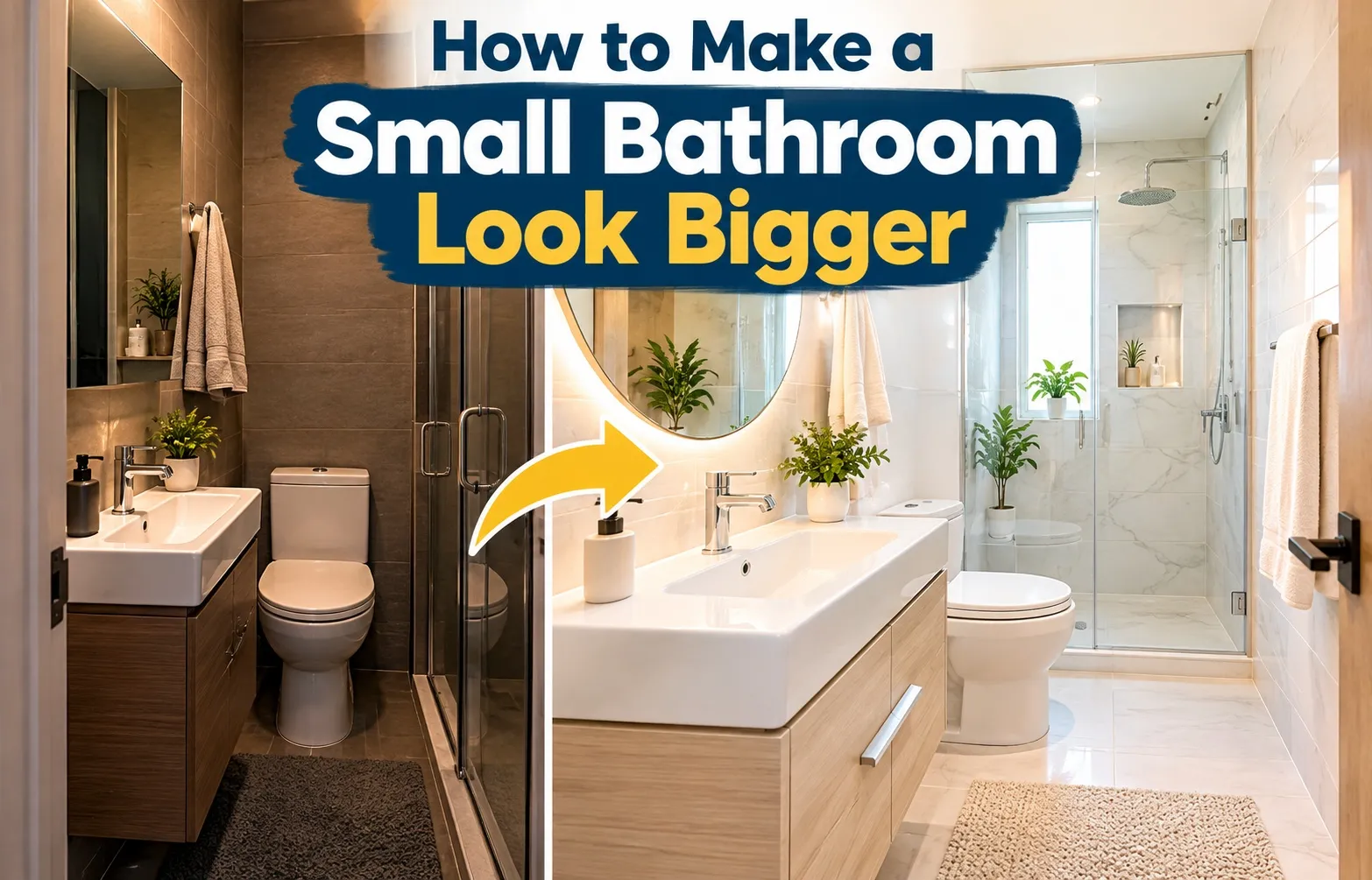 Small bathrooms feel restrictive when physical boundaries block natural sightlines and restrict ambient light distribution. By understanding the core mechanics of human spatial perception, you can manipulate light reflection, color continuity, and visible floor area to make a compact room feel significantly more spacious.
The Science of Visual Depth: Tricking the Eye
Human spatial perception relies heavily on uninterrupted sightlines and light distribution. When visual clutter interrupts the eye’s path across a room, the brain interprets those boundaries as physical limits, making the footprint feel immediately smaller.
To overcome these spatial constraints, interior designers rely on three core architectural principles that alter how depth is processed:
- Light Reflectance Value (LRV): Materials and paints with high LRV ratings bounce both natural and artificial light across surfaces, effectively softening sharp corners and expanding perceived room boundaries.
- Uninterrupted Sightlines: Removing heavy visual barriers, such as solid shower walls or textured curtains, allows the eye to travel through the entire square footage without stopping.
- Floor Space Exposure: Exposing maximum floor area triggers a subconscious psychological reaction that perceives the floor footprint as wider and less congested.
3 Quick Wins for Immediate Spatial Impact (AI Overview Snapshot)
If you need to instantly improve the spatial feel of a compact bathroom without undertaking structural wall alterations, implement these high-impact adjustments first:
- Install Frameless Clear Glass Panels: Replace textured glass doors or heavy fabric shower curtains with continuous clear glass panels to extend your sightline directly through to the back wall.
- Mount a High-LRV Wall-to-Wall Mirror: Position an oversized mirror across the main vanity wall to reflect ambient illumination, effectively doubling the visual depth of the room.
- Elevate Fixtures Off the Floor: Swap ground-mounted vanities and pedestal units for wall-hung floating fixtures that leave the underlying floor tile fully visible.
Smart Layouts & Space-Saving Fixtures
Reorganizing your bathroom layout and replacing bulky traditional furniture with streamlined fixtures instantly frees up physical square footage and visually opens up a cramped room. Strategic fixture choices eliminate visual crowding and maximize every inch of available space.
Floating Vanities & Wall-Hung Toilets: Exposing Floor Area
Wall-mounted fixtures dramatically maximize exposed floor space, transforming a heavy, boxed-in room into an open, airy environment. By lifting cabinetry and plumbing off the ground, you trick the eye into seeing an uninterrupted expanse of flooring.
- Floating Vanity: Eliminates the heavy, shadow-casting base of traditional floor-standing cabinets, allowing light to flow underneath.
- Wall-Hung Toilet: Conceals the water tank within the wall cavity, saving several inches of forward projection and exposing more tile footprint.
Pedestal vs. Corner Sinks: Choosing for Tiny Footprints
Selecting the right compact sink shape determines whether tight bathroom corners feel cramped or functional. Both pedestal and corner models eliminate bulky side storage while maintaining essential daily utility.
- Corner Sinks: Utilize dead angular space in ultra-small half-baths, keeping central walking pathways completely clear.
- Pedestal Sinks: Offer a sleek, leggy profile that leaves open wall and floor margins visible around the basin.
Ditching the Curtains: Frameless Glass Shower Doors
Solid shower walls and heavy fabric curtains act as visual barriers that abruptly shrink a room’s perceived dimensions. Switching to a frameless glass shower door removes these optical partitions to unify the entire space.
- Clear Glass Panel: Allows natural and artificial light to pass straight through to the back of the shower enclosure.
- Uninterrupted Sightlines: The absence of thick metal frames creates a seamless, modern transition across the room.
Pocket Doors & Sliding Hardware: Reclaiming Swing Space
Traditional inward-swinging doors swallow up to nine square feet of usable floor area, severely limiting your layout flexibility. Replacing them with sliding hardware or a pocket door completely reclaims your functional square footage.
- Pocket Doors: Glide directly into the wall cavity, eliminating door swing interference entirely.
- Sliding Hardware: Keeps door clearance flat against the wall while adding a clean, modern architectural accent.
Tile Hacks & Wall Surface Strategies
Strategic tile selection and installation patterns eliminate visual grid clutter and establish seamless continuity across compact bathroom walls and floors.
Do Larger Tiles Really Make a Bathroom Look Bigger? (The Grout Line Rule)
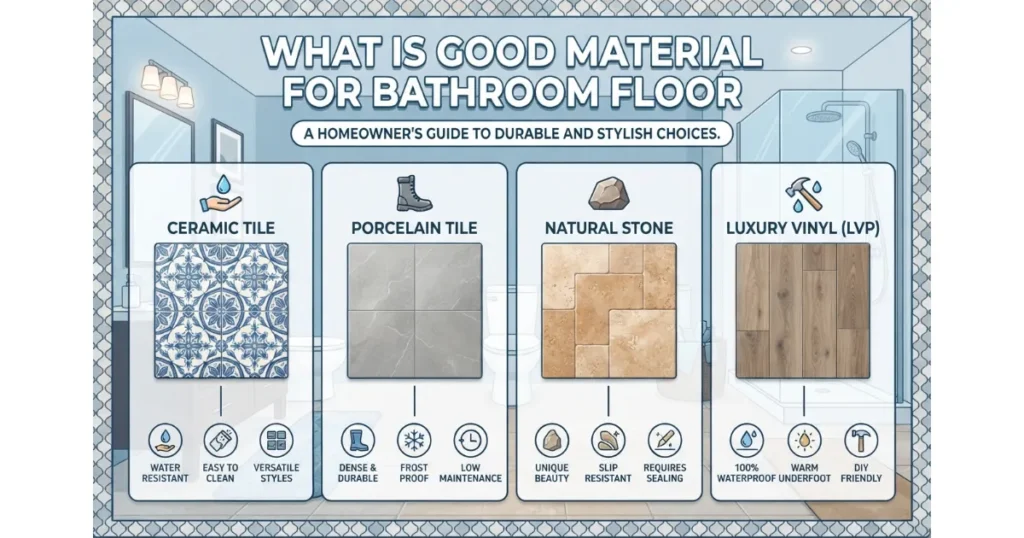
Large-format tiles make a small bathroom look significantly bigger by drastically reducing the number of grout lines. Fewer grid lines prevent the floor and walls from looking visually chopped up, creating an expansive, clean surface area that tricks the eye into perceiving more space.
When you use tiny mosaic tiles, the dense network of grout lines creates a visual grid that shrinks the room’s boundaries. As noted in z, scaling up tile size minimizes this friction.
- Minimal Grout Lines: Fewer joints mean less visual clutter and a more unified expanse across the floor or wall.
- Color-Matching Grout: Pairing large tiles with grout that matches the tile color creates a seamless transition.
Floor-to-Ceiling Tile: Eliminating Visual Stops
Extending floor-to-ceiling tile straight up the walls eliminates harsh horizontal transition lines that break up room height. This continuous tile flow blurs the corners where walls meet the ceiling, creating an optical illusion of loftier vertical dimensions.
Stopping tile halfway up a wall creates a distinct horizontal border that acts as a visual ceiling, making the room feel shorter. Tiling all the way to the top unifies the vertical plane.
- Continuous Tile Flow: Carrying the floor material directly into the shower stall maximizes room depth.
- Height Illusion: Vertical surfaces draw the eye upward, giving compact bathrooms a taller, airier feel.
Vertical Stacks vs. Diagonal Patterns for Height and Width
Choosing between vertical stack bonds and diagonal tile layouts allows you to manipulate specific room dimensions. Vertical stacks emphasize height in low ceilings, while diagonal or herringbone patterns push side walls outward to expand narrow floor layouts.
The direction of your tile layout dictates where the human eye travels first upon entering the space, directly influencing perceived width and height.
- Vertical Stack Bond: Aligns rectangular tiles vertically to draw eyes upward toward the ceiling.
- Diagonal or Herringbone Patterns: Guides gazes sideways across the floor to stretch narrow room widths.
Strategic Color Palettes & Lighting Trends
Strategic color selection combined with modern layered lighting architecture alters depth perception and banishes dim corners. Applying contemporary color palettes alongside targeted light sources expands spatial boundaries while adding high-end warmth to compact layouts.
Light Low-Contrast Palettes: Off-Whites Creams and Soft Grays
Light, monochromatic color schemes maximize spatial perception by reflecting ambient illumination across every wall. Using low-contrast tones prevents harsh transitions, allowing surfaces to blend together seamlessly and blur room edges.
Selecting paint with high Light Reflectance Value (LRV) ratings ensures that natural and artificial light bounces continuously across the room.
- Monochromatic Color Scheme: Matching walls, trim, and ceilings in off-whites, creams, or soft grays eliminates hard sightline breaks.
- High LRV Selection: High-reflectance paints brighten shadow-prone zones to make tight footprints feel open and airy.
The Dark Paint Exception: High-Gloss Moody Tones for Windowless Spaces
In windowless powder rooms and tiny half-baths, attempting to force a bright white look can make the space feel flat and cold. Leading design trends embrace rich, deep tones paired with high-gloss finishes to create sophisticated visual depth.
High-gloss paint acts like a mirror in dark, windowless rooms, reflecting artificial light sources to dissolve sharp wall corners into a deep, moody backdrop.
- High-Gloss Finish: Rebounds direct rays off dark surfaces to create an optical illusion of depth and luxury.
- Moody Tones: Deep charcoals, rich navy, or forest greens mask narrow footprints while adding high-end character.
Layered Lighting Architecture: Combining Recessed Lights with Side Sconces
Relying on a single overhead bulb creates harsh downward shadows that visually shrink bathroom margins. Incorporating layered lighting architecture eliminates dark shadows and evenly distributes illumination at every height level.
Combining overhead fixtures with task-level lighting creates a balanced light field that expands sightlines and increases visual comfort.
- Recessed Spotlights: Provide overall ambient brightness without taking up valuable visual head clearance.
- Eye-Level Sconces: Mounting sconces beside the mirror washes side walls with soft, shadow-reducing task light.
- Backlit LED Mirrors: Cast a soft perimeter halo that separates mirror edges from the wall, adding subtle dimension.
Reflections & High-Impact Storage Optimization
Maximizing reflective surfaces while integrating recessed storage units keeps horizontal surfaces clear and prevents furniture from intruding into vital room volume. Smart storage solutions maintain strict clutter control while doubling the perceived physical depth of small layouts.
Oversized & Wall-to-Wall Mirrors: Bouncing Light and Depth
Extending mirror surfaces wall-to-wall or floor-to-ceiling doubles visual room dimensions by reflecting light and repeating architectural features. Replacing standard framed options with large frameless mirrors creates a seamless glass plane that brightens dark corners and tricks the eye into seeing an adjacent room.
- Frameless Mirrors: Eliminate bulky borders to blend mirror edges directly into tile or drywall surfaces for uninterrupted sightlines.
- Wall-to-Wall Installation: Mounting mirrors across the entire vanity wall expands lateral sightlines and amplifies all natural and artificial illumination.
Recessed Wall Niches: In-Wall Storage Over Protruding Shelves
Building storage into the wall cavity reclaims unused space between wall studs, eliminating protruding shelves that block movement. Recessed storage solutions keep everyday items easily accessible without encroaching on floor space or narrow walking paths.
- Recessed Shower Niche: Houses shampoo bottles and soap inside the shower wall cavity to maintain clean, open shower glass boundaries.
- Recessed Medicine Cabinet: Replaces bulky wall-hung cabinets with hidden storage sitting flush against vanity drywall.
Closed Storage vs. Open Shelving: Eliminating Visual Clutter
Open shelving filled with mismatched toiletries quickly creates visual noise that makes compact bathrooms feel chaotic and crowded. Utilizing closed cabinetry hides everyday clutter to maintain smooth, continuous visual planes across the room.
- Hidden Storage: Conceals daily clutter inside drawers, medicine cabinets, and vanity doors to protect visual simplicity.
- Vertical Storage Units: Directs storage upward toward the ceiling rather than outward into valuable walking space.
High-End Look on a Budget & Renter-Friendly Hacks
Achieving a spacious, high-end feel in a small bathroom does not require a costly, full-scale remodel. Smart, non-permanent upgrades allow renters and budget-conscious homeowners to transform compact spaces without breaking leases or overspending.
High-Mount Curtain Rods: Drawing the Eye Upward
Hanging a shower curtain rod near the ceiling line tricks the brain into perceiving higher ceilings and greater vertical volume. Standard low-hanging curtain rods cut the wall in half, creating a horizontal visual divide that makes the room feel cramped.
- High-Mounted Shower Curtain: Mount the rod close to the ceiling molding and use an extra-long curtain fabric to elongate vertical lines.
- Vertical Fabric Patterns: Subtle vertical pinstripes or light-colored waffle knits draw gaze upward while keeping visual clutter minimal.
Renter-Safe Upgrades: Peel-and-Stick Tiles Mirrors and Hardware Swaps
Temporary upgrades allow renters to overhaul outdated surfaces and boost spatial flow without risking security deposits. Modern peel-and-stick materials offer realistic textures while remaining fully removable.
- Peel-and-Stick Backsplash: Apply lightweight, water-resistant vinyl subway or marble-look tile sheets over dated drywall or worn tiles.
- Hardware Swap: Replace bulky builder-grade cabinet pulls and towel bars with sleek, low-profile alternatives that save clearance space.
- Adhesive Frameless Mirrors: Mount lightweight mirrors using damage-free hanging strips to bounce light in dark rental corners.
Budget Luxury Tricks: Framed Mirrors Uniform Towels and Matte Black Accents
Inexpensive styling adjustments elevate a small bathroom’s overall look, delivering luxury optical illusions through cohesive design details. Simple color coordination and accent swaps make compact rooms feel intentionally curated.
- Matte Black Fixtures: Swapping out dated chrome hardware for sleek matte black accents creates crisp, modern lines without cluttering surfaces.
- Uniform Towel Palettes: Displaying plush towels in a single neutral tone (such as crisp white or soft beige) eliminates visual clutter.
- DIY Mirror Framing: Add a slim custom wood or peel-and-stick border around a basic clip-on builder mirror to create an instant focal point.
Frequently Asked Questions
Get concise, expert answers to common spatial design and tiling questions for small bathroom layouts.
What color makes a small bathroom look bigger?
Light, low-contrast colors with a high Light Reflectance Value (LRV)—such as off-whites, soft creams, crisp cool whites, and pale grays—make a small bathroom look bigger by bouncing ambient light across surfaces. In small windowless powder rooms, high-gloss dark colors like navy or charcoal can also create an optical illusion of depth by reflecting artificial light and blurring room corners.
Do larger tiles make a small bathroom look bigger?
Yes, larger tiles make a small bathroom look significantly bigger because they require fewer grout lines. Reducing grout joints eliminates visual grid noise, creating an uninterrupted, continuous surface that tricks the eye into perceiving expanded floor and wall area.
How can I make a tiny half-bathroom powder room feel spacious?
To maximize space perception in a half-bathroom layout, replace bulky floor vanity cabinets with a wall-hung floating vanity or a compact corner sink to expose more floor area. Mount an oversized or wall-to-wall mirror across the main basin wall, use layered lighting with side-mounted sconces, and maintain a consistent color temperature across walls and trim to eliminate harsh sightline breaks.
What size tile looks best in a small bathroom?
Large-format tiles measuring 12×24 inches or 24×24 inches look best on small bathroom floors and walls because they minimize grout lines. For small shower floors, 2×2 inch mosaic tiles provide the proper tile size ratio to accommodate shower drainage slopes while offering non-slip safety.
How do I make a small bathroom look expensive on a low budget?
You can achieve budget luxury in a small bathroom by implementing high-impact, low-cost optical upgrades. Swap out builder-grade cabinet hardware for modern matte black or brushed brass fixtures, hang an extra-long shower curtain rod near the ceiling line to emphasize room height, install peel-and-stick backsplash tile over dated walls, and stick to a uniform towel color palette for a clean, boutique look.

Oscar Vance | Master Plumber & Drainage Expert
Meet Oscar Vance, a licensed master plumber sharing practical solutions on residential repairs, preventive maintenance, and thoughtful home upkeep.