What Does Mold in the Bathroom Look Like?
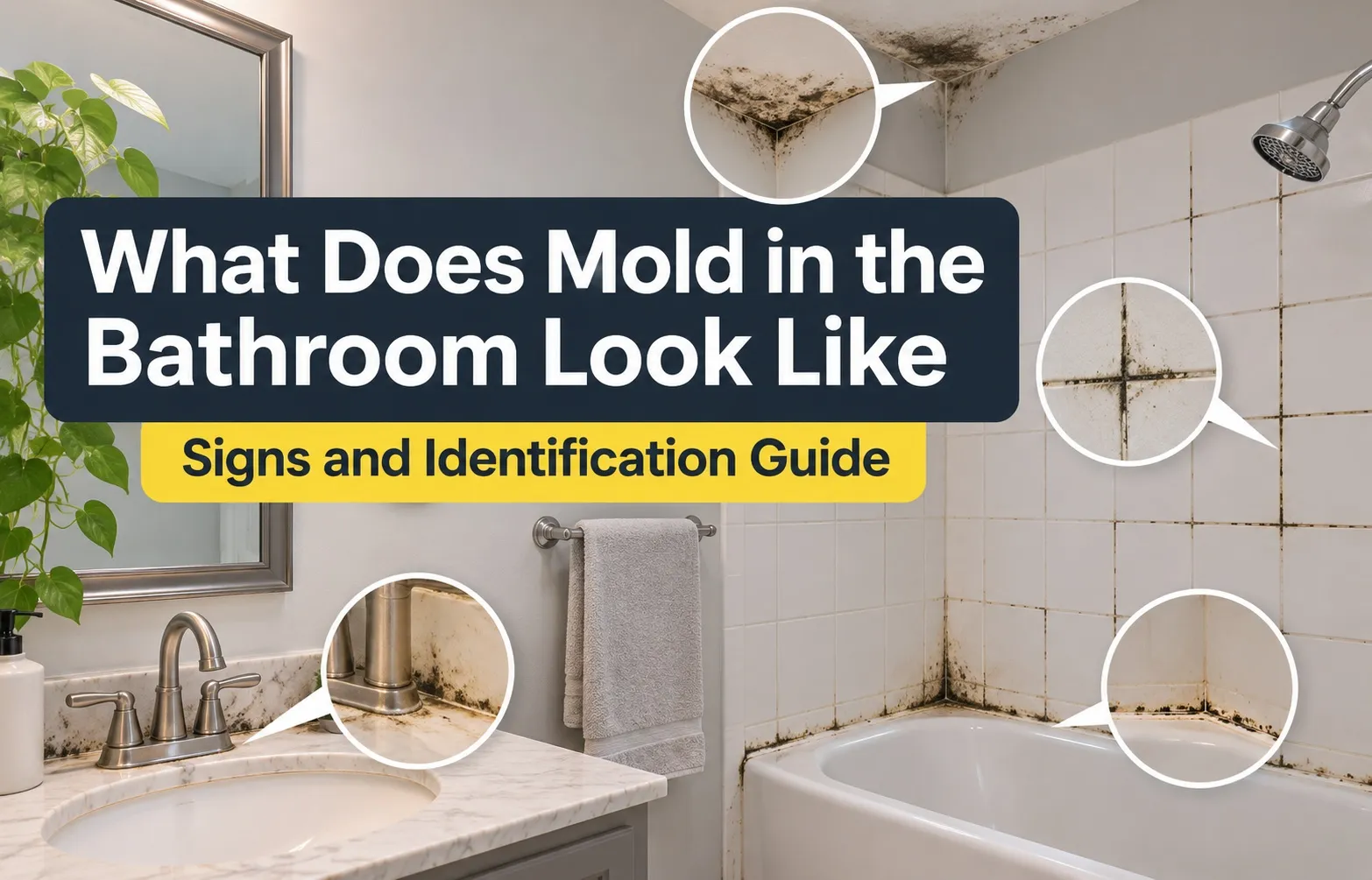 Bathroom mold typically appears as fuzzy, slimy, or powdery patches ranging in color from dark black and green to pink, white, and brown. It frequently develops on porous surfaces like grout lines, silicone caulk, and drywall where persistent moisture and humidity accumulate.
Visual Characteristics and Textures
Identifying mold requires looking beyond simple discoloration to examine its unique physical texture. Fungal colonies manifest in distinct ways depending on the species and the environment:
- Color Variations: Ranging from deep black and dark olive green to subtle pink, white, and brown shades.
- Surface Textures: Ranging from suede-like velvety patches and fuzzy cotton growths to slick, smooth bacterial slimes and dry, powdery layers.
- Common Placement: Concentrated heavily in chronically damp areas, including shower tile grout, bathtub seals, ceiling corners, and around plumbing fixtures.
Why Bathrooms Are a Breeding Ground for Fungal Growth
Bathrooms provide an ideal ecosystem for microscopic fungal spores to germinate and spread rapidly. Several environmental factors contribute directly to indoor mold proliferation:
- High Humidity: Steam from hot showers and baths elevates ambient moisture levels in enclosed spaces.
- Condensation Buildup: Water droplets settling on cold walls, mirrors, and window sills create trapped moisture pockets.
- Organic Nutrient Sources: Soap scum, skin cells, hair, and dust provide organic nourishment required for spores to feed and multiply.
- Inadequate Ventilation: Poor exhaust airflow traps moisture indoors, allowing microscopic spores to settle and form visible colonies within 24 to 48 hours.
Visual and Tactile Identification Matrix: Colors and Textures
Accurately identifying bathroom mold requires evaluating more than just surface color. By analyzing physical texture—whether velvety, slimy, or powdery—homeowners can pinpoint specific species, assess structural penetration, and choose the correct removal method.
Black or Dark Green Mold (Stachybotrys): Slimy, Velvety, and Deep
Often referred to as toxic black mold, Stachybotrys chartarum typically appears as dark, greenish-black patches with a slimy or velvety wet texture. When dry, it may turn dull and powdery while remaining deeply embedded in porous materials.
- Physical Appearance: Dark greenish-black discoloration with dense, suede-like or slimy consistency when moisture is present.
- Typical Locations: Thrives deeply inside damp grout lines, silicone caulk seams, and water-damaged drywall.
- Diagnostic Importance: Indicates long-term moisture accumulation and requires specialized handling due to heavy spore concentration.
Pink or Orange Slime (Serratia Marcescens): The Bacterial Impostor
Pink mold is actually a colony of Serratia marcescens bacteria rather than true fungus, appearing as a smooth, slippery film instead of traditional fuzzy growth. It feeds directly on soap residue and mineral deposits in high-moisture bathroom zones.
- Physical Appearance: Vibrant pink, reddish, or bright orange slick film with a slimy texture rather than a filamentous structure.
- Typical Locations: Commonly coats shower drains, bathtub corners, shower curtain liners, and around the inner rim of toilet bowls.
- Diagnostic Importance: Signals soap scum accumulation and high humidity rather than deep structural water leaks.
White or Light Gray Powdery Mildew: Surface-Level Growth
White or light gray powdery mildew lies completely flat against non-porous surfaces, resembling a light dusting of flour or talcum powder. It does not penetrate deep into building materials like true mold colonies do.
- Physical Appearance: Flat, chalky, and dry texture that wipes away easily with minimal effort using basic cleaning solutions.
- Typical Locations: Found on glass shower doors, smooth ceramic tile faces, and metal window sills prone to condensation.
- Diagnostic Importance: Represents early-stage superficial moisture issues that are easy to clear before they turn into severe infestations.
Brown, Olive, or Gray Fuzzy Patches: Common on Walls and Curtains
Brown, olive, or neutral gray growth exhibits a distinct cotton-like or fuzzy texture that extends outward from organic substrates. These patches release airborne spores readily when disturbed.
- Physical Appearance: Fluffy, thread-like strands resembling tiny cotton balls or dense tufts across painted surfaces.
- Typical Locations: Frequently colonizes fabric shower curtains, painted bathroom walls, baseboards, and wooden trim.
- Diagnostic Importance: Highlights persistent humidity imbalances and vulnerable organic paint coatings or textiles.
Surface-Level vs. Deep Structural Mold: How to Tell the Difference
Determining whether bathroom discoloration is a minor surface issue or a deep structural infestation requires evaluating the substrate material and how deeply the roots have penetrated. Recognizing these distinctions prevents unnecessary panic while ensuring hidden hazards are properly addressed.
Can You Just Wipe It Off? The Porosity Test
Evaluating whether bathroom growth is superficial or structural begins by testing the underlying material’s porosity. Non-porous surfaces keep spores strictly on top, whereas porous materials absorb moisture deeply, turning a simple wipe into a recurring problem.
- Non-Porous Surfaces: Glass shower doors, glazed ceramic tile, and chrome fixtures only support surface mold that wipes away easily without leaving stains or pitting.
- Porous Materials: Grout, unsealed stone, wood, and drywall absorb moisture and fungal roots, allowing colonies to embed themselves beneath the top layer.
- The Physical Test: If scrubbing with a standard cleaner removes the blemish completely and the material feels hard and smooth, the issue is superficial.
Grout and Caulk Stains vs. Drywall Penetration
Grout lines and silicone caulk frequently develop dark mold stains that look alarming but often remain localized to the surface sealant. However, when moisture breaches the protective barrier behind tiles, mold compromises drywall integrity and grows uncontrollably within wall cavities.
- Sealant Isolation: Surface discoloration confined strictly to silicone caulk beads or cement grout lines can typically be treated with targeted cleaning or re-caulking.
- Moisture Barrier Failure: Gaps in tile grout allow water to seep behind walls, destroying the moisture barrier and feeding hidden colonies.
- Structural Signs: Discoloration that spreads outward from wall seams or reappears constantly after cleaning points directly to underlying drywall saturation.
When a Surface Cleaning Isn’t Enough
Superficial cleanings only address visible discoloration and fail to eliminate fungal roots embedded inside structural materials. If mold returns within days or structural building components soften, surface disinfection is no longer sufficient and professional intervention is required.
- Rapid Regeneration: Fungal growth that returns in the exact same spot within 48 to 72 hours indicates an active moisture leak feeding a deeper colony.
- Material Degradation: Spongy drywall, crumbling plaster, or warped baseboards signal that structural integrity has been compromised by hidden moisture.
- Persistent Dampness: Areas that never fully dry out require professional moisture meters and remediation to tear out contaminated drywall sections safely.
Non-Visual Clues: Spotting Hidden Mold Behind Walls and Ceilings
Hidden mold inside wall and ceiling cavities can thrive undetected long before patches appear on the surface. Recognizing non-visual signs is critical for identifying structural infestations early and preventing prolonged indoor air contamination.
Persistent Musty Odors That Won’t Go Away
A persistent damp or earthy smell is often the earliest warning sign of hidden fungal colonies trapped behind building assemblies. If a bathroom smells continually like a damp basement despite thorough cleaning and airing out, moisture is likely fueling growth inside enclosed cavities.
- Earthy Dampness: A distinct, stale odor that lingers even after scrubbing tiles and fixtures clean.
- Environmental Triggers: Smells that intensify immediately when turning on the shower, running warm water, or activating a space heater.
- Invisible Sources: Odors emerging from electrical outlets, wall seams, or ceiling ventilation ports without any visible surface growth nearby.
Visual Red Flags: Peeling Paint, Bubbling Wallpaper, and Warped Baseboards
Water intrusion behind drywall creates physical pressure and moisture saturation that alters exterior wall finishes. Watching for subtle structural deformations helps homeowners catch hidden leaks and internal colonization before severe decay occurs.
- Peeling or Flaking Paint: Paint bubbling or peeling away from drywall or ceilings due to trapped vapor pushing outward from behind.
- Soft or Bubbling Drywall: Wall surfaces that feel spongy, soft, or indented when gently pressed with a gloved finger.
- Warped Baseboards: Wooden trim and baseboards swelling, cracking, or pulling away from the wall from prolonged moisture exposure.
Physical Symptoms: Unexplained Allergies and Musty Air Quality
Microscopic fungal spores circulating through indoor air systems can trigger acute physical reactions for individuals spending time in the space. Unexplained health symptoms often serve as a reliable biological indicator of hidden contamination.
- Respiratory Irritation: Sudden bouts of sneezing, coughing, or throat irritation that occur exclusively inside the bathroom.
- Nasal Congestion: A stuffy or runny nose that flares up during morning routines and clears after leaving the house.
- Eye and Skin Discomfort: Itchy eyes or skin rashes triggered by high concentrations of airborne mold spores in an enclosed environment.
Dangerous Myths Exposed: Can You Paint Over Mold or Use Bleach?
Attempting to fix bathroom mold with quick DIY shortcuts often backfires, worsening indoor air quality and structural damage. Understanding correct remediation science prevents hazardous chemical errors and permanent property decay.
The Trap of Painting Over Mold on Wet Walls
Painting directly over active bathroom mold does not eliminate the fungal colony; it simply masks the visual blemish. Trapped moisture behind the paint film continues to feed the infestation, accelerating hidden wood rot and drywall degradation.
- Masking vs. Eradicating: Paint seals the surface pigment from view while leaving live spores active beneath the coating.
- Moisture Retention: Standard paints trap ambient humidity against damp substrates, creating an ideal incubation chamber.
- Surface Failure: Trapped vapor expansion causes bubbling, cracking, and rapid peeling shortly after application.
Why Bleach Can Make Mold Worse on Porous Surfaces
Many homeowners rely on household bleach to destroy bathroom mold, but bleach is chemically ineffective on porous building materials. The water content in liquid bleach penetrates deep into porous drywall and wood, leaving the active fungal roots intact while only whitening surface pigments.
- Superficial Whitening: Bleach removes visible dark color without killing the root system embedded inside porous substrates.
- Moisture Contribution: Water-based chlorine solutions add extra moisture to already saturated materials, inadvertently encouraging further growth.
- Chemical Hazards: Mixing bleach with residual cleaning agents or ammonia creates toxic fumes dangerous for indoor spaces.
Effective Remediation: Enzyme Cleaners, Vinegar, and Proper Ventilation
Successful mold remediation requires disrupting fungal cell walls using targeted solutions rather than masking agents. Following safe protocols, including wearing personal protective equipment (PPE) and consulting the official EPA mold cleanup guidelines, ensures safe and permanent removal.
- Vinegar Solutions: Undiluted white vinegar penetrates porous materials naturally, acidic enough to kill multiple mold species at their roots.
- Commercial Enzyme Cleaners: Specialized enzymatic formulas break down organic residues and digest fungal proteins safely.
- Protective Gear: Always wear proper personal protective equipment (PPE) like N95 respirators and gloves during heavy cleaning.
Frequently Asked Questions
What Does Toxic Mold Look Like in a Bathroom?
Toxic mold, commonly identified as Stachybotrys chartarum, appears as dark greenish-black or jet-black patches featuring a slimy, suede-like, or velvety texture when wet. It thrives heavily in chronically damp environments like deep tile grout, silicone caulk seals, and saturated drywall.
- Color and Tone: Deep black or dark olive green with a dull appearance when dry.
- Texture Profile: Slimy or velvety wet surface that can turn powdery over time.
- Common Hotspots: Concentrated heavily in dark, high-humidity corners and water-damaged structural gaps.
How Do I Know If My Bathroom Has Hidden Mold?
Hidden bathroom mold is identified through persistent earthy or musty odors that linger despite rigorous cleaning, alongside structural warning signs like peeling paint, bubbling drywall, and warped baseboards. These colonies multiply silently inside enclosed wall and ceiling cavities.
- Persistent Musty Smells: A stagnant, damp odor that intensifies when running warm shower water.
- Surface Deformations: Soft drywall, flaking paint, and swollen wooden baseboards indicating trapped moisture.
- Air Quality Triggers: Unexplained nasal congestion and respiratory irritation experienced while inside the bathroom.
What Actually Kills Bathroom Mold Permanently?
Permanent mold elimination requires cutting off the underlying moisture supply and applying fungicidal solutions like white vinegar or professional enzyme cleaners that penetrate porous materials to destroy roots. Surface bleach treatments fail because they only whiten pigment while leaving fungal roots alive.
- Root Eradication: Using deep-penetrating solutions like pure white vinegar instead of superficial chlorine bleach.
- Moisture Control: Fixing active plumbing leaks and managing room humidity to prevent future spore germination.
- Preventative Upgrades: Installing efficient exhaust fans and applying mold-resistant sealants to protect vulnerable surfaces.
Is Bathroom Mold Dangerous to Breathe In?
Inhaling bathroom mold spores poses serious health risks, particularly for individuals with asthma, allergies, or compromised immune systems. Airborne spores act as strong biological irritants that trigger acute respiratory distress and chronic allergic symptoms.
- Respiratory Irritation: Frequent coughing, throat scratchiness, and wheezing when entering the space.
- Allergic Reactions: Stuffy noses, sneezing fits, and watery eyes caused by airborne spore exposure.
- Preventative Measures: Maintaining proper bathroom ventilation and utilizing protective gear during cleaning sessions to safeguard respiratory health.

Oscar Vance | Master Plumber & Drainage Expert
Meet Oscar Vance, a licensed master plumber sharing practical solutions on residential repairs, preventive maintenance, and thoughtful home upkeep.