Why Does Your Bathroom Sink Smell Like Rotten Eggs?
 A rotten egg smell from a bathroom sink is caused by hydrogen sulfide gas. This foul odor typically builds up when sulfur-producing bacteria feed on hair, soap scum, and organic biofilm trapped inside the P-trap or overflow channel. Alternatively, dried-out trap seals or water heater anode rod reactions can release sewer gas into your room.
The 10-Second “Glass Test”: Is It Your Drain or Your Water Supply?
Before buying drain cleaners or dismantling pipes, you must isolate the exact source of the sulfur odor. Identifying whether the gas originates from standing drain debris or your main water supply prevents unnecessary repairs and speeds up the solution.
- Fill a clean glass: Turn on the bathroom sink faucet and fill a clean glass with tap water.
- Step away from the sink: Turn off the faucet immediately and walk out of the bathroom into a hallway or another room.
- Smell the water sample: Bring the glass to your nose and take a sniff.
Understanding this distinction saves time. If the water itself carries the smell, bacterial growth is reacting inside your hot water tank. If the water smells clean in the glass, hydrogen sulfide gas is venting directly out of your drain pipe or sink overflow port.
- Drain-based odors: Caused by bacterial growth inside trapped soap scum, hair clogs, or an evaporated P-trap water seal.
- Supply-based odors: Caused by magnesium anode rods reacting with sulfate-reducing bacteria inside the water heater tank.
The 4 Primary Root Causes of Sink Odor
A rotten egg smell from a sink is almost always produced by hydrogen sulfide gas. Understanding the exact biological, chemical, or mechanical mechanism driving this odor allows you to target the root cause directly rather than masking the smell with surface cleaners.
1. Biofilm and Organic Buildup in the P-Trap
Every time you rinse your hands or shave, hair, toothpaste, soap scum accumulation, and dead skin cells wash down the drain. This organic debris settles at the bottom curve of the P-trap, creating an ideal breeding ground for bacteria.
As these micro-organisms break down the organic matter in an oxygen-depleted environment, they emit sulfur gas. Over time, this thick layer of bacterial slime, known as biofilm, releases a continuous rotten egg odor straight up through the drain opening.
- Trapped Debris: Hair and shaving cream act as a sponge, holding onto organic waste and slowing drainage.
- Bacterial Activity: Anaerobic microbes digest the trapped waste, producing hydrogen sulfide gas as a byproduct.
- Odor Path: The gas rises freely through the sink strainer into the bathroom air whenever the tap is turned on or off.
2. Bacterial Growth Hidden Inside the Overflow Channel
The small relief opening near the rim of your bathroom basin leads into a hidden inner chamber designed to prevent accidental water spills. Because water rarely flows through this sink overflow hole with high pressure, soap suds, splashing toothpaste, and moisture settle inside the dark cavity permanently.
This hidden space lacks adequate airflow, allowing sulfate-reducing bacteria to colonize the damp walls unimpeded. Traditional drain cleaners poured straight down the main drain bypass this section entirely, leaving the bacterial growth intact and continuing to release foul sulfur smells into the room.
- Moisture Trap: Splashes of dirty water enter the overflow cavity but lack the velocity needed to flush out completely.
- Untouched Slime: Standard drain pouring misses the upper channel, allowing bacteria to flourish hidden out of sight.
- Air Displacement: When you run water down the main drain, air is pushed out of the overflow hole, forcing a burst of bad smell directly toward your face.
3. A Dried-Out P-Trap (Infrequently Used Sinks)
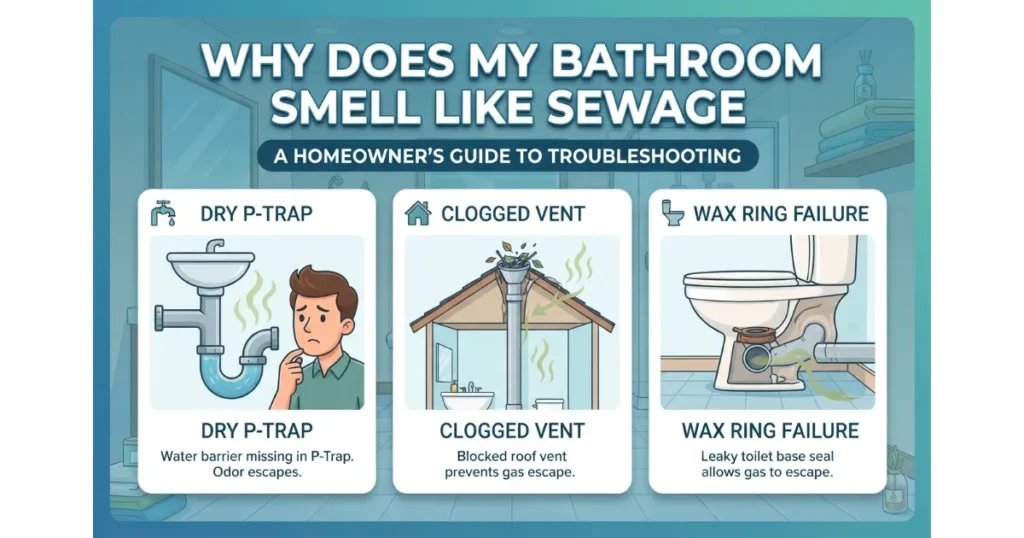
The curved pipe beneath your sink is designed to hold a standing water seal that acts as a physical barrier against sewer gas trap emissions. If a guest bathroom sink or powder room basin goes unused for weeks at a time, this standing water gradually evaporates.
Once the liquid barrier disappears, the seal is broken. Without this standing water barrier, gases from the municipal sewer line—including methane and hydrogen sulfide—flow unimpeded through the dry pipe directly into your living space.
4. Water Heater Anode Rod Reaction (Hot-Water-Only Smell)
If the rotten egg smell occurs strictly when running hot water, the source is chemical rather than biological. Most conventional water heaters contain a sacrificial magnesium anode rod designed to protect the steel tank lining from corrosion.
When water supplies contain high concentrations of natural sulfates, the magnesium metal undergoes an electrochemical reaction. The rod releases free electrons that react with naturally present sulfate-reducing bacteria inside the warm tank, converting sulfates directly into hydrogen sulfide gas.
- Chemical Trigger: Magnesium anodes produce electrons that reduce dissolved sulfates to sulfide ions.
- Temperature Factor: Warm water environments inside the tank accelerate the rate of bacterial gas generation.
- Targeted Isolation: Cold water stays completely odorless, while hot water emits an instant sulfur smell upon discharge.
5. Clogged Plumbing Roof Vents & Sewer Line Backups
Your home’s drain pipes rely on a plumbing stack vent extending through the roof to equalize air pressure and exhaust sewer odors safely outside. If leaves, bird nests, or ice block this roof vent, wastewater flowing through the system creates a suction effect.
This negative pressure pulls air through the path of least resistance, effectively siphoning the protective water right out of your sink’s P-trap. With the trap seal drained empty by vacuum force, sewer gases back up continuously into the bathroom.
- Vent Blockage: Debris atop the roof stack stops air from entering the plumbing vent system freely.
- Siphon Effect: Flushing a nearby toilet creates negative pressure that sucks standing water out of the sink trap.
- Persistent Exposure: Even after refilling the drain, subsequent water usage elsewhere in the house empties the trap seal again.
Essential Safety Rules & Chemical Warnings
Before applying any DIY remedies or pouring solutions down your drain, safety must take priority. Mixing household cleaning agents carelessly or ignoring signs of major sewer leaks can lead to severe health hazards and permanent plumbing damage.
Chemical Safety Warning: Never Mix Vinegar and Bleach
Combining chlorine bleach with acidic substances like white vinegar creates a dangerous chemical reaction. This mixture releases toxic chlorine gas into your bathroom, which can cause severe respiratory distress, eye irritation, and chemical burns upon inhalation.
Always flush drains thoroughly with plain water and allow ample time between applying different cleaning solutions. Protecting your plumbing hardware requires equal caution, as repeated exposure to harsh chemical mixtures can degrade rubber seals, melt plastic PVC slip-joints, and corrode metal fittings.
- Toxic Fumes Hazard: Never combine bleach with vinegar, ammonia, or commercial acid-based drain openers under any circumstances.
- Plumbing Inspection: Ensure plastic PVC slip-joint nuts and rubber washers under the sink basin are inspected for leaks after using hot water flushes.
- Ventilation Requirement: Keep bathroom windows open or run the exhaust fan whenever handling concentrated cleaning agents.
Is Hydrogen Sulfide Gas Dangerous in Home Sinks?
Low concentrations of hydrogen sulfide gas caused by minor organic biofilm or a dried-out P-trap produce a foul sulfur odor, but they rarely pose acute health risks in well-ventilated spaces. However, persistent or overwhelming gas exposure requires immediate attention.
Understanding hydrogen sulfide toxicity helps differentiate minor sink maintenance issues from dangerous main sewer line failures that threaten household safety.
Step-by-Step DIY Solutions: How to Fix the Smell
Eliminating a rotten egg smell requires targeting the exact root cause, whether it is organic biofilm inside the P-trap, slime buildup in the overflow channel, an evaporated water seal, or a water heater reaction.
Method 1: The Baking Soda & Vinegar Drain Flush
This natural chemical reaction breaks down organic grease, soap scum, and hair accumulation without damaging plastic or metal pipes. It neutralizes mild sulfur odors effectively.
- Clear standing water: Bail out any standing water in the sink basin before starting the cleaning process.
- Apply baking soda: Pour 1/2 cup of baking soda directly down the sink drain opening, ensuring it reaches the trap below.
- Add white vinegar: Pour 1/2 cup of white vinegar down the drain right after the baking soda to initiate a bubbling fizz reaction.
- Let it sit: Cover the drain tightly with a stopper and let the mixture foam and dissolve organic grime for 15 to 30 minutes.
- Flush with hot water: Pour a kettle of boiling water or run very hot tap water for 2 minutes to flush away the loosened debris.
Method 2: How to Deep-Clean the Hidden Sink Overflow Hole
Standard drain cleaners completely miss the inner slime and bacteria thriving inside the sink overflow channel. Deep-cleaning this hidden cavity eliminates a major source of persistent sulfur smells.
- Prepare a cleaning solution: Mix a hydrogen peroxide solution or dilute bleach with water inside a clean container.
- Inject into the overflow: Use a turkey baster or squeeze bottle to squirt the liquid deeply into the upper overflow relief hole.
- Scrub the inner walls: Insert a thin flexible bottle brush into the overflow opening to scrape away stubborn black biofilm and slime.
- Rinse thoroughly: Let the solution sit for 10 minutes, then pour warm water down both the main drain and overflow to flush out debris.
Method 3: Removing and Manual Cleaning of the P-Trap
When chemical flushes fail to remove stubborn clogs and heavy slime, manual removal of the P-trap is necessary. This hands-on plumbing fix gives you direct physical access to trapped hair and gunk.
- Set up protection: Place a bucket and an old towel directly underneath the sink cabinet to catch residual wastewater.
- Loosen slip nuts: Use a slip nut wrench or your hands to unscrew the plastic slip-nuts securing both ends of the curved P-trap.
- Clean the pipe: Detach the pipe, empty trapped debris into the bucket, and scrub the interior thoroughly with dish soap and a brush.
- Inspect plumbing washers: Check the rubber plumbing washers for wear or cracks, and replace them if necessary to prevent leaks.
- Reassemble securely: Reattach the P-trap, hand-tighten the slip-nuts firmly, and run water to test for leaks.
Method 4: Flushing the Water Heater & Replacing the Anode Rod
If the rotten egg smell occurs strictly when running hot water, your water heater requires maintenance. Sulfate-reducing bacteria reacting with sacrificial metal rods inside the tank produce continuous dissolved sulfur odors.
- Flush the tank: Attach a garden hose to the water heater drain valve and flush out sediment accumulation following manufacturer guidelines.
- Inspect the anode rod: Remove and check the internal magnesium or aluminum sacrificial anode rod for severe corrosion or depletion.
- Perform anode rod replacement: Replace a degraded magnesium rod with a zinc-aluminum alloy rod if bacterial sulfur reactions persist.
- Consult official standards: Review water quality guidelines and safety protocols via the U.S. Environmental Protection Agency (EPA) regarding hydrogen sulfide in residential water supplies.
Prevention & Long-Term Maintenance
Preventing sulfur odors from returning requires simple, proactive plumbing habits. Establishing a regular maintenance routine keeps biofilm from building up and ensures trap seals remain fully functional over time.
Weekly & Monthly Maintenance Routines
Incorporating regular preventive plumbing care stops organic debris from colonizing your pipes. Using gentle maintenance solutions protects your plumbing infrastructure while keeping drains smelling fresh.
- Monthly Hot Water Flush: Run boiling water or high-temperature tap water down the drain for 2 to 3 minutes once a month to melt away early grease and soap scum accumulation.
- Use Enzyme Drain Cleaner: Apply an eco-friendly enzyme drain cleaner monthly instead of harsh caustic chemicals. Biological enzymes digest organic slime and hair without corroding metal pipes or melting PVC slip-joints.
- Routine Overflow Clean: Flush the sink overflow hole with hot water and mild detergent every few weeks to prevent bacterial colonies from establishing inside the dark cavity.
Protecting Guest Bathroom Sinks From Drying Out
Sinks in guest bathrooms, basement powder rooms, or seasonal homes are highly vulnerable to dried-out P-traps due to water seal evaporation. Simple preventive steps maintain this critical physical barrier against sewer gas.
Following these steps eliminates odor recurrence, protects pipe longevity, and keeps your bathroom free of hydrogen sulfide smells without calling a professional plumber.
Frequently Asked Questions
Can I pour bleach down the sink to get rid of the rotten egg smell?
You can pour diluted bleach down the drain to kill odor-causing bacteria, but it should be done with caution. Always flush the pipe with plenty of water beforehand, and never mix bleach down drain safety routines with vinegar, ammonia, or acid-based chemical cleaners, as doing so generates dangerous chlorine gas.
What do plumbers recommend for smelly drains?
Plumbers typically recommend flushing smelly drains with a natural baking soda and vinegar mixture followed by boiling water, or using an enzyme-based drain cleaner to digest organic biofilm. For persistent odors, a licensed plumber consultation is advised to manually disassemble and clean the P-trap or clear a blocked plumbing roof vent stack.
Why does my sink smell like rotten eggs only when I run hot water?
If the sulfur odor occurs exclusively when hot water is running, the issue stems from your water heater rather than the drain. This water heater gas odor is created when sulfate-reducing bacteria in the tank react chemically with a sacrificial magnesium anode rod, releasing hydrogen sulfide gas directly into your hot water supply.
Why does my bathroom smell like eggs even when there is no clog?
A clear drain no clog smell usually indicates that organic biofilm has coated the hidden sink overflow cavity, or that standing water inside the P-trap has evaporated due to disuse. Without a functional water seal barrier, sewer gas flows freely up through the unobstructed pipe into your room.
When should I worry about a rotten egg smell in my house and call a plumber?
You should worry and call a professional immediately if the rotten egg odor is exceptionally strong, comes from multiple drains simultaneously, or persists after thorough cleaning. These symptoms signal a severe main line blockage, a damaged sewer pipe under your home, or a completely blocked plumbing roof vent that requires urgent diagnostic equipment.

Oscar Vance | Master Plumber & Drainage Expert
Meet Oscar Vance, a licensed master plumber sharing practical solutions on residential repairs, preventive maintenance, and thoughtful home upkeep.