The 5 Primary Materials Used in School Bathroom Sinks
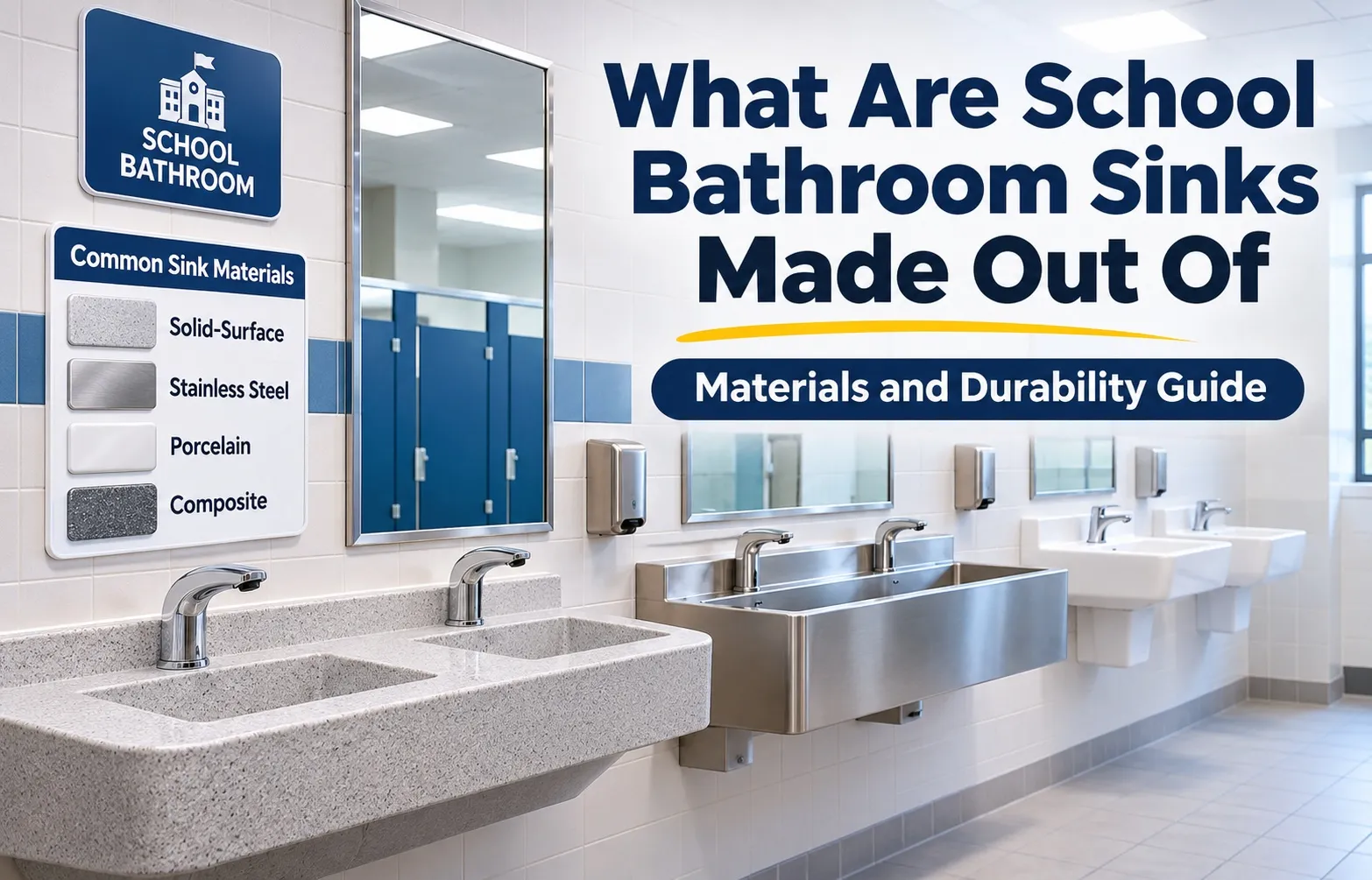 School facility planners select sink materials based on traffic volume, student age, and custodial maintenance capacity. Each of the five primary materials offers distinct structural advantages depending on where the restroom sits on campus.
1. Vitreous China (High-Density Commercial Porcelain)
Vitreous china is not ordinary residential ceramic—it is a high-density clay blend coated with powdered glass and fired in kilns at temperatures exceeding 2,000°F. This vitrification process fuses the glaze and clay body into a single, non-porous, ultra-hard enamel surface that resists staining, soap scum, and bacterial buildup.
Because it wipes clean effortlessly and fits standard wall-hung carrier brackets, vitreous china remains the most common material for individual basins in standard K-12 student restrooms. However, while its glass-like enamel glaze resists everyday scratching, the rigid body can chip or shatter if struck forcefully by a heavy metal object.
- Best Campus Location: Standard hallway restrooms with moderate supervision and individual handwashing stations.
- Key Advantage: Completely non-porous surface with zero water absorption and high resistance to daily chemical cleaners.
- Primary Limitation: Brittle under extreme blunt-force impact compared to metal or polymer composites.
2. Heavy-Gauge Stainless Steel (14-Gauge & 16-Gauge)
Middle schools, high schools, and gymnasium locker rooms rely heavily on commercial Type 304 stainless steel constructed in 14-gauge or 16-gauge thicknesses (where a lower gauge number indicates thicker, heavier steel). Unlike residential kitchen sinks made of thinner 18- to 22-gauge steel, institutional 14-gauge basins will not dent, crack, or shatter under intentional vandalism.
Leading institutional manufacturers like Acorn Engineering and Elkay also produce powder-coated stainless steel fixtures. These specialized finishes bond baked-on color coatings directly to the metal, eliminating the cold, prison-like aesthetic of raw steel while preserving full structural dent resistance.
- Best Campus Location: High school restrooms, athletic locker rooms, and unsupervised corridor washrooms.
- Key Advantage: Zero risk of shattering, cracking, or structural failure during aggressive physical abuse.
- Primary Limitation: Shows water spots easily unless wiped down or finished with a brushed satin or powder-coated surface.
3. Solid Surface & Polymer Resins (Corian, Corterra & Natural Quartz)
Modern school construction and restroom renovations increasingly replace individual wall-hung sinks with seamless, multi-user trough sinks molded from solid surface composites. These engineered materials combine acrylic-polyester resins or natural stone aggregates—such as Corian, Corterra, and Bradley’s Evero natural quartz—into continuous, joint-free basins with no caulk lines to trap mold.
For school custodians, solid surface composites offer an unmatched maintenance advantage: the color and mineral pattern run uniformly through the entire thickness of the slab. If a student carves initials into the rim, leaves a burn mark, or stains the basin with permanent marker, maintenance staff can simply sand the surface with fine-grit sandpaper and buff it back to its original factory finish.
- Best Campus Location: Newly renovated elementary, middle, and high school restrooms utilizing multi-station trough layouts.
- Key Advantage: Renewable, seamless surface that allows scratches, stains, and graffiti to be sanded away on-site.
- Primary Limitation: Higher upfront fabrication cost than basic wall-hung vitreous china units.
4. Terrazzo (The Classic Communal Washfountain Material)
Terrazzo is a heavy-duty composite made by setting natural marble, granite, or quartz chips into a pigmented cement or resin binder and grinding the surface to a smooth, polished sheen. It is the signature material behind the iconic circular and semicircular communal washfountains pioneered by Bradley Corporation and Acorn Engineering in mid-century schools and gymnasiums.
Rather than installing six separate sinks and faucets along a wall, a single circular terrazzo washfountain allows up to eight students to wash their hands simultaneously around one central spray head. Most classic models use a circular foot-pedal ring at the base—activating water only while stepped on—which prevents students from clogging drains or leaving faucets running between classes. You can explore detailed material specifications in the Bradley Corporation School Washroom Solutions guide.
- Best Campus Location: High-volume gymnasiums, cafeteria entrances, shop classes, and historic K-12 buildings.
- Key Advantage: Virtually indestructible lifespan exceeding 40 to 50 years while dramatically reducing plumbing hookups and water waste.
- Primary Limitation: Extremely heavy footprint requiring reinforced floor mounting and specialized sealing every few years.
5. Enameled Cast Iron
Enameled cast iron consists of a thick, solid cast-iron basin coated with a heavy layer of fused porcelain enamel. Before polymer resins and stainless steel troughs became standard, enameled cast iron was the go-to material for long, wall-mounted multi-faucet wash troughs in early- and mid-20th-century schoolhouses.
The thick iron core prevents flexing, vibration, or structural breakage even under extreme weight, while the glossy enamel interior resists harsh scrubbing. Because cast-iron troughs weigh hundreds of pounds and require multi-person crews to install, modern schools rarely specify them for new builds, though thousands remain active in older district facilities today.
- Best Campus Location: Historic school buildings and long, multi-user wall troughs installed prior to the 1980s.
- Key Advantage: Unmatched structural rigidity and decades-long service life when properly maintained.
- Primary Limitation: Excessive weight and susceptibility to rust if a deep impact chips the outer porcelain enamel down to the raw iron core.
School Bathroom Sink Materials Comparison Table
Comparing commercial restroom basin materials across ANSI/ASME durability standards helps K-12 facilities balance upfront installation budgets against long-term custodial maintenance. The table below outlines how each primary school sink material performs in lifespan, impact resistance, and graffiti removal.
Why Schools Don’t Use Regular Home Bathroom Sinks
Residential bathroom sinks are engineered for light family use, gentle household cleaners, and decorative vanity cabinets—meaning they fail within weeks in a K-12 environment. Commercial school fixtures undergo strict structural, chemical, and ergonomic engineering to survive hundreds of daily users.
1. Structural Load & Vandalism Prevention (Concealed Wall Carriers)
Students routinely lean, sit, or hang on bathroom sink rims between classes, applying downward torque that would immediately rip a standard residential basin off drywall anchors. To prevent catastrophic plumbing floods, commercial school sinks are bolted directly onto heavy-duty steel concealed wall carriers anchored inside the masonry or structural framing.
Furthermore, institutional basins incorporate shrouded bottoms or anti-ligature fixtures that completely enclose exposed P-traps and braided water supply lines. Blocking access to under-sink piping stops students from kicking drain pipes loose, tampering with shutoff valves, or hiding contraband inside vanity cabinets.
- Heavy Load Ratings: Commercial wall-mounted vitreous china and steel sinks are typically tested to support 300 to 500 pounds of static front-edge load without detaching.
- Tamper-Proof Hardware: Drain strainers and aerators require specialized spanner wrenches or Torx security bits rather than standard screwdrivers.
- Enclosed Piping: Full-wrap steel shrouds protect students from scalding hot-water drain pipes while eliminating exposed plumbing targets.
2. Resistance to Industrial-Strength Disinfectants & Bleach
School custodians sanitize restroom fixtures multiple times every day using hospital-grade quaternary ammonium disinfectants, accelerated hydrogen peroxide, and diluted sodium hypochlorite (bleach). When comparing cultured marble vs. solid surface or residential acrylics, standard home materials quickly lose their clear gel coat, turn yellow, and develop microscopic chemical etching under harsh daily sanitizers.
Commercial vitreous china, Type 304 stainless steel, and non-porous quartz composites feature dense, chemically inert surfaces. These materials tolerate repeated high-alkaline and chlorine-based washdowns without dulling, pitting, or absorbing odors.
- Zero Gel-Coat Breakdown: Unlike residential cultured marble, solid surface and vitreous china have no thin topical coating that peels away under bleach.
- High-Pressure Washdowns: Institutional basins are sealed to withstand custodial hose-down cleaning routines without water seeping behind wall joints.
3. ADA Compliance & Child-Height Ergonomics
Public schools must comply with strict Americans with Disabilities Act (ADA) compliance guidelines as well as age-specific ergonomic standards. Standard 32-inch residential vanity cabinets block wheelchair access and sit far too high for elementary school children to reach the faucet stream comfortably.
Solid surface and heavy-gauge stainless steel trough sinks can be custom-fabricated at 27-inch to 34-inch rim heights while maintaining unobstructed knee and toe clearance underneath the basin. This allows districts to satisfy wheelchair accessibility codes and lower elementary-grade mounting heights within a single continuous fixture.
- Accessible Rim Heights: Standard ADA adult-height school sinks mount at a maximum 34-inch rim height, while children’s accessible stations mount at 27 to 30 inches.
- Unobstructed Under-Basin Clearance: Wall-hung trough designs provide at least 27 inches of vertical knee clearance and angled protective pipe covers so wheelchairs roll right up to the water stream.
Elementary vs. High School Sinks: How Material Choices Change by Grade
Architects and facility managers must adapt restroom specifications across educational tiers, as developmental stages dictate distinct priorities between injury prevention for young children and extreme durability against adolescent vandalism.
Elementary & Primary Schools (Hygiene, Safety & Low Heights)
Designing elementary school washrooms requires prioritizing child safety, touchless hygiene, and non-intimidating aesthetics to encourage proper handwashing habits among young students. Solid surface trough sinks featuring rounded safety edges eliminate sharp corners, drastically reducing head bump risks during high-traffic transition periods.
- Ergonomic Rim Heights: Installing sinks at lower rim heights ranging from 24 inches to 27 inches ensures effortless access for children from kindergarten through fifth grade.
- Sensor-Activated Faucets: Automated sensor-activated faucets eliminate the need for manual twisting knobs, preventing water wastage and enabling toddlers who lack grip strength to wash hands easily.
- Vibrant Solid Surfaces: Non-porous materials like Corian or Quartz composite allow bright, welcoming color integration that reduces institutional anxiety while resisting bacterial growth.
Middle Schools, High Schools & Universities (Maximum Vandal Proofing)
Transitioning to secondary education and high school environments requires shifting the architectural focus entirely toward combating high school vandalism and implementing heavy-duty hardware. Facilities demand 14-gauge stainless steel or heavy-duty vitreous china fixtures engineered to withstand severe physical abuse and deliberate destruction attempts.
- Heavy-Gauge Materials: 14-gauge stainless steel offers exceptional impact resistance, preventing dents, cracks, or punctures from heavy objects or intentional impacts.
- Flush-Mounted Sensors: Low-profile infrared sensors sit flush with the basin deck, eliminating protruding spouts that vulnerable students can snap off or leverage.
- Torx Security Fasteners: All exposed mounting points and drain assemblies utilize Torx security fasteners and specialized tamper-proof hardware that standard tools cannot dismantle.
Vitreous China vs. Ceramic vs. Porcelain: What’s the Difference?
Navigating the distinctions between ceramic, porcelain, and vitreous china is essential for specifying commercial washrooms that balance aesthetic appeal with long-term structural integrity. Understanding how these ceramic variants perform under stress prevents premature fixture failures and costly replacements.
How to Tell What Material a Bathroom Sink Is Made Of
Identifying an existing bathroom sink’s substrate requires a practical, non-destructive evaluation process. Facility managers and contractors can accurately determine material composition using a reliable three-step identification test.
- The Tap Test: Gently tap the basin rim; a high-pitched, solid, dense ring indicates high-density vitreous china or porcelain, whereas a dull thud often points to lower-density standard ceramic.
- Underside Rim Inspection: Examine the unglazed underside or mounting rim to check porosity; vitreous china features a tightly vitrified, non-porous body, while standard ceramic reveals a chalky, absorbent clay structure.
- The Magnet Test: Apply a household magnet to the basin surface to instantly rule out or confirm enameled cast iron and enameled steel substrates hidden beneath white finishes.
Why Vitreous China Outlasts Standard Ceramic in Public Restrooms
Commercial and public restrooms demand exceptional material resilience, making standard domestic ceramic inadequate for high-traffic environments. Vitreous china undergoes a specialized high-temperature glazing and firing process that completely transforms its microscopic structure.
- Low Water Absorption Rate: Vitreous china maintains a strict vitreous china water absorption rate of less than 0.5 percent, making the core material completely waterproof even under constant moisture exposure.
- Resilience to Glaze Chipping: Because the body itself absorbs virtually no water, minor surface damage or glaze chipping does not compromise the structural core or cause internal degradation.
- Standard Ceramic Vulnerability: Standard ceramic lacks full vitrification, allowing moisture penetration if the protective coat cracks, leading to internal expansion and progressive failure.
Frequently Asked Questions About School Bathroom Sinks
Navigating the maintenance, durability, and material characteristics of school restroom fixtures involves understanding specific operational traits. Here are direct answers to the most common questions regarding educational sink installations.
What are those big circular sinks in school bathrooms called?
Those large circular or semi-circular fixtures are known as washfountains, pioneered by major commercial manufacturers like Bradley and Acorn. Designed for high-traffic environments, they allow multiple students to wash their hands simultaneously around a single central basin.
- Material Composition: Typically constructed from durable terrazzo or heavy-duty stainless steel to withstand constant usage.
- Activation Mechanisms: Operated via bottom foot rings, hand-press buttons, or automated infrared sensors for touchless operation.
Will bleach ruin a porcelain or vitreous china school sink?
Diluted bleach solutions will not harm non-porous vitreous china or porcelain surfaces during standard sanitization routines. However, prolonged exposure or harsh chemical misuse requires careful management to protect surrounding hardware.
- Metal Component Risks: Leaving undiluted bleach sitting on a stainless steel drain assembly or metal fittings can cause pitting and corrosion over time.
- Worn Enamel Vulnerability: Older, worn enamel coatings can become dull or chemically etched if harsh disinfectants are left unrinsed.
Do porcelain school sinks scratch or crack easily?
Vitreous china and porcelain feature a specialized glass glaze that is significantly harder than steel, allowing them to easily resist everyday scratching from metal keys, belt buckles, or watches.
- Impact Vulnerability: While highly scratch-resistant, dropping heavy metal objects or dense tools directly into the basin can cause surface chipping or structural cracking.
- Non-Porous Glaze Benefits: The hard exterior layer prevents staining and chemical degradation under normal operational use.
Why are school bathroom sinks always so cold to the touch?
School bathroom sinks feel remarkably cold because materials like stainless steel, vitreous china, and terrazzo possess high thermal conductivity. These dense materials rapidly draw heat away from human skin tissue upon contact.
- Thermal Transfer: Because your hands are warmer than the fixture, heat transfers quickly into the sink material, creating an immediate sensation of cold.
- Ambient Restroom Temperatures: Commercial and institutional buildings maintain cooler ambient air temperatures and unheated water supply lines to optimize energy efficiency and hygiene.
Can you pour boiling water down a porcelain or stainless steel school sink?
Stainless steel handles extreme temperatures effortlessly, whereas pouring boiling water directly into a freezing-cold vitreous china or porcelain basin can trigger severe thermal shock.
- Thermal Shock Risks: Rapid temperature spikes can cause hairline craze cracks in the enamel glaze, weakening the fixture’s structural integrity.
- Safe Practices: Always temper water temperatures or use stainless steel fixtures if high-heat thermal disposal is a frequent requirement in the facility.

Oscar Vance | Master Plumber & Drainage Expert
Meet Oscar Vance, a licensed master plumber sharing practical solutions on residential repairs, preventive maintenance, and thoughtful home upkeep.