Where Eggshell Paint Works vs. Fails in a Bathroom
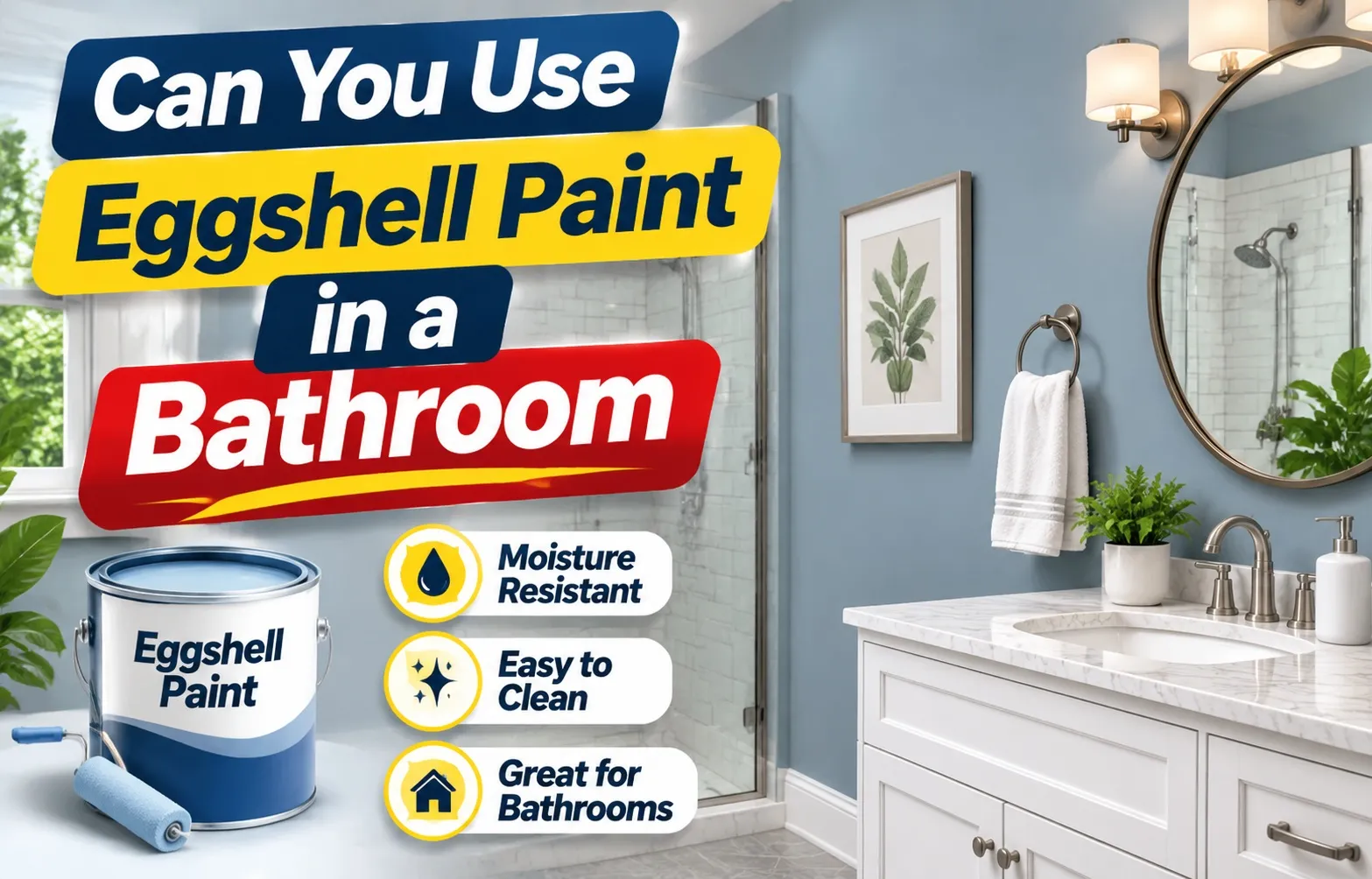 Whether eggshell paint succeeds or fails depends entirely on which bathroom surface you are coating and how much direct steam hits that zone. Painting standard drywall in a dry half-bath is completely different from painting an unventilated ceiling directly above a hot shower.
Powder Rooms & Half-Baths
Standard eggshell paint performs exceptionally well on bathroom walls inside powder rooms and half-baths because there is no shower or bathtub producing daily steam. Without heavy condensation settling on the paint film, eggshell delivers a clean, designer finish that lasts for years.
- Masks Drywall Flaws: Its low luster scatters light gently, hiding tape seams, minor dents, and patched nail holes that glossier finishes highlight.
- Sufficient Washability: Half-bath walls rarely need aggressive scrubbing, making eggshell’s light wipe-down durability more than enough around a hand sink.
Full Bathrooms with Showers & Tubs
In a full bathroom, standard interior eggshell paint struggles against repeated waves of hot shower steam and trapped humidity. Over time, water vapor penetrates the softer paint film, leading to moisture streaks, mildew growth, and premature peeling near the tub or shower frame.
- Ventilation Requirement: You should only use eggshell on full bathroom walls if your exhaust fan moves enough air (at least 1 CFM per square foot of floor space) to clear mirror fog within 10 to 15 minutes.
- Formula Upgrade: Swap standard builder-grade eggshell for a 100% acrylic, bath-rated formula engineered with built-in mildewcides and tighter moisture-blocking resins.
Bathroom Ceilings
Using standard eggshell paint on a bathroom ceiling is risky because heat and steam naturally rise and pool overhead, forming heavy droplets of condensation. Furthermore, the low sheen of eggshell reflects overhead vanity lighting unevenly across ceiling drywall imperfections.
- Better Ceiling Alternatives: Apply a dedicated moisture-resistant ceiling paint in a flat or matte bath finish, which hides ceiling waves while resisting mildew and water staining.
- High-Steam Exceptions: If your ceiling sits lower than 8 feet directly above a walk-in shower, choose a bath-rated satin finish to stop water droplets from soaking into the drywall paper.
Bathroom Tiles & Inside Shower Enclosures
Never apply standard eggshell wall paint to bathroom tiles or inside a bathroom shower enclosure. Standard latex and acrylic eggshell paints cannot chemically bond to glazed porcelain, ceramic tile, or fiberglass, and they will blister and peel off in sheets after just a few wet exposures.
- How to Paint Bathroom Tiles Safely: Scuff-sand the glazed surface, apply a high-adhesion bonding primer, and topcoat with a two-part epoxy or specialized urethane tile paint rather than standard wall eggshell.
- Inside Wet Shower Zones: Keep all standard architectural wall paints outside the splash zone, stopping your eggshell wall finish cleanly at the outer edge of the tile surround or shower curb.
What Actually Happens If You Use Standard Eggshell in a Steamy Bathroom?
When you apply standard eggshell paint inside a high-moisture bathroom, the lower-sheen paint film reacts poorly to repeated heat and humidity cycles. Rather than failing immediately, standard acrylic binders break down progressively through distinct chemical and physical reactions.
Surfactant Leaching (Those Oily, Brown Streaks on Your Walls)
Taking a hot shower shortly after painting creates surfactant leaching, where water-soluble chemical additives rise to the surface of the wet paint film. This leaves ugly, glossy, brownish-amber soap-like streaks running down your bathroom walls.
- The Science: Surfactants are added to paint to keep pigments stable in the can; high humidity pulls them out before the film fully locks.
- How to Clean It: Wipe the brown streaks away gently with a damp microfiber cloth and mild soapy water once the paint has fully cured—do not scrub aggressively or you will damage the sheen.
Moisture Absorption, Bubbling, and Peeling
Standard eggshell possesses a more porous paint binder structure than satin or semi-gloss, allowing microscopic water vapor from hot showers to slip past the surface. Once moisture gets behind the paint film, it breaks the bond with the underlying drywall paper.
- Paint Bubbling: Trapped moisture expands behind the coating, creating raised blisters and soft pockets on the wall surface.
- Paint Peeling: As the blisters dry out and re-wet daily, the paint film loses its grip entirely, peeling off in jagged strips right down to the bare primer.
Mildew Spots & Burnishing When Scrubbing
The porous texture of standard eggshell traps microscopic dust, soap residue, and bathroom humidity, creating an ideal breeding ground for mildew growth and hidden mold spores. Attempting to scrub these stains away introduces a new problem known as burnishing.
- Burnishing Damage: Rubbing a low-sheen eggshell finish with a sponge flattens the microscopic micro-pigment particles, leaving shiny, polished bald spots that stand out under vanity lights.
- Health Risks: Unchecked mold spores hidden inside porous paint binders can degrade indoor air quality, making proper paint selection essential for damp spaces.
Eggshell vs. Satin vs. Semi-Gloss for Bathrooms
Choosing the correct paint sheen for a bathroom requires balancing moisture defense against wall imperfection glare. Comparing eggshell, satin, and semi-gloss finishes side by side reveals exactly how their resin formulations and light reflection percentages impact your walls.
Side-by-Side Bathroom Paint Sheen Comparison Table
When to Choose Eggshell Over Satin (And Vice Versa)
Deciding between eggshell and satin depends heavily on your household routine and the physical condition of your drywall. If your bathroom sees multiple hot showers daily, satin is the safer choice to prevent long-term film breakdown.
- Choose Eggshell When: Your bathroom has no shower, excellent ventilation, and older walls with visible plaster repairs that a higher sheen would make glaringly obvious.
- Choose Satin When: Multiple family members share a steamy full bath, kids splash water near the sink, or you need a surface that withstands frequent wipe-downs.
The Low-Sheen Loophole: Bath-Specific Matte & Eggshell Formulas
If you prefer a contemporary soft, low-reflection look but want full protection against humidity, you do not have to settle for glossy paints. Advanced resin technology has unlocked specialty architectural coatings engineered specifically for high-moisture environments.
- Specialized Performance: Premium products like Benjamin Moore Aura Bath & Spa utilize proprietary water-borne color technology to provide a luxurious matte or low-sheen finish that resists humidity without blistering.
- Alternative Options: Formulas like Sherwin-Williams Duration Home and Behr Dynasty incorporate robust mildew-resistant additives and tighter molecular binders, bridging the gap between soft aesthetics and wet-room durability.
How to Safely Use Eggshell Paint in a Bathroom (5 Pro Painter Rules)
If you already bought a gallon of eggshell paint or insist on its soft finish for a full bathroom, proper preparation and curing can prevent premature failure. Following five strict contractor rules bridges the durability gap between standard eggshell and dedicated bathroom coatings.
1. Apply a Moisture-Blocking, Mildew-Resistant Primer First
Yes, you always need a dedicated primer before applying eggshell paint in a bathroom over bare drywall, joint-compound patches, or existing glossy surfaces. Without a sealed base coat, moisture bypasses the porous eggshell film and saturates the drywall core directly.
- Best Primers for Bathrooms: Use a stain-blocking, high-adhesion moisture-blocking primer such as Zinsser Bulls Eye 1-2-3 or Kilz Kitchen & Bath to seal porous substrates and anchor the topcoat.
- Over Existing Semi-Gloss: Priming is mandatory when painting eggshell over older semi-gloss or oil-based bathroom walls, as fresh latex will otherwise bead up and peel off.
2. Lightly Scuff-Sand Between Coats (220-Grit Rule)
Lightly scuff-sanding between coats of eggshell paint creates microscopic grooves that lock the second coat onto the first through mechanical adhesion. Skipping this step leaves a slick interface where expanding shower steam can cause the top layer to delaminate.
- Sandpaper Selection: Use fine 220-grit sandpaper or a fine sanding sponge after the first coat dries completely, applying light, even pressure across the entire wall.
- Dust Removal: Wipe the sanded walls down with a slightly damp microfiber cloth or tack cloth before rolling the final coat so dust nibs do not compromise the smooth finish.
3. Add a Mildewcide Packet (If Using Standard Eggshell)
Standard interior eggshell paints often lack the heavy antimicrobial protection required to fight damp bathroom air. Mixing a concentrated liquid or powder mildewcide additive directly into your paint can upgrades its mold resistance before the roller touches the wall.
- Application Ratio: Stir one standard 1.5-ounce mildewcide packet thoroughly into each gallon of paint, and ask your paint counter to shake the can mechanically for an even blend.
- Targeted Protection: This extra additive prevents dark mold spores from feeding on organic binders inside lower-sheen paints.
4. Respect the 48-Hour Steam-Free Cure Window
Freshly applied eggshell paint feels dry to the touch within two hours, but the chemical cross-linking process takes weeks to harden against moisture. Exposing fresh eggshell paint to hot shower steam within the first 24 to 48 hours triggers immediate surfactant leaching and softens the binder permanently.
- Minimum Dry Time: Keep the shower completely off for at least 48 hours after applying your final coat, running a box fan or dehumidifier to speed up evaporation.
- Full Chemical Cure: Avoid scrubbing or wiping down newly painted eggshell walls for 14 to 30 days while the paint curing time completes and the film reaches maximum hardness.
5. Run Your Exhaust Fan During and 20 Minutes After Showers
Even the best-prepped eggshell paint will fail if humid air sits trapped against the walls for hours after every shower. Consistent exhaust fan ventilation removes moisture vapor before it condenses into liquid droplets on the paint surface.
- Ventilation Benchmark: Ensure your bathroom fan delivers at least 1 CFM (cubic feet per minute) per square foot of floor area—for example, an 80-square-foot bathroom requires at least an 80 CFM fan.
- Post-Shower Habit: Turn the fan on before turning on the hot water and leave it running for at least 20 minutes after stepping out, or crack a window if your bathroom lacks mechanical venting.
Common Bathroom Eggshell Mistakes & FAQs
Homeowners frequently run into edge-case application dilemmas when using lower-sheen paints in high-humidity rooms. Addressing these common technical questions prevents costly repainting mistakes and ensures an even, long-lasting finish.
Can you mix semi-gloss paint with eggshell paint for a bathroom?
No, you should never mix semi-gloss paint with eggshell paint in an attempt to create a custom satin sheen. Blending different sheens, resin bases, or paint brands destabilizes the chemical binders, leading to patchy gloss levels, poor moisture resistance, and peeling.
- Resin Compatibility Issues: Semi-gloss relies on higher ratios of acrylic resins than eggshell; mixing them causes uneven curing and weak film formation under bathroom humidity.
- Color Shifting: Combining different sheen bases alters pigment suspension, often resulting in a streaky, mismatched wall color once the paint dries.
Why can’t you easily touch up eggshell paint on bathroom walls?
Spot-touching eggshell paint almost always causes paint flashing, which leaves a noticeable dull or shiny patch where the new paint meets the aged wall. Bathroom vanity lighting amplifies this texture difference, making small brush-applied touch-ups stand out immediately.
- Application Texture Mismatch: Paint applied with a small brush dries smoother than the surrounding stipple created by a paint roller, altering how light reflects off the wall.
- The Feathering Technique: Thin the touch-up paint with 5% to 10% water, use the exact same roller nap size as the original job, and feather the edges outward lightly—or repaint the single wall corner-to-corner for an invisible repair.
Is matte or eggshell paint better for a bathroom?
Eggshell is significantly better than standard matte paint for a bathroom because standard matte has a chalky, porous surface that absorbs steam, traps mildew, and stains permanently when wiped. Standard matte should be avoided in any bathroom with a shower or tub.
- Porosity vs. Washability: Eggshell contains slightly more protective resin than standard matte, giving it enough surface seal to handle light moisture and gentle cleaning.
- The Only Matte Exception: You should only choose matte over eggshell if you buy a specialty moisture-rated formula engineered specifically for wet spa environments.
Can you use eggshell paint in a kitchen too?
Yes, you can use eggshell paint on general kitchen walls, breakfast nooks, and hallways, but it struggles directly behind stoves and sinks. Kitchens expose walls to airborne cooking grease, boiling steam, and frequent scrubbing that quickly wear down a soft eggshell finish.
- High-Splash Kitchen Zones: Use a satin or semi-gloss kitchen paint sheen around the range, backsplash, and sink areas so grease splatters wipe off cleanly without burnishing the paint.
- Dry Kitchen Walls: Eggshell works well on upper kitchen walls and dining areas where minimizing glare from overhead recessed lighting is a priority.

Oscar Vance | Master Plumber & Drainage Expert
Meet Oscar Vance, a licensed master plumber sharing practical solutions on residential repairs, preventive maintenance, and thoughtful home upkeep.