What Is a Raceway in Electrical Wiring?
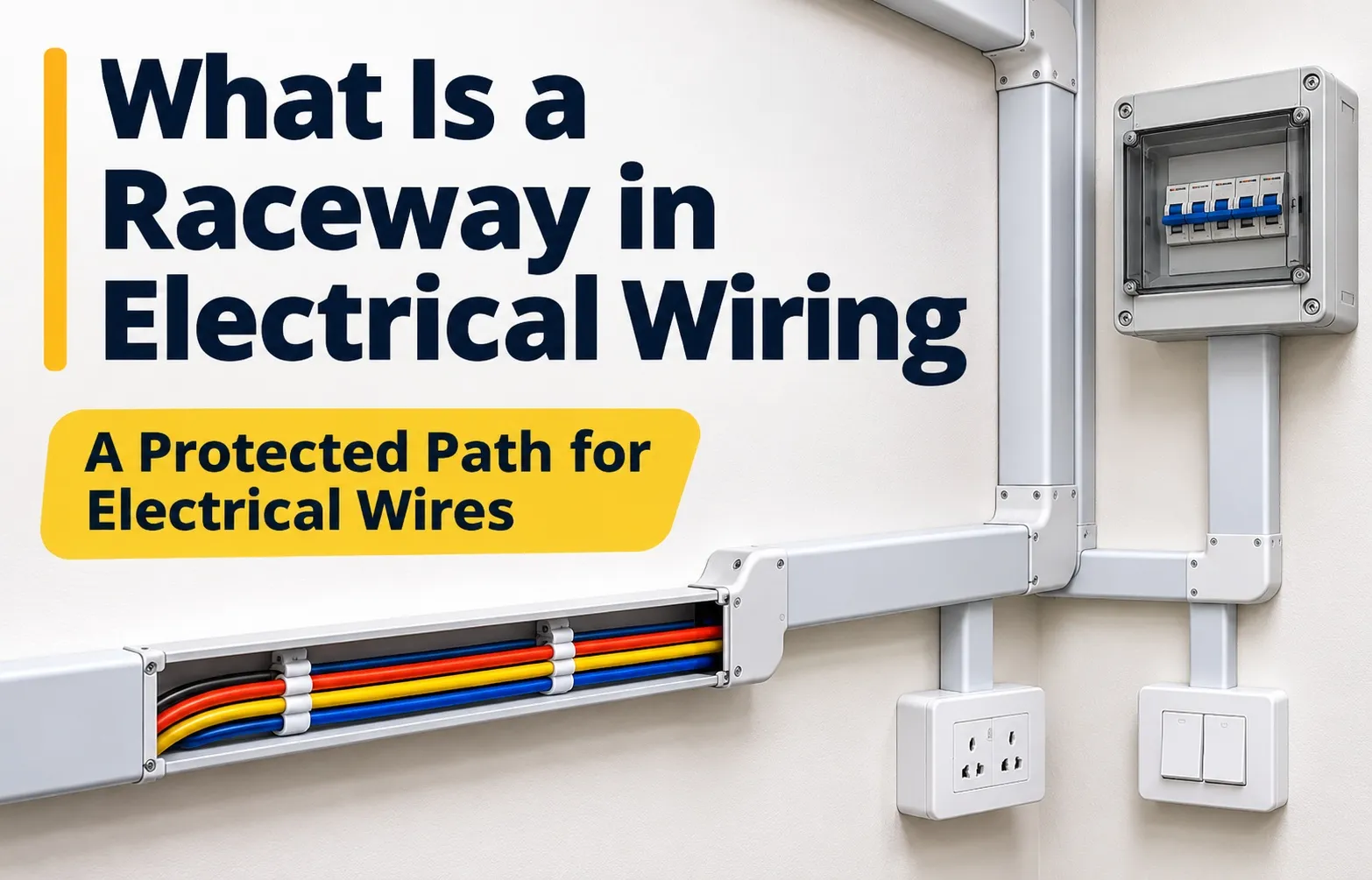 In electrical work, an electrical raceway is an enclosed channel of metal or nonmetallic material designed to hold and protect insulated conductors, cables, or busbars. Under the National Electrical Code (NEC) and NEC Article 100, it creates a safe routing pathway that prevents physical damage, simplifies maintenance, and supports reliable circuit performance.
Understanding what is a raceway in wiring starts with recognizing how it shields live circuits from everyday hazards. Unprotected wiring inside walls, garages, or industrial spaces faces constant risks from impact, abrasion, and environmental stress.
- Physical impact protection: Shields conductors and cables from ladders, tools, carts, and accidental strikes in exposed or high-traffic areas.
- Moisture, heat, and corrosion defense: Helps keep water, dampness, and harsh ambient conditions away from conductor insulation when paired with proper fittings.
- Clean wire organization: Groups multiple conductors or cables along a defined path so technicians can trace, service, or expand circuits safely.
- Code compliance: Meets NEC Article 100 and broader installation rules required for safe residential, commercial, and industrial inspections.
What Is an Example of a Raceway?
Knowing what is an example of a raceway helps clarify how the term applies across different buildings and setups. A raceway can be a round conduit carrying branch circuits in a shop, a rectangular metal trough in a mechanical room, or a low-profile wall channel hiding cables.
In workshop and job-site runs, I have seen unenclosed cables rubbed down to bare copper within weeks when brushed against rough concrete, shelving brackets, or moving equipment. Putting those same conductors inside a properly supported raceway stops jacket wear before a short circuit or shock hazard develops.
- Garage and commercial conduit runs: Steel or PVC conduit routing power circuits along block walls, ceilings, or outdoor equipment pads.
- Surface-mounted wall raceways: Low-profile channels fastened over drywall or masonry in older homes when cutting open plaster is impractical.
- Industrial wireways and busbar enclosures: Enclosed rectangular channels or busbars organizing multiple heavy feeders in control rooms and plants.
- Desk and entertainment cord channels: Enclosed channels routing power and low-voltage cords along baseboards or workbenches to prevent tripping and cable kinks.
Common Types of Electrical Raceways (Metallic, Nonmetallic & Surface)
Understanding the main types of raceways electrical installers use starts with material strength, moisture exposure, and mounting style. Selection spans heavy industrial metal conduit, corrosion-resistant nonmetallic tubing, low-profile wall or floor cord channels, and enclosed rectangular wireways.
Metallic Conduit and Tubing (EMT, RMC, IMC, FMC)
Metal raceway electrical options deliver strong mechanical protection for commercial, industrial, and exposed residential wiring. When pulling conductors through long metallic runs, clean reamed pipe ends and proper bend radii keep wire insulation from snagging on couplings or sharp edges.
- EMT (Electrical Metallic Tubing): Lightweight thin-wall steel or aluminum tubing joined with set-screw or compression fittings for indoor commercial and exposed garage circuits.
- RMC (Rigid Metal Conduit): Heavy-wall threaded metal pipe built for severe physical impact, hazardous locations, and demanding outdoor or structural runs.
- IMC (Intermediate Metal Conduit): Thinner and lighter than RMC yet stronger than EMT, offering threaded couplings and tough protection at lower weight.
- FMC (Flexible Metal Conduit): Helical interlocking metal strip tubing that absorbs vibration and handles tight bends near motors, transformers, and equipment whips.
Nonmetallic Conduit and Tubing (PVC, ENT, LFNC)
Nonmetallic raceways resist rust and chemical corrosion, making them common for damp areas, underground trenching, and concrete encasement. Because plastics expand and contract with temperature swings more than steel, installers must account for thermal movement and proper strap spacing.
- PVC (Polyvinyl Chloride): Rigid plastic conduit solvent-welded at joints for underground feeders, outdoor runs, and wet or corrosive environments.
- ENT (Electrical Nonmetallic Tubing): Flexible, corrugated flame-retardant plastic tubing often fished inside walls, ceilings, or slab pours where quick bends save time.
- LFNC (Liquidtight Flexible Nonmetallic Conduit): Smooth or corrugated flexible plastic tubing with liquidtight fittings for damp equipment connections, outdoor HVAC units, and washdown zones.
Surface Raceways, Wireways, and Floor Cord Channels
Surface channels and wireways bridge practical homeowner cord management and commercial wire routing without tearing open finished walls. Low-profile surface raceways suit older homes or desk setups, while rectangular wireways and trunking organize heavy multi-conductor runs in utility spaces.
- Surface raceway and wire channel: Low-profile metal or plastic tracks mounted along walls, baseboards, or workbenches to conceal power and low-voltage cables cleanly.
- Wireway and trunking: Hinged or gasketed rectangular metal channels that hold numerous conductors side by side for easy splicing, inspection, or circuit additions.
- Cable raceway floor: Beveled or ramped floor channels that cover cords across walkways and offices to reduce trip hazards and crush damage.
Quick Comparison Table: Raceway Categories by Material, Environment & Use Case
Raceway vs. Conduit vs. Cable Tray Key Differences Explained
Understanding the difference between a raceway and a conduit comes down to scope: every conduit is a raceway, but not every raceway is a conduit. A cable tray is different again because it acts as an open support system rather than an enclosed channel.
Does Conduit Count as a Raceway?
Yes, conduit counts as a raceway because a conduit or tubing run forms an enclosed channel built to hold and protect electrical conductors. However, raceway is the broader umbrella term that also covers rectangular wireways, surface channels, and busbar enclosures.
Treating conduit as the only raceway causes confusion when planning commercial or renovation layouts. Use round conduit or tubing when you need a tubular pathway, and choose non-tubular raceways when rectangular or low-profile routing fits better.
- All conduits are raceways: EMT, RMC, IMC, FMC, PVC, ENT, and LFNC all qualify as enclosed raceways when installed properly.
- Not all raceways are conduits: Surface-mounted wall channels, rectangular wireways, and underfloor channels are raceways without being round conduit.
- Why the distinction matters: Sizing rules, fittings, and mounting hardware differ between cylindrical tubing and rectangular or surface channels.
Electrical Raceway vs. Cable Tray
The core difference in an electrical raceway vs cable tray comparison is that a raceway is an enclosed channel, while a cable tray is an open support system governed under NEC Article 392. In facilities and industrial plants, engineers choose a cable tray when routing heavy, accessible cable bundles overhead and a raceway when conductors need full enclosure.
On commercial and plant walk-throughs, I see cable trays favored where technicians need easy visual checks and future cable additions along long overhead spans. By contrast, enclosed raceways are preferred where cables face direct impact, tighter routing rules, or single-conductor protection requirements.
- Enclosure vs. open support: A raceway encloses conductors or cables along its path, whereas a cable tray supports listed cables on ladder, ventilated, or solid-bottom rungs or troughs under NEC Article 392.
- Cable types and access: Cable trays hold suited power, control, and data cables with open airflow and easy layout changes, while raceways house individual conductors or cables inside a defined housing.
- Protection trade-offs: Enclosed raceways guard against direct contact and localized hazards, while cable trays prioritize high-capacity routing and accessibility over full enclosure.
Side-by-Side Comparison: Raceway vs. Conduit vs. Cable Tray
Essential NEC Rules Grounding, Bend Limits & Fill Capacity
Following National Electrical Code rules under NEC Article 300 keeps raceway installations safe to pull, cool properly, and clear fault currents reliably. Reviewing raceway technical guidance from Mike Holt Enterprises raceway resources helps align field work with established code standards.
Equipment Grounding Conductor (EGC): Metal vs. Nonmetallic Raceways
Eligible metallic raceways can act as an Equipment Grounding Conductor (EGC), whereas nonmetallic raceways always require a separate grounding wire pulled alongside circuit conductors. Verifying continuous bonding at couplings, boxes, and terminations prevents high-resistance fault paths that could delay breaker trip.
- Metallic raceways as an EGC: Listed metal conduits and raceways provide a low-impedance fault path when fittings, locknuts, and bushings stay tight and properly bonded.
- Nonmetallic raceways and grounding wire: PVC, ENT, and LFNC do not conduct fault current on their own, so you must pull a dedicated copper or aluminum grounding wire.
- Grounding continuity checks: Loose set screws, painted knockouts, or missing bonding jumpers compromise safety even when a metal raceway looks intact.
The 360-Degree Bend Limit and Pull-Point Planning
Raceway runs between pull points—such as junction boxes, pull boxes, or conduit bodies—cannot exceed a 360-degree bend limit in total sweeps and offsets. In real installations, pushing past 360 degrees spikes pulling tension, scrapes conductor insulation, and can trap wire inside a run.
- Count every angle: Add up all 90-degree bends, 45-degree offsets, and saddles between two consecutive pull points before cutting pipe.
- Place pull points smartly: Install a pull box or conduit body along long or multi-turn routes so installers can feed and pull wire without straining jackets.
- Mind bend radius: Tighter-than-spec bends increase sidewall pressure during pulls and make future wire replacements harder.
Conduit Fill Limits and Safe Installation Practices
Respecting conduit fill rules prevents overcrowded raceways from trapping heat and damaging wire insulation during normal loads. Electrical safety requires strict adherence to code and local permits, so hire a licensed electrician whenever installing, altering, or grounding building wiring.
- Prevent overcrowding and heat buildup: Leaving adequate open cross-sectional space lets heat dissipate and allows conductors to pull smoothly without wedging.
- Follow NEC Article 300 fundamentals: Support raceways at required intervals, protect against physical damage, and match fittings to the environment.
- Hire a licensed electrician: Working around live service panels, fault currents, or permitted circuits carries shock and fire risks—bring in a licensed electrician for code-compliant installation.
Code & DIY Edge Cases — FAQ (Romex, Panels, Fixtures & Stud Bays)
Answering can you run romex through a raceway, whether enclosures can pass through wiring, and how framing spaces differ from raceways prevents costly code violations. Field experience shows these edge cases trip up both homeowners and rushed remodelers during rough-in and inspection.
Can You Run Romex Through a Raceway?
Yes, you can run Romex (NM-B cable) inside a raceway for physical protection in dry indoor locations, provided you follow fill limits, derating rules, and sleeve or raceway guidelines. Never route NM-B cable through a raceway in wet or underground locations, even if the conduit itself is buried or watertight.
- Dry-location protection only: Romex is rated for dry interior spaces, so moisture inside an outdoor or underground raceway remains a code violation.
- Watch fill and heat limits: Multi-conductor cables take up more cross-sectional area than individual THHN wires and can overheat if crammed into undersized sleeves.
- Use proper bushings and ends: Install smooth bushings or fittings at raceway ends so cable jackets do not chafe during pulls or thermal movement.
Can You Use an Electrical Panel, Disconnect Switch, or Light Fixture as a Raceway?
Generally no unless the specific enclosure or luminaire is listed and approved for feed-through conductors with sufficient wiring space. Treating a panel, disconnect switch, or fixture housing as a general pass-through risks overcrowding terminals, blocking service access, and failing inspection.
- Can I use an electrical panel as a raceway: Only when code provisions and panel listing permit feed-through conductors without violating allowable conductor fill and gutter space.
- Can you use a disconnect switch as a raceway: Do not route unrelated branch or feeder circuits through a disconnect switch unless the enclosure is rated and sized for pass-through wiring.
- Can I use a light fixture as a raceway: Only fixtures listed for through-wiring can carry branch conductors past the fixture, and only within their marked temperature and conductor limits.
Is a Stud Bay Considered a Raceway, and What Is the 36-Inch Rule for Electrical Panels?
No, a stud bay is a wall framing cavity rather than an electrical raceway, as electricians routinely point out when discussing concealed residential framing. Separately, the 36 inch rule for electrical panels requires keeping at least 36 inches of clear working clearance in front of panel equipment for safe operation and servicing.
- Is a stud bay considered a raceway: A stud bay is an open structural space between studs—cables run through framing bays must still be stapled or protected per code rather than treated as a listed raceway.
- 36-inch working clearance rule: Keep boxes, shelving, water heaters, and equipment out of the required working clearance zone in front of electrical panels.
- Practical job-site takeaway: Maintain unobstructed floor access and proper cable protection before closing walls or signing off on a remodel.

Home Improvement Researchers & Guides Editors
Meet the Nest Team, a collective of dedicated researchers, home improvement enthusiasts, and industry writers sharing practical guides, thorough category research, and trusted solutions for residential repairs and thoughtful home upkeep.