Cheap vs Expensive Toilet at a Glance
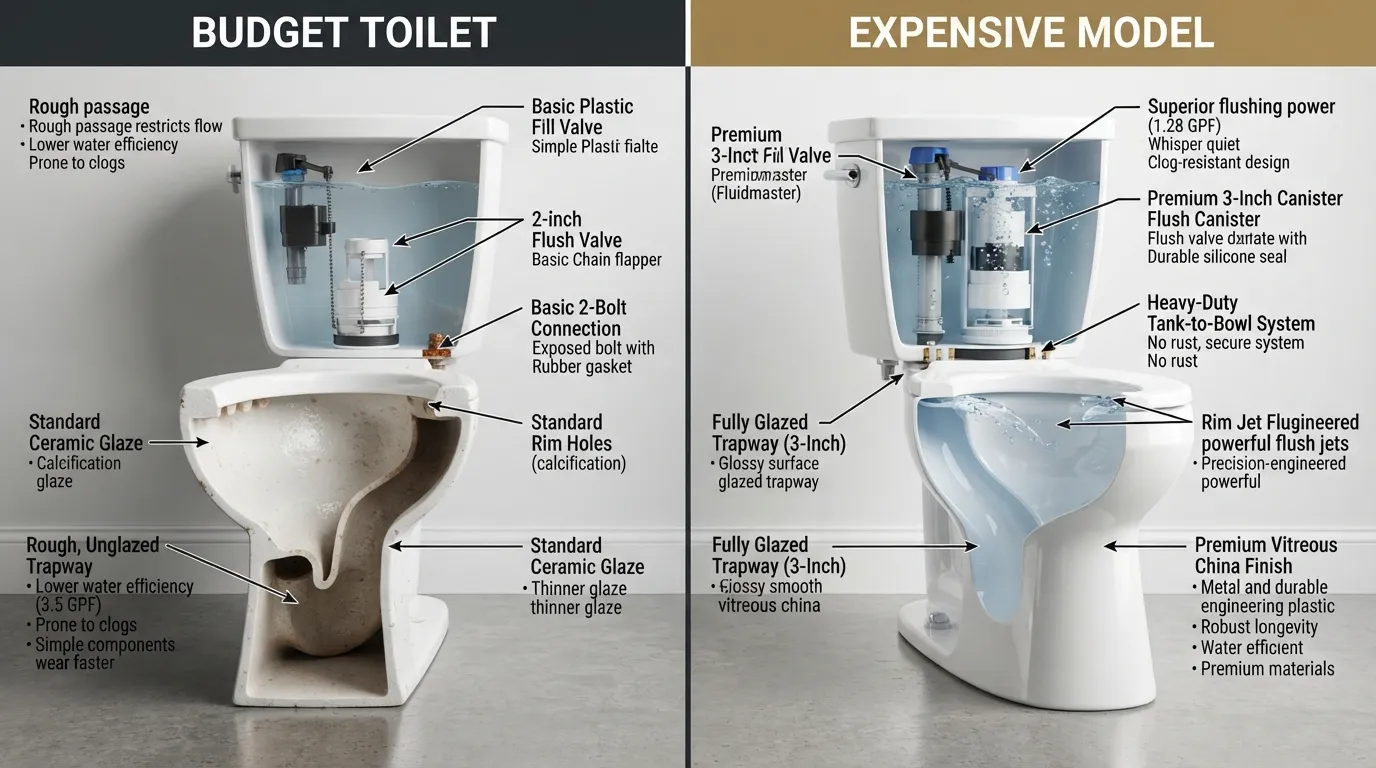
The primary difference between a cheap ($90–$150) and an expensive ($250–$500+) toilet lies in internal engineering, ceramic quality, and long-term reliability rather than basic flushing power. Federal regulations cap all modern toilets at 1.28 gallons per flush (GPF), meaning both price tiers meet the same baseline water-efficiency standards.
Higher-priced models achieve superior performance through advanced manufacturing processes, premium materials, and better hydraulic design. Investing more upfront typically eliminates common plumbing headaches like frequent clogs, leaking flush valves, and premature hairline cracks in the porcelain.
The Core Difference Glaze Trapway & Durability
Budget toilets often use standard, porous ceramic finishes that accumulate mineral deposits and waste residue over time. This leads to stubborn staining and requires harsh chemical cleaning agents that can eventually degrade internal rubber flappers and seals.
Expensive toilets utilize high-temperature vitreous china fired with proprietary ion-barrier ceramic glazes. These ultra-smooth surfaces create a hydrophobic barrier that prevents waste from sticking, ensuring a cleaner bowl with every flush while drastically reducing maintenance.
- Trapway Quality: Cheap toilets feature narrow, rough trapways that catch debris, whereas expensive models use fully glazed, wide trapways designed for seamless waste evacuation.
- Construction Style: Budget units are predominantly two-piece designs with separate tanks and bowls, while premium options frequently offer sleek, one-piece or skirted designs that are easier to clean.
- Hardware Durability: Expensive toilets include solid brass or heavy-duty plastic fill and flush valves, whereas cheap units use lightweight plastic components prone to warping.
Cheap $90–$150 vs Expensive $250–$500+ Key Differences Table
What Actually Makes a Toilet Expensive”?
High-end toilets command premium prices not because of luxury branding alone, but due to advanced manufacturing techniques, proprietary glaze technologies, and superior hydraulic engineering. Investing in an expensive model delivers long-term value through enhanced clog resistance, easier cleaning, and significantly greater durability.
Ceramic Glaze Quality Why Some Bowls Stay Cleaner Longer
Superior ceramic glazing is the primary factor separating budget bowls from luxury fixtures. High-end manufacturers fire their porcelain at extremely high temperatures and apply multiple layers of micro-smooth glaze, creating a glass-like surface that prevents waste and minerals from adhering.
- Vitreous China Fusion: Premium glaze fuses permanently with the porcelain body during kiln firing, ensuring it won’t chip or wear away over time.
- Microscopic Pores: Budget toilets often feature microscopic surface pores that trap microscopic bacteria and organic residue, causing persistent staining.
- Reduced Chemical Reliance: Smooth, high-grade glaze allows bowls to remain spotless with minimal scrubbing and fewer harsh cleaning chemicals.
SanaGloss & Advanced Coatings Explained
Proprietary surface treatments like Toto’s SanaGloss (marketed as CeFiTect in some regions) take porcelain smoothness a step further by adding an ionized ion-barrier layer. This advanced technology creates a hydrophilic surface, meaning water spreads completely flat across the bowl to easily wash away debris.
- Ion Barrier Protection: Permanently alters the surface charge of the ceramic to repel particulate matter instantly upon contact.
- Self-Cleaning Properties: Combines with every flush to rinse away waste efficiently without leaving behind stubborn residue streaks.
- Long-Term Durability: Engineered to withstand thousands of cleaning cycles without degrading the microscopic barrier properties.
Trapway Design The Hidden S-Curve That Prevents Clogs
The trapway is the internal S-shaped channel responsible for safely evacuating waste from the bowl to the drain line. Expensive toilets feature fully glazed, wider, and computer-optimized trapways that streamline water flow and eliminate hidden friction points.
- Fully Glazed Interiors: Unlike cheap models with rough, unglazed internal trapways, premium versions prevent waste from catching or snagging mid-bend.
- Uniform Diameter: Expensive models maintain a consistent width throughout the entire S-curve, preventing narrow choke points where clogs typically form.
- Optimized Jet Siphon: Precision-engineered trapway geometry maximizes gravitational pull and suction velocity for instantaneous clearing.
Does a Higher Price Mean More Flushing Power? The GPF Law Myth
Federal regulations mandate that all modern residential toilets manufactured in the United States consume a maximum of 1.28 gallons per flush (GPF), regardless of price point. Therefore, a higher price tag does not mean the toilet uses more water; instead, it means the engineering is vastly superior at utilizing that exact volume of water.
- Hydraulic Efficiency: Expensive toilets maximize every single drop of the mandated 1.28 GPF using pressurized tanks, rim-jet placement, or dual-cyclone flushing systems.
- Energy Conservation vs. Power: Premium units redirect water momentum effectively to clean the bowl completely on the first try, eliminating double-flushing waste.
- Regulatory Compliance: Both budget and luxury units adhere strictly to federal water conservation laws while achieving radically different performance results.
Build Quality Weight & Installation Differences
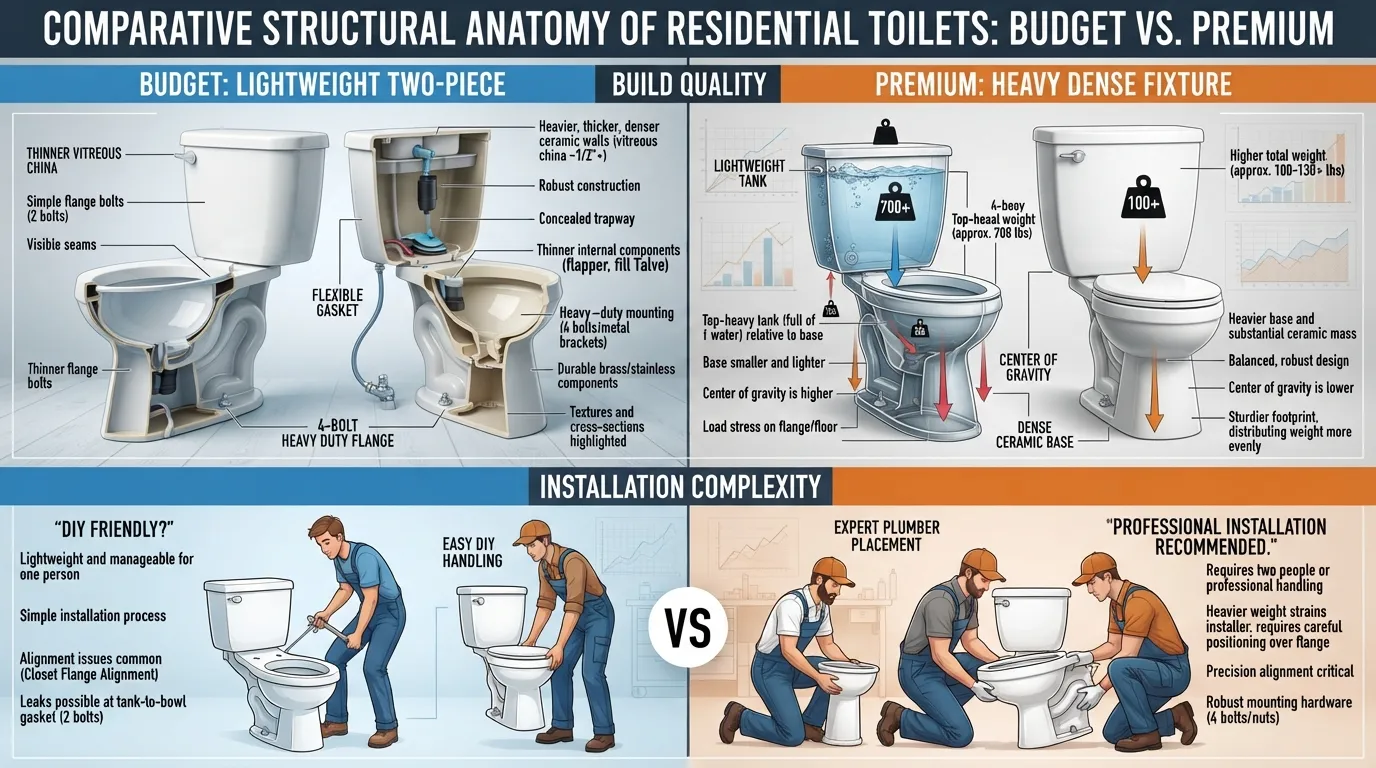
Understanding the mechanical and physical differences between modern toilet designs prevents costly installation errors and long-term structural issues. Build quality directly dictates product lifespan, subfloor stress, and the complexity required during the setup process.
One-Piece vs Two-Piece Toilets Which Is Right for You?
One-piece toilets fuse the tank and bowl into a single seamless unit, offering enhanced durability and effortless cleaning. Two-piece models feature separate tanks bolted to the bowl, making them significantly lighter and easier to transport during remodeling projects.
- One-Piece Benefits: Eliminates the rubber tank-to-bowl gasket leak point, features a sleek low-profile aesthetic, and wipes clean instantly without crevices.
- Two-Piece Benefits: More affordable upfront, replacement parts are universally accessible, and modular transport allows easy maneuvering up narrow staircases.
- Durability Factor: Both designs offer reliable performance when paired with quality internal flush valves and durable porcelain glazes.
Why Do Premium Toilets Weigh 120+ lbs?
Heavy-duty porcelain structures weighing 120 pounds or more utilize denser, higher-grade vitreous china and reinforced trapways. This extra mass absorbs acoustic resonance during flushing and prevents micro-cracking under daily household weight loads.
- Porcelain Density: Thicker clay walls require longer kiln-firing cycles, resulting in a completely non-porous, stain-resistant glass-like finish.
- Concealed Trapways: Skirted designs require massive exterior architectural walls to hide the internal discharge path, adding considerable dead weight.
- Structural Integrity: Heavy frames anchor securely to floor flanges without shifting or flexing when subjected to heavy dynamic loads.
Installation Risk Why Heavier Skirted Models Are Harder to Install
Skirted models and ultra-heavy configurations obscure the mounting bolt channels, forcing installers to work via blind-connection systems or specialized mounting brackets. This lack of direct visibility drastically increases the risk of misalignment, cracked porcelain, and wax ring failure.
- Blind Mounting Brackets: Installers must secure side-mount brackets first and slide the heavy unit backward, relying purely on spatial memory.
- Porcelain Fracture Risk: Over-tightening mounting bolts on heavy units creates localized stress points, instantly shattering the ceramic base.
- Wax Ring Compression: Heavy units require precise vertical drops to seat the wax seal evenly on the first attempt without second-guessing alignment.
DIY vs Professional Installation What You Should Know
Standard two-piece toilets under 80 pounds are manageable DIY weekend projects, whereas 120-pound skirted units demand professional two-person handling to avoid personal injury or property damage. Assess your physical capability and bathroom layout constraints before committing to a DIY approach.
- DIY Viability: Standard configurations are suitable for experienced homeowners with a helper, a level, and basic plumbing tools.
- Professional Requirement: Complex skirted designs, uneven subfloors, or fragile tile installations require licensed plumbers equipped with lifting gear.
- Liability Protection: Professional installation guarantees water-tight seals and covers potential subfloor water damage under contractor warranties.
The Hidden Costs of a Cheap Toilet
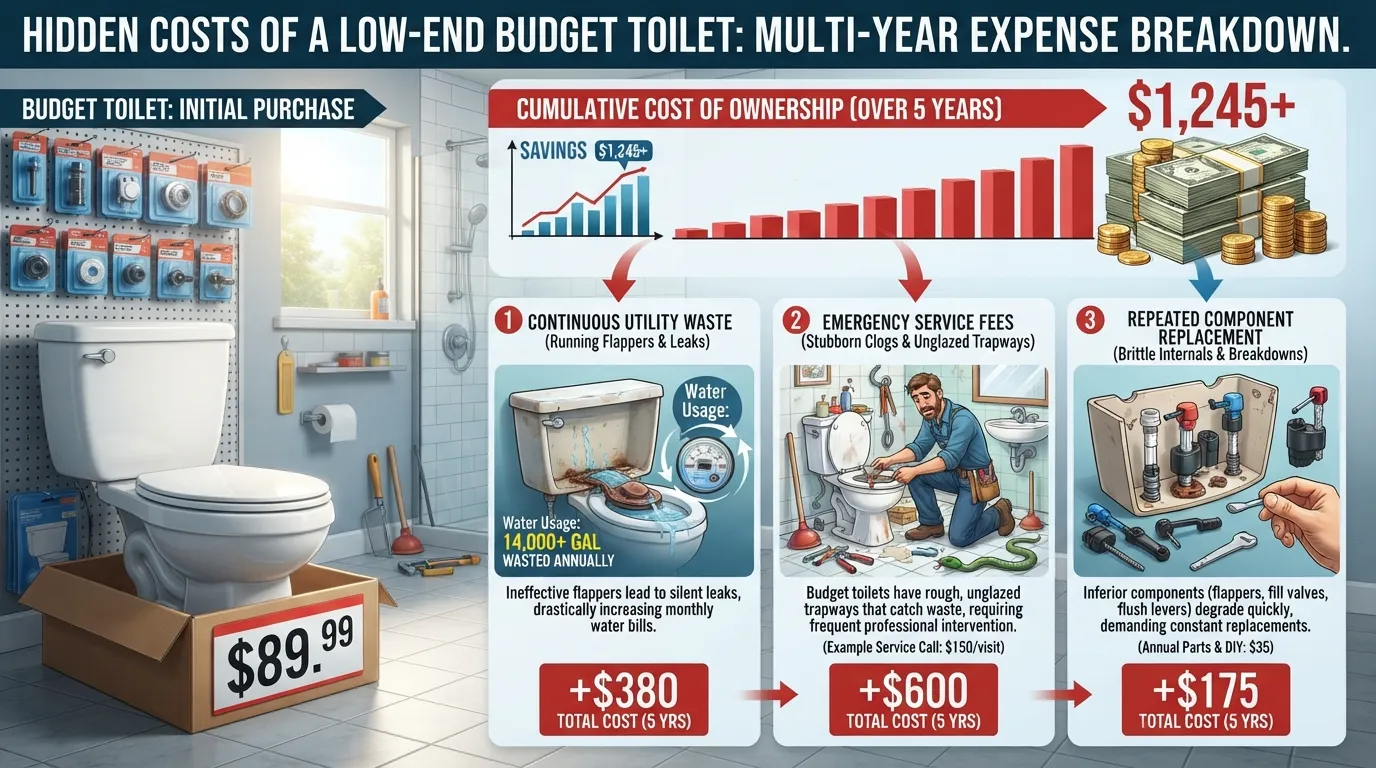
Choosing a budget fixture often masks long-term financial drains through inflated water bills, recurring plumber call-out fees, and fragile internal components. True economy extends far beyond the initial checkout price.
Higher Water Bills Over Time The Real Math
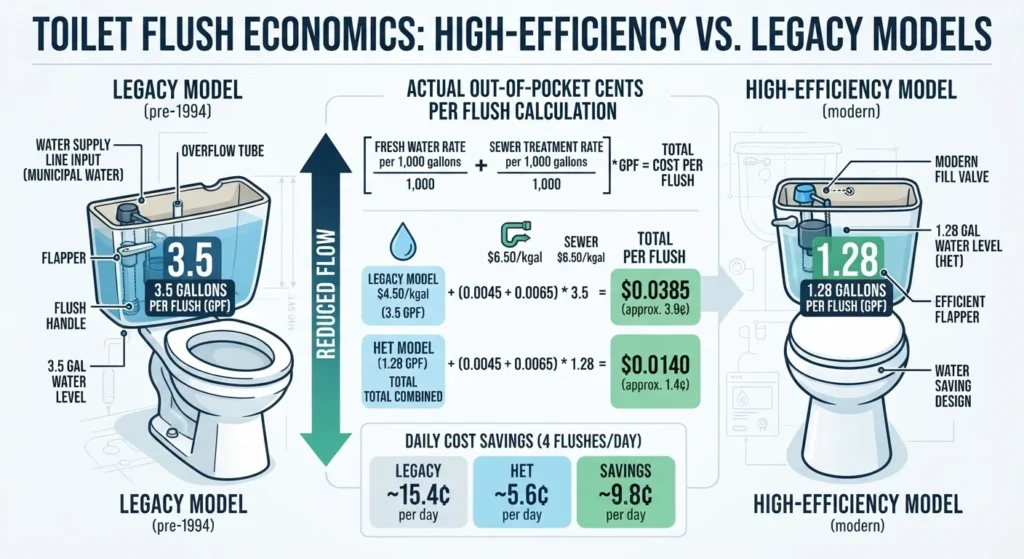
Inconsistent seals and warped flappers on budget units frequently cause silent, continuous leaks that waste hundreds of gallons daily. Over a single billing cycle, this hidden water loss quietly inflates municipal utility costs.
- Silent Tank Leaks: Sub-standard flappers degrade rapidly under standard chemical-based bowl cleaners, allowing water to bleed continuously from the tank to the drain.
- Inefficient Trapways: Older or poorly engineered cheap porcelain designs often demand double-flushing to clear solid waste, drastically multiplying water usage per event.
- Cumulative Expense: A minor continuous leak can easily tack an extra $10 to $30 onto monthly water statements, erasing any initial hardware savings within the first year.
Frequent Clogs & Plumber Call Out Costs
Inadequate trapway glazing and narrow siphon jets on discount models invite frequent blockages that standard plungers struggle to clear. Relying on professional intervention quickly negates any upfront savings.
- Sub-Optimal Trap Design: Cheap fixtures frequently feature unglazed or partially glazed internal trapways, creating surface friction that traps solid waste.
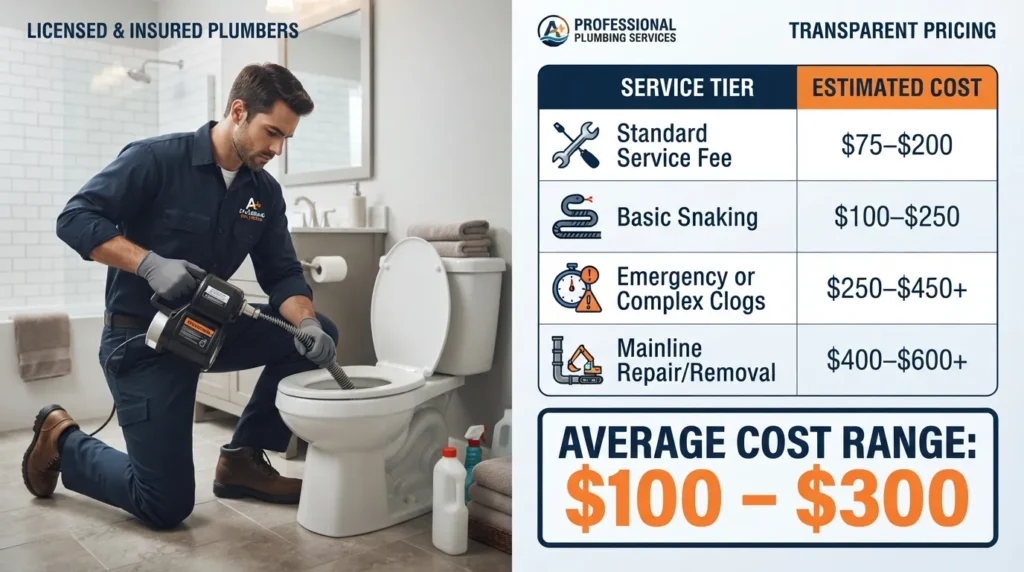
- Emergency Service Rates: Hiring a licensed plumber for stubborn sewer-line augering or repeated manual clearing typically commands upwards of $150 to $300 per visit.
- Property Damage Risks: Recurring overflows from substandard flushing capacity can warp laminate flooring and ruin subfloors, triggering massive renovation bills.
Replacement Parts Why Generic Guts Fail Sooner
Low-end manufacturing cuts corners on internal hardware, utilizing brittle plastics and thin rubber gaskets that degrade under standard water pressure. Maintenance becomes a repetitive cycle of part swaps.
- Brittle Plastic Assemblies: Cheap tank levers, plastic locknuts, and thin fill-valve shanks crack under normal tightening torque during routine maintenance.
- Sub-Standard Rubber Gaskets: Tank-to-bowl gaskets made from low-grade synthetic rubber dry out, lose elasticity, and leak within months of installation.
- Constant Maintenance Cycles: Homeowners spend valuable weekends troubleshooting running water, buying replacement kits, and disassembling corroded hardware components.
Do a $49 and a $400 Toilet Really Use the Same Flush Valve?
Examining the hardware aisle reveals surprising manufacturing realities regarding internal components across vastly different price tiers. Premium styling rarely correlates with functional internal upgrades.
- Shared Internal Components: Roughly 90% of residential toilets rely on universal third-party fill valves, meaning a budget model and a mid-tier model often utilize identical mechanical guts.
- Where the Money Goes: Higher price tags buy denser vitreous china, quieter pressure-assist mechanisms, designer color glazes, and sleek skirted aesthetics rather than superior valve mechanics.
- Visual Breakdown: Analyze how manufacturing corners are cut and where elite engineering actually matters by reviewing the detailed video asset below.
Price Breakdown What You Get at Every Budget Tier
Determining how much to spend on a new fixture requires balancing upfront investment against long-term reliability and comfort. Understanding feature sets across distinct pricing categories prevents overspending on unnecessary aesthetics.
Budget Tier $90–$150 What You’re Really Getting
Entry-level models from brands like American Standard and Glacier Bay prioritize basic functionality at minimal cost. These fixtures serve well in secondary powder rooms or rental properties with light daily usage.
- Construction Quality: Typically manufactured using lighter-weight vitreous china with two-piece bolted configurations.
- Component Standards: Features basic plastic fill and flush valves that may require sooner maintenance or seal replacements.
- Flush Mechanics: Standard gravity-flush systems that handle regular waste adequately but lack advanced rim-wash jets.
Mid-Range Tier $150–$300 The Sweet Spot for Most Homes
The mid-range market, anchored by reliable Kohler and American Standard options, represents the best value for primary residential bathrooms. These models optimize durability, water efficiency, and ease of cleaning.
- Enhanced Glazing: Advanced ceramic glazes resist staining and mineral buildup far better than budget alternatives.
- Improved Efficiency: High-efficiency WaterSense certified designs that balance strong flushing power with reduced water consumption.
- Better Hardware: Upgraded internal brass or heavy-duty composite hardware that resists corrosion and premature leaking.
Premium Tier $300–$500 Luxury Features Worth Paying For
Higher-end offerings from industry leaders like TOTO and Kohler introduce sophisticated engineering focused on hygiene and seamless aesthetics. Skirted trapways and powerful trap-seal priming highlight this category.
- Concealed Trapways: Smooth, skirted exterior profiles eliminate exterior dust traps and make bathroom cleaning significantly faster.
- Advanced Siphon Jets: Cyclone or double-nozzle flushing technologies scour the bowl completely with every activation.
- Soft-Close Hardware: Premium seats with engineered dampeners that prevent slamming and wear out significantly slower.
Luxury Smart Toilets $500+ Are They Overkill?
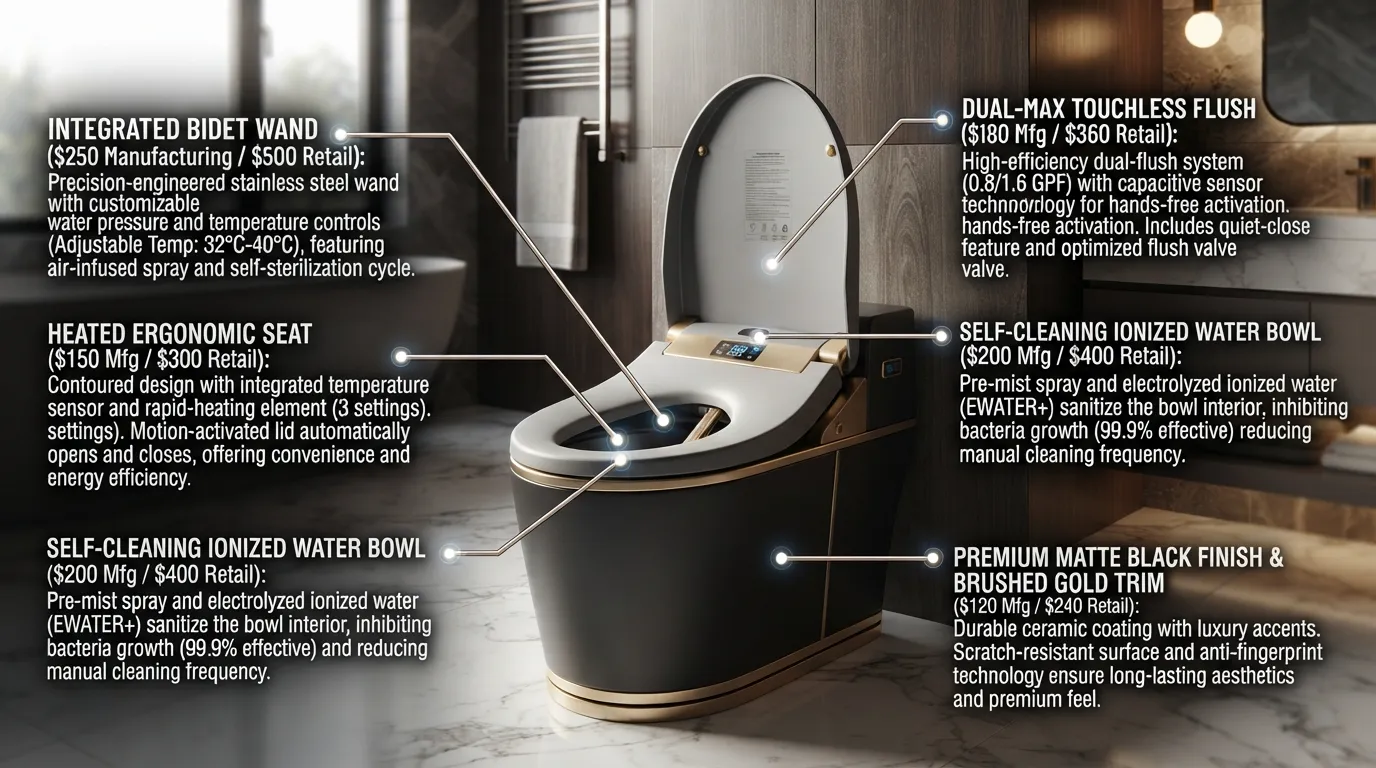
High-end smart fixtures and integrated bidets transform the bathroom experience through automation and personalized hygiene settings. While expensive, they offer undeniable accessibility and comfort advantages.
- Integrated Bidet Functions: Built-in warm water cleansing, adjustable air drying, and heated seats eliminate the need for separate attachments.
- Hands-Free Operation: Motion-activated automatic lids and auto-flush sensors maximize home hygiene and touch-free convenience.
- Value Verdict: Essential for luxury renovations or accessibility needs, but often overkill for standard guest bathrooms.
Difference Between a $200 Toilet and a $400 Toilet Direct Compariso
Stepping up from a standard $200 model to a $400 unit changes structural design and engineering rather than basic functionality. Evaluating these differences helps clarify where the extra money goes.
Which Toilet Should You Buy? Use Case Based Recommendation
Selecting the right fixture requires matching specific household demands with the correct engineering tier. Strategic investment depends entirely on frequency of use and who occupies the space.
Best Toilet for a Guest Bathroom Low Use Space
Low-traffic spaces demand reliable, budget-friendly options that handle occasional visitors without tying up excessive capital. Prioritize functional simplicity over advanced features.
- Ideal Price Range: $100 to $160 standard two-piece models that reliably handle intermittent usage.
- Recommended Focus: Standard round bowls fit tight powder-room layouts better while keeping upfront expenditures minimal.
- Smart Compromise: Skip costly skirted designs and self-cleaning glazes since chemical buildup occurs very slowly with infrequent flushes.
Best Toilet for a Main Family Bathroom Daily Heavy Use
Primary residential bathrooms experience punishing daily traffic, requiring robust internal mechanisms and stain-resistant bowl finishes. Durability and ease of maintenance outweigh initial savings.
- Ideal Price Range: $250 to $400 mid-range or premium fixtures built with reinforced vitreous china.
- Recommended Focus: Look for fully glazed trapways, powerful modern siphon jets, and slow-close antimicrobial seats to withstand heavy family wear.
- Water Efficiency: Ensure WaterSense certification to keep municipal utility bills low despite dozens of daily flushes.
Best Toilet for Rental Properties Landlord’s Perspective
Rental investments demand bulletproof durability, simple maintenance, and universally available replacement parts to minimize tenant disputes and contractor fees.
- Ideal Price Range: $130 to $200 commercial-grade or sturdy standard models from trusted legacy manufacturers.
- Recommended Focus: Avoid complex electronic bidet seats or proprietary push-button top flushes that tenants might break or misuse.
- Standard Parts: Choose models compatible with standard 3-inch flappers and universal fill valves so quick repairs cost under $15.
Is It Worth Spending More on a Toilet? Direct Verdict
Upgrading past the baseline $100 threshold delivers tangible benefits in daily cleaning ease and clog prevention, but spending beyond $400 yields diminishing returns.
- The $200 Threshold: Crossing this line buys superior bowl glazes that drastically cut down manual scrubbing and stubborn mineral staining.
- The $400 Ceiling: Spending past this point primarily covers aesthetic design choices like fully skirted traps or luxury bidet electronics rather than core performance.
- Final Takeaway: Invest around $250 to $300 for a primary bathroom to eliminate chronic clogs and high water bills without paying for unnecessary showroom styling.
Total Cost of Ownership Beyond the Sticker Price
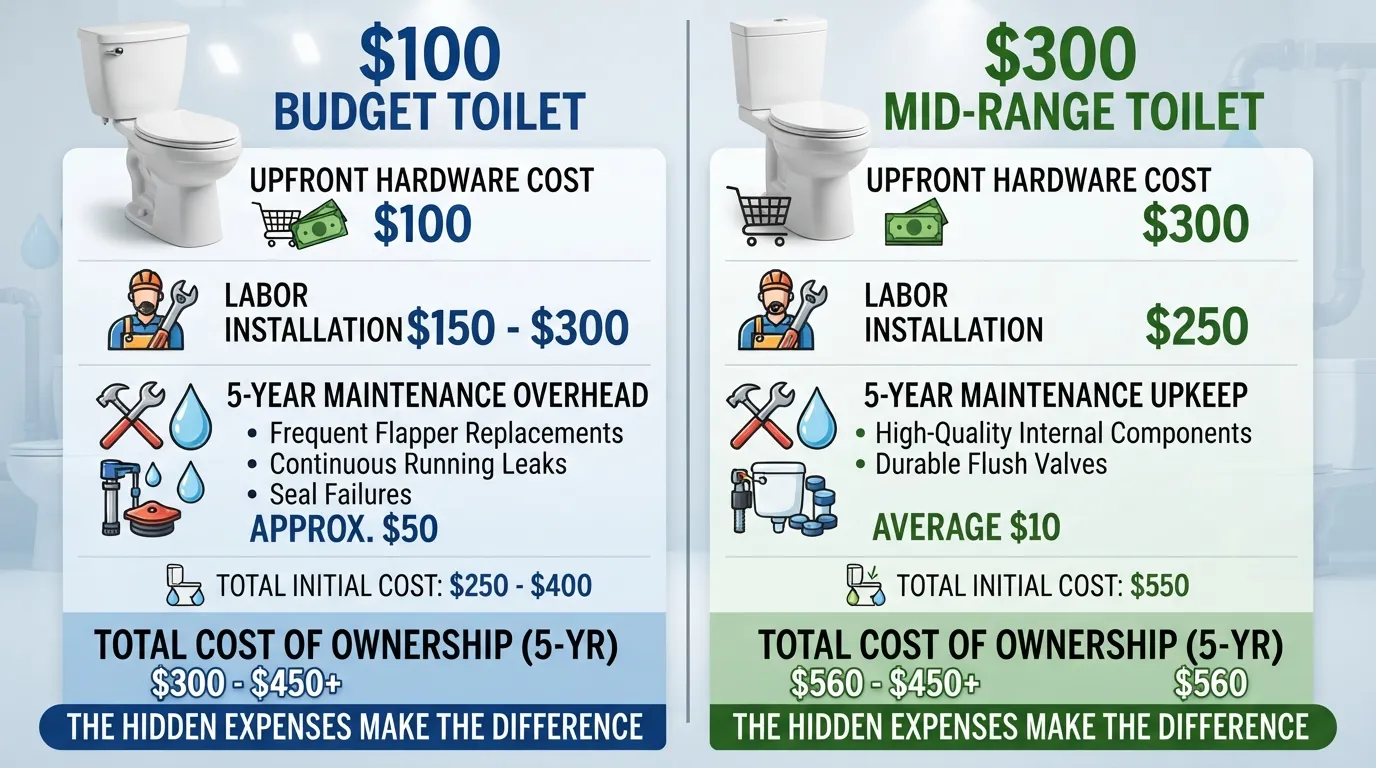
Calculating the true investment of a new bathroom fixture requires looking past the initial shelf price. Professional labor, retail installation fees, and routine maintenance combine to form your actual total cost of ownership.
Average Plumber Installation Charges
Hiring a licensed independent plumber for a standard floor-mounted replacement typically ranges from $250 to $500 for labor alone. Complex configurations or subfloor complications can quickly escalate these figures.
- Standard Labor Range: Expect to pay $180 to $400 for straightforward swaps where existing lines and flanges are fully up to code.
- Disposal & Extra Fees: Hauling away old units and replacing rotted wax rings or corroded shut-off valves typically adds an extra $50 to $150.
- Unforeseen Structural Work: Rusted closet flanges or damaged subflooring from slow base leaks can introduce an extra $100 to $300 in unexpected repair costs.
How Much Does Home Depot Charge to Install a Toilet?
Big-box retailers offer streamlined contracted installation services that bundle scheduling and baseline labor guarantees. Home Depot utilizes vetted local service providers for home improvement projects.
- Baseline Installation Fee: Home Depot typically charges between $150 and $300 for basic drop-in toilet replacement labor.
- Exclusions Apply: This base rate excludes the cost of the physical toilet unit, old unit hauling fees, and custom subfloor or flange modifications.
- Scheduling Advantage: Contracting through major home centers ensures warranty coverage on installation workmanship alongside streamlined customer service options.
How Much Does Lowe’s Charge to Install a Toilet?
Lowe’s provides comparable contracted installation programs designed to simplify bathroom updates without requiring homeowners to vet independent contractors manually.
- Standard Service Rates: Basic professional installation packages generally start around $150 to $250 for straightforward swap-outs.
- Variable Add-Ons: Extra charges apply if technicians must replace supply lines, fix damaged waste flanges, or handle heavy specialty units.
- Promotional Bundles: Keep an eye out for seasonal home-improvement events where major hardware chains discount installation services or bundle delivery fees.
Toilet Price + Installation + Maintenance = Real Cost
Evaluating long-term financial commitments means summing hardware expenses, deployment overhead, and ongoing upkeep over a fixture’s lifespan.
What Real Homeowners Say Community Insights Section
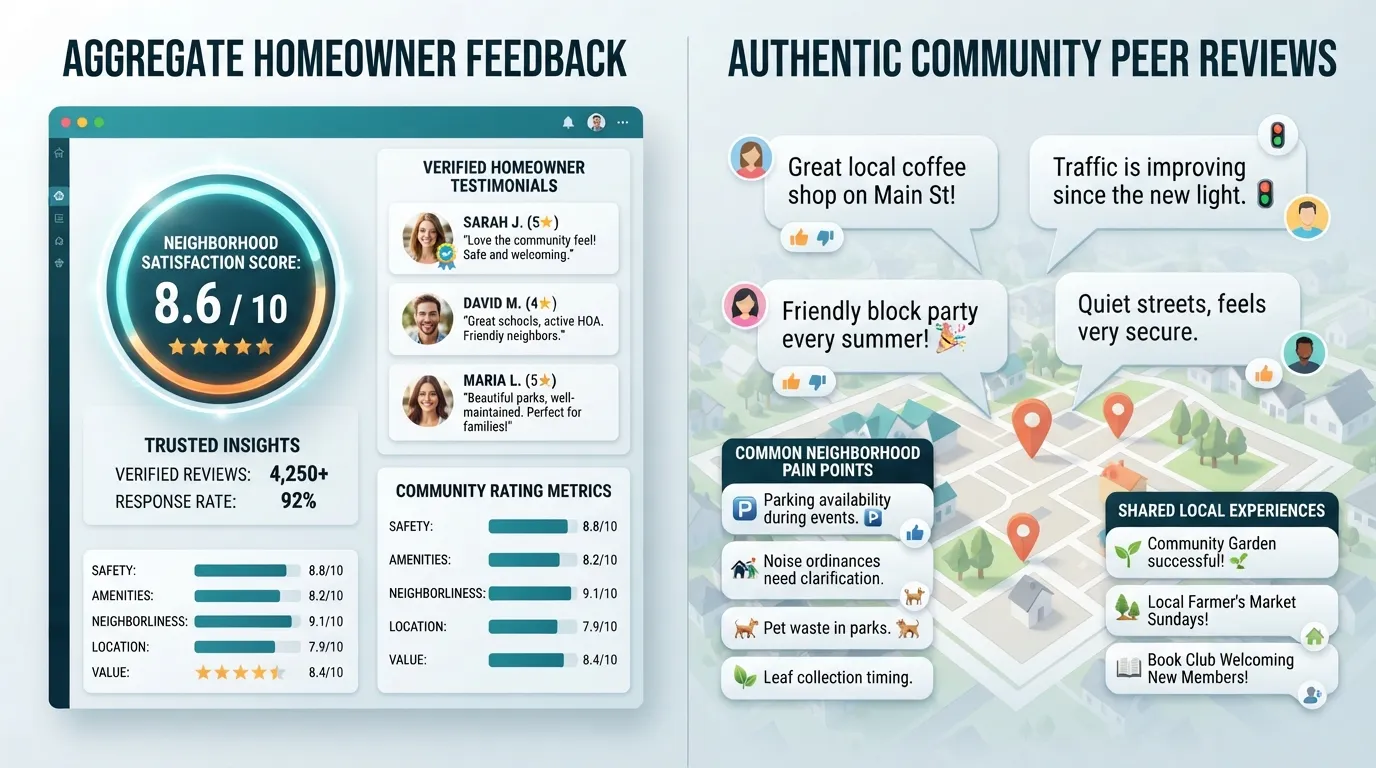
Aggregating feedback from online homeowner forums and renovation communities reveals a practical consensus on budget versus premium fixtures. Real-world experiences often challenge marketing claims made by major hardware manufacturers.
Why Some Homeowners Say Budget Toilets Work Just Fine
Many budget-conscious buyers report that entry-level units handle standard, low-traffic duties without requiring costly upgrades. Basic engineering is often sufficient for secondary powder rooms.
- Adequate Performance: Users note that low-cost units from standard lines manage everyday waste effectively if the trapway is properly glazed.
- Minimal Regret on Price: Homeowners installing affordable fixtures in rental properties or guest baths emphasize that spending under $150 minimizes financial exposure.
- Simple Fixes: When cheap internal parts eventually fail, replacing a flapper or fill valve costs less than $10 at any local hardware store.
Why Others Insist Mid-Range or Premium Is Worth It
Frequent complaints regarding recurring clogs, poor bowl coverage, and cracked tanks drive many users toward trusted mid-tier and high-end investments. Premium porcelain engineering reduces long-term maintenance headaches.
- Eradicating Clogs: Homeowners upgrading to models like the Toto Drake or American Standard Champion frequently highlight zero clogging incidents over years of heavy family use.
- Easier Cleaning: Skirted designs and advanced ion-glazed surfaces earn high praise for drastically cutting down manual scrubbing and mineral stains.
- Durability Factors: Communities often warn against cheap plastics and unglazed traps that trap waste and demand repeated chemical cleaning.
The Balanced Verdict from Real User Experiences
Balancing real-world reviews demonstrates that the sweet spot for most households lies in the $200 to $350 range, avoiding both ultra-cheap pitfalls and overpriced luxury gimmicks.
- Prioritize Engineering Over Brand Prestige: Focus on trapway design, flush valve size (such as 3-inch openings), and water-spot surface area rather than aesthetic wrapper labels.
- Match Location to Quality: Save money on guest baths with light traffic, but invest in robust mid-range porcelain for primary family bathrooms.
- Community Insights Reference: Detailed breakdowns of long-term reliability and owner satisfaction can be explored further via community threads on Reddit HomeImprovement discussions.
Toilet Lifespan & When to Replace
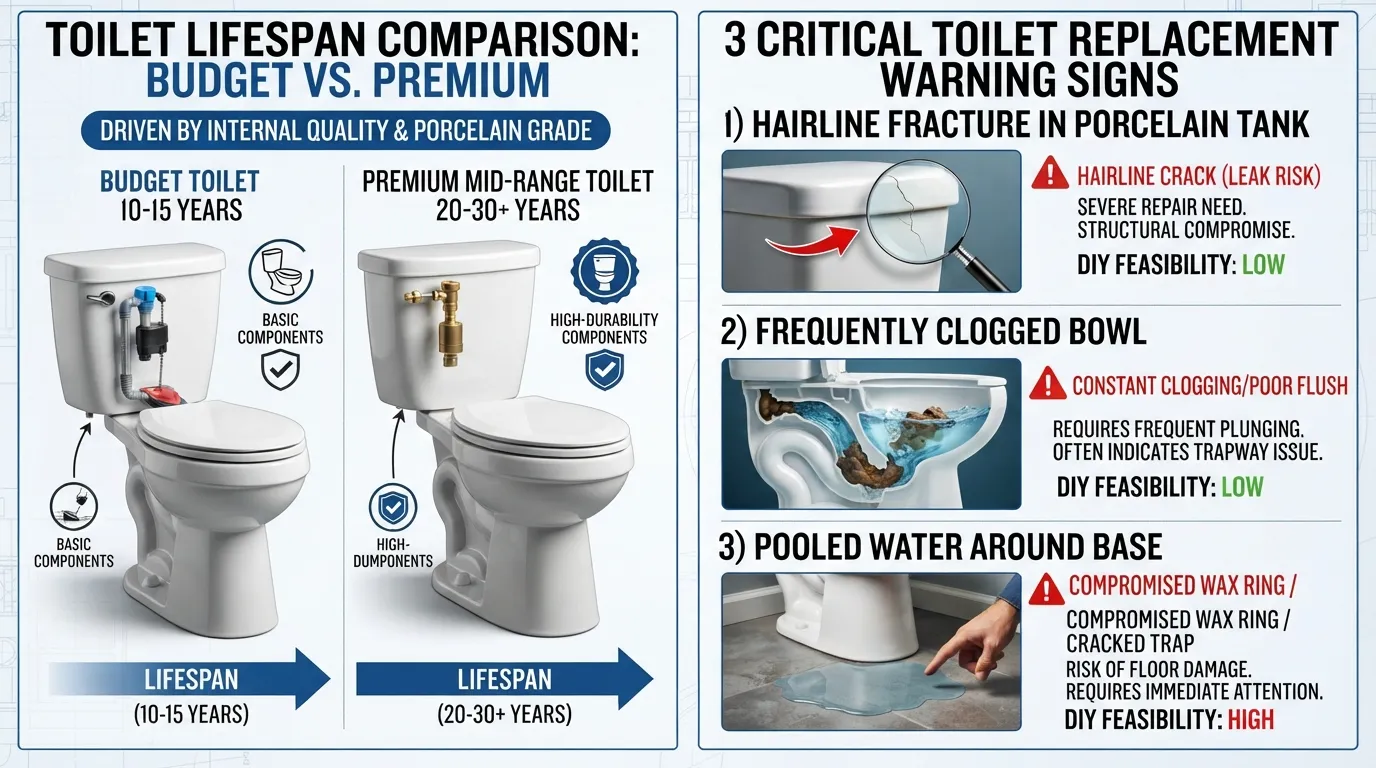
Understanding ceramic aging and mechanical wear helps homeowners determine when routine repairs are no longer cost-effective. While porcelain lasts indefinitely, internal mechanisms and hidden micro-fractures dictate true operational lifespans.
Average Lifespan of a Cheap vs Expensive Toilet
While premium and budget porcelain bodies can physically endure for decades, their internal operational life cycles differ dramatically based on manufacturing grade. Hardware durability determines when your fixture requires a full swap versus minor part replacements.
- Budget Models (10–15 Years): Entry-level fixtures typically feature thinner porcelain, lower-grade internal plastics, and rubber components that degrade faster under continuous chemical exposure.
- Mid-Range & Premium Models (20–30+ Years): High-end vitreous china resists crazing and structural fatigue much longer, often surviving for decades with routine internal part refreshes.
- The Porcelain Paradox: Even if a 20-year-old toilet still flushes, degrading internal water lines, corroded floor flanges, and outdated water-volume consumption often make replacement a smarter financial choice.
Signs Your Old Toilet Needs Replacing
Recognizing structural red flags prevents unexpected household floods, exorbitant water bills, and unhygienic bathroom failures. Certain chronic issues indicate that patching the unit is no longer viable.
- Hairline Cracks in Porcelain: Hidden fractures along the tank or bowl base pose an immediate flood risk and demand a complete emergency replacement.
- Constant Clogging: If your fixture requires plunging multiple times a week despite clear drain lines, the internal trapway is likely failing or improperly glazed.
- Unexplained Floor Puddles: Water pooling around the base that persists after tightening bolts and replacing the wax ring signals a cracked trap footprint or compromised subfloor.
Is Replacing a Toilet a Big Job?
Swapping out an old fixture is a manageable intermediate DIY project for most homeowners, typically requiring two to three hours of work and basic hand tools. Professional assistance is only necessary if subfloor repairs or plumbing relocations are involved.
- The Basic DIY Scope: The process involves shutting off the water supply, draining the tank, unbolting the floor anchors, and setting a fresh wax ring.
- Weight Considerations: Standard two-piece units weigh around 60 to 90 pounds, making a two-person lift helpful for safe maneuvering and positioning.
- Cost vs. Effort: Tackling the installation yourself saves $150 to $300 in contractor labor fees, leaving you with total control over your bathroom hardware upgrade.
Frequently Asked Questions
Addressing common queries regarding pricing tiers, installation costs, and performance differences helps homeowners make confident, well-informed purchasing decisions for their bathroom remodeling projects.
Are More Expensive Toilets Worth It?
Spending more on a toilet is worth it if you prioritize easier cleaning, superior bowl glazes, and reliable clog prevention in high-traffic family bathrooms. However, spending above $400 mostly buys luxury electronic bidet features or skirted designer aesthetics rather than core mechanical upgrades.
- Mid-Tier Value: Models in the $200 to $350 range strike the optimal balance between powerful flushing technology and long-term durability.
- Diminishing Returns: Basic flushing performance remains nearly identical between a $200 unit and a $400 unit, meaning extra costs go toward styling and specialized finishes.
How Much Should You Pay for a Good Toilet?
You should expect to pay between $200 and $300 for a reliable, high-performing toilet suitable for a primary residential bathroom. This price tier ensures fully glazed trapways, efficient WaterSense certification, and durable internal hardware.
- Budget Options ($100–$150): Best reserved for low-use guest bathrooms or rental properties where daily traffic is minimal.
- Sweet Spot ($200–$300): Provides the ideal combination of strong siphon jet flushing and stain-resistant ceramic bowl coatings.
What Is the Best Inexpensive Toilet?
The best inexpensive toilets typically come from legacy manufacturers like American Standard (such as the H2Option line) and Glacier Bay, priced between $100 and $150. These models deliver dependable gravity flushing for tight budgets.
- Core Reliability: Look for standard 2-inch or 3-inch flapper designs that ensure easy and affordable replacement part availability.
- Simple Maintenance: Avoid complex push-button dual-flush mechanisms on ultra-cheap models, as basic lever handles prove more durable.
Which Is Better a 1-Piece or 2-Piece Toilet?
Two-piece toilets are generally better for budget-conscious buyers and easier transport, while one-piece toilets excel in modern aesthetics and effortless cleaning. A two-piece unit separates the tank and bowl, whereas a one-piece model fuses them into a single seamless structure.
- Two-Piece Advantages: Lower initial purchase cost and lighter, more manageable components during DIY installation.
- One-Piece Advantages: Eliminates the pesky tank-to-bowl gap where dust and grime accumulate, making exterior wipe-downs much faster.
What’s the Difference Between a $99 Toilet and a $199+ Toilet That Look the Same?
Although they may appear identical on the showroom floor, a $199+ toilet typically features a fully glazed internal trapway, better-quality internal fill valves, and a more robust ceramic body. A $99 toilet often cuts corners with unglazed trap friction and brittle plastic hardware.
- Trapway Glazing: Fully glazed internal surfaces prevent solid waste from sticking, drastically reducing the frequency of clogs.
- Component Longevity: Higher-tier pricing includes heavier-duty gaskets and reinforced tank levers that resist premature wear and running water leaks.
What Do Plumbers Usually Charge to Install a Toilet?
Independent plumbers typically charge between $250 and $400 for standard toilet replacement labor, excluding the cost of the hardware unit itself. Additional fees may apply if rotten subflooring or corroded waste flanges require immediate repair.
- Retail Installation: Big-box hardware chains like Home Depot and Lowe’s offer standardized installation services ranging from $150 to $300.
- DIY Savings: Taking on the installation yourself eliminates contractor labor expenses entirely, requiring only a wax ring, basic hand tools, and a couple of hours.
Final Verdict Our Recommendation
Navigating the vast array of bathroom fixtures ultimately boils down to balancing upfront investment against daily convenience and long-term reliability. Making the right choice eliminates chronic plumbing headaches while keeping your home remodeling budget fully intact.
Our Bottom-Line Recommendation by Budget
Selecting the ideal fixture depends entirely on room traffic and how long you plan to stay in your current home. Prioritizing targeted spending ensures maximum performance where it matters most.
- For Guest Bathrooms ($100–$150): Opt for a standard, reliable two-piece model from a trusted legacy brand; low daily usage means you can safely bypass luxury add-ons.
- For Main Family Bathrooms ($200–$350): Invest in a mid-range, WaterSense-certified unit with a fully glazed trapway to prevent frequent clogs and heavy mineral buildup under punishing daily traffic.
- For Luxury Renovations ($400+): Choose skirted designs or smart bidet integrations only if you desire modern aesthetics, effortless exterior wiping, and advanced personal hygiene automation.
The One Feature Worth Paying Extra For If You Only Pick One
If your budget restricts you to a single upgrade, make sure it is a fully glazed internal trapway. This single engineering element separates hassle-free fixtures from constant maintenance nightmares.
- Eliminating Surface Friction: A fully glazed trapway ensures solid waste glides smoothly through the drain lines, drastically lowering the risk of unexpected embarrassing clogs.
- Long-Term Peace of Mind: Skipping unglazed budget traps saves you from recurring plunger interventions and costly professional plumber call-out fees down the road.
- Smart Prioritization: While fancy colors and electronic lids are nice luxuries, smooth internal porcelain engineering protects your daily routine and your wallet

Oscar Vance | Master Plumber & Drainage Expert
Meet Oscar Vance, a licensed master plumber sharing practical solutions on residential repairs, preventive maintenance, and thoughtful home upkeep.