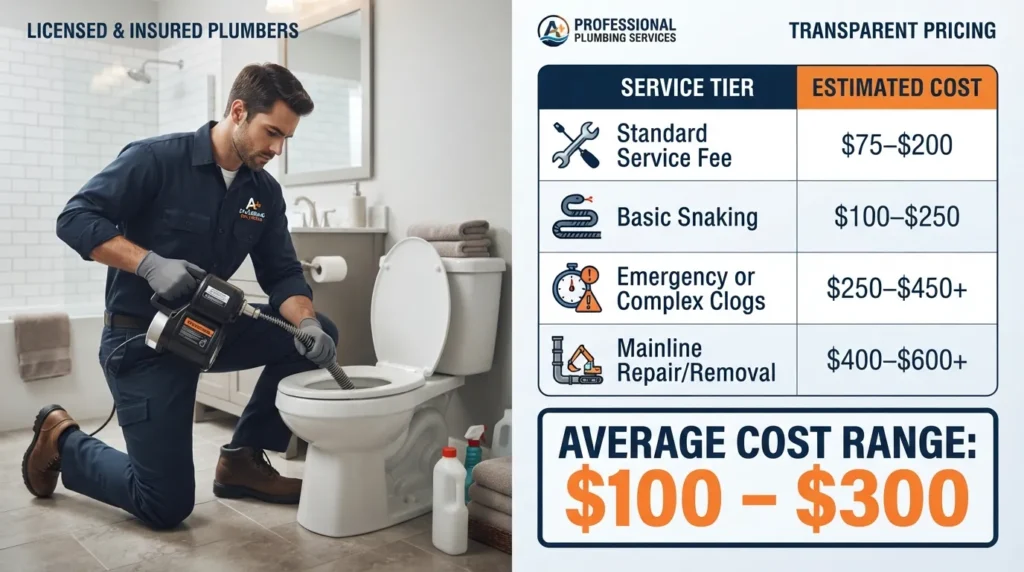
2026 Plumbing Snake Cost Comparison Table
 Choosing between buying, renting, or hiring a professional plumbing snake depends heavily on the severity of the blockage, the depth of the drain line, and your comfort level with heavy equipment. Evaluating the cost-to-benefit ratio across these 8 distinct methods prevents unnecessary spending while ensuring your drainage issues are resolved efficiently.
Rule of Thumb for Decision Making
Maximizing value and protecting your home’s plumbing infrastructure requires adhering to proven selection standards based on clog complexity:
- DIY for surface and localized blockages: Utilize inexpensive manual options like a plastic hair snake (Zip-It) or handheld drum auger for minor sink or tub clogs to keep out-of-pocket costs under $50.
- Rent for deep branch-line challenges: When facing stubborn clogs that exceed manual reach, renting an electric drain snake from major depots like The Home Depot Tool Rental provides high power at a fraction of a service call fee.
- Hire professionals for high-risk main lines: Main sewer line obstructions, structural pipe issues, or recurring backups necessitate expert intervention via a trusted local plumber or a comprehensive Roto-Rooter flat rate service to avoid costly pipe ruptures.
How Much Does It Cost to Buy a Plumbing Snake? (By Type & Length)
Purchasing a plumbing snake requires matching your specific clog location, pipe diameter, and cable length requirements to avoid overpaying for underpowered tools or damaging delicate residential infrastructure. Retail prices range from pocket-friendly $4 plastic strips to heavy-duty professional electric machines exceeding $500.
Plastic Hair Snakes ($4 – $10)
Costing between $4 and $10, plastic hair snakes provide an immediate, chemical-free solution for surface bathroom sink and shower hair clogs. These flexible, barbed strips physically snag hair accumulations near the drain opening without risking corrosion or damaging vulnerable PVC P-traps.
- Superiority over chemicals: Unlike harsh liquid drain openers that degrade rubber seals and pipe joints, barbed plastic strips extract the hair mass safely.
- Ease of use: Simply feed the flexible strip down the drain aperture, twist, and pull upward to extract compacted residue instantly.
- Limitations: Restricted to the top 15 to 20 inches of shallow fixtures; ineffective against deep grease blockages or main line tree roots.
Handheld & 25-Foot Drum Augers ($20 – $60)
Priced between $20 and $60, a 25 ft plumbing snake is the ultimate mid-range tool for resolving kitchen sink and bathtub P-trap clogs. These handheld drum augers utilize flexible 1/4-inch cables that easily navigate tight pipe bends while breaking through localized organic grease and food buildup.
- Manual vs. Drill-Compatible: Models like the RIDGID Power Spin+ and Husky hand augers allow manual cranking or attachment to a cordless drill for high-speed cable rotation.
- Cable Specifications: Features a durable 1/4-inch cable housed within a protective plastic or steel drum to keep dirty cables contained during storage and transport.
- Best Applications: Perfectly sized for secondary drain lines running from kitchen sinks, utility tubs, and bathroom lavatories.
Toilet Closet Augers ($25 – $65)
Retailing from $25 to $65, toilet closet augers are purpose-built tools featuring a vinyl-coated guide tube designed specifically to protect vulnerable porcelain bowls. Never use a standard metal drum snake in a toilet bowl, as exposed steel permanently scratches and shatters ceramic surfaces.
- Porcelain Protection: Integrated rubber bumpers and plastic-coated guards prevent the rigid steel shaft from chipping or cracking expensive bathroom fixtures.
- Engineered Reach: Tools like the Milwaukee Trap Snake and RIDGID closet augers feature a 3-to-6-foot telescoping shaft with a bulbous J-hook head to snag foreign objects trapped in the built-in toilet trapway.
- Operational Tip: Feed the rubber-protected bend gently into the bowl throat before turning the crank handle to clear flush blockages safely.
Heavy-Duty Electric & 100-Foot Drain Snakes ($110 – $500+)
Ranging from $110 to $500+, heavy-duty electric drain snakes and 100 ft drain snake systems conquer severe blockages deep within main sewer lines. These motorized units deliver high-torque rotation through robust 1/2-inch to 3/4-inch steel cables capable of shredding tree roots and heavy grease.
- Budget-Friendly Electric: Brands like VEVOR offer motorized drum machines ($110–$260) with 50-to-100-foot cable sections for budget-conscious homeowners tackling tough main line backups.
- Professional Grade Power: Premium cordless and corded solutions like the Milwaukee M18 FUEL and General Wire Spring machines provide contractor-grade reliability and automatic cable feed control.
- When to Upgrade: Essential for multi-story residential buildings or main lateral lines stretching 50 to 100 feet out to municipal sewer connections.
Where to Buy: Home Depot vs. Lowe’s vs. Harbor Freight vs. Walmart
Major hardware stores and mass retailers offer distinct pricing tiers and brand selections for plumbing snakes, balancing instant local availability with budget options. Comparing inventory across national home improvement centers ensures you secure the exact cable length and power rating required.
- The Home Depot: Features the widest in-store and online selection of professional-grade tools. You can explore live inventory and pricing directly on The Home Depot’s Drain Snakes category page.
- Lowe’s & Ace Hardware: Stock reliable mid-tier brands like Kobalt, Blue Hawk, and RIDGID, ideal for homeowners needing immediate replacement parts or standard hand augers.
- Harbor Freight: Offers budget-friendly manual and electric drum augers under house brands like Pittsburgh, catering to occasional DIYers seeking low upfront costs.
- Walmart: Excellent for inexpensive plastic hair strips and basic 15-to-25-foot manual drum augers with convenient local pickup or shipping options.
How Much Does It Cost to Rent a Plumbing Snake?
Renting an industrial-grade electric drum machine or a 100 ft drain snake Home Depot unit provides heavy-duty main line clearing power for a fraction of retail purchase costs. Rental rates typically range from $50 to $95, making professional-grade clearing accessible for stubborn tree root and mainline blockages.
4-Hour vs. 24-Hour Drain Snake Rental Rates ($52 – $86)
Renting a commercial-grade auto-feed electric auger for a standard 4-hour window typically costs between $52 and $68, while a full 24-hour daily rental runs $75 to $95. Selecting the right rental duration and machine size depends entirely on how far your clog lies from the main cleanout cap.
- 4-Hour Short-Term Rentals: Priced at $52 to $68, this tier is ideal for experienced DIYers who can locate the blockage, operate the machine, and clear the line within a tight timeframe.
- 24-Hour Daily Rentals: Ranging from $75 to $95, daily rates provide breathing room for complex clogs requiring multiple cable passes, enzyme flushing, or line testing.
- Cable Length and Diameter Selection: Standard 50-ft models with 1/2-inch cables handle standard branch lines, whereas a 100 ft drain snake Home Depot unit featuring a robust 5/8-inch cable is mandatory for deep lateral sewer lines.
Hidden Rental Costs to Factor In (Deposits, Blades & PPE)
Budgeting for a mechanical drain cleaning rental requires factoring in upfront security deposits, specialized cutting attachments, and essential personal protective equipment. Preparing these items beforehand ensures your rental window is spent clearing the line rather than running errands.
- Refundable Security Deposits: Rental desks place a temporary hold of $50 to $150 on your credit card, which is fully refunded upon returning the machine clean and undamaged.
- Cutting Head Attachments: Verify that your rental package includes versatile attachments, such as a root cutter blade for intrusive tree roots and C-cutters for hardened grease deposits.
- Mandatory Safety Gear (Leather-Palm Gloves): Always equip heavy-duty leather-palm gloves; never wear cloth or fabric work gloves, which can easily catch on the spinning steel cable and drag your hand into the rotating drum.
- Main Cleanout Cap Preparation: Locate, clear away debris from, and loosen your property’s main cleanout cap before picking up the equipment to maximize your hourly rental value.
How to Choose & Safely Use the Right Snake (Preventing $3,000 Pipe Damage)
Selecting the correct drain cleaning tool and mastering proper auger technique prevents catastrophic cable kinking, broken lines, and thousands of dollars in property damage. Diagnosing whether your backup is localized or systemic ensures you deploy the exact equipment needed without risking pipe integrity.
Step 1: Identify Single-Drain vs. Main Sewer Line & Septic Clogs
Diagnosing the origin of a blockage before touching a tool prevents wasting time with a small 25-ft hand snake on a system-wide failure. If multiple plumbing fixtures are backing up simultaneously, the issue resides in your main sewer line or a saturated septic tank rather than a localized fixture trap.
- Localized single-drain clogs: Slow drainage or backups confined to a single sink, tub, or shower typically stem from hair, soap scum, or localized grease trapped directly in the P-trap or branch line.
- Main sewer line and septic warning signs: Gurgling toilets when running the washing machine, water bubbling up in ground-floor showers when flushing, or multiple fixtures backing up simultaneously indicate a main lateral line blockage or full septic tank requiring a heavy-duty cleanout plug intervention.
- Diagnostic rule: Never deploy a standard 25-ft bathroom snake into a suspected main line clog, as it lacks the reach and torque required to punch through deep lateral obstructions.
Cable Diameter & Length Matching Guide
Matching your cable diameter and length to specific pipe dimensions is critical to prevent cable binding, kinking, or puncturing thin-walled PVC pipes. Using an oversized cable in a narrow drain or an undersized cable in a massive main line guarantees operational failure.
- 1.5-inch bathroom pipes: Pair with a flexible 1/4-inch cable designed to easily negotiate tight 90-degree elbows in bathroom sinks, showers, and tubs without bowing or damaging wall connections.
- 2-inch kitchen and laundry lines: Utilize a 5/16-inch to 3/8-inch cable equipped with a drop-head or bulb auger to chew through compacted grease and food waste in kitchen sink P-traps.
- 3-inch to 4-inch main sewer lines: Mandate a robust 1/2-inch to 3/4-inch steel cable to deliver high-torque cutting power through main lateral cleanout access points without twisting under heavy resistance.
How to Snake a Drain Without Getting the Cable Stuck
Executing a controlled, methodical drain-snaking technique safeguards against jammed cables, twisted springs, and costly pipe fractures. Feeding the cable slowly and maintaining steady tension allows the auger head to navigate bends safely while grinding through stubborn obstructions.
- Establish safe entry: Access the line through a designated cleanout plug or remove the fixture P-trap rather than pushing a metal snake through a delicate sink strainer or toilet bowl.
- Feed slowly at bends: Advance the cable in short, measured increments (6 to 12 inches at a time), applying gentle hand pressure when encountering a 90-degree elbow or resistance.
- Recognize resistance versus blockages: Stop immediately if the cable stops rotating freely or starts bowing outside the pipe opening; forcing a bound cable causes severe kinking or line puncturing.
- Retract and clean thoroughly: Pull the cable back slowly while wiping it down with a rag and commercial cleaner to prevent corrosive residue buildup and maintain tool longevity.
How Much Does a Plumber or Roto-Rooter Charge to Snake a Drain?
Hiring a professional to clear a stubborn clog provides immediate relief but varies significantly depending on whether you call an independent technician or a nationwide franchise. Understanding standard regional rates, flat-rate versus hourly models, and hidden add-on fees protects you from unexpected billing spikes.
Local Licensed Plumber Costs by Fixture ($125 – $350)
Hiring an independent licensed plumber to clear a clogged household fixture typically ranges from $125 to $350, depending on accessibility and severity. Minor clogs located right at the fixture trap are fast and inexpensive to resolve compared to deep branch line obstructions.
- Kitchen Sink ($125 – $225): Involves clearing grease, food scraps, and soap buildup using a motorized drum auger or cleaning out the P-trap assembly.
- Toilet Clogs ($100 – $200): Ranging from simple manual augering to removing and resetting porcelain bowls when foreign objects block the trapway.
- Tub and Shower Drains ($125 – $250): Focused primarily on extracting dense hair mats and soap scum accumulations just past the drain stopper.
- Main Sewer Cleanout ($200 – $450): Requires heavy-duty cable machinery to clear lateral lines running from the home out to the municipal connection.
Roto-Rooter Pricing Breakdown ($150 – $600+ | Average: $305)
Nationwide franchises like Roto-Rooter typically operate on structured flat-rate pricing rather than hourly wages, averaging around $305 for standard drain cleaning jobs. While highly reliable for emergency dispatch, major brands often factor dispatch overhead and specialized equipment warranties into their base rates.
- Flat-Rate vs. Hourly Models: Most franchise locations quote a fixed upfront price after diagnosing the clog rather than billing by the hour, protecting you if the job takes longer than expected.
- Service Call and Trip Fees: Expect a standard $70 to $200 service call fee just for the technician to visit your home, though many companies waive this fee if you approve the repair quote.
- After-Hours and Emergency Surcharges: Calling a technician on weekends, holidays, or late at night triggers emergency surcharges that can add $150 to $300+ to your final invoice.
- Discount Policies: Always ask dispatch if active military, veteran, or senior citizen discounts apply to lower your total service bill.
Red Flag Alert: Is $1,600 Normal for Snaking a Drain?
A basic drain-snaking job should never cost $1,600 unless the contractor bundled multiple high-end diagnostic and restoration services into the quote. If a technician quotes over a thousand dollars for a simple cable run, you are likely facing high-pressure upselling or bundled treatments that were not requested.
- Legitimate High-Cost Add-ons: A $1,600 bill is only justified if it includes comprehensive heavy-duty hydro-jetting ($450–$1,000), a high-resolution sewer camera inspection ($150–$400), or trenchless pipe spot repairs for a severe tree root intrusion.
- Three Questions to Ask Before Signing: Always ask the technician: (1) Is this a flat rate for a simple snake or does it include camera work? (2) What is the exact hourly or trip charge if I decline the extra services? (3) Can I see the video proof of structural pipe damage before approving advanced repairs?
- Avoiding Scams: If a technician refuses to provide a clear itemized breakdown or pressures you to approve expensive hydro-jetting immediately without showing you camera footage, halt work and get a second opinion from an independent local plumber.
Frequently Asked Questions
Can I snake my main sewer line myself?
Yes, you can clear your main sewer line yourself by accessing an exterior 3-inch or 4-inch cleanout plug using a rented 50-to-100-foot motorized drum auger. However, this DIY approach is only recommended if you do not have fragile cast-iron drain pipes or structural line collapses.
Is Roto-Rooter cheaper than a local plumber?
Roto-Rooter is typically 15% to 30% more expensive than an independent local plumber. This price variance reflects national franchise overhead, 24/7 dispatch availability, and standardized commercial pricing structures, though they do not charge extra for standard travel time.
Why is Roto-Rooter so expensive?
Roto-Rooter commands higher pricing due to corporate franchise overhead, comprehensive commercial liability insurance, heavy-duty root-cutting equipment, and built-in service warranties. Customers are paying for round-the-clock emergency dispatch, rapid response times, and guaranteed workmanship coverage.
Does Roto-Rooter give senior discounts?
Yes, most participating Roto-Rooter franchise locations offer a 10% senior citizen discount upon request. To ensure the price reduction is honored, you must explicitly mention and request the senior discount from the dispatcher or technician before signing the final service contract.
What is the easiest way to clear a blockage in the sewer line?
The most efficient method to clear a severe sewer line blockage is accessing the exterior main sewer cleanout with a heavy-duty 100-ft motorized auger. If the obstruction involves heavy grease buildup or root masses, professional hydro-jetting provides a thorough, long-lasting restoration.
How often should plumbers snake drains?
Healthy residential plumbing systems should not require routine maintenance snaking. Needing to clear a drain more than once a year signals an underlying structural issue such as tree root intrusion, a pipe belly, a failing septic baffle, or deteriorating piping.

Oscar Vance | Master Plumber & Drainage Expert
Meet Oscar Vance, a licensed master plumber sharing practical solutions on residential repairs, preventive maintenance, and thoughtful home upkeep.