Can You Really Start a Roofing Business with No Experience?
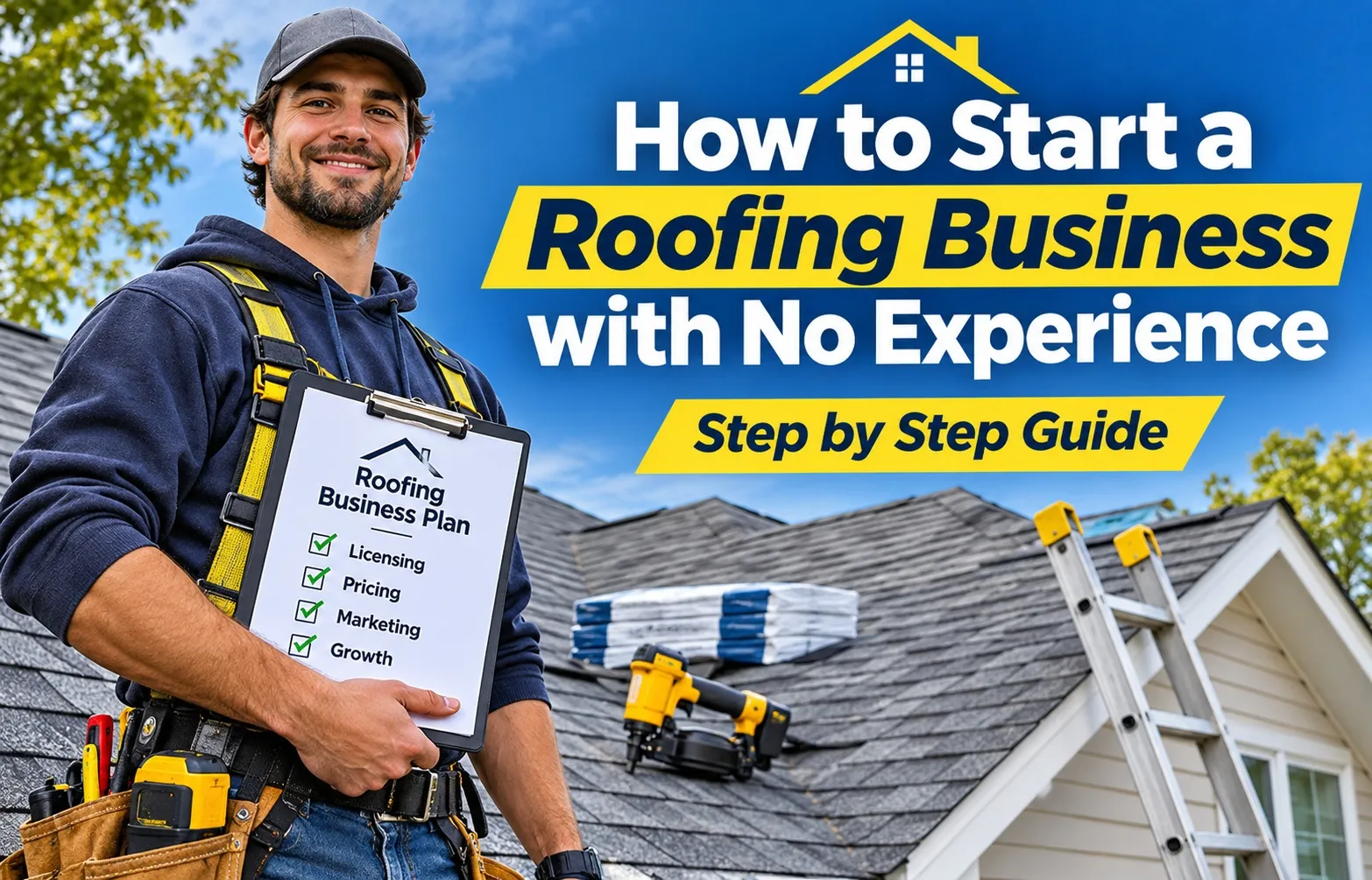 Starting a roofing business with zero hands-on trade experience is entirely achievable by adopting a general contractor and project management model rather than attempting to install shingles yourself. Successful roofing company ownership centers on sales, administrative systems, and managing skilled subcontractor crews rather than physical labor.
The Biggest Misconception About the Roofing Industry
Many aspiring entrepreneurs assume that entering the home improvement sector requires years of working as a professional roofer or mastering complex carpentry skills. In reality, the most profitable roofing businesses are run by owners who focus exclusively on business growth, client relations, and quality control.
- Owners act as project coordinators rather than field laborers.
- Technical installation is handled by hired, licensed subcontractor crews.
- Success depends on business acumen, marketing, and operational efficiency.
Why Roofing is a Sales, Systems, and Management Business
Roofing company ownership relies heavily on building robust administrative workflows, generating inbound leads, and managing client expectations from inspection to completion. Master trade skills can be outsourced, but strategic oversight and customer trust must come directly from leadership.
- Establishing reliable CRM and measurement software pipelines.
- Fostering strong relationships with material distributors and sub-crews.
- Maintaining strict safety compliance and liability protection standards.
What This Ultimate Blueprint Will Cover
This comprehensive guide breaks down every operational phase required to launch and scale a thriving enterprise from scratch. You will discover the exact mechanics of establishing legal entities, structuring subcontractor agreements, and dominating local search results.
- Structuring your business model around the subcontractor framework.
- Navigating state contractor licensing, bonding, and insurance requirements.
- Mastering storm damage restoration and local lead generation strategies.
The Middleman Business Model: How Non-Tradespeople Run a Roofing Company
Operating as a non-tradesperson roofing owner means leveraging a general contractor framework where you orchestrate supply chains, manage sales pipelines, and coordinate skilled labor through experienced crew leads. By focusing on administration and client acquisition, you can run a highly profitable contracting firm without ever touching a shingle.
Understanding the General Contractor vs. Subcontractor Dynamic
As a general contractor, your primary responsibility is project orchestration rather than physical installation. You secure the client contract, coordinate logistics, and hire independent subcontractors who execute the physical work under strict quality guidelines.
- General contractors manage client communications, project timelines, and financial settlements.
- Subcontractors provide the necessary skilled labor, specialized tools, and manual execution expertise.
- This clear division of labor allows entrepreneurs to scale operations rapidly without mastering installation trades.
The Daily Role of a Modern Roofing Owner (Sales, Not Shingles)
Your day-to-day operations focus entirely on business development, lead generation, and vendor management. You do not climb ladders or nail shingles; instead, you drive revenue, handle customer service, and oversee administrative workflows.
- Conducting initial property inspections and managing direct customer consultations.
- Managing cash flow, client invoicing, and material deposit schedules.
- Optimizing marketing channels and tracking local service inquiries.
Partnering with Master Foremen from Day One
Finding an experienced lead foreman is the critical bridge that fills any technical knowledge gap. A seasoned crew leader ensures that every project meets strict building codes and delivers elite craftsmanship without requiring your personal supervision.
- Partnering with trusted material suppliers like ABC Supply and SRS Distribution for seamless material delivery.
- Vetting crew foremen for historical track records, safety compliance, and quality output.
- Establishing direct lines of credit and bulk material pricing through major distribution networks.
Legal, Licensing, Insurance, and Capital Requirements
Launching a roofing business requires securing formal legal structures, municipal trade licenses, and essential risk-mitigation insurance policies before booking your first project. Addressing these foundational elements early protects personal assets and ensures full compliance with local commercial regulations.
Step 1: Forming Your Legal Entity (LLC and Corporate Protection)
Forming a formal business structure like a Limited Liability Company (LLC) shields personal assets from operational liabilities, unexpected job site accidents, and commercial lawsuits. Registering your business entity properly establishes formal credibility with material suppliers, banks, and prospective clients from day one. You can review foundational registration steps using the official SBA Business Guide to ensure your corporate structure complies with federal and state standards.
- File Articles of Organization with your state’s Secretary of State office.
- Obtain an Employer Identification Number (EIN) from the IRS for banking and tax purposes.
- Open a dedicated business bank account to separate personal and company finances completely.
Step 2: Navigating State and Local Contractor Licensing & Surety Bonds
Contractor licensing requirements vary significantly by state and municipality, ranging from comprehensive trade examinations to simple local business registrations. Most jurisdictions require roofing contractors to secure surety bonds ranging from $5,000 to $25,000 to guarantee adherence to local building codes and contract terms.
- Check state contractor licensing boards to determine if a qualifying party or licensed qualifier is mandatory.
- Purchase a surety bond to protect consumers against incomplete work or regulatory code violations.
- Secure local municipal permits for every active job site before starting physical installation work.
Step 3: Mandatory Insurance Coverages (Protecting Your Business from Day 1)
Operating a roofing enterprise demands comprehensive insurance policies to mitigate the severe physical and property risks inherent in construction work. General liability insurance, workers’ compensation, and commercial auto coverage protect your company against catastrophic financial loss from accidents or property damage.
- General Liability Insurance covers third-party property damage or accidental injuries on job sites.
- Workers’ Compensation Insurance is legally mandatory if you employ in-house labor or crew members.
- Commercial Auto Coverage protects company vehicles, transported tools, and transit equipment.
Step 4: Initial Startup Capital Breakdown ($10,000 to $50,000 Model)
Starting a roofing business with minimal upfront inventory requires an initial capital reserve between $10,000 and $50,000, depending on your operating model. Utilizing a subcontractor-heavy framework significantly reduces equipment overhead by eliminating the need to purchase heavy machinery or large commercial trucks immediately.
- Allocate funds toward LLC formation fees, licensing applications, and mandatory surety bonds.
- Secure initial general liability and workers’ compensation insurance premium down payments.
- Reserve working capital for local digital marketing, CRM software subscriptions, and initial administrative overhead.
The Subcontractor Playbook: How to Vet, Hire, and Manage Crews with Zero Technical Eye
Managing construction labor without hands-on experience requires a structured vetting process, precise legal contracts, and rigorous oversight systems. By relying on standardized checklists and accountability frameworks, non-technical owners can consistently secure elite craftsmanship and protect their business from liability.
Where to Find Reliable and Licensed Sub-Crews
Finding dependable sub-crews requires tapping into professional distribution networks rather than relying on casual online job boards. Established material supply houses and local trade networks serve as the highest-quality referral sources for vetted crews.
- Building direct relationships with regional counter staff at major commercial supply distributors.
- Visiting active residential job sites to observe crew professionalism, cleanliness, and safety habits firsthand.
- Connecting with local building inspectors who regularly review completed work across various local contracting teams.
The 4-Point Vetting Checklist for Subcontractors
Vetting independent crews without technical roofing knowledge relies on verifying legal credentials, insurance certificates, and historical project references. Evaluating compliance and operational history protects your brand reputation against slipshod installations.
- Verify active general liability and workers’ compensation insurance policies directly with issuing carriers.
- Inspect at least three recently completed local projects to review craftsmanship standards.
- Confirm state or municipal trade licensing compliance where legally mandated by local jurisdictions.
- Evaluate crew communication responsiveness and punctuality during initial project discussions.
Drafting Ironclad Subcontractor Agreements and Lien Waivers
Protecting your enterprise from financial liability and missed deadlines demands formal subcontractor agreements and signed lien waivers for every project. Clear contractual terms establish explicit expectations regarding timelines, material waste, and warranty protection.
- Include explicit clauses detailing performance timelines, payment schedules, and punch-list completion terms.
- Require signed conditional and unconditional lien waivers to prevent supplier mechanics liens on client properties.
- Enforce mandatory workmanship warranties backed directly by the subcontractor crew.
How to Inspect a Completed Roof Without Climbing On It
Inspecting a completed roof installation without climbing onto the structure requires utilizing high-resolution drone photography and ground-level visual benchmarks. Checking critical components ensures long-term weatherproofing and structural integrity.
- Review drone imagery to inspect valley installations, shingle alignment, and ridge cap placement.
- Verify proper installation of metal flashing around chimneys, vents, and wall intersections to prevent leaks.
- Ensure protective underlayment and starter strips were correctly applied prior to shingle installation during the build phase.
Mastering Insurance Claims & Storm Restoration (The Secret to 6-Figure Startups)
Insurance restoration drives over 70% of residential roofing revenue, making it the most reliable financial engine for scaling a brand-new contracting enterprise. Mastering property claims allows non-technical owners to generate massive cash flow by helping homeowners navigate severe weather damage efficiently.
Why Insurance Restoration is the Fastest Path to Profit
Insurance restoration accelerates business growth by tapping into high-ticket property replacement projects funded directly by carrier policies rather than out-of-pocket savings. This structural funding mechanism creates predictable demand whenever major storms strike local residential communities.
- Property owners readily approve full replacements when severe weather creates clear insurance justifications.
- Average project ticket sizes are significantly larger than standard retail repairs or minor property maintenance.
- Seasonal storm patterns ensure a continuous influx of high-value prospective clients throughout the year.
How the Storm Damage Inspection and Claim Process Works
The insurance restoration cycle begins with a comprehensive roof inspection to document wind and hail impacts, followed by filing an official claim with the carrier. Guiding the client safely through every phase ensures maximum coverage approval and transparent project execution.
- Conducting detailed rooftop assessments to identify bruised shingles, cracked tiles, and compromised flashing.
- Assisting homeowners in filing formal insurance claims accompanied by precise meteorological event timestamps.
- Meeting insurance adjusters directly on-site to advocate for complete and accurate repair scope coverage.
Working with Public Adjusters and Mortgage Companies
Managing complex claims often requires coordinating directly with public adjusters and mortgage endorsement departments to release insurance funds safely. Understanding financial disbursement workflows prevents cash flow bottlenecks during multi-phase property restoration projects.
- Collaborating with licensed public adjusters during contested claim denials or complex scope adjustment disputes.
- Navigating multi-party check endorsements required by mortgage lenders holding primary property deeds.
- Ensuring the homeowner’s deductible is collected legally and transparently without unauthorized fee waivers.
Introduction to Estimating Software (Xactimate Basics)
Xactimate serves as the undisputed industry-standard estimating software used by major insurance carriers and top-tier roofing contractors worldwide. Mastering its core pricing lines enables you to submit precise supplements that recover overlooked repair costs and material expenses.
- Utilizing standardized line-item pricing that matches regional insurance adjuster software parameters.
- Filing detailed supplements to account for hidden structural damage discovered during the initial tear-off phase.
- Streamlining financial approvals by speaking the exact technical language insurance carriers require.
Local Marketing, Lead Generation, & Building Immediate Trust
Generating consistent roofing contracts without a historical portfolio requires executing targeted local outreach, leveraging specialized measurement software, and establishing prominent digital visibility. By combining face-to-face neighborhood canvassing with modern lead-generation technology, new enterprises can secure a steady stream of profitable jobs from day one.
Door-to-Door Sales and Strategic Neighborhood Targeting
Door-to-door canvassing remains one of the most effective customer acquisition channels for new roofing companies, especially in areas impacted by recent severe weather. Directly engaging homeowners with transparent inspections builds immediate rapport and bypasses traditional advertising noise.
- Targeting neighborhoods with aging roofs or documented storm damage activity.
- Offering complimentary, no-obligation roof inspections to assess potential hail or wind wear.
- Maintaining a professional, educational approach rather than using aggressive sales pressure tactics.
Leveraging Technology: CRM and Measurement Software (ProLine & Roofr)
Deploying advanced administrative tools allows lean startup teams to operate with the efficiency and polish of established market veterans. Utilizing specialized software streamlines lead tracking, remote roof measurements, and customer communications instantly.
- Using ProLine CRM to automate lead follow-ups, pipeline management, and customer status tracking.
- Generating accurate satellite roof measurements and professional digital proposals remotely via Roofr.
- Delivering transparent pricing and visual reports directly to homeowners via secure mobile links.
Google Business Profile and Local SEO Domination
Optimizing your Google Business Profile is critical for capturing high-intent local search traffic from customers actively looking for emergency repairs or full replacements. Ranking in the local map pack establishes instant legitimacy and drives inbound phone calls.
- Verifying and fully optimizing your local service area profile with accurate business categories and contact details.
- Publishing geo-targeted service pages that highlight local neighborhoods and specific municipal roofing solutions.
- Posting consistent updates, project photos, and educational content to maintain high local search engagement.
Obsessing Over Reviews to Overcome “No Portfolio” Syndrome
Securing early social proof is the fastest way to neutralize customer hesitation when you lack an extensive historical project portfolio. Delivering exceptional communication and flawless execution turns initial clients into vocal brand advocates.
- Requesting verified online feedback immediately following every successful repair or replacement project.
- Showcasing 5-star reviews prominently across your website, social channels, and digital proposals.
- Addressing any customer service concerns proactively to protect your digital reputation and local ranking.
Risk Mitigation, Handling Callbacks, and Scaling Your First Year
Successfully navigating your first year in business requires proactive risk mitigation, disciplined cash flow management, and a systematic approach to scaling operations. By establishing rigorous quality controls and professional customer protocols, non-technical owners can overcome early operational hurdles and build a sustainable residential roofing enterprise.
Managing Your First Angry Customer and Callbacks (Leak Protocols)
Encountering a post-installation roof leak or dealing with an upset customer is an inevitable test for any new business owner. Executing calm, structured leak protocols transforms potential public relations disasters into powerful demonstrations of reliability and professional accountability.
- Dispatching an experienced foreman to the job site within 24 hours to inspect and diagnose reported callback issues.
- Listening empathetically and taking immediate ownership of the fix without making defensive excuses.
- Honoring workmanship warranties immediately to reinforce customer trust and protect your brand’s reputation.
Managing Cash Flow: Deposits, Final Payments, and Supplier Terms
Maintaining positive cash flow management is the lifeblood of a growing contracting company, preventing capital shortages during peak production weeks. Structuring secure payment milestones and leveraging supplier credit terms keeps working capital healthy across every active job.
- Collecting standard upfront material deposits before ordering supplies or scheduling subcontractor crews.
- Establishing net-30 material supplier accounts once your business entity and trade credit references are established.
- Conditioning final payments on complete customer satisfaction and the delivery of signed lien waivers.
The 12-Month Growth Roadmap: From Small Repairs to Full Replacements
Executing a controlled business scaling strategy allows you to build technical confidence, financial reserves, and operational stability progressively over your first full year. Starting with manageable projects prevents overextension while laying the groundwork for high-ticket market expansion.
- Months 1 through 3: Focus on minor repairs, gutter cleanings, and small leak fixes to establish local cash flow and immediate reviews.
- Months 4 through 8: Transition into standard retail roof replacements and build reliable subcontractor partnerships.
- Months 9 through 12: Scale up storm restoration marketing, streamline Xactimate claims, and expand your regional service radius.

Oscar Vance | Master Plumber & Drainage Expert
Meet Oscar Vance, a licensed master plumber sharing practical solutions on residential repairs, preventive maintenance, and thoughtful home upkeep.