Reverse-Engineering the $100k Roofing Sales Math
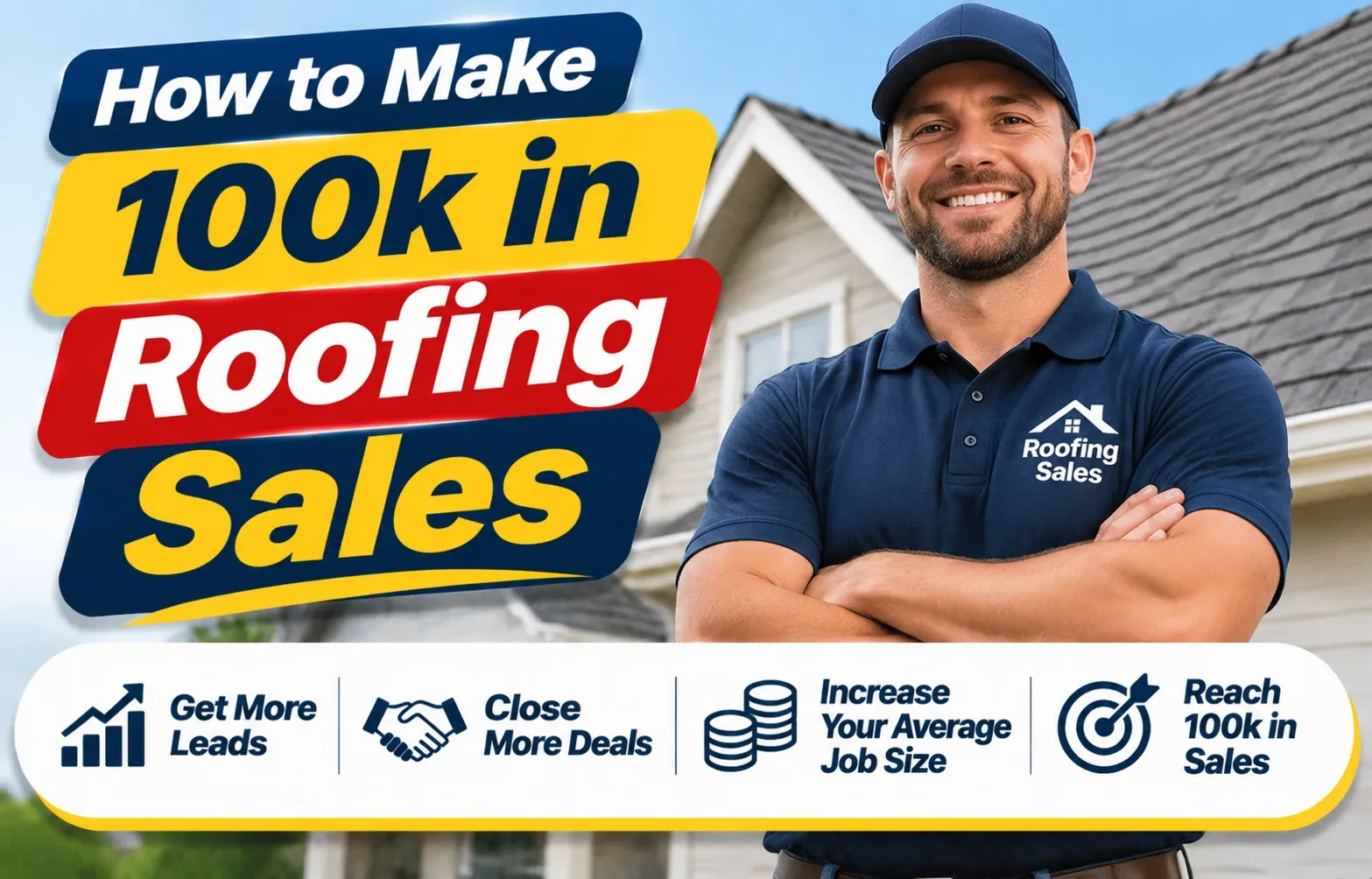 Achieving a six-figure income in roofing sales requires generating approximately $1 million in total closed sales volume under a standard 10% commission framework. Top-performing sales professionals reach this benchmark by closing 50 to 100 residential or commercial projects annually through structured lead generation and higher contract values.
The $1 Million Gross Revenue Rule Explained
The fundamental mathematics behind earning $100,000 in roofing sales depends on gross revenue volume, average contract size, and commission percentages. Treating your sales pipeline like a predictable mathematical equation eliminates uncertainty and provides a clear daily target.
- Gross Commission Benchmark: At a standard 10% commission rate, hitting exactly $1,000,000 in closed roofing revenue yields a $100,000 annual payout.
- Weekly Production Targets: This financial goal breaks down into securing roughly 1 to 2 closed roofing contracts every week across a 50-week operating year.
- Pipeline Stability: Maintaining consistent prospecting prevents seasonal income drops and ensures steady cash flow during slower weather months.
Breaking Down Job Sizes and Close Volumes (100 Jobs vs. Fewer High-Ticket Installs)
The total number of roofs you need to sell depends heavily on your average ticket size per installation. Selling higher-ticket packages drastically reduces the total number of homeowners you must close each month to achieve your six-figure target.
- Standard $10,000 Roofs: Requires closing 100 jobs annually, averaging roughly 2 completed projects every single week.
- Upgraded $15,000+ Packages: Pushing average ticket sizes higher through architectural shingles, metal systems, and integrated gutter solutions lowers your annual quota to approximately 66 deals.
- Commercial Contracts: Securing larger commercial or multi-family roofing projects allows sales reps to hit six figures with as few as 10 to 20 closed transactions.
The Two Paths to Six Figures: Insurance Restoration vs. Retail Cash Sales
Roofing sales professionals typically reach their $100k earning goals through one of two distinct business models: insurance restoration or retail cash sales. Each path demands a unique skill set, lead generation strategy, and closing process to hit high-volume revenue targets successfully.
Path A: Insurance Restoration & Storm Chasing (Navigating Adjusters and Supplements)
Insurance restoration roofing relies on severe weather events and storm seasons to drive high-volume damage inspections and carrier-funded replacements. Sales reps in this sector act as liaisons between the homeowner and insurance companies, managing complex paperwork, property assessments, and carrier payouts.
- Storm Season Volatility: Leveraging high-impact hail and wind storms enables reps to close massive clusters of homes in a single neighborhood rapidly.
- Insurance Adjuster Collaboration: Meeting adjusters on-site ensures all hidden damages, such as soft decking and compromised flashing, are properly documented.
- Roofing Supplements: Securing approved supplements for code-required upgrades adds thousands of dollars in hidden revenue to individual project totals.
- Depreciation Checks: Tracking the release of initial claim payments, recoverable depreciation, and deductible management keeps the project lifecycle moving smoothly.
Path B: Retail Residential Sales (Higher Margins and Financing Options)
Retail residential sales involve marketing directly to homeowners whose roofs need replacement due to age, wear, or cosmetic preference rather than storm damage. This path requires superior consultative selling skills, direct relationship building, and strategic consumer financing solutions.
- Retail Cash Sales: Generating consistent year-round business through targeted local marketing, door-to-door canvassing, and trusted community referrals.
- Flexible Financing Options: Offering monthly payment plans and low-interest financing lowers the barrier to entry for homeowners facing steep out-of-pocket costs.
- Higher Profit Margins: Controlling pricing without relying on insurance carrier approvals allows reps to protect gross profit margins and maximize commission payouts.
- Predictable Workflow: Avoiding the chaotic spikes and valleys of storm-chasing markets provides a more stable, year-round income pipeline.
Which Path Should a New Rep Choose?
Choosing between insurance restoration and retail sales depends on your local market conditions, risk tolerance, and appetite for administrative paperwork. Successful sales professionals often evaluate market demand and personal strengths before committing to a primary sales track.
- Choose Insurance Restoration If: Your geographic region experiences frequent severe weather and you excel at managing fast-paced, high-volume insurance negotiations.
- Choose Retail Sales If: You prefer steady, predictable year-round income and want to build a business based on direct consumer trust and premium upgrades.
- Hybrid Approach: Many top earners blend both models—pursuing storm claims during peak seasons while cultivating retail and repair leads during the rest of the year.
Mastering the Roofing Sales Funnel: Lead Generation to Seated Presentation
Building a consistent six-figure income requires mastering every stage of the roofing sales funnel, from initial lead acquisition to the final seated presentation. Top-earning representatives combine aggressive field prospecting with rapid digital response systems to secure high-intent appointments.
Building a Pipeline: Door-to-Door Canvassing and Digital Inbound Leads
Generating a reliable flow of prospective roofing customers requires a balanced strategy combining traditional door-to-door (D2D) canvassing in storm-hit neighborhoods with optimized digital inbound channels. Reps who rely on a single source often experience severe revenue fluctuations during off-peak seasons.
Effective pipeline building integrates physical boots-on-the-ground execution with digital visibility to capture high-intent homeowners.
- Door-to-Door (D2D) Canvassing: Systematically walking neighborhoods following severe weather events to offer free roof inspections and build immediate local trust.
- Google Business Profile Optimization: Leveraging local SEO, reviews, and geo-targeted service pages to drive high-converting digital inquiries.
- Referral Networks: Incentivizing past customers to supply warm introductions to neighbors, significantly lowering customer acquisition costs.
The 1-Minute Rule: Speed-to-Lead and Automated CRM Follow-Ups
Responding to incoming digital inquiries within the first 60 seconds dramatically increases your chances of booking an inspection before competitors intervene. Industry data shows that conversion rates plummet significantly when lead response times stretch past five minutes.
Automated software platforms eliminate human delay and ensure every prospect receives instant engagement.
- ProLine Roofing CRM Integration: Utilizing specialized roofing customer relationship management tools to automate multi-channel follow-up sequences instantly.
- Speed-to-Lead Advantage: Contacting inbound leads immediately establishes authority and signals high professionalism to the homeowner.
- Consistent Drip Campaigns: Maintaining automated SMS and email touches for colder prospects until they are ready to schedule a quote.
For more insights on optimizing conversion workflows, you can review industry benchmarks in the Roofr Sales Framework Report.
Aerial Measurements and Transparent Tiered Proposals
Delivering accurate proposals quickly during a seated presentation builds immediate trust and maximizes your quote-to-close ratio. Modern roofing professionals rely on precise aerial software and transparent pricing options to eliminate homeowner hesitation on the spot.
Equipping your presentation with accurate aerial data and clear tier structures turns complex roof replacements into easy buying decisions.
- Hover Aerial Measurement: Generating precise 3D roof models and accurate material measurements without physically climbing dangerous slopes initially.
- Transparent Tiered Proposals: Offering good, better, and best product options (e.g., standard architectural shingles versus premium metal systems) to increase average ticket value.
- Quote-to-Close Ratio Optimization: Presenting clear financing options and professional reports during the initial kitchen-table meeting to close deals on the first visit.
Field-Tested Playbooks: Exact Scripts and Objection Handling
Mastering day-one execution in roofing sales requires field-tested scripts and proven objection-handling frameworks that build immediate rapport and drive high conversion rates. Elite sales professionals rely on structured conversational blueprints to navigate homeowner hesitation without damaging trust or profit margins.
The Knock: Breaking the Ice During Door-to-Door Canvassing
Breaking the ice during door-to-door canvassing requires a low-pressure, value-driven approach that immediately establishes local credibility. Instead of pushing for an immediate sale, successful representatives focus entirely on securing a free, no-obligation roof inspection after a recent storm event.
Deploying a structured conversational opener disarms homeowners and shifts the interaction from a sales pitch to a helpful community service.
- The Opening Script: “Hi, I’m [Name] with [Company]. We’re currently out inspecting roofs on [Street Name] following last week’s severe weather. A lot of your neighbors noticed bruised shingles, so we’re offering complimentary damage assessments to make sure everyone’s home is secure. Have you had yours checked yet?”
- Body Language & Positioning: Step back two paces from the front door after knocking to give the homeowner personal space, and hold your company ID badge and clipboard visibly.
- Focus on Inspection: Never sell a roof at the door; always sell the 10-minute professional inspection as the next logical step.
Overcoming “I Need to Talk to My Insurance Agent First”
Handling the common insurance hesitation requires validating the homeowner’s caution while clarifying that filing an official claim without professional documentation can lead to premature denials. Reps must position themselves as expert advocates who help substantiate the claim correctly from day one.
Guiding the homeowner through the proper sequence prevents costly filing mistakes and protects their insurance record.
- The Response Script: “I completely understand wanting to talk to your agent first. The challenge is that if you call them without photos or a formal assessment, they often log an inquiry that counts against your record even if no payout occurs. Let us document the damage first so you can present your agent with clear, factual evidence.”
- Establishing Authority: Educate the homeowner on how insurance adjusters operate and why having an independent inspection report strengthens their claim approval odds.
- Seamless Transition: Offer to schedule the joint inspection with their adjuster on-site to remove all administrative friction.
Closing the Deal: Handling Price Objections Without Dropping Your Margin
Protecting your commission and profit margins when facing price resistance involves shifting the homeowner’s focus from upfront cost to long-term value, material warranties, and flexible monthly financing options. Elite closers never discount their pricing reflexively; instead, they isolate the true underlying objection.
Addressing price resistance with consultative questions uncovers whether the hesitation stems from budget constraints or a lack of perceived value.
- The Price Objection Script: “Mr. Homeowner, I respect that price is a major factor. If budget is the primary hurdle, are we comparing apples to apples regarding our lifetime manufacturer warranties, upgraded ice-and-water shields, and proper ventilation, or can we look at our monthly payment options to make this comfortable?”
- Isolating the Concern: Determine if price is a smoke screen for a deeper hesitation regarding trust, color choice, or installation timeline.
- Monthly Payment Framing: Break high-ticket lump sums down into manageable monthly financing figures (e.g., “$145 a month”) to remove financial anxiety during the seated presentation.
Surviving the Slumps: Managing Cash Flow and Seasonality
Roofing sales inherently experience high seasonal variance, with monthly commissions swinging wildly from $4,000 during slow winter periods to over $15,000+ during peak storm seasons. Mastering financial planning, budgeting, and service diversification ensures sales representatives maintain a stable six-figure lifestyle year-round.
Understanding Monthly Income Swings ($4k to $15k+ Realities)
Income volatility is an unavoidable reality in commission-based roofing sales, driven largely by weather patterns and seasonal storm cycles. Recognizing these predictable cash flow fluctuations allows top-performing representatives to structure their personal finances and avoid the panic of slow winter months.
Commission checks fluctuate directly based on production schedules, insurance check processing speeds, and regional weather conditions across the calendar year.
- Peak Storm Season Spikes: High-volume months following major hail or wind events can generate massive commission payouts exceeding $15,000.
- Winter and Off-Season Valleys: Freezing temperatures, snow, and low storm activity can drop monthly take-home pay to $4,000 or lower.
- The Cash Flow Trap: Spending peak season earnings immediately rather than leveling out your income causes severe financial stress when production slows down.
Building a Storm-Season War Chest: How to Budget for the Off-Season
Establishing a robust financial buffer during high-revenue months is the single most effective strategy for surviving off-season slumps without burning out. Treating your commission like a corporate salary—paying yourself a fixed monthly base and saving the surplus—prevents cash crunches.
Disciplined savings separate long-term industry veterans from sales representatives who exit the field after their first slow winter season.
- The Salary-Cap Strategy: Pay yourself a steady monthly amount equal to your target $100k annual average, banking all excess storm-season revenue.
- Emergency Financial Buffer: Maintain at least three to six months of living expenses in liquid savings to absorb unexpected production delays.
- Tax Provisioning: Set aside proper percentages for quarterly self-employment taxes immediately upon receiving commission checks to avoid end-of-year shortfalls.
Diversifying Into Commercial or Repair Work When Residential Slows Down
Expanding your sales scope into commercial roofing and recurring maintenance plans keeps your pipeline active when residential roof replacements stall. Savvy reps leverage their existing contractor relationships to secure year-round revenue streams independent of weather patterns.
Diversification protects your bottom line by tapping into corporate and industrial budgets that operate on year-round maintenance schedules.
- Commercial Roofing Contracts: Flat roofs, industrial warehouses, and multi-family complexes require inspections and repairs regardless of winter weather.
- Roof Repair Maintenance Plans: Pitching annual inspection and minor repair agreements to local property managers generates steady recurring service commissions.
- Cross-Selling Exterior Services: Offering gutters, siding, and window replacement packages maximizes every customer interaction and bridges residential gaps.
Daily Habits and Tech Stack of Top-Earning Roofing Reps
Hitting a six-figure income in roofing sales is not driven by random bursts of motivation, but rather by disciplined daily habits, aggressive referral systems, and an optimized software tech stack. Top earners treat their schedule like a structured business operation to maximize face-to-face selling time and minimize administrative drag.
The Power of Referrals: Turning One Roof Into Three Neighboring Jobs
Turning a single completed roof installation into an engine of three or more neighboring leads requires systematically asking for introductions while the property looks pristine. Top-earning sales reps leverage homeowner pride immediately after a successful build to capture high-converting referral opportunities across the block.
Implementing a repeatable referral system slashes customer acquisition costs and generates warm, pre-vetted leads.
- Post-Build Scripts: Asking satisfied homeowners for introductions on the exact day cleanup is completed while curb appeal is at its absolute peak.
- Strategic Yard Signs: Keeping branded yard signs visible throughout the construction phase to capture inbound interest from passing neighbors.
- Instant Referral Incentives: Offering immediate financial bonuses or gift cards for every neighbor who books a free inspection.
The Night-Before Planning Routine: Time-Blocking Your Day
Eliminating morning indecision by mapping out your daily schedule the night before ensures you never waste peak prospecting hours on low-value tasks. Elite sales professionals utilize strict time-blocking to separate door-to-door canvassing, insurance adjuster meetings, and administrative CRM follow-ups into dedicated execution windows.
Structuring your calendar rigidly prevents procrastination and keeps your pipeline flooded with active appointments.
- Evening Route Mapping: Pre-selecting target neighborhoods for morning canvassing using satellite maps and previous storm data.
- Dedicated Prospecting Blocks: Reserving morning hours exclusively for outbound door-to-door knocking and consistent prospecting.
- Afternoon Administration: Grouping email responses, proposal drafting, and CRM updates into a single late-afternoon time block.
Essential Tech Stack: CRMs, Drones, and Automated Drip Campaigns
Deploying a modern software tech stack comprising specialized customer relationship management tools, automated text workflows, and aerial measurement software drastically accelerates deal velocity. Top performers rely on platforms like ProLine CRM and Jobber to manage pipeline data and eliminate manual administrative delays.
Leveraging software automation allows sales reps to handle double the volume of leads without burning out.
- ProLine CRM & Jobber: Utilizing specialized roofing platforms to automate lead tracking, contract management, and pipeline visibility.
- Automated Drip Campaigns: Engaging cold or pending leads with scheduled SMS and email drip campaigns until they are ready to buy.
- Aerial Measurement Tools: Integrating drone software to generate accurate property estimates instantly without risking safety on steep pitches.
Frequently Asked Questions
Navigating career growth in roofing sales raises important questions regarding income potential, compensation structures, and long-term scaling strategies. Addressing these core inquiries helps sales professionals optimize their career path and maximize earning capacity.
How profitable are roofing sales for beginners?
Roofing sales can be exceptionally profitable for beginners, with motivated first-year representatives frequently earning between $60,000 and $80,000 while mastering the fundamentals. Because compensation relies entirely on performance rather than corporate tenure, dedication and proper field training can quickly accelerate newcomers into six-figure earnings.
Managing initial expectations and embracing a rigorous prospecting schedule allows new reps to build momentum quickly.
- First-Year Earnings: Earning $60k to $80k is standard for disciplined beginners who treat canvassing like a full-time job.
- Performance-Based Growth: Income scales instantly with effort and skill rather than waiting for annual corporate salary reviews.
- Mentorship Impact: Working under experienced sales managers dramatically shortens the learning curve and secures early wins.
What percentage do roof salesmen typically make?
Roofing sales representatives typically earn a gross commission between 8% and 12% on total contract value, or a 35% to 50% split on net project profits. Exact compensation percentages vary widely depending on whether you sell retail cash projects, high-volume insurance restoration claims, or commercial installations.
Evaluating commission structures carefully ensures you align with contracting companies that reward high-margin sales and upsells.
- Gross Revenue Splits: Offering steady 8% to 12% payouts calculated directly off total project contract prices.
- Net Profit Splits: Yielding 35% to 50% payouts that reward reps heavily on high-margin retail upgrades.
- Flat Claim Rates: Providing fixed bonuses per approved insurance claim, common in fast-paced storm restoration markets.
Can you make $500,000 a year in roofing sales?
Earning $500,000 a year in roofing sales is entirely achievable for elite producers who scale into team management, commercial portfolios, or independent general contracting. Reaching this multi-six-figure tier requires transitioning from a solo producer into a business owner or top-tier commercial closer.
Scaling beyond individual residential sales involves leveraging leverage, leadership, and high-value commercial contracts.
- Building a Sales Team: Recruiting, training, and overriding a team of commission-only sales reps to multiply your total volume.
- Commercial Roofing Contracts: Securing multi-million-dollar industrial and flat-roof projects with massive contract payouts.
- Independent Contracting: Launching your own roofing restoration company to capture full profit margins instead of standard rep commissions.
What is the fastest way to get your first roofing sale?
The fastest way to secure your first roofing sale is through aggressive, targeted door-to-door canvassing in neighborhoods recently impacted by severe weather. Offering immediate, no-obligation roof inspections to homeowners creates quick wins and builds instant trust before competitors arrive.
Executing proven quick-win strategies helps new sales representatives land their inaugural signed contract within their first week on the job.
- Storm-Zone Canvassing: Targeting blocks with verified hail or wind damage to offer immediate, free inspection services.
- Leveraging Warm Networks: Asking friends, family, and local contacts for initial inspection opportunities to practice your pitch.
- On-the-Spot Closing: Utilizing aerial measurement apps and clear financing options to close contracts during the first homeowner meeting.

Oscar Vance | Master Plumber & Drainage Expert
Meet Oscar Vance, a licensed master plumber sharing practical solutions on residential repairs, preventive maintenance, and thoughtful home upkeep.