Roofing Search Behavior Breakdown: Emergency Mobile vs. Planned Replacement
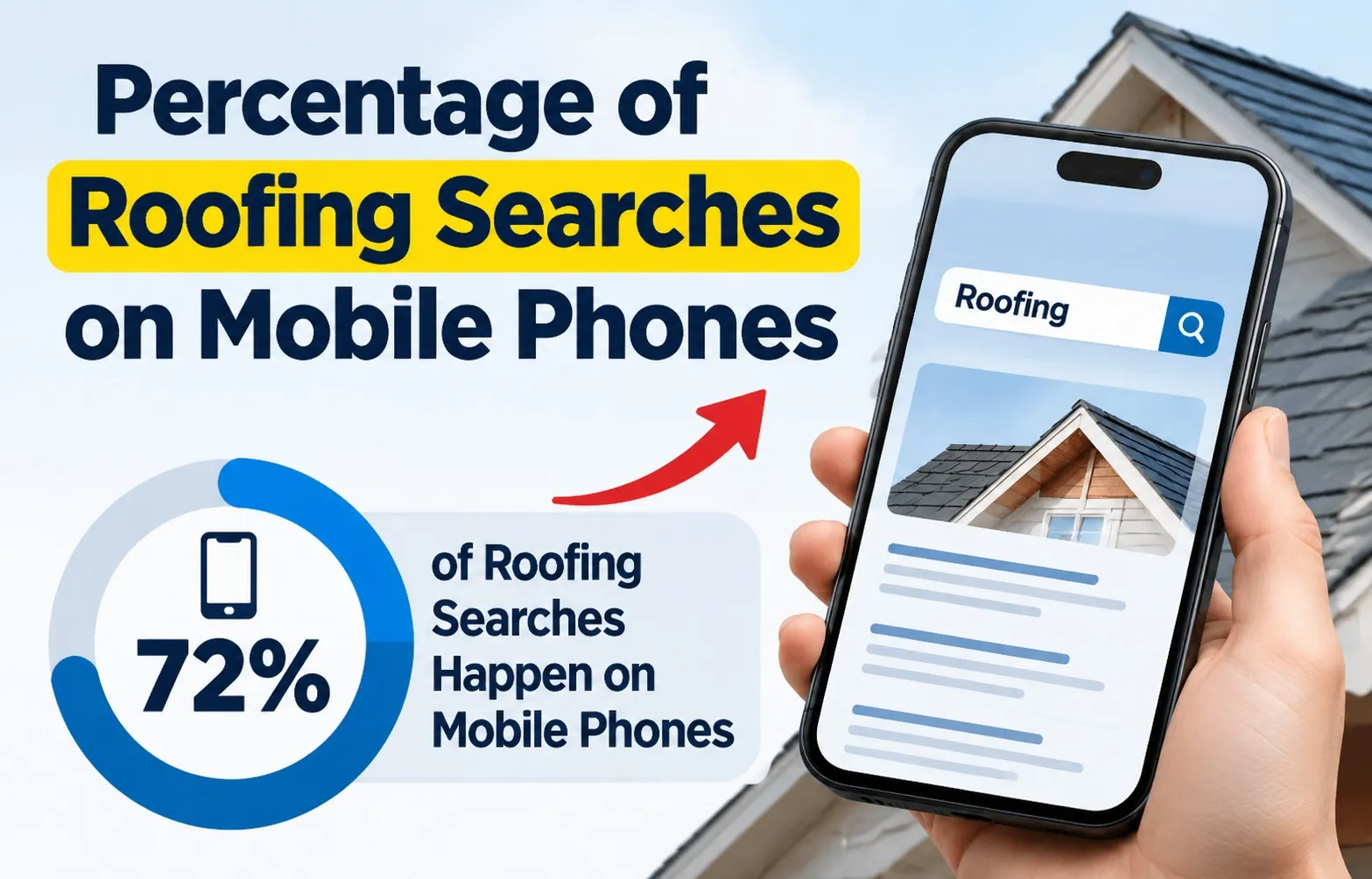 Not all roofing queries carry the same device split or urgency level. Segmenting homeowner search behavior by project type reveals a sharp divide between immediate storm emergencies and high-ticket roof replacement research.
Emergency Roof Repairs & Storm Damage (80%+ Mobile Share)
Over 80% of emergency roof leak searches happen on smartphones because active water intrusion demands an immediate response. When heavy rain or hail damages a roof, homeowners grab the nearest device in their pocket rather than booting up a laptop.
- Single-Session Urgency: Storm-damaged homeowners rarely browse ten websites; they scan the top three Google Map Pack results and tap the first prominent phone number.
- High-Intent Storm Damage Roofing Leads: Queries like “emergency roof tarp service” or “24 hour roof leak repair” convert within minutes, making mobile click-to-call functionality essential for conversion rate optimization (CRO).
- Location-Driven Results: Mobile GPS signals trigger hyper-local results, prioritizing contractors with verified proximity and fast response times.
Full Roof Replacements & Material Research (Cross-Device Journey)
Planned roof replacement research follows a multi-step, cross-device customer journey that begins on a smartphone and finishes on a larger screen. While 60% to 65% of initial contractor discovery starts with mobile “near me” local search intent, homeowners switch to desktop or tablet devices when evaluating $15,000+ investments.
- Phase 1 — Mobile Discovery: Homeowners use smartphones during spare moments to check local contractor ratings, browse project photos, and shortlist three to four reputable roofers.
- Phase 2 — Desktop Evaluation: Buyers move to desktop browsers to read manufacturer warranty terms, compare architectural shingle vs. metal roof pricing, and review financing calculators.
- Phase 3 — Final Form Submission: After verifying credentials on desktop, homeowners either submit a detailed estimate form or return to their phone to schedule an on-site inspection.
Why 52% of Roofers Lose Mobile Leads
High mobile traffic alone does not generate organic roofing leads if basic technical and local visibility errors block potential clients. Structural homepage flaws and poor smartphone experiences account for more than half of lost contracts before a homeowner ever makes contact.
The “52% Homepage Mistake” Killing Local Mobile Rankings
Comprehensive local SEO audits reveal that 52% of roofer homepages fail to explicitly name their target city or local service region. Google’s mobile-first indexing relies heavily on explicit geographic entities in the primary headers and above-the-fold content to match hyper-local smartphone queries.
- Missing Geographic Signals: Websites lacking clear city names force Google’s local algorithm to rely on vague IP signals, dropping them out of the top local Map Pack.
- Vague Service Area Text: General phrases like “serving the local area” fail to capture high-intent geographic searches performed by smartphone users standing outside.
- Missed Organic Traffic: Fixing this single oversight on a roofer homepage local SEO layout immediately captures missed hyper-local search traffic.
Three Mobile UX Friction Points That Cost Contractors Jobs
Even when organic roofing leads reach a mobile landing page, smartphone users abandon pages instantly if minor design hurdles impede quick communication during emergency situations.
- Non-Clickable Phone Numbers: Hidden or static text phone numbers force mobile users to manually copy and paste digits, instantly driving them to competitors with click-to-call conversion buttons.
- Poor Core Web Vitals Performance: Slow mobile page load speeds on 4G or 5G connections cause immediate bounce spikes when frustrated homeowners face active roof leaks.
- Extended Form Fatigue: Lengthy, multi-step quote forms create mobile UX friction; replacing them with quick 2-field tap-to-request forms dramatically increases form completion rates.
Actionable Mobile-First Optimization Checklist for Roofing Websites
Capturing the 61% to 75% mobile roofing search share requires technical precision and user-focused mobile design. Implementing these four structural updates ensures smartphone visitors convert immediately into booked inspections.
1. Deploy Sticky Above-the-Fold Click-to-Call Buttons
Position a persistent, full-width click-to-call button at the bottom of the mobile viewport within the natural smartphone thumb zone. Smartphone users dealing with sudden roof leaks expect one-tap access to dispatchers without hunting through navigation menus.
- Ergonomic Placement: Keep the sticky above-the-fold CTA anchored to the lower screen edge for effortless one-handed tapping.
- Urgency-Driven Copy: Pair the phone icon with direct action phrases such as “Call Now for 24/7 Roof Repair” rather than passive labels like “Contact Us.”
- Direct Tel Protocol: Wrap every displayed phone number in clean HTML
tel:links so mobile dialers launch instantaneously.
2. Align H1 Tags and Google Business Profile (GBP) for “Near Me” Queries
Eliminate the 52% missing-city homepage flaw by structuring your primary headline around the exact formula: [Primary Roofing Service] in [City, State]. Matching your geo-targeted H1 tags directly with your Google Business Profile (GBP) service areas signals unmistakable local relevance to Google’s mobile algorithm.
- Exact Headline Structure: Use clear headers like “Residential Roof Replacement & Repair in Dallas, TX” directly above the fold.
- GBP Category Synchronization: Match your primary GBP category (“Roofing Contractor”) and secondary services (“Roof Repair Service”) with dedicated mobile landing pages.
- Consistent NAP Data: Display identical Name, Address, and Phone number formatting across your mobile footer and GBP listing to strengthen local trust signals.
3. Optimize Mobile Speed Under 2.5 Seconds
Compress high-resolution project galleries and defer non-critical tracking scripts so mobile pages render completely in under 2.5 seconds. Photo-heavy roofing portfolios frequently stall on cellular 4G and 5G networks during severe storms when bandwidth fluctuates.
- Next-Gen Image Compression: Convert all before-and-after shingle and metal roof galleries into lightweight WebP or AVIF formats with explicit width and height attributes.
- Lazy Loading Below-the-Fold Media: Apply native
loading="lazy"tags to project galleries and review widgets so hero banners load first. - Script Deferral: Delay third-party chat widgets and heavy analytics scripts until initial user interaction to pass mobile Core Web Vitals thresholds.
4. Capture High-Intent Mobile Traffic via Local Service Ads (LSAs) & Map Pack
Combine Google Guaranteed Local Service Ads (LSAs) with an optimized Google Local Pack profile to dominate the entire above-the-fold smartphone screen. On mobile devices, LSAs and the 3-pack push traditional organic blue links below the initial scroll line.
- Google Guaranteed Trust Badge: Complete background checks and license verification to display the green checkmark badge directly beside your tap-to-call button.
- Review Velocity & Keywords: Encourage recent customers to mention specific services and neighborhood names in GBP reviews to boost Map Pack rankings.
- Mobile Call Extensions: Enable automated call extensions and verified business hours on search campaigns so mobile callers reach live estimators immediately.
Frequently Asked Questions
What percentage of local mobile roofing searches convert into a phone call or job?
Approximately 78% of local mobile roofing searches result in an offline phone call, quote request, or booked job within 24 hours. High mobile conversion rates occur because smartphone searchers typically face urgent repair needs and contact contractors directly from local Map Pack listings.
Why is mobile search traffic higher during storm season for roofers?
Storm season search volume pushes mobile traffic above 80% because severe wind, hail, and heavy rain trigger sudden interior leaks. Homeowners immediately search on their smartphones for emergency tarping and local roof repair contractors rather than waiting to use a desktop computer.
- Immediate Accessibility: Smartphones remain accessible even during localized power outages caused by severe weather.
- GPS-Driven Urgency: Mobile searchers rely on real-time location results to find the closest available roofing crew.
How can a roofing company get organic mobile leads without paying for ads?
Roofing companies capture free organic roofing leads on mobile by optimizing their Google Business Profile (GBP), building city-specific service pages, and maintaining steady review velocity. Consistent five-star customer reviews mentioning specific neighborhoods and roofing services push listings into the top three Google Map Pack spots.
- Geo-Targeted Service Pages: Publish dedicated mobile-friendly pages for every city and core roofing service offered.
- Consistent Review Velocity: Request verified customer reviews immediately after project completion to sustain high local rankings.
- Complete GBP Optimization: Upload geotagged project photos weekly and keep service hours and emergency contact numbers accurate.
Does Google use mobile-first indexing to rank roofing websites?
Yes, Google uses 100% Google mobile-first indexing to crawl, evaluate, and rank all roofing websites across both mobile and desktop search results. If a roofing contractor hides service descriptions, city names, or structured data on their mobile layout, Google excludes that missing content from ranking evaluations.
- Content Parity: Ensure mobile pages display the exact same headings, service details, and local city keywords as desktop pages.
- Technical Crawlability: Verify that mobile CSS, JavaScript, and image assets remain unblocked for Googlebot Smartphone crawlers.
Home Improvement Researchers & Guides Editors
Meet the Nest Team, a collective of dedicated researchers, home improvement enthusiasts, and industry writers sharing practical guides, thorough category research, and trusted solutions for residential repairs and thoughtful home upkeep.