What Does It Actually Cost to Flush a Toilet?
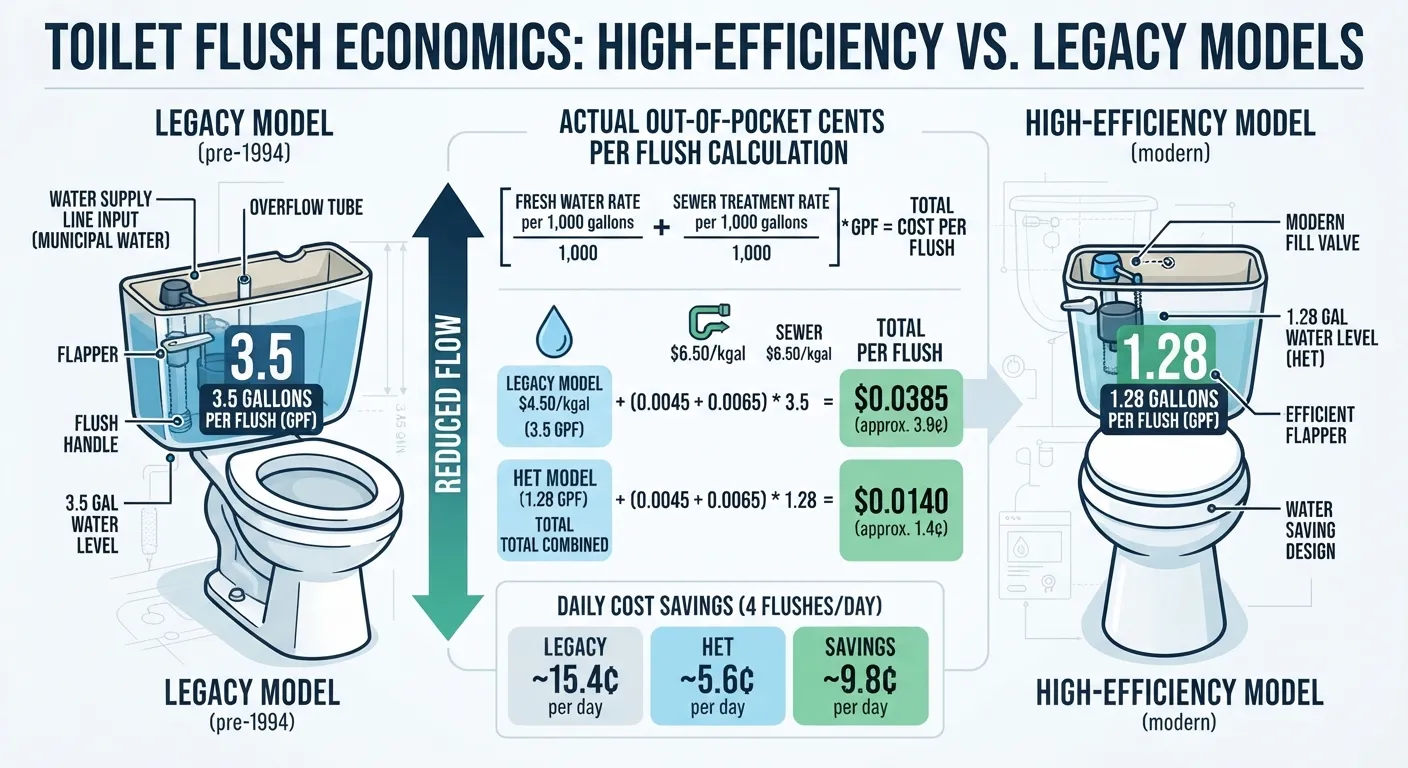
Flushing a modern, high-efficiency toilet typically costs between 1 and 3 cents per flush, while older, inefficient models can cost up to 6 cents or more. This price directly combines local municipal water rates, sewer utility fees, and the specific gallon-per-flush capacity of your plumbing fixture.
The Real-World Financial Breakdown Per Flush
Calculating the exact price requires evaluating how much water your tank releases combined with what your local utility providers charge per gallon. Modern plumbing standards mandate low-flow fixtures, but legacy systems remain common in older residential properties.
- High-Efficiency Toilets (HET): Using 1.28 gallons per flush (GPF), these modern fixtures cost approximately $0.01 to $0.015 per flush.
- Standard Ultra-Low Flush Toilets: Standard 1.6 GPF models manufactured after 1994 average about $0.015 to $0.025 per flush.
- Older Conventional Toilets: Vintage gravity-fed models consuming 3.5 to 7 gallons per flush can drive expenses up to $0.05 to $0.07 per flush.
Why the Answer Isn’t a Single Number
A single universal figure does not exist because utility pricing fluctuates wildly depending on your geographic location, municipal rate structures, and household water tier. Water and sewer utilities are billed concurrently in most municipalities, compounding the financial impact of every flush.
- Geographic Rate Disparities: Municipal water and sewer rates vary significantly by region, meaning the exact same volume of water costs radically different amounts in different cities.
- Tiered Utility Billing: Many utility providers scale their pricing upward as household consumption increases, making later flushes during a billing cycle incrementally more expensive than earlier ones.
- Fixture Age and Maintenance: Internal tank components like flappers and fill valves degrade over time, causing silent leaks that drastically increase total water consumption behind the scenes.
The Real Formula How to Calculate Your Exact Cost
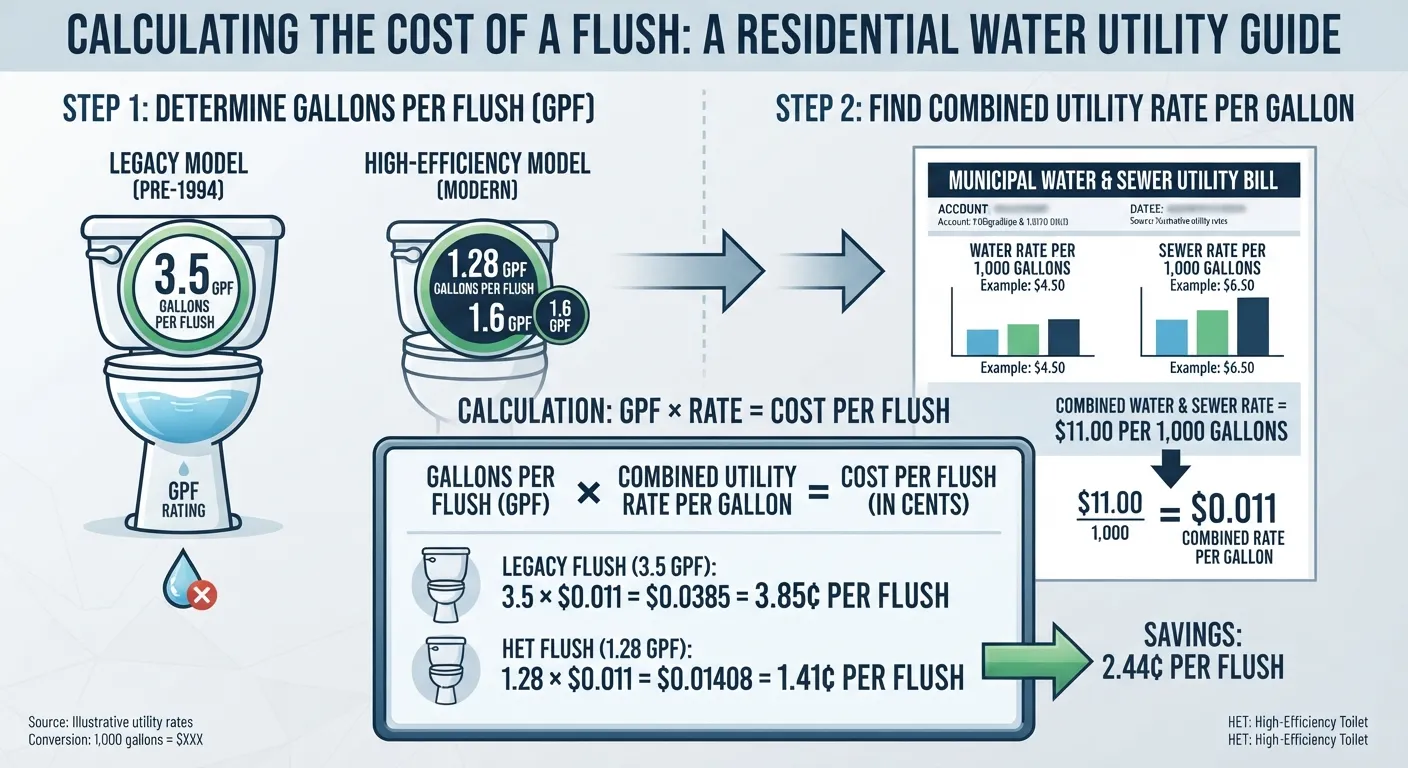
Calculating your precise toilet flushing expenses requires pairing your fixture’s water volume with your local utility provider’s combined billing rates. By multiplying these two exact figures together, you eliminate guesswork and uncover the exact financial impact of your household’s daily restroom usage.
The Formula: GPF × Combined Water & Sewer Rate
Determining your exact cost per flush relies on a straightforward mathematical equation that accounts for both water consumption and wastewater disposal. Municipalities bill for both incoming fresh water and outgoing sewage treatment, which must be combined for an accurate total.
- GPF (Gallons Per Flush): The specific volume of water your toilet uses per activation, typically stamped near the flapper or listed on the manufacturer specification sheet.
- Combined Rate Per Gallon: Your total local utility cost for delivering fresh water and treating wastewater, converted from hundred cubic feet (CCF) or gallons.
- The Core Equation: Multiply your toilet’s GPF rating by the combined rate per gallon to reveal the exact expense of a single flush.
Where to Find Your Local Water Rate Utility Bill Reading Guide
Locating your exact water and sewer rates requires reviewing your latest municipal utility statement, which typically details charges per thousand gallons or per CCF. Because water utilities frequently bundle fresh water delivery fees with wastewater treatment fees, you must add both unit prices together.
- Locate the Unit Price: Look for line items showing charges per 1,000 gallons or per CCF (one CCF equals roughly 748 gallons) for both water and sewer services.
- Convert to Per-Gallon Pricing: Divide your total combined cost per CCF by 748 to establish your exact combined rate per individual gallon.
- Consult Official Resources: Review standards and efficiency baselines provided by regulatory bodies such as the EPA WaterSense Residential Toilets Guide to benchmark your local usage against national averages.
Worked Example Step by Step Calculation
Walking through a practical math scenario demonstrates how minor changes in fixture efficiency and utility rates translate into actual dollars and cents. This step-by-step breakdown uses standard residential figures to illustrate the calculation process clearly.
- Step 1 (Identify GPF): Assume you are using a standard 1.6 GPF toilet manufactured before modern ultra-low-flow regulations were universally mandated.
- Step 2 (Determine Combined Rate): Assume your local utility bill charges a combined rate of $0.012 per gallon for fresh water supply and sewer treatment combined.
- Step 3 (Execute Multiplication): Multiply 1.6 gallons by $0.012 per gallon, resulting in a total cost of $0.0192, or roughly 1.9 cents per single flush.
Cost Breakdown by Toilet Type
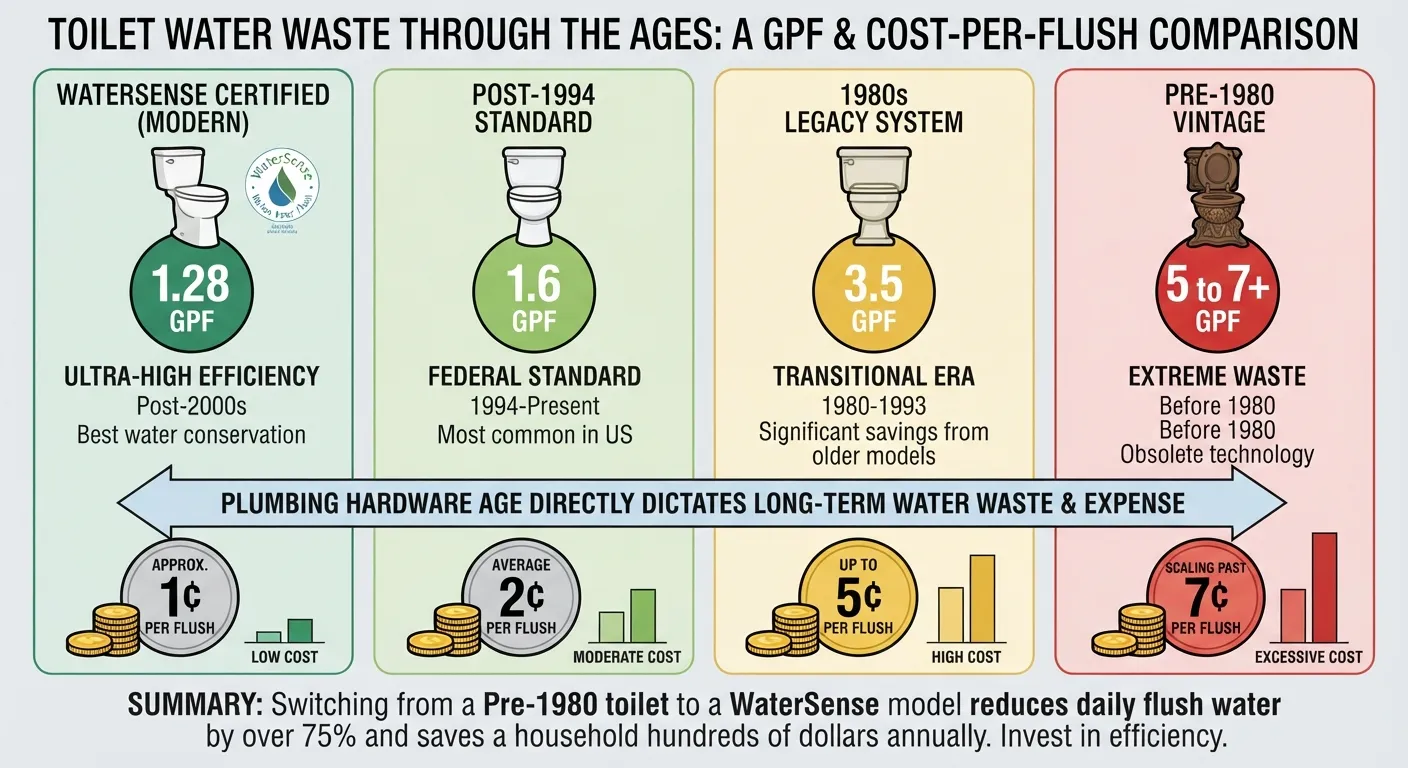
Plumbing fixture efficiency varies dramatically depending on the manufacturing era, regulatory standards, and internal flush mechanisms. Evaluating costs across different models highlights how transitioning to modern standards impacts cumulative household utility bills.
WaterSense Certified Toilets 1.28 GPF
WaterSense certified fixtures represent the gold standard in modern water conservation, utilizing high-efficiency designs to clear waste effectively while consuming minimal volume. These models use at least 20 percent less water than standard 1.6 GPF fixtures without sacrificing flushing performance.
- Water Volume: Consumes precisely 1.28 gallons per flush.
- Financial Impact: Costs roughly 1.0 to 1.5 cents per flush based on standard municipal utility pricing.
- Efficiency Benefits: Significantly lowers annual indoor water consumption for multi-person households.
Standard Modern Toilets Post 1994 1.6 GPF
Following the implementation of the 1992 Energy Policy Act which took full effect in 1994, manufacturers standardized residential gravity-flush toilets at a maximum of 1.6 gallons per flush. These fixtures balance reliable performance with moderate water conservation.
- Water Volume: Consumes exactly 1.6 gallons per flush.
- Financial Impact: Averages 1.5 to 2.5 cents per flush depending on regional sewer surcharges.
- Prevalence: Represents the most common toilet type found in homes constructed over the past three decades.
Older Models 1980s to Early 1992 3.5 GPF
Toilets manufactured during the 1980s and early 1990s before federal low-flow mandates took effect rely on high-volume tanks to clear waste. These legacy systems consume more than double the water of modern fixtures, driving up monthly utility expenditures.
- Water Volume: Consumes 3.5 gallons per flush per cycle.
- Financial Impact: Ranges between 3.5 and 5.0 cents per individual flush.
- Operational Drawback: Substantially increases water utility bills in homes with high daily restroom traffic.
Vintage Pre-1980 Toilets 5–7+ GPF
Vintage homes often retain original, heavy-duty cast-iron or porcelain toilets that were engineered before water conservation became a municipal priority. These older models flush massive volumes of water, making them the most expensive fixtures to operate.
- Water Volume: Consumes anywhere from 5.0 to 7.0 gallons or more per flush.
- Financial Impact: Costs up to 7.0 cents to 10.0 cents per single flush.
- Upgrade Priority: Replacing these units yields the fastest return on investment through immediate utility savings.
How Much Water Does a 20-Year-Old Toilet Use?
A typical toilet manufactured 20 years ago (around 2006) uses 1.6 gallons of water per flush, aligning with the federal mandates established by the 1992 Energy Policy Act. However, internal wear and tear can cause these older units to consume significantly more water than their rated capacity if internal components leak.
- Design Standard: Built to operate at 1.6 GPF for standard gravity-fed configurations.
- Wear-Induced Variance: Warped flappers or miscalibrated fill valves often allow continuous trickling, artificially inflating actual usage.
- Modern Comparison: Consumes roughly 25 percent more water per flush than a current WaterSense certified 1.28 GPF model.
How Much Does It Cost in Your City? Location Based Breakdown
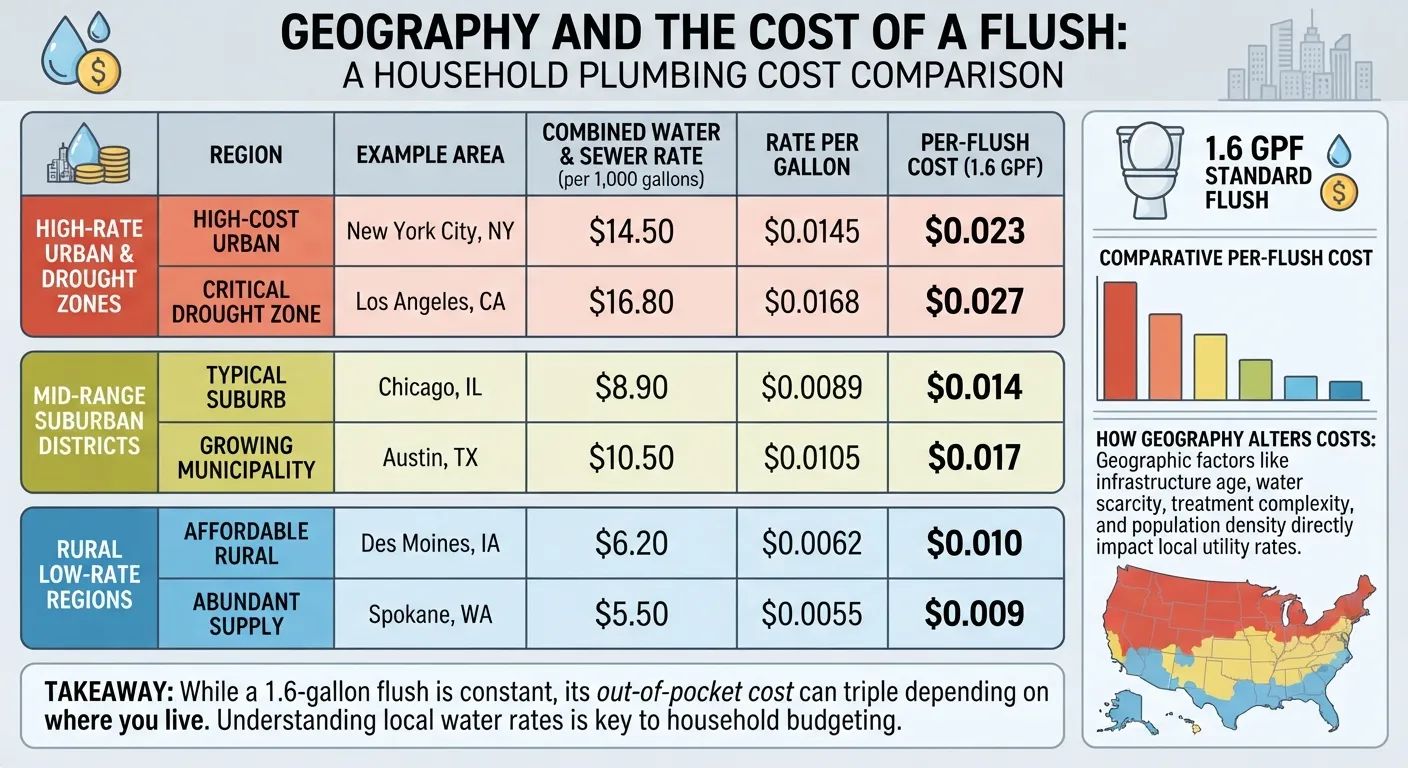
Municipal water and sewer rates vary drastically across regions, meaning the financial cost of flushing a toilet changes significantly depending on your geographical location. High-density urban centers and drought-prone regions enforce steep utility pricing structures that elevate the price per gallon far above national averages.
NYC High-Rate Cities e.g. California drought-prone areas
Major metropolitan hubs like New York City and drought-stressed regions throughout California face intensive infrastructure maintenance costs and strict water conservation surcharges. These economic pressures translate into some of the highest combined water and sewer rates in the country.
- Combined Utility Rates: Water and wastewater rates in these regions frequently exceed $0.015 to $0.025 per individual gallon.
- Cost Per Flush Impact: Operating a standard 1.6 GPF toilet in high-rate urban areas can easily climb to 3 to 5 cents per flush.
- Conservation Mandates: Local municipal codes often mandate low-flow replacements during property renovations to curb excessive utility usage.
Average Mid-Range Cities
Most mid-sized suburban municipalities and regional population centers experience moderate utility costs governed by standard treatment facility operations and predictable local watershed supplies. These areas represent the baseline for standard national water pricing models.
- Combined Utility Rates: Rates hover consistently between $0.008 and $0.012 per gallon for combined water and sewer services.
- Cost Per Flush Impact: Standard modern fixtures cost roughly 1.5 to 2 cents per individual flush cycle.
- Pricing Stability: Annual rate increases remain incremental, tied closely to regional inflation and infrastructure updates.
Rural Low-Rate Areas
Rural communities situated near major natural freshwater reservoirs or operating under subsidized municipal utility districts often enjoy the lowest water and sewer rates nationwide. Minimal distribution overhead keeps consumer expenses exceptionally low.
- Combined Utility Rates: Total combined costs can drop as low as $0.004 to $0.007 per gallon.
- Cost Per Flush Impact: Flushing a toilet in these areas costs less than 1 cent, even when utilizing older, higher-volume legacy fixtures.
- Alternative Systems: Many rural properties utilize private well water and septic systems, shifting costs from monthly utility bills to upfront pump maintenance.Comparison Table (City vs Avg Cost per Flush)
Annual Cost Calculator By Household Size
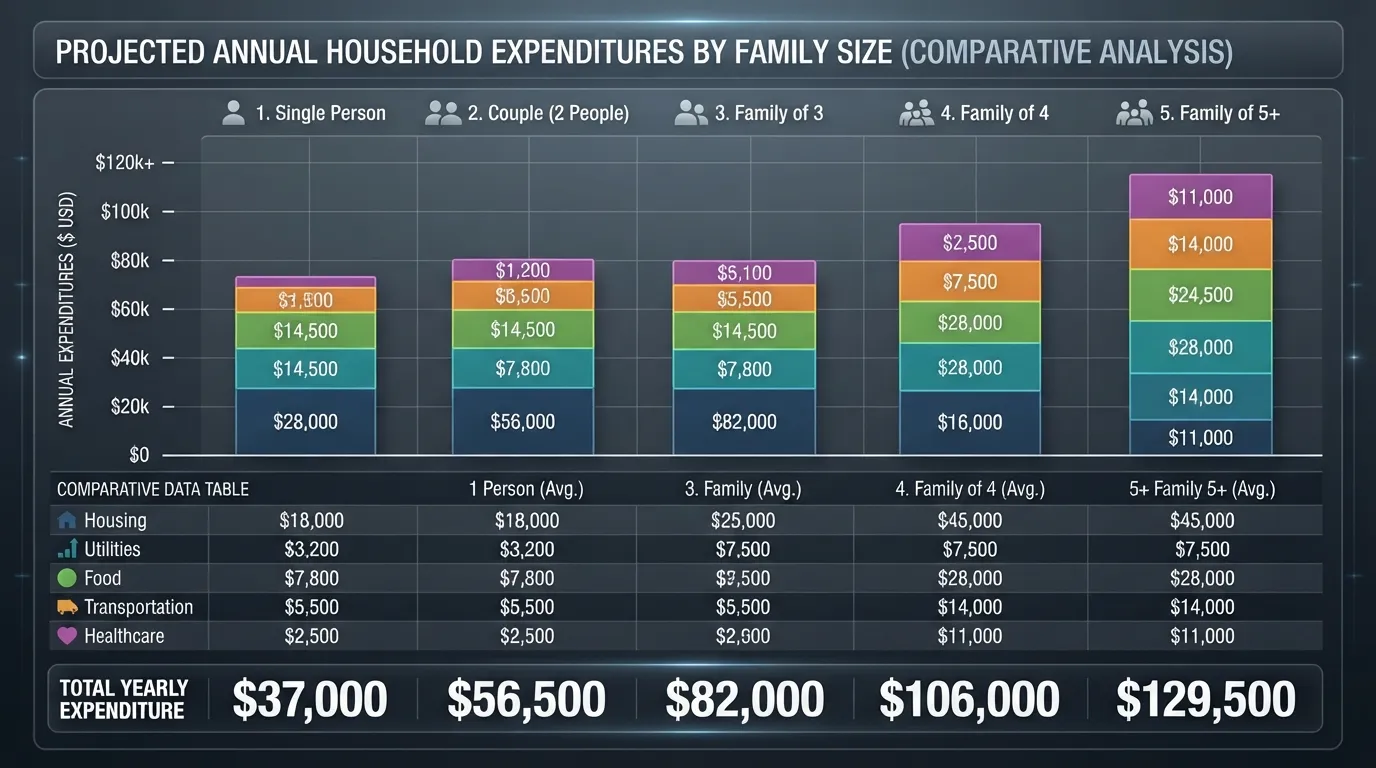
Translating individual flush costs into yearly household expenditures reveals the true financial scale of residential water consumption. By multiplying average daily flushes across family members, homeowners can accurately project their annual utility spending on restroom operations.
1-Person Household Annual Cost
Single-occupant residences consume significantly less water, averaging around five flushes per day based on standard usage patterns defined by public utility estimates. This minimal volume keeps annual plumbing utility expenditures remarkably low.
- Daily Usage: Approximately 5 total flushes per day.
- Annual Water Volume: Roughly 2,900 gallons per year using a standard 1.6 GPF fixture.
- Total Yearly Expense: Between $29.00 and $45.00 annually, depending on local utility rates.
4-Person Family Annual Cost
A standard four-person household multiplies daily restroom traffic substantially, resulting in roughly twenty or more total flushes per day across all family members. This increased volume makes fixture efficiency a major factor in monthly budgeting.
- Daily Usage: Approximately 20 total flushes per day combined.
- Annual Water Volume: Roughly 11,600 gallons per year utilizing a 1.6 GPF toilet.
- Total Yearly Expense: Between $115.00 and $180.00 per year for toilet flushing alone.
6+ Person Household Annual Cost
Large families, multi-generational homes, or shared rental properties with six or more occupants generate heavy daily wear and high utility volumes. Upgrading legacy fixtures in these high-occupancy environments yields immediate, substantial savings.
- Daily Usage: 30 or more total flushes per day.
- Annual Water Volume: Exceeds 17,500 gallons annually on standard legacy hardware.
- Total Yearly Expense: Ranges from $175.00 to over $300.00 annually for waste removal and water supply.
Interactive Calculator Note
Web developers and site administrators can easily embed a dynamic JavaScript calculator in this space to allow users to input their exact family size, local utility cost per gallon, and custom GPF ratings for real-time annual cost estimates.
- Input Variables: Program fields should capture occupant count, average daily flushes per person, and local rate per CCF.
- Dynamic Output: Instant calculation updates display monthly and yearly financial projections instantly.
- User Engagement: Interactive widgets increase time-on-page metrics and enhance overall content utility for readers.
Does Flushing a Toilet Increase Your Water Bill?
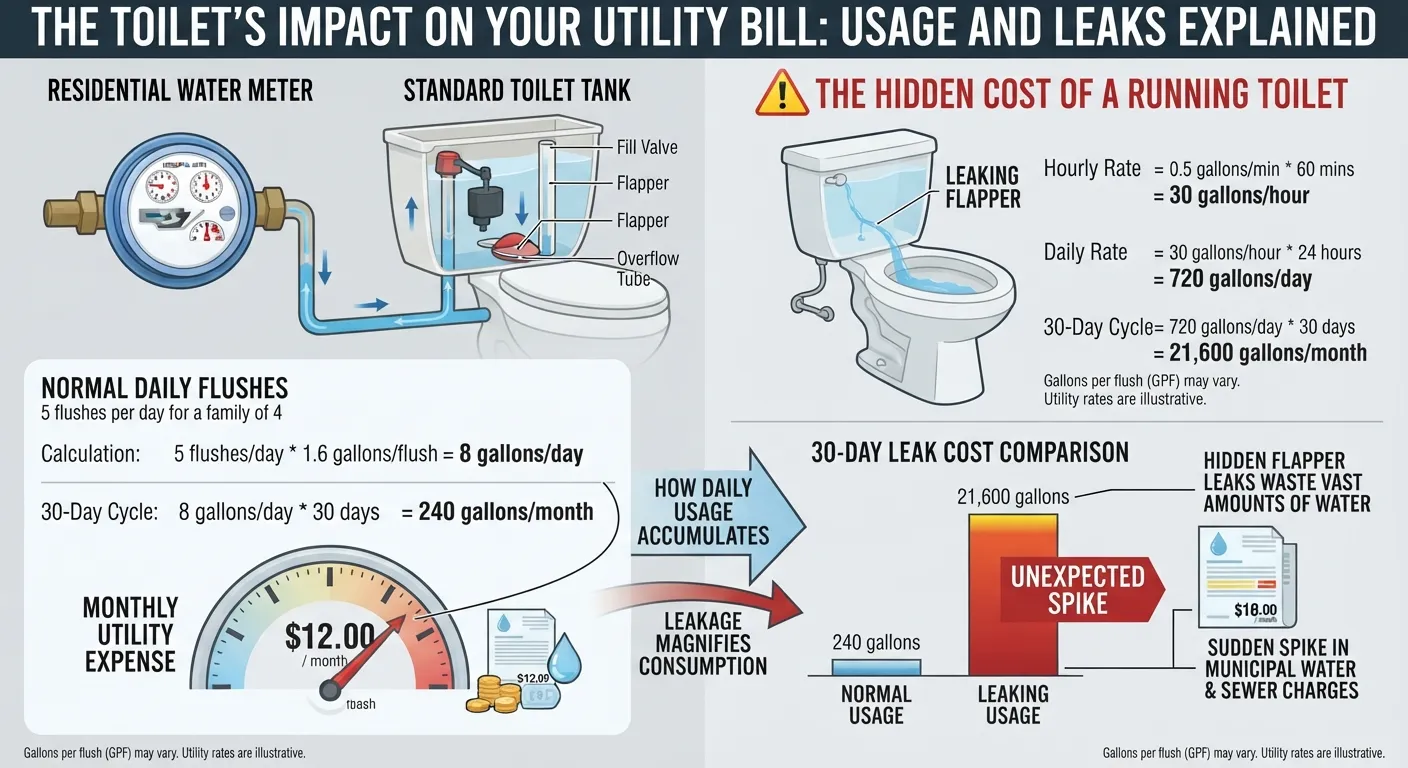
Toilet flushing accounts for nearly 30 percent of total indoor residential water use, making it one of the largest controllable factors on your monthly municipal utility bill. Understanding how normal usage and hidden plumbing leaks impact your expenses helps you identify waste and lower utility costs.
Does Flushing the Toilet Run Up Your Water Bill?
Flushing the toilet directly contributes a substantial portion of your monthly water bill because every single activation draws fresh municipal water and incurs corresponding sewer treatment fees. While necessary for sanitation, inefficient fixtures or excessive daily flushes compound these costs rapidly over a standard 30-day billing cycle.
- Consumption Share: Toilets consume more indoor water than clothes washers, baths, or dishwashers in a typical home.
- Cumulative Billing: Multiple occupants flushing older 3.5 GPF fixtures dozens of times daily can add significant charges to every utility statement.
- Mitigation Strategy: Upgrading to high-efficiency models or adopting dual-flush habits directly reduces this specific category of household expense.
Does Flushing a Toilet Use a Lot of Water?
A single flush uses anywhere from 1.28 to 7 gallons of water depending on the age and model of your toilet, which adds up quickly when multiplied across daily household routines. Over the course of a single year, a standard family flushes thousands of gallons down the drain.
- Volume Context: A standard 1.6-gallon toilet uses enough water over 100 flushes to fill a standard residential bathtub multiple times.
- Daily Accumulation: A four-person family using 20 flushes per day consumes over 32 gallons of water daily just for restroom operations.
- Comparative Efficiency: Modern 1.28 GPF WaterSense fixtures reduce this volume significantly compared to legacy hardware manufactured decades ago.
Normal Flushing vs Hidden Problems
Normal, healthy flushing habits create predictable, manageable utility costs, whereas silent plumbing leaks can secretly double or triple your water bill overnight. Identifying the difference between intentional usage and equipment malfunction is essential for financial control.
- Normal Usage Patterns: Predictable daily flushes scale linearly with household size and maintain stable, expected monthly utility statements.
- Silent Flapper Leaks: A degraded rubber flapper allows a continuous trickle from the tank into the bowl, wasting hundreds of gallons daily without user awareness.
- Proactive Maintenance: Routine dye testing and immediate replacement of worn internal tank components prevent unexpected water bill spikes.
Should You Flush Every Time You Pee?
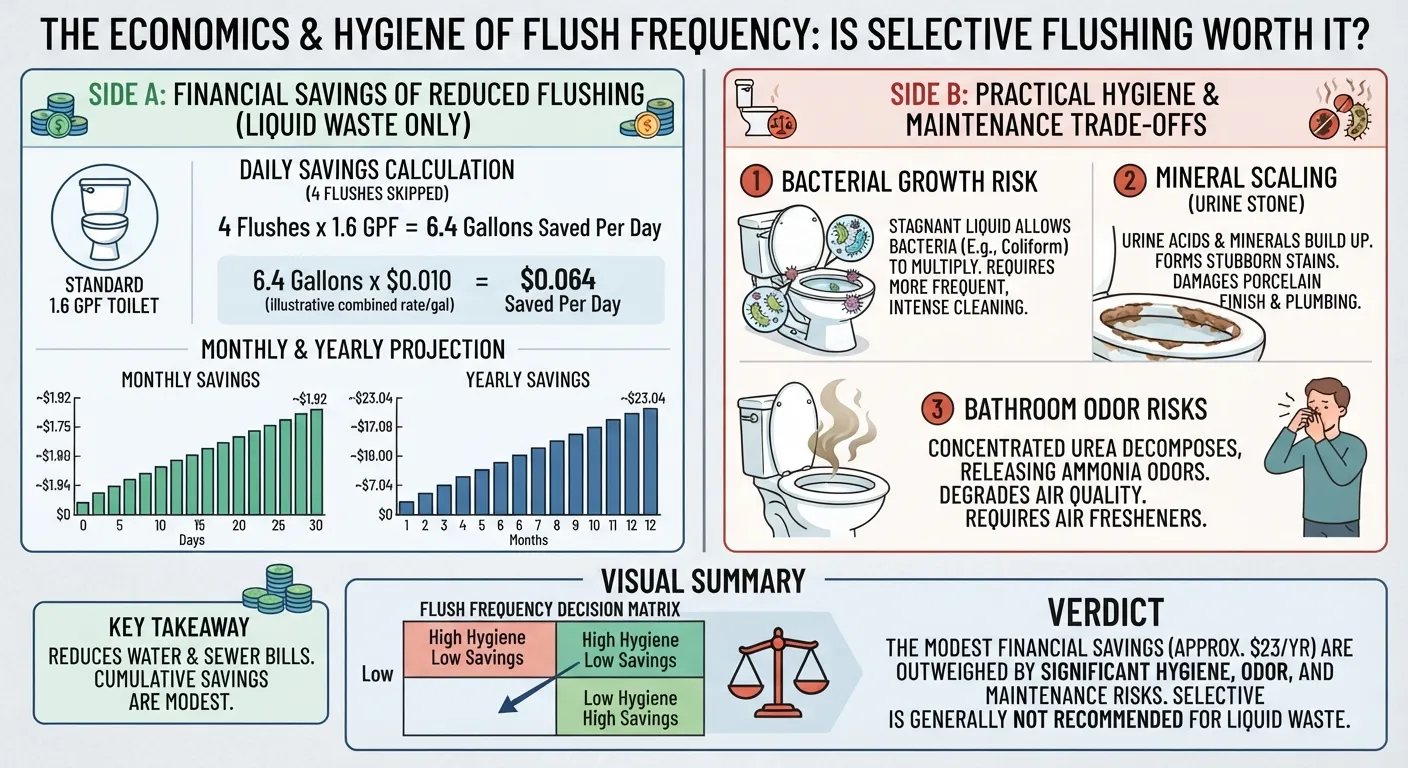
Adopting the classic mantra “if it’s yellow, let it mellow” is a frequent strategy homeowners consider to slash municipal utility bills, but balancing monetary savings against hygiene and plumbing health requires careful consideration. While skipping flushes reduces water consumption, the practice involves distinct trade-offs in household sanitation and fixture maintenance.
Do You Save Money by Not Flushing?
Skipping every other flush cuts your direct toilet water consumption and associated sewer fees in half for liquid waste, leading to tangible reductions on your monthly municipal utility bill. For a multi-person household, cutting out half of daily liquid waste flushes can preserve thousands of gallons of water annually.
- Direct Consumption Drop: Halving daily liquid waste flushes instantly eliminates unnecessary water usage from your household ledger.
- Financial Impact: A four-person family can save between $50.00 and $90.00 annually depending on local water and sewer rates.
- Volume Multiplier: Savings scale directly with household size, offering larger absolute dollar reductions in high-occupancy homes.
Does Not Flushing the Toilet Save Money?
Refraining from flushing after every trip to the restroom definitely saves money on your water utility statement, but the financial savings are often relatively modest for individual users. Because water rates vary by city, the actual dollar amount saved by skipping a 1.5-cent flush is measured in pennies per occurrence.
- Per-Flush Savings: Each skipped flush saves roughly 1.5 to 2.5 cents based on standard 1.6 GPF hardware and average utility rates.
- Monthly Accumulation: Over 30 days, skipping one flush per day per person accumulates to roughly $0.45 to $0.75 in direct savings per individual.
- Cost-Benefit Reality: While mathematically effective, the minor financial return must be weighed against aesthetic and sanitary drawbacks within the home.
Pros, Cons & Hygiene Trade-offs
Deciding whether to let liquid waste sit in the bowl involves balancing minor utility savings against noticeable drawbacks regarding bathroom odor, bacterial growth, and aesthetic comfort for residents and guests.
- Sanitary Concerns: Stagnant urine releases uric acid odors into the bathroom air and promotes rapid bacterial proliferation inside the bowl.
- Staining and Mineral Buildup: Leaving urine sitting for extended periods accelerates mineral scaling and stubborn ring formation at the water line.
- Social and Aesthetic Factors: Reduced guest comfort and unpleasant bathroom odors often outweigh the minimal financial savings for most homeowners.
Realistic Dollar Savings Practical Example
Quantifying the actual financial return of selective flushing demonstrates whether the practice is truly worth implementing in your daily routine. Breaking down the numbers clarifies the exact annual yield of this conservation habit.
- Baseline Scenario: A single person urinates six times daily using a standard 1.6 GPF toilet at $0.012 per gallon ($0.0192 per flush).
- Selective Flushing Routine: If three of those daily flushes are skipped, daily savings amount to roughly 5.7 cents.
- Annual Yield: Saving 5.7 cents daily totals approximately $21.00 in annual savings for one person, proving that the financial reward is relatively minor compared to upgrading to an efficient dual-flush system.
The Hidden Cost Running Toilets & Leaks
While standard daily operations add predictable expenses to your utility bill, a silent plumbing leak can quietly drain hundreds of dollars over the course of a year. Identifying and resolving failing flapper valves or constant running issues is the single most effective way to protect your wallet from unexpected financial spikes.
How Much Does It Cost If Your Toilet Runs All Night?
A continuously running toilet can waste upwards of 200 to 500 gallons of water every single day if the fill valve fails to shut off or the flapper remains unseated. Over a single night spanning eight hours, this malfunction can easily dump 100 gallons or more down the drain, translating to an extra $1.00 to $3.00 wasted in mere hours.
- Hourly Water Loss: A stuck or warped flapper can leak between 1 and 3 gallons of water every minute continuously.
- Overnight Expense: A standard 8-hour overnight run can rack up an unnecessary charge equivalent to dozens of intentional flushes.
- Financial Accumulation: Left unaddressed for weeks, a minor running malfunction transforms into a massive, unexpected surcharge on your monthly municipal statement.
What Uses 200 Gallons of Water a Day?
A minor, silent toilet leak stemming from a degraded rubber flapper valve is the primary household culprit that quietly consumes 200 gallons of water daily without any visible pooling on the bathroom floor. Because the water slips directly from the tank into the bowl via the overflow tube, homeowners often remain completely unaware of the massive volume being wasted.
- Silent Seepage: The rate of flow is often quiet enough to escape notice, hiding behind closed bathroom doors.
- Daily Volume Equivalent: 200 gallons matches the daily output of multiple running household appliances combined.
- Common Culprits: Mineral scaling, stiff rubber seals, or tangled flush chains frequently cause these persistent, hidden leaks.
How to Check If Your Toilet Is Leaking Dye Tablet Test
Performing a quick dye test takes less than fifteen minutes and provides definitive proof of whether your toilet tank is secretly leaking water into the bowl. This simple diagnostic method requires no specialized plumbing tools and can be executed using standard household items.
- Step 1 (Prepare the Tank): Remove the porcelain lid from your toilet tank and inspect the water surface. Drop specialized dye tablets or 10 to 15 drops of dark food coloring directly into the standing tank water.
- Step 2 (Wait Without Flushing): Do not flush or use the toilet for 15 to 20 minutes, allowing the colored tracer dye to disperse thoroughly through the tank.
- Step 3 (Inspect the Bowl): Check the water inside the toilet bowl. If the colored dye seeps down from the tank into the bowl without any flushing, you have a confirmed silent leak requiring a replacement flapper.
Monthly & Yearly Cost of an Unfixed Leak
Ignoring a silent toilet leak turns a minor equipment malfunction into a persistent financial drain that inflates every utility bill cycle. Because water meters register every single drop passing through the supply line, unresolved leaks compound costs rapidly over time.
- Monthly Waste Volume: A steady moderate leak wasting 200 gallons a day accumulates to roughly 6,000 gallons of lost water every month.
- Monthly Financial Penalty: Depending on local utility pricing tiers, an unfixed leak adds an extra $30.00 to $70.00 to your monthly bill.
- Annual Expense Impact: Over a 12-month period, neglecting a $10 rubber flapper replacement can easily cost upwards of $300 to $800 in wasted water and sewer fees.
Why Is My Sewer Bill Higher Than My Water Bill?
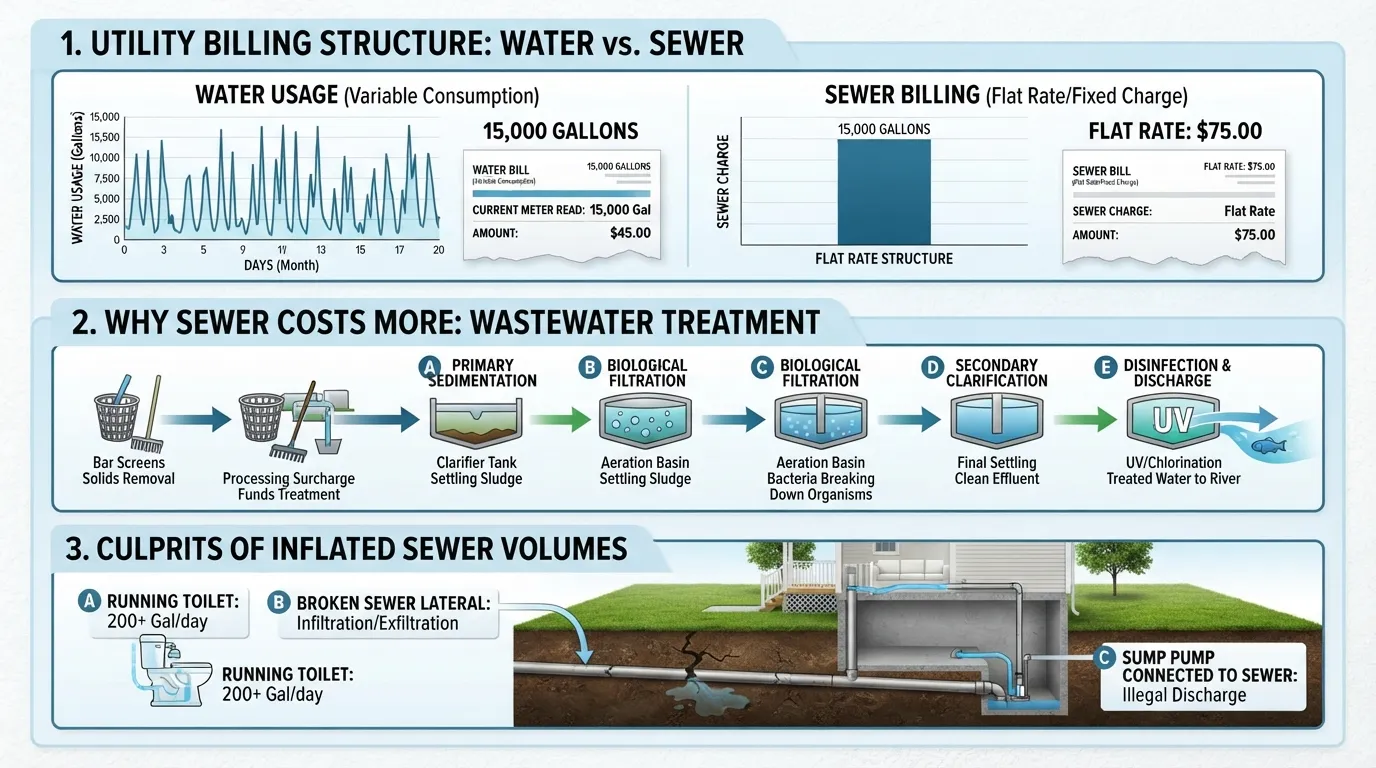
Discovering that your municipal sewer charges outstrip your fresh water supply costs on your utility bill is a common shock for homeowners. Municipalities structure utility rates this way because collecting, treating, and purifying wastewater is far more complex and chemically intensive than simply pumping fresh water to your tap.
The Sewer Multiplier Explained
Municipal utility providers often calculate your sewer bill by applying a fixed multiplier to your total incoming fresh water usage, assuming that nearly every gallon entering your home eventually leaves as wastewater. Because treating sewage requires extensive biological and chemical processing facilities, municipalities price wastewater disposal at a significantly higher rate per gallon than incoming supply.
- Assumption of Return: Most city utilities bill sewer volume as a direct 1:1 ratio or higher based on your metered water consumption.
- Processing Costs: Treating contaminated wastewater to environmental discharge standards involves complex filtration, aeration, and disinfection protocols.
- Surcharge Rates: It is standard practice for wastewater utility tiers to cost 1.5 to 2 times more per unit than fresh water delivery.
Why Sewer Rates Are Often Higher Than Water Rates
Operating a municipal wastewater treatment plant demands vastly more infrastructure investment, maintenance, and regulatory oversight than sourcing and piping raw freshwater from local reservoirs. These immense operating expenditures are passed directly to consumers through inflated sewer rate tiers on monthly statements.
- Infrastructure Maintenance: Managing miles of underground sanitary sewer mains, lift stations, and massive treatment plants requires continuous capital funding.
- Strict Environmental Regulations: Federal and state clean water standards demand rigorous chemical treatment and continuous testing before treated water can be safely released back into natural waterways.
- Stormwater Management: Combined municipal sewer systems must also process rainwater runoff during heavy storms, increasing overall facility wear and operational costs.
What Wastes the Most Water in a House?
Analyzing whole-house indoor water consumption reveals where your household spends the majority of its utility budget, placing toilet usage into proper perspective. While toilets represent a massive share of indoor water use, showers and laundry appliances frequently consume even greater volumes depending on daily family habits.
Toilet vs Shower vs Washing Machine vs Dishwasher
What Runs Your Water Bill Up the Most?
Showers and toilets typically tie for the largest share of indoor water consumption in a standard residential home, followed closely by clothes washing machines. Together, these three categories account for more than 70 percent of all water passing through a household utility meter.
- Showers and Bathing: Accounting for roughly 20 percent of indoor use, long showers utilizing standard non-aerated showerheads quickly outpace individual toilet flushes.
- Toilet Flushing: Consuming nearly 30 percent of indoor water, toilets represent the single largest constant category of daily indoor water waste.
- Laundry Appliances: Older top-loading washing machines consume up to 45 gallons per cycle, making laundry a major contributor to high monthly water bills.
How to Reduce Your Toilet’s Water Cost Practical Tips
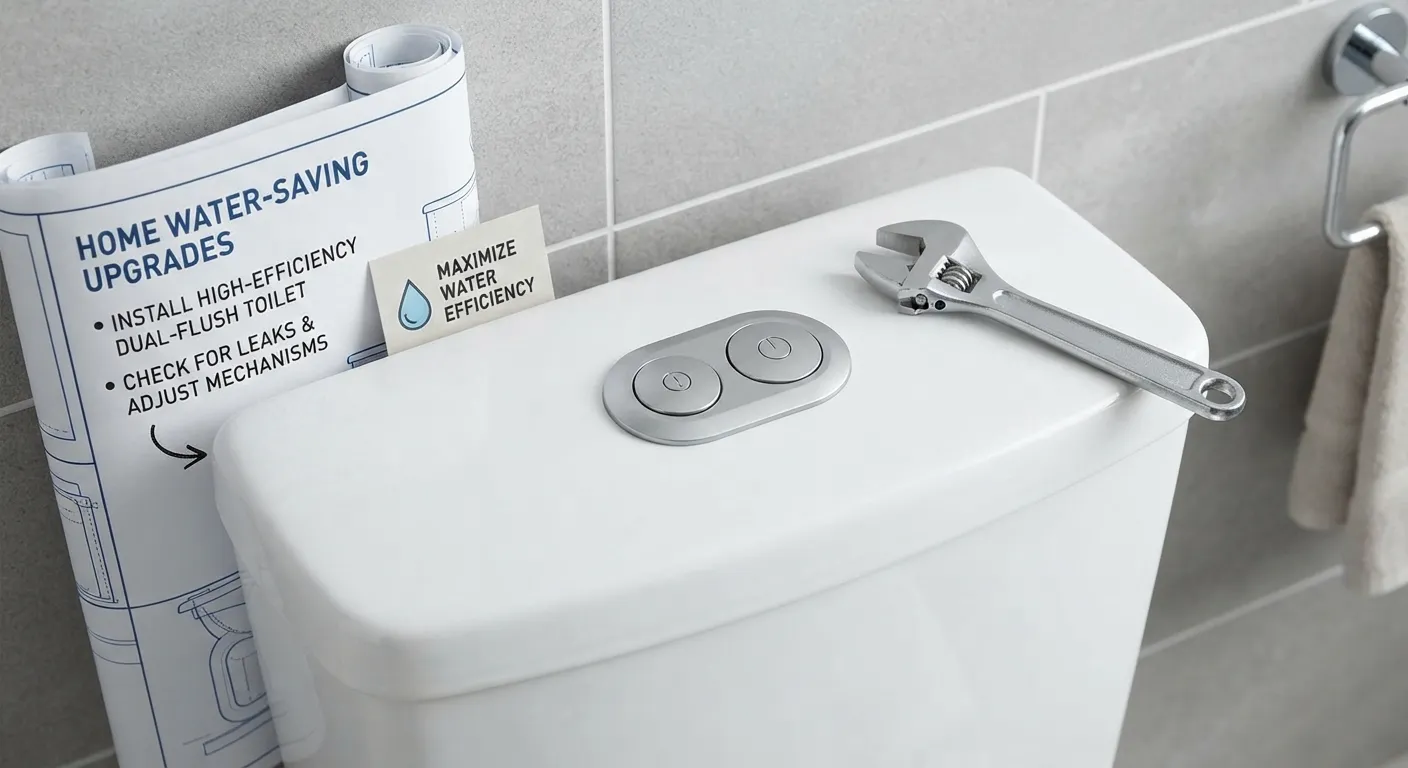
Implementing targeted plumbing upgrades and minor habit adjustments can dramatically cut your toilet’s water consumption and lower your monthly utility bills. Combining hardware updates with vigilant maintenance ensures maximum long-term savings for your household.
Upgrading to a WaterSense Dual Flush Toilet ROI Payback Period
Replacing an older, high-volume toilet with a modern WaterSense certified model or dual-flush system drastically cuts water usage per flush and delivers a rapid return on investment. The money saved on monthly utility bills quickly offsets the initial cost of purchasing and installing a new fixture.
- Reduced Consumption: Modern dual-flush models use as little as 0.8 gallons for liquid waste and 1.28 gallons for solid waste.
- Fast Financial Payback: For high-occupancy households using older 3.5 GPF fixtures, a new toilet often pays for itself through utility savings within two to three years.
- Property Value Increase: Upgrading dated plumbing fixtures modernizes bathrooms and enhances overall home efficiency ratings.
Fixing Leaks Immediately
Addressing degraded flappers, warped seals, and malfunctioning fill valves the moment they appear stops silent water loss before it inflates your monthly utility statement. Routine visual inspections of your tank internals prevent small hardware failures from turning into expensive utility bills.
- Quick Component Swaps: Replacing a worn rubber flapper costs less than $15 and takes minutes to install without professional plumbing help.
- Annual Tune-Ups: Routinely checking fill valves and flush chains ensures your tank seals properly after every single use.
- Immediate Savings Halt: Stopping a silent leak instantly eliminates hundreds of gallons of daily waste from your household ledger.
Simple No-Cost Habits
Adopting simple behavioral adjustments around the house requires zero financial investment while immediately reducing total daily water consumption. Small changes in how family members interact with plumbing fixtures add up to meaningful yearly savings.
- Avoid Using the Toilet as a Trash Can: Tossing facial tissues, wipes, or small debris into the trash prevents unnecessary, wasteful flushes.
- Check Handle Jiggling: Ensuring family members do not leave the flush handle stuck down prevents continuous running between uses.
- Monitor Guest Usage: Educating visitors or children on proper conservative water habits maintains whole-house efficiency consistently.
Trivia Who Was Thomas Crapper?
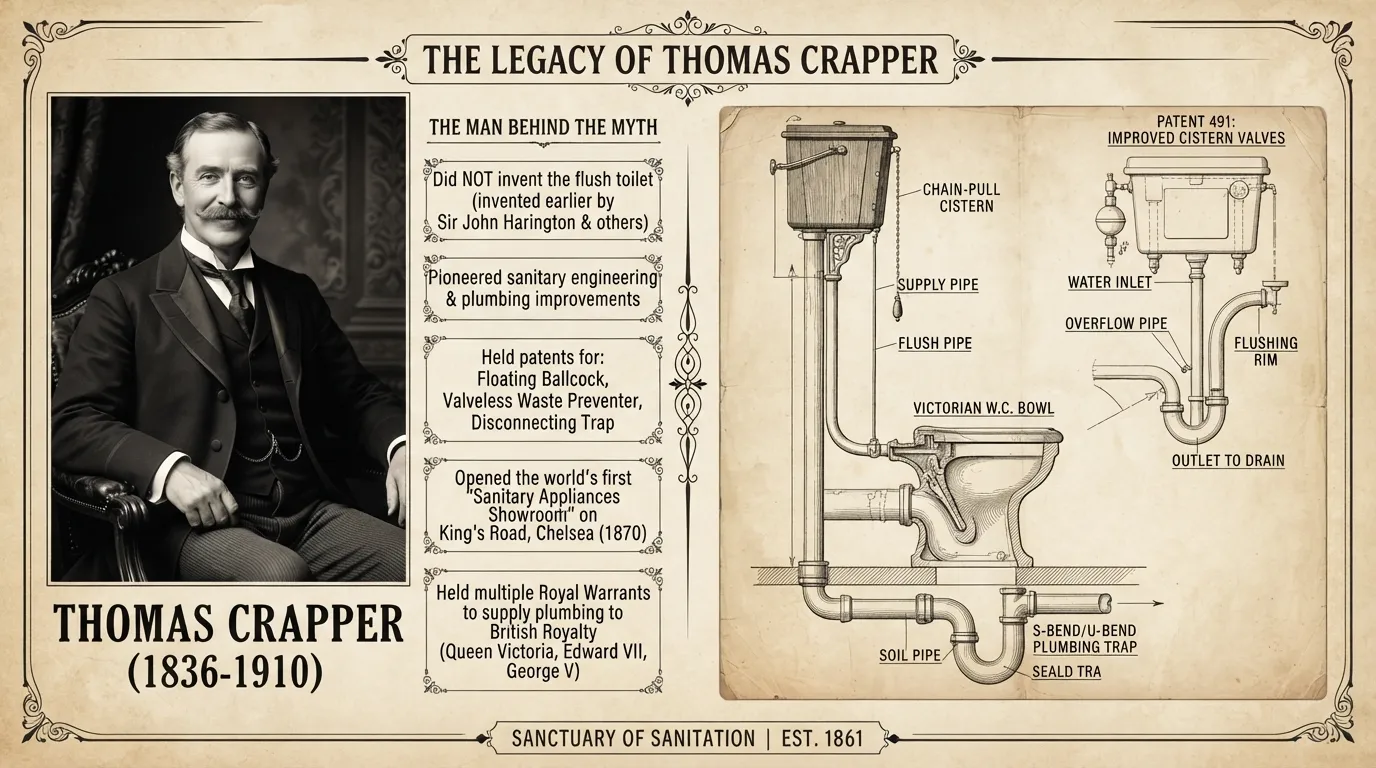
Thomas Crapper was a famous 19th-century sanitary engineer and plumbing entrepreneur whose company popularized modern flush toilets in Victorian England. While popular folklore often mistakenly credits him with inventing the flushing toilet entirely, his true historical legacy lies in revolutionizing plumbing manufacturing, showroom retail, and high-quality sanitary hardware installation.
Thomas Crapper’s Real Role in Toilet History
Although Thomas Crapper did not invent the first flush toilet—which was actually patented by Sir John Harrington in 1596 and later advanced by Alexander Cummings in 1775—he built a thriving plumbing empire that perfected foundational tank mechanisms. His London-based firm manufactured reliable ballcocks, improved siphon systems, and held multiple Royal Warrants for supplying sanitation equipment to British palaces.
- Manufacturing Innovation: Crapper’s company mass-produced durable, high-quality earthenware toilets and advanced flushing valves that drastically reduced household plumbing breakdowns.
- Popularizing Sanitation: By opening one of the world’s first dedicated sanitary appliance showrooms on Oxford Street, he helped remove the social taboos surrounding indoor plumbing.
- Etymological Legend: Allied soldiers stationed in England during World War I noticed his surname stamped on porcelain sanitary ware throughout British barracks, popularizing the slang term “crap” in American military culture.
Frequently Asked Questions
How much water does a toilet use per flush?
A modern toilet typically uses between 1.28 and 1.6 gallons of water per flush, while older legacy models manufactured before 1994 can consume anywhere from 3.5 to 7 gallons per flush.
- High-Efficiency Models: WaterSense certified fixtures consume precisely 1.28 gallons per flush.
- Standard Modern Models: Units manufactured after 1994 standardly use 1.6 gallons per flush.
- Older Legacy Units: Vintage systems from the 1980s and earlier use 3.5 to 7 gallons per flush.
Does flushing the toilet use a lot of water?
Yes, toilet flushing accounts for nearly 30 percent of total indoor residential water use, making it the single largest consumer of water inside a typical home.
- Volume Impact: A standard family of four uses dozens of gallons daily just for restroom operations.
- Comparative Scale: Toilets consume more indoor water on average than clothes washers, dishwashers, or baths.
- Conservation Potential: Upgrading older fixtures instantly reduces this massive daily indoor consumption share.
What runs your water bill up the most?
Toilets and showers typically drive up indoor water bills the most, accounting for over 50 percent of combined household water consumption when factoring in regular daily use and potential leaks.
- Top Consumer: Toilets represent the highest constant volume of daily indoor water waste and usage.
- Close Contender: Long showers using non-aerated showerheads rival toilets in total household water volume.
- Hidden Drivers: Silent toilet leaks can double a monthly utility bill overnight by continuously running hundreds of gallons down the drain.
Final Takeaway
Mastering your household water expenses comes down to understanding that routine flushing costs mere pennies, whereas silent equipment failures can drain hundreds of dollars from your wallet. Focusing on hardware efficiency and proactive leak detection provides far greater financial relief than altering daily restroom habits.
Key Numbers Recap
Reviewing the core mathematical baselines clarifies exactly how much individual flushes and household usage contribute to your overall municipal utility expenditure.
- Per Flush Expense: Standard modern toilets cost between 1 and 3 cents per flush, while older legacy models cost up to 7 cents.
- Indoor Consumption Share: Toilets account for nearly 30 percent of total indoor residential water use.
- Leak Impact: A single running toilet wasting 200 gallons a day adds up to hundreds of dollars in unnecessary annual utility surcharges.
The One Thing That Actually Impacts Your Bill Leaks Not Flushing Habits
Obsessing over whether to skip individual flushes yields negligible monetary savings, whereas identifying and repairing a silent flapper leak instantly protects your household budget from hundreds of dollars in wasted utility fees.
- The Myth of Skipping Flushes: Refusing to flush liquid waste saves mere pennies per month while creating noticeable sanitation and odor issues.
- The Reality of Silent Leaks: A degraded $10 rubber flapper running unnoticed overnight causes massive, compounding water waste on your monthly bill.
- Final Actionable Advice: Perform a routine dye test, replace worn tank seals immediately, and upgrade to high-efficiency WaterSense fixtures to permanently secure your utility savings.

Oscar Vance | Master Plumber & Drainage Expert
Meet Oscar Vance, a licensed master plumber sharing practical solutions on residential repairs, preventive maintenance, and thoughtful home upkeep.