Is It Better to Use PVC or PEX?
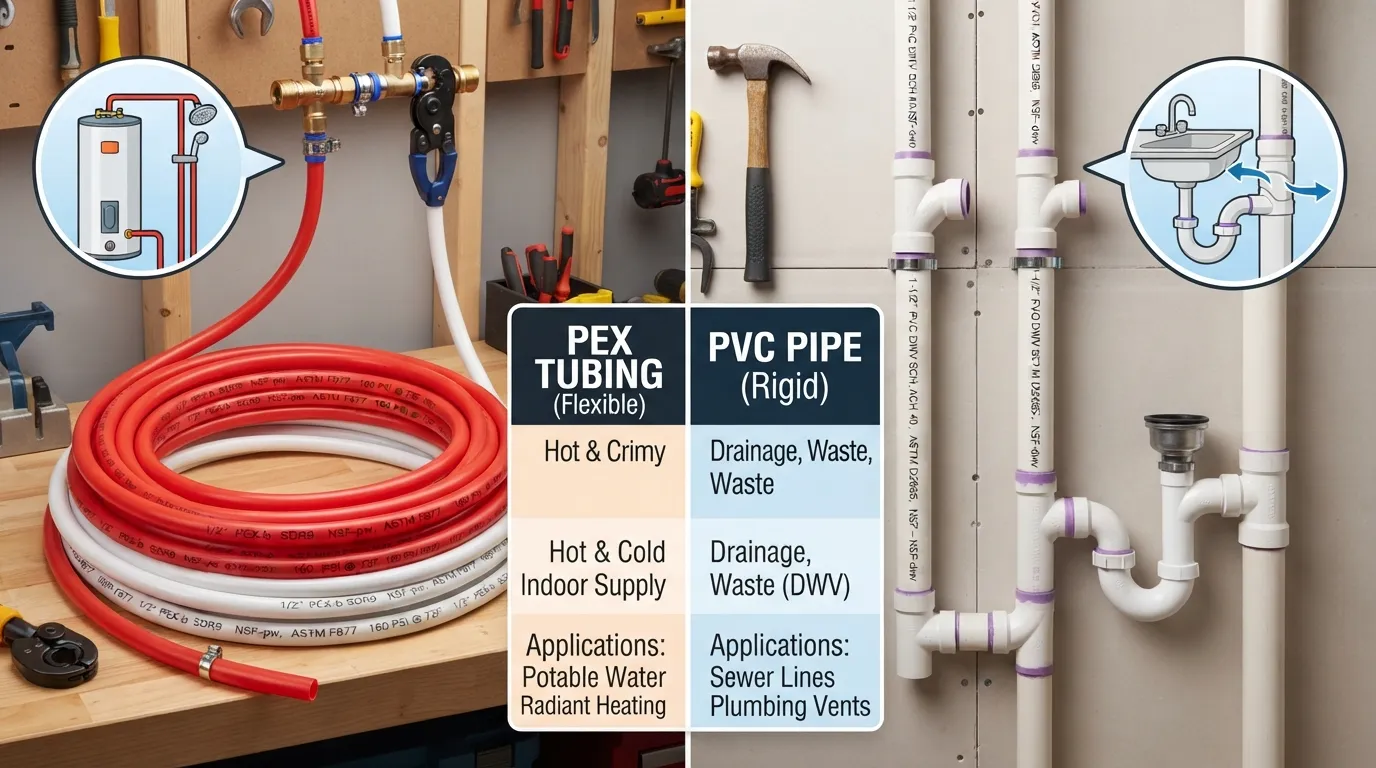
PEX is generally better for indoor supply lines due to its superior flexibility, exceptional freeze resistance, and seamless handling of both hot and cold water. PVC is the ideal choice for outdoor drainage, vent systems, and main underground supply lines because of its rigid durability and high pressure tolerance.
- PEX (Cross-linked Polyethylene): Perfect for flexible indoor plumbing, domestic water lines, and navigating tight spaces with fewer joints.
- PVC (Polyvinyl Chloride): Essential for non-pressurized drainage, waste lines, and robust exterior plumbing applications.
Is Guide Mein Kya Cover Hoga
This guide explores critical performance metrics including cost, installation efficiency, lifespan, temperature thresholds, and building code requirements to help you choose the right material for your specific project.
PEX vs PVC vs CPVC Comparison Table
PEX vs CPVC Kya Farq Hai?
CPVC handles high temperatures and pressure ratings comparable to copper pipe networks, making it a rigid choice for indoor lines. Meanwhile, PEX brings ultimate flexibility and an extended functional lifespan compared to standard composite pipe variants.
- Rigidity vs Bending: CPVC requires glued fittings and rigid joints, whereas PEX bends around layout turns easily.
- System Integration: Both materials offer robust pressure ratings, but PEX excels at absorbing sudden pressure spikes.
What Is PEX Pipe & What Is PVC Pipe?
Cross-linked polyethylene (PEX) is a flexible, durable plastic pipe widely utilized for modern indoor supply lines. It expands and contracts under stress, making it exceptionally resilient against thermal shock and pressure variations.
- PEX-A: Manufactured using the Engel (peroxide) method, offering maximum flexibility, superior freeze resistance, and memory expansion.
- PEX-B: Created via the silane method, providing high rigidity and robust bursting strength for standard installations.
- PEX-C: Produced through electron-beam irradiation, delivering a balanced mid-tier flexibility and clean manufacturing profile.
PVC Polyvinyl Chloride Definition & Common Schedule Types
Polyvinyl chloride (PVC) is a rigid thermoplastic pipe engineered for structural stability, drainage, and non-potable outdoor water transport. It withstands heavy environmental impacts but remains unsuited for high-temperature indoor hot water lines.
- Schedule 40 PVC: The standard residential choice for drain, waste, and vent (DWV) systems and low-pressure irrigation networks.
- Schedule 80 PVC: Features thicker walls designed to handle higher industrial pressure ratings and chemical processing lines.
Key Differences Between PEX and PVC
PEX functions exclusively as a pressurized piping network for clean indoor hot and cold water distribution. In contrast, standard PVC serves as a non-pressurized system dedicated to drainage, waste, and vent (DWV) stacks.
- Indoor Supply: PEX safely delivers potable drinking water throughout modern residential structures.
- Drainage Transport: PVC handles heavy wastewater removal, main sewer lines, and outdoor venting safely.
Flexibility & Number of Joints Required
PEX bends smoothly around corners and structural studs, drastically minimizing the need for elbows and specialized joints. Rigid PVC requires multiple glued fittings and connectors to navigate any layout changes.
- Fewer Leak Points: Flexible PEX runs significantly reduce joint failure risks behind walls.
- Rigid Alignment: PVC layouts demand precise measurements and structural support brackets at regular intervals.
Installation Method Crimp Expansion Rings vs Solvent Cement
Installing PEX involves mechanical connection systems using metal crimp rings, copper rings, or expansion fittings with plastic sleeves. PVC installation relies on chemical welding via purple primer and solvent cement to fuse components.
- Mechanical Fastening: PEX tools secure tight fittings instantly without hazardous chemical fumes or drying times.
- Solvent Welding: PVC chemical bonding melts the plastic surfaces together to form an unbreakable monolithic joint once cured.
Freeze Resistance Kya PEX Sach Mein Nahi Phatta?
PEX expands outward when internal water freezes, offering exceptional elasticity that prevents sudden burst pipes in sub-zero temperatures. Rigid PVC lacks this elasticity and will crack or shatter under the exact same ice expansion pressure.
- Elastic Expansion: PEX stretches safely to accommodate ice formation during unexpected winter freezes.
- Brittle Fracture: Rigid PVC structures split open easily when trapped water freezes solid inside them.
Lifespan & Durability 50 years vs 50–70+ years Practical Breakdown
PEX delivers an expected functional lifespan of 40 to 50 years when shielded from UV degradation and extreme thermal stress. PVC often lasts 50 to 100 years underground because it resists chemical corrosion, though sunlight exposure degrades both materials quickl
Which One Should You Choose? Decision Framework by Scenario
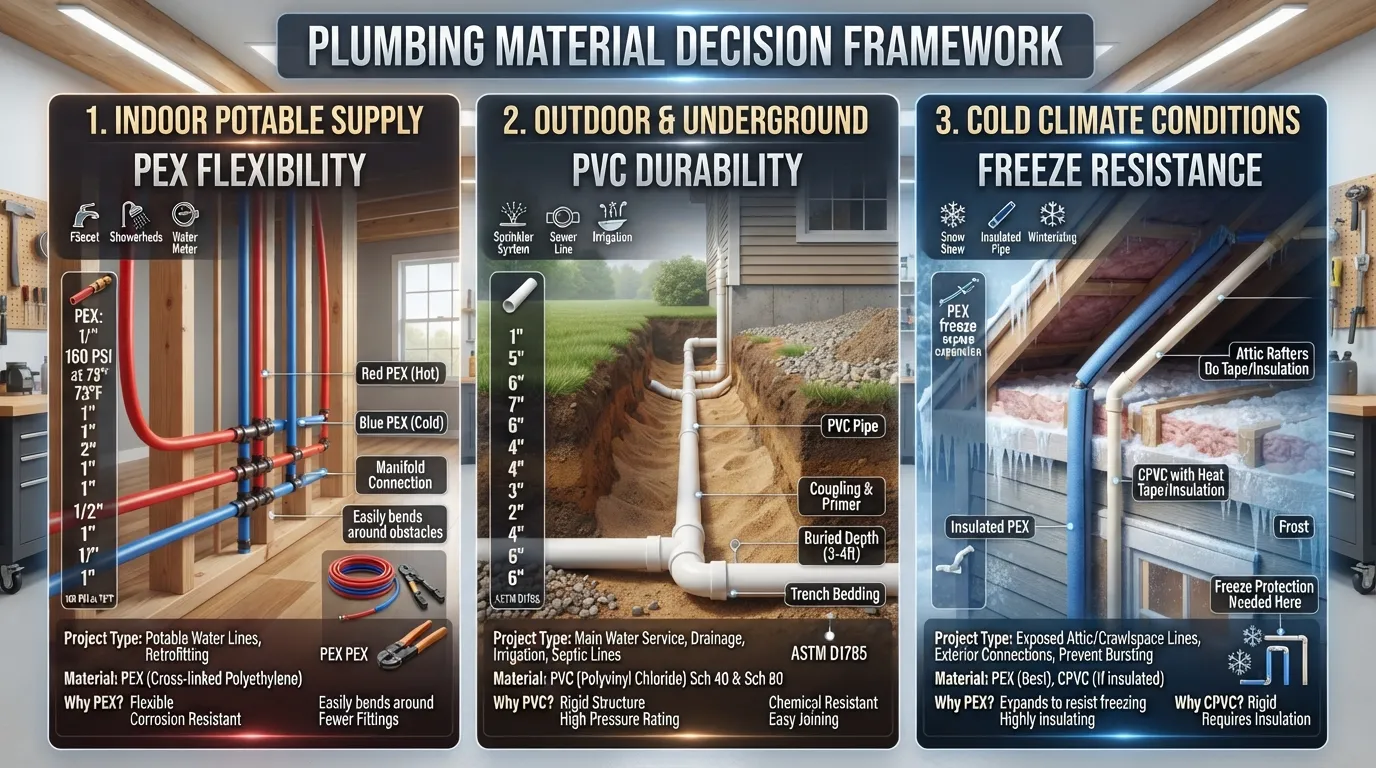
PEX is the undisputed industry standard for indoor supply lines and potable drinking water distribution. Its flexibility allows it to snake easily through wall cavities without frequent fittings.
- Potable Safety: Certified safe for carrying clean domestic drinking water under continuous pressure.
- Efficient Routing: Eliminates dozens of standard joints, drastically reducing potential leak vectors.
For Drainage, Waste & Vent Lines
PVC is the definitive choice for handling non-pressurized drainage systems and gravity-fed wastewater removal. Its rigid structural profile supports heavy waste loads without sagging or warping.
- Gravity Flow Stability: Rigid PVC maintains precise slope gradients essential for proper wastewater drainage.
- Chemical Resistance: Resists household cleaners, soaps, and corrosive sewer gases efficiently.
For Outdoor Use
PVC outclasses PEX for outdoor use because standard PEX degrades rapidly when exposed to direct ultraviolet (UV) sunlight. When running outdoor plumbing lines, rigid PVC or protected conduit systems are required.
- UV Degradation Resistance: PVC holds up well under exterior sun exposure when properly shielded or painted.
- Structural Rigidity: Withstands environmental weather elements and minor external impacts above ground.
For Underground Installation
PVC serves as the reliable standard for underground plumbing infrastructure like main sewer lines, exterior cleanouts, and irrigation conduits. Its high crush resistance prevents collapse under heavy shifting soil loads.
- Soil Load Bearing: Thick wall schedules absorb ground pressure and heavy traffic loads above.
- Corrosion Proof: Completely immune to rust, root intrusion vulnerabilities, and electrochemical soil reactions.
For Cold Climate Regions Freeze Prone Areas
PEX is the optimal material for cold climate regions and freeze-prone areas because its elastic molecular structure expands instead of shattering when water freezes inside. PVC will rupture immediately under the exact same internal ice expansion.
- Elastic Ice Tolerance: Expands outwardly to accommodate freezing water volume safely.
- Winter Durability: Drastically lowers the risk of catastrophic indoor pipe bursts during severe winter freezes.
Why Do Insurance Companies Not Like PEX Plumbing?
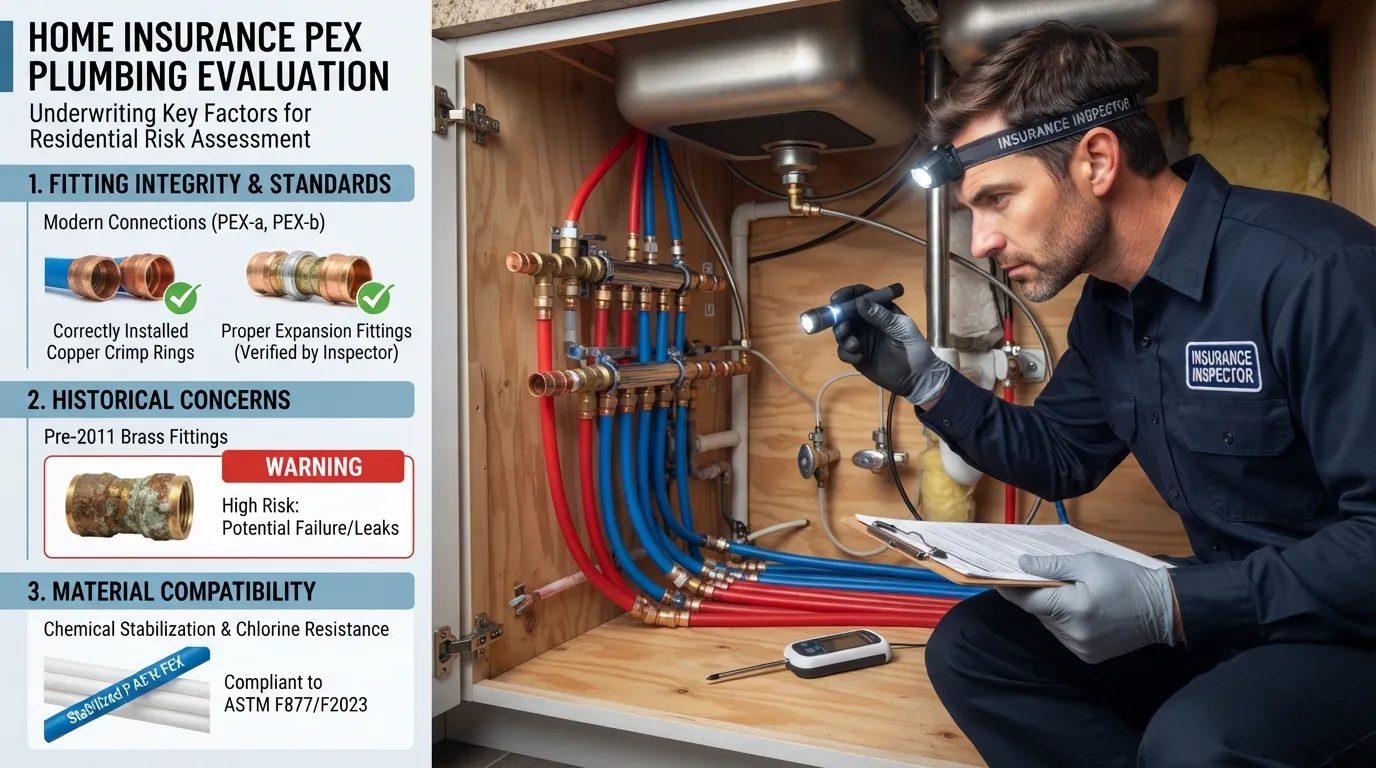
Insurance companies generally favor modern plumbing materials like PEX over legacy systems, but underwriting hesitations often arise due to historical product liabilities, early-generation manufacturing faults, and fitting degradations. Past class-action lawsuits tied to specific pre-2011 brass fittings and early experimental resin blends have left carriers cautious about sudden water damage risks.
- Early-Generation Fitting Failures: Defective brass insert fittings used in older installations experienced dezincification, leading to joint leaks.
- Chlorine & Chemical Degradation: Aggressive municipal water treatment chemicals can occasionally react with low-grade plastic compounds over long periods.
- Rodent Vulnerability: Pented or exposed lines run through crawlspaces can occasionally be chewed by rodents looking for water.
Does This Mean PEX Is Unsafe?
PEX is thoroughly certified, heavily tested, and completely safe when installed to modern building codes using current ASTM standards. Modern PEX manufactured after 2011 features vastly superior chemical stabilization and redesigned expansion or crimp connection systems that eliminate historical vulnerabilities.
- Strict Code Compliance: Approved by major model plumbing codes across North America for residential and commercial supply distribution.
- Material Evolution: Contemporary PEX tubing effectively resists the environmental stress cracking that plagued experimental batches from decades prior.
What Homeowners Should Check With Their Insurer
Homeowners planning a repipe or purchasing a house with PEX should proactively consult their insurance carrier to clarify policy requirements. Underwriting guidelines vary widely between providers regarding acceptable installation dates and material documentation.
- Installation Timeline Documentation: Confirm whether your insurer requires proof that the PEX system was installed after 2011.
- Permit & Contractor Records: Keep professional plumbing installation receipts and local municipal inspection permits handy to streamline policy approval.
Pros and Cons of PEX Pipe
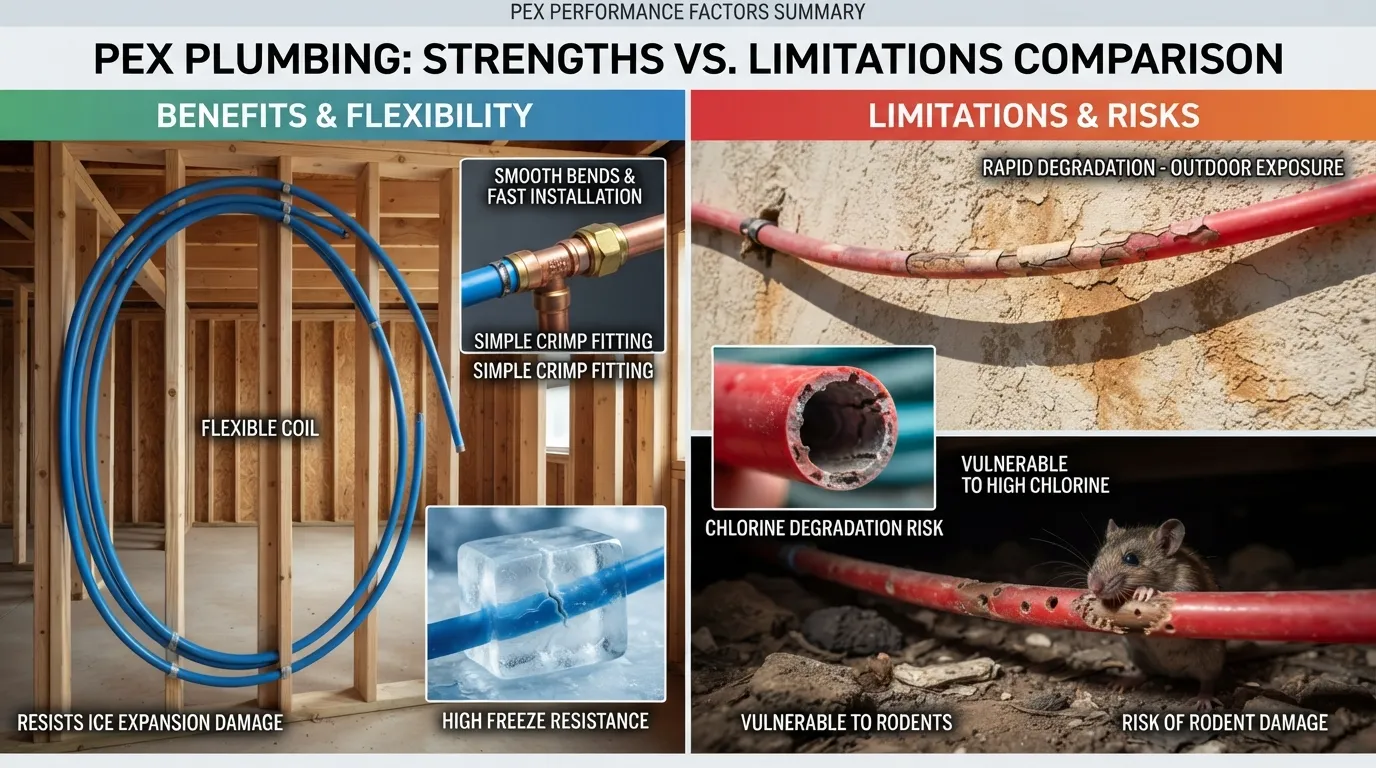
PEX pipe offers exceptional flexibility, lower material costs, and remarkable resistance to freezing temperatures that make it a favorite among modern plumbers. Its continuous coils eliminate the need for dozens of rigid elbows and joints, drastically reducing potential leak points behind walls.
- Superior Flexibility: Bends around structural studs and obstacles easily without requiring specialized connection fittings.
- Freeze Resilience: Expands outward under sub-zero temperatures, preventing the sudden catastrophic splitting common in rigid pipes.
- Quick Installation: Uses fast mechanical crimp, clamp, or expansion ring tools without messy glues or open flames.
Disadvantages Downsides of PEX UV Sensitivity Rodent Chewing Chlorine Sensitivity
PEX degrades rapidly when exposed to direct ultraviolet (UV) sunlight, making it entirely unsuitable for outdoor or unshielded exterior runs. Additionally, its polymer structure can be vulnerable to aggressive municipal chlorine over long periods and occasional chewing by rodents in tight crawlspaces.
- UV Degradation: Sunlight breaks down the polymer chains quickly, requiring complete indoor shielding during installation.
- Rodent Susceptibility: Exposed runs in dark, unfinished basements or attics can occasionally attract rodents seeking moisture.
- Chemical Vulnerability: Low-grade formulations may degrade prematurely when exposed to harsh water treatment chemicals and high heat over decades.
Pros and Cons of PVC Pipe
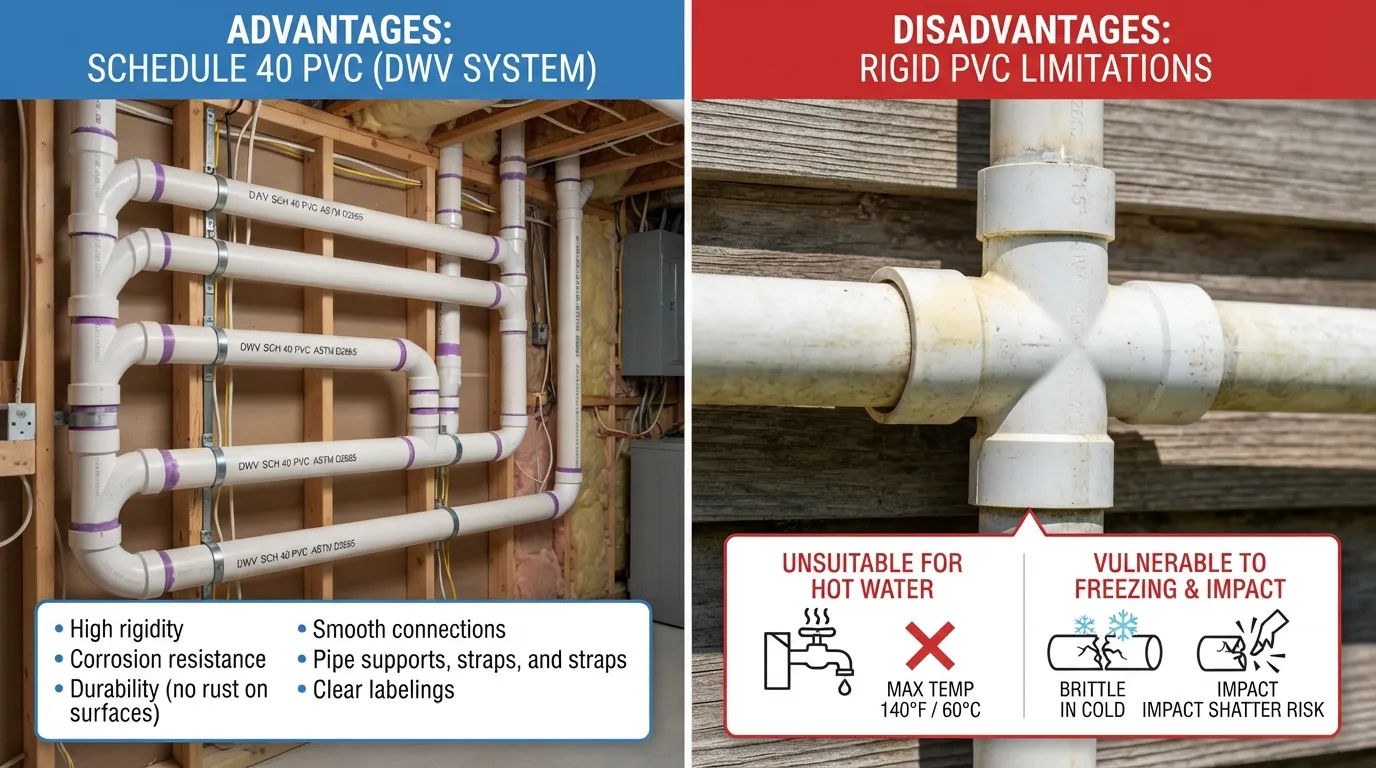
PVC pipe delivers unmatched rigidity, exceptional chemical resistance, and long-term durability for drainage, waste, and vent applications. Its smooth interior walls prevent residue buildup, ensuring uninterrupted wastewater flow over decades of continuous use.
- High Structural Rigidity: Withstands heavy earth loads and pressure underground without sagging or losing its shape.
- Chemical Resistance: Resists household detergents, grease, and acidic sewer gases without corroding or rusting.
- Cost-Effective Drainage: Provides an affordable, long-lasting solution for large-scale DWV systems and outdoor irrigation.
Disadvantages Downsides of PVC (Brittleness Not for Hot Water Chemical Joints
PVC becomes brittle under extreme physical impact or prolonged exposure to freezing temperatures, causing it to shatter easily. It cannot handle high water temperatures or internal pressure loads required for residential hot water supply lines.
- Thermal Limitations: Warps, deforms, and fails under high temperatures, making it unsafe for indoor hot water supply.
- Brittleness & Impact Damage: Shitters under sudden physical impact or frozen water expansion due to its rigid molecular makeup.
- Solvent Dependency: Requires hazardous chemical primers and glues to create permanent joints, demanding proper ventilation during installation.
Do Plumbers Still Use PVC in 2026?
Professional plumbers continue to rely heavily on PVC for all non-pressurized drainage networks, main sewer lines, and outdoor vent stacks. While indoor supply lines have largely transitioned to PEX or copper, PVC remains the absolute gold standard for wastewater management across modern residential and commercial construction.
- Wastewater Infrastructure: Essential for building code-compliant drain, waste, and vent (DWV) systems.
- Unrivaled Longevity: Continues to be specified for underground utilities due to its complete immunity to rust and soil corrosion.
PVC Pipe Color & Schedule Guide
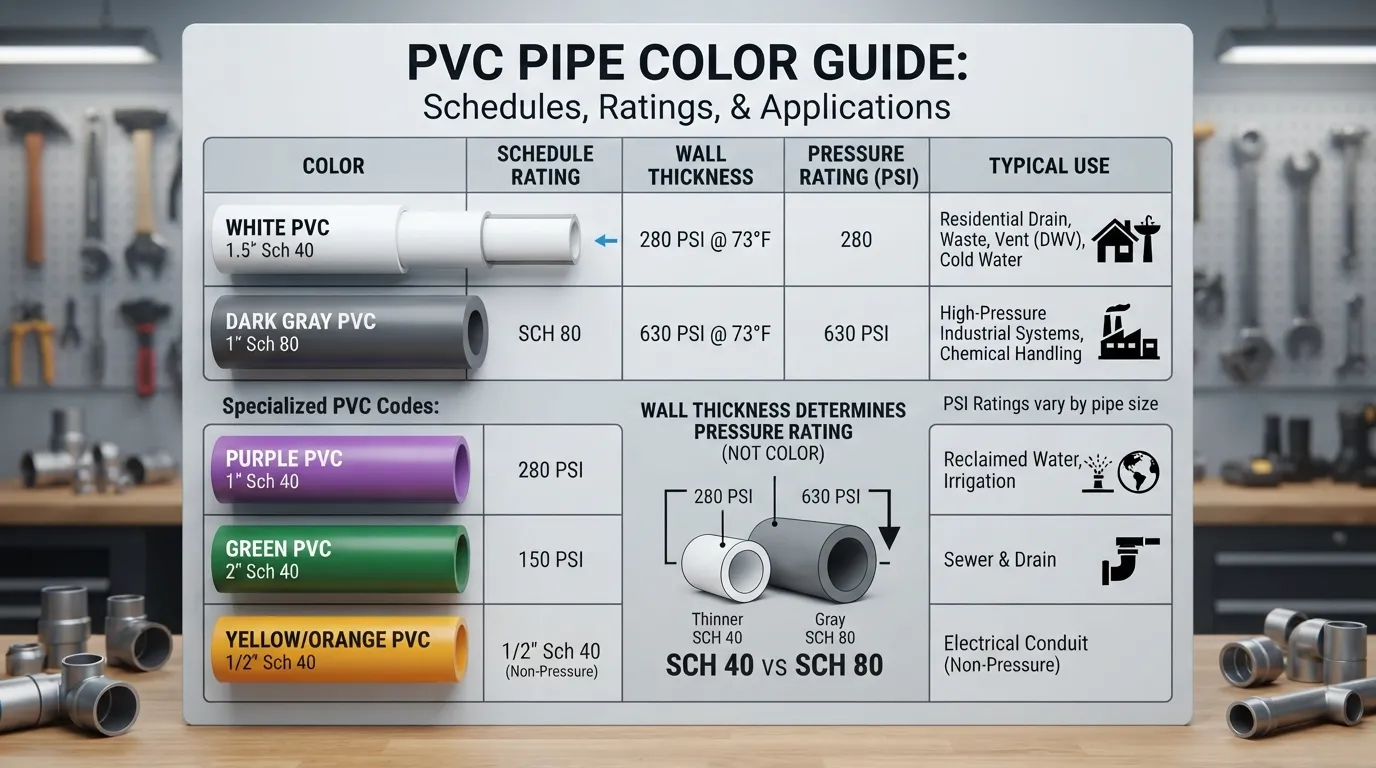
PVC pipe colors serve as standardized visual indicators denoting specific applications, pressure ratings, and intended uses rather than measuring intrinsic plastic strength. Standard white PVC is typically manufactured for residential drainage, waste, and vent systems, while dark gray or blue varieties are engineered for specialized industrial fluid transport and irrigation mains.
- White PVC: Universally designated for residential DWV (drain, waste, and vent) plumbing stacks and non-pressure applications.
- Gray or Dark Blue PVC: Often utilized for industrial process piping, electrical conduits, and high-pressure municipal water supply lines.
- Purple PVC: Reserved strictly for reclaimed or recycled non-potable water distribution systems under local plumbing codes.
Schedule 40 vs Schedule 80 Strength Comparison
Schedule 40 and Schedule 80 ratings define the wall thickness and internal pressure capacity of the pipe rather than its polymer composition. Schedule 80 features significantly thicker walls designed to withstand heavy industrial pressure loads, whereas Schedule 40 is optimized for standard residential gravity drainage.
- Schedule 40: Standard wall thickness providing a balanced mix of durability and cost for everyday residential drainage and venting.
- Schedule 80: Heavy-duty wall thickness providing exceptional burst resistance for high-pressure industrial pumping environments.
Which Color Schedule Is Strongest?
Schedule 80 pipes are structurally the strongest because their thicker walls allow them to handle much higher internal pressures and external crushing forces than Schedule 40. For detailed engineering specifications and regulatory performance benchmarks, consult the Plastic Pipe & Fittings Association technical guide.
- Wall Thickness Factor: Color does not dictate strength; physical wall thickness and schedule rating determine overall pressure resistance.
- Industrial Standard: Dark gray Schedule 80 configurations outperform standard white Schedule 40 lines in high-stress mechanical applications.
Real-World Experience What Homeowners & Plumbers Say
Homeowners frequently praise PEX for its ease of repair and remarkable ability to survive unexpected winter freezes without splitting open inside walls. Many who have upgraded older metallic or rigid systems note how quickly PEX runs smoothly through tight joist spaces with minimal disruption to finished drywall.
- Freeze Season Peace of Mind: Property owners in cold regions report far fewer emergency winter plumbing calls after switching to flexible PEX supply lines.
- Remodeling Flexibility: DIYers and renovators find routing flexible coils through tight framing cavities significantly easier than gluing rigid elbows.
What Professional Plumbers Recommend in 2026
Licensed plumbing contractors overwhelmingly recommend a hybrid piping strategy: utilizing flexible PEX for all pressurized indoor hot and cold distribution lines while relying on rigid PVC exclusively for gravity-fed drain, waste, and vent networks. This combination optimizes material performance, code compliance, and long-term reliability.
- Hybrid System Design: Matching each material to its specific engineering strengths prevents premature failure and ensures maximum operational lifespan.
- Time-Tested Reliability: Professional contractors lean on PVC for all underground and DWV needs because of its unbeatable structural stability against shifting soil.
Practical Tip: Kya Testing Inspection Ke Waqt Dekhna Chahiye
During plumbing installations or home inspections, always verify that PEX lines are fully protected from direct ultraviolet exposure and secured with appropriate expansion or crimp gauges. For PVC drainage runs, ensure that solvent cement joints show clean, uniform beads around the fittings and that proper slope gradients are maintained throughout.
- Pressure Testing: Always conduct a rigorous air or water pressure test before closing up wall cavities to catch connection leaks early.
- Support & Spacing: Check that both PEX and PVC lines feature proper hanger spacing to prevent sagging and stress fatigue over time.
Frequently Asked Questions FAQ
Why Use PEX Instead of PVC?
PEX is used instead of PVC for indoor water supply lines because it is flexible, handles both hot and cold water under high pressure, and expands to resist bursting when water freezes. PVC cannot handle hot water and shatters under freezing conditions.
- Hot & Cold Versatility: Carries potable water at high domestic temperatures safely.
- Freeze Protection: Molecular elasticity protects against winter ice expansion cracks.
Is It Cheaper to Run PEX or PVC?
PEX material costs slightly more per foot than basic PVC, but PEX is cheaper overall for indoor supply installations because its flexibility requires significantly fewer fittings, joints, and labor hours.
- Labor Reductions: Pulling continuous coils slashes installation hours drastically.
- Fittings Savings: Eliminates the purchase of dozens of rigid elbows and connectors.
Which Is Better for Outdoor Use, PEX or PVC?
PVC is much better for outdoor use because it resists UV degradation from direct sunlight. Standard PEX breaks down quickly when exposed to sunlight and must be kept indoors or heavily shielded.
- Sunlight Resistance: PVC stands up well to exterior elements without breaking down chemically.
- Indoor Restriction: PEX requires complete enclosure away from outdoor ultraviolet rays.
How Long Will PEX Pipe Outside Last?
Unshielded PEX will degrade, crack, and fail within a few months if left exposed to direct outdoor ultraviolet sunlight. It is strictly rated for indoor use unless housed inside a protective UV-blocking conduit.
- Rapid UV Breakdown: Solar radiation destroys PEX polymer chains quickly.
- Protective Shielding: Requires physical enclosure if used in outdoor runs.
What Is the Downside to PEX Plumbing?
The primary downsides of PEX include complete sensitivity to UV sunlight, potential vulnerability to chlorine degradation in aggressive water conditions, and rare instances of rodent chewing in dark crawlspaces.
- Sunlight Vulnerability: Cannot be installed where exposed to natural light.
- Pest Risk: Exposed lines in unsealed crawlspaces can attract chewing rodents.
Do Plumbers Still Use PVC Pipe?
Yes, professional plumbers rely on PVC daily for non-pressurized drain, waste, and vent (DWV) systems, main sewer connections, and underground outdoor utility lines due to its unmatched structural rigidity.
- Wastewater Standard: Essential for gravity-fed drain and vent networks.
- Underground Stability: Resists soil pressure and chemical corrosion underground.
What Are the Downsides of PVC Pipes?
PVC cannot handle hot water supply applications, becomes brittle and shatters under impact or freezing temperatures, and requires hazardous chemical solvent cements and primers to assemble.
- Temperature Limits: Deforms and fails under hot water conditions.
- Impact Brittleness: Shatters easily when struck or subjected to internal ice freezing.
What Color PVC Pipe Is the Strongest?
Color does not determine PVC strength; wall thickness and schedule rating dictate load capacity. Dark gray Schedule 80 pipes feature thicker walls and are significantly stronger than standard white Schedule 40 pipes.
- Wall Thickness Matters: Schedule rating dictates the actual pressure limit.
- Industrial Grade: Gray Schedule 80 outperforms standard white Schedule 40.
Is PEX Plumbing Catching on for New Construction? Should It Be?
PEX is the dominant choice for new residential construction because it speeds up installation timelines, reduces joint leak points, and handles thermal expansion better than rigid metal or plastic alternatives.
- Efficiency Boost: Contractors complete plumbing rough-ins significantly faster.
- Joint Safety: Fewer connection points mean lower long-term leak risks.
Is PEX More Expensive Than CPVC?
PEX and CPVC have comparable material costs, but PEX is generally cheaper to install overall because it eliminates the extensive gluing, priming, and rigid elbow fittings required by CPVC systems.
- Material Parity: Raw tubing prices remain closely matched in stores.
- Installation Savings: Fast mechanical connections cut labor overhead.
Should I Replace My Plumbing With PEX?
You should replace old, corroded, or leaking metal supply pipes with PEX to improve water pressure, eliminate rust, and gain superior freeze resistance. However, leave existing PVC drainage lines intact if they are structurally sound.
- Supply Upgrade: Swapping old metal lines to PEX boosts water flow.
- Drains Retention: Sound PVC drainage stacks do not need replacement during supply repipes.
Final Verdict Conclusion
Choose PEX for all indoor hot and cold water supply lines, whole-house repipes, and freeze-prone areas due to its unmatched flexibility, cost-efficiency, and freeze-burst resistance. Reserve PVC strictly for non-pressurized drainage, waste, vent (DWV) systems, and outdoor underground utility lines where its rigid structural integrity and chemical corrosion resistance shine.
- Indoor Supply Winner: PEX is the definitive choice for modern potable water distribution and fast installations.
- Drainage & Underground Winner: PVC remains the undisputed standard for gravity-fed wastewater and outdoor structural conduits.
Checklist Before You Decide
Evaluate your specific project requirements against operating pressures, temperature thresholds, local building codes, and environmental exposure before purchasing materials. Ensuring your piping choice matches the exact engineering application guarantees long-term system reliability and complete peace of mind.
- Fluid Type & Pressure: Confirm whether the line carries pressurized potable water or gravity-fed wastewater.
- Environmental Exposure: Verify that PEX is fully shielded from UV sunlight and PVC is rated for your installation environment.

Oscar Vance | Master Plumber & Drainage Expert
Meet Oscar Vance, a licensed master plumber sharing practical solutions on residential repairs, preventive maintenance, and thoughtful home upkeep.

Pingback: How Do I Know If I Have PVC or PEX? 5 Easy Ways to Tell