Snaking vs Hydro Jetting
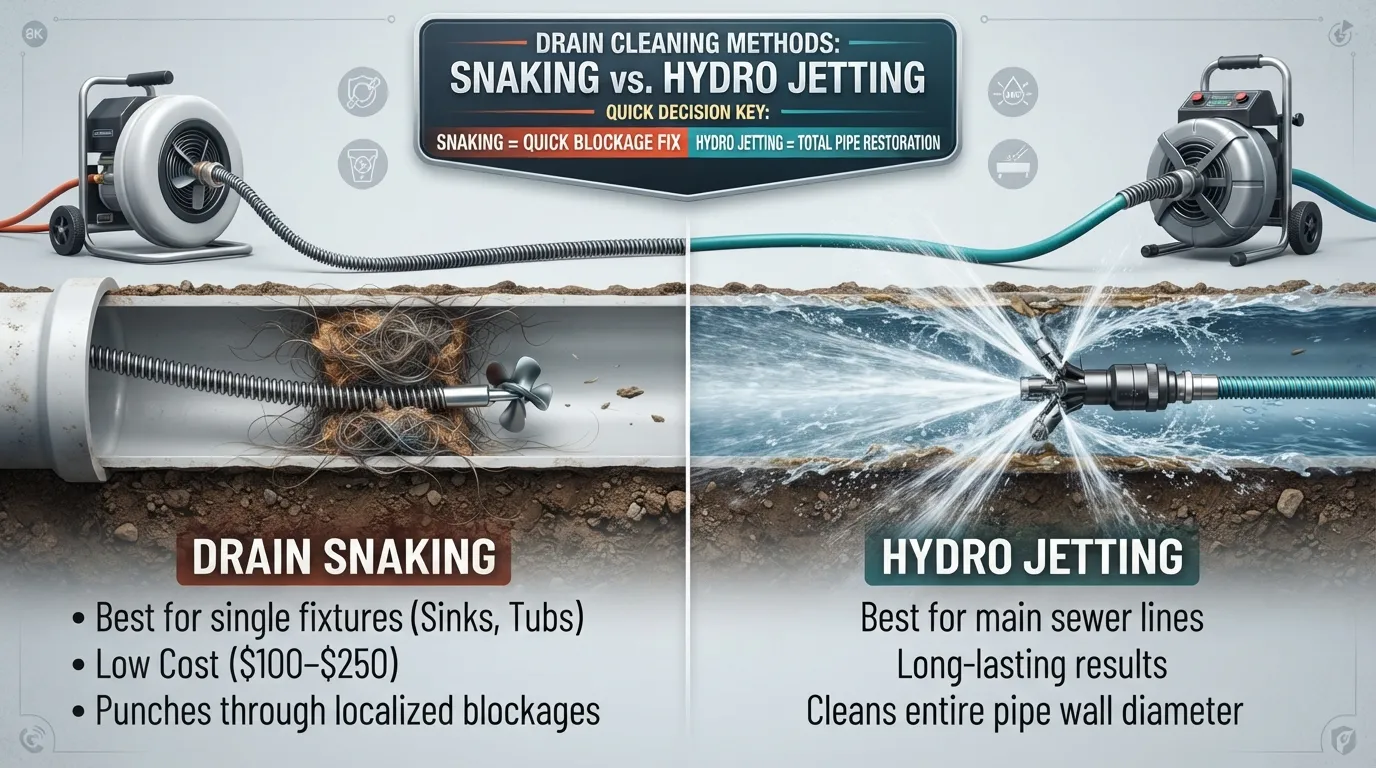
The fundamental difference between drain snaking and hydro jetting for drain cleaning lies in their mechanism and coverage. Snaking uses a flexible physical cable with an auger to punch through and clear an isolated clog, such as hair or localized debris. In contrast, hydro jetting uses high-pressure water to scour the entire pipe wall, completely stripping away grease, mineral scale, and stubborn obstructions for a comprehensive clean.
What is Drain Snaking?
Drain snaking is a traditional, highly effective plumbing method used to clear localized blockages in residential and commercial drainage systems. It involves inserting a flexible tool directly into the plumbing line to physically break apart or retrieve obstructions.
How a Plumbing Snake Auger Works
A plumbing snake, often referred to as a drain auger, relies on a long, flexible metal cable fitted with a specialized cutting head or corkscrew tip at the end. The technician feeds this cable down the drainpipe and rotates it manually or via a motorized system to engage the blockage.
- The rotating cable bores directly through the center of dense masses to punch an opening.
- Alternatively, the tip hooks onto fibrous obstructions like tangled hair so they can be pulled back out.
- This process rapidly restores normal water flow without requiring extensive disassembly of the household plumbing network.
Best Use Cases for Snaking
Snaking is not designed for total pipe scouring, but it is the premier solution for everyday, localized plumbing issues. Homeowners typically utilize this technique for specific fixtures experiencing acute blockages.
- Clearing individual bathroom sink and shower drain lines choked with hair and soap scum.
- Punching through localized debris in kitchen sink traps where food particles accumulate.
- Resolving single-fixture clogs in toilets caused by excessive paper or solid waste.
What is Hydro Jetting?
Hydro jetting is an advanced, heavy-duty drain cleaning technique that uses high-pressure water streams to thoroughly scour the interior of plumbing pipes. Unlike traditional tools that only poke a hole through a blockage, this method completely revitalizes the entire drainage network.
How Hydro Jetting Works
The system operates by feeding a specialized hose with a multi-directional nozzle into the main sewer line. Powered by industrial pumps, it delivers water at pressures ranging from 3,000 to 4,000 PSI, obliterating residue while propelling the hose forward.
- High-pressure jets blast backward and forward to simultaneously scour pipe walls and push debris downstream.
- Specialized multi-port nozzles ensure 360-degree coverage of the interior conduit surface.
- The sheer force of the water thoroughly flushes out loosened particles, leaving the pipe condition close to new.
What Hydro Jetting Removes
Because of its immense cleaning power, hydro jetting handles stubborn buildups that standard equipment cannot touch. It is exceptionally effective for heavily contaminated commercial and residential lines.
- Stubborn kitchen grease layers that harden along pipe interiors over years of use.
- Thick organic sludge, mineral scale, and soap scum buildup restricting water flow.
- Invasive tree roots that have broken through pipe joints and clogged the main sewer line.
Why a Camera Inspection Comes First
Professional plumbers always perform a sewer camera inspection before initiating hydro jetting to evaluate pipe integrity. Pumping thousands of PSI into compromised infrastructure can cause severe structural failure.
- Assess existing pipe material, age, and structural weaknesses like cracks or severe corrosion.
- Identify exact blockages and determine whether fragile older pipes can withstand high-pressure cleaning.
- Verify that the line is completely clear once the hydro jetting procedure is finished.
Snaking vs Hydro Jetting Full Comparison Table
Evaluating the differences between snaking and hydro jetting requires looking closely at how each method operates, what problems they solve, and their long-term value. Selecting the right approach depends on the severity of the blockage and the overall health of your plumbing system.
Mechanism Comparison
The operational mechanism dictates how thoroughly each method cleans your drain pipes. Snaking relies on mechanical force to punch a pathway through an obstruction.
- Snaking uses a flexible metal cable or auger that rotates through the pipe to break apart localized blockages.
- Hydro jetting uses a specialized hose delivering powerful high-pressure streams of water to scour every square inch of the pipe interior.
- While snaking leaves residue along the walls, hydro jetting strips away all buildup down to the bare pipe material.
Best-For Comparison
Different plumbing issues demand distinct solutions based on the type of debris and the specific pipe diameter involved. Matching the right technique prevents wasted effort and recurring issues.
- Snaking is best for single-fixture problems, localized hair clogs, and minor sink backups.
- Hydro jetting is ideal for main sewer lines choked by heavy grease, mineral scale, and invasive tree roots.
- Choosing hydro jetting is particularly effective when dealing with extensive system-wide sludge accumulation.
Cost, Duration & Longevity Comparison
Understanding the financial investment, time commitment, and long-term results helps homeowners make an informed choice. Hydro jetting commands a higher upfront investment but delivers extended protection against repeat clogs.
Which Method Do You Actually Need? (Symptom-Based Guide)
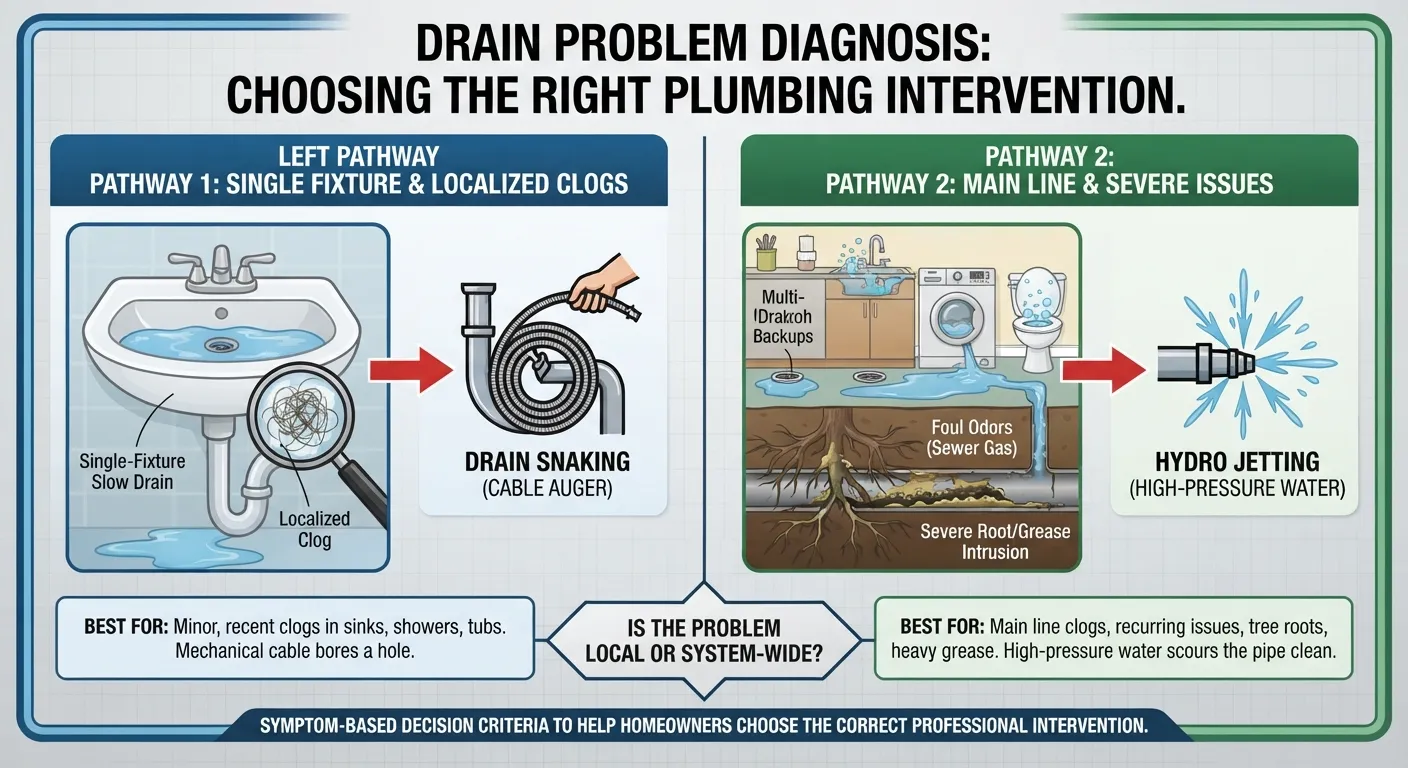
Selecting the right drain cleaning method depends entirely on the specific symptoms your plumbing system is displaying. Matching your current drainage issues to the appropriate technique ensures you solve the root problem without overspending.
Single Slow Drain? Choose Snaking
A single slow drain or an isolated stoppage confined to one fixture points directly to a localized issue. Snaking is the fastest and most efficient way to resolve this type of nuisance.
- Perfect for a single bathroom sink, shower stall, or bathtub backing up from hair and soap accumulation.
- Quickly clears localized blockages in the P-trap without subjecting your broader plumbing network to intensive force.
- Provides an immediate, cost-effective fix for everyday single-fixture plumbing hiccups.
Recurring Multi-Drain Backup? Choose Hydro Jetting
When multiple plumbing fixtures begin backing up simultaneously or a cleared clog returns within a few weeks, the issue lies deeper within the main sewer line. Hydro jetting is necessary to eliminate widespread system stagnation.
- Resolves multi-fixture failures where flushing a toilet causes water to bubble up in the shower or sink.
- Clears out systemic sludge and structural pipe restrictions that manual cables simply push past.
- Restores full hydraulic capacity to the entire drainage network in one comprehensive service.
Tree Root Intrusion or Grease Buildup? Choose Hydro Jetting
Certain types of stubborn obstructions are completely immune to standard mechanical cabling. Heavy organic contaminants and structural intrusions demand the scouring power of high-pressure water.
- Obliterates thick interior layers of kitchen grease that harden and narrow pipe diameters over time.
- Slices through invasive tree roots entering through pipe joints and thoroughly flushes the debris away.
- Removes hardened mineral scale that accumulates inside aging cast iron or galvanized lines.
Self-Diagnosis Checklist
Reviewing a quick symptom checklist helps determine whether you need a basic mechanical clearing or a deep-cleaning water jet. Use these indicators to guide your final decision before calling a professional.
- Check the scope: Is only one fixture affected, or are multiple drains in the house acting up at the same time?
- Review history: Have you had to clear the same drain repeatedly over the past few months?
- Identify odors: Are you noticing persistent foul sewer odors emanating from your floor drains or sinks?
- Evaluate usage: Do you frequently pour cooking grease down the kitchen sink or have large trees planted near your sewer line?
Cost Comparison How Much Does Each Method Cost?
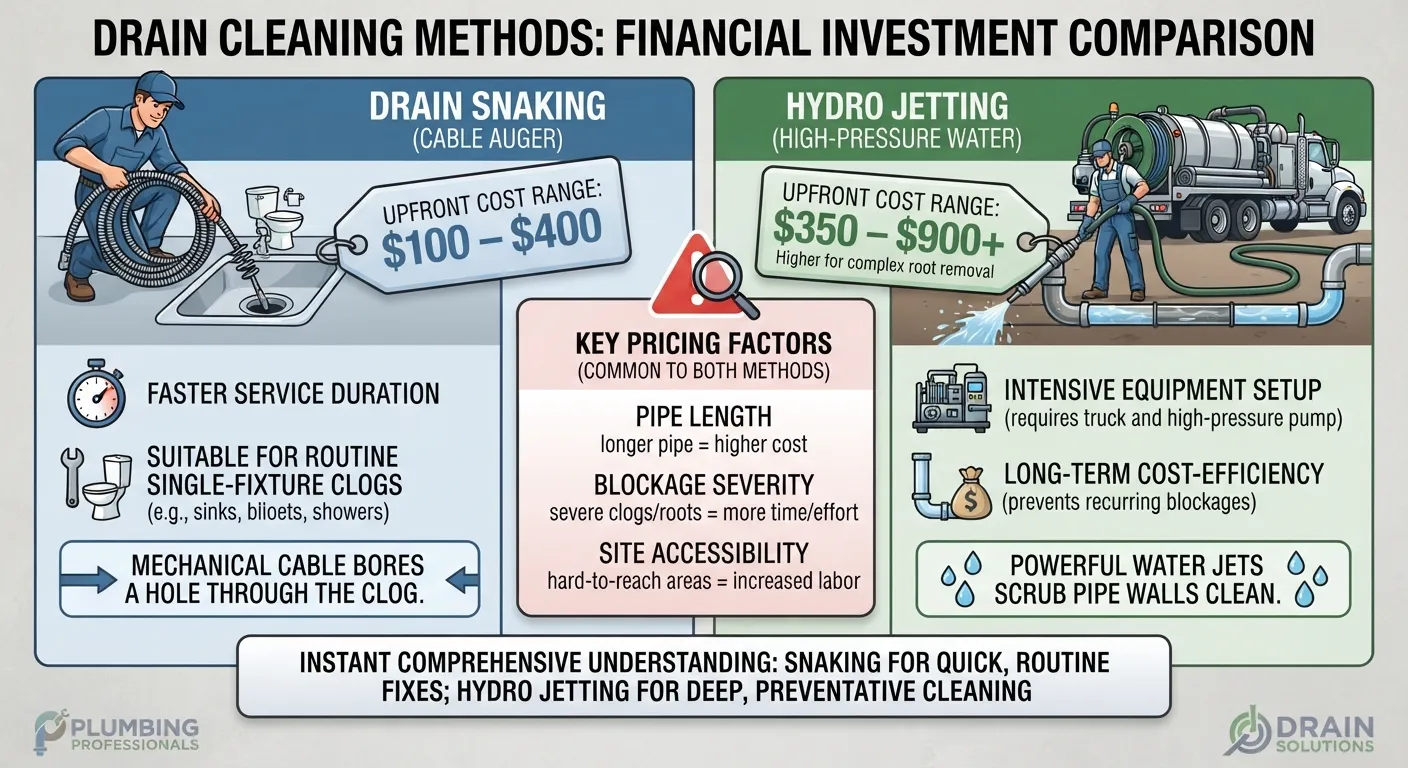
Understanding the pricing differences between drain snaking and hydro jetting helps homeowners balance immediate budgets against long-term maintenance needs. While mechanical snaking offers a cheaper, quick-fix solution, hydro jetting requires a larger upfront investment for comprehensive pipe restoration.
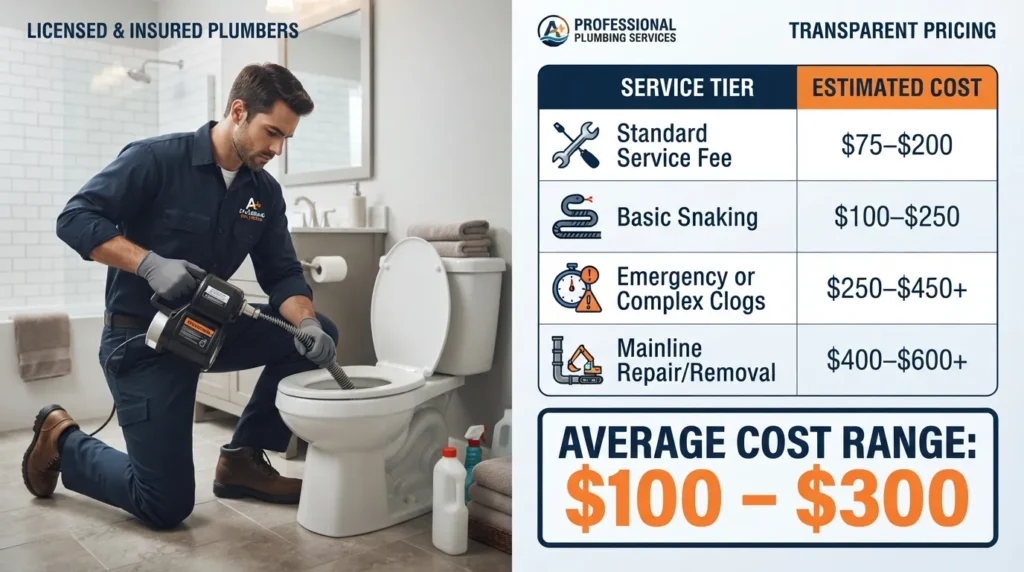
Average Cost of Drain Snaking $100–$400
Drain snaking is an affordable, budget-friendly service typically used for routine residential blockages. Because the equipment is simple and the process is fast, labor and service fees remain relatively low.
- Standard single-fixture snaking generally ranges from $100 to $250 for accessible areas like kitchen sinks, showers, or toilets.
- Clearing a main sewer line branch via an exterior clean-out usually costs between $200 and $400 depending on regional labor rates.
- Emergency after-hours calls or difficult interior access points can push the total price toward the higher end of the spectrum.
Average Cost of Hydro Jetting $350–$900
Hydro jetting is a specialized, labor-intensive process requiring high-pressure pumps, water tanks, and advanced multi-port nozzles, making its baseline cost higher than traditional cabling.
- Standard residential hydro jetting for main sewer lines typically falls between $350 and $600 for routine maintenance.
- Complex blockages involving heavy scale or thick root masses can raise the price from $900 up to $1,600.
- Commercial-grade jobs or extensive underground lines requiring specialized setup can exceed $2,000.
Factors That Affect Pricing
Several variables influence the final price quote provided by a licensed plumbing professional. Evaluating these site-specific conditions helps explain why estimates vary from house to house.
- Pipe length and diameter: Longer lines and larger industrial pipes require more water volume and extended operational time.
- Blockage severity: Simple organic buildup is faster to clear than hardened mineral scale or interwoven tree root mats.
- Location and accessibility: Easily accessible outdoor cleanouts reduce labor time, whereas hard-to-reach indoor access points increase total costs.
Is Hydro Jetting Worth the Extra Cost?
Hydro jetting is well worth the higher price tag if you are dealing with chronic, recurring clogs or heavy grease and root accumulation. While snaking provides a temporary pathway, hydro jetting completely scours the pipe walls to restore near-new inner diameters, saving you money on repeated emergency plumbing visits over the years.
Is Hydro Jetting Safe for Old Pipes?
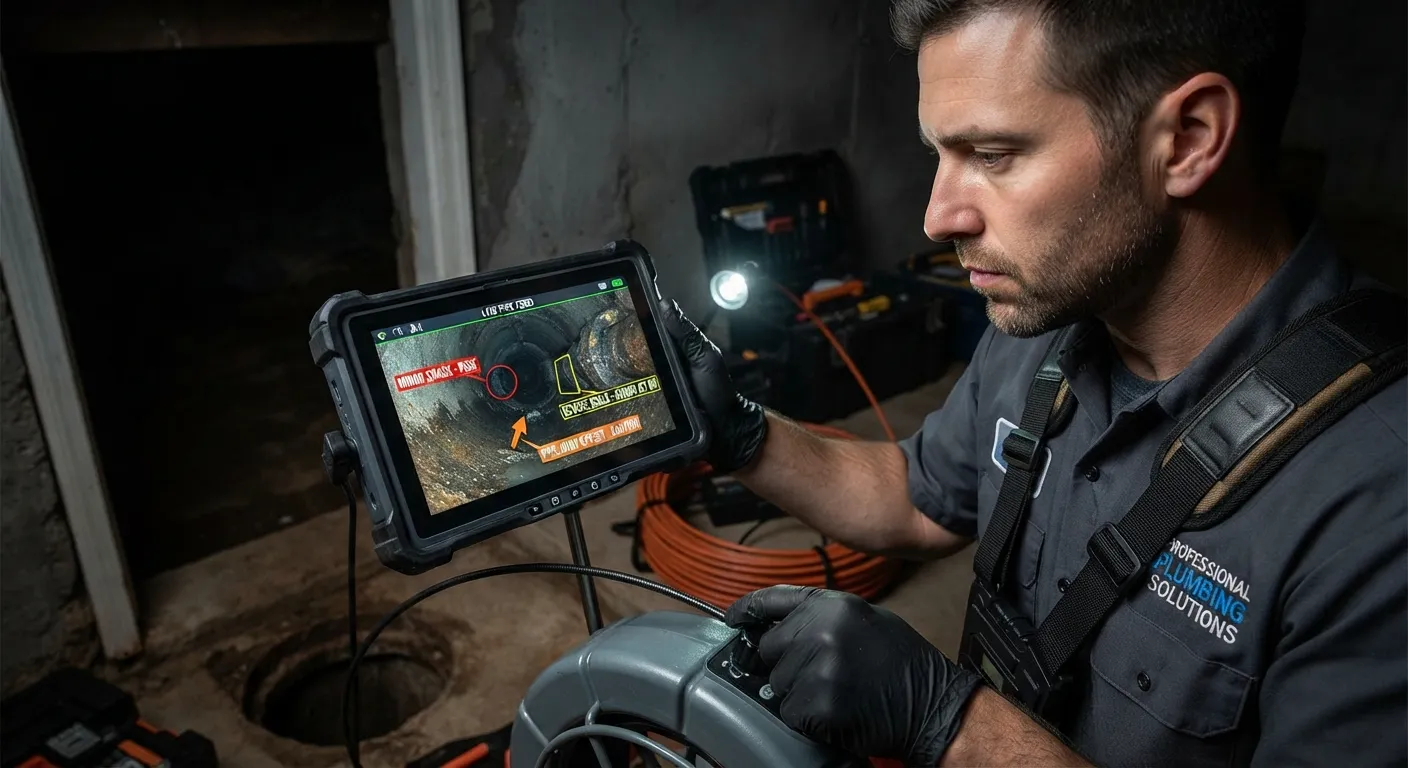
Hydro jetting is exceptionally powerful, which raises valid concerns regarding its safety on older or fragile plumbing networks. Pumping thousands of PSI of water pressure into compromised infrastructure can cause catastrophic pipe failure if proper precautions are ignored.
Why Camera Inspection is Mandatory Before Jetting
A professional plumber must always perform a video camera inspection before beginning a hydro jetting job. This diagnostic step allows the technician to visualize the interior condition of the pipe and identify structural vulnerabilities.
- Detects hidden structural cracks, severe corrosion, or completely collapsed pipe sections.
- Determines whether the material can withstand high-pressure scouring or if a gentler cleaning method is required.
- Ensures that delicate joints are not subjected to pressure levels that could displace or rupture them.
Pipe Materials That Are Safe
Modern plumbing infrastructure is engineered to easily handle the high-velocity water streams used in hydro jetting. These durable materials suffer no structural compromise when serviced by a trained professional.
- PVC and ABS Plastic: Modern plastic lines possess smooth, resilient walls that endure high pressure without degradation.
- Newer Cast Iron: Intact, well-maintained cast iron lines handle hydro jetting exceptionally well while benefiting from scale removal.
- Copper and Modern Ductile Iron: Rigid commercial-grade metallic pipes maintain structural integrity under standard high-pressure maintenance.
Pipe Materials at Risk
Older or deteriorating pipe materials carry a high risk of damage when exposed to aggressive water jetting pressures. Plumbers will typically reduce pressure settings or use alternative techniques for fragile systems.
- Aging Cast Iron: Severely corroded or thin-walled cast iron can develop punctures or blowouts under high PSI.
- Vitrified Clay Pipes: Older clay sewer lines feature vulnerable mortar joints that can easily shatter or dislodge under intense water force.
- Orangeburg Pipes: Constructed from compressed wood fibers and tar, this obsolete material will completely collapse under hydro jetting.
Can You DIY Hydro Jetting?
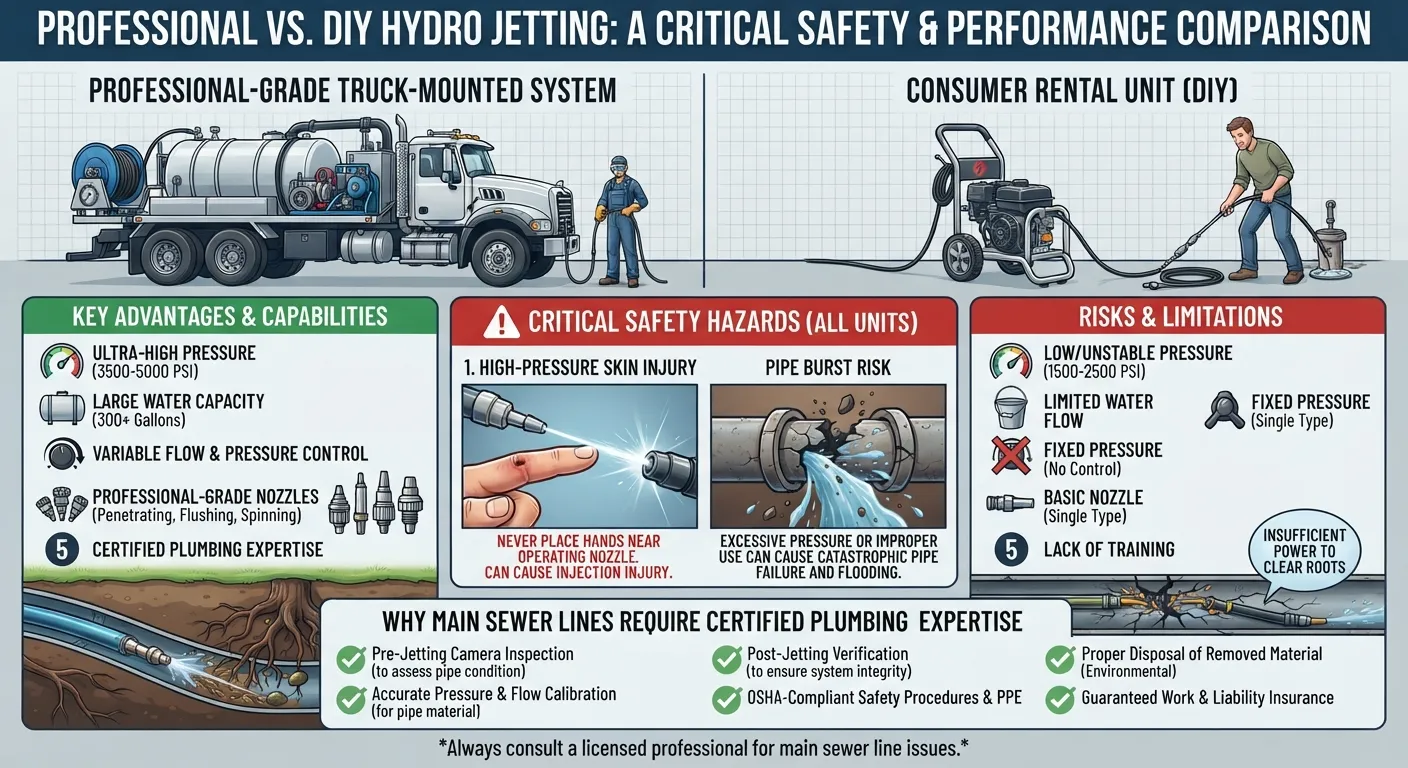
Attempting DIY hydro jetting is generally discouraged for homeowners due to severe safety hazards and the high risk of property damage. While consumer-grade pressure washers and small rental units exist on the market, they lack the sophisticated power regulation and specialized attachments required for safe sewer line maintenance.
Risks of DIY Hydro Jetting
Operating industrial-level water pressure without professional training can lead to immediate physical injury and expensive plumbing disasters. High-pressure hoses can behave unpredictably inside dark, confined pipe networks.
- Severe physical injury from high-pressure water streams that can easily pierce skin or cause deep tissue trauma.
- Catastrophic pipe bursts resulting from uncontrolled PSI levels applied to hidden, fragile junctions.
- Backsplash hazards that spray contaminated sewage and debris back out of the drain opening and into living spaces.
Rental Machines vs Professional-Grade Equipment
There is a massive technological gap between standard equipment available for consumer rental and the systems used by certified plumbing contractors. Professional rigs are engineered for precise control and variable pressure management.
- Rental Units: Typically operate at lower PSI outputs, often lack precision multi-port nozzles, and provide little protection against pipe blowouts.
- Professional Rigs: Feature truck-mounted or portable heavy-duty pumps, onboard water tanks, adjustable pressure controls, and specialized cutting nozzles designed specifically for roots and heavy grease.
When It’s Safe to DIY
Homeowners should strictly limit DIY efforts to basic, low-risk maintenance that does not involve high-pressure machinery or main sewer lines. Leave complex deep-cleaning tasks to certified professionals.
- Using a standard manual hand snake or small drum auger for minor hair clogs in a bathroom sink P-trap.
- Applying approved enzymatic drain cleaners for routine, preventative organic maintenance.
- Calling a professional immediately if a backup involves multiple fixtures or fails to clear after a simple manual snake attempt.
Hydro Jetting Maintenance — How Often Should You Do It?
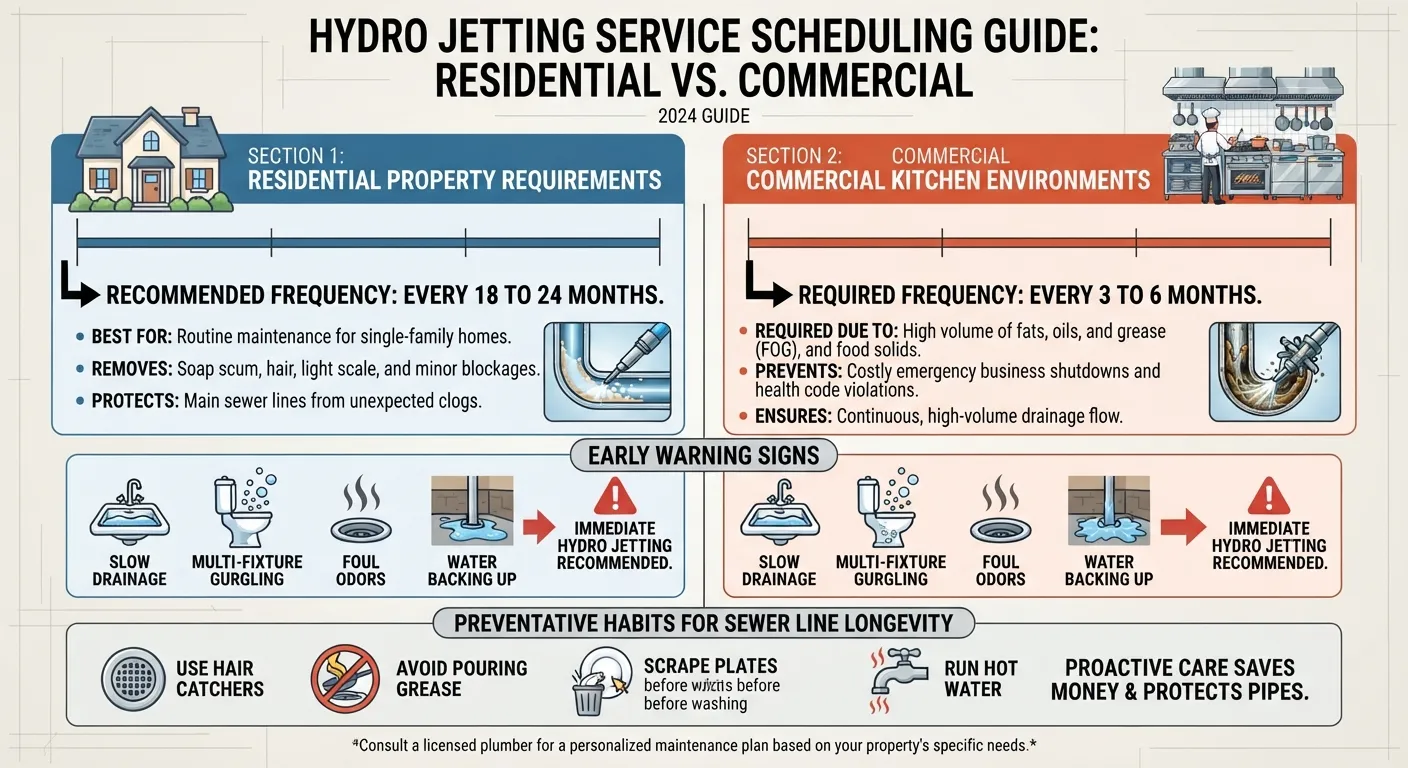
Maintaining a proactive schedule for hydro jetting helps prevent emergency plumbing failures and extends the overall lifespan of your sewer line. Unlike traditional snaking which only offers a temporary fix, scheduled preventative jetting keeps your pipes operating at peak hydraulic capacity.
Recommended Maintenance Frequency
The frequency of hydro jetting depends heavily on property usage, household size, and the volume of waste passing through the drainage system. Residential and commercial properties require vastly different maintenance timelines.
- Residential Homes: Standard households generally require hydro jetting every 18 to 24 months, or as a preventative measure if large trees grow near the sewer line.
- Commercial Kitchens & Businesses: Restaurants, cafes, and multi-family complexes dealing with high grease volume need hydro jetting every 3 to 6 months to prevent catastrophic backups.
- Older Properties: Homes with aging pipes or chronic root intrusion may benefit from an annual inspection and targeted jetting session.
Signs You Need Another Jetting Session
Monitoring your plumbing system for early warning signs allows you to schedule maintenance before a complete blockage occurs. Catching these indicators early prevents messy and expensive emergency overflows.
- Water draining noticeably slower across multiple household fixtures simultaneously.
- Gurgling sounds echoing from your toilet bowls or floor drains when running the washing machine or kitchen sink.
- Persistent, unpleasant sewer odors lingering around indoor drains or outdoor cleanout ports.
Preventive Maintenance Tips
Pairing professional hydro jetting with healthy daily habits ensures your drainage system remains clean and clear for years between service calls. Simple routine practices significantly reduce heavy buildup inside your plumbing lines.
- Avoid pouring cooking oil, grease, or coffee grounds down the kitchen sink drain.
- Install hair catchers in all shower stalls and bathroom bathtubs to capture loose strands before they enter the P-trap.
- Use monthly enzyme-based treatments to help break down minor organic film without harming pipe walls.
Hydro Jetting vs Descaling What’s the Difference?
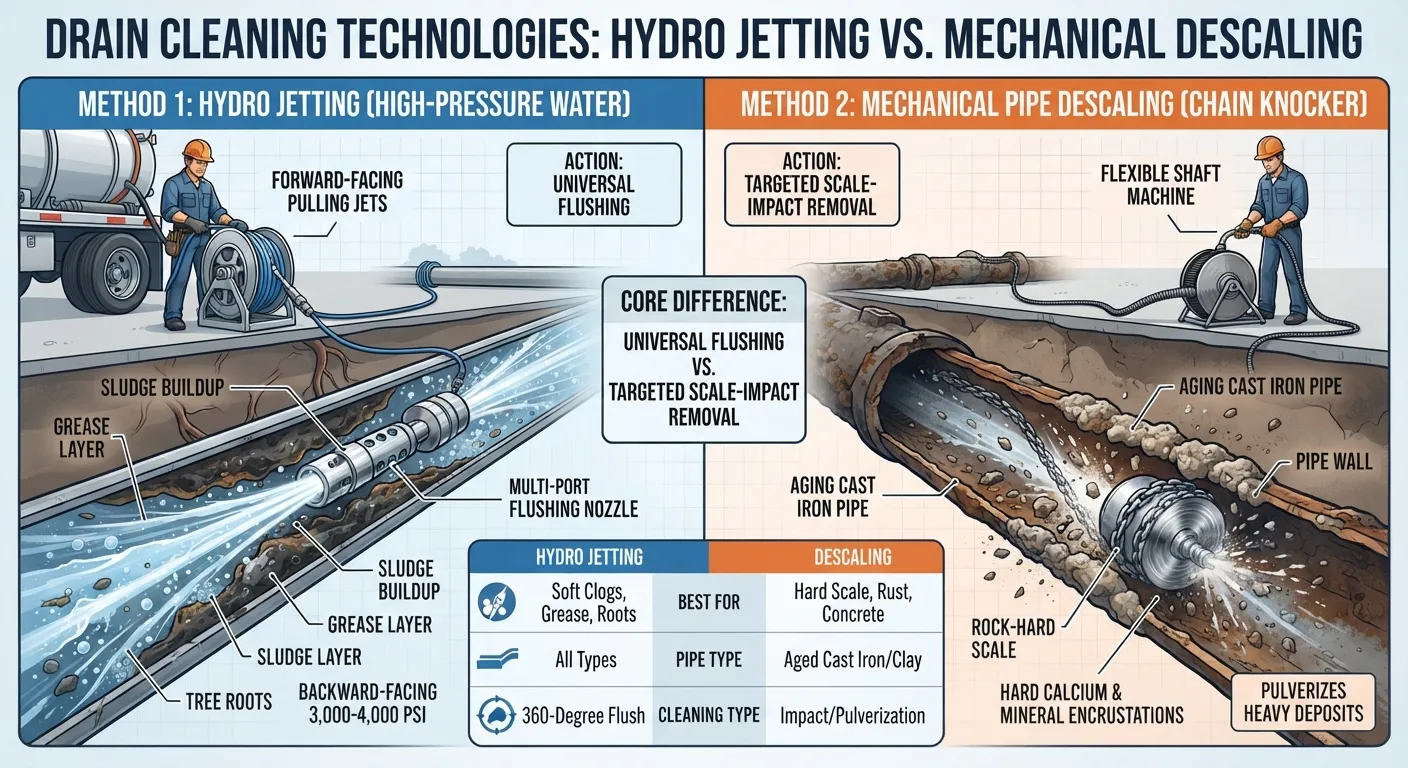
While both hydro jetting and pipe descaling are advanced, professional plumbing interventions designed to clean the interior of sewer lines, they serve distinctly different purposes. Understanding when to use each method ensures your plumbing network receives the precise care it requires.
What is Pipe Descaling?
Pipe descaling is a specialized mechanical process used to remove hard mineral deposits, corrosion flakes, and rust buildup from the inside walls of metal pipes, particularly aging cast iron. Technicians use a heavy-duty flexible shaft fitted with specialized chain-knocker attachments that spin rapidly inside the conduit.
- Scrapes away rough, jagged calcium and mineral crusts that accumulate over decades of water exposure.
- Smooths out tuberculation and internal corrosion to prevent toilet paper and waste from snagging on rough patches.
- Prepares severely deteriorated cast iron lines for structural rehabilitation, such as epoxy pipe lining.
Key Differences from Hydro Jetting
Although hydro jetting uses powerful water pressure to scour pipes, descaling relies on direct mechanical impact to pulverize rock-hard encrustations. The two techniques utilize entirely different operational mechanisms.
- Mechanism: Descaling uses rotating chain knockers to chip away hard scale, whereas hydro jetting uses high-velocity water streams to flush away grease, sludge, and loose debris.
- Primary Target: Descaling targets mineral scale and rust inside metallic lines, while hydro jetting handles universal clearing of roots, heavy grease, and organic blockages across plastic, clay, and iron pipes.
- Aggressiveness: Descaling is engineered specifically for metallic structural restoration, whereas hydro jetting provides comprehensive hydraulic scouring for the entire system.
When Descaling Alone is Enough
Descaling is typically deployed as a standalone treatment when dealing with specific age-related pipe degradation rather than active, heavy clogging. It is a vital precursor for maintaining older infrastructure.
- When homeowners notice frequent toilet paper snags caused by rough, unglazed interior cast iron walls.
- As a mandatory preparatory step prior to trenchless pipe lining or epoxy coating installation.
- When mineral scale buildup significantly narrows the internal diameter of water supply or drain lines without the presence of heavy grease or tree roots.
Professional Plumbing Services What to Expect
Hiring a licensed plumbing professional for your drain cleaning needs ensures the job is done safely and effectively. Major national companies, local independent contractors, and regional service providers utilize specialized equipment to diagnose and resolve complex blockages.
Do Major Plumbing Companies Offer Both Services?
Most large-scale plumbing franchises and reputable independent companies—including national providers like Roto-Rooter—maintain full fleets equipped for both mechanical snaking and high-pressure hydro jetting.
- Technicians arrive equipped with standard manual and motorized snakes for routine single-fixture backups.
- Service vans carry high-pressure water jetters, remote-controlled cameras, and specialized multi-port nozzles for heavy main-line jobs.
- Professionals assess your specific plumbing symptoms on-site to recommend the exact technique required rather than pushing a one-size-fits-all solution.
What a Professional Service Visit Typically Includes
A comprehensive drain cleaning appointment follows a systematic diagnostic and execution process to ensure long-term reliability. Knowing what to expect helps ease concerns about the service timeline.
- Initial Consultation: The technician evaluates your symptoms, checks affected fixtures, and locates accessible clean-out ports.
- Diagnostic Camera Inspection: A high-definition push camera is fed into the line to pinpoint the exact location and nature of the blockage.
- Execution and Cleanup: The plumber performs the agreed-upon snaking or hydro jetting service, followed by a post-cleaning inspection to confirm full flow restoration.
Questions to Ask Before Hiring a Plumber
Before authorizing major work on your main sewer line, asking targeted questions ensures transparency regarding pricing, warranties, and service quality.
- Do you perform a video camera inspection before deciding between snaking and hydro jetting?
- Is the quoted price a flat fee, or does it change based on hourly labor and unexpected complications?
- Do you offer a warranty or guarantee on your drain cleaning and hydro jetting services?
Frequently Asked Questions
Homeowners often have specific questions regarding the practical differences, limitations, and expectations of drain snaking versus hydro jetting. Reviewing these common inquiries provides clear guidance for your next plumbing maintenance decision.
Is Hydro Jetting Better Than Snaking?
Hydro jetting is not universally “better” than snaking; rather, each serves a completely different purpose. Snaking is superior for quick, affordable clearance of isolated, single-fixture clogs like hair in a shower, while hydro jetting is unmatched for deep, comprehensive pipe scouring of grease, scale, and tree roots across your entire main sewer line. For a real-world perspective on when professionals choose one over the other, you can check out this r/askaplumber discussion.
Does Hydro Jetting Have Any Disadvantages?
The primary disadvantages of hydro jetting include its higher upfront cost compared to traditional snaking and the potential risk it poses to severely compromised or aging pipes. Because it utilizes extreme water pressure (up to 4,000 PSI), applying it to cracked clay lines or heavily corroded cast iron without a prior camera inspection can cause structural failure.
How Long Does It Take to Hydrojet a Sewer Line?
A standard residential hydro jetting service typically takes between 1 to 2 hours from start to finish. This duration includes setting up the equipment, running an initial diagnostic camera inspection, performing the high-pressure wash, and completing a final post-cleaning video check to ensure the line is entirely clear.
What’s the Difference Between Hydro-Jetting and Snaking?
Snaking uses a flexible physical cable with a specialized auger to punch a hole through a localized blockage and allow water to pass. Hydro jetting uses a high-pressure water hose and multi-port nozzle to scour the entire interior circumference of the pipe wall, stripping away grease, sludge, and roots down to the bare pipe.
How Effective is Hydro Jetting?
Hydro jetting is the most effective method available for restoring residential and commercial drainage lines to near-new internal diameters. By completely eliminating organic buildup, scale, and bacterial slime rather than just punching a temporary hole, it reduces the likelihood of recurring clogs and keeps lines clear for years.
Conclusion Which One Should You Choose?
Choosing between drain snaking and hydro jetting ultimately depends on the nature of your clog and the overall condition of your plumbing system. Making an informed decision ensures you resolve current blockages efficiently while protecting your infrastructure from unnecessary wear and expense.
To finalize your choice, consider these core takeaways:
- Opt for snaking when dealing with localized, single-fixture clogs like hair in a bathroom sink or minor food obstructions in a P-trap.
- Choose hydro jetting for chronic, recurring backups, main sewer line obstructions, heavy kitchen grease, mineral scale, and invasive tree roots.
- Always prioritize a professional camera inspection before letting any technician apply high-pressure water to older or vulnerable pipe materials.
When in doubt, consult a licensed plumbing professional to diagnose your drainage issues accurately and recommend the safest, most cost-effective solution for your home.
Oscar Vance | Master Plumber & Drainage Expert
Meet Oscar Vance, a licensed master plumber sharing practical solutions on residential repairs, preventive maintenance, and thoughtful home upkeep.
Pingback: How Much Does a Plumbing Snake Cost? Price Guide