Introduction What a Plumbing Snake Costs at a Glance
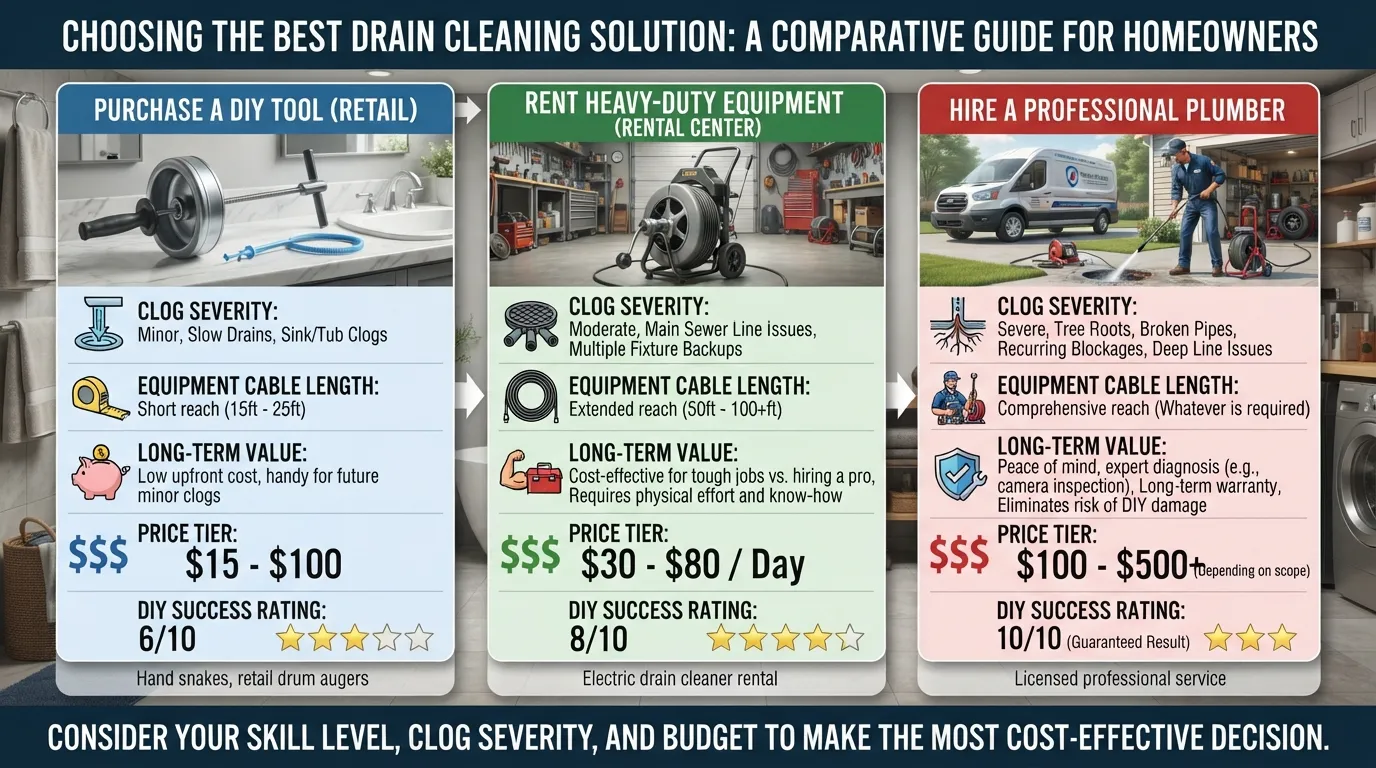
A plumbing snake—also referred to as a drain snake or drain auger—costs anywhere from $15 to $100 for a retail purchase, $30 to $80 per day to rent, and $100 to $500 for professional drain cleaning services depending on the location and severity of the blockage.
Plumbing Snake Price Range Buy vs Rent vs Professional
Choosing between buying a tool, renting heavy equipment, or hiring a licensed plumber depends directly on whether you are clearing a minor sink/tub clog or tackling a major main sewer line backup. Understanding these cost boundaries helps you optimize your budget and pick the right approach immediately.
- Purchase Price (DIY): Basic hand-crank models and toilet augers run $15 to $45, while motorized drill-attached units cost up to $100. Heavy-duty commercial machine augers range from $250 to $1,000.
- Rental Cost: Renting a standard mechanical drain auger or medium-duty sewer snake from a local home improvement center costs between $30 and $80 per day, or $125 to $300 weekly.
- Professional Service Cost: Hiring a professional plumber to clear a localized sink, tub, or shower drain ranges from $100 to $275, whereas clearing a complex main sewer line ranges from $150 to $500.
Plumbing Snake Cost by Type Buying Guide
Purchasing the right drain auger requires matching the tool’s mechanical design to your specific pipe layout and clog severity. Prices scale dynamically depending on whether you choose a simple manual wire or a high-torque motorized cordless unit.
Manual Wire Snake Price & Best Use
A manual wire snake is an ultra-budget, flexible wire tool designed for minor sink and shower strainer clogs. It provides a lightweight reach without mechanical cranks or heavy drums.
- Price Range: $5 to $15.
- Specifications: Typically features a thin 1/4-inch cable ranging from 15 to 25 feet long with a simple corkscrew or bulb boring head.
- Best Use: Surface-level hair clogs and soap scum buildup in bathroom sinks and tubs.
Handheld Crank Snake Price & Best Use
Handheld crank snakes utilize a manual hand-turning handle and a protective metal or plastic housing unit to feed and retract the cable safely. They offer superior leverage compared to simple wires.
- Price Range: $15 to $35.
- Specifications: Equipped with a thumb screw to lock cable length, featuring 1/4-inch to 3/8-inch flexible cables spanning 15 to 25 feet.
- Best Use: Kitchen sinks, utility basins, and minor bathroom clogs located just past the trap.
Drill-Attachment Snake Price & Best Use
Drill-attachment snakes replace the manual hand crank with a specialized hex-nut spindle that connects directly to a standard household power drill. This injects automated rotational torque into the cleaning process.
- Price Range: $25 to $50.
- Specifications: 25-foot inner core or hollow-core cables with standard bulb or drop-head boring attachments.
- Best Use: Tougher grease clogs and minor root infiltrations in secondary lines where manual cranking lacks power.
Drum Auger Pistol Grip Price & Best Use
Drum augers feature a self-contained protective plastic or metal drum that completely houses the dirty cable when retracted, keeping your floors and hands clean during operation.
- Price Range: $35 to $85.
- Specifications: Heavy-duty pistol-grip handles, automatic cable feed triggers, and 25-foot to 50-foot cables.
- Best Use: Toilet clogs (via specialized toilet augers with protective vinyl guards) and stubborn branch lines.
Cordless Electric Power Snake Price & Best Use
Cordless or electric power snakes are heavy-duty, motor-driven machines that feed and spin industrial-strength cables automatically at high RPMs. They eliminate physical fatigue entirely.
- Price Range: $100 to $400+ (tool-only or bundled with battery packs).
- Specifications: Robust 3/8-inch to 1/2-inch thick steel cables ranging from 35 to 100 feet with interchangeable cutting heads.
- Best Use: Main sewer lines, extensive tree root blockages, and commercial-grade drain clearing.
Snake Size & Length Which One Do You Actually Need?
Selecting the correct cable diameter and length prevents equipment jams, pipe punctures, and ineffective drain clearing. Matching the tool scale to your specific pipe layout ensures you reach the clog safely without risking expensive plumbing damage.
Cable Diameter Guide: 1/4″ vs 3/8″ vs 1/2″
Cable thickness determines the structural rigidity and rotational torque transferred through the line. Choosing the right caliber ensures the snake navigates tight bends without folding or getting stuck.
- 1/4-Inch Cable: Highly flexible and thin, ideal for navigating tight P-traps and small 1.25-inch to 1.5-inch bathroom sink or tub drain lines.
- 3/8-Inch Cable: A versatile mid-range thickness capable of handling kitchen sinks, laundry drains, and secondary branch lines up to 2 inches wide.
- 1/2-Inch to 3/4-Inch Cable: Rigid, heavy-duty industrial cables designed exclusively for 3-inch to 4-inch main sewer lines and heavy root cutting.
Length Guide: 25ft Sink vs 50ft Tub Shower vs 100ft Main Line
Drain snakes come in various lengths to match how far the blockage sits from your fixture access point. Buying an overly long cable for a simple sink clog creates unnecessary handling hazards.
- 25-Foot Lengths: Perfect for localized clogs located right past the P-trap in bathroom sinks, kitchen drains, and toilets.
- 50-Foot Lengths: Necessary for longer secondary branch lines, deep shower drains, and multi-fixture laundry room lines.
- 100-Foot Lengths: Essential for clearing main sewer lines all the way out to the municipal street connection or septic tank.
Why Wrong Size Can Damage Your Pipes
Using an oversized cable in a narrow pipe creates severe mechanical stress that can crack older PVC, cast iron, or fragile clay lines. Conversely, using an undersized cable on a main sewer clog causes the wire to knot up inside the pipe, requiring professional extraction.
- Pipe Puncture Risks: Thick industrial augers forced into narrow 1.5-inch sink traps can pierce plastic elbows.
- Cable Kinking: Thin wires used in main lines lack the rigidity to cut roots, leading to immediate bird-nesting and tool failure.
- Fixture Scratching: Unprotected metal heads can chip porcelain toilets or scratch high-end acrylic tubs if improperly guided.
Snake vs. Auger Are They the Same Thing?
While the terms “drain snake” and “drain auger” are often used interchangeably by homeowners, professional plumbers make a distinct mechanical distinction between the two. Understanding these structural differences prevents equipment mismatch and ensures you choose the most effective tool for your specific blockage.
Drain Snake vs Drain Auger Key Differences
A drain snake typically refers to a flexible, lightweight wire or cable used to poke through localized clogs, whereas a drain auger features a mechanical housing drum, a crank handle or drill attachment, and a more rigid, heavy-duty cable.
- Drain Snake Construction: Lightweight, highly flexible unhoused wire or flat spring steel designed primarily for navigating tight bends in secondary branch lines.
- Drain Auger Construction: Enclosed drum housing with a crank or power drive that feeds high-tensile steel cables with specialized boring heads.
- Closet/Toilet Auger Specialization: A specific type of auger featuring a protective vinyl-coated arm and a crank handle designed to clear porcelain toilet traps without scratching the bowl.
Which One Should You Use for Your Clog?
Matching the tool to the fixture prevents wasted effort and accidental damage. Simple surface clogs require minimal gear, whereas stubborn subterranean blockages demand heavy mechanical leverage.
- Use a Snake For: Simple hair clogs in bathroom sinks, shower drains, and tub strainers where a flexible wire easily slips past the P-trap.
- Use an Auger For: Stubborn kitchen grease clogs, laundry line backups, and toilet blockages where a manual wire lacks the rotational torque to break up dense waste.
- Use a Professional Machine For: Deep-seated main sewer line obstructions caused by structural pipe collapses or heavy tree root invasions.
How to Use a Plumbing Snake Step by Step
Clearing a stubborn blockage safely requires precise technique and proper preparation to avoid damaging your porcelain fixtures or twisting the steel cable. Mastering this hands-on process ensures you clear the clog without creating a secondary plumbing disaster.
Preparing the Drain Remove Stoppers Strainers
Before inserting any cable, you must clear physical obstacles blocking direct entry into the drain opening. Leaving a pop-up stopper or hair strainer in place will prevent the auger head from passing through.
- Remove Bathroom Stoppers: Unscrew or lift out sink pop-up stoppers by disconnecting the pivot rod underneath the basin.
- Clear Debris Screens: Take out any removable mesh strainers from shower stalls or kitchen sinks to expose the raw pipe opening.
- Protect Surrounding Surfaces: Lay down old towels around the base of the fixture to catch any dirty sludge or standing water that splashes out during the process.
Feeding the Snake Correctly Avoid Kinking
Proper cable control prevents the steel wire from looping back on itself and buckling under pressure. Always maintain firm tension as you feed the auger into the line.
- Loosen the Thumb Screw: Pull 6 to 12 inches of cable out of the drum or housing before pushing the tip into the drain opening.
- Tighten the Lock: Secure the thumb screw so the cable remains fixed while you begin rotating the crank handle.
- Feed Slowly: Never shove the wire aggressively; let the rotational motion guide the auger head forward smoothly through pipe bends.
Twisting & Cranking Technique
Applying the correct rotational force breaks apart dense hairballs and grease clogs rather than just pushing them tighter against pipe walls. Consistent clockwise rotation keeps the cable rigid.
- Maintain Clockwise Rotation: Turn the handle clockwise while pushing gently inward whenever you encounter resistance.
- Feel for the Clog: A sudden drop in resistance or a gritty scraping sensation indicates you have reached and hooked into the blockage.
- Retract and Clean: Reel the cable back slowly into the housing, wiping off collected debris with a disposable paper towel as you go.
When to Stop and Call a Professional
Recognizing your limits prevents permanent pipe damage and avoids turning a minor slow drain into a major excavation project. Knowing when to quit is vital for home safety.
- Sudden Hard Resistance: Stop immediately if the cable hits an unyielding metallic blockage that feels like a structural pipe joint or root intrusion.
- Persistent Backups: If clearing one drain causes sewage to bubble up into another bathroom fixture, the main sewer line is blocked.
- Excessive Cable Resistance: If the cable starts twisting violently or refuses to retract smoothly, call a licensed plumber to prevent pipe puncture.
Where to Buy a Plumbing Snake
Finding the right retail supplier depends on whether you need an emergency budget wire right away or an industrial-grade motorized power auger delivered to your door. Major home improvement centers and online marketplaces offer diverse selections tailored to every DIY budget.
Retailer Price Comparison Table Home Depot vs Lowe’s vs Menards vs Ace
Comparing local hardware stock against online inventories ensures you secure the best price and immediate availability for your project timeline.
In-Store vs Online Buying: Pros & Cons
Deciding where to purchase your drain auger depends heavily on the urgency of your plumbing backup and your need to physically inspect the cable housing before purchase.
- In-Store Advantages: Immediate availability for active plumbing emergencies, zero shipping delays, and the ability to verify physical weight and cable stiffness.
- In-Store Disadvantages: Limited inventory options at smaller neighborhood locations and potential markups compared to digital storefronts.
- Online Advantages: Access to a wider selection of specialized power snakes, user reviews, and competitive pricing across multiple brands.
- Online Disadvantages: Waiting 1 to 3 days for delivery, which is impractical when dealing with an overflowing toilet or active sink backup.
Where to Rent a Plumbing Snake
Renting a commercial-grade motorized drain cleaner is a cost-effective alternative to buying expensive heavy equipment for a single main line backup. Major home improvement rental centers and equipment supply yards offer professional-tier machines for a fraction of retail purchase costs.
Tool Rental Costs Per Day Pricing
Rental rates scale according to the motor strength, cable thickness, and total reach required to clear deep residential or commercial blockages. Most providers offer flexible 4-hour, daily, and weekly billing options.
- Small Sink & Toilet Augers: $15 to $30 per day for manual or cordless drum units designed for secondary bathroom lines.
- Medium Drum Machines (50ft – 75ft): $50 to $90 per day for electric units capable of clearing kitchen and laundry branch lines up to 4 inches wide.
- Large Main Line Augers (100ft): $90 to $150 per day for heavy-duty industrial machines designed to chew through stubborn tree roots.
Best Places to Rent a Commercial-Grade Snake
Securing a reliable machine quickly depends on local inventory availability and store proximity during plumbing emergencies.
- The Home Depot Tool Rental Center: Features an extensive fleet of General Wire and Electric Eel machines ranging from 25-foot hand units to 100-foot main sewer line cleaners.
- Local Equipment Rental Yards (Sunbelt Rentals, Herc Rentals, United Rentals): Ideal for heavy-duty commercial or industrial-grade root-cutting augers.
- Local Independent Hardware Stores: Neighborhood True Value or Ace Hardware locations often rent out basic manual or electric drum snakes with minimal paperwork.
What to Check Before Renting Cable Length Motor Power
Verifying equipment specs prior to leaving the rental counter prevents return trips and ensures compatibility with your plumbing layout.
- Cable Length & Diameter: Confirm that the cable length comfortably exceeds the distance from your access point to the suspected clog, and ensure the diameter matches your pipe size.
- Drive Mechanism Type: Check whether the unit features manual cable feed or an automated power-feed control, which significantly reduces physical fatigue during operation.
- Required Security Deposits: Expect to present a valid government-issued photo ID and a credit card for equipment security deposits, which are standard policy at major tool rental hubs.
Rent vs. Buy Which One Actually Saves You Money?
Deciding whether to purchase a drain auger outright or rent heavy equipment for a weekend depends entirely on how frequently your plumbing backs up and the physical scope of the blockage. Analyzing your long-term maintenance costs prevents unnecessary spending on tools you may only use once.
One-Time Use? Here’s Why Renting Makes Sense
If you are facing an isolated main sewer line backup or a stubborn root intrusion that requires heavy commercial machinery, purchasing an industrial 100-foot power snake is financially impractical. Renting provides access to heavy-duty equipment without long-term storage or maintenance hassles.
- Avoid High Upfront Costs: Commercial-grade motorized machines cost $300 to $1,000+ to buy, whereas renting costs a fraction for a single day.
- No Storage Requirements: Heavy drum augers take up substantial garage space and require specialized cleaning to prevent rust.
- Professional Grade Performance: Rentals give you access to high-torque industrial motors that clear tough blockages faster than lightweight consumer tools.
Frequent Clogs? Here’s Why Buying Pays Off
Homes with older plumbing infrastructure, mature trees near sewer lines, or large families prone to recurring hair and grease clogs benefit greatly from owning a reliable baseline tool. Having a snake on hand eliminates emergency rental fees and waiting periods.
- Immediate Availability: You can tackle minor sink or toilet backups instantly on weekends or late at night without visiting a rental yard.
- Long-Term Savings: A basic $30 to $50 drum auger pays for itself after just one successful DIY fix compared to paying a plumber or rental fee.
- Familiarity with Equipment: Owning your own tool allows you to master its specific balance, cable tension, and feed mechanism over time.
Break-Even Point How Many Uses Before Buying is Cheaper
Calculating the financial tipping point helps clarify whether a purchase or a rental fits your specific household maintenance profile.
- Small Household Augers: At a retail price of $35 and an average rental or plumber fee of $100, buying becomes cheaper on your very first use.
- Commercial Main Line Machines: With rentals averaging $75 per day and retail purchase prices exceeding $400, buying only makes financial sense if you expect to use the machine more than five times over its lifespan.
- Plumber Dispatch Comparison: A single professional service call ranges from $150 to $500, meaning almost any consumer-grade purchase delivers an immediate return on investment.
Professional Plumber Cost to Snake a Drain
Hiring a professional plumber to clear a stubborn obstruction provides a reliable safeguard against DIY mistakes and pipe damage. Understanding standard industry pricing models ensures you receive fair billing for labor, service calls, and specialized equipment usage.
Basic Fixture Snaking Cost Sink Tub Toilet
Clearing standard secondary fixtures requires basic handheld tools or compact drum machines, keeping labor hours minimal. Most routine jobs are completed quickly.
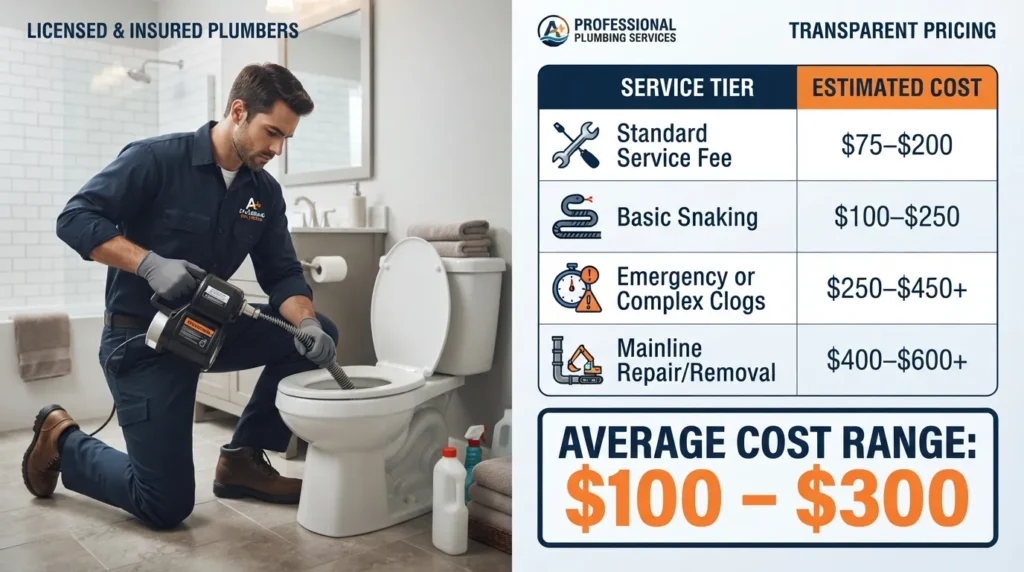
- Sink and Tub Drains: Professional fees range from $100 to $275 to clear hair, soap scum, and localized food debris.
- Toilet Augering: Standard toilet blockages cost $100 to $275 to clear, which may include pulling and resetting the toilet bowl if the obstruction is lodged deep in the trapway.
- Standard Service Time: Most basic fixture snaking procedures take between 20 to 45 minutes from arrival to clean-up.
Main Sewer Line Snaking Cost
Main sewer line blockages require heavy industrial machinery, longer steel cables, and specialized root-cutting heads, driving up the overall service price.
- Standard Main Line Clearing: Professional main sewer line snaking ranges from $150 to $500 depending on accessibility via an outdoor cleanout.
- Complex Tree Root Removal: Heavy root intrusions requiring specialized blade attachments can push total costs toward $600.
- Camera Inspection Add-ons: Plumbers often recommend an accompanying sewer camera inspection ($150 to $350) to verify that the line is fully cleared and structurally intact.
What Affects the Final Bill Trip Charge Labor Clog Severity
Final plumbing invoices vary based on distinct service logistics, time of day, and the physical complexity of the obstruction.
- Service Trip Fees: Many companies charge an initial diagnostic trip fee of $50 to $150, which is occasionally rolled into the final labor total if you authorize the repair.
- After-Hours Emergency Rates: Calling a plumber on weekends, holidays, or late at night typically incurs emergency dispatch premiums that double standard labor rates.
- Clog Accessibility: Lines lacking an accessible cleanout require plumbers to dismantle fixtures or crawl through tight access spaces, increasing labor time.
Real Customer Experience: Was I Overcharged? Addressing the Reddit Concern
Homeowner forums frequently feature complaints about high plumbing bills for what appears to be “just 10 minutes of snaking work.” Understanding the business reality behind these quotes clarifies why professional pricing reflects more than just the minutes spent turning a handle.
- Overhead and Licensing Costs: Professional service invoices cover commercial vehicle upkeep, liability insurance, specialized machine maintenance, and licensed technician wages.
- Risk and Liability: If a technician cracks an aging cast-iron pipe while clearing a tough blockage, the plumbing company carries the financial burden of repair.
- National Benchmarks: According to HomeGuide Cost Data, routine residential drain clearing typically averages between $100 and $275 for single fixtures, while complex main line work ranges from $175 to $600. Any quote falling safely within this window is generally standard market rate.
Toilet-Specific Clog Snaking Cost
Clearing a stubborn toilet backup requires specialized equipment to navigate delicate porcelain trapways without scratching the bowl. Understanding specialized toilet auger costs and professional pricing prevents costly fixture replacements.
Cost to Snake a Clogged Toilet
Toilet snaking prices vary depending on whether you purchase a specialized tool for DIY clearing or hire a professional plumber to dislodge a deep foreign object.
- DIY Retail Cost: A dedicated toilet auger (often called a closet auger) costs between $20 and $50 at major hardware stores.
- Professional Service Cost: Hiring a licensed plumber to clear a severely blocked toilet ranges from $100 to $250.
- Severe Blockage Removals: If flushed items like toys or hygiene products require pulling and resetting the entire porcelain bowl, labor costs can rise to $250 to $450.
Why You Shouldn’t Use a Regular Snake on a Toilet Closet Auger Needed
Standard wire sink snakes feature exposed metal coils and sharp ends that easily gouge and permanently scratch the visible porcelain inside a toilet bowl. A closet auger features critical protective measures.
- Rubber Bowl Guards: Quality closet augers feature a vinyl or rubber guard over the curved arm to prevent scratching or chipping delicate porcelain.
- Rigid Drop-Head Design: Unlike flexible sink cables that coil up inside a large toilet trap, closet augers use a rigid shaft designed to push straight through the trapway.
- Coat Hanger Risks: Makeshift DIY solutions like straightened wire coat hangers can permanently mar your toilet finish and easily puncture older wax rings or plastic flanges.
DIY Alternatives Before You Buy or Call a Plumber
Before investing in equipment rentals or paying for professional plumbing dispatch, you can often clear minor slow drains using household items and basic tools. These low-cost methods resolve organic surface buildup safely without risking pipe wear.
Baking Soda & Vinegar Method
The chemical reaction between baking soda and vinegar produces carbon dioxide bubbles that help loosen organic grease and soap scum stuck inside secondary branch lines.
- Application Steps: Pour half a cup of baking soda down the drain opening, followed immediately by one cup of white vinegar.
- Reaction Time: Cover the drain with a stopper or cloth for 15 to 30 minutes to let the fizzing action break apart minor buildup.
- Flush Routine: Follow up by pouring a kettle of boiling hot water down the drain to flush away the loosened debris.
Dish Soap & Hot Water Trick
Dish soap acts as a powerful lubricant that breaks down greasy kitchen clogs, allowing trapped food particles to slide freely through the P-trap.
- Application Steps: Squirt a generous amount of liquid dish soap directly into the clogged sink or tub drain.
- Heat Activation: Pour a gallon of very hot (not boiling, to prevent cracking porcelain or PVC joints) water down the pipe.
- Best Suited For: Kitchen sinks experiencing sluggish drainage caused by mild cooking oil and grease accumulation.
Plunger vs Snake When Each Works
Plungers rely on air pressure and water displacement, whereas snakes physically break apart or hook into solid blockages.
- Cup Plunger: Best for flat surfaces like kitchen and bathroom sinks where suction can force water back and forth across the clog.
- Flange Plunger: Features an extended rubber flap designed specifically to seal tightly inside toilet bowl openings.
- When to Switch to a Snake: If plunging fails after five to six vigorous attempts, the obstruction is too dense or too far down the pipe for air pressure to move.
Wet/Dry Vacuum Method
A heavy-duty shop vacuum can create powerful suction capable of pulling solid hair clogs or debris back up through the drain opening.
- Setup Protocol: Remove any sink stoppers and ensure you create an airtight seal around the drain opening using a wet rag.
- Vacuum Setting: Set your shop vac to wet suction mode and cover the overflow hole with a damp cloth to maximize upward pulling force.
- Caution: Never use a standard household dry vacuum for this method, as liquid exposure creates severe electrical shock hazards.
FAQs People Also Ask Capture Block
Quickly finding answers to common plumbing questions saves time and prevents costly mistakes when troubleshooting stubborn household drain backups.
What is the best snake to unclog a drain?
The best drain snake depends entirely on your specific fixture type and clog location. A basic 25-foot drum auger or handheld crank snake works best for standard bathroom and kitchen sinks, while a vinyl-coated closet auger is required for clearing clogged toilets without scratching the porcelain bowl.
How much is a plumber snake at Lowe’s?
A basic manual wire snake or crank auger at Lowe’s typically ranges from $12 to $35, while heavy-duty drill-attachment snakes and motorized consumer drum units cost between $40 and $150 depending on the cable length and brand.
Is a drain auger better than a snake?
A drain auger is generally more effective than a simple wire snake for tough blockages because its enclosed drum housing, crank handle, or power-drill attachment provide the mechanical torque needed to break through dense grease and solid waste.
Can Dawn dish soap really unclog a drain?
Dawn dish soap can effectively clear minor kitchen sink clogs caused by fresh grease and cooking oil by acting as a lubricant, especially when followed by a flush of very hot water, though it will not move hair clumps or solid objects.
What size snake do plumbers use for main lines?
Professional plumbers typically use heavy-duty motorized machines equipped with 1/2-inch to 3/4-inch thick steel cables ranging from 50 to 100 feet in length to clear deep main sewer line blockages and tree roots.
Conclusion Final Cost Recap & Recommendation
Navigating drain blockages efficiently requires balancing your budget against the complexity of the clog. Whether you choose to invest in a low-cost DIY hand tool or hire a professional plumber, understanding total pricing models guarantees you avoid unnecessary expenses.
All Costs in One Place
Reviewing all purchase, rental, and professional service expenses in a single breakdown helps you finalize your plumbing maintenance strategy immediately.
Our Recommendation Based on Clog Type
Matching your strategy directly to the source of the plumbing backup saves time and prevents accidental fixture damage.
- For Minor Bathroom Clogs: Buy a $15 to $35 handheld crank snake or drum auger; it pays for itself on the very first use and provides instant access for future hair traps.
- For Toilet Blockages: Invest in a $20 to $50 rubber-guarded closet auger to clear the trap safely without scratching the porcelain bowl.
- For Main Sewer Line Emergencies: Rent a commercial drum machine for $50 to $100 per day if you are comfortable operating heavy equipment, or call a licensed professional if the blockage involves structural tree roots or multi-fixture backups.

Oscar Vance | Master Plumber & Drainage Expert
Meet Oscar Vance, a licensed master plumber sharing practical solutions on residential repairs, preventive maintenance, and thoughtful home upkeep.
Pingback: How to Unclog Bathtub Drain 3 Safe DIY Fixes
Pingback: What Is the Average Cost to Unclog a Drain? (2026)