Action Plan & Emergency Triage
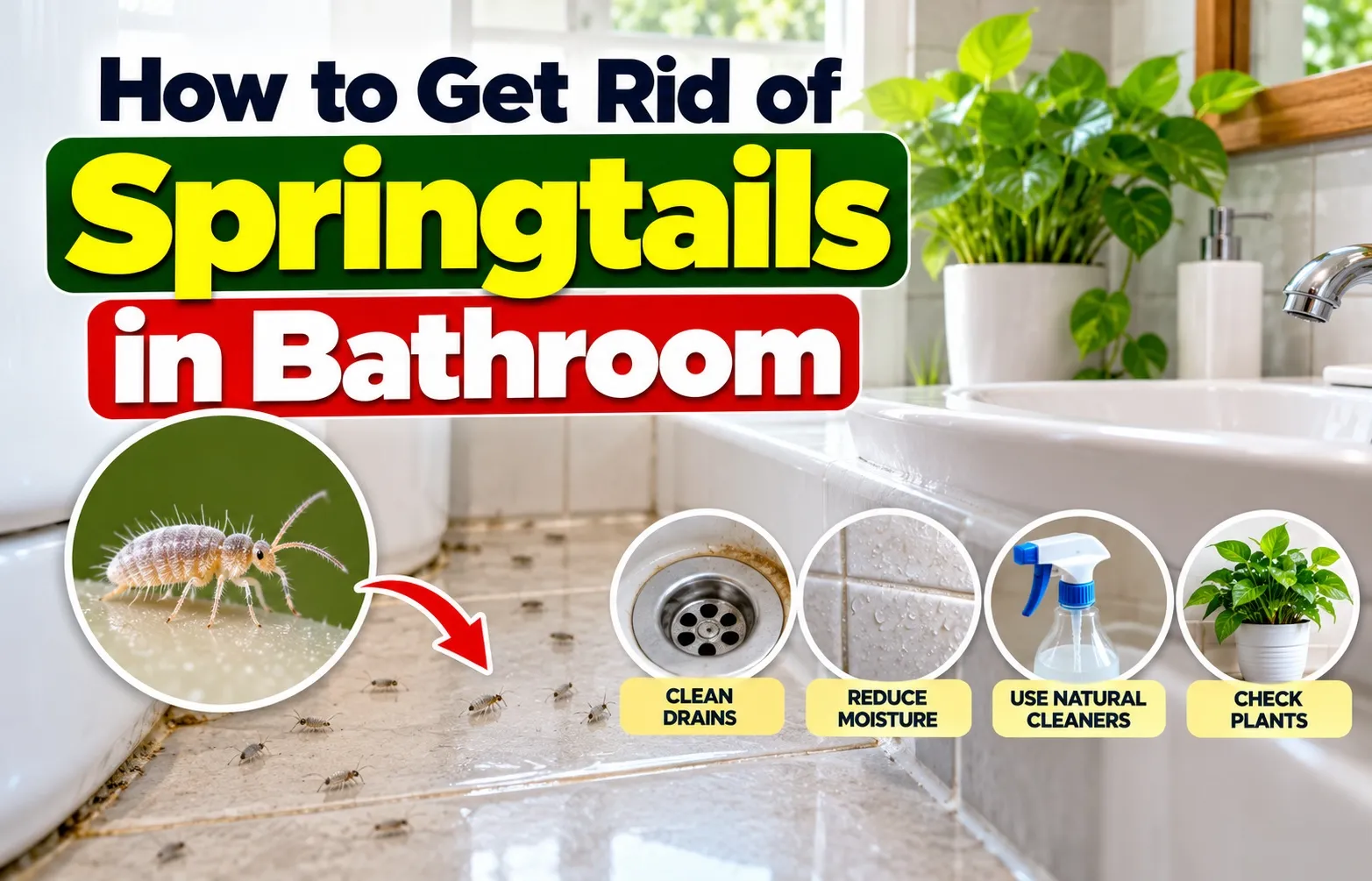 To eliminate springtails in your bathroom immediately, spray visible clusters with a simple mixture of 2 tablespoons of liquid dish soap and 1 cup of water or white vinegar. This breaks their water-repellent outer cuticle, causing instant knockdown on contact. Alternatively, use a vacuum hose to suck up active bugs instantly and immediately dispose of the contents outdoors.
60-Second Emergency Checklist: How to Stop Springtails Right Away
When hundreds of tiny jumping bugs appear around your sinks or baseboards, take these four emergency control steps to stop their movement immediately:
- Apply a Contact Spray: Mix equal parts white vinegar and water with a few drops of dish soap in a spray bottle. Spray directly on active springtails to kill them in seconds without using toxic chemicals.
- Vacuum Active Clusters: Use a narrow vacuum hose attachment to suck up large congregations along floor joints, window sills, and tile grout lines.
- Dispose of Waste Immediately: Empty the vacuum canister or seal the vacuum bag in a plastic trash bag and take it outside right away to prevent survivors from crawling back inside.
- Dry Surface Moisture: Wipe down damp sinks, bathtub edges, and wet tiles with a microfiber towel to remove the standing water springtails need to survive.
Fast Safety Check: Do Springtails Bite, Sting, or Damage Your Home?
Springtails in the bathroom present zero physical threat to humans, pets, or building materials. They are a harmless nuisance pest that feeds exclusively on decaying organic matter, micro-mold, algae, and fungi in damp environments.
- No Human or Pet Hazard: Springtails do not bite, sting, or transmit diseases, and they cannot infest human hair or skin.
- No Structural Damage: Unlike termites or carpenter ants, springtails cannot chew through dry drywall, framing timber, or wooden floorboards.
- No Fabric or Food Damage: They do not eat clothes, carpets, bedding, or stored kitchen pantry goods.
Springtail vs. Flea vs. Drain Fly: Quick Identification Chart
Distinguish springtails from other common bathroom pests using this physical and behavioral comparison matrix to ensure you apply the correct treatment:
The Diagnostic Cluster Map: Locating the Root Cause
To eliminate springtails permanently, locate where they cluster in your bathroom. Their exact gathering location reveals the specific moisture source or breeding site driving the infestation, allowing you to target the root cause without guessing.
Clustered Around the Sink or Bathtub Drain
When springtails gather inside or around a bathroom sink or bathtub drain, they are feeding on organic sludge lodged inside the plumbing system. Drains accumulate hair, soap scum, and dead skin cells, creating a nutrient-dense biofilm.
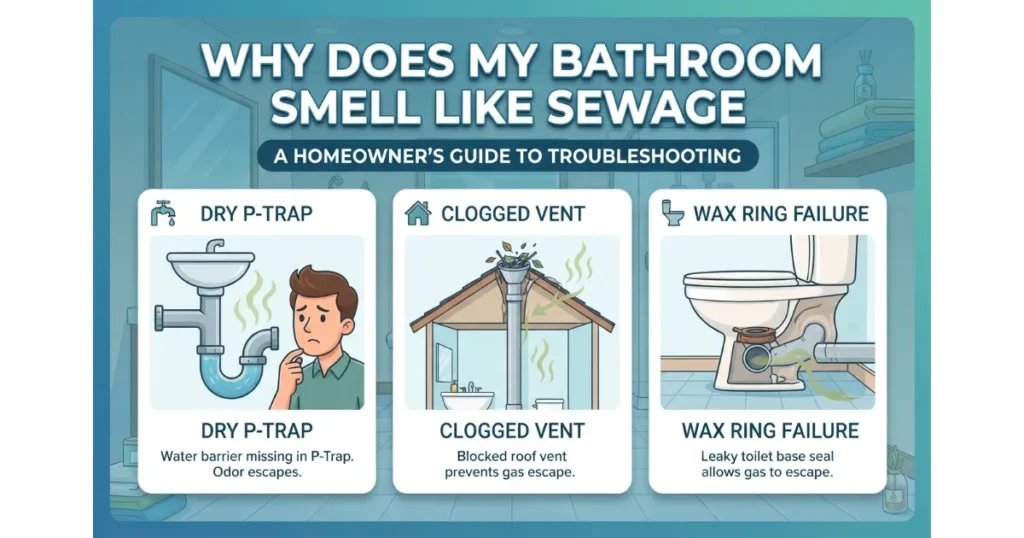
- P-Trap Accumulation: The U-shaped P-trap pipe underneath your sink holds standing water and decaying debris, providing an ideal breeding environment for springtails.
- Overflow Drain Build-up: The small overflow channel near the top of your bathroom sink or tub collects trapped moisture and dark mold growth that rarely gets cleaned.
- Action Steps: Scrub internal pipe walls with a stiff drain brush and treat the lines with an enzymatic drain cleaner to digest the organic film.
Found Along Baseboards Tile Floor or Under Toilet
Springtails crawling along floor grout lines, baseboards, or near the base of the toilet indicate localized floor-level humidity or unnoticed plumbing drips. Surface condensation pools in these low points and trickles beneath floor coverings.
- Sweating Toilet Tanks: Temperature differences between cold tank water and warm, humid bathroom air cause heavy condensation to drip onto floorboards continuously.
- Failing Wax Ring Seals: A degraded toilet wax ring allows small amounts of water to seep underneath the porcelain base every time the toilet flushes.
- Slab Moisture Intrusion: Unsealed tile grout lines absorb mop water and trap dampness against subfloor slabs, encouraging pest activity along baseboards.
Gathering on Bathroom Window Sills or Exterior Walls
If springtails concentrate around window frames or exterior-facing walls, the infestation originates outdoors. High population densities in damp soil or garden beds force them to migrate inward through tiny structural gaps.
- Exterior Garden Mulch: Thick layers of organic wood mulch, decaying leaves, or rich topsoil against your home’s foundation harbour millions of springtails.
- Unsealed Window Sills: Cracks in exterior caulk or gaps along window tracks allow migrating springtails to enter, attracted to indoor humidity.
- Unscreened Weep Holes: Open drainage weep holes in brick exterior walls create direct highways into your bathroom’s outer perimeter.
Crawling Out from Drywall, Peeling Wallpaper, or Outlets
Springtails emerging from wall seams, electrical outlets, or behind bubbling wallpaper indicate a serious structural moisture issue inside the wall void. This pattern signals hidden dampness requiring structural inspection.
- Hidden Plumbing Leaks: Pinhole leaks in supply lines or slow drain pinholes inside wall cavities saturate insulation and wood framing over time.
- Subfloor Rot & Mold: Trapped water rots subfloor plywood, creating hidden fungal growth that sustains large springtail colonies out of sight.
- Peeling Wallpaper Indicators: Trapped moisture breaks down wallpaper adhesive, causing sheets to separate while creating a humid breeding ground beneath the surface.
Comprehensive Elimination Strategy (Step-by-Step)
Permanent springtail eradication requires a multi-layered approach targeting hidden breeding grounds, excessive moisture levels, and entry barriers. Quick chemical surface sprays offer only temporary relief if underlying structural conditions remain unaddressed.
Step 1: Deep Clean & Sanitize Drains (Beyond Baking Soda & Vinegar)
Standard household vinegar and baking soda treatments only provide temporary surface fizzing, leaving the core organic slime intact. To eliminate drain-breeding springtails, you must mechanically strip decaying biofilm from internal plumbing components.
- Mechanical Scrubbing: Detach and clean the P-trap using a flexible, stiff-bristled drain brush to physically strip away built-up hair, soap scum, and grease.
- Enzymatic Cleaning Power: Pour a professional-grade enzymatic drain cleaner down sinks and tubs. Specialized enzymatic cleaners digest organic waste rather than just washing it down.
- Overflow & Weep Hole Sanitization: Flush bathtub overflow channels and shower weep holes with hot water and enzymatic foam to destroy hidden breeding sludge.
Step 2: Environmental Moisture Control (The Permanent Fix)
Springtails cannot survive in dry air because their delicate exoskeletons require high ambient moisture to prevent fatal desiccation. Modifying your bathroom’s microclimate creates a hostile environment that stops reproduction permanently.
- Exhaust Fan Discipline: Run your bathroom exhaust fan during every shower and keep it operating for 30 to 45 minutes afterward to clear trapped steam and condensation.
- Target Humidity Levels: Install a digital hygrometer and deploy a room dehumidifier to keep indoor relative humidity strictly below 50%.
- Fix Leaks & Grout: Repair dripping faucets immediately, replace faulty toilet seals, and re-caulk cracked grout lines around sinks and bathtubs.
Step 3: Crack & Crevice Barrier Application
Establishing a physical chemical barrier along wall-floor junctions prevents migrating springtails from entering living spaces. However, standard DIY application methods frequently fail due to bathroom humidity.
Pro-Tip Warning: The Diatomaceous Earth (DE) Humidity Trap
Traditional food-grade Diatomaceous Earth (DE) becomes completely useless the moment it absorbs moisture in a humid bathroom, turning into an ineffective, hardened paste. Instead of standard DE, apply dry silica aerogel powder or professional microencapsulated residual sprays like Temprid inside dry wall voids and baseboard crevices where moisture won’t wash them away.
- Targeted Crack Treatment: Apply dust-form silica aerogel directly into baseboard gaps, pipe penetrations, and window frame joints.
- Microencapsulated Sprays: Utilize professional residual formulations along perimeter wall junctions and floor plates where pests travel.
Advanced Troubleshooting: What to Do When Springtails Return
If springtails return despite thorough surface cleaning and drain treatments, the infestation is supported by an undiscovered moisture reservoir or an external entry path. Solving persistent outbreaks requires investigating hidden structural cavities and treating outer perimeter walls.
How to Detect Hidden Leaks Behind Bathroom Walls
When springtails continue emerging from baseboards or electrical outlets, a hidden plumbing leak inside the wall void is often supplying continuous moisture. Locating these hidden moisture pockets stops fungal growth behind drywall.
- Use a Pinless Moisture Meter: Press a non-destructive pinless moisture meter against drywall, vanity backings, and subfloors to scan for elevated moisture levels without damaging surfaces.
- Conduct Thermal Imaging Scans: Use an infrared thermal camera to scan bathroom walls. Evaporative cooling from hidden leaks appears as distinct cold spots on thermal displays.
- Inspect Wall Cavities: Look for warning signs like soft drywall, discolored paint, or musty odors, which indicate saturated insulation or rotting timber framing inside the wall void.
Treating Exterior Perimeter & Foundation Entry Points
Heavy springtail populations around outdoor foundation walls often invade bathrooms through structural gaps. Creating a dry buffer zone along your home’s exterior perimeter stops outward migration.
- Clear Foundation Barriers: Pull organic wood mulch, fallen leaves, and thick groundcover at least 12 inches away from your home’s foundation walls to reduce damp habitat zones.
- Seal Open Weep Holes: Stuff open brick weep holes with breathable copper mesh to block pest entry while maintaining required wall ventilation.
- Caulk Exterior Penetrations: Apply high-grade exterior silicone caulk around window sills, hose bibs, exhaust vents, and foundation expansion joints.
Realistic Timeline: How Long Does It Take to Completely Eliminate Them?
Complete elimination usually takes 7 to 14 days after removing the core moisture source. Understanding the die-off timeline prevents premature frustration during treatment.
- Days 1–3 (Initial Knockdown): Surface sprays and vacuuming eliminate active visible clusters, but eggs in hidden crevices continue hatching.
- Days 4–7 (Dehydration Phase): Lowering indoor humidity below 50% forces remaining adult springtails and newly hatched nymphs to dehydrate and die off.
- Days 8–14 (Complete Eradication): As residual treatments remain active and wall voids dry out completely, reproduction stops and the population collapses entirely.
Frequently Asked Questions
Get quick, definitive answers to common questions about springtail behavior, effective elimination methods, and health myths.
What can I pour down my drain to get rid of springtails?
Pour an enzymatic foam drain cleaner down your sink or tub drain to break down the organic biofilm springtails feed on. Alternatively, pour a solution of hot water mixed with liquid dish soap down the drain to kill visible pests on contact without damaging plumbing lines.
What kills springtails instantly?
Springtails die instantly when sprayed directly with 70% isopropyl alcohol, soapy water, or contact insecticides containing pyrethrins. These liquids disrupt their protective outer cuticle and cause rapid dehydration within seconds.
What do springtails hate the most?
Springtails hate dry air more than any chemical spray. Maintaining indoor relative humidity below 50% forces their moisture-dependent bodies to dehydrate and die rapidly, making low humidity the single most effective long-term control method.
Do springtails mean I have mold or water damage?
Yes, persistent springtail infestations usually indicate microscopic mold and fungi growing on wet drywall, subflooring, or leaky pipes. Their presence serves as an early warning sign of hidden structural dampness or trapped water.
Can springtails infest human hair or skin?
No, springtails cannot infest human hair, skin, or bodies. They do not bite, feed on human tissue, or lay eggs inside homes, making any belief in a human body infestation a complete myth verified by experts in the University Extension Entomology Guide.

Oscar Vance | Master Plumber & Drainage Expert
Meet Oscar Vance, a licensed master plumber sharing practical solutions on residential repairs, preventive maintenance, and thoughtful home upkeep.