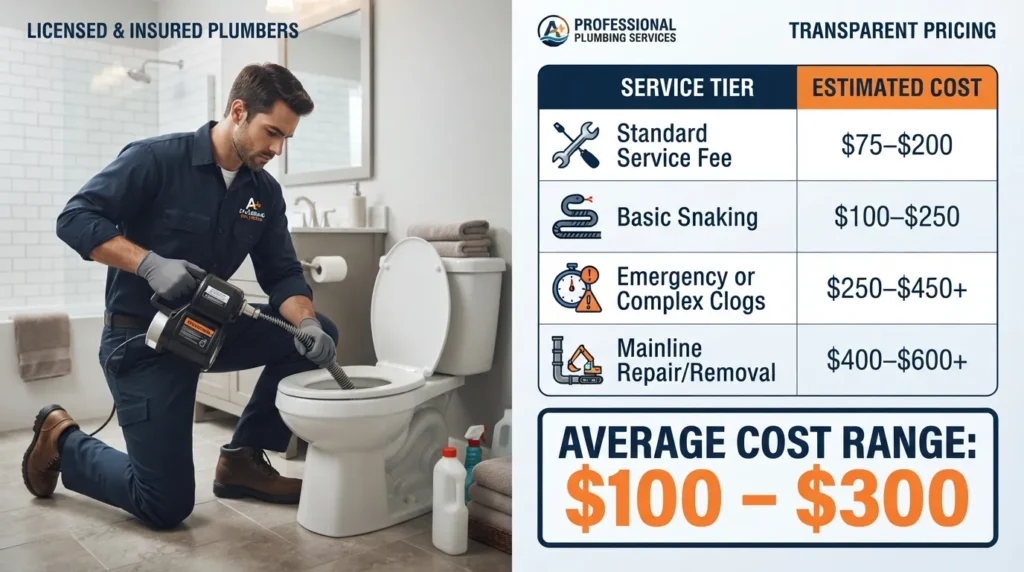
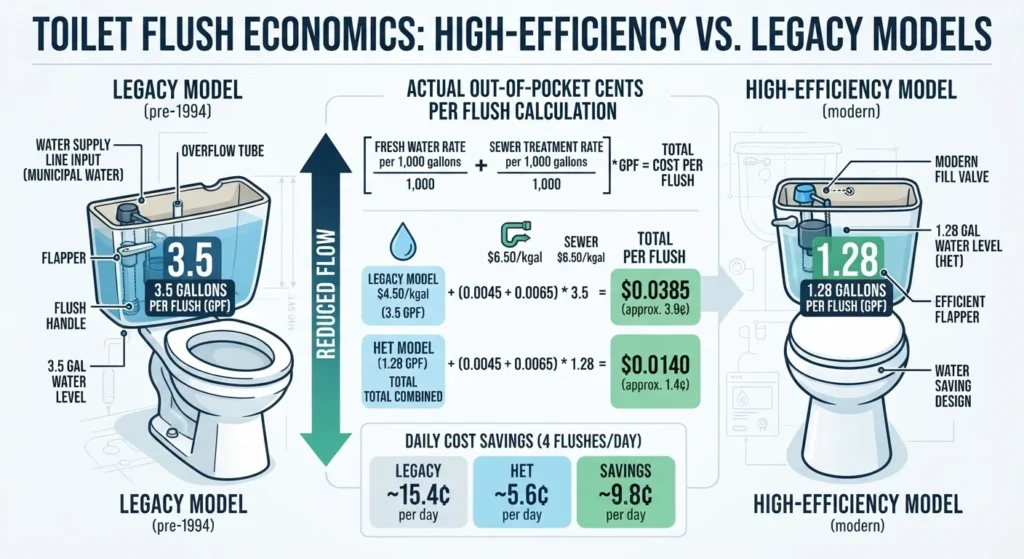
How Much Does a Plumber Cost?
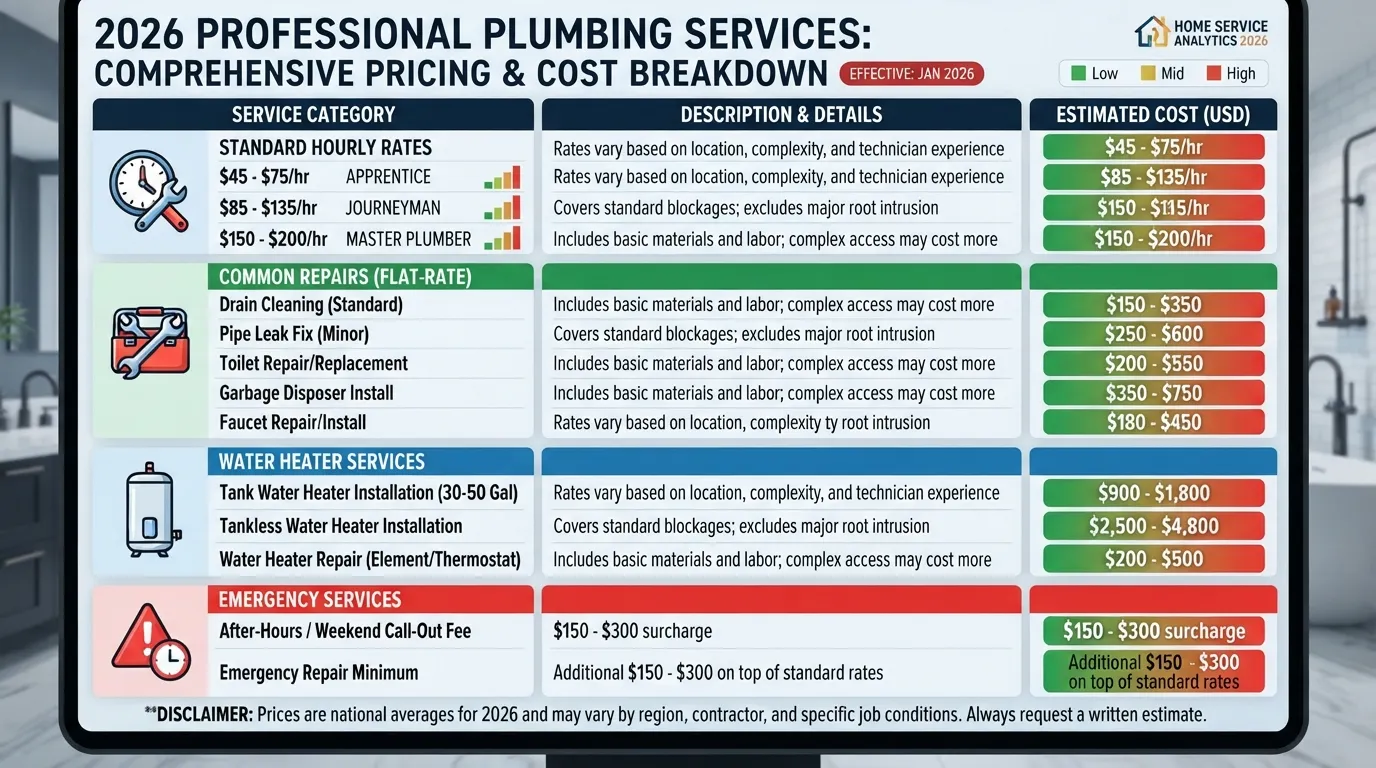
Hiring a professional plumber typically costs between $45 and $200 per hour for standard labor, with total project prices varying based on complexity. Most homeowners spend anywhere from $175 to $450 for typical repairs like fixing leaks, unclogging drains, or repairing toilets.
Range Hourly + Flat Rate + Service Call
Understanding pricing structures helps you accurately budget for minor fixes and major emergency plumbing installations. Professionals typically combine hourly fees with fixed parts pricing or flat rates for predictable tasks.
- Plumber Cost Per Hour: Expect to pay $45 to $200 per hour depending on geographic location, contractor experience, and whether the technician is a journeyman or master plumber.
- Flat Rate Pricing: Many plumbers charge standardized flat rates for common jobs like installing a water heater, replacing a faucet, or clearing a standard main sewer line.
- Service Call Fee: A diagnostic dispatch fee of $75 to $200 is frequently required just for the plumber to travel to your home and assess the problem.
How Much Does a Plumber Charge Per Hour? Full Breakdown
Plumbing hourly rates vary depending on licensing, experience level, and geographic location, generally ranging from $45 to $200 per hour [00:00:07]. Knowing how different tiers of plumbers structure their labor costs helps you evaluate estimates and manage your renovation or repair budget effectively [00:00:22].
Apprentice Plumber Rate per hour
Apprentice plumbers are individuals who are currently in training or completing their required apprenticeship hours under direct supervision [00:00:22]. Their lower hourly rates make them cost-effective options for basic assistance on larger projects.
- Average Hourly Rate: Typically ranges between $25 and $45 per hour.
- Supervision Requirements: Must always work under a licensed journeyman or master plumber [00:00:27].
- Best Suited For: Assisting with straightforward utility installations or general labor tasks.
Journeyman Plumber Rate per hour
Journeyman plumbers have completed their formal training, passed comprehensive licensing examinations, and are fully qualified to work independently [00:00:27]. They balance high-level technical expertise with more accessible pricing than master-level contractors.
- Average Hourly Rate: Usually ranges from $50 to $100 per hour.
- Independent Capability: Fully licensed to diagnose, repair, and install plumbing infrastructure without oversight [00:00:27].
- Best Suited For: Standard plumbing repairs, leak tracing, and fixture replacements.
Master Plumber Rate per hour
Master plumbers represent the top tier of the profession, boasting extensive years of field experience and often operating their own contracting businesses [00:00:37]. Their premium rates reflect elite problem-solving capabilities and complex system knowledge [00:00:07].
- Average Hourly Rate: Frequently ranges between $100 and $200+ per hour [00:00:07].
- Advanced Authority: Certified to pull commercial permits, design intricate plumbing layouts, and manage large teams.
- Best Suited For: Major commercial installations, intricate structural issues, and complicated diagnostic overhauls.
How Plumbers Calculate Their Hourly Rate labor + overhead + tools breakdown
A professional plumber’s hourly price isn’t just take-home pay; it is a calculated reflection of various operational expenses required to keep a business running safely. Understanding this plumbing pricing structure clarifies why service fees are structured the way they are.
- Direct Labor Costs: Wages, state-mandated licensing fees, and continuous safety training certifications.
- Business Overhead: Commercial vehicle payments, fuel, comprehensive general liability insurance, and bonding.
- Specialized Equipment: Maintenance costs for expensive tools like hydro-jets, sewer camera inspection units, and electronic leak detectors.
Flat Rate vs Hourly Rate Pricing Which One Costs You More?
Plumbers typically charge using either a fixed upfront flat rate or an hourly rate plus materials. Choosing the right pricing model depends on the predictability and scope of your repair project, helping you avoid unexpected overcharges.
What Is Flat Rate Plumbing Pricing?
Flat rate pricing provides a fixed price quote for an entire project before any physical work begins. This upfront pricing structure covers all estimated labor and standard replacement parts.
- Budget Certainty: You know the exact total cost regardless of how long the repair actually takes the plumber to complete.
- Risk Shift: The financial risk of unexpected complications falls on the contractor rather than the homeowner.
- Best Suited For: Clearly defined installations and routine fixes like toilet replacements, water heater installs, and garbage disposal swaps.
What Is Hourly Rate Plumbing Pricing?
The hourly pricing model charges you for every minute the plumber spends on your property, usually starting the moment they arrive. Material costs and service call fees are added separately to the final bill.
- Pay for Actual Time: Quick diagnostic fixes or minor adjustments may cost less if the job wraps up rapidly.
- Variable Totals: Hidden complications or hard-to-reach pipes can quickly inflate the final labor hours.
- Best Suited For: Vague troubleshooting tasks, exploratory leak searches, and multi-faceted custom remodeling projects.
Flat Rate vs Hourly Side-by-Side Comparison Table
Which Pricing Model Should You Choose?
Selecting the optimal plumbing pricing strategy protects your financial investment and encourages efficient contractor performance. Always request written estimates before committing to any service agreement.
- Opt for Flat Rate When: You want absolute peace of mind and protection against runaway labor costs on standard household fixes.
- Opt for Hourly When: You have a minor, straightforward task that an experienced professional can knock out in under thirty minutes.
Plumber Service Call Fee & Call Out Charges Explained
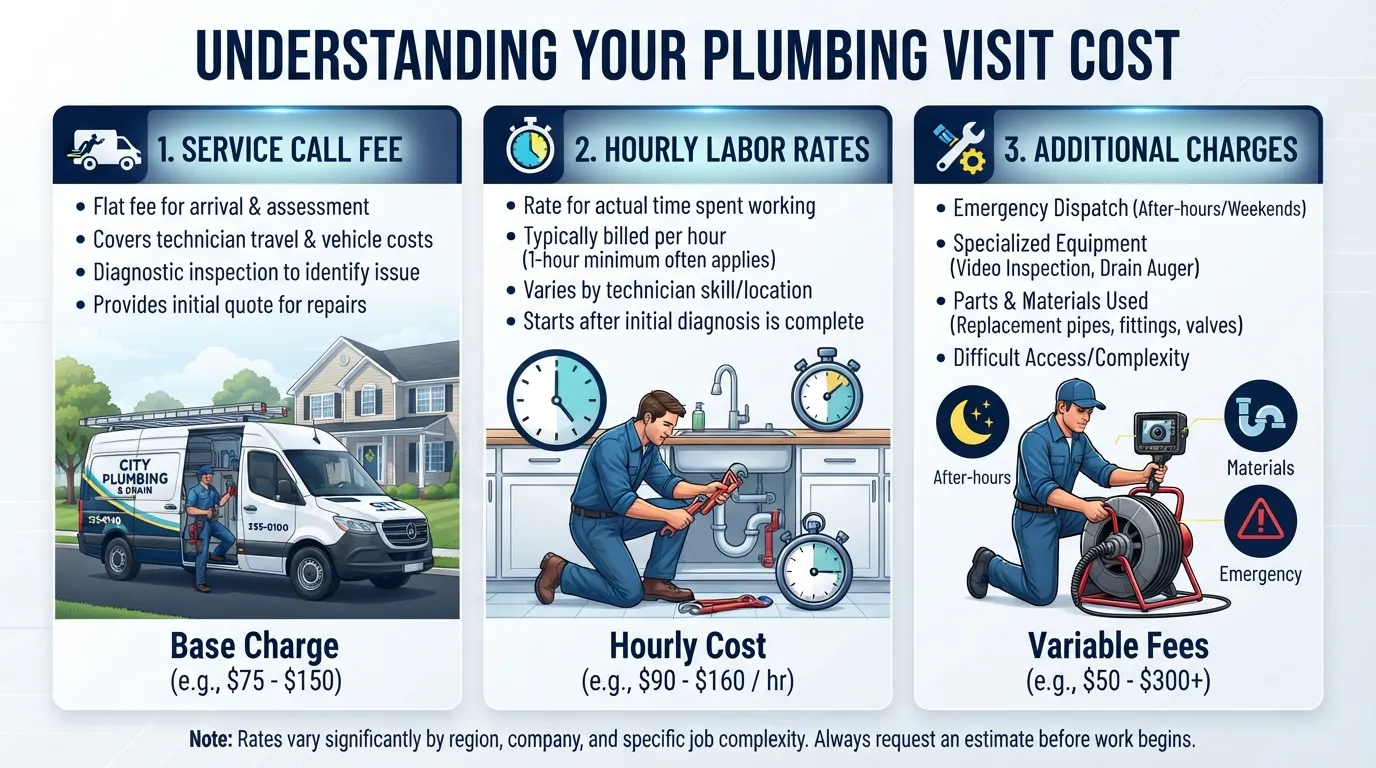
A service call fee, also known as a trip fee or diagnostic fee, typically ranges from $75 to $200. This mandatory charge covers the contractor’s transportation expenses and the initial professional evaluation required to find your plumbing problem.
What Is a Service Call Fee?
The service call fee is a separate baseline charge billed just for getting a licensed plumber to drive to your property and inspect the issue. It ensures technicians are compensated for their travel time, fuel, and diagnostic expertise even if you decide not to proceed with the repair.
- Covers Logistics & Time: Offsets fuel consumption, vehicle maintenance, and dispatch scheduling overhead.
- Funds Expert Diagnostics: Pays for the physical inspection time needed to locate hidden leaks or assess broken water heaters.
- Billed Independently: Operates separately from hourly labor charges and specific replacement parts costs.
Average Call-Out Charge Range
Most residential plumbing companies set their standard call-out rates based on local geographic competition and travel distances. Emergency after-hours calls or weekend dispatches carry significantly higher dispatch pricing.
- Standard Business Hours: Usually costs between $75 and $200 for regular daytime visits.
- Emergency After-Hours: Can spike to $150 to $350+ for nights, weekends, or major holiday dispatches.
- Remote Locations: Properties outside standard service zones often incur an extended mileage surcharge.
Is the Service Fee Applied to Final Labor Cost?
Many professional plumbing contractors will roll the diagnostic fee directly into the final price of the repair if you choose to hire them on the spot. Always clarify this policy before booking a technician to avoid unexpected duplicate charges.
- Credited Toward Repairs: Frequently absorbed into the total cost of completed work as a customer courtesy.
- Non-Refundable Diagnostics: Retained by the company if you decline the repair estimate or cancel after arrival. Always ask
Emergency & After Hours Plumber Rates
Emergency plumbing services typically cost between $150 and $400 per hour, or a flat fee of $250 to $600 [00:00:57], making after-hours calls significantly more expensive than standard daytime visits [00:00:30]. When unexpected disasters strike outside normal business hours, understanding these pricing structures prevents costly surprises.
Weekend Night & Holiday Rate Multipliers
Plumbing issues rarely happen on a convenient schedule, often occurring late at night, on weekends, or during major national holidays [00:00:25]. Contractors adjust their standard billing rules during these times to reflect the interruption to their personal schedules [00:02:53].
- Night and Weekend Call-Outs: Usually billed at 1.5x to 2x the normal hourly rate [00:00:28].
- Holiday Surcharges: Often command top-tier premium pricing due to limited technician availability.
- Expanded Service Fees: Emergency call-out fees generally start around $150 to $300 just for dispatching a technician.
Why Emergency Rates Are 1.5x–3x Higher
Paying premium rates during an emergency can feel frustrating [00:02:49], but several operational factors explain why after-hours pricing is substantially higher than standard weekday labor [00:02:53].
- Disrupted Personal Time: Technicians must leave their homes and families during off-hours to handle urgent property threats [00:02:53].
- Immediate Resource Allocation: Emergency dispatches require pulling on-call staff away from scheduled rest and mobilizing specialized equipment quickly.
- Mitigating Severe Risk: Higher fees offset the liability and intensity of containing catastrophic home damage on short notice [00:02:59].
When It’s Worth Paying Emergency Rates
Not every plumbing problem requires an immediate midnight call to a professional contractor [00:03:30]. Knowing which situations constitute a true emergency helps you decide whether to wait until regular business hours or pay the premium rate [00:03:30].
- Burst or Frozen Pipes: Requires instant intervention to stop indoor flooding and protect structural framework [00:03:09].
- Severe Sewage Backups: Presents a critical health hazard that demands immediate professional sanitation and clearing [00:03:13].
- Total Loss of Water: Complete water shut-offs disrupt essential daily living or business operations, making quick restoration necessary [00:03:16].
Average Cost for Common Plumbing Repairs
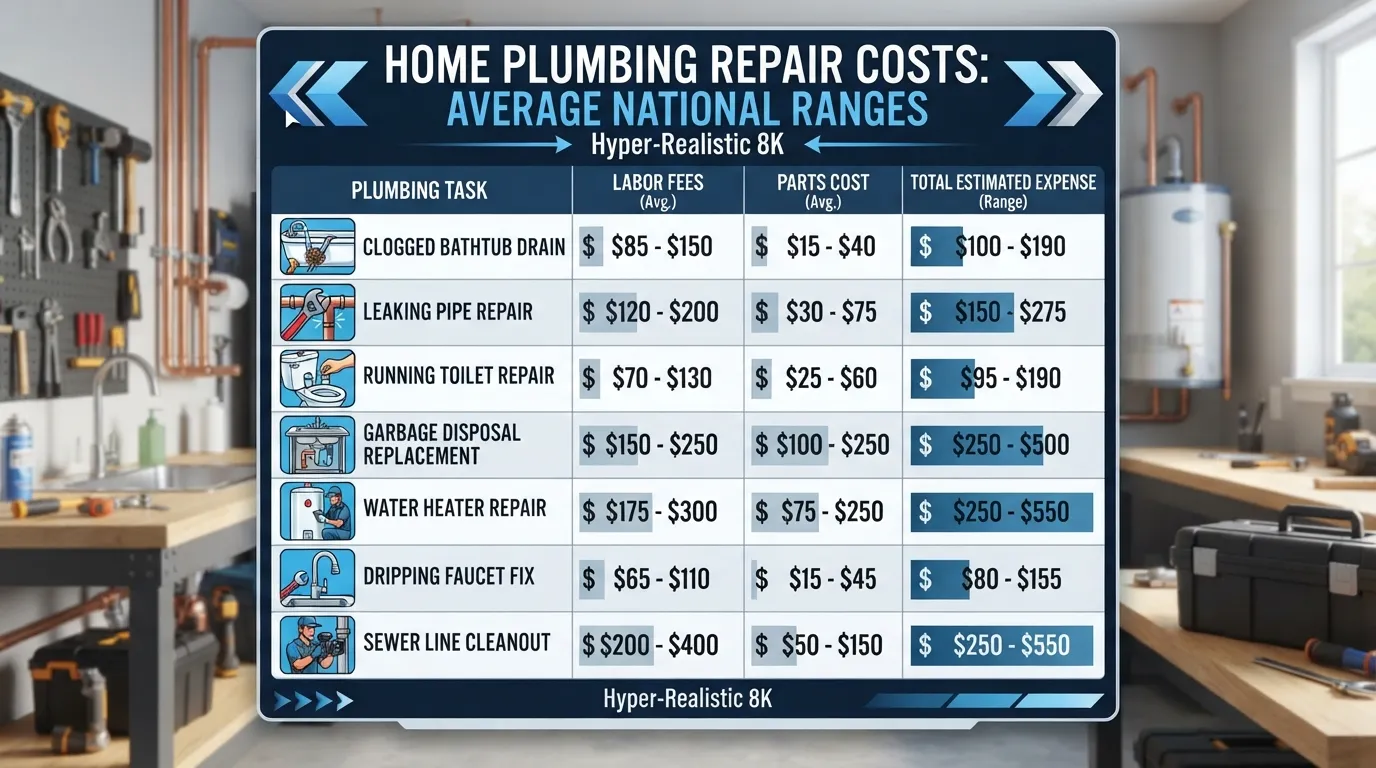
Plumbing repair costs vary drastically by specific task, ranging from $100 for a minor faucet washer replacement to over $1,500 for complex main line repairs. Knowing task-specific pricing helps you anticipate expenses for everything from clearing clogs to replacing water heaters.
Clogged Drain or Toilet Cost
Clearing a standard blocked drain or unclogging a stubborn toilet typically costs between $100 and $300. Simple blockages can be cleared quickly with a hand auger, whereas deep-set main line clogs require specialized drain snaking or hydro-jetting equipment.
- Standard Sink or Tub Clog: Usually ranges from $100 to $250 using basic mechanical snakes.
- Toilet Unclogging: Generally costs $125 to $300 if the blockage requires removing the porcelain fixture.
- Main Sewer Line Clearing: Can range from $250 to $800 depending on branch length and accessibility.
Leaking Faucet Pipe Repair Cost
Fixing a leaking faucet or a damaged pipe segment generally costs between $150 and $700. Addressing drips early prevents structural rotting and skyrocketing water bills.
- Leaky Faucet Fix: Costs $100 to $300 for replacing worn cartridges, O-rings, or washers.
- Accessible Pipe Leak: Runs $150 to $450 for soldering copper or swapping out PEX sections.
- Hidden Wall/Slab Leaks: Spikes to $500 to $1,500 due to exploratory drywall cutting and structural access.
Toilet Installation or Replacement Cost
Replacing an old, cracked, or inefficient toilet costs between $220 and $600 including basic labor and disposal. Premium smart toilets or bidet combinations carry much higher material expenses.
- Standard Toilet Swap: Ranges from $220 to $450 for labor and new wax ring installations.
- New Unit Purchase: Standard models cost an extra $150 to $400 if the plumber supplies the fixture.
- Flange Repair Add-on: Adds $100 to $250 if subfloor wood or plastic closet flanges are damaged.
Water Heater Repair Replacement Cost
Water heater maintenance and part swaps range from $150 to $600, while a full unit replacement runs $800 to $3,500. Tankless systems require more complex gas line and electrical retrofitting.
- Thermostat or Element Swap: Costs $150 to $300 for standard electric or gas assembly fixes.
- Traditional Tank Replacement: Ranges from $800 to $2,500 including disposal and code upgrades.
- Tankless Unit Installation: Runs $1,500 to $3,500+ due to venting and high-capacity gas line demands.
Bathroom Sink Replacement Cost
Upgrading a bathroom sink vanity or replacing an existing basin ranges from $200 to $600. Labor totals depend on whether custom countertop modifications or new tailpiece connections are needed.
- Drop-in Basin Swap: Costs $200 to $450 using existing vanity cutouts and supply lines.
- Undermount Vanity Replacement: Runs $350 to $700 due to complex adhesive mounting and sealing.
- P-Trap & Tailpiece Refresh: Adds $150 to $250 if old PVC drainage pipes are corroded.
Kitchen Faucet Replacement Cost
Installing a brand new kitchen faucet generally costs between $150 and $350. Pull-down sprayers, touchless sensors, and integrated soap dispensers increase total installation time.
- Standard Faucet Swap: Ranges from $150 to $250 for basic single or dual-handle models.
- Touchless / Smart Faucet: Costs $250 to $400 due to under-sink battery packs and control boxes.
- Shut-off Valve Replacement: Adds $75 to $150 if old angle stops fail to seal properly.
Thermocouple Replacement Cost
Replacing a faulty gas water heater thermocouple typically costs $150 to $250. This fast safety component swap takes an experienced technician less than an hour to complete.
- Quick Safety Fix: Low parts cost offset by standard diagnostic service trip fees.
- Pilot Assembly Check: Involves cleaning pilot tubing and testing burner ignition.
- Preventative Tip: Always verify gas valve integrity whenever a thermocouple fails.
Push-Down Loo Handle Replacement Cost Quick 5 Minute Job
Swapping out a broken push-down toilet handle or flush lever costs $75 to $150 when hiring a pro, though it is a simple DIY project. Plumbers often bundle this into minor bathroom tune-ups.
- Minimal Parts Expense: Universal replacement levers cost less than $20 at local hardware stores.
- Chain Adjustment: Involves calibrating flapper tension for optimal water release.
- Labor Minimums: Most contractors charge their minimum 30-minute rate or service call fee for single small fixes.
Burst Pipe Repair Cost
Repairing a burst pipe is an urgent plumbing emergency that costs between $400 and $1,500. Total expenses scale upward depending on how many walls must be opened to reach frozen or ruptured lines [1.2.2].
- Emergency Excavation or Cutout: Adds heavy labor costs to access hidden water lines.
- Pipe Material Upgrades: Replaces fragile old galvanized steel with flexible PEX tubing.
- Drying and Restoration: Often requires secondary remediation services if structural flooding occurred.
Why Plumbers Charge More Than They Earn The Wage vs Price Truth
Many homeowners experience sticker shock when a plumber quotes $150 to $200 per hour [00:00:57], only to discover that the technician’s take-home wage is closer to $30 or $40 per hour. This widespread financial discrepancy exists because a plumbing service charge covers critical business overhead expenses rather than pure profit.
Business Overhead: Insurance, Licensing, Tools & Van Costs
A professional plumbing enterprise requires heavy capital investments to operate safely and legally within municipal guidelines. These foundational running expenses must be factored into every billable hour.
- Commercial Vehicle Expenses: Fully outfitted service vans demand steep monthly lease payments, heavy commercial insurance, and constant fuel expenditures.
- Licensing and Bonding: State contractor bonds, master plumber licensing fees, and continuous safety certifications require annual investments.
- Specialized Diagnostic Gear: Industrial pipe locators, hydro-jets, and electronic testing units cost thousands of dollars to purchase and maintain.
Non-Billable Admin Time Explained
Plumbers do not get paid for every hour they are awake or working; a massive portion of their schedule involves unpaid administrative tasks. Traveling between appointments, sourcing specific parts at supply houses, and writing estimates are entirely non-billable.
- Travel and Logistics: Driving across sprawling service territories burns time and fuel without earning customer labor revenue.
- Parts Sourcing: Tracking down rare replacement valves or specialized fittings requires visiting local supply warehouses.
- Customer Communication: Answering inquiries, booking dispatches, and processing billing paperwork take up valuable non-revenue hours.
Taxes & Business Expenses Breakdown
Unlike traditional corporate employees who receive paid time off and company-subsidized benefits, independent plumbers and small business owners must self-fund every aspect of their livelihood. According to the U.S. Bureau of Labor Statistics (BLS) plumber wage data, median hourly earnings reflect base labor rather than total corporate billing rates.
- Self-Employment Taxes: Independent contractors and business owners pay double FICA taxes to cover federal contributions.
- Zero Paid Benefits: Plumbers receive no paid sick days, holiday pay, or employer-sponsored healthcare coverage.
- Liability Protection: Comprehensive general liability and worker’s compensation insurance policies protect homeowners from property damage liabilities.
Real Example Where Does the Money Actually Go?
Breaking down a $200 service charge reveals how quickly gross revenue is absorbed by fundamental business operations before any profit is realized. Every transaction supports the infrastructure required for safe home repairs.
- Direct Labor & Wages: Compensates the technician’s skilled labor, experience, and field expertise.
- Overhead Allocation: Funds fuel, vehicle insurance, tool depreciation, and dispatch software.
- Safety & Compliance: Covers mandatory state continuing education, gas safety registrations, and bonding.
Plumber Hourly Rate by State Including Michigan
Plumber hourly rates vary significantly depending on geographic location, local cost of living, and regional contractor demand. Michigan maintains competitive rates that closely align with the national average for licensed residential plumbing services.
Plumber Rates by State Comparison Table Top 10 States
Plumber Hourly Rate in Michigan
In Michigan, licensed journeyman and master plumbers typically charge between $60 and $135 per hour for standard residential work. Metro Detroit areas trend toward the higher end of this range due to elevated municipal licensing requirements and local travel distances.
- Standard Residential Rate: Most local contractors bill $75 to $110 per hour for general troubleshooting.
- Service Call Fees: Michigan dispatch trip fees generally range from $75 to $150.
- Seasonal Adjustments: Winter freeze-ups and frozen pipe calls often trigger higher emergency dispatch pricing.
Is $30 an Hour a Good Plumber Wage in Michigan?
An hourly wage of $30 is typical for an apprentice or entry-level plumbing assistant in Michigan, but it does not reflect what a licensed independent contractor charges clients. While $30 an hour provides a steady living wage for supervised trainees, total customer billing rates must cover overhead costs like commercial vehicle insurance and fuel.
- Entry-Level Earnings: Apprentices starting out in the state commonly earn between $20 and $32 per hour.
- The Wage vs. Billable Gap: Technicians earning $30 hourly work within companies that bill clients $90+ to maintain business operations.
- Licensing Progression: Earning a journeyman card significantly increases individual wage earning potential across the state.
Why Rates Vary by Location Cost of Living Demand Licensing
Geographic disparities in plumbing prices are driven by fundamental economic variables that impact how contractors run their businesses. Understanding these factors explains why hiring a plumber in a major city costs more than in rural counties.
- Cost of Living: Local real estate, commercial rent, and vehicle maintenance expenses dictate baseline operational overhead.
- Contractor Demand: High-growth housing markets create competitive technician shortages that drive up hourly pricing.
- State Licensing Laws: Stringent continuing education and bonding mandates in states like Michigan ensure high quality but increase business expenses.
What Is the 135 Rule for Plumbing?
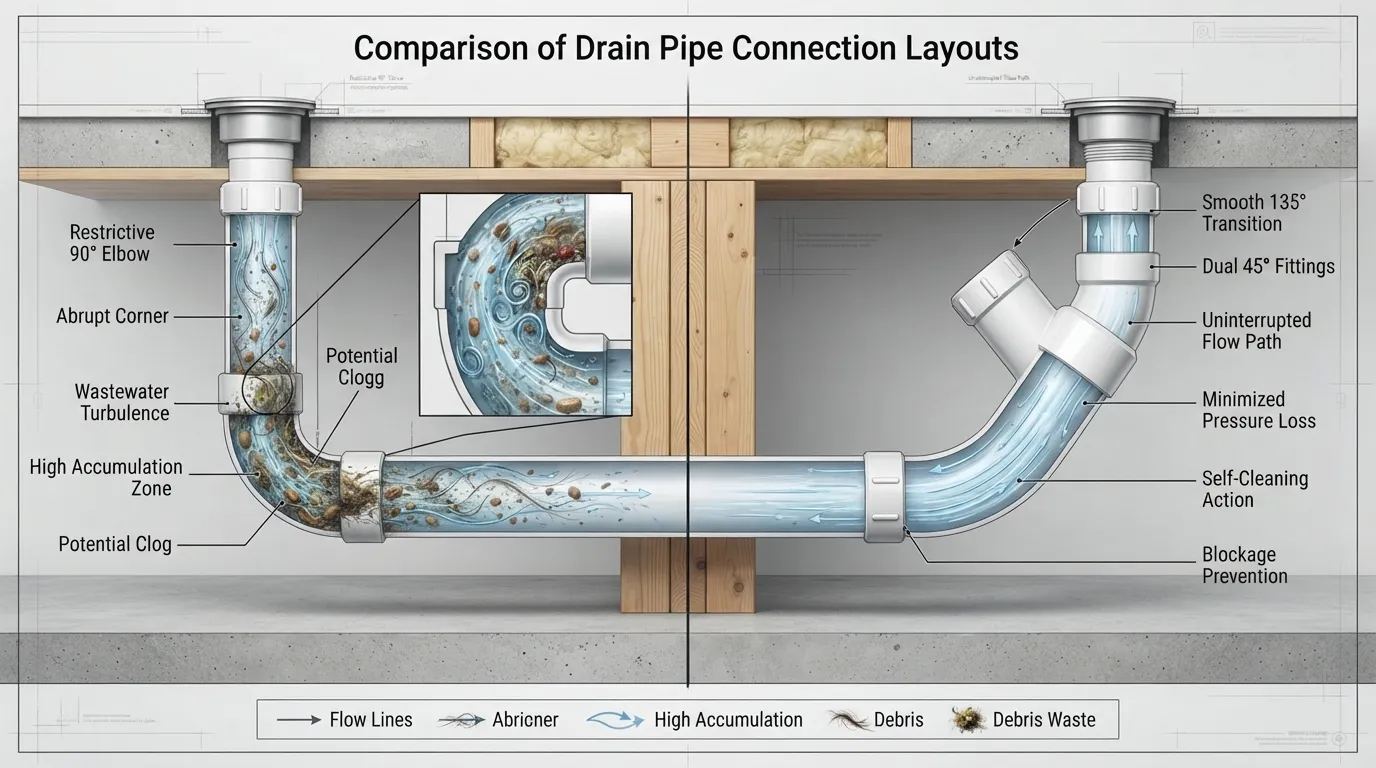
The 135 rule in plumbing is a vital code guideline dictating that when horizontal drain pipes accumulate a total directional change of more than 135 degrees, a cleanout access point must be installed. This standard ensures that wastewater systems remain serviceable and resistant to chronic clogs.
Definition of the 135 Rule
Plumbing codes use the 135-degree threshold to measure how much a drainage line can twist or turn before routine maintenance and snaking become overly difficult. Instead of forcing wastewater through sharp, continuous corners, the rule limits cumulative bend angles to maintain proper hydraulic flow.
- Cumulative Angle Limit: Refers to the total sum of horizontal turns in a specific pipe section between access points.
- Mandatory Access Points: Triggers the legal requirement to install an accessible cleanout fitting.
- Drainage Protection: Prevents fluid turbulence and solid waste buildup at tight interior joints.
How It’s Used in Pricing Estimating
When professional plumbers design layouts or scope out complex bathroom renovations, they factor the 135 rule into their labor and material estimates. Failing to account for this code requirement can lead to failed municipal inspections and unexpected tear-outs.
- Fitting Calculations: Estimators calculate whether upcoming remodels require extra cleanout tees or sweeping bends.
- Inspection Compliance: Ensures finished work passes local plumbing code evaluations on the first attempt.
- Labor Adjustments: Adds specialized fitting time into upfront flat-rate quotes for complex basement or crawlspace runs.
Real-World Example Calculation
To see the 135 rule in action, consider a standard kitchen or bathroom sink drain routing wastewater through tight framing spaces during a remodel.
- The Classic Combination: A 90-degree elbow connected directly to a 45-degree bend equals exactly 135 degrees of total horizontal change.
- The Three-Bend Scenario: Three separate 45-degree turns also sum up to 135 degrees, crossing the regulatory threshold.
- The Required Solution: Once this cumulative limit is reached, a licensed plumber must install an accessible cleanout so the line can be cleared in the future.
How to Tell If Your Plumber Is Overcharging You
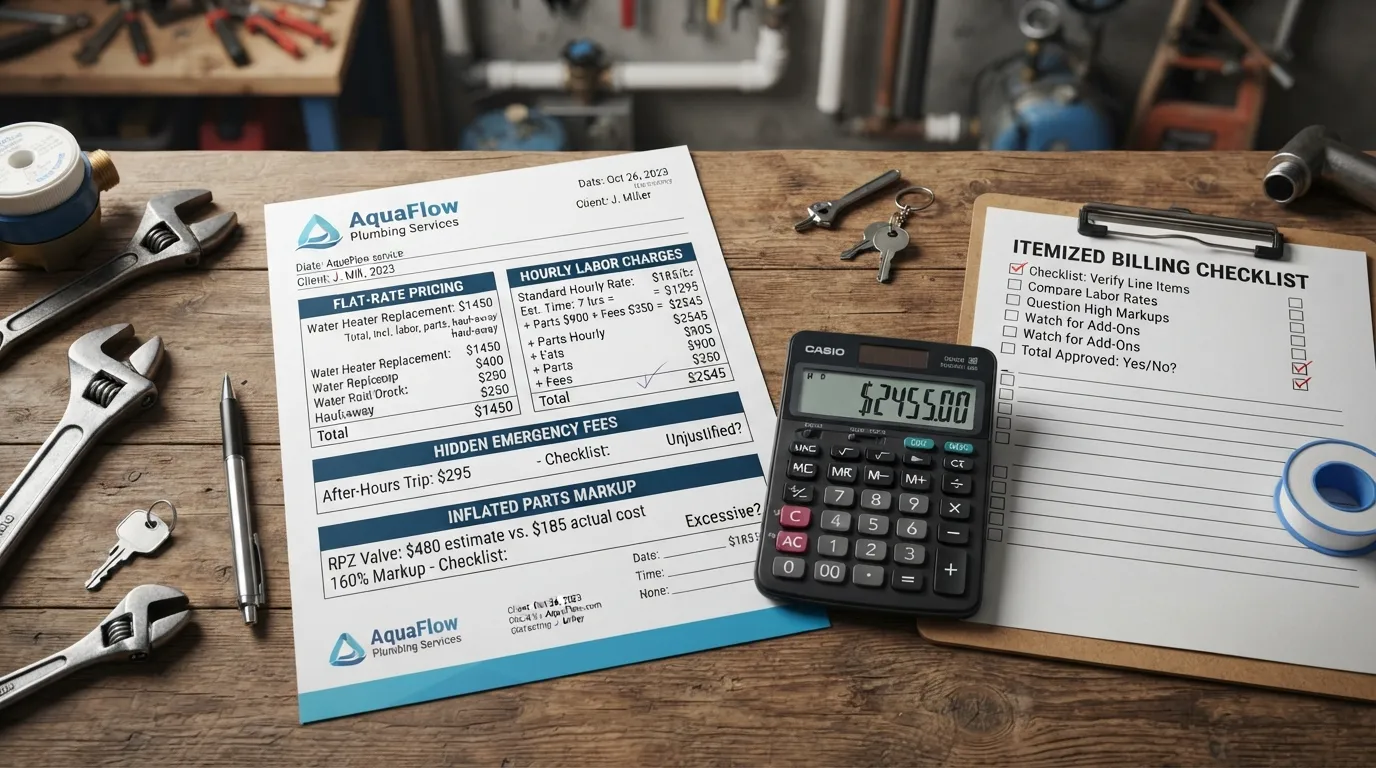
Protecting yourself from inflated pricing or dishonest contractor fees requires knowing what red flags to look out for before signing any repair agreement. Recognizing transparent pricing standards helps ensure you pay a fair market rate for quality plumbing work.
Red Flags of an Overpriced Quote
Dishonest contractors occasionally exploit urgent repair situations by introducing unnecessary charges or vague line items. Spotting these warning signs early helps you avoid financial exploitation.
- Vague Itemization: Refusing to break down separate labor, materials, and service call fees on written estimates.
- High-Pressure Sales: Urging you to approve expensive emergency overhauls immediately without offering alternative solutions.
- Excessive Markups: Charging extreme retail markups on basic hardware store parts like standard washers or PVC fittings.
How to Compare Multiple Quotes Correctly
Gathering at least three independent estimates is the most effective way to benchmark local market rates and identify outliers. Evaluating competing bids side-by-side reveals true project value.
- Apples-to-Apples Scope: Ensure every contractor is bidding on the exact same material specifications and repair scope.
- Verify Licensing Included: Check that quotes factor in valid state licensing, insurance, and municipal permit pulls.
- Scrutinize Trip Fees: Compare how different companies handle diagnostic dispatch charges and whether they apply them to final labor.
How to Negotiate Plumber Rates Practical Tips
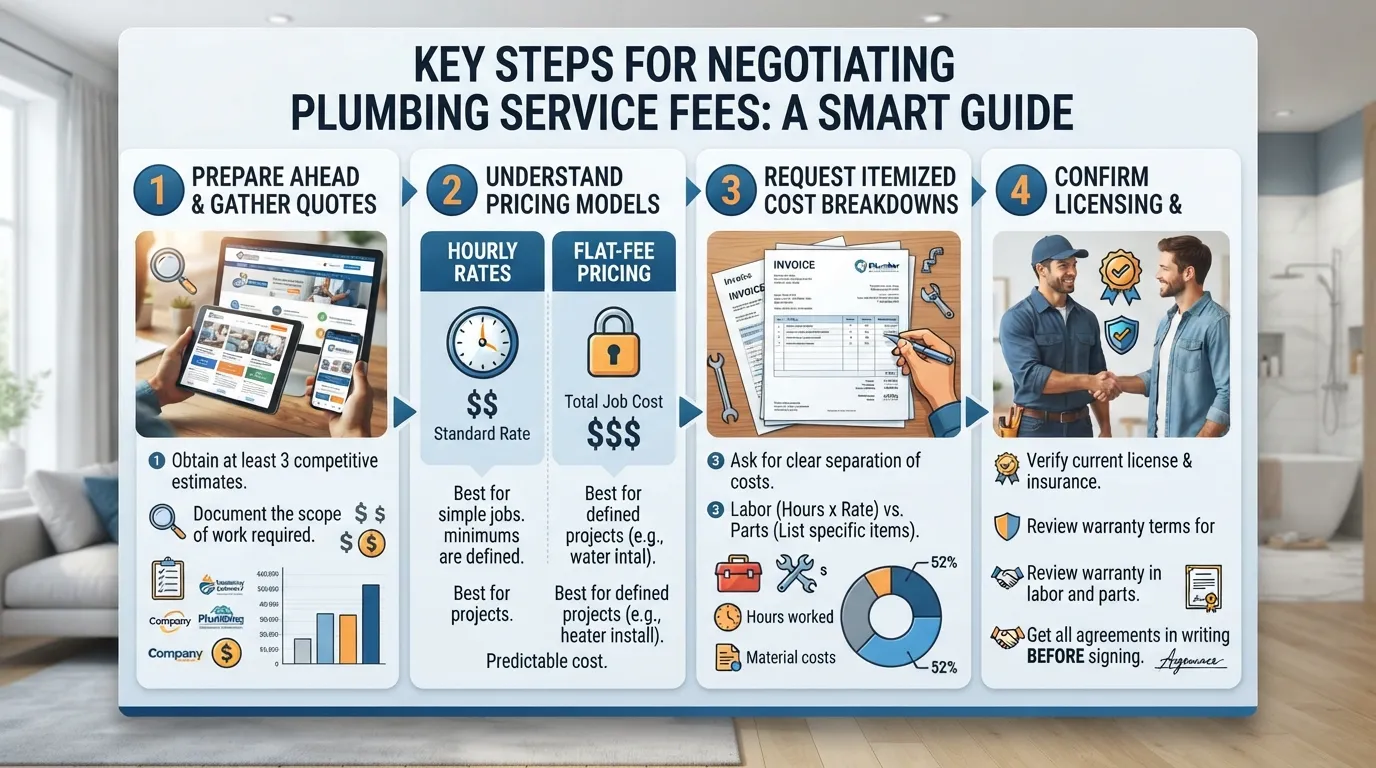
Negotiating plumber rates effectively involves leveraging competing bids, bundling maintenance tasks, and timing your service calls during non-peak hours. Employing these smart strategies helps you secure professional plumbing services at a fair and reasonable cost.
Get Multiple Quotes Before Committing
Securing at least three independent estimates gives you immediate market leverage when discussing pricing with contractors. Plumbers are often willing to match competitive bids or adjust their rates when they know you are actively comparing local options.
- Establish Baseline Pricing: Use competing quotes to identify outlier estimates that are artificially inflated.
- Leverage Competitor Bids: Politely mention lower comparable offers to see if a preferred contractor will adjust their labor fees.
- Evaluate Overall Value: Balance price differences against contractor reputation, warranty guarantees, and licensing credentials.
Bundle Small Repairs Into One Visit
Plumbers charge standard trip fees and minimum labor hours just to show up at your home, making single minor fixes quite costly. Combining multiple small household tasks into a single service visit maximizes your labor investment.
- List Minor Issues: Collect a punch list of minor problems like loose handles, slow drains, and dripping spigots.
- Avoid Multiple Trip Fees: Prevent paying separate diagnostic call-out charges by tackling everything during one scheduled appointment.
- Negotiate Bulk Labor: Ask the technician for a flat package rate to fix several minor items simultaneously.
Discounts Seniors Military First Time Customers
Many plumbing companies offer special promotional pricing that isn’t prominently advertised on their standard rate sheets. Inquiring about available customer discounts before booking can yield immediate savings.
- Affiliation Reductions: Ask if the company provides designated discounts for senior citizens, military veterans, or first responders.
- First-Time Customer Promos: Inquire about introductory discounts offered to new residential clients in your local area.
- Seasonal Service Specials: Check for promotional maintenance packages during off-peak spring or autumn months.
Best Time to Schedule for Lower Rates
Timing your plumbing repairs strategically helps you avoid emergency surcharges and secure standard weekday pricing. Scheduling non-urgent maintenance during off-peak periods ensures faster technician availability and better rate flexibility.
- Book During Weekday Mornings: Standard weekday time slots prevent triggering after-hours or weekend rate multipliers.
- Avoid Holiday Windows: Schedule major upgrades well in advance of long weekends or major holiday periods.
- Plan Routine Upgrades Early: Address aging water heaters or bathroom renovations proactively rather than waiting for sudden failure.
What If You Can’t Afford a Plumber? Budget Friendly Options
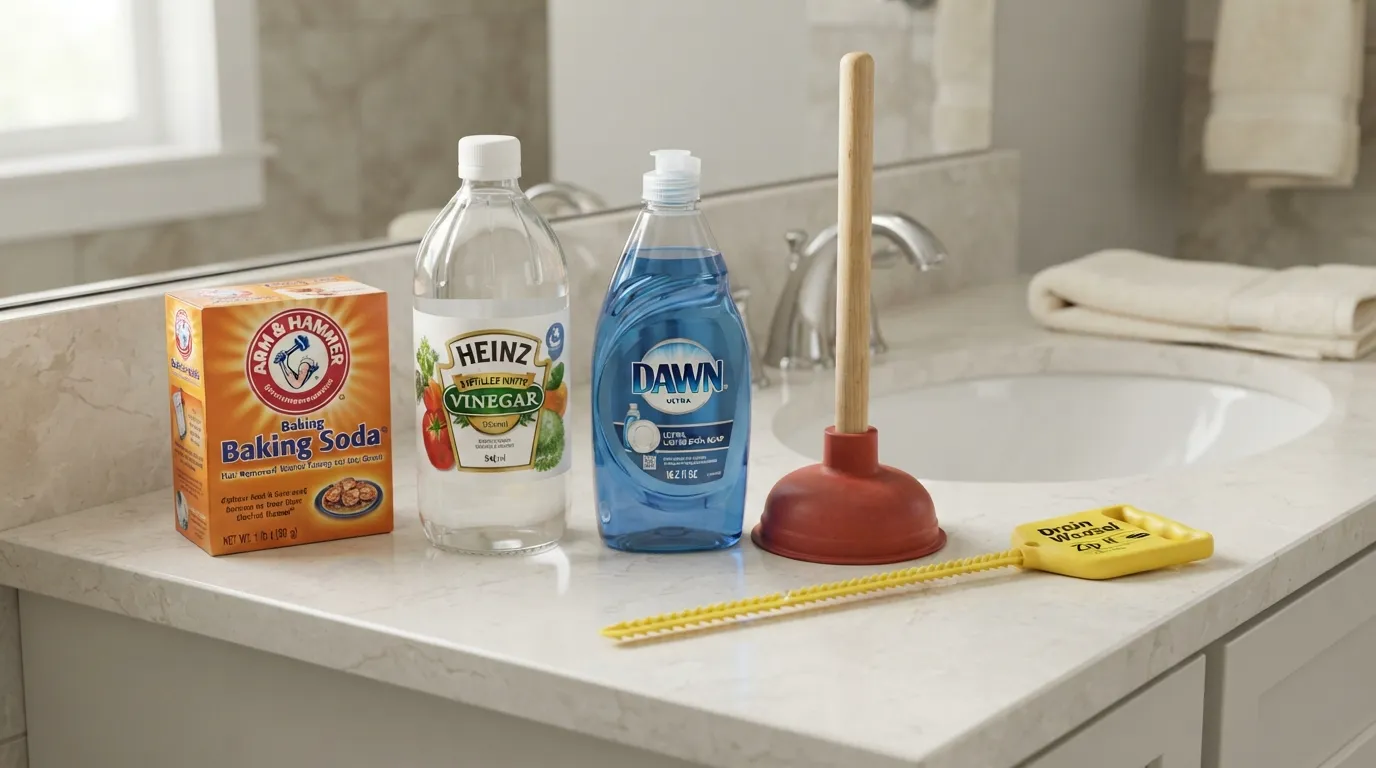
Facing a plumbing emergency when funds are tight can be stressful, but several financial assistance options and safe DIY alternatives can help you manage critical repairs without breaking the bank.
Financing & Payment Plan Options
Many professional plumbing companies partner with third-party lenders to offer flexible monthly financing plans for expensive, unexpected repairs like water heater replacements or main sewer line overhauls.
- Deferred Interest Promos: Look for promotional financing programs that allow you to pay off major repairs over 6 to 12 months interest-free.
- In-House Payment Terms: Established local plumbing companies often provide customized payment installments for loyal, repeat residential customers.
- Home Equity Lines: For massive plumbing overhauls, utilizing low-interest home equity options can spread heavy costs over manageable long-term schedules.
Local Assistance Programs
Low-income homeowners, seniors, and disabled residents can often access government grants, community non-profit programs, or emergency housing funds designed specifically for critical home infrastructure repairs.
- Community Action Agencies: Local municipal programs frequently offer emergency home repair grants for essential plumbing and sanitation issues.
- Non-Profit Housing Groups: Organizations like Habitat for Humanity or Rebuilding Together occasionally assist with urgent home system hazards.
- Utility Company Relief: Some regional water departments provide emergency relief programs or leak-forgiveness credits for unexpected line breaks.
Simple DIY Fixes You Can Try First Safe Ones Only
Tackling minor, non-structural plumbing problems on your own can save you expensive service call fees, provided you stick to safe, basic maintenance tasks.
- Clearing Slow Drains: Use a simple plastic zip-it tool or a baking soda and vinegar flush to clear surface hair clogs in bathroom sinks.
- Plunging Toilets Properly: Use a flange plunger with steady, vertical plunging motions to clear minor toilet blockages without calling a pro.
- Replacing Washer O-Rings: Stop a dripping faucet by turning off the water supply valve and swapping out worn internal rubber washers.
When DIY Is NOT Worth the Risk
While DIY fixes save money on minor nuisances, attempting complex plumbing repairs without professional expertise can easily turn a small problem into a catastrophic property flood.
- Gas Line Modifications: Never attempt to modify, reconnect, or repair gas water heater lines on your own due to lethal explosion risks.
- Main Sewer Line Breaks: Heavy structural blockages require industrial hydro-jets and camera gear that homeowners cannot safely operate.
- Burst Pressurized Pipes: High-pressure water supply lines demand instant professional intervention to prevent extensive structural mold and water damage.
What to Know Before Calling a Plumber + Signs of a Good Plumber
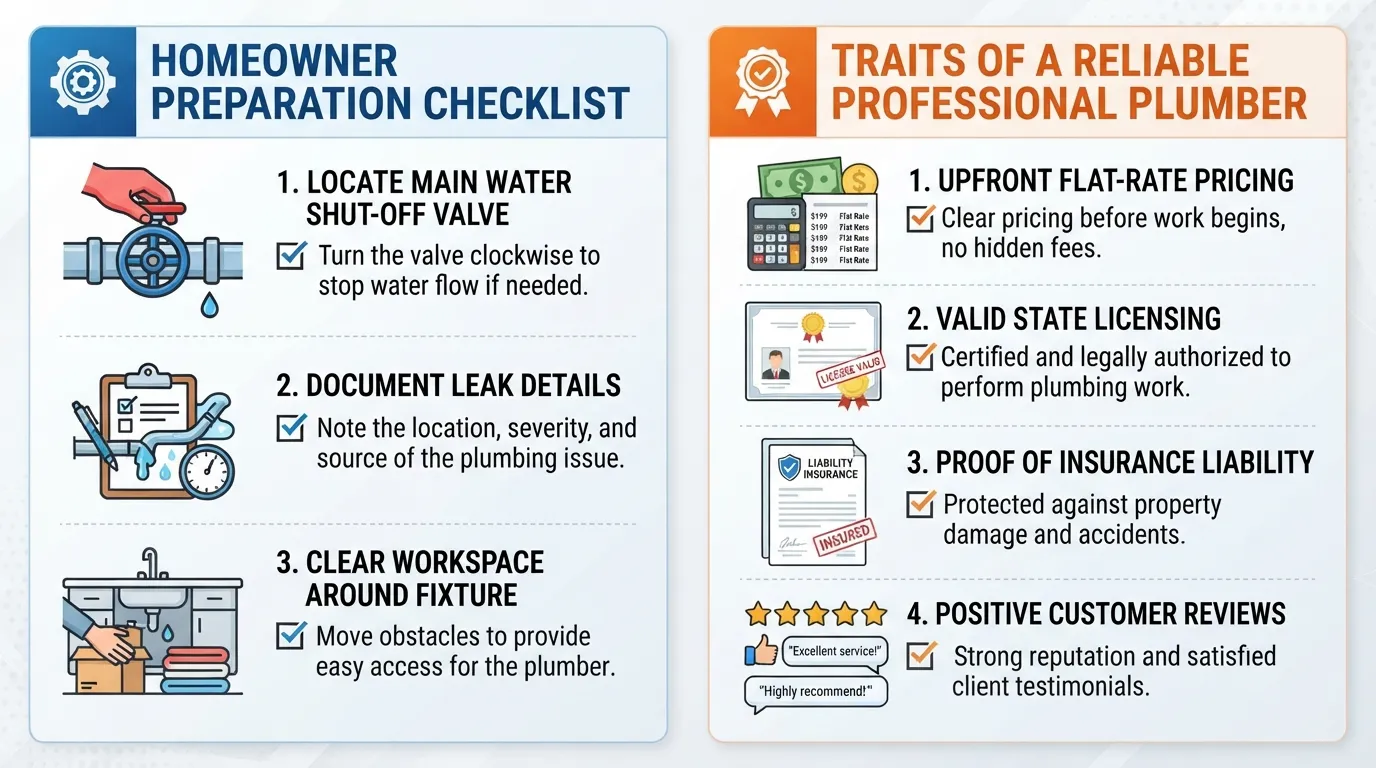
Preparing before you hire a plumbing professional helps streamline the repair process, protect your property, and ensure you contract a reliable, certified technician. Knowing what questions to ask and verifying credentials prevents costly hiring mistakes.
Checklist Before You Call
Gathering essential details about your plumbing system before placing a service call helps dispatchers send the right technician with appropriate replacement parts on the first trip.
- Locate the Main Shutoff: Know exactly where your home’s main water shutoff valve is located in case an active leak worsens.
- Document the Symptoms: Note when the issue occurs, strange noises, unusual odors, or changes in water pressure.
- Clear the Work Area: Remove stored items, boxes, or furniture around the affected sink, toilet, or water heater to give the technician immediate access.
License & Insurance Verification
Never hire a contractor without independently confirming their legal licensing and active insurance coverage to protect yourself from liability during accidents.
- State Contractor License: Verify that the plumber holds an active, up-to-date state or municipal license for your region.
- General Liability Insurance: Ensure the company carries comprehensive liability coverage to pay for accidental property damage.
- Worker’s Compensation: Confirm workers are insured so you are not held liable if a technician is injured on your property.
Signs of a Trustworthy, Skilled Plumber
Reputable plumbing professionals distinguish themselves through transparent pricing, clear communication, and strong local reputations backed by solid written guarantees.
- Upfront Written Estimates: Provides clear, detailed pricing breakdowns before starting any physical work.
- Workmanship Warranties: Stands behind their labor and installed parts with a clear, written guarantee policy.
- Professional Demeanor: Arrives on time in a marked vehicle, wears protective shoe covers, and cleans up the workspace thoroughly.
Frequently Asked Questions About Plumbing Fittings
Common questions regarding plumbing rates, day fees, and service costs help homeowners navigate hiring decisions with absolute confidence.
Do plumbers charge by the hour or for a job?
Plumbers utilize both billing structures depending on the specific scope of work required. Standard diagnostic troubleshooting and exploratory repairs are usually billed by the hour, whereas well-defined tasks like water heater replacements or fixture swaps rely on fixed upfront flat rates.
- Hourly Rate Model: Billed at $45 to $200 per hour for open-ended or complex diagnostic investigations.
- Flat Rate Model: Provides a single fixed price quote for predictable, routine installations and repairs.
How much do plumbers charge per day?
Full-day plumbing rates generally range from $400 to $1,200 depending on the contractor’s experience level and regional cost of living. Hiring a technician for a full 8-hour day is often more cost-effective for multi-task punch lists and extensive home renovations.
- Daily Labor Average: Most independent contractors discount their daily rates slightly compared to strict hourly billing.
- Project Scale: Comprehensive day rates cover intensive pipe re-routes, bathroom rough-ins, or major system upgrades.
How much does a plumbing service cost overall?
Total plumbing service expenses typically range from $175 to $450 for standard repairs like fixing leaks, clearing drain clogs, or swapping out broken toilets. Major overhauls such as sewer line replacements or tankless water heater installations can range from $1,500 to $4,500+.
- Minor Service Calls: Smaller fixes average under $300 including standard trip fees and labor.
- Major Infrastructure: Complex overhauls require higher material budgets and extended labor hours.
How much do local plumbers charge on average?
Local residential plumbers average $75 to $150 per hour across most suburban and urban markets, plus an initial service call dispatch fee of $75 to $200. Prices fluctuate based on geographic location, contractor licensing tiers, and emergency timeframes.
- Regional Variations: High-cost metropolitan areas trend toward the upper end of standard pricing brackets.
- Trip Fee Inclusion: Always verify whether diagnostic travel charges are rolled into final repair totals.
Why is it crucial to obtain a good plumber service?
Hiring a licensed, highly qualified plumbing service protects your home from catastrophic water damage, ensures compliance with local building codes, and guarantees lasting repairs. Substandard workmanship often leads to hidden leaks, mold growth, and expensive secondary structural failures.
- Preventing Property Damage: Certified technicians install pipes and fixtures correctly to prevent disastrous indoor flooding.
- Code Compliance: Professional work passes municipal building inspections and preserves your home’s resale value.
- Warranty Protection: Established plumbing services back their labor with written guarantees for your peace of mind.
Conclusion Final Cost Summary & Key Takeaways
Navigating plumbing expenses becomes straightforward when you understand hourly rates, flat-rate quotes, and common repair pricing structures. Armed with clear knowledge about service call fees and labor tiers, you can make confident, budget-conscious decisions for your home.
Key Cost Takeaways Recap
Reviewing essential pricing benchmarks helps you accurately budget for everything from minor fixture swaps to emergency pipe repairs.
- Standard Hourly Rates: Expect to pay between $45 and $200 per hour depending on whether you hire an apprentice, journeyman, or master plumber.
- Service Call Fees: Diagnostic dispatch fees typically run $75 to $200, which are often credited toward completed repair work.
- Emergency Surcharges: After-hours, weekend, and holiday dispatches generally carry 1.5x to 3x higher multipliers due to scheduling disruptions.
Final Tip Before You Hire
Always collect at least three written, itemized estimates from licensed and insured local contractors before committing to any major plumbing project. Transparent pricing, clear warranties, and verified credentials are your best defense against unexpected costs and poor workmanship.

Oscar Vance | Master Plumber & Drainage Expert
Meet Oscar Vance, a licensed master plumber sharing practical solutions on residential repairs, preventive maintenance, and thoughtful home upkeep.