Emergency Safety Steps for AC Water Leaks
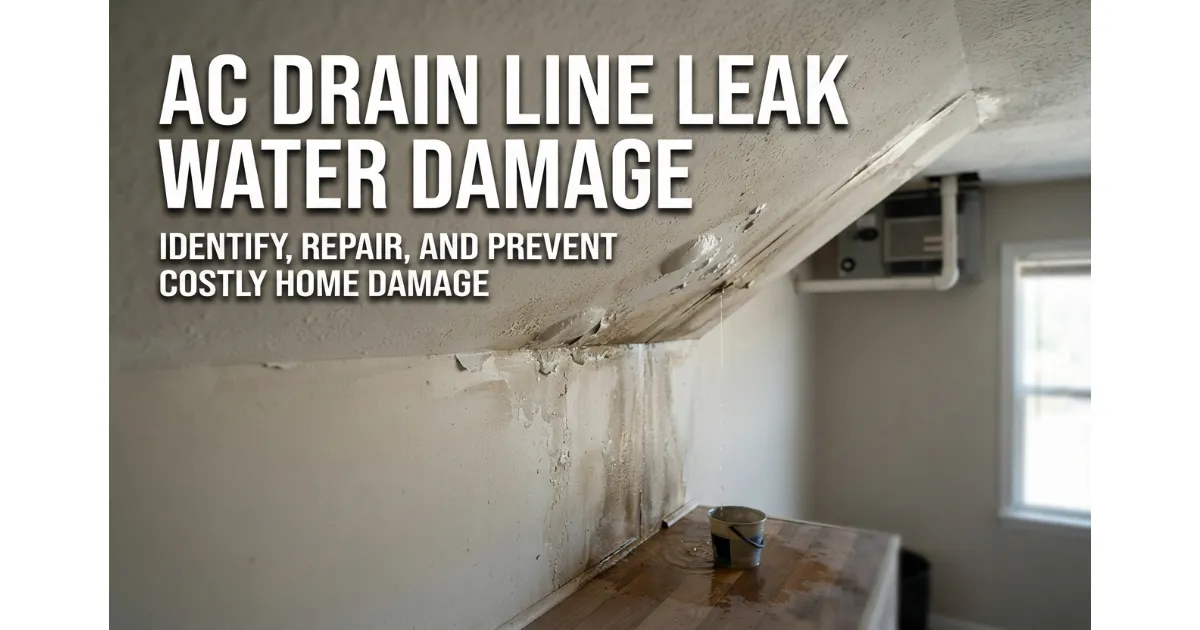 When you discover your air conditioner is leaking water, immediate action is required to prevent electrical hazards, structural water damage, and costly repairs to your property. Acting swiftly helps stabilize the situation while preparing the system for professional troubleshooting or DIY remediation.
What to Do the Moment You Notice an AC Water Leak
Follow these prioritized emergency steps immediately to secure your home environment and protect sensitive electrical components from severe water exposure:
- Locate and adjust your thermostat: Immediately switch your climate control system from “Cool” or “Heat” to the Off position to stop active condensation and compressor operation.
- Cut power at the breaker box: Navigate to your home electrical panel and flip the circuit breaker dedicated to your HVAC air handler to prevent dangerous electrical shock hazards.
- Contain active pooling water: Place towels, buckets, or a wet/dry shop vacuum around the base of the indoor unit to soak up standing water and prevent subfloor rot or ruined drywall.
- Inspect the condensate drain pan: Check if the primary drain pan beneath your evaporator coils is overflowing due to a blocked PVC pipe or algae buildup.
Should You Turn Off Your AC Completely?
Yes, you should turn off your air conditioning system completely at the first sign of a water leak. Leaving the system powered on while water escapes risks major component failure and safety risks:
- Prevents electrical shorts: Water frequently splashes near sensitive control boards, wiring harnesses, and blower motors, creating severe short-circuit risks.
- Stops continuous condensation: Operating the cooling cycle forces humid air across freezing evaporator coils, continuously generating more liquid that feeds the leak.
- Protects compressor longevity: Running a system low on refrigerant or with restricted airflow can permanently burn out your outdoor compressor unit.
Can You Still Run Your AC While It’s Leaking?
No, you must never run your air conditioner while it is actively leaking water. Doing so is unsafe and counterproductive for several critical reasons:
- Risk of electrocution: Pooling water near electrical components creates a life-threatening shock hazard for anyone stepping nearby.
- Exacerbated property damage: Unchecked leaks soak insulation, drywall, and subflooring, rapidly fostering toxic mold growth within 24 to 48 hours.
- System damage escalation: Continuing operation forces the equipment to work twice as hard, turning a minor clogged condensate line into a major mechanical breakdown.
What Causes an HVAC AC Drain Line Leak?
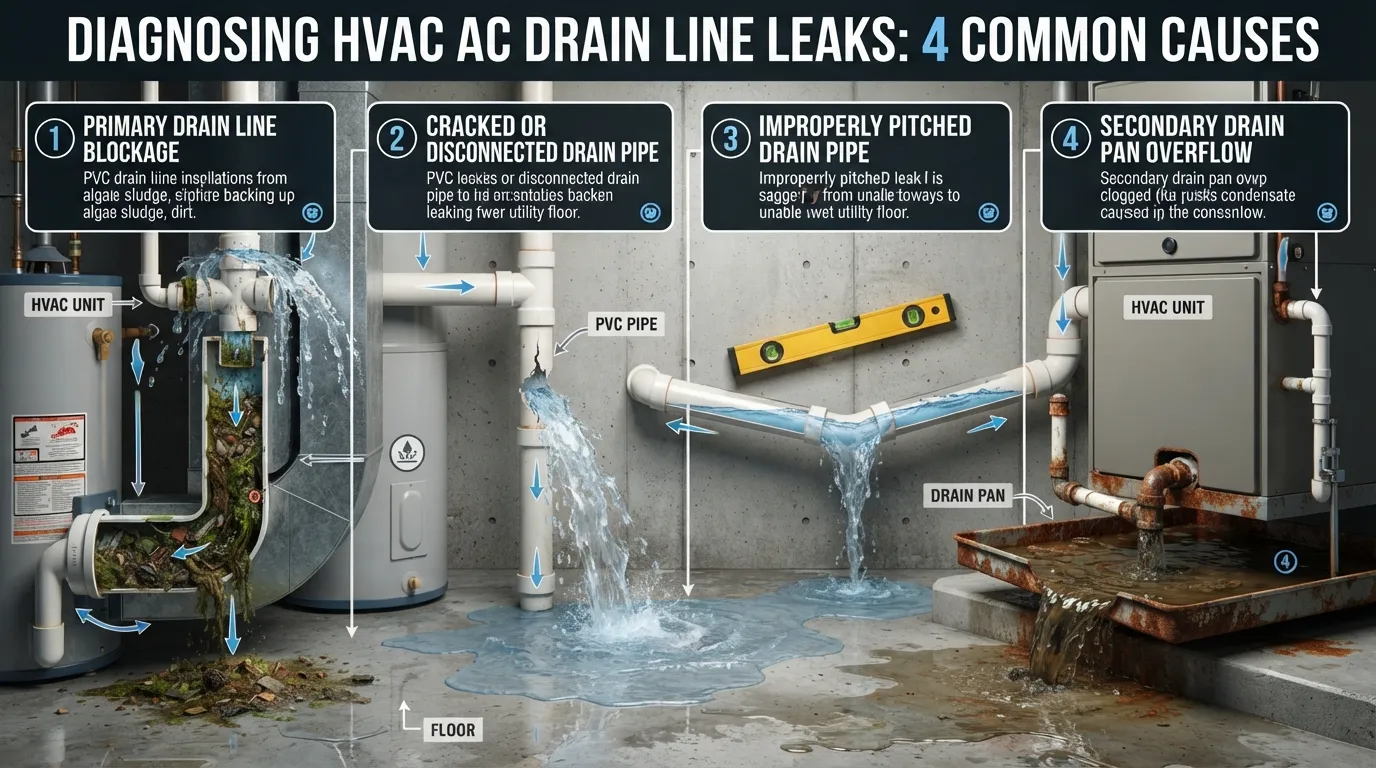 Air conditioners naturally produce moisture as warm indoor air passes over cold evaporator coils, collecting humidity that should flow smoothly through a PVC drain line. When water leaks inside your home, it typically stems from specific mechanical clogs, component degradation, or installation flaws that disrupt this drainage process.
Algae, Mold & Debris Clogs Most Common Cause
Dark, damp conditions inside condensate lines create an ideal breeding ground for algae, mold, dust, and slime. Over time, these organic buildups completely choke the PVC pipe:
- Slime buildup: Algae colonies thrive on moisture and dust, forming thick gelatinous blocks inside the line.
- Overflowing pans: Once the primary drain line blocks, backup water spills over the edges of the condensate pan directly into your living space.
- Routine vulnerability: Units located in humid basements, utility closets, or attics are especially prone to recurring biological growth.
Frozen Evaporator Coils
When refrigerant-filled evaporator coils drop below freezing, accumulated moisture turns into solid ice rather than liquid condensation. When the system eventually cycles off, that thick ice melts rapidly:
- Overflowing volume: The sudden rush of melting ice floods the condensate pan faster than the drain line can evacuate it.
- Root causes of freezing: Restricted airflow from dirty air filters or low refrigerant charge are the primary culprits behind freezing coils.
- Debris overflow: The resulting overflow often leaks past the unit casing and drips onto surrounding floors or ceilings.
Damaged Cracked or Disconnected PVC Pipes
Physical wear and tear, shifting house foundations, or accidental bumps can compromise the integrity of your PVC drain network. Even a tiny fracture creates a persistent leak point:
- Joint failure: PVC cement bonds can degrade over years of temperature fluctuations, causing sections to pull apart.
- Cracked fittings: Aging plastic pipes become brittle and develop hairline fractures along elbows and tees.
- Hidden leaks: Breaks hidden behind walls or inside crawl spaces can leak for weeks before becoming visible.
Rusted or Cracked Drain Pan
The secondary or primary condensate pan sits directly beneath your indoor air handler to catch normal runoff. Age and chemical exposure eventually break down these trays:
- Metal corrosion: Older metal drain pans rust through over time, creating pinhole leaks that seep directly underneath the unit.
- Plastic warping: Plastic condensate pans can warp, sag, or crack after years of intense heat exposure in attics.
- Complete failure: A compromised drain pan cannot hold water effectively, rendering safe drainage impossible.
Improper Drain Line Slope Installation
Gravity is the sole driving force moving condensation out of your home through the PVC drain line. Poor initial installation often disrupts this natural downward flow:
- Inadequate pitch: Drain lines must feature a downward slope of at least one-quarter inch per foot to ensure proper drainage.
- Sagging sections: Unsecured PVC runs can sag over time, creating pooling pockets where sediment settles and clogs form.
- Reverse grading: An improperly pitched pipe forces water to flow backward toward the air handler instead of exiting the house.
Location-Based Troubleshooting for AC Leaks
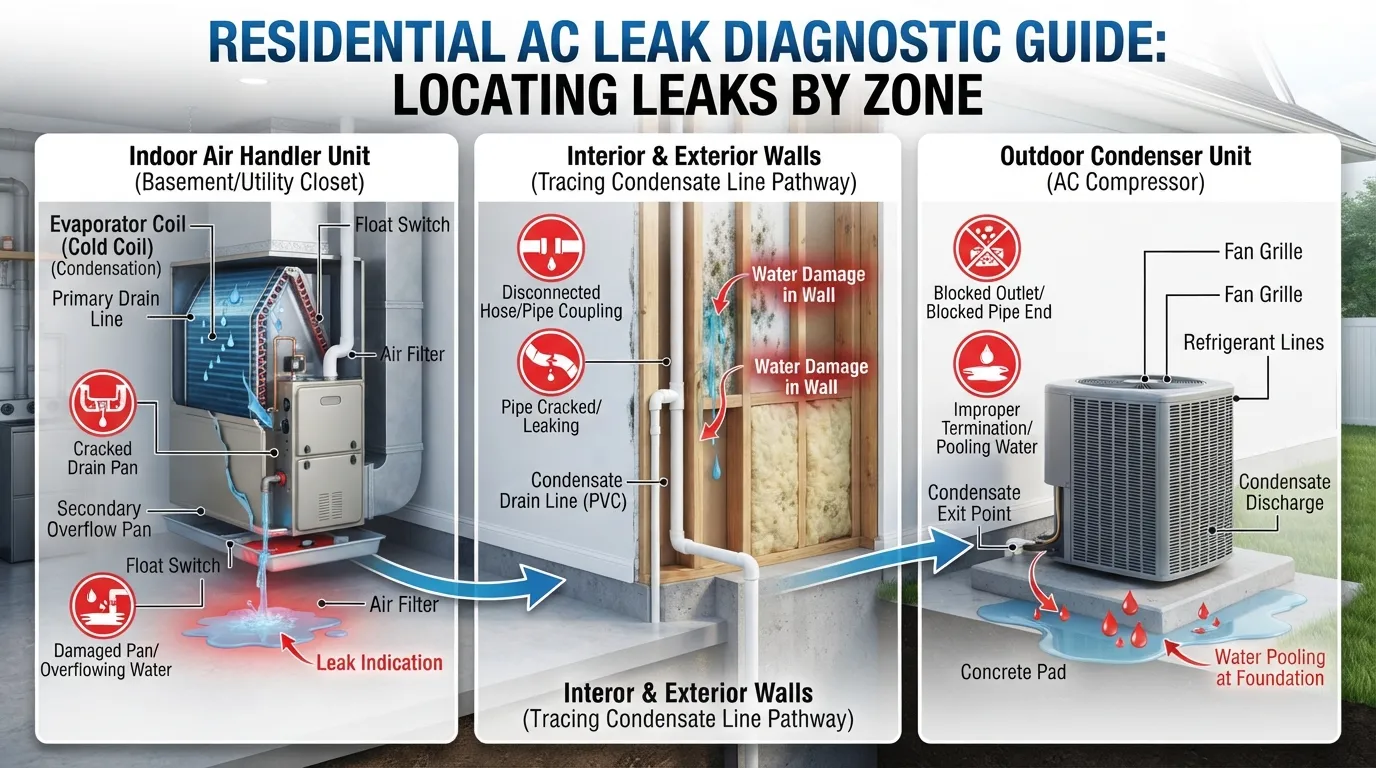 Where your air conditioner leaks water heavily dictates the root cause and the urgency of the repair. Understanding how different indoor locations experience leaks helps you quickly pinpoint the exact failure point within your HVAC system.
AC Drain Line Leaking in the Attic What to Check
Attic-mounted air handlers present the highest risk of catastrophic property damage because leaks drop straight through ceilings into your living spaces. When you notice an attic leak, focus on these critical components immediately:
- Inspect the secondary drain pan: Verify whether your safety overflow pan has water pooled inside, which indicates a primary drain line clog.
- Check the float switch: Ensure the emergency float switch is wired correctly; it should automatically shut down your system when water levels rise in the secondary pan.
- Examine insulation wrap: Look for condensation dripping off uninsulated flexible ducts or the main air handler body due to extreme attic heat.
AC Drain Line Leaking in a Closet or Utility Room
Closet and utility room air handlers usually sit on the ground level or over a platform, making localized water pooling immediately visible on flooring. Troubleshooting these confined spaces involves checking:
- Floor drain accessibility: Check if the utility room’s auxiliary floor drain is blocked, causing normal runoff or minor leaks to accumulate.
- Wall penetration seals: Inspect where the PVC drain line exits the closet wall to ensure water isn’t tracking backward along the pipe sleeve.
- Filter restriction: A severely clogged air filter in a tight closet restricts airflow, causing rapid coil freezing and subsequent overflow.
AC Drain Line Leaking Inside a Wall
A leak hidden inside a wall typically manifests as peeling paint, bubbling wallpaper, warped drywall, or a musty odor without an obvious source. Addressing this involves careful inspection:
- Trace drain routing: Determine if your PVC or flexible drain line runs through wall cavities to reach the exterior of the house.
- Look for joint separations: Hidden PVC elbows inside wall frames can crack or unglue under pressure or structural shifting.
- Use moisture meters: Employ a non-invasive moisture detector to track the exact vertical path of the water leak behind the drywall.
AC Drain Line Leaking Outside Is It Normal?
Seeing water drip from your exterior condensate pipe is completely normal during peak cooling season, as your system extracts gallons of humidity daily. However, you must differentiate normal discharge from a problem:
- Normal flow: A steady trickle or dripping stream coming from the primary outdoor PVC pipe means your system is draining correctly.
- Warning signs: Zero water dripping outside while your indoor AC runs continuously usually indicates a severe clog backing up inside your walls or attic.
- Foundation pooling: Ensure your outdoor drain line extends far enough away from your home’s foundation to prevent soil erosion or basement seepage.
Window Split AC Units Different Leak Patterns
Window units and ductless mini-split systems feature completely different drainage mechanics than central HVAC air handlers, leading to unique leak patterns:
- Window unit tilt: Window ACs must tilt slightly backward toward the outside; if installed level or tilted inward, condensation spills directly onto your interior windowsill.
- Mini-split condensate blockage: Ductless indoor wall cassettes often leak due to clogged small drain hoses or malfunctioning electronic condensate pumps.
- Dirty indoor fins: Dust buildup on mini-split coils alters water surface tension, causing droplets to splash past the trough and drip down the wall.
Warning Signs of Water Damage From AC Leaks
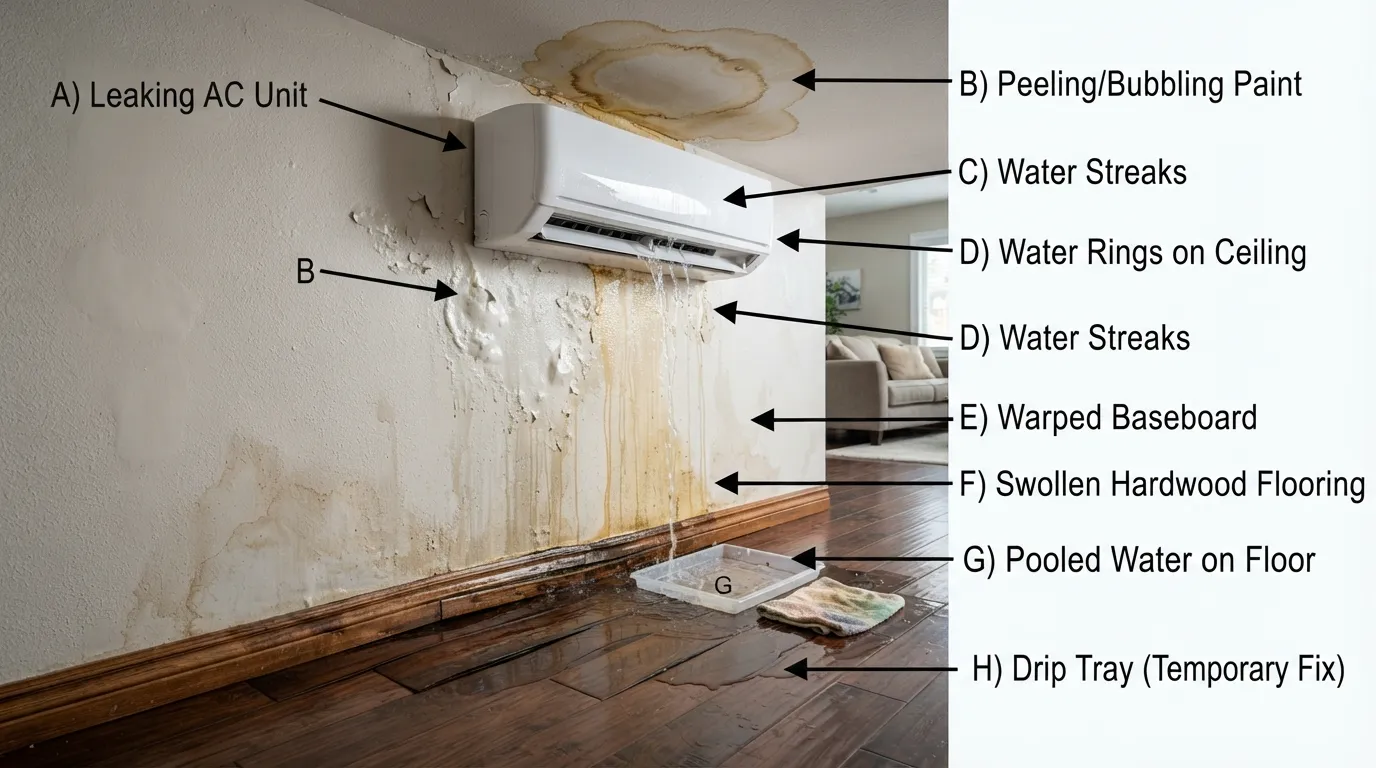 Recognizing the early warning signs of an air conditioner water leak prevents minor condensation issues from escalating into major structural damage or expensive home renovations. Detecting these symptoms early helps you address the root cause before severe property degradation occurs.
Visible Signs Pooling Water Wet Carpets Water Stains
The most obvious indicators of an HVAC leak appear directly around your indoor air handler, flooring, or ceiling surfaces:
- Standing puddles: Unexplained water pooling near the base of a utility closet, basement unit, or floor platform.
- Soggy flooring: Damp carpeting, warped hardwood planks, or buckling laminate flooring situated near the HVAC unit.
- Discolored rings: Yellow or brown water rings forming on ceilings directly beneath attic-mounted air handling equipment.
Structural Signs Sagging Ceilings Damp Drywall
Persistent water leaks rapidly weaken building materials, compromising the structural integrity of your walls and ceilings:
- Sagging drywall: Ceilings or walls bowing downward under the weight of accumulated water trapped behind the surface.
- Peeling paint and wallpaper: Paint bubbling, cracking, or peeling away from drywall surfaces adjacent to ductwork or AC units.
- Soft building materials: Baseboards and framing studs feeling spongy or soft when pressed due to long-term moisture exposure.
Hidden Signs Musty Odors High Humidity Mildew Growth
Not all water damage is visible to the naked eye; environmental changes in your home often expose hidden leaks:
- Persistent musty smell: A damp, earthy odor circulating through your air vents whenever the air conditioning system kicks on.
- Spike in indoor humidity: Rooms feeling clammy or sticky despite the AC running continuously, often indicating water evaporating back into the air stream.
- Discolored patches: Faint black, green, or pink fuzzy spots emerging along baseboards, duct seams, or wall corners.
Health Risks of Mold Growth From AC Leaks
Unaddressed moisture from AC leaks creates an ideal breeding ground for toxic mold within 24 to 48 hours, posing serious health hazards:
- Respiratory irritation: Spores circulating through your ductwork can trigger chronic coughing, throat irritation, and nasal congestion.
- Aggravated allergies and asthma: Mold exposure frequently induces severe allergic reactions, skin rashes, and sudden asthma attacks in sensitive individuals.
- Indoor air quality decline: Prolonged fungal growth degrades overall home air quality, making remediation and deep sanitization necessary.
Step-by-Step DIY Fix Guide for AC Water Leaks
Fixing a blocked or leaking air conditioner condensate line is a straightforward process if handled systematically. Before you begin troubleshooting, ensure the system power is completely disconnected at the breaker box to guarantee total safety.
Tools You’ll Need
Gathering the correct equipment before you start will make the DIY clearing process fast and efficient:
- Wet/dry shop vacuum: Essential for sucking out thick sludge and blockages from the exterior drain termination point.
- Distilled white vinegar: Used as a natural monthly flush solution to eliminate algae and mold spores.
- Bucket and rags: For capturing residual water spills and cleaning up wet surfaces around the indoor unit.
- Replacement air filter: To swap out any restricted or dirty filters that contributed to coil freezing.
Step 1 — Inspect & Replace the Air Filter
Restricted airflow is a primary catalyst for frozen coils and subsequent water overflows. Address this first:
- Locate your return air filter slot near the indoor air handler or wall grille.
- Remove the old filter and check for heavy dust buildup, pet hair, or debris clogging the media mesh.
- Install a fresh, clean air filter ensuring the airflow directional arrows point correctly toward the unit.
Step 2 — Clear the Drain Line With a Wet/Dry Vacuum
Clearing clogs from the outside of your home is the most effective way to dislodge stubborn organic slime:
- Locate the primary PVC condensate drain pipe exit on the exterior wall or foundation of your house.
- Connect your wet/dry shop vacuum hose directly to the end of the PVC outlet pipe, sealing any gaps with a rag if necessary.
- Run the shop vacuum for 1 to 2 minutes to suck out standing water, algae plugs, and built-up debris.
Step 3 — Check and Clean the Drain Pan
Once the line is cleared, inspect the condensate pan underneath the indoor unit for lingering residue:
- Remove the access panel on your indoor air handler to view the primary drain pan.
- Wipe away standing sludge, slime, or rust particles using a damp sponge and mild soap solution.
- Inspect the pan for hairline cracks or corrosion holes that might require sealant or replacement.
Step 4 — Flush the Line Prevention Step
Regular preventive maintenance keeps PVC drain lines clear throughout peak cooling seasons:
- Locate the T-shaped vent or access cap on your indoor PVC drain line near the air handler.
- Remove the cap and slowly pour 1 cup of distilled white vinegar down the opening.
- Allow the solution to sit for 30 minutes to break down remaining bacteria, then flush with clean warm water.
Vinegar vs Bleach Which Should You Use in Your AC Drain?
Choosing the right cleaning agent for your air conditioner’s condensate drain line is crucial for preventing organic clogs without damaging your HVAC system’s plumbing components. Homeowners frequently debate between household bleach and white vinegar, but their chemical impacts on PVC pipes and indoor air quality differ significantly.
Is It Safe to Pour Vinegar Down the AC Drain Line?
Yes, pouring distilled white vinegar down your AC condensate line is completely safe, highly effective, and recommended by professional HVAC technicians as a monthly maintenance routine:
- Natural acidity: The mild acetic acid in vinegar safely breaks down algae, mold spores, and bacterial slime without harsh chemical reactions.
- Pipe-friendly formula: Vinegar will not corrode PVC joints, degrade rubber gaskets, or damage the plastic condensate pan beneath your air handler.
- Odor-free operation: Unlike chemical cleaners, vinegar does not release toxic fumes that get sucked into your home’s ductwork and circulated through your living spaces.
Is It Safe to Pour Bleach Down the AC Drain Line?
No, pouring regular household bleach down your AC drain line is strongly discouraged by plumbing and HVAC experts due to several hidden risks:
- Corrosive damage: Strong chlorine bleach can degrade rubber seals, weaken PVC primer joints, and eventually cause cracks or leaks in older drainage lines.
- Vapor hazards: Chlorine fumes can travel upward into the air handler, spreading noxious odors through your vents and irritating respiratory tracts.
- Slime residue accumulation: Dead organic matter treated with bleach can form crusty residues that actually trap future dust and accelerate new clogs.
Vinegar vs Bleach Comparison
When to Call a Professional HVAC Technician
While minor condensate clogs and slow drainage can often be resolved with basic DIY techniques, certain situations require licensed professional intervention. Recognizing when a leak goes beyond a simple fix prevents permanent equipment damage and ensures your home remains safe and dry.
Red Flags That Mean DIY Won’t Work
If you encounter any of the following advanced symptoms, attempting further self-service can worsen the problem or pose electrical risks:
- Persistent clogs: The drain line repeatedly blocks within days of being vacuumed or flushed, indicating a structural collapse or improper pipe slope inside the wall.
- Electrical component exposure: Water is leaking directly onto electrical control boards, wiring harnesses, or the indoor blower motor assembly.
- Mechanical pump failure: Your condensate pump hums continuously or fails to activate, meaning the internal float switch or motor has burned out.
- Refrigerant issues: Ice formation on your evaporator coils persists even after installing a brand-new, clean air filter, signaling a refrigerant leak.
How Much Does It Cost to Fix or Replace a Condensate Drain Line?
Understanding typical industry pricing helps you budget accordingly when hiring a licensed technician for HVAC drainage repairs:
What Happens If You Ignore It?
Dismissing a minor water leak as a non-urgent issue quickly leads to severe compounding complications throughout your home:
- Extensive structural rot: Subflooring, joists, and drywall absorb moisture over time, requiring thousands of dollars in carpentry repairs.
- Toxic mold infestations: Unchecked dampness breeds extensive mold colonies that degrade indoor air quality and endanger family health.
- Complete system failure: Persistent moisture shorts out expensive electrical components, ultimately forcing a premature full-system replacement.
Does Homeowners Insurance Cover HVAC Water Damage?
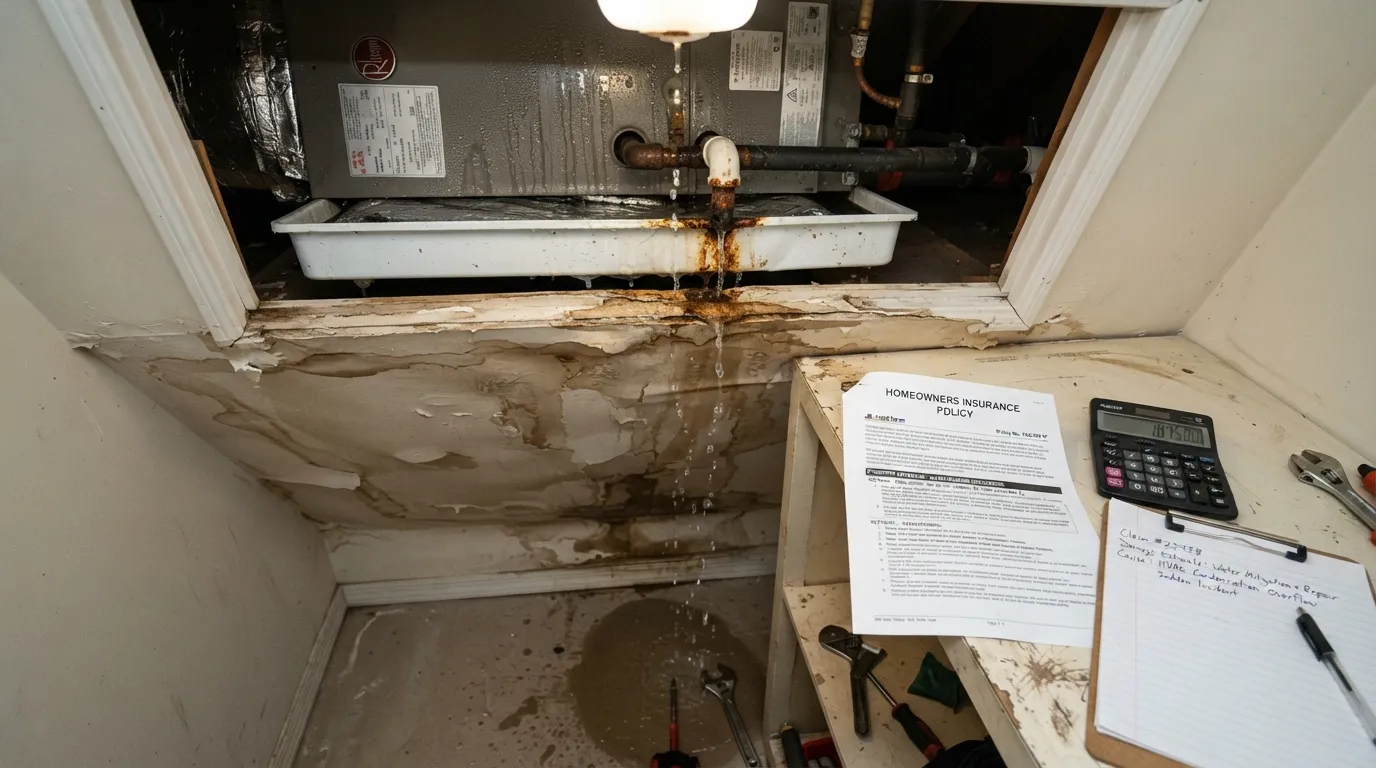 Navigating insurance coverage for air conditioner water damage can be complicated. Homeowners frequently assume their policy automatically covers all domestic leaks, but insurance providers draw strict lines based on how and when the damage occurred.
Sudden vs Gradual Damage Why It Matters for Insurance Claims
The distinction between sudden accidental incidents and long-term neglect is the single biggest factor insurance adjusters evaluate when reviewing a claim:
- Sudden and accidental damage: Policies typically cover water damage resulting from an unexpected event, such as a PVC pipe abruptly cracking or a secondary pan instantly bursting.
- Gradual wear and tear: Damage caused by a slow leak that went unaddressed for weeks or months is usually denied because insurers classify it as preventable home maintenance.
- Documentation necessity: Providing prompt repair receipts and photographic proof of the sudden failure is vital for claim approval.
What Most Policies Typically Cover and Exclude
Reviewing standard policy guidelines helps clarify what expenses your insurance carrier will shoulder versus out-of-pocket costs:
- Covered property damage: Standard HO-3 policies usually pay to repair warped drywall, ruined flooring, and soaked ceiling plaster resulting from a covered leak.
- HVAC unit exclusion: Insurance almost never covers the cost of repairing or replacing the actual air conditioning unit, drain line, or worn-out parts that caused the leak.
- Mold limitations: Many policies cap mold remediation coverage at modest limits (e.g., $1,000 to $5,000) unless an optional endorsement was purchased beforehand. According to guidelines from the Insurance Information Institute, understanding specific policy riders is essential before submitting paperwork.
Steps to Take Before Filing a Claim
If you believe your AC water damage qualifies for insurance reimbursement, follow these critical steps before contacting your carrier:
- Mitigate further damage: Take immediate action to stop the leak and dry up standing water, as policies often require homeowners to prevent secondary losses.
- Capture comprehensive media: Take clear, high-resolution photographs and videos of all damaged drywall, flooring, and personal belongings before cleanup begins.
- Consult professional reports: Obtain a written diagnostic statement from a licensed HVAC technician detailing the exact sudden failure that caused the leak.
How to Prevent Future AC Drain Line Leaks
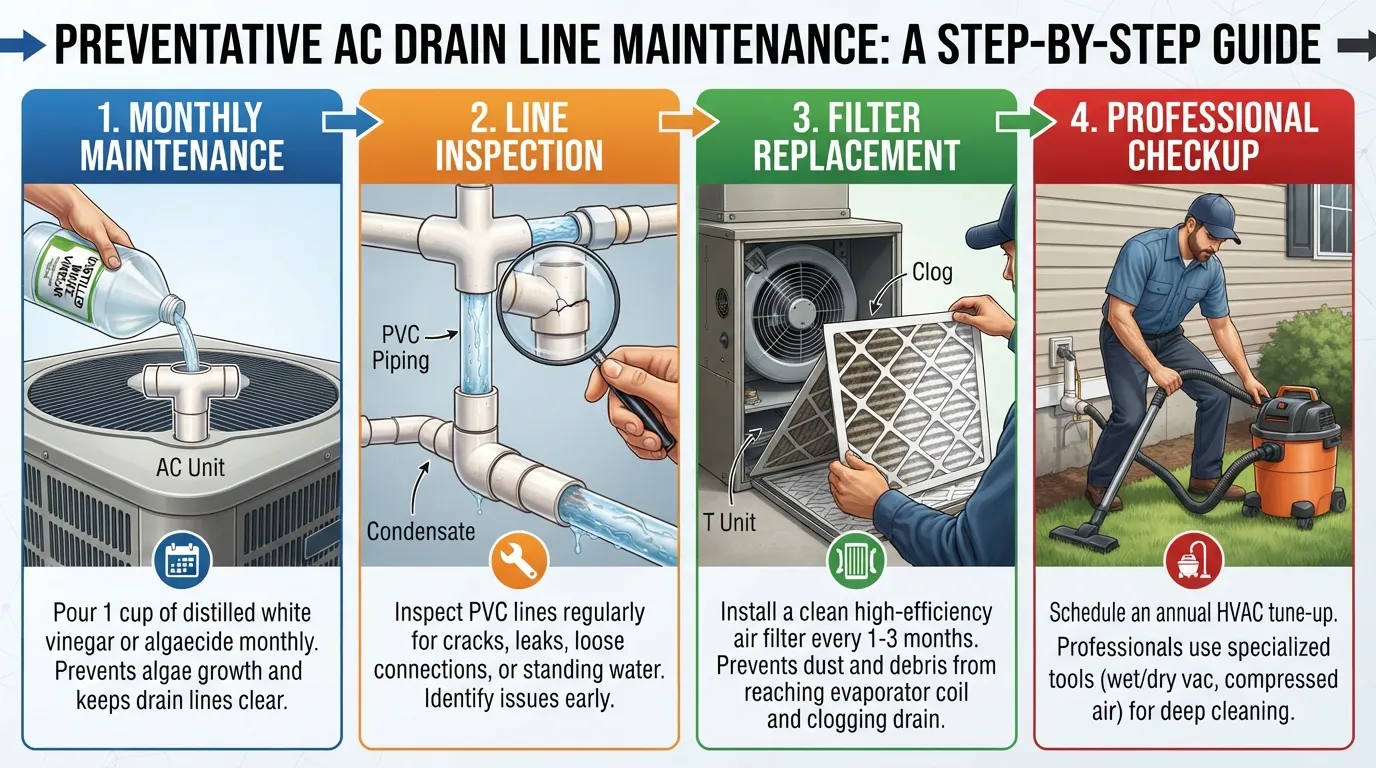 Preventing future air conditioner water leaks requires establishing a proactive maintenance routine. Taking simple preventive steps throughout the year eliminates stubborn algae buildup, protects your drainage pipes, and ensures your cooling system runs smoothly without unexpected disruptions.
Seasonal Maintenance Checklist
Follow this structured seasonal schedule to keep your HVAC condensate management system operating at peak performance:
- Spring startup check: Inspect all PVC drain lines and condensate pans for winter damage or debris before turning on the cooling system for summer.
- Monthly filter changes: Replace or wash your air filters every 30 to 60 days to maintain unobstructed airflow and prevent coil freezing.
- Fall shutdown inspection: Clear out any organic matter from the outdoor drain exit and ensure the lines are completely clear before cooler weather sets in.
How Often Should You Flush the Drain Line?
Consistency is key when keeping condensate pipes free of slimy organic growth and mineral blockages:
- Monthly frequency: Flush your drain line with one cup of distilled white vinegar once every month throughout the heavy cooling season.
- High-humidity environments: Homes located in extremely humid climates may require bi-weekly vinegar treatments to combat rapid algae proliferation.
- Enzymatic tablets: Alternatively, drop a specialized, HVAC-safe condensate pan tablet into the collection tray to continuously treat water runoff for months.
Signs of Early Warning Before It Becomes a Leak
Catching subtle operational hints can save you from waking up to flooded floors or damaged ceilings:
- Slow outdoor flow: Noticeably reduced water dripping from the exterior PVC pipe while the AC runs heavily suggests a developing restriction inside the line.
- Unusual gurgling sounds: Gurgling or bubbling noises coming from the indoor unit indicate air trapped in the drain lines due to partial clogs.
- Slight musty whiffs: Faint damp odors near supply vents signal that moisture is lingering too long in the condensate pan or duct seams.
Installing a Float Switch or Safety Sensor
Adding an automatic safety switch is one of the most effective mechanical upgrades you can make to protect your home:
- Automatic power interruption: A float switch wired into your thermostat cable shuts down the AC system the moment water in the secondary pan rises too high.
- Prevents overflow disasters: By stopping the cooling cycle proactively, it prevents continuous condensation from spilling over and ruining your ceilings or floors.
- Inexpensive insurance: Professional installation of an emergency shut-off switch is a low-cost upgrade that offers ultimate peace of mind during peak summer months.
Frequently Asked Questions About AC Water Leaks
Find direct, expert answers to the most common questions homeowners ask regarding air conditioner water leaks, operational safety rules, and troubleshooting best practices.
What is the 3-minute rule for air conditioners?
The 3-minute rule dictates that you should wait at least three to five minutes before restarting an air conditioner after it has been turned off. This mandatory waiting period allows the refrigerant pressures within the system to equalize, protecting the compressor motor from severe electrical strain and potential burnout.
Is it better to run AC all day or just at night?
It is generally more efficient to maintain a steady temperature by running your AC consistently at a comfortable setting rather than turning it completely off and on. Allowing your home to heat up all day forces the system to work much harder to cool it down, which spikes your energy bills and increases humidity levels.
What happens if water gets in an air conditioner?
When water comes into contact with internal electrical components, control boards, or blower motors, it can cause immediate short-circuits, blow electrical fuses, and create severe shock hazards. Furthermore, trapped moisture encourages rapid mold and mildew growth that degrades indoor air quality and corrodes metal housing parts.
How cool should my house be if it’s 100°F outside?
As a general rule of thumb, your air conditioner is designed to maintain a temperature difference of about 20°F cooler than the outdoor air. If outdoor temperatures reach 100°F, setting your indoor thermostat between 78°F and 80°F ensures optimal comfort while preventing your cooling system from running continuously without stopping.
Can you run AC if it’s leaking inside the house?
No, you should never run an air conditioner that is actively leaking water inside your living space. Operating a leaking unit creates immediate risks of electrical shock, accelerates structural water damage to drywall and flooring, and can permanently burn out your compressor due to restricted airflow or frozen coils.
Why does my window AC leak water from the front/back?
Window units leak water into the room when they are installed level or tilted slightly inward instead of tipping backward toward the outside. Conversely, leaking from the back is usually normal condensation runoff, provided the drainage holes aren’t blocked by dirt, debris, or improper chassis positioning.
Summary and Key Takeaways for AC Water Leaks
Dealing with an air conditioner water leak can feel stressful, but understanding the core causes, safety precautions, and maintenance steps puts you back in control. Taking swift, measured action protects your home’s structural integrity and keeps your HVAC system running efficiently.
Quick Recap Checklist
Keep these essential priorities in mind whenever you encounter or troubleshoot an HVAC drainage issue:
- Prioritize safety first: Always turn off your thermostat and cut power at the circuit breaker before inspecting or touching a leaking air handler.
- Address common clogs: Clear out PVC drain lines using a wet/dry shop vacuum and perform monthly maintenance flushes with distilled white vinegar.
- Avoid harsh chemicals: Skip bleach to protect your PVC joints and rubber seals from premature corrosion and toxic vapor distribution.
- Know when to call a pro: Reach out to a licensed HVAC technician if you face recurring clogs, electrical hazards, refrigerant leaks, or complex mechanical failures.

Oscar Vance | Master Plumber & Drainage Expert
Meet Oscar Vance, a licensed master plumber sharing practical solutions on residential repairs, preventive maintenance, and thoughtful home upkeep.