What Is an HVAC Line Set?
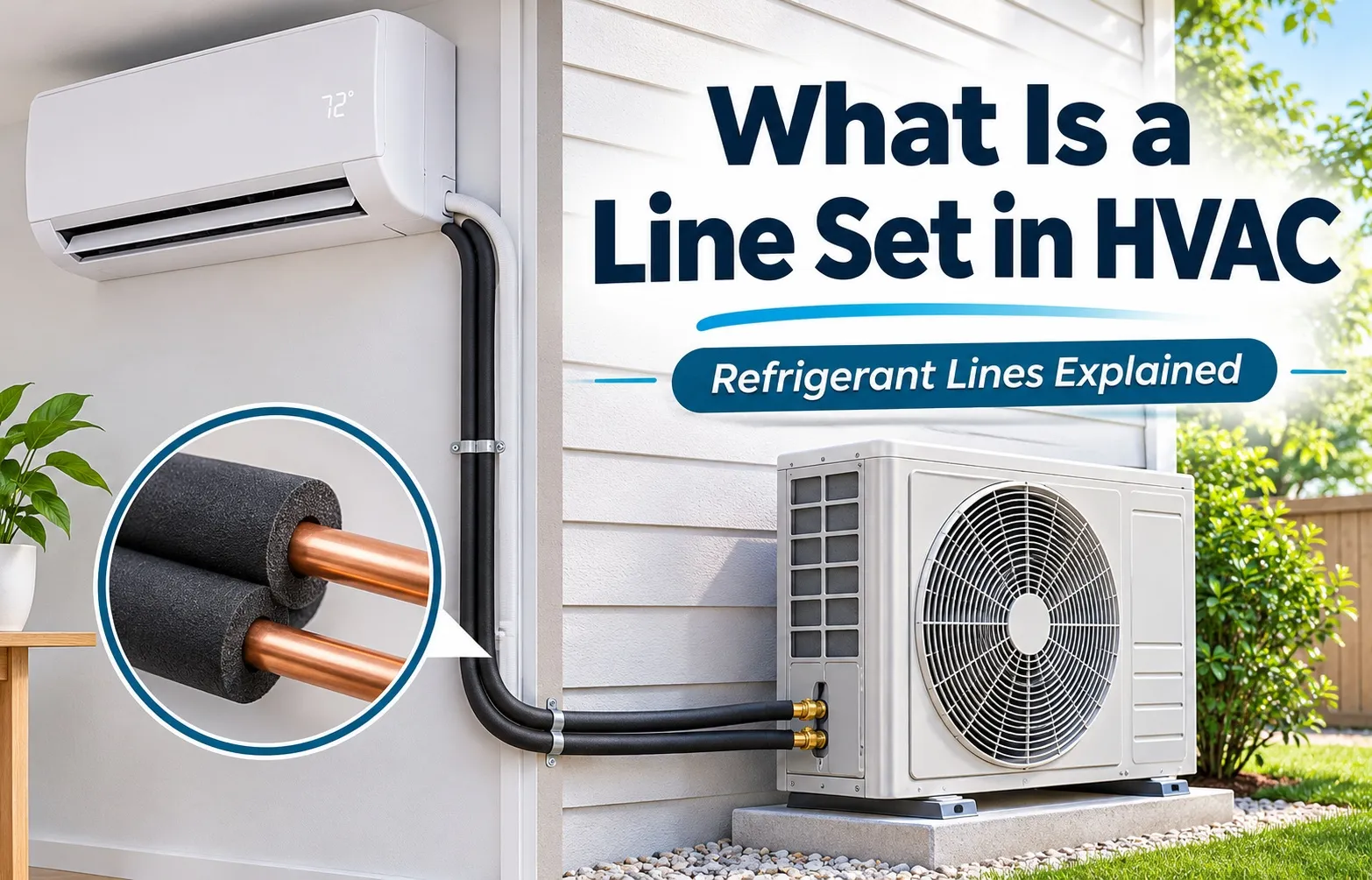 An HVAC line set is a pair of copper pipes that connects the outdoor condenser or heat pump to the indoor evaporator coil in a split-system AC or mini-split unit. It forms a sealed, continuous loop that circulates refrigerant to absorb heat inside your home and discharge it outdoors. Without a fully functional line set, your air conditioning system cannot transfer thermal energy or cool your living space.
The line set acts as the central circulatory system of residential and commercial cooling units. It safely transports refrigerant across varying distances while enduring constant thermal expansion, pressure fluctuation, and outdoor weather exposure.
What Does an AC Line Set Do? (The Closed-Loop Highway)
An AC line set serves as a sealed, pressurized highway moving chemical refrigerant between indoor and outdoor equipment. It enables continuous thermodynamic heat transfer, allowing your system to regulate ambient indoor temperature efficiently.
This closed-loop system relies on continuous pressure changes created by the outdoor compressor to change the physical state of the refrigerant. The primary functions of the line set include:
- Heat Extraction: Directs cool liquid refrigerant to the indoor evaporator coil where it absorbs indoor heat and moisture from passing air.
- Refrigerant Return: Routes warm, low-pressure vapor back to the outdoor condenser unit to release absorbed heat into the outside atmosphere.
- System Protection: Maintains pressure integrity to prevent chemical leaks, moisture invasion, and severe compressor failure.
The Two Copper Tubing Lines Explained (Overview)
Every HVAC line set consists of two distinct copper pipes bundled together. Although both lines carry the same refrigerant throughout the cooling cycle, they operate at completely different temperatures, pressures, and physical states.
- The Liquid Line: The smaller-diameter copper pipe that transports high-pressure, warm liquid refrigerant from the outdoor unit to the indoor coil.
- The Suction Line: The larger-diameter copper pipe wrapped in heavy foam insulation that returns low-pressure, cool vapor refrigerant from the indoor coil back to the compressor.
Both lines work in tandem to ensure efficient refrigerant flow across all split-system AC and ductless mini-split installations.
The Two Core Components: Liquid Line vs. Suction Line
An HVAC split system relies on two distinct copper pipes bundled together to create a continuous closed-loop refrigerant circuit. While both lines carry the identical refrigerant chemical, they operate at completely different temperatures, pressures, and physical states to complete the cooling cycle.
The Liquid Line (Smaller Pipe): Pressure State, Temperature, and Function (Uninsulated High-Pressure Liquid)
The liquid line is the narrower copper pipe in an HVAC line set that transports high-pressure, room-temperature liquid refrigerant from the outdoor condenser coil directly to the indoor expansion device. It typically remains uninsulated because its temperature closely matches ambient outdoor conditions, minimizing unwanted thermal exchange.
Engineered for high density and liquid-phase transport, this pipe plays a pivotal role in feeding subcooled refrigerant into the indoor evaporator coil. Key characteristics include:
- Narrow Diameter: Typically measures 1/4 inch or 3/8 inch because dense liquids require less cross-sectional area to travel efficiently.
- High Pressure: Operates under significant pressure as the refrigerant exits the outdoor condenser coil in a liquid state.
- Minimal Insulation: Usually left exposed or lightly covered, as heat gain or loss along this line has minimal impact on overall system efficiency.
The Suction/Vapor Line (Larger Pipe): Low-Pressure Gas Return & Armaflex Foam Insulation
The suction line, also called the vapor line, is the wider copper pipe that returns low-pressure, cool refrigerant gas from the indoor evaporator coil back to the outdoor compressor. It is universally wrapped in a thick Armaflex foam insulation sleeve to maintain thermal efficiency and stop moisture accumulation.
Because this line carries cold vapor returning from inside the conditioned space, it is highly susceptible to thermal transfer from hot attic spaces or outdoor air. Core functions include:
- Thermal Efficiency: Prevents ambient outdoor or attic heat from warming the returning refrigerant vapor, ensuring the compressor receives dense, cool gas.
- Condensation Prevention: Stops atmospheric moisture from condensing onto the freezing-cold copper surface, protecting building structures from water damage.
- Vapor Transport: Handles low-pressure, expanded gas returning from the indoor evaporation phase.
Why Is the Suction Line Larger Than the Liquid Line? (Addressing the Thermodynamic Gap: Vapor Expansion vs. Liquid Density)
The suction line features a significantly larger copper pipe diameter than the liquid line because refrigerant vapor occupies exponentially more volume than liquid refrigerant at lower pressures. This sizing difference prevents severe pressure drops and ensures the compressor receives adequate mass flow without restriction.
Understanding this thermodynamic disparity clarifies why pipe sizing cannot be uniform across an HVAC system. Key engineering reasons include:
- Gas Volume vs. Liquid Density: As refrigerant expands into a gas inside the indoor coil, its volume multiplies dramatically, requiring a wider pathway to travel without choking flow.
- Pressure Drop Mitigation: A wider suction line prevents frictional resistance from lowering suction pressure, which would otherwise force the compressor to work harder and consume more electricity.
- Compressor Protection: Proper sizing guarantees correct oil and gas return, preventing compressor starvation and catastrophic mechanical failure.
HVAC Line Set Sizing Matrix & Tonnage Compatibility Guide
Selecting the correct line set diameter is critical for maintaining systemic pressure balance, ensuring proper oil return, and achieving the full seasonal energy efficiency ratio (SEER2) rating of your cooling equipment. Incorrect pipe dimensions restrict refrigerant flow or cause excessive pressure drop, leading to premature compressor failure and reduced cooling capacity.
Line set sizing depends primarily on system capacity measured in tons or British Thermal Units (BTUs) per hour, alongside total piping length between the outdoor condenser and indoor air handler.
Line Set Sizing Chart (1.5 Ton to 5 Ton Systems)
Most standard residential split-system air conditioners use a 3/8-inch outer diameter (OD) liquid line paired with a suction line that scales upward as system capacity increases. The table below outlines standard factory line set diameters for typical residential installations up to 50 feet in length.
How Line Set Length Affects Refrigerant Charge & Efficiency (15 ft to 50+ ft Runs)
Most modern condensing units come pre-charged from the factory for a standard line set length of 15 feet. Extending line runs beyond this baseline increases friction and volumetric space, requiring precise adjustments during system commissioning.
When line set piping extends past standard distances, technicians must account for performance variables, including:
- Refrigerant Charge Adjustment per Foot: Adding additional refrigerant—typically between 0.6 oz and 0.8 oz per extra linear foot of 3/8-inch liquid line—to maintain proper subcooling levels.
- Frictional Pressure Drop: Overcoming pressure drop in runs exceeding 50 to 75 feet by upsizing the suction line diameter (e.g., expanding from a 3/4-inch to a 7/8-inch line).
- Oil Return Integrity: Ensuring refrigerant gas velocity inside long or vertical suction risers remains high enough to sweep compressor oil back to the outdoor unit.
Reusing vs. Replacing Line Sets (The Legacy System Dilemma)
Replacing a central air conditioner or mini-split often triggers an intense debate among homeowners and technicians over whether to install a new copper line set or reuse the existing tubing embedded inside finished walls and ceilings. While reusing copper lines can reduce labor expenses during installation, doing so without rigorous testing risks catastrophic equipment failure and voided manufacturer warranties.
Deciding between line set reuse and replacement requires evaluating physical line sizing, structural wall clearance, physical damage, and chemical compatibility between older legacy refrigerants and modern eco-friendly alternatives.
Can You Reuse an Existing Line Set When Installing a New AC?
You can reuse an existing HVAC line set only if the current copper tubing matches the exact diameter specifications required by the new condenser and indoor air handler, passes a high-pressure leak check, and contains zero mechanical kinks or internal contamination.
Before reusing existing lines during a equipment upgrade, technicians must verify critical baseline conditions:
- Proper Pipe Sizing: Modern high-efficiency systems often require larger suction lines than legacy 8-SEER or 10-SEER units to prevent pressure drops.
- Structural Integrity: The copper must be free of corrosion, leaks, flattened bends, or physical pinch points concealed inside drywall.
- Insulation Condition: Existing foam insulation on the suction line must be intact and free from UV degradation or waterlogging.
R-22 to R-410A / R-32 / R-454B Conversion: Mineral Oil vs. POE Synthetic Oil Contamination
Transitioning from legacy R-22 systems to modern refrigerants like R-410A, R-32, or A2L blends (such as R-454B) introduces a severe risk of chemical contamination. Legacy R-22 systems used mineral oil for compressor lubrication, whereas modern refrigerants rely on Polyolester (POE) synthetic oil, which is incompatible with residual mineral oil.
When upgrading equipment across different refrigerant generations, chemical incompatibility presents significant operational challenges:
- Sludge & Acid Formation: Residual mineral oil left in an unflushed line set reacts with POE oil, creating sticky sludge, organic acid contamination, and severe copper plating inside the system.
- Thermal Expansion Valve (TXV) Clogging: Loose debris and oil residues strip off line walls and block tiny orifices inside modern metering devices, causing systemic flow blockages.
- Compressor Burnout: Cross-contaminated oils lose their lubricating properties rapidly, leading to mechanical friction, overheating, and total compressor burnout.
- Refrigerant Transition Rules: Due to strict environmental regulations regarding the phaseout of ozone-depleting substances, technicians must perform a comprehensive chemical solvent flush (using an approved flush kit) followed by a dry nitrogen purge whenever an R-22 line set is retrofitted for lower-GWP refrigerants.
Pressure Testing & Nitrogen Sweeping Guidelines
To safely repurpose a copper line set for higher-pressure refrigerants like R-410A or R-32, technicians must execute a standardized nitrogen pressure test and sweeping procedure. Modern refrigerants operate at working pressures up to 60% higher than legacy systems, making pressure integrity paramount.
A rigorous line validation procedure follows these mandatory steps:
- High-Pressure Nitrogen Sweep: Technicians push high-velocity dry nitrogen gas through the isolated lines to clear out loose particulate matter, residual solvent, and trapped oil pockets.
- Static Pressure Hold Test: The copper circuit is pressurized with dry nitrogen to at least 300 to 450 PSI and monitored for a minimum of 15 to 30 minutes to verify zero micro-leaks exist.
- Deep Vacuum Evacuation: A vacuum pump lowers system pressure below 500 microns to boil off trace atmospheric moisture and non-condensable gases before releasing new refrigerant into the lines.
Installation, Maintenance, and Common Line Set Problems
Proper installation and regular maintenance of an HVAC line set are essential for ensuring peak cooling performance and extending system longevity. Because refrigerant lines operate under continuous thermal stress and elevated pressures, subtle structural defects or inadequate insulation can quickly compromise overall system health.
Identifying early warning signs of physical failure and adhering to industry-standard installation practices prevents costly structural water damage and catastrophic compressor burnouts.
Signs of a Damaged or Leaking HVAC Line Set
A compromised line set manifests through distinct physical symptoms and performance drops. Catching these indicators early prevents total refrigerant loss and protects indoor building envelope components.
Common signs of line set failure include:
- Line Set Sweating Inside Walls: Excessive condensation dripping off uninsulated or unsealed suction lines, creating water stains on drywall, ceiling spots, or localized mold growth.
- Refrigerant Leaks: Micro-fractures along copper joints or flare fittings that leak refrigerant gas, causing hiss noises, reduced cooling capacity, and frozen evaporator coils.
- Physical Kinks and Crushes: Accidental sharp bends in the copper tubing that restrict refrigerant mass flow, creating abnormal pressure drops and severe compressor strain.
- Ice Accumulation: Thick frost or ice buildup along the uninsulated suction line returning to the outdoor unit due to low pressure or restricted flow.
Why Line Set Insulation Deteriorates (UV damage & moisture build-up)
The closed-cell foam insulation sleeve wrapping the suction line degrades over time when exposed to aggressive environmental factors. When this protective layer breaks down, thermal loss accelerates and condensation forming on the exposed pipe drips uncontrolled.
Primary drivers of insulation failure include:
- Ultraviolet (UV) Exposure: Direct sunlight degrades unprotected rubber foam (Armaflex), causing it to crack, crumble, and strip away within 2 to 4 years of outdoor exposure.
- Moisture Saturation: High humidity and unsealed foam seams trap water vapor against the copper wall, saturating the insulation core and completely negating its thermal efficiency.
- Physical Wear and Animal Damage: Yard maintenance equipment, pest chewing, and extreme weather tear open insulation sleeves, exposing raw copper directly to outdoor temperatures.
Installation Best Practices (Brazing, flaring for mini-splits, and line hide covers)
Installing a durable HVAC line set requires precise mechanical connections and protective external enclosures. Following standard technical practices eliminates future leak hazards and extends structural insulation life.
Essential installation guidelines include:
- Copper Brazing under Nitrogen Purge: When joining traditional split-system copper tubing, technicians must flow low-pressure dry nitrogen through the pipes during brazing with silver alloy rods to prevent internal oxidation and scale formation.
- Precision Mini-Split Flaring: Ductless mini-split connections rely on mechanical flare joints rather than brazing. Using an eccentric cone flaring tool and applying proper torque specs prevents flare-face cracking and refrigerant leaks.
- Installing Line Hide Raceways: Encasing exterior line sets inside durable plastic line hide covers protects copper lines and foam insulation from damaging UV light, impact, weather, and animal interference.
- Vibration Isolation: Securing line runs with insulated clamps prevents copper tubing from rubbing against wall studs or exterior masonry, eliminating friction leaks and vibration noise inside the home.
HVAC Line Set Replacement Costs & FAQ
Replacing an HVAC line set involves balancing material expenses for high-grade copper tubing with the labor needed to route, braze, evacuate, and recharge the system. Understanding these cost drivers helps homeowners budget effectively for standalone repairs or full equipment replacement.
Total replacement expenses vary depending on copper pipe diameter, total line length, accessibility inside walls or crawlspaces, and local labor rates.
How Much Does It Cost to Replace an HVAC Line Set? (Material & Labor Breakdown)
On average, replacing an HVAC line set costs between $600 and $2,500 for standard residential split systems. Simple runs across open basements or exterior walls fall on the lower end of the spectrum, while complex installations routed through multi-story walls or finished ceilings drive costs higher.
Cost components broken down by line item include:
- Copper Line Set Material Costs: Raw copper tubing and foam insulation typically run between $5 and $15 per linear foot depending on line diameter (e.g., 3/8″ x 3/4″ vs. 3/8″ x 7/8″).
- Labor and Installation Costs: Professional HVAC labor accounts for $75 to $150 per hour. Opening walls, soldering connections, and securing line hide covers usually adds 3 to 6 hours of labor ($300 to $900).
- Refrigerant Recovery & Recharge: Recovering old gas, evacuating the system to a deep vacuum, and recharging with new refrigerant adds an additional $200 to $600 depending on total system charge.
Frequently Asked Questions
How long do HVAC line sets typically last?
An HVAC line set made of high-quality copper can last between 15 and 25 years under normal operating conditions. However, the outer rubber foam insulation sleeve decays much faster—often within 3 to 7 years if exposed to direct UV sunlight—and should be inspected annually and replaced as needed to maintain thermal efficiency.
Why does one line sweat while the other does not?
Only the larger suction line sweats because it carries cold refrigerant vapor returning from the indoor coil, causing atmospheric moisture to condense onto its cold surface. The smaller liquid line carries warm, high-pressure liquid near ambient outdoor temperatures, so water vapor does not condense on it.
Can I buy refrigerant or line sets without an EPA 608 license?
You can purchase uncharged copper line sets and physical installation mounting hardware without restrictions. However, under Section 608 of the Clean Air Act, buying regulated chemical refrigerants (such as R-410A or R-22) or purchasing pre-charged equipment requires a valid EPA 608 certification card or hiring a licensed HVAC professional.

Oscar Vance | Master Plumber & Drainage Expert
Meet Oscar Vance, a licensed master plumber sharing practical solutions on residential repairs, preventive maintenance, and thoughtful home upkeep.