Beat the Summer Heat Without Breaking Your AC
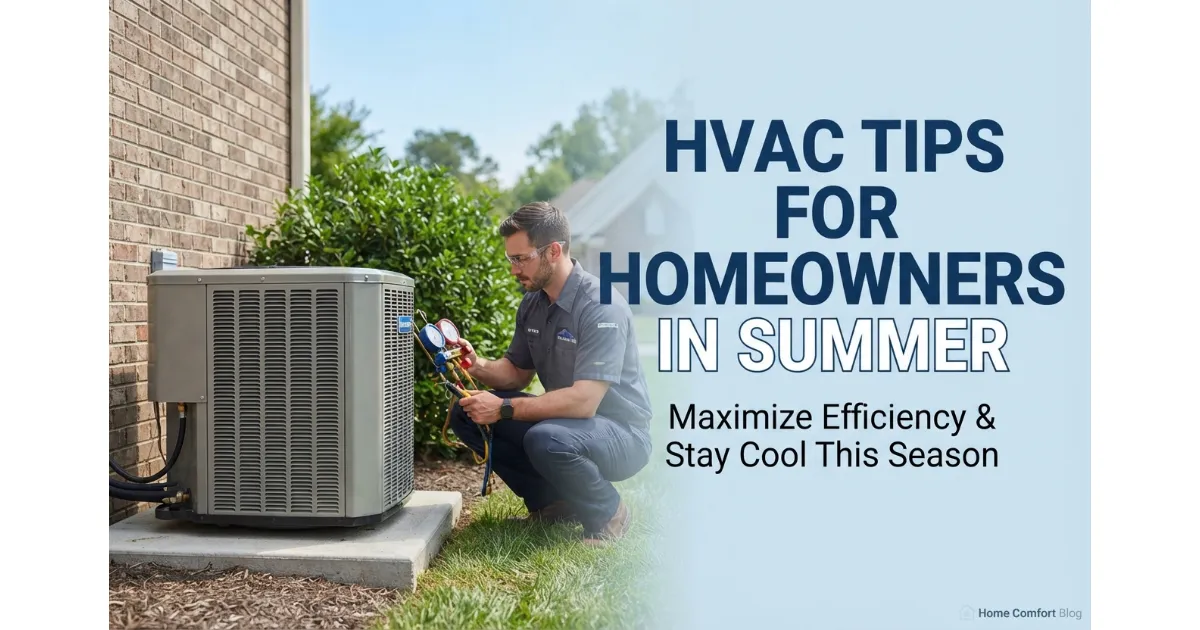 Keeping your home comfortable during peak summer doesn’t mean you have to face punishing energy bills or risk a sudden HVAC system breakdown. By implementing smart homeowner maintenance and strategic air conditioner efficiency practices, you can maximize summer cooling while significantly reducing wear and tear on your equipment.
Rising temperatures often force air conditioners to work overtime, leading to soaring energy bills and costly emergency repairs. However, proactive care and minor operational adjustments ensure your cooling unit runs smoothly, keeping your home refreshing all season long without draining your wallet.
Essential Summer HVAC Maintenance Checklist
Proactive HVAC maintenance is your first line of defense against unexpected mid-summer breakdowns, plummeting SEER ratings, and soaring electricity bills. Executing a systematic checklist optimizes airflow, protects delicate coils and refrigerant lines, and extends the lifespan of your cooling system.
Change Your Air Filters Har Kitne Din Mein?
Checking and replacing your air filters every 30 to 90 days prevents dust, pet dander, and debris from choking airflow and accumulating on internal evaporator coils. Clean filters drastically reduce motor strain and maintain optimal indoor air quality throughout peak summer cooling cycles.
- Inspect standard fiberglass or pleated filters monthly during heavy summer usage.
- Replace standard 1-inch filters every 30 to 60 days, or upgrade to high-efficiency MERV filters and change every 90 days.
- Households with multiple pets or allergy sufferers should transition to a strict 30-day replacement schedule.
Clear the Outdoor Condenser Unit
Your outdoor condenser unit requires unrestricted airflow to dissipate heat effectively into the surrounding environment. Overgrown bushes, grass clippings, and falling leaves can suffocate the unit, forcing the compressor to work harder and consume more power.
- Maintain a minimum two-foot clearance zone around all sides of the condenser cabinet.
- Carefully trim back shrubs, tree branches, and tall weeds encroaching on the unit.
- Gently wash away accumulated dirt and debris from the exterior fins using a standard garden hose at low pressure.
Check Vents & Registers for Blockages
Blocked supply and return registers disrupt proper static pressure balance across your entire HVAC network, causing uneven cooling and localized hot spots. Ensuring unobstructed airflow guarantees that conditioned air circulates smoothly into every room.
- Walk through your home to verify that rugs, heavy furniture, or drapes are not covering floor or wall vents.
- Keep return air grilles completely open and dust-free to maintain balanced return pressure.
- Adjust individual vent dampers slightly to fine-tune room-by-room comfort without over-restricting airflow.
Inspect the Condensate Drain Line Vinegar Trick
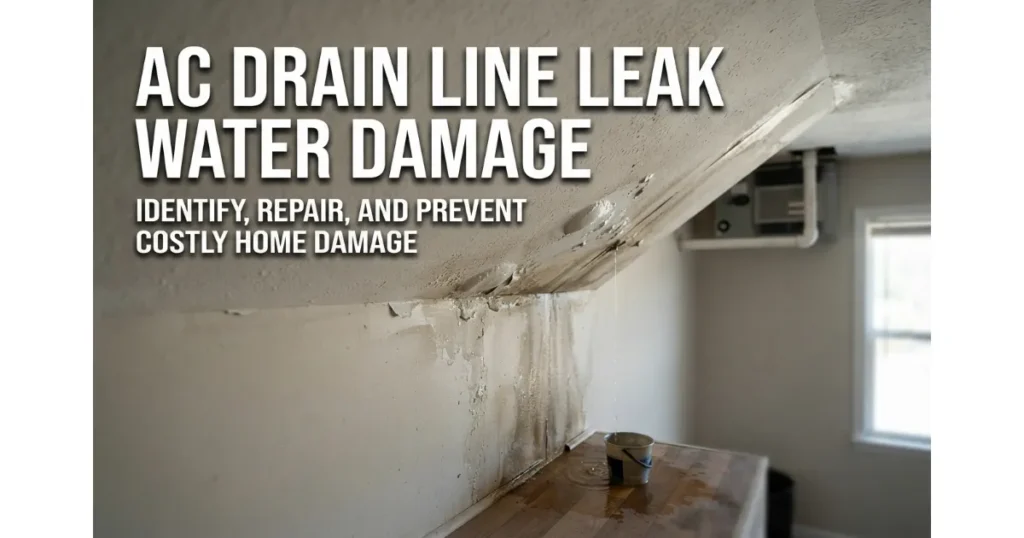
High summer humidity generates massive volumes of condensation that must drain freely out of your home. Algae, mold, and sludge can quickly clog the drain line, triggering your system’s float switch and causing unexpected emergency shutdowns.
- Locate the T-shaped vent opening on your indoor unit’s PVC condensate drain line.
- Pour one cup of distilled white vinegar down the access port monthly to dissolve algae and blockages.
- Inspect the exterior drainage exit point outside your home to ensure water flows out cleanly during operation.
Schedule a Professional Tune-Up Before Peak Season
While DIY tasks handle surface-level upkeep, professional technician evaluations uncover hidden mechanical issues like micro-leaks in refrigerant lines, worn electrical contactors, or failing capacitors before they cause complete system failure on the hottest day of the year.
- Book a comprehensive spring or early-summer tune-up to calibrate thermostat controls and test system safety switches.
- Ask technicians to inspect refrigerant pressures and check evaporator and condenser coil cleanliness.
- Verify electrical connections and measure motor amp draws to protect against sudden catastrophic component burnout.
What’s the Ideal Thermostat Setting for Summer?
 Balancing indoor comfort with sustainable energy savings during peak summer months requires understanding how temperature differentials affect your HVAC system’s runtime and electricity consumption. Setting your thermostat correctly prevents your air conditioner from running continuously while keeping your indoor environment livable and refreshing.
Is 78°F the Best AC Temperature in Summer?
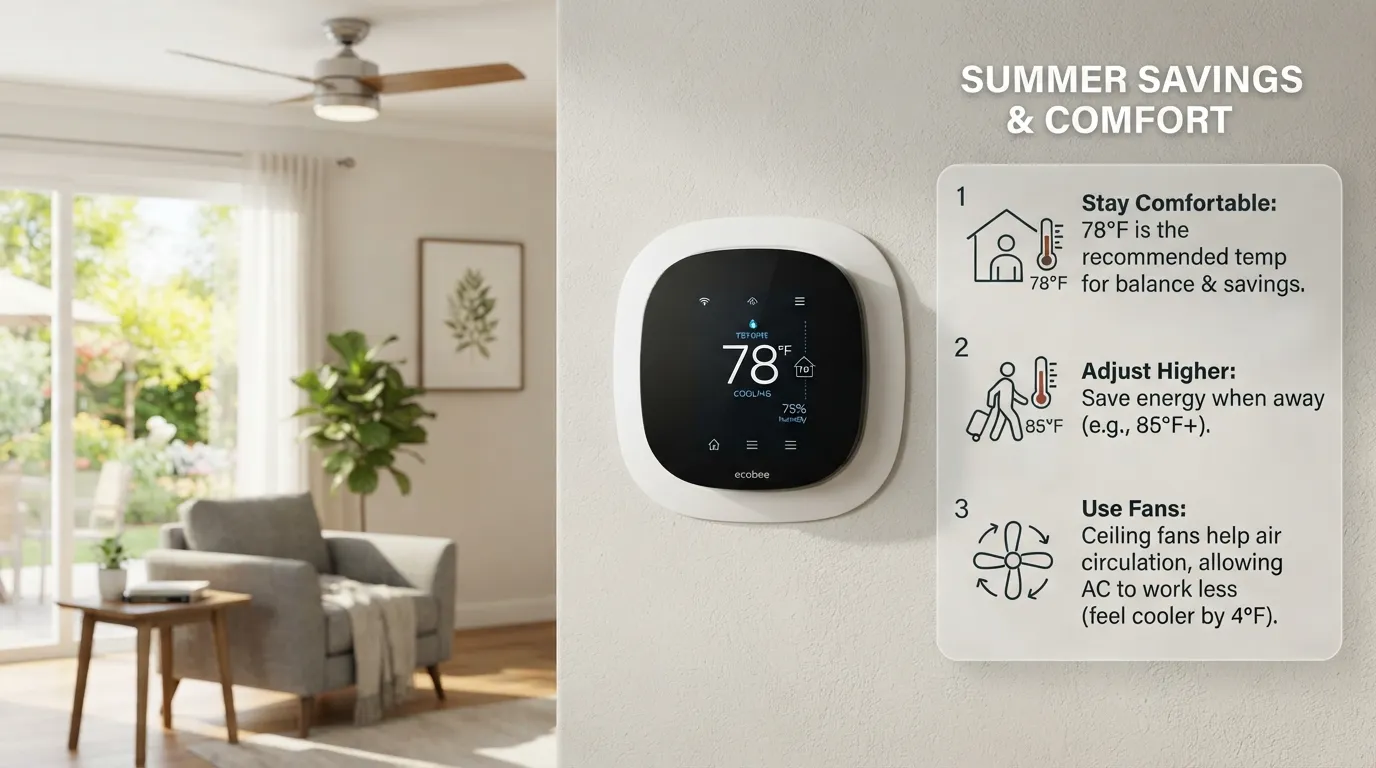
According to official energy guidelines from organizations like the U.S. Department of Energy, 78 degrees Fahrenheit is widely considered the optimal baseline setting when you are home and active. This specific target minimizes the thermal gap between indoor and outdoor air, slashing cooling costs without sacrificing basic comfort.
- Maintains an efficient balance between compressor load and energy conservation.
- Reduces overall electricity consumption by up to 3% for every degree you raise the thermostat setting.
- Pairs effectively with ceiling fans to create a cooling wind-chill effect on human skin.
Is 72°F Too Cold for Your Energy Bill?
Dropping your indoor temperature down to 72°F might feel instantly refreshing, but it places a massive continuous strain on your cooling equipment. Lower settings force your system to run longer cycles, leading to high utility bills and increased wear on mechanical parts.
- Aggressive cooling increases energy usage significantly, driving up monthly electricity expenses.
- Overworking the compressor can trigger overheating and lead to premature component failure.
- Lower settings do not cool a home any faster; they only cause the system to over-shoot target temperatures.
How Cool Should Your House Be If It’s 95°F or 100°F Outside?
When extreme heat waves push outdoor temperatures past 95°F or 100°F, trying to maintain a chilly 70°F indoors creates an impossible thermal differential. Air conditioners are generally designed to drop indoor temperatures by roughly 20°F relative to the outdoors.
- Accept a realistic indoor target of 78°F to 80°F during extreme heat advisories to protect your system.
- Focus on indoor humidity control, as lower moisture levels make warmer indoor temperatures feel much crisper.
- Close blinds and thermal curtains during peak sun hours to prevent solar heat gain from overwhelming your AC.
Is 68°F or 69°F Too Cold to Run AC?
Running residential central air conditioning systems at 68°F or 69°F during summer is generally discouraged unless specifically required for medical reasons. These ultra-low settings cause continuous compressor operation and can freeze up indoor evaporator coils.
- Continuous freezing risks can block airflow completely and damage compressor components.
- Excessive runtimes spike electrical consumption and lead to expensive utility bills.
- Wastful cooling strains local power grids during peak regional demand periods.
Should You Use a Smart Thermostat to Automate This?
Programmable and smart thermostats eliminate the guesswork of manual adjustments by automatically modifying temperatures based on your daily routine. Devices like Nest or Sensi optimize runtimes and save energy while you are asleep or away at work.
- Automatically raise your home’s temperature by 7 to 10 degrees when you are away for extended periods.
- Program customized cooling schedules tailored precisely to your family’s daily habits.
- Monitor energy consumption reports remotely via smartphone applications to fine-tune your efficiency strategy.
The HVAC $5000 Rule Should You Repair or Replace?
 Facing a major air conditioner breakdown during peak summer brings a stressful dilemma: should you pay for another expensive repair or invest in a brand-new system? Using structured decision-making frameworks like the industry-standard $5000 rule removes the guesswork from this costly investment.
What Is the HVAC $5000 Rule? Formula Explained
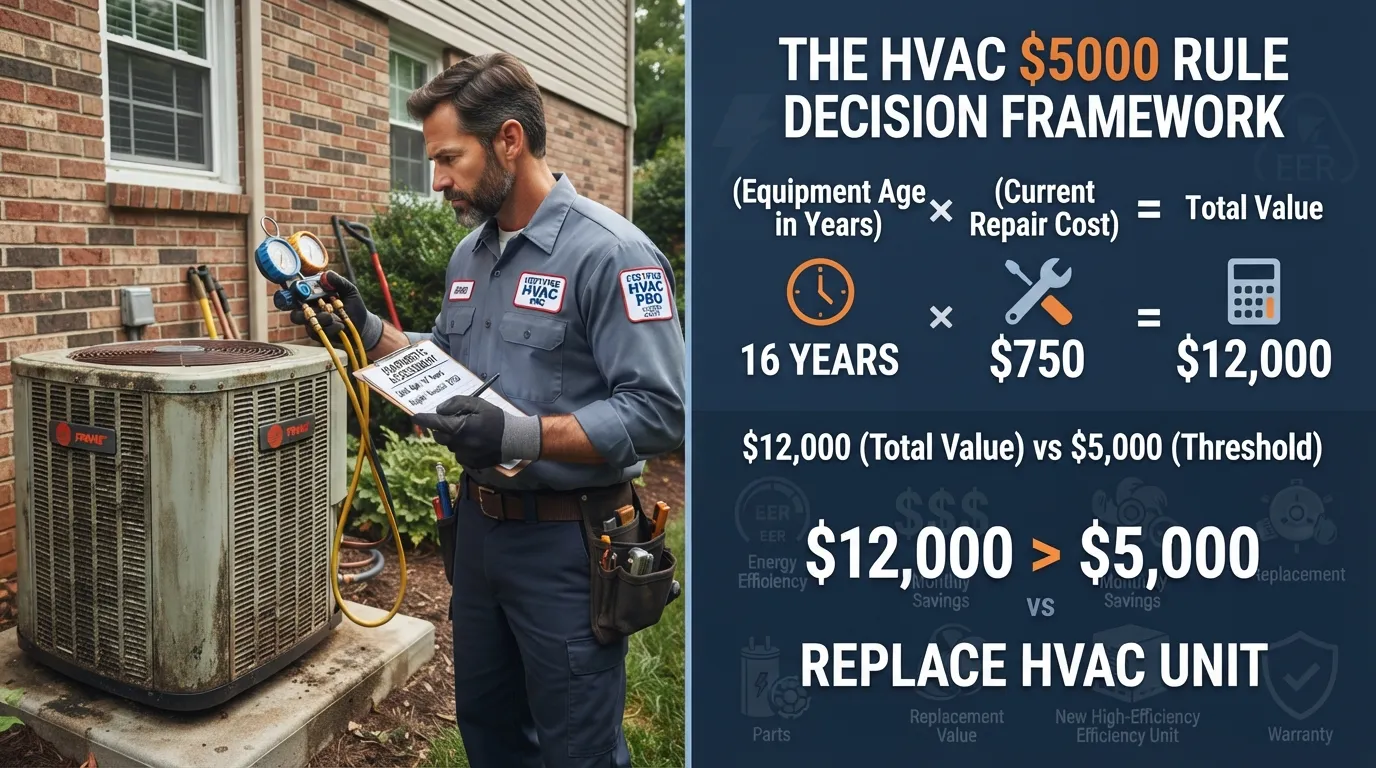
The HVAC $5000 rule is a simple calculation used to determine whether repairing an aging air conditioner is financially sound or a waste of money. To apply the formula, multiply the estimated repair cost by the age of your equipment in years. If the resulting figure exceeds $5,000, replacement is typically the smarter long-term financial decision.
- Multiply your current HVAC repair quote by the age of the unit (e.g., a $600 repair on an 8-year-old system equals $4,800).
- Compare the calculated total against the $5,000 threshold to evaluate economic viability.
- Factor in future reliability and remaining component lifespan rather than focusing solely on immediate out-of-pocket costs.
When Repair Makes More Sense Than Replacement
If your air conditioner is relatively young and the repair calculation falls well below the threshold, fixing the unit is usually the wisest path. Minor issues like a faulty capacitor, a tripped breaker, or a worn-out contactor do not warrant buying an entirely new HVAC system.
- Your system is less than 8 to 10 years old and has been regularly maintained with annual tune-ups.
- The repair is isolated, inexpensive, and restores full, dependable performance.
- Your existing unit still operates on efficient R-410A refrigerant rather than phased-out R-22 Freon.
When It’s Time to Invest in a New System
Pouring money into an aging, inefficient air conditioner is throwing good money after bad. When major components fail on older equipment, upgrading to a modern, high-SEER system provides immediate reliability and dramatic energy savings.
- The system is over 12 to 15 years old and requires frequent, recurring emergency repairs.
- The compressor or evaporator coil has failed, or the system uses expensive, obsolete R-22 refrigerant.
- Your utility bills keep rising despite routine maintenance because overall system efficiency has permanently degraded.
Is It Cheaper to Run AC All Day or Only at Night?
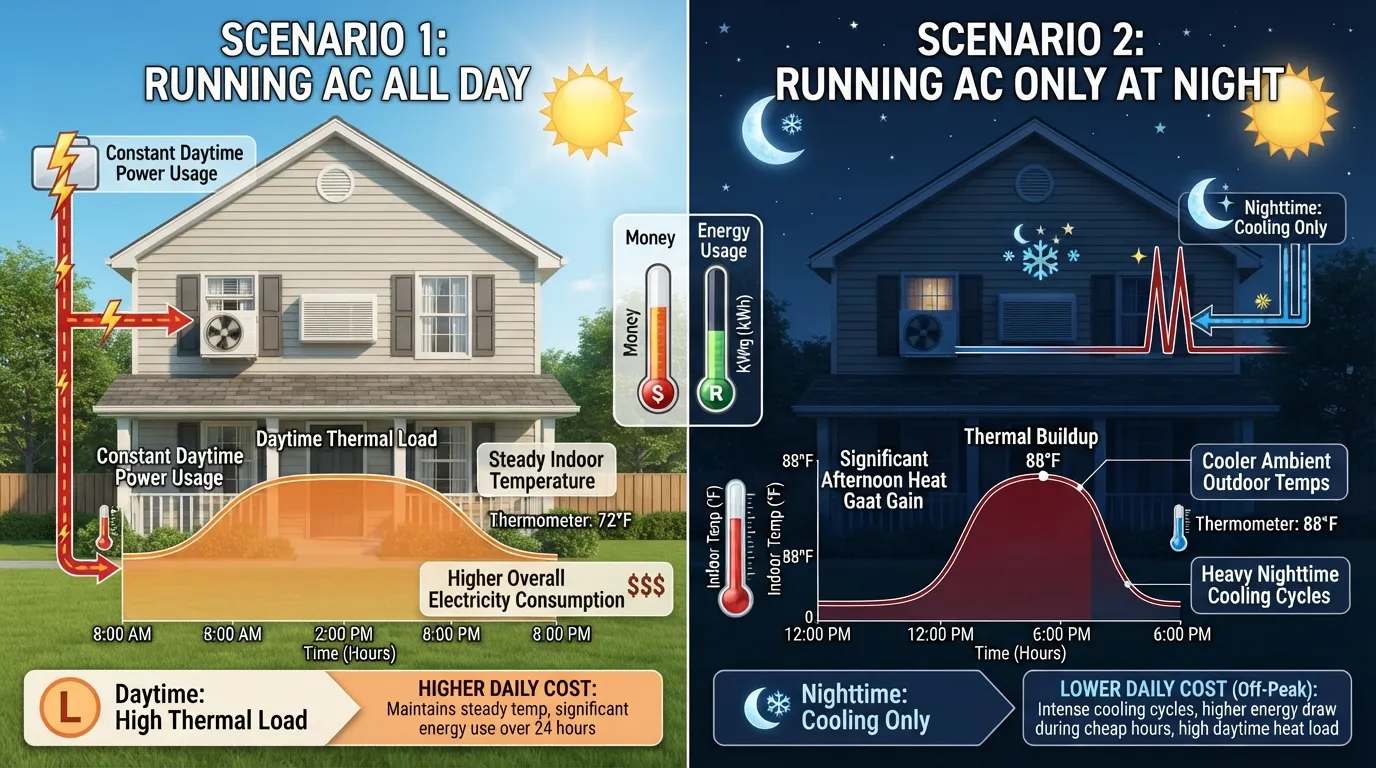 One of the most common homeowner debates centers around whether keeping your air conditioner running steadily throughout the day or shutting it off completely until evening saves more money. Understanding how thermal mass, energy consumption in kilowatt-hours (kWh), and humidity control interact reveals the most cost-effective approach.
The Cost Difference: All-Day vs Night-Only Cooling
Running your AC all day maintains a stable temperature, but shutting it off entirely while away and blasting it upon return can force the compressor into an intense, continuous over-work cycle. While continuous low-level maintenance consumes steady energy, sudden spikes to cool a boiling house often demand maximum wattage for hours, frequently matching or exceeding steady-state daily usage.
- Constant low-level runtime prevents extreme temperature accumulation in structural building materials.
- Spike-cooling an 85°F house down to 72°F forces the system to pull peak amperage for prolonged stretches.
- Smart temperature setback strategies (raising the thermostat 4 to 6 degrees while away) consistently outperform both continuous cooling and full shutdown methods.
Why Turning AC Off Completely Can Backfire
Shutting down your cooling system entirely during scorching summer days allows thermal heat to saturate your home’s walls, furniture, and insulation. Furthermore, unchecked humidity climbs rapidly, creating a muggy environment that feels much hotter than the actual thermometer reading.
- Excessive moisture buildup forces your AC to spend extra electricity pulling humidity out of the air rather than just lowering temperature.
- Saturated indoor air encourages mold growth and makes furniture and drywall hold latent heat.
- Re-cooling a thermally saturated home takes hours, defeating the purpose of turning the unit off.
Best Middle-Ground Strategy for Homeowners
The most cost-effective strategy relies on moderation and automation rather than extreme all-or-nothing habits. By utilizing a programmable setback schedule, you minimize energy consumption during peak solar hours without letting your home’s temperature or humidity spiral out of control.
- Program your thermostat to allow a moderate 5-degree temperature increase when you are out during the workday.
- Begin cooling your home 30 minutes before you return using a smart schedule or smartphone geofencing.
- Maintain indoor relative humidity between 40% and 50% to ensure comfort at higher baseline temperatures.
Common Summer HVAC Problems & Troubleshooting
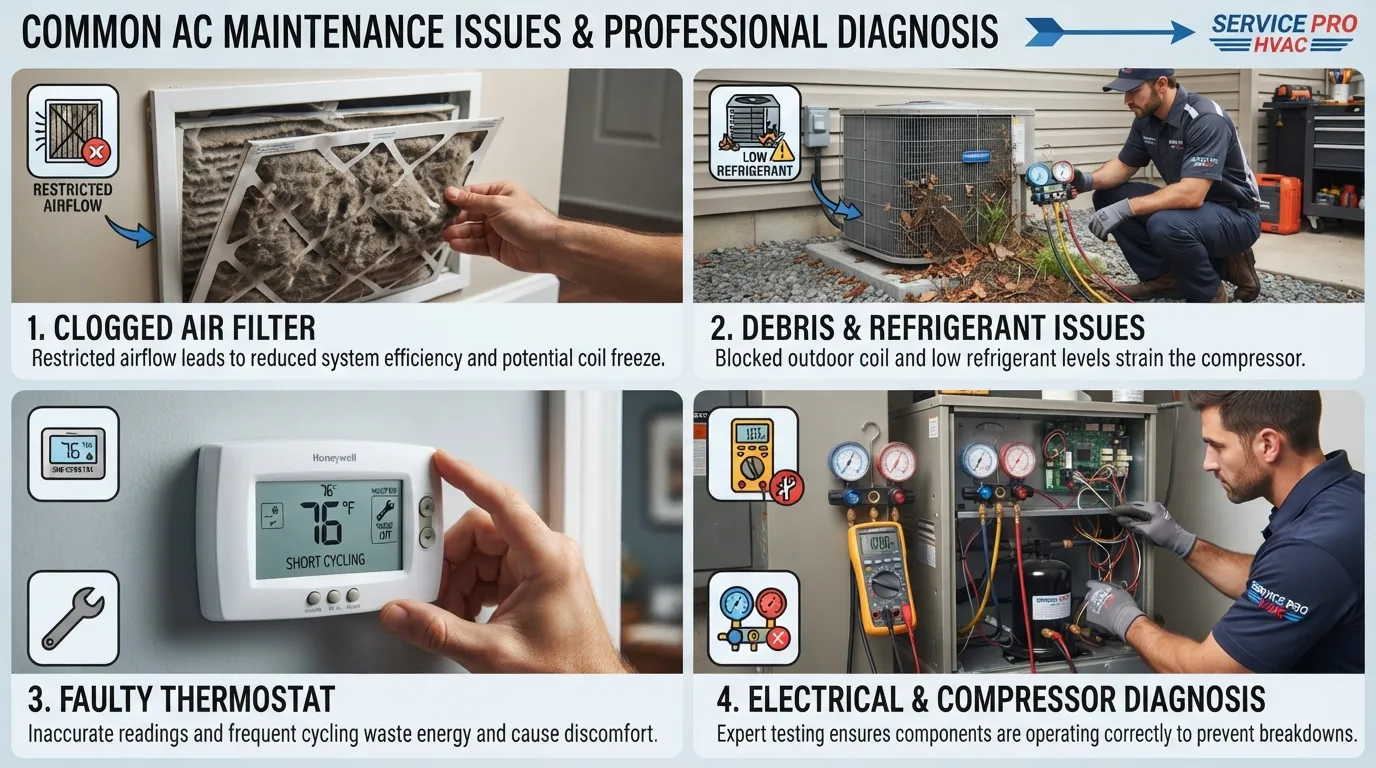 Summer heat pushes air conditioning systems to their absolute limits, frequently resulting in unexpected operational hiccups. Knowing how to diagnose and address minor issues before they escalate can save you from costly emergency service calls and sweltering discomfort.
Why Is My AC Short Cycling?
Short cycling occurs when your air conditioner turns on and off rapidly without completing a full, proper cooling cycle. This frustrating behavior wastes massive amounts of electricity, increases component wear, and leaves your home humid and sticky.
- Check for a severely clogged air filter that is restricting airflow and causing the system to overheat.
- Inspect outdoor condenser coils for heavy dirt buildup or blockage preventing proper heat dissipation.
- Verify that your thermostat is not positioned in direct sunlight or placed near a heat source that triggers false readings.
Uneven Cooling Between Rooms Common Causes
If certain rooms feel like a refrigerator while others remain uncomfortably warm, your home’s airflow distribution is unbalanced. This is a common summer complaint caused by structural or mechanical airflow restrictions.
- Inspect supply vents throughout the house to ensure no furniture, rugs, or drapes are blocking conditioned air delivery.
- Check flexible ductwork in your attic for sharp kinks, crushing, or disconnected sections.
- Balance your duct dampers to redirect more airflow toward upper-floor rooms that naturally accumulate excess heat.
Why Is My Smart Thermostat Nest Taking Longer to Cool the House?
If your Nest or other smart thermostat seems sluggish during peak summer heat waves, it may be due to built-in learning algorithms or delayed response features designed to protect your equipment. Alternatively, system efficiency limitations in extreme weather can cause extended runtimes.
- Check if “True Radiant” or advanced learning features are pacing temperature changes gradually to save energy.
- Ensure your thermostat’s Wi-Fi connection is stable so it can receive real-time weather adjustments and updates.
- Verify that the wall opening behind your thermostat is properly sealed to prevent drafts from skewing internal temperature sensors.
Signs You Need to Call a Technician Immediately
While DIY troubleshooting solves many minor quirks, certain symptoms indicate severe mechanical or electrical failure that requires immediate professional intervention. Ignoring these warning signs can destroy your compressor or create fire hazards.
- Listen closely for grinding, screeching, or loud metallic banging noises coming from the compressor or blower motor.
- Watch out for ice forming on the indoor evaporator coils or refrigerant lines during hot summer days.
- Notice a persistent burning smell or experience frequent circuit breaker trips every time the AC turns on.
Inverter vs Non-Inverter AC Which One Saves More in Summer?
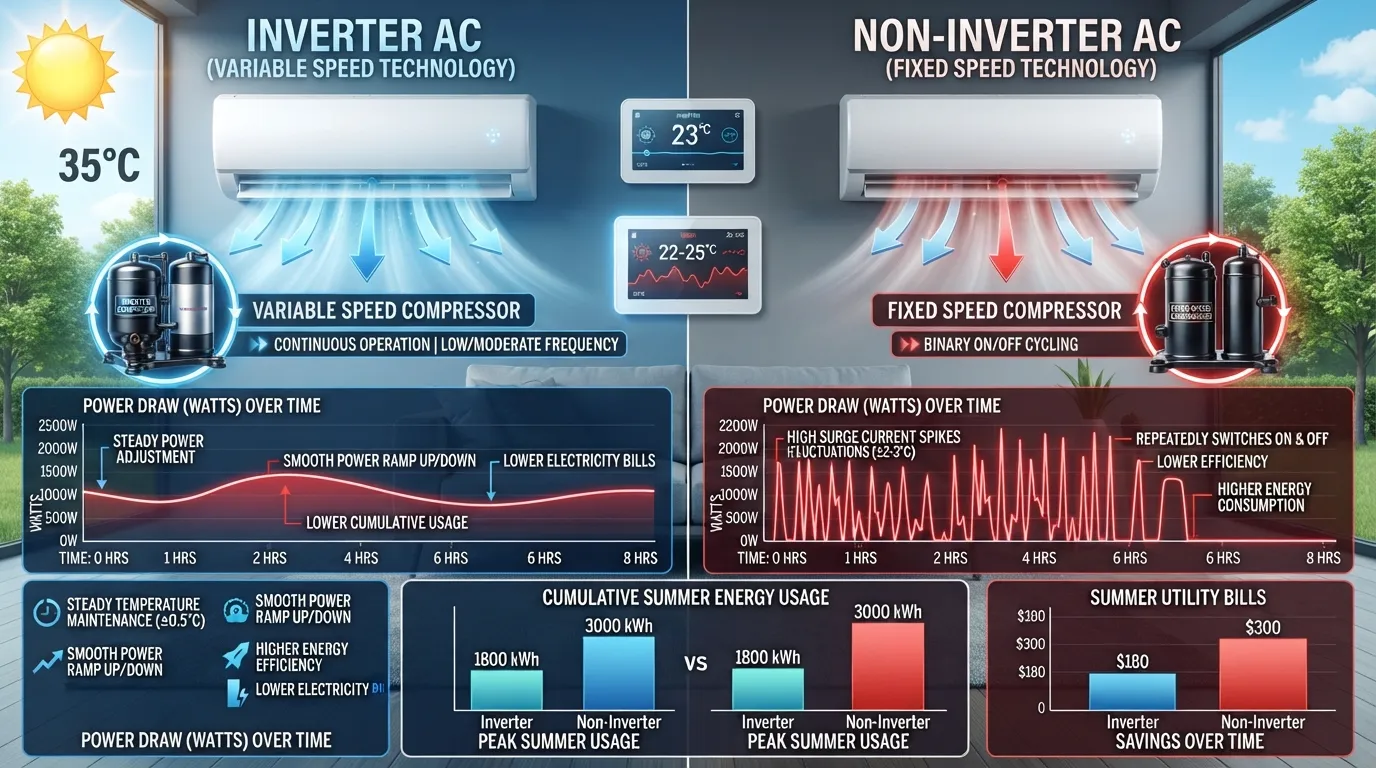 Choosing the right compressor technology is one of the most impactful decisions you can make for your long-term summer utility bills. Understanding the fundamental differences between inverter and non-inverter air conditioners helps you select the ideal system for your cooling habits and home layout.
How Inverter ACs Work Differently
Traditional non-inverter air conditioners operate on a binary principle: the compressor runs at 100% capacity until the room reaches the target temperature, then shuts off entirely before restarting when the room warms up. In contrast, an inverter AC utilizes variable-speed compressor technology that continuously adjusts motor speed to match exact cooling demands without powering down completely.
- Eliminates massive power surges caused by constant motor restarts and hard stops.
- Maintains exceptionally stable indoor temperatures without uncomfortable hot and cold swings.
- Reduces overall mechanical wear and tear on internal electrical components and motor windings.
Which One Is Better for Long Daily Usage 7-8 Hours+?
If you run your air conditioner for extended daily stretches—such as overnight cooling or keeping homes cool throughout hot summer afternoons—an inverter AC is vastly superior for energy conservation. Because inverter compressors consume minimal electricity once the target temperature is established, they excel during prolonged runtime scenarios.
- Saves up to 30% to 50% on electricity bills over traditional units during heavy summer usage.
- Operates quietly at partial capacity rather than roaring at full throttle for hours on end.
- Provides superior humidity removal during long run cycles by keeping evaporator coils consistently cold.
Which One Suits Small Rooms vs Whole-House Cooling?
Matching your cooling technology to your specific spatial requirements ensures you do not overspend on equipment or sacrifice performance. Room size, thermal load, and usage frequency determine whether an inverter or standard unit makes the most sense.
- Choose inverter units for bedrooms, home offices, and primary living areas where AC runs for many continuous hours daily.
- Non-inverter window or portable units may still suit guest rooms, workshops, or infrequently used spaces where initial purchase budget is the primary concern.
- Ensure correct BTU sizing for your room square footage to allow inverter compressors to modulate efficiently.
How to Keep Your Home Cool Without Overworking Your AC
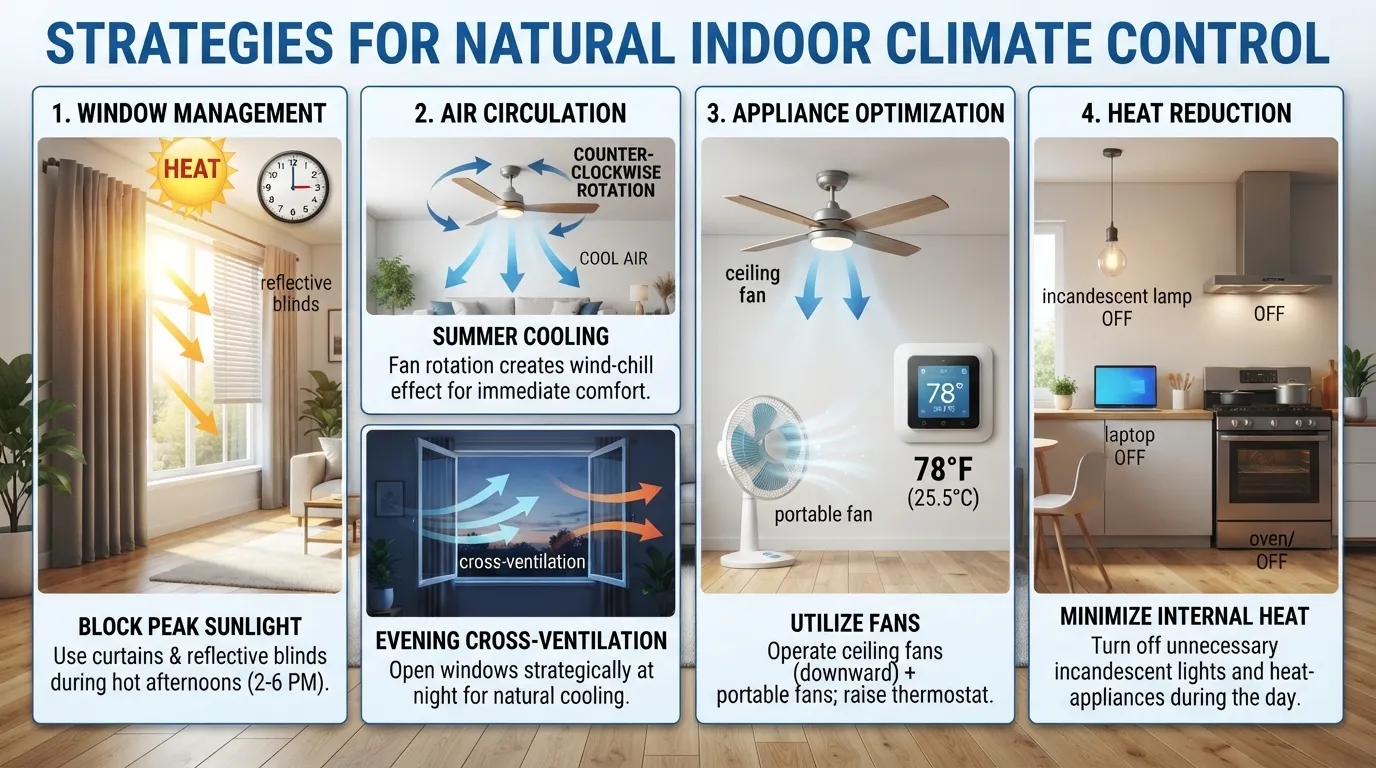 Relying solely on your air conditioner during extreme summer heat can push your system past its breaking point and drive up your utility bills. Implementing passive cooling techniques and natural barriers drastically reduces your home’s thermal load, keeping rooms comfortable with minimal HVAC effort.
Blocking Solar Heat Gain Curtains Blinds
Up to 30% of unwanted home heat comes directly through your windows from solar radiation. Installing and utilizing proper window treatments prevents sunlight from turning your living spaces into greenhouses.
- Close blackout curtains, solar shades, and reflective blinds on east- and west-facing windows during peak morning and afternoon sun hours.
- Install exterior awnings or solar window film to deflect ultraviolet rays before they penetrate glass panes.
- Keep windows closed on humid days to prevent hot outdoor air from overwhelming indoor cooling efforts.
Using Fans Strategically with AC
Ceiling fans and portable fans do not actually lower ambient air temperature, but they create a powerful wind-chill effect that makes human skin feel up to 4 degrees cooler. Using fans correctly allows you to set your thermostat a few degrees higher without sacrificing personal comfort.
- Set ceiling fans to rotate counterclockwise during summer to push air straight down and create a cooling breeze.
- Turn off ceiling fans when leaving a room, as they cool people rather than spaces, wasting electricity in empty areas.
- Place a box fan blowing outward in a window to exhaust trapped hot air from stuffy rooms during evening hours.
Sealing Doors Windows to Trap Cool Air
Air leaks around doors, windows, and attic hatches let expensive, conditioned air escape while allowing hot outdoor air and humidity to seep inside. Proper weatherstripping and sealing keep your home airtight and efficient.
- Apply fresh weatherstripping and door sweeps around exterior doors to eliminate visible gaps and drafts.
- Use clear window-sealing film kits on older single-pane glass to create an insulating thermal barrier.
- Inspect attic access hatches and recessed lighting fixtures for air leaks that bleed cool indoor air upward.
Expert Insight What a Real HVAC Technician Wants You to Know
Behind every emergency summer service call is often a preventable habit or common misconception. Experienced HVAC technicians witness firsthand how small homeowner oversights turn into catastrophic mechanical failures when peak temperatures hit.
The One Mistake Technicians See Every
The single most frequent and damaging mistake technicians encounter during scorching summer months is neglected air filters. Running an air conditioner with a heavily clogged filter starves the system of airflow, causing evaporator coils to freeze solid and compressors to overheat.
- Restricted airflow forces the blower motor to pull excessive electrical current, risking burnout.
- Frozen coils melt into overflowing condensate drain pans, triggering water damage to ceilings and drywall.
- Ignored filters reduce overall cooling efficiency, driving up monthly utility bills unnecessarily.
Should You Cover Your Outdoor AC Unit?
While wrapping your outdoor condenser unit in a heavy plastic tarp during summer storms might seem protective, technicians strongly advise against it. Tightly sealed covers trap moisture and condensation inside the cabinet, creating a breeding ground for corrosion and nesting spots for rodents.
- Outdoor condenser units are manufactured from weather-resistant aluminum and galvanized steel designed to endure rain and sun.
- If you use a breathable mesh cover during winter, remove it entirely before turning the AC on for summer.
- Keep the top and sides of the unit free of solid covers that block necessary ventilation.
Why Annual Maintenance Pays for Itself
Many homeowners view professional tune-ups as an unnecessary expense, but experienced technicians know that preventive maintenance pays for itself. Catching a failing capacitor or a minor refrigerant leak early prevents expensive emergency breakdowns during a brutal heat wave.
- Clean coils and properly calibrated refrigerant charges restore peak SEER efficiency ratings.
- Routine tune-ups double the operational lifespan of expensive compressors and blower motors.
- Manufacturer warranties often require documented annual maintenance to remain valid on major component replacements.
Frequently Asked Questions
Get quick, direct answers to common homeowner questions regarding summer air conditioning settings, troubleshooting, and system efficiency.
Is 68 Degrees Cold for a House in Summer?
Yes, 68 degrees Fahrenheit is considered quite cold for a residential home during summer. Setting your thermostat this low forces your air conditioner to run continuous, heavy cooling cycles that inflate your electricity bill and increase the risk of frozen evaporator coils.
- Creates an excessive temperature differential between scorching outdoor air and indoor living spaces.
- Drives up energy consumption and places unnecessary stress on compressor components.
- Experts recommend targeting between 75°F and 78°F for a healthy balance of comfort and savings.
Is It Okay to Run AC When It’s 60 Degrees Outside?
Running your air conditioner when outdoor temperatures drop to 60°F is generally discouraged. Most residential cooling systems are not engineered to operate efficiently when ambient outdoor temperatures are cool, which can cause internal pressures to drop and coils to freeze.
- Low outdoor temperatures can cause indoor evaporator coils to ice over, leading to water leaks.
- Opening windows to let in natural fresh air is a much more efficient alternative than running mechanical cooling.
- If humidity is a concern, use a dedicated standalone dehumidifier rather than your central AC.
What Happens If I Set My AC to 30°C Will It Cool Faster?
Setting your air conditioner to an extreme temperature like 30°C in heating mode, or setting it to the lowest possible cooling point hoping it will cool down faster, is a common misconception. Air conditioners operate at a single fixed speed; they do not blow colder air based on how low you set the thermostat.
- Extreme temperature settings only cause the system to run longer until it overshoots the desired comfort level.
- Forcing prolonged cooling cycles wastes electricity without speeding up the cooling process.
- Always set your thermostat to your exact desired comfortable temperature rather than an extreme value.
How Do I Reset My Thermostat AC Settings?
If your thermostat is unresponsive, displaying incorrect temperatures, or failing to communicate with your HVAC unit, a soft reset usually resolves the issue. The exact reset procedure depends on your thermostat model.
- For digital or smart thermostats like Nest, navigate to the settings menu and select the factory reset or restart option.
- For traditional digital thermostats, remove the faceplate from the wall mount, take out the batteries for 60 seconds, and reinsert them.
- If the system remains locked out, check your main circuit breaker panel to reset the dedicated HVAC breaker switch.
Does a 1-Level House Need a Bigger AC Than a 2-Level House of the Same Size?
A two-story house typically requires careful zone planning and different cooling considerations compared to a single-level home of identical square footage. Multi-level homes suffer from natural thermal stack effect, where hot air rises to the upper floor, making second stories much harder to keep cool.
- Two-story homes often benefit from multi-zone HVAC setups or separate systems for upper and lower levels.
- Single-story homes have larger roof surface areas exposed to direct solar radiation, requiring proper attic insulation.
- An experienced HVAC professional must perform a formal Manual J load calculation to determine correct system tonnage regardless of layout.
Conclusion Key Takeaways
Navigating the summer heat without breaking your air conditioner or draining your budget comes down to a combination of proactive maintenance, smart thermostat management, and efficient daily habits. By implementing a regular filter replacement schedule, utilizing the Department of Energy’s recommended 78°F baseline when appropriate, and blocking solar heat gain, you protect your HVAC investment while maximizing indoor comfort.
Whether you are weighing a repair against the $5000 rule or evaluating whether an inverter system fits your cooling habits, staying informed is your best defense against unexpected breakdowns. Regular attention to your system ensures reliable performance all season long, keeping your home cool, efficient, and comfortable when temperatures peak.

Oscar Vance | Master Plumber & Drainage Expert
Meet Oscar Vance, a licensed master plumber sharing practical solutions on residential repairs, preventive maintenance, and thoughtful home upkeep.