Understanding One Piece and Two Piece Toilets
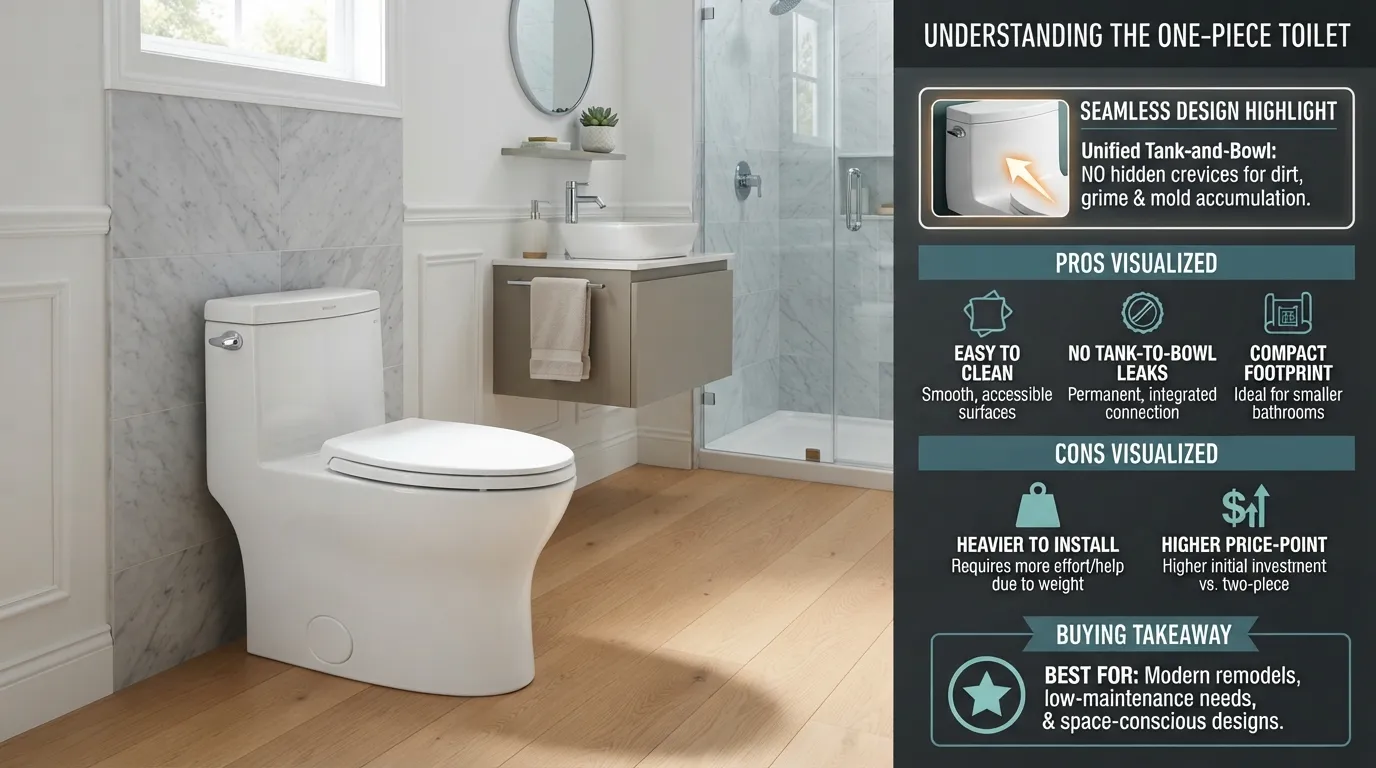
Choosing between a one-piece and two-piece toilet comes down to how the tank and bowl are constructed and joined. While a one-piece toilet fuses the tank and bowl into a single seamless unit, a two-piece toilet features a separately bolted tank and bowl that are assembled during installation.
One Piece vs Two Piece Toilet Difference
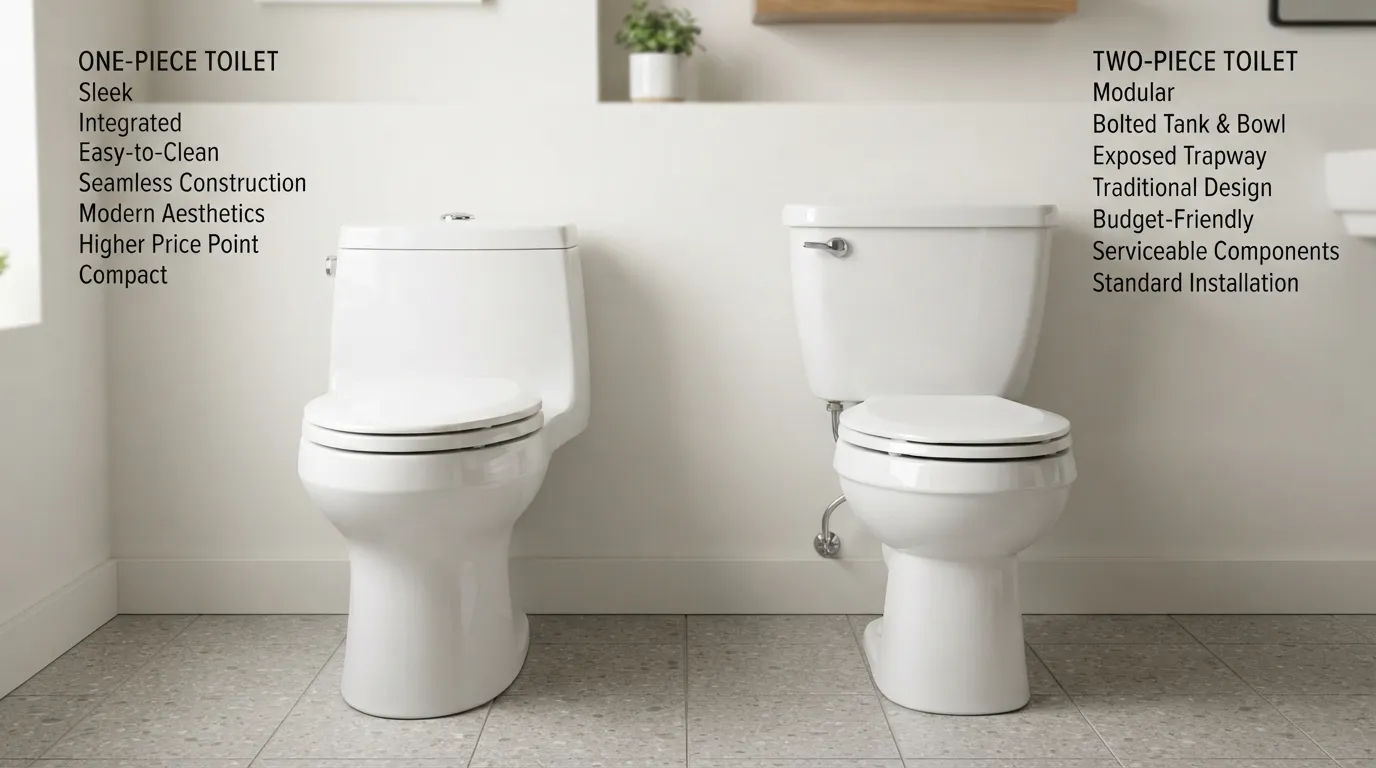
A one-piece toilet combines the tank and bowl into one integrated, solid piece of porcelain for a streamlined look and easier cleaning. In contrast, a two-piece toilet uses a bolted tank and bowl system, making it more affordable, easier to transport in tight spaces, and simpler to replace individual parts if damage occurs.
- One-piece toilet: Features a seamless unit design with no crevices between the tank and bowl, preventing dirt and grime buildup.
- Two-piece toilet: Comprises a distinct tank and bowl connected via a bolted tank mechanism and a rubber gasket.
- Installation & Weight: One-piece models are heavier and require two people to maneuver, whereas two-piece models are lighter because components are carried separately.
- Cost & Availability: Two-piece toilets are generally budget-friendly and widely available, while one-piece units represent a higher-end aesthetic investment.
What Is a One Piece Toilet?
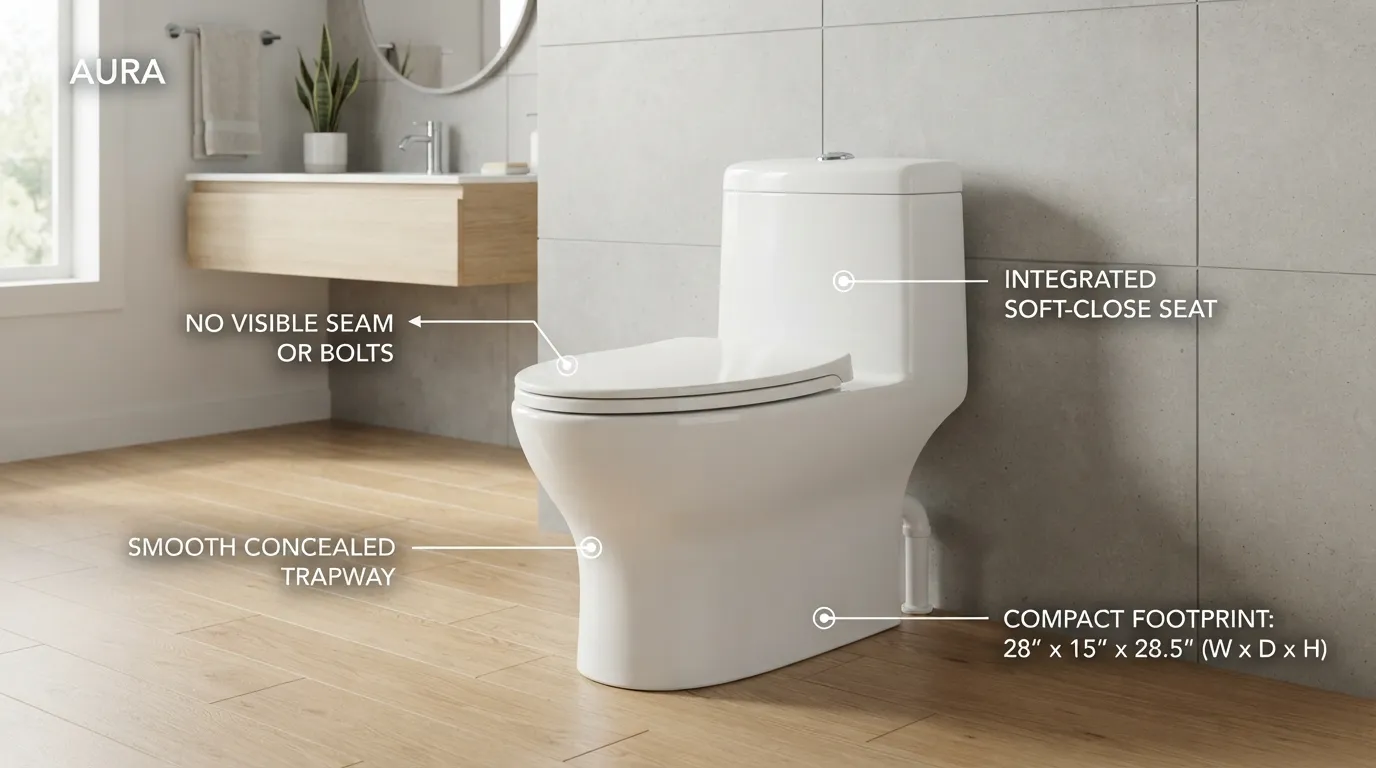
A one-piece toilet is a plumbing fixture where the tank and bowl are fused together during the manufacturing process to form a single, solid unit. This integrated design eliminates the traditional seam between compartments, delivering a sleek profile and modern aesthetic tailored for contemporary bathrooms.
How a One Piece Toilet Is Constructed
Manufacturers build a one-piece toilet using high-grade porcelain construction that is cast and kiln-fired as a single continuous piece rather than separate components. Because the raw clay is molded together before firing, the finished product hardens into a dense, heavy, and structurally unified body.
- Unified porcelain body: The entire pathway from the rim down through the trapway and up into the water tank is created in one contiguous mold.
- Weight and density: Fusing the components creates a heavier fixture that demands careful handling and dual-person placement during installation.
- Factory-sealed integrity: There are no loose joints or modular junctions to misalign on-site, ensuring uniform structural geometry.
Why It Has No Tank to Bowl Gasket
A one-piece toilet has no tank-to-bowl gasket because the tank and bowl are part of a fused tank and bowl configuration rather than mechanically joined parts. Traditional toilets require a rubber ring and bolt assembly to bridge the gap between two separate pieces, a vulnerability completely bypassed by a seamless design.
- Elimination of leak points: Without a separate tank resting on top of the bowl, there is zero risk of the rubber seal deteriorating or leaking water onto the bathroom floor.
- Rigid structural connection: The water flows internally from the integrated tank directly into the bowl without needing compression bolts or metal brackets.
- Simplified long-term upkeep: Homeowners never have to worry about tightening rusty bolts or replacing degraded tank-to-bowl gaskets over the lifespan of the fixture.
What Is a Two Piece Toilet?
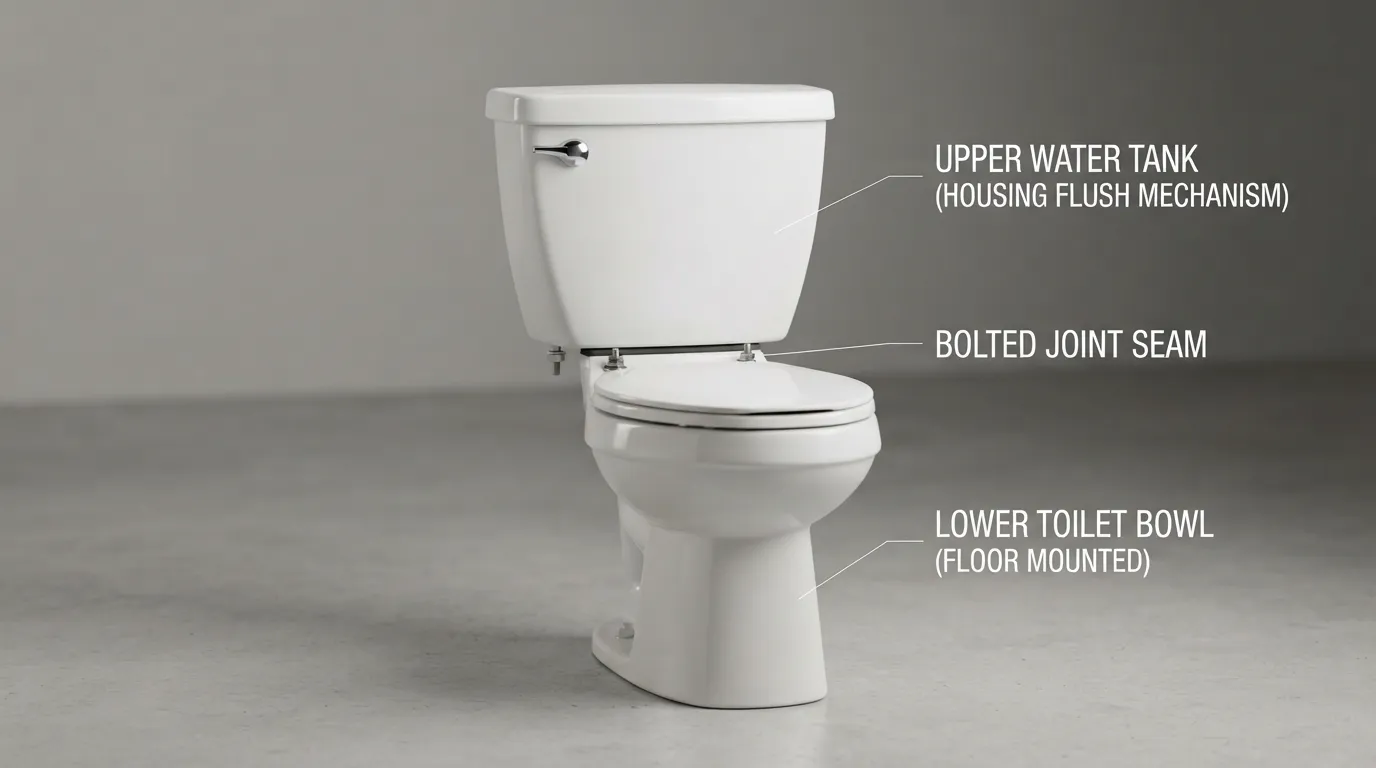
A two-piece toilet is a conventional plumbing fixture where the water tank and the toilet bowl are manufactured as two distinct, separate pieces and joined together during installation. This classic architecture makes up the vast majority of residential toilets worldwide due to its reliability and cost-effectiveness.
How a Two Piece Toilet Is Assembled
A two-piece toilet is assembled on-site by mounting the heavy porcelain bowl to the floor flange and then securing the separate tank directly on top of it. Technicians align the two modules using a rigid or flexible interface, locking them into a stable and functional unit.
- Modular construction: The tank and bowl are fired separately in the kiln, allowing easier quality control and lower production waste.
- On-site integration: Installers handle each component individually, making it significantly easier to navigate narrow staircases or small bathrooms.
- Traditional toilet design: This classic configuration represents the standard look found in most homes and commercial properties for decades.
Role of Tank to Bowl Bolts and Gasket
The tank-to-bowl bolts and gasket form the critical mechanical and hydraulic bridge between the separate tank and the bowl. The rubber gasket sits squarely over the flush valve opening to prevent water leakage, while metal or high-strength composite bolts pull and hold both components tightly together.
- Water-tight gasket seal: A spongy rubber or foam gasket compresses between the bottom of the tank and the top of the bowl to create a leak-proof water passage.
- Structural tension bolts: Specially coated bolts pass through the tank floor into the bowl, stabilizing the assembly against shifting or rocking.
- Maintenance accessibility: If a gasket wears out or a bolt rusts over time, individual components can be swapped out cheaply without replacing the entire toilet fixture.
One-Piece Toilet Pros and Cons
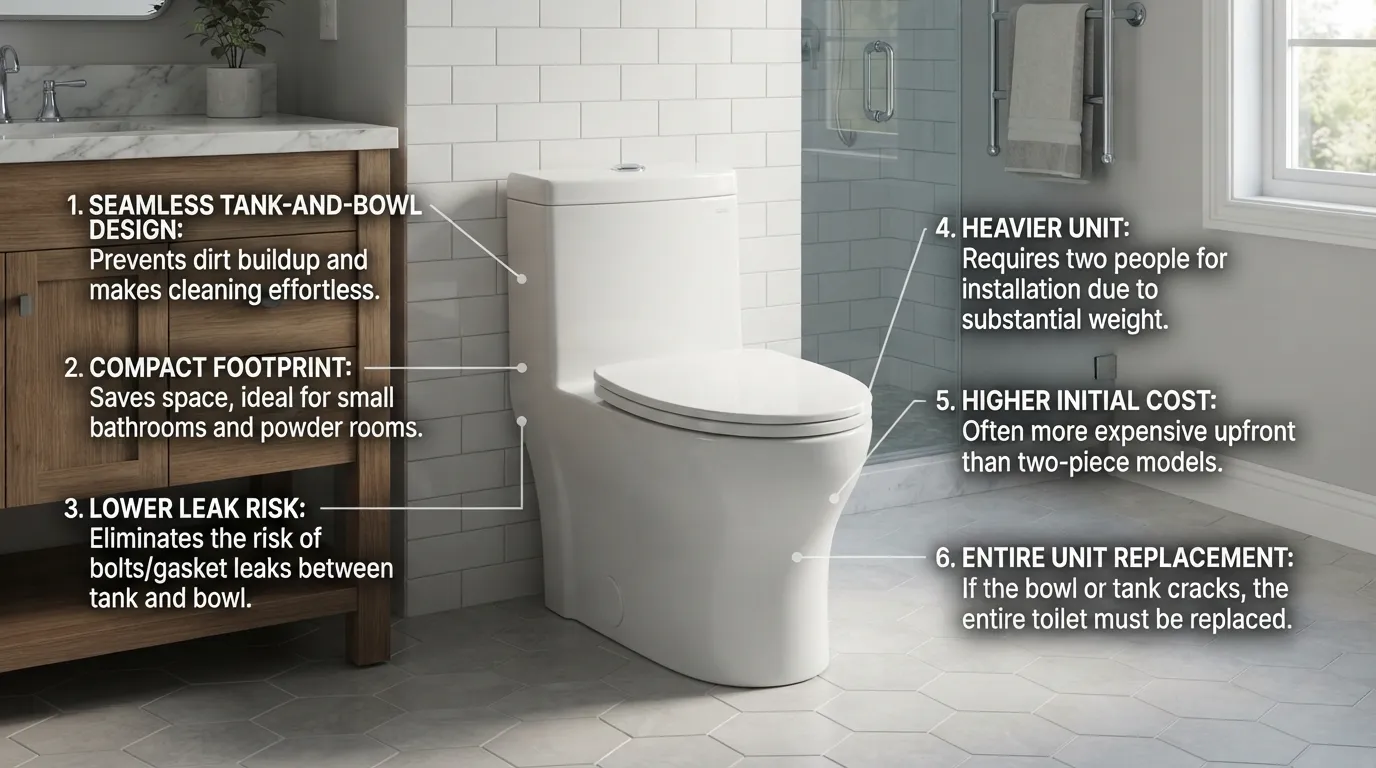
Weighing the advantages and disadvantages of a one-piece toilet helps determine if its streamlined look and lower maintenance outweigh the higher price tag and heavier build. Understanding these trade-offs ensures you make the right investment for your bathroom layout and budget.
Advantages of a One Piece Toilet
One-piece toilets deliver superior hygiene and a contemporary aesthetic by merging the tank and bowl into a continuous form. This solid construction eliminates common wear points found in traditional modular toilets.
- Easier to clean: With no crevice or joint where the tank meets the bowl, dust, grime, and mildew have nowhere to hide.
- Lower leak risk: A fused design eliminates the tank-to-bowl gasket and bolts, removing the primary cause of standard toilet leaks.
- Compact and sleek: The integrated profile often features a lower overall height and footprint, making it ideal for modern minimalist bathrooms.
- Sturdy and rigid: Because the unit is cast as a single piece, it never rocks, shifts, or wobbles between the upper and lower sections.
Disadvantages of a One Piece Toilet
Despite their sleek appearance, one-piece toilets come with distinct drawbacks that can complicate purchasing, shipping, and long-term repairs.
- Expensive upfront: The complex manufacturing and casting process makes one-piece models significantly more costly than two-piece alternatives.
- Heavier weight: Fusing both heavy porcelain sections together creates a bulky, dense fixture that is strenuous to move and lift.
- Full unit replacement on crack: If the porcelain cracks anywhere on the tank or bowl, the entire toilet must be replaced rather than swapping a single part.
- Limited style variety: Fewer decorative or high-tank custom configurations are available in a seamless one-piece format.
Are One Piece Toilets Harder to Install?
Yes, one-piece toilets are harder to install primarily due to their heavier weight and awkward bulk, which typically demands a two-person installation. Unlike two-piece models where you carry and mount each piece separately, you must maneuver the entire heavy unit onto the floor flange at once.
- Two-person installation recommended: The combined weight of the porcelain makes positioning the rough-in alignment challenging and risky for a single DIYer.
- Reduced margin for error: Lowering a heavy single unit onto the wax ring requires steady hands to avoid cracking the porcelain against the floor or wall.
- Tight space constraints: Navigating a large, rigid one-piece body through narrow hallway turns or tiny powder room doors demands extra caution.
Two Piece Toilet Pros and Cons
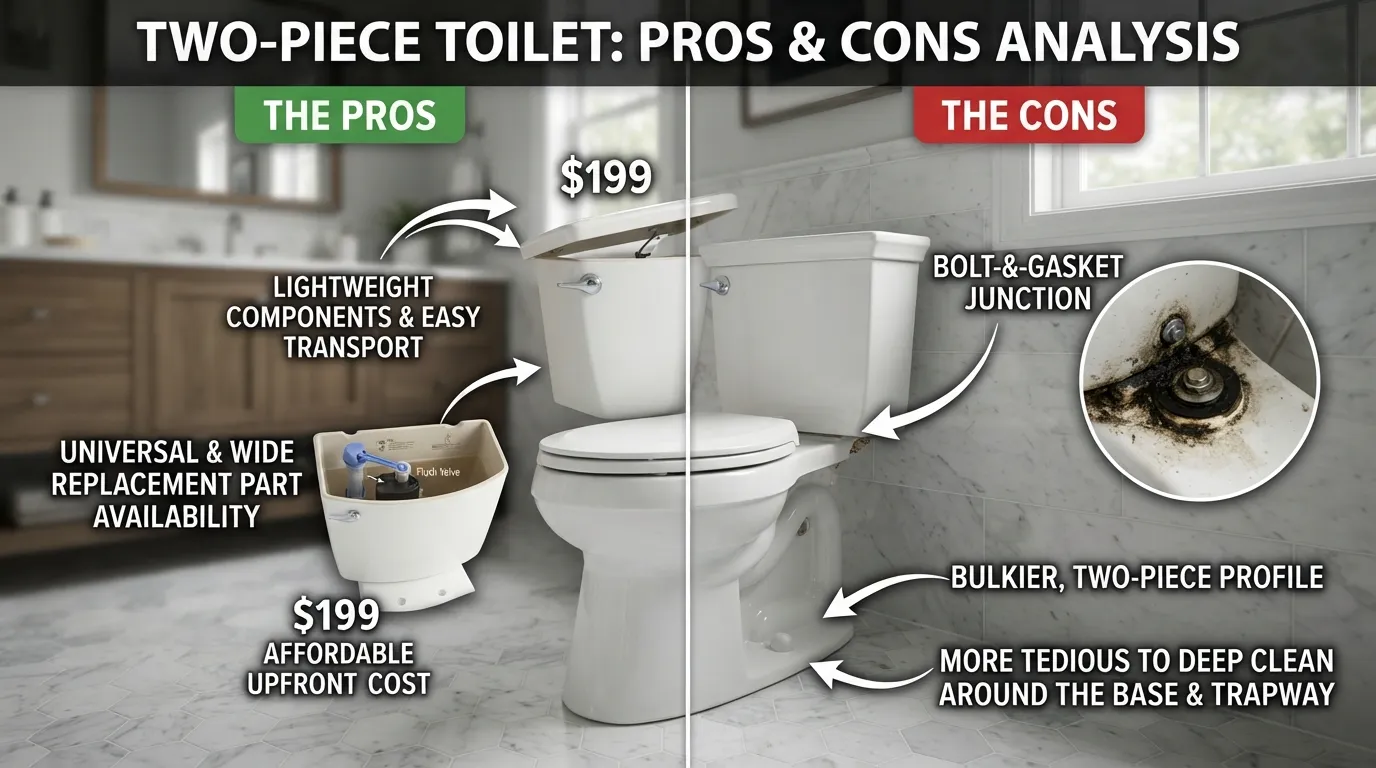
Evaluating the advantages and disadvantages of a two-piece toilet highlights why this traditional design remains a staple in homes worldwide. Weighing these practical factors helps clarify whether modular flexibility outweighs the extra cleaning effort.
Advantages of a Two Piece Toilet
Two-piece toilets offer a reliable, cost-effective balance of modular convenience and straightforward installation that appeals to both budget-conscious homeowners and DIY plumbers.
- Budget-friendly: Modular manufacturing keeps production costs low, making two-piece models significantly cheaper upfront than seamless units.
- Lightweight and manageable: Because you transport the separate tank and bowl independently, moving the fixture through narrow hallways or up stairs is much easier.
- Easy DIY install: Single-person installation is practical since you mount the lighter bowl to the floor first and attach the tank afterward.
- Replace tank or bowl separately: If an accident cracks only the tank or the bowl, you can swap out just the damaged piece instead of buying a whole new toilet.
Disadvantages of a Two Piece Toilet
While modular construction provides great versatility, it introduces specific maintenance vulnerabilities and cleaning challenges over time.
- Crevice buildup: The tight joint where the separate tank meets the bowl creates a hard-to-reach gap where dust, grime, and hard water stains accumulate.
- Bolt wear and corrosion: Metal tank-to-bowl bolts can rust, loosen, or weaken over years of exposure to moisture and flushing vibrations.
- Leak over time: The internal rubber tank-to-bowl gasket can degrade or dry out, eventually leading to slow leaks onto the bathroom floor if not replaced.
- Slight shifting or rocking: Modular joints can occasionally experience micro-movements if the mounting bolts require periodic tightening.
One Piece vs Two Piece Toilet Side by Side Comparison Table
Directly comparing structural and functional differences side-by-side clarifies how one-piece and two-piece toilets stack up across key decision metrics like upfront cost, cleaning ease, and long-term durability.
Comparison Table: Design Price Cleaning, Installation Durability
One Piece vs Two Piece Toilet Size Comparison
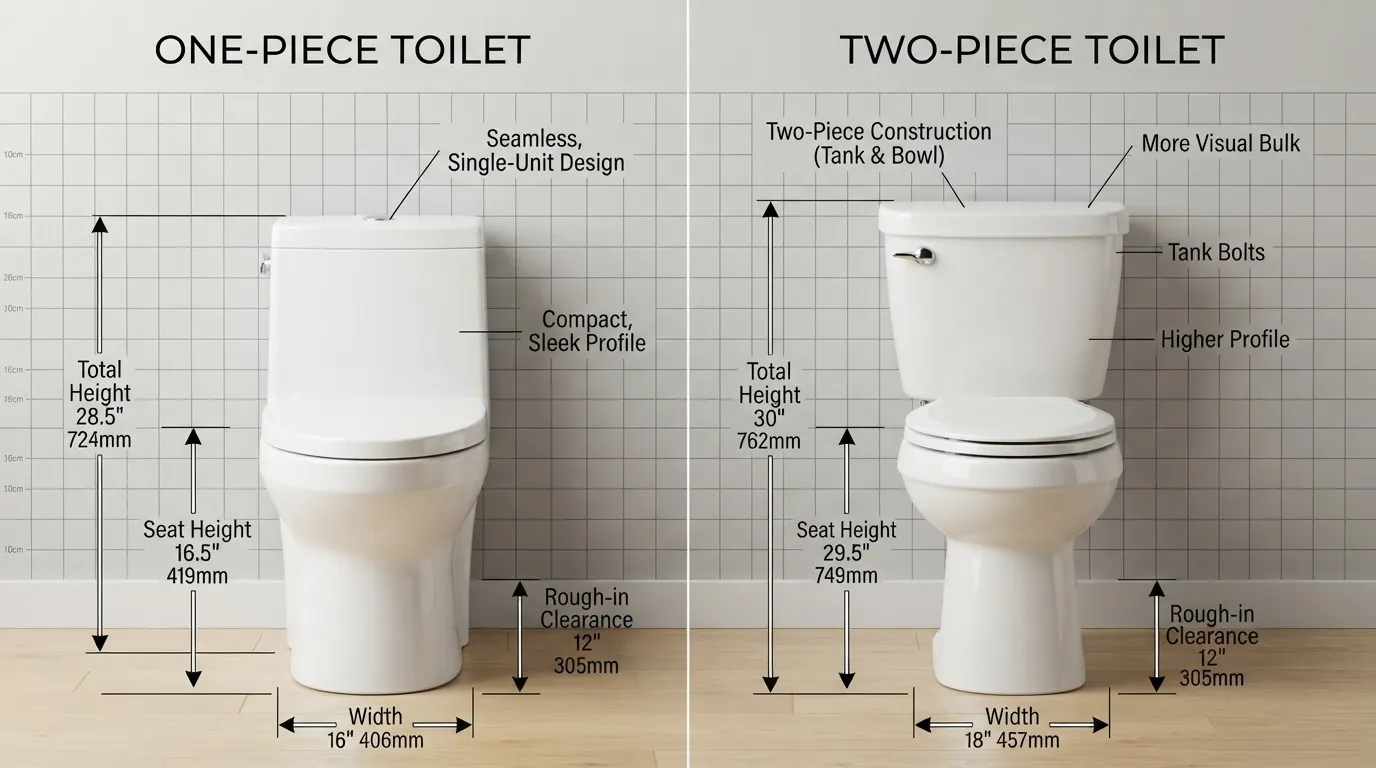
Evaluating the spatial dimensions of a toilet involves more than just total height; understanding how the footprint and bowl length interact with tight clearances helps prevent costly layout mistakes in small bathrooms.
Footprint and Bowl to Wall Clearance
While standard rough-in size remains a uniform **12 inches** from the finished wall to the center of the waste flange for most models, the actual length of the ceramic body and bowl-to-wall clearance can vary significantly between designs.
- Rough-in consistency: Both one-piece and two-piece toilets typically require the same standard 12-inch rough-in, though 10-inch and 14-inch specialty options exist for unique framing.
- Compact bowl options: Elongated bowls measure around **28 to 30 inches** from the wall, whereas round-front variations trim the projection down to **25 to 27 inches** to save valuable floor space.
- Tank profile height: One-piece toilets frequently feature a lower, sleeker tank profile that extends less visually into the room compared to taller, bulkier two-piece water tanks.
Which One Fits Better in a Small Bathroom?
A one-piece toilet generally fits better in a small bathroom or powder room when you prioritize a compact footprint, visual lightness, and tight clearance around vanity swings or shower doors.
- Space-saving toilet profiles: Many modern one-piece units are engineered with a shortened front-to-back length and a low-slung tank that makes tiny half-baths feel less cramped.
- Navigating tight entryways: Even though one-piece toilets are heavier, their single contiguous box shape can sometimes maneuver through tricky powder room doorframes better than trying to assemble a two-piece tower in tight quarters.
- Visual openness: Eliminating the bulky step between the tank and bowl creates an uninterrupted line of sight that visually expands narrow or windowless bathrooms.
Installation Difference DIY vs Plumber
Installing a toilet involves much more than just setting porcelain on the floor; the weight of the unit, the complexity of the flange connection, and whether you are lifting a single piece or two separate parts dramatically alter the difficulty level.
Step-by-Step Installation Difficulty Comparison
A two-piece toilet splits the labor into manageable stages by letting you set the lighter bowl first and bolt the tank on afterward, whereas a one-piece toilet requires lowering the entire heavy body onto the wax ring in a single precision maneuver.
- Two-piece workflow: Position the wax ring, lower the bowl onto the floor flange, level it, and then mount and plumb the separate water tank using standard tools required like a wrench and level.
- One-piece workflow: Align the integrated heavy lifting body directly over the floor bolts and wax ring on your first try, demanding exceptional core strength and spatial control.
- Flange connection stability: Both configurations rely on a secure floor flange connection, but two-piece units forgive slight hand-shaking during alignment because the tank goes on last.
Estimated Installation Time and Plumber Cost
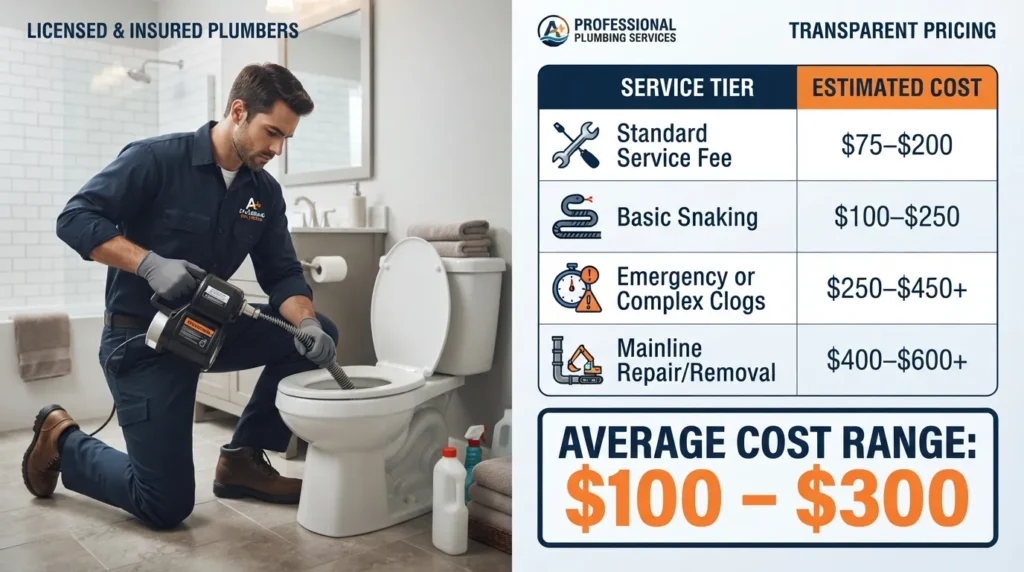
Hiring a professional plumber typically ranges from $150 to $400 for standard toilet replacement, with one-piece installations often skewing toward the higher end due to the extra labor and risk involved with heavy lifting.
- Time investment: A DIY installation for a two-piece toilet takes about 1 to 2 hours, while a one-piece unit can take longer or require an extra set of hands.
- Plumber labor rates: Most licensed plumbers charge hourly or flat-rate fees that reflect the necessity of a second helper when unboxing and setting heavy porcelain.
- Additional hardware costs: Expect to spend extra on a fresh wax ring, braided stainless steel supply lines, and reinforced floor bolts regardless of which style you choose.
Can You Install a One Piece Toilet Yourself?
Yes, you can install a one-piece toilet yourself if you have basic DIY plumbing experience and a friend to help lift and guide the heavy porcelain onto the wax ring without cracking it.
- The solo DIY challenge: Maneuvering an 80-to-100-pound single unit while squatting over a floor opening makes solo alignment hazardous to your back and the toilet base.
- Preparation and dry-fitting: Always dry-fit the toilet without the wax ring first to check wall clearance and ensure the base sits flat against uneven bathroom tile.
- When to call a pro: If your floor flange is rusted, broken, or sits below floor level, hiring a plumber prevents costly water damage beneath the subfloor.
Long-Term Maintenance and Repair Cost
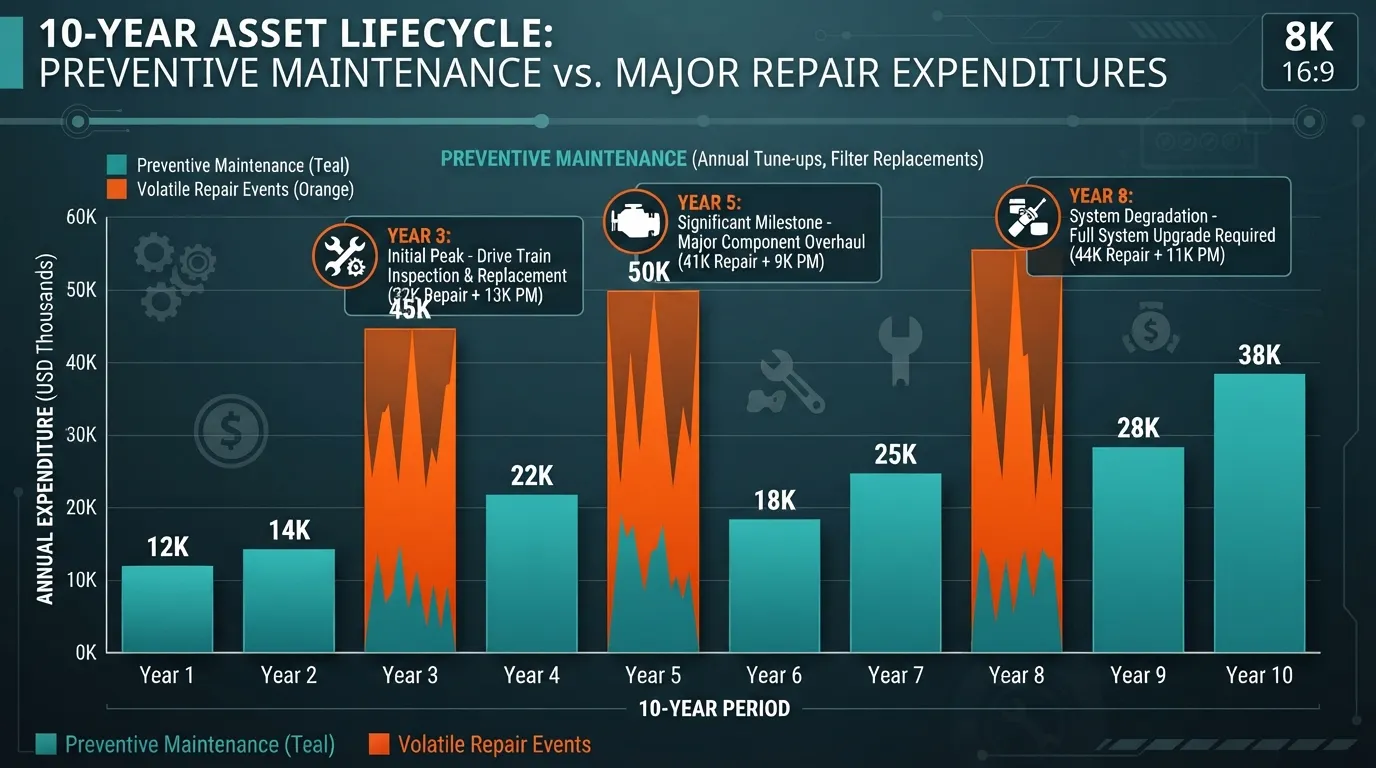
Calculating the total cost of ownership extends far beyond the initial purchase price tag, requiring a close look at how gaskets, bolts, and porcelain structural integrity hold up over a 5-to-10-year horizon.
Which One Needs More Maintenance Over Time?
A two-piece toilet requires more routine maintenance over time due to its modular design, where rubber tank-to-bowl gaskets and metal hardware gradually degrade and require periodic tightening or replacement.
- Gasket and bolt wear: The rubber seal between the tank and bowl in a two-piece model can dry out, compress, or leak after several years of chemical exposure and flush pressure.
- Zero joint maintenance: A one-piece toilet eliminates the tank-to-bowl interface completely, meaning you never have to worry about loose bolts or weeping rubber seals down the road.
- Standard internal parts parity: Both styles share identical internal fill valves, flush valves, and flappers, meaning routine mechanical tune-ups cost roughly the same for either unit.
Repair Cost: Fixing a Leak or Crack
While fixing minor leaks is cheap and straightforward on a two-piece toilet, repairing or replacing a cracked porcelain body exposes a stark financial difference in long-term cost of ownership.
- Minor leak repairs ($10 to $30): Replacing a worn tank-to-bowl gasket or corroded bolts on a two-piece toilet takes inexpensive parts and minimal labor.
- Crack vulnerability and full replacement: If a heavy impact fractures the porcelain on a one-piece toilet, crack repair is structurally impossible, forcing a complete unit replacement costing hundreds of dollars.
- Manufacturer warranty protection: Many reputable brands offer lifetime limited warranties on porcelain integrity for both styles, though shipping a replacement one-piece unit can incur high freight fees.
Water Efficiency and Flush Performance
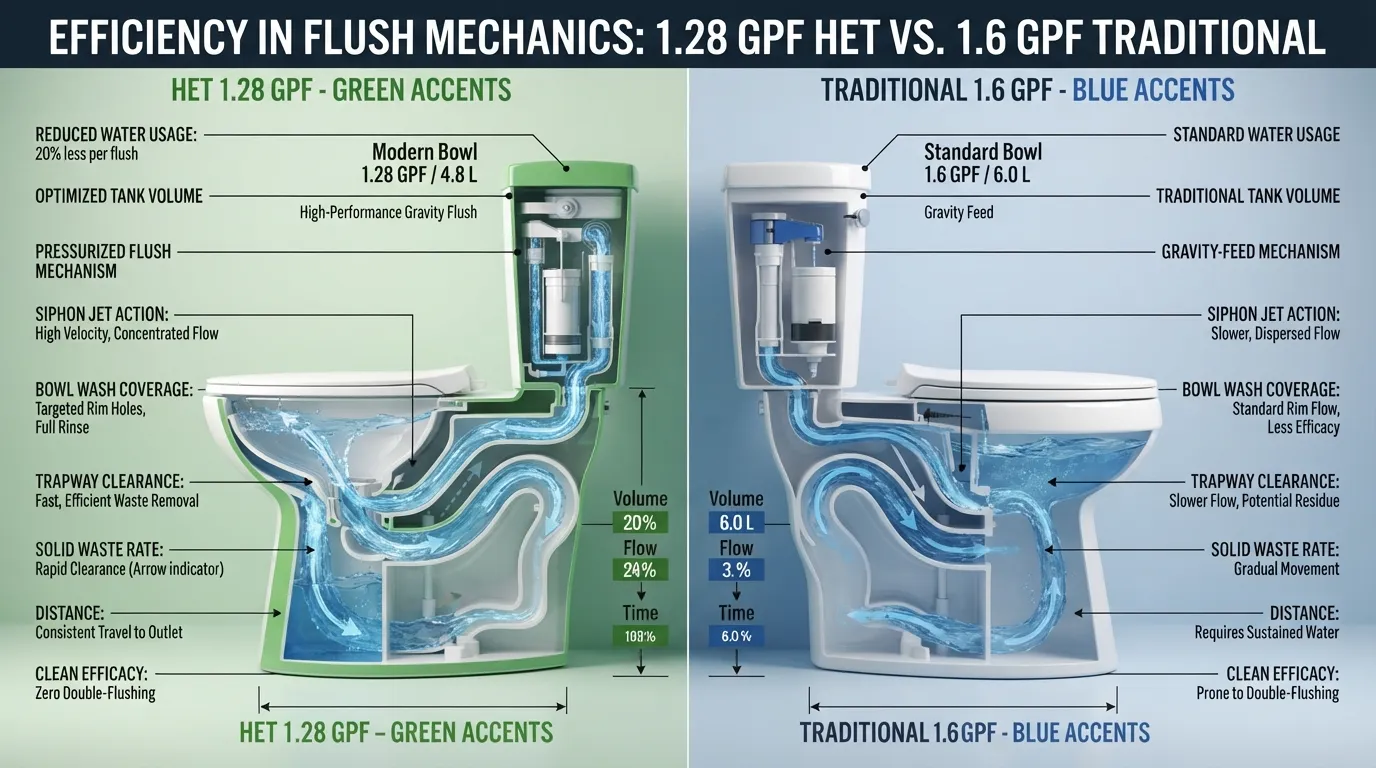
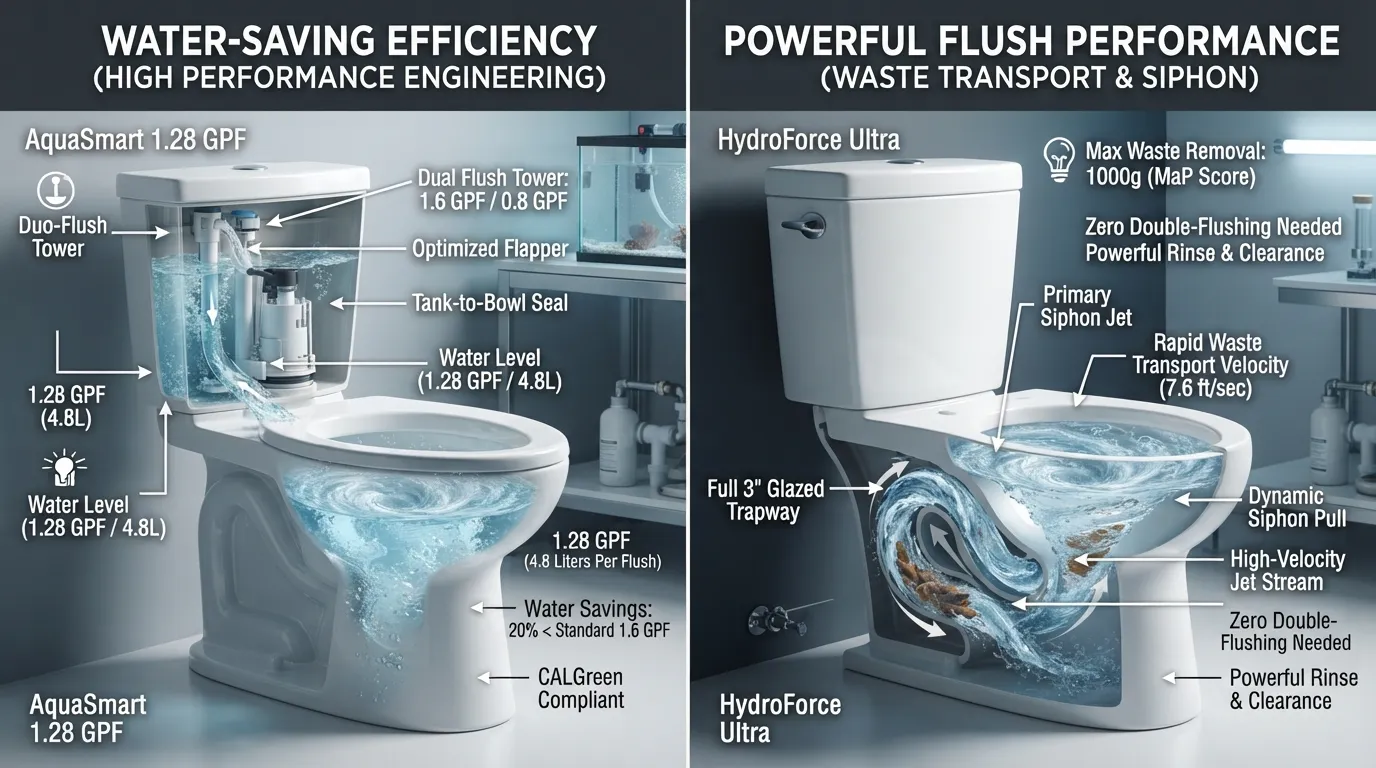
Modern toilet performance is defined by how effectively a fixture clears waste while minimizing gallons per flush (GPF), making water efficiency and hydraulic design critical factors when comparing one-piece and two-piece models.
Do Plumbers Recommend Dual Flush Toilets?
Yes, plumbers frequently recommend dual-flush toilets because they give users a choice between a lower-volume half-flush for liquid waste and a full-flush for solid waste, significantly reducing household water consumption over time.
- Water-efficient toilet savings: Dual-flush systems typically use around **1.0 to 1.1 GPF** for light flushes and **1.28 to 1.6 GPF** for heavy flushes, saving thousands of gallons annually.
- WaterSense certified standards: Plumbers look for EPA WaterSense certified models that guarantee high performance while consuming no more than 1.28 GPF on average.
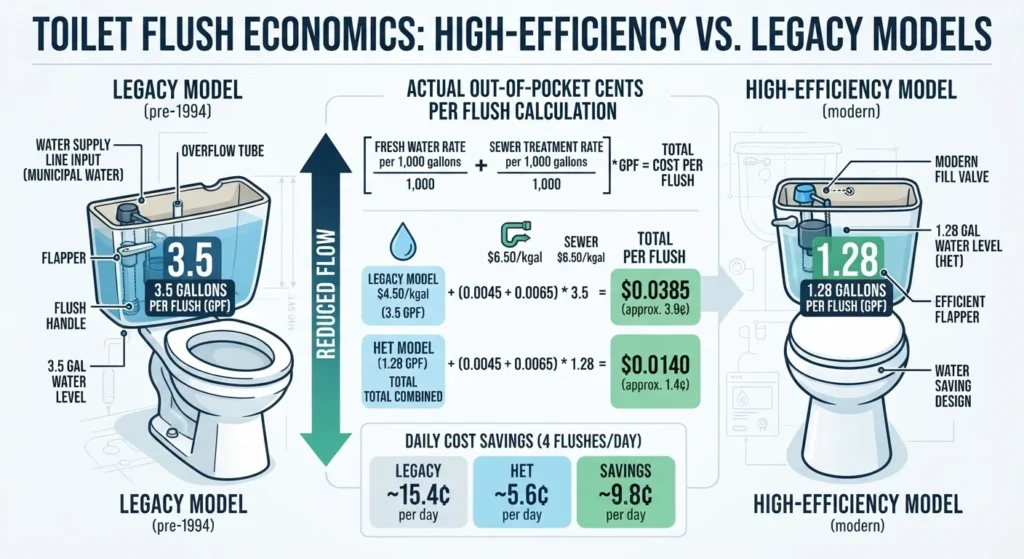
- Reduced utility bills: Implementing a dual-flush mechanism translates to immediate, measurable reductions in municipal water and sewage charges for residential households.
Flush Power: One Piece vs Two-Piece
Flush power depends primarily on the internal trapway design, siphon jet, and valve engineering rather than whether the toilet is a one-piece or two-piece structure, meaning both styles can deliver high-performance flushes.
- Gravity-fed vs pressure-assisted: Both one-piece and two-piece toilets are available in standard gravity configurations or high-pressure-assisted designs for maximum clearing force.
- Gravity dynamics: One-piece toilets occasionally feature a slightly lower water drop height from the tank to the bowl, though manufacturers compensate with wider, glazed trapways to maintain strong flush performance.
- Consistent GPF ratings: Modern engineering ensures that equivalent one-piece and two-piece models from top brands meet identical gallons per flush and solid-waste removal benchmarks.
Which One Should You Choose? Decision Guide
Selecting the right toilet comes down to balancing your immediate budget, your bathroom’s role in the house, and whether you plan to tackle the installation yourself or hire a licensed plumber.
Best Choice Based on Your Budget
A two-piece toilet is the clear budget-friendly option when you want a reliable, high-performing fixture without spending heavily on manufacturing or freight logistics.
- Budget-conscious buyers: Two-piece models cost significantly less upfront, leaving more room in your renovation budget for tiles, vanities, or fixtures.
- Long-term investment value: If you are outfitting multiple secondary bathrooms or rental properties, two-piece toilets minimize initial capital outlay.
- Premium aesthetic budget: Choose a one-piece toilet if your budget allows for a higher-end, architectural look where clean lines and seamless porcelain are a priority.
Best Choice for Master Bathroom vs Powder Room
The ideal toilet style shifts depending on whether the bathroom is a high-visibility master suite or a compact powder room used frequently by guests.
- Master bathroom pick: A one-piece toilet shines in a master bath where effortless cleaning and a sleek, modern silhouette elevate the daily spa-like atmosphere.
- Powder room pick: A two-piece or compact round-front unit works wonderfully in a powder room, providing dependable performance in tight spaces with easier part replacements.
- Visual cleanliness: Eliminating the tank-to-bowl crevice in a master bath reduces dust and grime accumulation in spaces that demand pristine upkeep.
Best Choice If You’re Installing It Yourself
A two-piece toilet is the best choice if you are planning a DIY installation and want to manage the heavy lifting and flange alignment completely on your own.
- DIY-friendly modular handling: Transporting a separate bowl and tank up stairs and positioning them individually prevents back strain and awkward maneuvering.
- Forgiving alignment process: Setting the bowl first allows you to level the base and secure the flange connection before dropping the tank into place.
- Professional installation recommended: Opt for a one-piece toilet if you have hired a pro or have an extra set of hands ready to guide the heavy single unit onto the wax ring.
Is a One Piece Toilet a Good Choice?
Yes, a one-piece toilet is an excellent choice if you value a streamlined aesthetic, lower long-term leak risks from gaskets, and easier surface cleaning around the base.
- Hygiene and maintenance winner: The absence of a rubber tank-to-bowl gasket means you will never deal with hidden grime or seal leaks between compartments.
- Sturdy, rock-solid build: Cast from a single piece of porcelain, it will never develop a loose or wobbly joint between the upper and lower sections.
- Weighing the trade-offs: Make sure you are comfortable with the higher upfront price tag and the requirement of extra help during delivery and installation.
Best One Piece and Two Piece Toilet Brands
When evaluating the best toilets 2026 has to offer, focusing on proven manufacturers ensures you invest in reliable flush technology, durable porcelain, and long-term part availability. The best toilet brands consistently deliver high performance across both their seamless and modular product lines.
Toto One Piece vs Two-Piece: Pros and Cons
Toto toilets are renowned globally for their advanced Tornado Flush systems and high-quality ceramic glaze. Choosing between a Toto one-piece and two-piece model involves weighing seamless aesthetic preferences against initial costs and installation requirements.
- Toto One-Piece Pros: Sleek, low-profile designs (like the Ultramax II) eliminate the tank gap completely, making them exceptionally easy to clean while minimizing leak risks.
- Toto One-Piece Cons: These premium seamless models command a higher price tag and are significantly heavier, often requiring a professional or two-person installation team.
- Toto Two-Piece Pros: Modular models (like the Toto Drake) offer the exact same powerful flushing technology at a much more budget-friendly price point, featuring lighter, DIY-friendly parts.
- Toto Two-Piece Cons: The traditional tank-to-bowl joint and exposed bolts require more diligent cleaning to prevent dust and bathroom grime buildup over time.
What Are People Saying About the WaterRidge One Piece Toilet?
The WaterRidge one-piece toilet has gained significant popularity as an affordable, all-in-one bathroom solution frequently sold at major warehouse retailers. Homeowners consistently praise its high-value inclusion of soft-close seats and dual-flush mechanisms right out of the box.
- Unbeatable value: Reviewers highlight that WaterRidge delivers a modern, seamless aesthetic at a fraction of the cost of premium luxury plumbing brands.
- All-inclusive kits: Unlike many competitors that sell parts separately, these packages typically include the wax ring, floor bolts, and seat, streamlining the purchasing process.
- Common critiques: Some users note that proprietary replacement parts, such as specific fill valves or dual-flush buttons, can occasionally be harder to source locally than universal components.
Who Makes the Best One Piece Toilets?
While Toto frequently tops expert lists for the best toilets 2026 features, other industry giants like Kohler and American Standard manufacture highly competitive one-piece models. The right choice depends on whether you prioritize innovative flush power, architectural design, or maximum water efficiency.
- Toto: Leads the premium market with proprietary features like CEFIONTECT glaze and ultra-efficient flushing, making their one-piece units incredibly hygienic and durable.
- Kohler: Renowned for bold, contemporary architectural designs and powerful AquaPiston technology, offering excellent seamless options for design-focused bathroom renovations.
- American Standard: Delivers exceptional durability combined with their EverClean surface, providing reliable, clog-resistant one-piece fixtures that excel in busy residential households.
Real World Experience and Practical Insights

First-hand testing and long-term homeowner feedback reveal truths that glossy product catalogs often leave out. Examining how these fixtures perform years after installation highlights practical realities beyond initial aesthetics and marketing claims.
What Homeowners Say After Using Both Types
Long-term reviews from real user experience discussions indicate that while people initially fall in love with the sleek look of a one-piece toilet, owners of two-piece models frequently appreciate the flexibility when small repairs pop up.
- The cleaning satisfaction factor: Homeowners with one-piece toilets consistently note how much time they save during weekly cleanings because there is no awkward gap behind the bowl to trap dust and hair.
- Regret over accidental chips or cracks: A common cautionary note in homeowner reviews involves dropping a heavy perfume bottle or tank lid on a seamless fixture, resulting in a full-unit replacement rather than a simple part swap.
- Appreciation for modular simplicity: People who stick with two-piece toilets often mention that being able to swap out a corroded bolt or a leaking gasket for a few dollars keeps them loyal to traditional designs.
Common Mistakes People Make When Choosing a Toilet
First-time renovators frequently overlook critical spatial and logistical details during the purchase phase, leading to frustrating returns, delayed projects, or awkward bathroom layouts.
- Ignoring rough-in measurements: Buying a toilet without measuring the distance from the finished wall to the center of the floor flange leads to mismatched rough-ins—most commonly failing to account for a 10-inch or 14-inch pipe setup instead of a standard 12-inch.
- Overlooking weight and doorway clearances: Underestimating how heavy a one-piece toilet is can leave DIYers stranded trying to muscle a bulky box up narrow staircases or through tight powder room entries without a second pair of hands.
- Chasing aesthetics over bowl shape: Selecting a large elongated bowl for a tiny half-bath just for the look can dangerously restrict knee clearance against the opposite vanity or door swing.
Frequently Asked Questions
Find direct, expert answers to the most common questions homeowners ask when deciding between one-piece and two-piece toilets for their bathroom renovation.
Is a 1 Piece Toilet Better Than a 2-Piece?
A one-piece toilet is generally considered better for modern aesthetics and easier cleaning because its seamless unit design eliminates the tank-to-bowl crevice. However, a two-piece toilet is often considered better for budget-friendly projects, easier transportation, and simpler individual part replacements.
- Best for hygiene: One-piece models prevent dust and grime buildup in hard-to-reach joint gaps.
- Best for budget: Two-piece models offer significant upfront cost savings without compromising flush performance.
What Are the Disadvantages of a One Piece Toilet?
The primary disadvantages of a one-piece toilet include a higher upfront price point, a heavier porcelain body that requires extra lifting effort, and the requirement to replace the entire fixture if the porcelain cracks.
- Higher cost: Complex single-mold manufacturing drives up retail prices.
- Heavy lifting: Strenuous weight typically demands a two-person installation team.
Is There an Advantage to Having a One Piece Toilet?
Yes, the main advantages of having a one-piece toilet are superior cleaning ease, a sleek low-profile aesthetic, and zero risk of leaks from degraded tank-to-bowl gaskets or loose mounting bolts.
- No leak points: Fused construction removes the gasket vulnerability found in modular designs.
- Streamlined look: Creates an uninterrupted, modern visual flow ideal for contemporary master bathrooms.
Are There Any Disadvantages to a One Piece Toilet?
Yes, disadvantages include a heavier overall weight that complicates DIY transport, a more expensive initial purchase price, and vulnerability to total unit replacement if a fracture occurs.
- Fragility replacement risk: A single crack anywhere on the body means replacing the whole unit.
- Installation challenges: Maneuvering a dense, heavy box in tight powder rooms requires professional care.
What Is the Average Cost of Replacing a Two Piece Toilet?
The average cost of replacing a two-piece toilet ranges from $200 to $500, which includes the price of a standard toilet kit ($150 to $300) plus professional plumber labor ($150 to $250) if you choose not to DIY.
- Hardware and parts: Includes the bowl, tank, wax ring, floor bolts, and supply line.
- Labor variance: Costs increase if the floor flange requires repair or sub-floor reinforcement.
Final Verdict Conclusion
Deciding which is better, a one-piece or a two-piece toilet, depends on whether you value seamless modern hygiene and zero-leak reliability or upfront affordability and modular repair convenience.
Our Final Recommendation
As a final verdict, go with a one-piece toilet if you are designing a high-end master bath where easy cleaning, a low-profile aesthetic, and the elimination of tank-to-bowl gaskets are top priorities. Opt for a two-piece toilet if you want the best overall choice for a tight budget, an easy solo DIY installation, or replacement flexibility for rental properties and secondary baths.
- Choose a one-piece toilet if: You prioritize a sleek, modern look, hate scrubbing hard-to-reach crevices, and are comfortable investing more upfront for a solid-mold fixture.
- Choose a two-piece toilet if: You need a cost-effective, reliable workhorse that is lightweight to transport up stairs and simple to service part-by-part over time.
- The baseline takeaway: Both styles deliver identical flush power and water efficiency when purchased from reputable manufacturers, making your decision purely a matter of budget, installation style, and aesthetic taste.

Oscar Vance | Master Plumber & Drainage Expert
Meet Oscar Vance, a licensed master plumber sharing practical solutions on residential repairs, preventive maintenance, and thoughtful home upkeep.
Pingback: Can I Replace a Toilet Myself? DIY Guide & Time
Pingback: What Is a Fair Price for Replacing a Toilet? 2026 Cost
Pingback: What Toilet Is Better, Kohler or American Standard?
Pingback: What is the difference between a cheap toilet and an expensive toilet?