Dishwasher High Loop vs Air Gap Which One Do You Need?
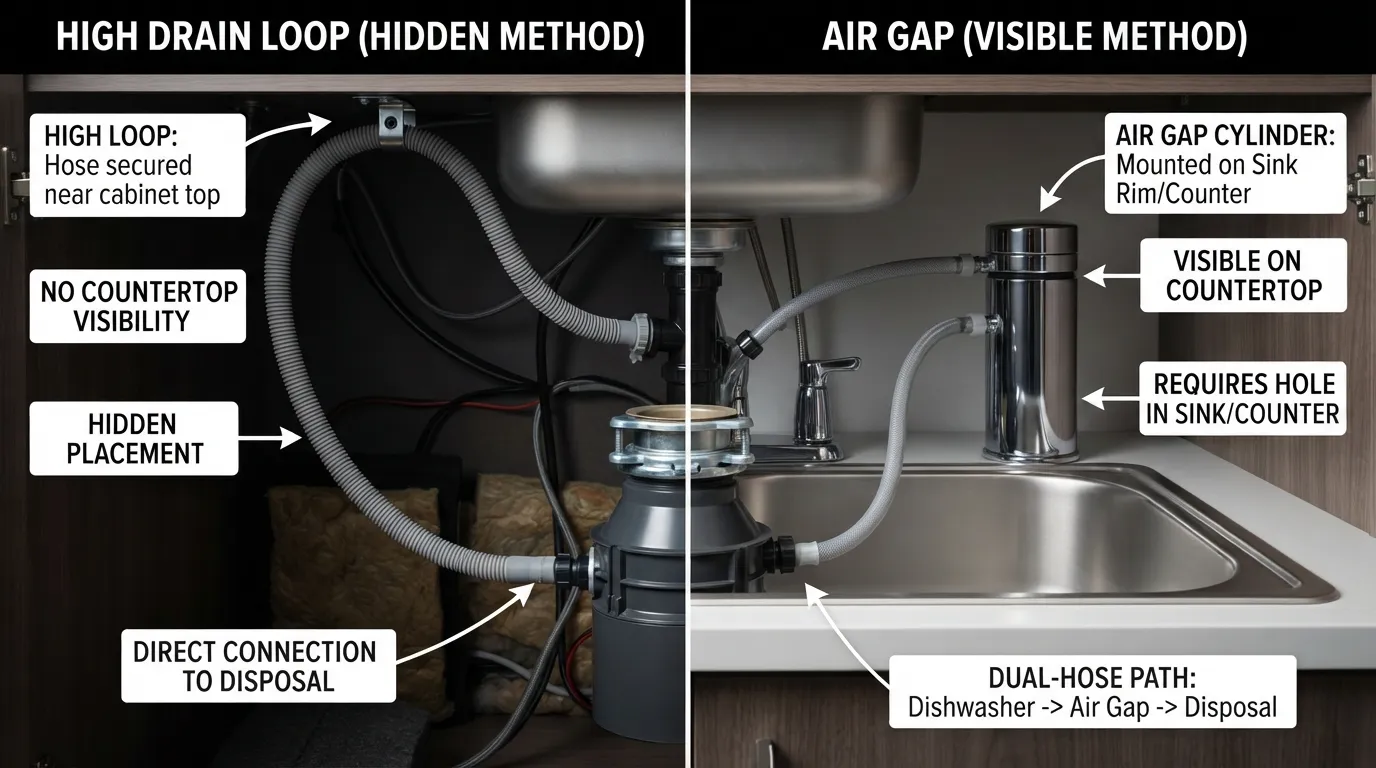
Choosing between a dishwasher high loop and an air gap comes down to local plumbing code requirements, installation complexity, and countertop aesthetics. While both methods effectively prevent contaminated wastewater from siphoning back into your dishwasher, they achieve this through entirely different mechanical designs and space configurations.
What Is a High Loop?
A high loop is an effective, hidden backflow prevention method created by securing the dishwasher’s drain hose as high as possible beneath the countertop. By routing the hose near the underside of the sink basin before it connects to the tailpiece or garbage disposal, gravity prevents dirty sink water from flowing back into the appliance.
How a High Loop Works Mechanism Explanation
The high loop leverages basic gravity to maintain a reliable barrier against contaminated wastewater. When the sink fills up or the garbage disposal backs up, the water cannot climb past the elevated peak of the drain hose secured under the cabinet.
- The flexible drain hose ascends from the dishwasher base to the highest point under the countertop.
- Gravity ensures that any standing water in the sink or drain pipe stays below the apex of the loop.
- Water flows exclusively in one direction—out of the dishwasher and down into the municipal drainage system.
Correct High Loop Height 20 32 Inches Rule
Precision during installation ensures your drainage configuration performs up to required standards. The apex of the drain hose must be securely fastened between 20 and 32 inches above the floor.
- Use a reliable tape measure to verify that the top of the loop reaches at least 20 inches from the floor, ideally level with the countertop underside.
- Secure the hose firmly using a heavy-duty zip-tie and a mounting bracket attached directly to the cabinet sidewall or sink basin.
- Avoid letting the loop sag over time, as a lowered hose compromises the gravity barrier and invites back-siphoning.
Pros of a High Loop
Homeowners and professional plumbers frequently favor high loops due to their simplicity and seamless integration. They offer distinct advantages over visible deck-mounted equipment.
- Completely hidden from view inside the under-sink cabinet, preserving a minimalist kitchen aesthetic.
- Cost-effective installation requiring no extra hardware purchases beyond basic mounting brackets and zip-ties.
- Zero maintenance overhead since there are no mechanical moving parts or air vents prone to mineral clogs.
Cons of a High Loop Not 100% Fail-Safe Pressure Drop Risk
While widely adopted, high loops have limitations under specific plumbing failure scenarios. They rely entirely on geometry rather than a physical air break.
- Under extreme main sewer blockages or severe pressure drops, backed-up water can potentially overcome the hose height.
- Certain regional municipal codes governed by strict IRC guidelines may not accept a high loop as a standalone backflow device.
- Improper installation or a slipping zip-tie can quietly invalidate the loop height without immediate homeowner notice.
Common High Loop Installation Mistakes
Avoiding frequent setup errors ensures long-term operational safety and prevents accidental wastewater contamination. Proper technique guarantees compliance and efficiency.
- Securing the loop too low: Fastening the hose below the 20-inch threshold fails to create an effective gravity barrier.
- Using weak fasteners: Relying on adhesive tape instead of a rigid zip-tie bracket allows the hose to slip down over time.
- Kinking the hose: Bending the corrugated drain line too tightly restricts water flow and causes pooling inside the dishwasher tub.
What Is a Dishwasher Air Gap?
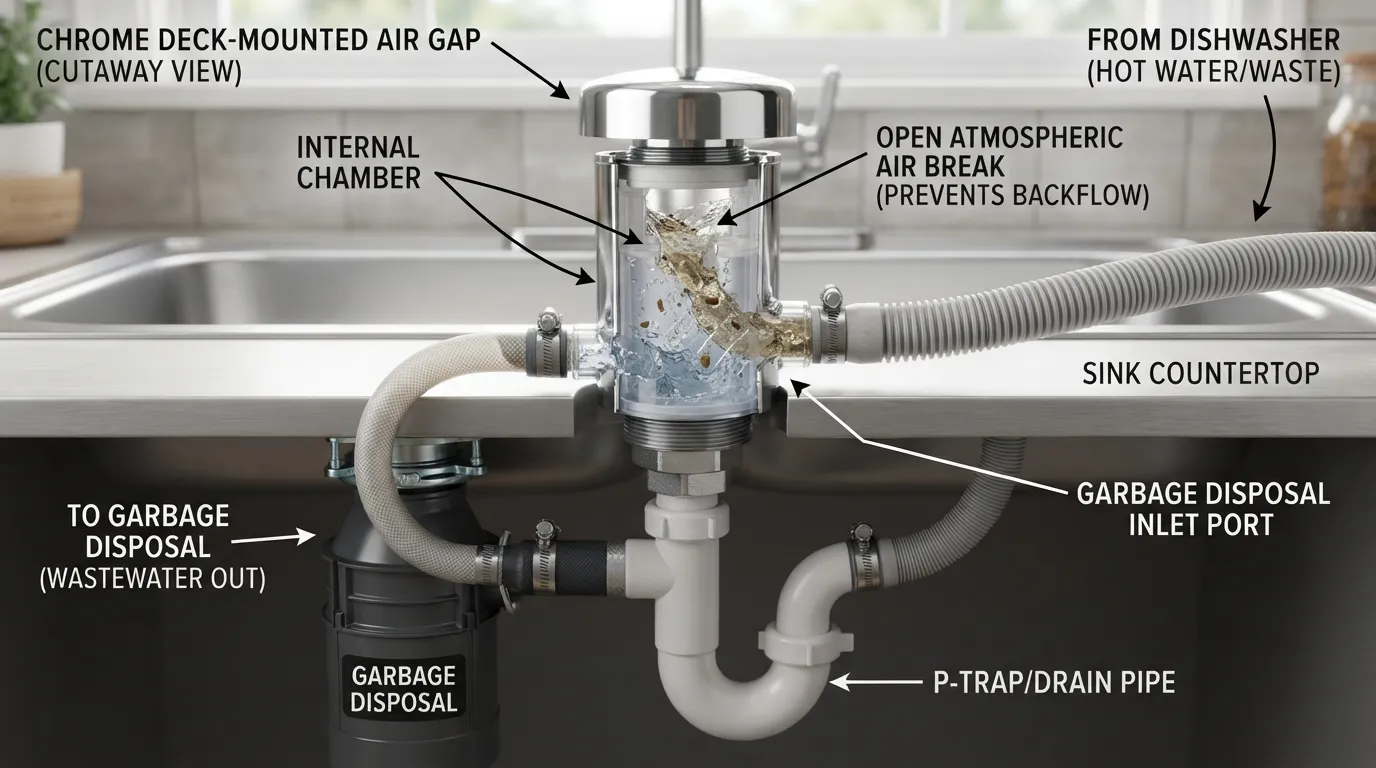
A dishwasher air gap is a physical, cylinder-shaped device mounted directly on the kitchen sink deck or countertop. It serves as a mandatory safety barrier required by many municipal plumbing codes to completely eliminate the risk of contaminated wastewater siphoning back into your clean dishwasher tub.
How an Air Gap Works Atmospheric Break Explanation
The air gap creates a true atmospheric break between the dishwasher drain hose and your household plumbing line. Wastewater pumped out of the appliance travels upward through the first hose and enters the air gap cylinder, where it drops through open air before exiting down a second hose into the garbage disposal side-port or sink tailpiece.
- Water is forced up from the dishwasher and sprays inside the internal chamber of the brass or plastic fitting.
- Because there is a literal physical gap of air between the inlet and outlet ports, dirty water can never be sucked backward, even during a total main sewer backup.
- Gravity takes over as the water falls past the open air break and drains smoothly into the sink basin disposal side-port.
Pros of an Air Gap 100% Foolproof Backflow Prevention
Air gaps provide maximum protection and are heavily favored by regulatory boards for absolute safety compliance. Their design ensures total isolation from contaminated sink waste.
- Delivers 100% foolproof backflow prevention backed by official UPC code requirements in many regions.
- Eliminates any possibility of cross-contamination between sink wastewater and your dishwashing cycle.
- Provides immediate visual confirmation that your dishwasher is actively and correctly draining water.
Cons of an Air Gap Visible Hole Clogging Gurgling Spitting Issues
Despite their superior safety ratings, air gaps introduce certain aesthetic drawbacks and regular maintenance frustrations for homeowners.
- Requires an extra hole drilled directly into your kitchen sink basin or granite/quartz countertop.
- Prone to trapping food debris, grease, and soap scum, leading to frequent clogging, gurgling, and spitting noises.
- Visible chrome, nickel, or plastic cylinders can clutter a clean, minimalist kitchen design layout.
Common Air Gap Problems and Fixes What Causes an Air Gap to Overflow
When an air gap overflows onto the countertop during a wash cycle, it usually signals a blockage or restriction further down the drainage path. Quick troubleshooting resolves the issue without professional plumbing intervention.
-
- Disposal Inlet Plug Left Intact: If a new garbage disposal was installed recently, the knockout plug inside the side-port often remains sealed, blocking all drainage.
- Hose Clogs and Sludge Buildup: Grease, food particles, and mineral deposits frequently build up inside the narrow discharge hose leading to the disposal.
- Remove the decorative metal or plastic cap from the air gap cylinder.
- Unscrew or unclip the inner plastic cap and check for trapped debris or slimy biofilm buildup.
- Run a flexible bottle brush or compressed air through the hoses to clear any hidden obstructions.
- Kinked or Sagging Drainage Hoses: A pinched or improperly sloped discharge hose under the sink will slow water velocity, causing the air gap chamber to back up and overflow onto the counter.
High Loop vs Air Gap: Full Comparison
Evaluating the differences between a high loop and an air gap side-by-side helps you determine which drainage configuration matches your functional needs, budget, and design preferences. Review the critical performance metrics below to make an informed decision for your kitchen setup.
Cost Comparison
Budget considerations often drive the final choice between these two backflow solutions, especially during a kitchen remodel or DIY sink replacement.
- High Loop Financials: Extremely cost-effective since it requires no specialized hardware purchases. A standard mounting bracket and zip-tie cost less than $5 total.
- Air Gap Financials: Requires purchasing the physical assembly unit ($15–$40) and potentially investing in specialized drill bits if a new hole must be punched through granite or quartz.
Appearance & Aesthetics Comparison
Visual presentation matters significantly for modern minimalist kitchens where clutter-free countertops are a primary design priority.
- High Loop Aesthetics: Completely hidden from sight beneath the sink cabinet, keeping your countertop lines sleek and unobstructed.
- Air Gap Aesthetics: Features a visible fixture mounted next to your kitchen faucet, which must match your chosen finish (matte black, brushed nickel, or chrome).
Reliability & Safety Comparison
Understanding how each system protects your home against wastewater contamination ensures long-term peace of mind.
- High Loop Reliability: Depends entirely on correct elevation and hose integrity. It functions well under normal conditions but can fail if a severe sewer backup overwhelms the system.
- Air Gap Reliability: Offers absolute protection by breaking the continuous water column, making it fully compliant with strict plumbing codes like the UPC.
Ease of Installation Comparison
Evaluating installation complexity helps determine whether you can tackle the project yourself or if professional assistance is required.
- High Loop DIY: Straightforward process that takes minutes. You simply lift and secure the existing drain hose to the cabinet wall.
- Air Gap DIY: Involves routing two separate hoses—one from the dishwasher to the air gap, and another from the air gap to the disposal—along with securing the deck-mounted cylinder.
Do You Need a Dishwasher Air Gap? State & Code Requirements
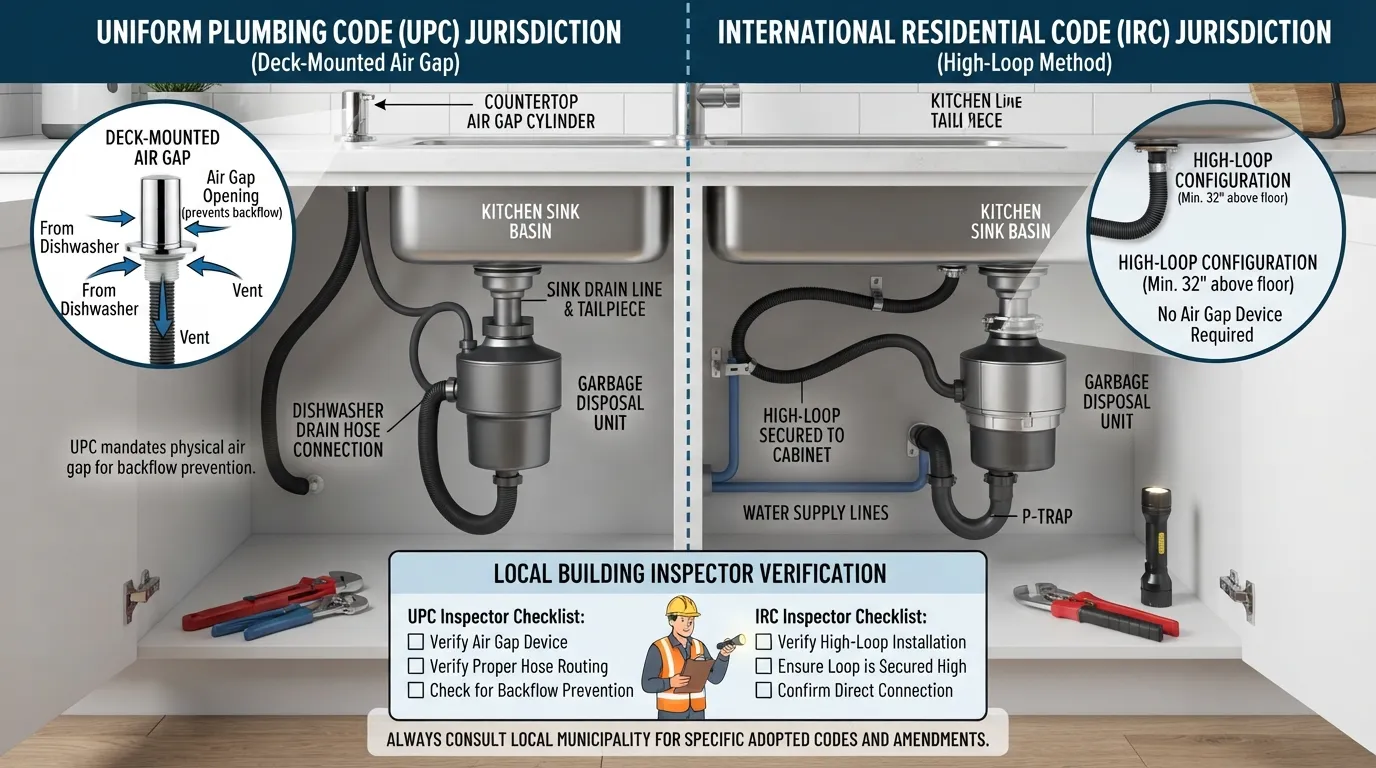
Determining whether your kitchen requires a physical dishwasher air gap or permits a high loop depends entirely on your local municipal plumbing code and regional governance standards. Because building requirements vary significantly by state and city, verifying your local regulations before installation prevents code violations and failed inspections.
States Jurisdictions That Require Air Gaps UPC-Governed Areas
Regions that strictly enforce the Uniform Plumbing Code (UPC) mandate a physical air gap for all residential dishwasher installations to eliminate any possibility of wastewater cross-contamination.
- States such as California and Texas, along with numerous municipalities nationwide, legally require a deck-mounted air gap during new construction or major kitchen renovations.
- Local health and safety boards favor the UPC standard because the atmospheric break offers 100% foolproof protection against severe municipal sewer backups.
- If your property falls under strict UPC jurisdiction, failing to install an approved air gap can result in failed building permits and complications during home sales.
Areas Where High Loop Is Accepted IRC-Governed Areas
Many suburban and rural jurisdictions operate under the International Residential Code (IRC), which recognizes an elevated drain hose as an acceptable method for backflow prevention.
- Under IRC guidelines, a properly secured high loop reaching between 20 and 32 inches satisfies standard residential plumbing protection requirements.
- Inspectors in these regions acknowledge that gravity provides sufficient resistance against normal drainage back-siphoning without requiring a countertop fixture.
- Homeowners in these areas enjoy greater flexibility, allowing them to maintain minimalist countertops without sacrificing basic drainage safety.
How to Check Your Local Plumbing Code
Because plumbing codes can change at the county or city level, verifying your local requirements requires direct outreach to municipal resources. You can easily confirm your regional mandates by following a few practical steps.
- Contact your local city or county building department office and ask specifically whether residential codes enforce the UPC or IRC standard for dishwashers.
- Review guidelines provided by official resources such as the International Association of Plumbing and Mechanical Officials to understand baseline regional compliance requirements.
- Consult a licensed local plumber who routinely pulls permits in your specific neighborhood and is familiar with local inspector expectations.
Is a High Loop Necessary If You Have an Air Gap?
Installing both an air gap and a high loop together is redundant and generally unnecessary for standard kitchen layouts. Once wastewater clears the physical air gap cylinder, the drainage path is already fully protected from backflow. However, maintaining a gentle upward slope or secondary loop toward the disposal connection helps prevent sluggish drainage and eliminates unpleasant gurgling sounds.
Does Your Dishwasher Brand Need an Air Gap? Bosch Whirlpool LG Samsung
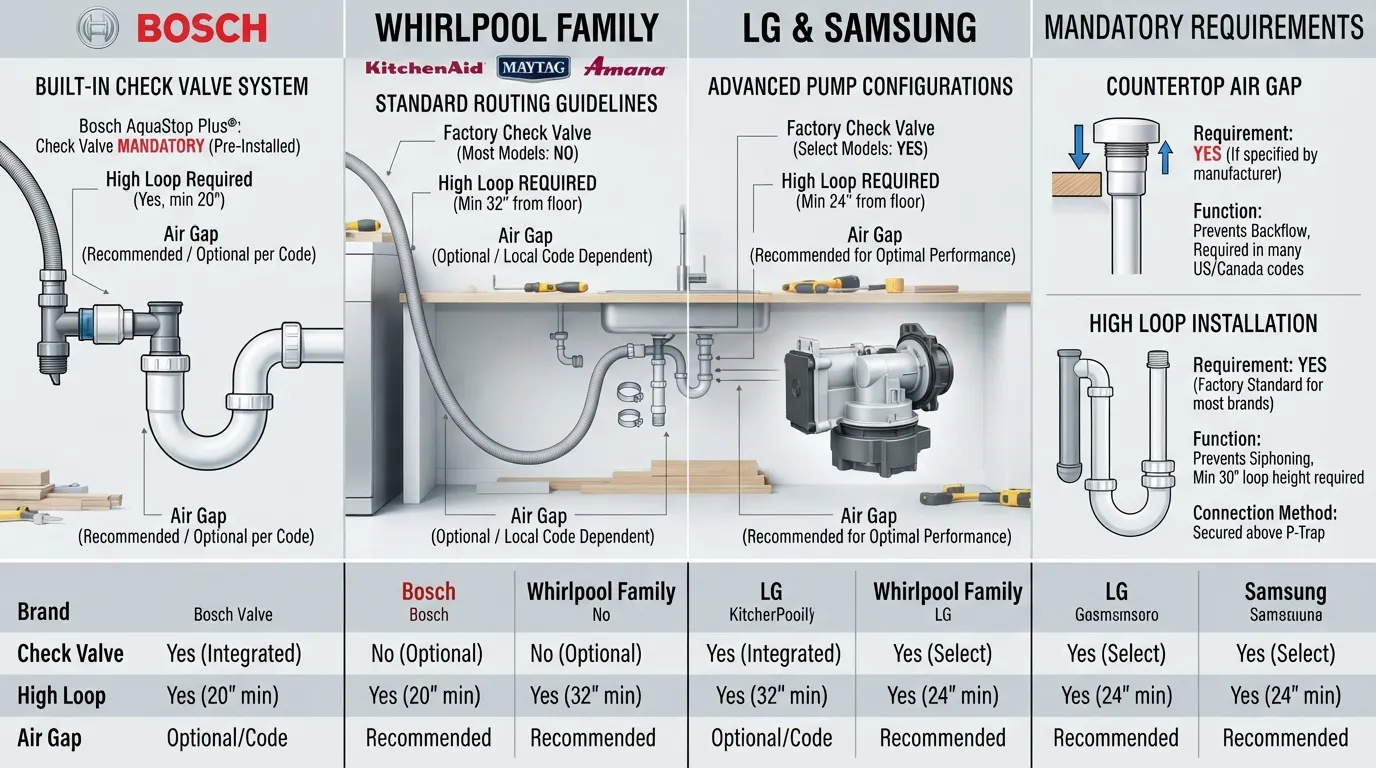
Major dishwasher manufacturers design their internal drainage systems differently, creating unique backflow requirements for brands like Bosch, Whirlpool, LG, and Samsung. Understanding your specific appliance’s engineering helps you determine whether a high loop is completely sufficient or if an external air gap is mandatory.
Bosch Dishwashers Built-In Check Valve Explained
Bosch dishwashers are engineered with sophisticated internal check valves and drain loops that frequently eliminate the need for a countertop air gap. German engineering standards prioritize integrated backflow prevention right at the pump assembly.
- Bosch units feature a built-in one-way check valve that prevents discharged wastewater from re-entering the sump during normal drainage cycles.
- Most Bosch installation manuals explicitly allow for a high-loop drain configuration secured beneath the countertop as standard practice.
- An external air gap is only required if your local municipal building code strictly mandates UPC deck-mounted compliance regardless of appliance design.
Whirlpool Dishwashers Air Gap Requirement
Whirlpool appliances generally adhere to standard North American plumbing practices, making them compatible with both high loops and physical air gap assemblies.
- Whirlpool models do not rely solely on internal check valves, meaning proper external drainage routing is critical to prevent water pooling.
- The manufacturer installation guide provides instructions for connecting the drain hose directly to a high loop or an under-sink air gap cylinder.
- Checking local municipal codes dictates whether you must drill a countertop hole or if a high loop satisfies local Whirlpool warranty and inspection rules.
LG & Samsung Dishwashers Check Valve Design
Modern smart dishwashers from LG and Samsung incorporate high-efficiency drain pumps paired with simple internal check valves to manage wastewater flow.
- LG and Samsung drainage systems use flexible tubing that easily accommodates a 20-to-32-inch high loop under the kitchen sink.
- While these brands feature internal flaps to stop immediate backflow, they still recommend a high loop installation to safeguard against disposal clogs.
- Countertop air gaps are only implemented on LG or Samsung setups when mandated by regional inspectors or strict state housing codes.
How to Check If Your Dishwasher Has a Built-In Check Valve
Verifying your exact appliance specifications prevents unnecessary countertop drilling and ensures compliance with factory guidelines. You can easily confirm your model’s drainage design through a few reliable steps.
- Locate your dishwasher’s physical owner’s manual or search the manufacturer’s official support database using your specific model number.
- Navigate directly to the “Installation Instructions” or “Drainage Requirements” section to see if a high loop is approved by the factory.
- Inspect the drain hose connection area at the rear base of the dishwasher to look for integrated backflow prevention valves or specialized pump housings.
Alternatives to a Dishwasher Air Gap
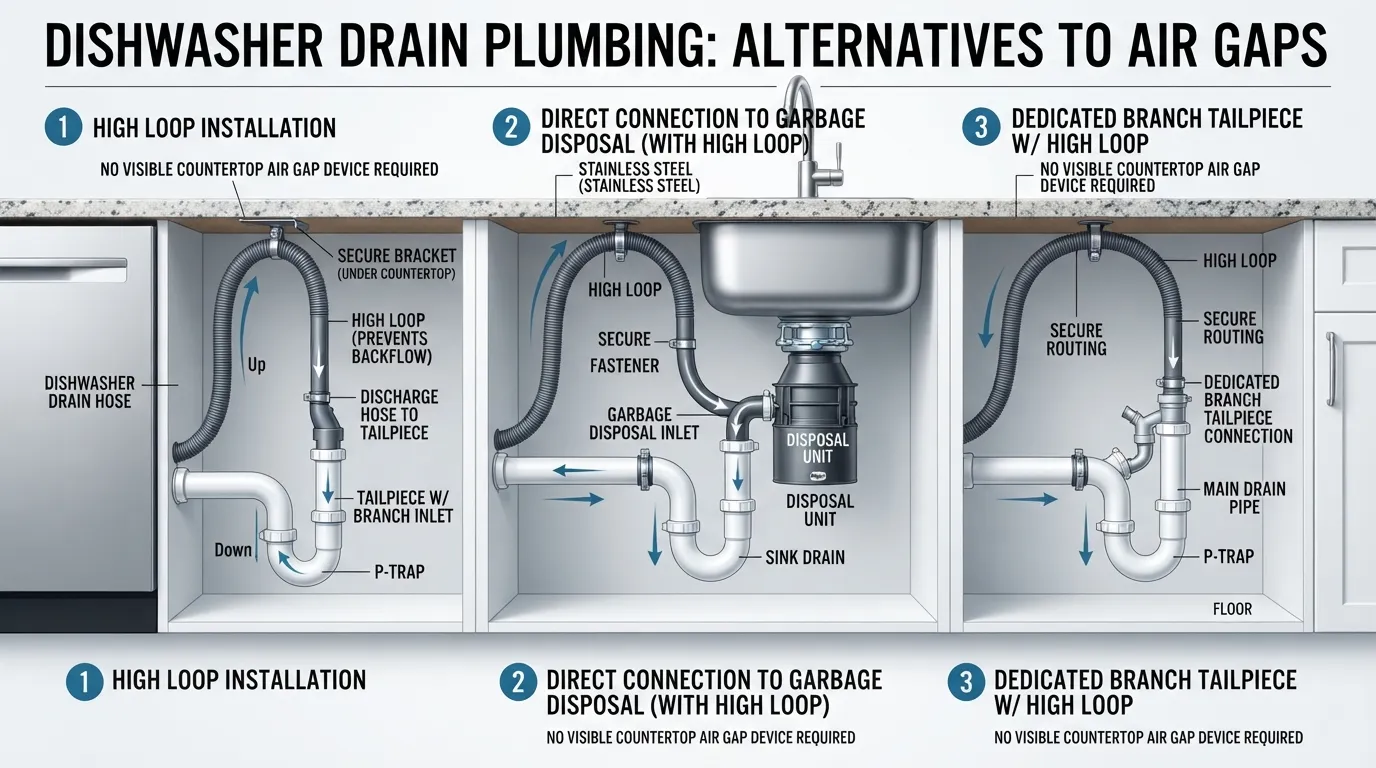
If you want to avoid drilling an unsightly hole in your countertop or dealing with the clogging and gurgling noises of a traditional cylinder, several effective alternatives exist. Homeowners can choose from engineered drainage methods, integrated appliance features, or aesthetic fixture combinations that satisfy backflow prevention needs.
High Loop as an Alternative
The high loop serves as the most popular and cost-effective alternative to a mechanical deck-mounted air gap. By elevating the drain hose near the top of the cabinet interior, gravity creates a reliable physical barrier against wastewater siphoning back into your machine.
- Requires zero special hardware purchases beyond a standard mounting bracket and heavy-duty zip-tie.
- Keeps all drainage components completely hidden beneath the sink, maintaining a clean countertop aesthetic.
- Complies with many regional building codes where the International Residential Code (IRC) is adopted.
Air Gap Faucet Soap Dispenser Style Alternatives
For kitchens operating under strict municipal codes that mandate a physical air gap but prioritize design, dual-function fixtures provide a stylish compromise. Manufacturers now offer integrated hardware solutions that combine functionality with modern styling.
- Combined Faucets: Special kitchen faucets feature a built-in air gap passage directly within the faucet body, eliminating the need for a standalone cylinder on the sink deck.
- Decorative Caps: Designer air gap caps match high-end finishes like matte black, brushed brass, or satin nickel to blend seamlessly with your main kitchen hardware.
- Soap Dispenser Hybrids: Some modern configurations integrate the drainage path near alternative countertop accessories to minimize visual clutter.
Check Valve Alternative Built-In Manufacturer Solution
Many modern dishwashers incorporate built-in mechanical solutions directly within their pump architecture to prevent wastewater from returning. While rarely accepted as a standalone code replacement in strict UPC regions, they act as an internal secondary safeguard.
- Factory-installed one-way check valves automatically close when the drain pump stops operating, trapping wastewater safely in the hose line.
- Brands like Bosch rely heavily on internal engineering to manage drainage efficiency without demanding complex external venting hardware.
- Reviewing your specific model’s owner’s manual helps clarify whether your manufacturer supports utilizing internal check valves alongside a standard high loop.
How to Convert an Air Gap to a High Loop Step by Step
Removing an obsolete or clogging countertop air gap and converting to a hidden high loop creates a sleek, low-maintenance drainage configuration. Before beginning the conversion process, verify that local building regulations in your municipality permit high-loop installations.
Tools You’ll Need
Gathering the right supplies beforehand ensures a quick, leak-free DIY project under your kitchen sink.
- Adjustable wrench or channel-lock pliers for loosening hose clamps.
- Heavy-duty mounting bracket and secure zip-ties to anchor the drain hose.
- Bucket and old towels to catch residual standing water trapped inside the lines.
- Sink hole cover cap (if you prefer to plug the empty deck opening rather than install a soap dispenser).
Step by Step Conversion Process
Executing each step carefully guarantees proper water flow and prevents messy leaks under your kitchen sink.
- Disconnect the power to your dishwasher and garbage disposal to ensure safe working conditions.
- Unscrew the clamp nuts connecting the two hoses to the under-sink air gap cylinder, and place a bucket underneath to catch trapped water.
- Remove the old air gap body from the countertop and plug the exposed sink hole with a matching decorative deck cover or soap dispenser.
- Route the long dishwasher drain hose up to the highest point under the countertop (between 20 and 32 inches high).
- Secure the hose tightly against the cabinet sidewall or sink basin using a mounting bracket and heavy-duty zip-tie.
- Connect the end of the drain hose directly to the garbage disposal side-port or tailpiece inlet, ensuring a secure clamp connection.
Is Converting Legal in Your Area?
Because backflow prevention requirements depend heavily on regional plumbing codes, converting from an air gap to a high loop must be checked against local standards.
- If your municipality strictly enforces the Uniform Plumbing Code (UPC), removing a required mechanical air gap may result in a code violation.
- Regions operating under the International Residential Code (IRC) typically permit high loops as fully compliant drainage alternatives.
- Always cross-reference your local building department guidelines before permanently removing a countertop air gap device.
Should You Hire a Plumber or DIY This?
Weighing the complexity and potential risks of the conversion helps you decide whether to tackle the project yourself or call a professional.
- DIY Approach: Highly manageable for handy homeowners who feel comfortable working with under-sink plumbing connections, saving typical plumber service fees.
- Professional Plumbing Route: Recommended if you live in a strict UPC zone, require professional plugging of countertop stone holes, or encounter seized, corroded brass fittings.
What Happens If You Skip Either One? Risks Explained
Skipping proper drainage protection—whether neglecting to install a high loop or removing a mandated air gap—introduces serious operational and legal hazards. Understanding these risks highlights why proper backflow prevention is essential for maintaining a sanitary, fully functioning kitchen environment.
Risks of No High Loop Back Siphoning, Dirty Water in Dishwasher
Failing to elevate the dishwasher drain hose under the countertop removes the essential gravity barrier that stops wastewater migration.
- Dirty sink water and food debris from your garbage disposal can easily flow backward into the dishwasher basin during heavy use.
- Standing wastewater left sitting in the bottom of the tub breeds foul-tiring bacteria, mold, and unpleasant kitchen odors.
- Dishes left inside the machine can become contaminated with graywater, posing potential health risks to your household.
Risks of No Air Gap Where Legally Required Code Violation, Failed Inspection
Omitting a physical air gap in jurisdictions that enforce strict plumbing codes creates immediate regulatory and administrative consequences.
- Property owners face formal code violations that can halt building permits or delay ongoing kitchen remodeling projects.
- Installations lacking required deck-mounted devices automatically fail municipal plumbing and health inspections.
- Fixing a non-compliant drainage setup often requires retrofitting the countertop later at an inconvenient, added expense.
Real-World Consequences Failed Home Inspection Insurance Resale Issues
Plumbing non-compliance extends beyond daily convenience, frequently impacting property transactions and homeowner liabilities.
- Home inspectors routinely flag improper dishwasher drainage configurations, requiring costly repairs before a real estate transaction can close.
- Prospective home buyers may request escrow credits or walk away from sales due to unpermitted plumbing modifications.
- Certain property insurance policies may dispute water damage claims if flooding or backup issues trace back to unapproved, non-compliant DIY plumbing setups.
Garbage Disposal Connection Guide
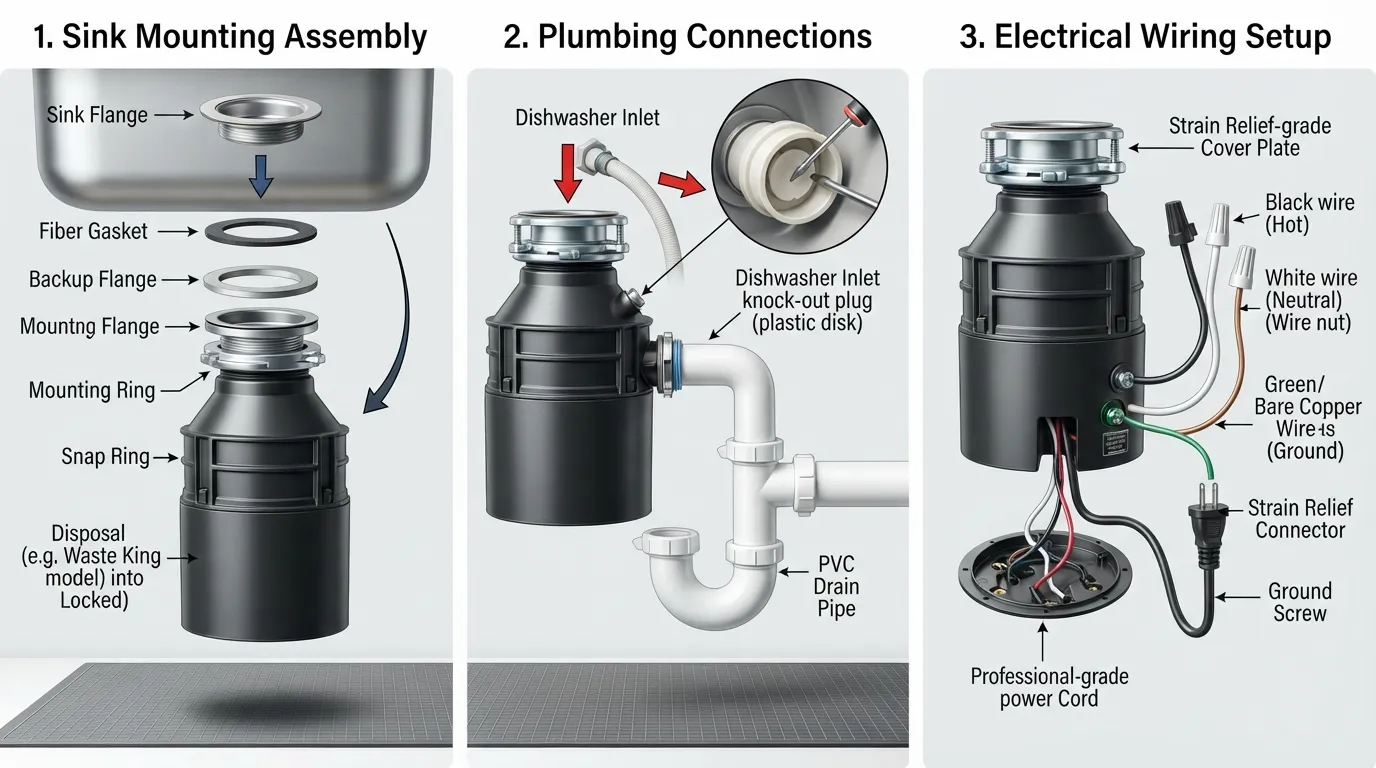
Connecting your dishwasher drain line to a garbage disposal requires precise execution, whether you use a high loop or an air gap system. Understanding how these two components interact prevents common drainage clogs and ensures your appliance evacuates wastewater efficiently.
Do You Need an Air Gap If You Have a Garbage Disposal?
Having a garbage disposal does not eliminate the need for backflow prevention; rather, it changes where and how the wastewater routing is protected.
- A garbage disposal acts as a mechanical waste grinder but provides zero backflow prevention on its own.
- If your local municipal code mandates the Uniform Plumbing Code (UPC), you must still install a physical air gap between the dishwasher and the disposal side-port.
- If your region follows the International Residential Code (IRC), routing your dishwasher drain hose into a high loop before connecting it to the disposal side-port fulfills code requirements.
How to Connect the Dishwasher Hose to the Disposal
Securing the hose correctly to the disposal inlet ensures a watertight seal and prevents messy leaks under your kitchen sink.
- Inspect the side-port inlet of your garbage disposal to ensure the internal plastic knockout plug has been completely removed if the disposal is brand new.
- Slide a metal hose clamp over the end of the dishwasher drain hose or the air gap discharge line.
- Push the hose firmly onto the disposal’s inlet nipple, ensuring it seats past the raised ridge for a secure grip.
- Tighten the hose clamp securely with a screwdriver or pliers to lock the connection in place.
Common Reasons a Dishwasher Won’t Drain After Disposal Replacement
When a dishwasher suddenly refuses to drain following the installation of a new garbage disposal, the issue typically points back to one common oversight.
- Forgotten Knockout Plug: Brand-new garbage disposals feature a solid plastic seal inside the dishwasher inlet nipple that must be punched out and removed with a hammer and screwdriver before connection.
- Dislodged Debris: Punching the knockout plug can cause plastic shards to fall inside the disposal chamber, where they can block the drain outlet or jam the impeller.
- Pinched or Loose Clamps: A slipped hose clamp or a sharply kinked drain line can restrict water velocity, causing wastewater to back up into the dishwasher basin.
Which One Should You Choose? Decision Framework

Selecting the ideal drainage setup for your kitchen requires balancing regulatory compliance, aesthetic preferences, and installation complexity. Applying a structured decision framework helps you choose between an air gap and a high loop with absolute confidence.
If You’re Installing a New Sink Countertop
New kitchen construction or complete countertop slab replacements present the ideal window to plan your drainage architecture without existing physical constraints.
- Check Municipal Mandates First: Verify whether your local building department strictly enforces Uniform Plumbing Code (UPC) rules that require a physical deck-mounted air gap.
- Evaluate Countertop Aesthetics: If your local code permits a high loop and you prefer a minimalist, clutter-free sink deck without extra holes, opt for the hidden high loop.
- Plan Fixture Holes: If an air gap is mandatory, coordinate the finish (matte black, brushed nickel, or chrome) to match your primary kitchen faucet and soap dispenser.
If You’re Replacing an Existing Setup
Swapping out an old dishwasher or upgrading components under an existing sink simplifies your choices based on what is already drilled into your countertop.
- Retaining an Existing Air Gap: If your sink already features an operational air gap and your current plumbing layout functions smoothly, keeping it avoids unnecessary countertop patching.
- Converting to a High Loop: If your old air gap constantly clogs, gurgles, or spits water, and your local code falls under the International Residential Code (IRC), converting to a high loop eliminates a frustrating maintenance headache.
- Plugging Unused Deck Holes: When removing an obsolete air gap cylinder during a conversion, use a matching decorative sink hole cover or secondary soap dispenser to seal the exposed opening cleanly.
If Local Code Doesn’t Specify Best Practice Recommendation
When municipal guidelines or building inspector instructions leave room for interpretation, default to industry best practices for long-term safety and convenience.
- Prioritize Reliability and Access: If your household experiences frequent garbage disposal clogs or heavy daily dishwashing loads, a high-mounted high loop provides sufficient protection with zero mechanical parts to clean.
- Consult a Local Professional: When in doubt, a quick call to a licensed local plumber familiar with regional inspection habits ensures your installation passes review without unexpected friction.
Frequently Asked Questions About Dishwasher Drainage
Find direct, authoritative answers to the most common questions regarding dishwasher high loops, air gaps, plumbing code compliance, and backflow prevention.
Do modern dishwashers need an air gap?
Modern dishwashers do not always require an air gap; necessity depends entirely on your local municipal building code. While many contemporary appliances feature built-in internal check valves, regions governed strictly by the Uniform Plumbing Code (UPC) still legally mandate a physical deck-mounted air gap.
Is a high loop necessary?
A high loop is necessary for any dishwasher installation that relies on gravity to prevent contaminated wastewater from siphoning backward into the appliance. If your region operates under the International Residential Code (IRC) and you choose not to install a mechanical air gap, a high loop is mandatory to maintain safe drainage.
Why do dishwasher drains need a high loop?
Dishwasher drains need a high loop to create an elevated gravity barrier that stops dirty sink water and garbage disposal wastewater from flowing back into the clean dishwasher tub. Without this elevated loop, standing water and food debris can easily contaminate your dishes and damage internal pump components.
Does a high loop dishwasher require an air gap?
A high loop dishwasher does not require an air gap in areas governed by the International Residential Code (IRC), as the elevated hose serves as the primary backflow prevention method. However, if your local municipality enforces the Uniform Plumbing Code (UPC), both a high loop and a physical air gap may be required by law.
Is an air gap better than a high loop?
An air gap provides superior, 100% foolproof backflow protection and satisfies all strict plumbing codes, making it technically safer. However, a high loop is often considered better for aesthetics and maintenance because it is completely hidden under the sink and never clogs with food debris or causes spitting issues.
What happens if a dishwasher doesn’t have an air gap?
If a dishwasher lacks an air gap in a jurisdiction where one is legally required, you face potential building code violations and failed property inspections. Furthermore, without either an air gap or a high loop, your machine becomes vulnerable to back-siphoning, which can flood the tub with dirty graywater and foul odors.
Can you install a dishwasher disposal without an air gap?
You can install a dishwasher and garbage disposal without an air gap only if your local plumbing code permits an alternative method, such as a properly secured high loop. In regions where the Uniform Plumbing Code applies, skipping the air gap constitutes a direct violation of local housing regulations.
Conclusion Final Takeaway
Choosing between a dishwasher high loop and an air gap ultimately comes down to balancing strict local plumbing code compliance with your personal preferences for kitchen aesthetics and maintenance simplicity. While a physical air gap offers 100% foolproof backflow prevention mandated by UPC regulations, a correctly elevated high loop provides a sleek, hidden, and cost-effective alternative permitted under IRC guidelines. Always verify your municipal building requirements before starting your installation to ensure complete safety and peace of mind.

Oscar Vance | Master Plumber & Drainage Expert
Meet Oscar Vance, a licensed master plumber sharing practical solutions on residential repairs, preventive maintenance, and thoughtful home upkeep.