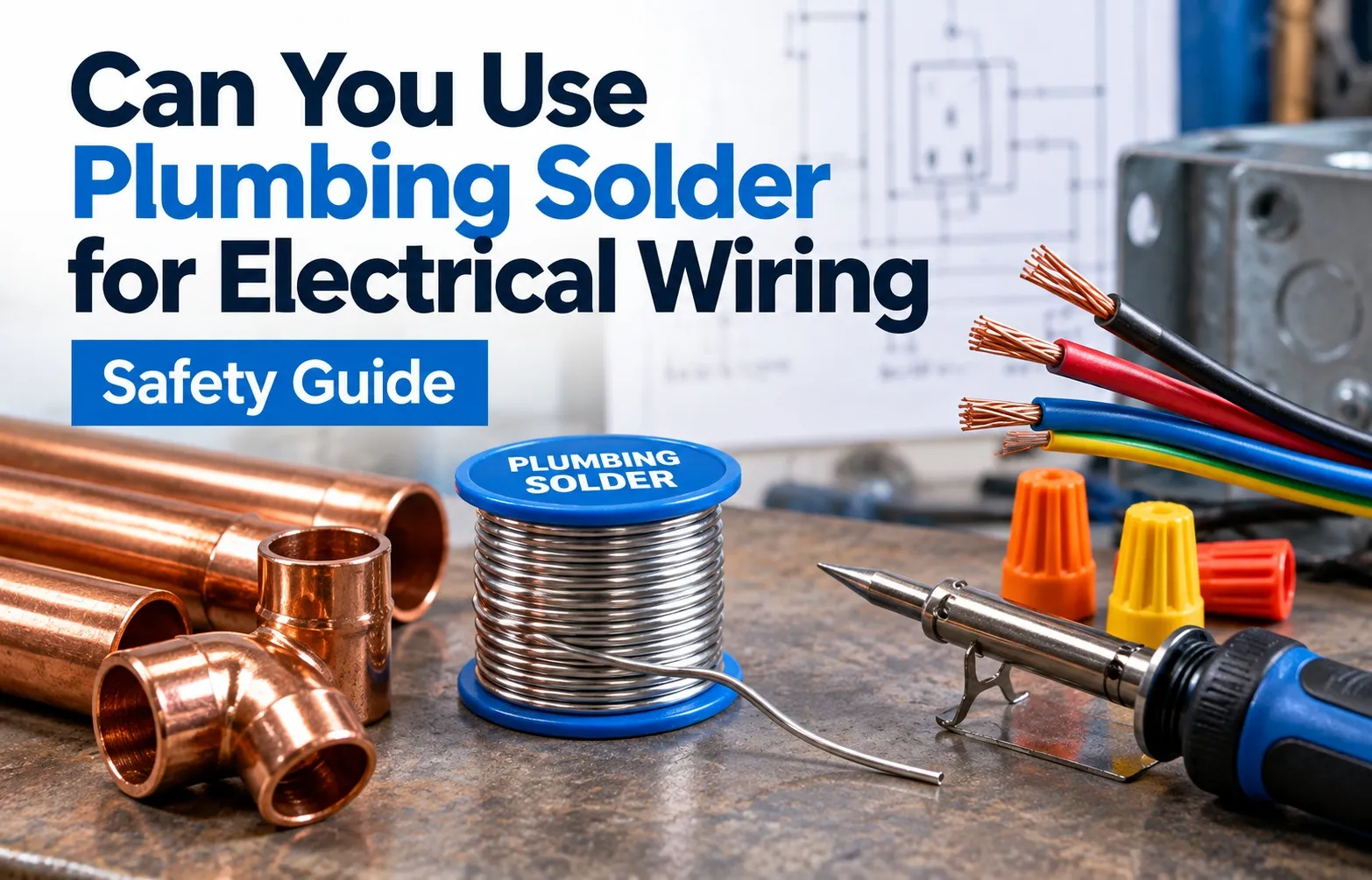
 Can You Use Plumbing Solder for Electrical Work? (Critical Warning)
Can You Use Plumbing Solder for Electrical Work?
No, you cannot use plumbing solder for electrical work under any circumstances. Plumbing solder is manufactured for joining mechanical copper pipes using corrosive acid-core flux, whereas electrical wiring requires non-corrosive rosin-core flux. Attempting to use plumbing solder on electrical connections will eat away at copper wire strands, degrade circuit board traces, create high electrical resistance, and ultimately trigger short circuits or fire hazards.
While both materials are metallic alloys designed to melt and form seals, their chemical compositions and core design purposes are fundamentally incompatible:
- Chemical Corrosiveness: Plumbing solder contains aggressive acid-based flux (such as zinc chloride or ammonium chloride) designed to strip heavy oxidation off thick copper pipes. This acid remains active long after cooling and aggressively corrodes delicate electrical copper wires.
- Flux Core Differences: Electrical solder utilizes a rosin-core or no-clean flux formulation derived from pine sap, which cleans the wire joint during heating and solidifies into an inert, non-conductive, non-corrosive protective layer.
- Melting Point Requirements: Plumbing alloys are engineered to melt at higher temperatures ($400^\circ\text{F}$ to $460^\circ\text{F}$) using open-flame torches, whereas electrical solders melt at lower thresholds ($360^\circ\text{F}$ to $370^\circ\text{F}$) designed specifically for low-wattage soldering irons.
The Dangers of Acid-Core Flux & Overheating at a Glance
Using plumbing solder on electrical circuits introduces critical material failures that directly compromise system safety and functionality. Understanding these risks upfront prevents catastrophic hardware failure and potential structural fires.
Here is a breakdown of the primary hazards associated with applying plumbing solder to electrical wiring:
- Accelerated Copper Corrosion: Acid flux residue trapped inside multi-strand electrical wire creates an ongoing chemical reaction. Over weeks or months, the acid dissolves individual copper strands into green copper carbonate, causing connection failure.
- Extreme Thermal Damage: Because plumbing solder lacks the rapid wetting properties of electrical rosin flux at low temperatures, hobbyists often overheat the wire. This excessive heat melts PVC insulation, scorches adjacent circuit components, and destroys printed circuit board (PCB) traces.
- Increased Electrical Resistance and Shorts: Acid residue absorbs ambient atmospheric moisture, creating conductive paths between adjacent solder joints or terminal pins. This leakage current leads to erratic voltage fluctuations, localized overheating, short circuits, and severe fire hazards.
Material Science: Plumbing vs. Electrical Solder
Core Composition & Chemical Differences (Acid vs. Rosin)
Plumbing solder utilizes corrosive chemical compounds like zinc chloride and ammonium chloride to eliminate heavy copper oxidation on water pipes. In contrast, electrical solder relies on natural rosin-core flux derived from pine resin, which gently removes light tarnish without corroding sensitive wiring.
Plumbing alloys and electrical alloys serve completely different chemical roles in their respective industries. Using the wrong flux core introduces destructive chemical agents directly into delicate electronic assemblies.
- Plumbing Flux Agents: Formulated with aggressive inorganic acids like zinc chloride and ammonium chloride that etch metal surfaces to create tight water-pipe joints.
- Electrical Flux Agents: Utilizes purified rosin or no-clean synthetic compounds that vaporize or leave an inert, non-conductive residue upon cooling.
- Corrosion Mechanism: Trapped acid flux residue constantly reacts with ambient humidity to oxidize copper wire strands until complete electrical failure occurs.
Melting Point Comparison: Torch vs. Soldering Iron
Plumbing solder requires high thermal energy exceeding 400 degrees Fahrenheit, typically applied using propane or acetylene torches. Electrical solder melts at significantly lower temperatures between 360 and 370 degrees Fahrenheit, perfectly calibrated for low-wattage handheld irons.
Thermal threshold differences dictate the tools and methods required for successful bonding. Applying a plumbing torch to electronic components instantly destroys them.
- Plumbing Solder Range: Lead-free plumbing compositions melt between 400°F and 460°F, demanding heavy open-flame equipment to flow properly.
- Electrical Solder Range: Traditional 60/40 tin-lead and common lead-free electronic solders melt cleanly at roughly 360°F to 370°F.
- Thermal Protection: Low melting points protect sensitive semiconductor chips, delicate circuit boards, and thin PVC wire insulation from thermal warping.
Mechanical Strength vs. Electrical Conductivity
Plumbing joints prioritize rigid structural tensile strength and hydraulic pressure resistance to withstand constant water flow. Electrical connections prioritize maximum electrical conductivity, low resistance, and flexibility to accommodate micro-vibrations without cracking.
Physical characteristics determine how each solder behaves under structural stress and electrical load. Water pipes require heavy physical bonding, whereas wires require stable electronic pathways.
- Structural Rigidity: Plumbing joints lock heavy copper pipes together rigidly, resisting high water pressure and physical shifting.
- Electrical Conductivity: Electronic joints maximize electron flow and minimize resistance, preventing heat buildup across critical circuit pathways.
- Flexibility Management: Electrical solder joints maintain microscopic elasticity to endure equipment movement and thermal expansion cycles.
Side-by-Side Comparison: Plumbing Solder vs. Electrical Solder
A direct side-by-side comparison highlights the stark differences in flux chemistry, melting temperature ranges, and application tools. Reviewing these structural variances clarifies why cross-application causes severe hardware degradation.
What Happens If You Use Plumbing Solder on Wires?
1. Rapid Copper Strand & PCB Trace Corrosion
Applying plumbing solder onto multi-strand wiring or printed circuit boards triggers immediate chemical degradation. The aggressive acid flux eats through copper strands, converting solid metal into corroded green dust and causing catastrophic connection failure over time.
Unlike surface tarnishing, acid flux works its way deep inside the individual copper strands through capillary action. This internal chemical attack weakens delicate circuitry from the inside out.
- Delamination of PCB Traces: Acid flux residue dissolves the adhesive layers holding copper traces onto circuit boards, causing traces to peel off completely.
- Internal Wire Degradation: Acid seeps under wire insulation, destroying internal copper strands long before damage becomes visible on the outside.
- Continuous Chemical Reaction: Unlike rosin flux, acid flux remains chemically active after cooling, reacting continuously with moisture in the air.
2. Scorched Insulation & Damaged Components
The excessive thermal energy needed to flow plumbing solder causes severe thermal damage to electrical insulation and delicate electronic components. Using high-heat irons or torches on wiring melts PVC jackets and burns internal silicon chips instantly.
Standard electronic components cannot withstand the high temperatures required to melt lead-free plumbing alloys ($400^\circ\text{F}$ to $460^\circ\text{F}$). Prolonged heat exposure leads to component failure.
- Melted Wire Insulation: High temperatures scorch protective PVC wire jacketing, exposing bare conductors and creating immediate electrical short risks.
- Thermal Shock on Semiconductors: Transistors, microcontrollers, and capacitors overheat and fail internally when exposed to excessive heat.
- Damaged Heat Shrink Tubing: Nearby heat shrink tubing melts prematurely during soldering, ruining protective insulation covers.
3. High Electrical Resistance & Fire Hazards
Corroded copper joints and acid flux residues create high electrical resistance points along the wire path. As current flows through high-resistance connections, localized heat builds up rapidly, increasing the risk of electrical fires.
Beyond heat generation, acidic flux residue acts as an unintended electrical conductor, causing voltage leaks across circuit board pins.
- Dielectric Breakdown: Acid residue degrades the insulating properties between adjacent wiring leads, leading to arc shorts across small gaps.
- Localized Overheating: High electrical resistance converts incoming current into intense heat, melting nearby terminal blocks and plastic enclosures.
- Voltage Fluctuations: Intermittent electrical contact caused by corroded metal leads to system crashes and unpredictable device behavior.
Remedial Action: What to Do If You Already Used It?
Step-by-Step Recovery Guide for Accidental Plumbing Solder Use
If you have accidentally used plumbing solder or acid flux on electrical connections, you must remove it immediately before permanent corrosion sets in. The best corrective action is to strip away the contaminated section, clean the exposed wire, and perform a fresh joint re-soldering procedure using proper rosin-core solder.
Follow these practical steps to safely remediate a contaminated electrical joint:
- Disconnect Power Completely: Shut off all electrical power, disconnect batteries, or unplug the device to prevent short circuits during cleanup.
- Cut Back the Contaminated Wire: If length allows, cut off the soldered joint entirely, including 0.5 to 1 inch of wire behind it where acid flux may have wicked under the insulation.
- Desolder PCB or Terminal Connections: If cutting is impossible (such as on circuit boards), use a desoldering pump or copper solder wick to draw out every trace of the molten plumbing solder.
- Strip and Prep Fresh Copper: Strip back the insulation to expose clean, bright copper wire that has not been touched by acid residue.
- Re-solder with Rosin-Core Solder: Apply 60/40 rosin-core or SAC305 electronic solder using a standard 30W–60W soldering iron to restore a clean, reliable electrical joint.
How to Clean Acid Flux Residue (Neutralization Techniques)
When acid flux contacts circuit boards or non-replaceable wire ends, mechanical solder removal alone is not enough. You must chemically neutralize the active acid compounds and scrub away leftover residues using proper cleaning solutions.
Apply these targeted cleaning techniques to stop ongoing chemical corrosion:
- Baking Soda Neutralizer Wash: Mix one tablespoon of baking soda in a cup of warm water. Apply the solution with a soft toothbrush to neutralize active zinc chloride or ammonium chloride acids, then rinse thoroughly with distilled water.
- High-Purity Isopropyl Alcohol (IPA) Scrub: After neutralizing, scrub the area vigorously with 90%+ Isopropyl Alcohol (IPA) to wash away flux oils, salts, and moisture.
- Complete Drying Cycle: Allow the cleaned board or wire to dry completely for at least 12 to 24 hours before applying power or sealing with heat shrink tubing.
Recommended Solder & Flux for Electrical Projects
Best Types of Solder for Circuit Boards vs. Wiring
Selecting the correct solder alloy depends on whether you are assembling delicate surface-mount components on a circuit board or joining heavy stranded copper wires. Choosing specialized electronic solders guarantees low electrical resistance, smooth thermal flow, and long-term mechanical reliability.
The two primary categories of electrical solder used in modern electronics include:
- 63/37 Sn/Pb Eutectic Solder: Formulated with 63% tin and 37% lead, eutectic solder transitions instantly from liquid to solid at 361°F (183°C). This rapid freezing eliminates cold solder joints caused by wire movement during cooling.
- 60/40 Rosin Core Solder: The classic choice for general electrical wiring, automotive harnesses, and speaker cables, offering excellent wetting action and strong conductivity.
- Lead-Free SAC305 Solder: Composed of Tin, Silver, and Copper, SAC305 is the industry standard for RoHS-compliant electronics and commercial circuit board assembly, melting cleanly around 423°F (217°C).
Choosing the Right Flux: Rosin Core vs. No-Clean Flux
Flux is essential for removing light surface oxidation and allowing molten solder to wet copper surfaces evenly. For electrical work, you must use non-corrosive flux formulations that protect thin copper traces and internal wire strands.
Matching the appropriate flux type to your project ensures optimal circuit performance:
- Rosin Core Flux (Type R / RMA): Derived from natural pine resin, rosin flux cleans metal dynamically under heat and leaves a mild, non-conductive, non-corrosive residue upon cooling.
- No-Clean Flux: Ideal for fine-pitch PCB soldering where washing boards is impractical. It leaves behind virtually zero tacky residue and requires no post-solder washing.
- Flux Pen Applicators: Convenient liquid flux dispensers used to apply precise amounts of rosin or no-clean flux directly onto wire splices or SMD pads prior to heating.
To verify industry material standards and chemical classifications across plumbing vs. electrical applications, consult the Oatey Solder Technical Specifications Guide.
Common DIY Myths & FAQs
Is plumbing solder conductive?
Yes, plumbing solder is electrically conductive because it is composed of metals like tin, copper, and silver. However, using it for electrical work remains dangerous because the acid-core flux used alongside it corrodes copper wires over time, leading to high electrical resistance, short circuits, and potential fire hazards.
While the metal wire itself conducts electricity, the chemical damage caused by acid flux renders the connection unsafe for long-term use.
- Metal Conductivity: Plumbing solder alloys carry current, but they are not optimized for delicate electrical conductivity.
- Corrosion Resistance Loss: Acid residue constantly attacks copper strands, degrading electrical conductivity over weeks or months.
Can I use Vaseline or WD-40 instead of soldering flux?
No, you should never use Vaseline (petroleum jelly) or WD-40 as substitutes for soldering flux. Neither substance contains the chemical deoxidizing agents required to remove oxides from copper metal, and both create severe smoke, carbon buildup, and fire hazards when exposed to high soldering iron temperatures.
Using improper Household substitutes ruins your soldering tip and contaminates the joint:
- Petroleum Jelly (Vaseline): Melts instantly into flammable liquid and burns into carbon residue without removing metal oxidation layers.
- WD-40 Spray: Contains volatile solvents that vaporize rapidly upon heat contact, presenting a serious flash fire risk around hot tools.
- Proper Alternative: Always use dedicated rosin flux, RMA paste, or a liquid flux pen designed specifically for electronics.
Can you use electrical solder for plumbing pipes?
No, you cannot use electrical solder for plumbing pipes. Many electrical solders contain lead (such as standard 60/40 tin-lead formulations), which causes dangerous lead contamination when introduced into potable water systems. Furthermore, electrical solder lacks the mechanical tensile strength and high melting point required to seal pressurized water pipes.
Plumbing codes strictly regulate materials used in drinking water systems to protect health and structural integrity:
- Lead Contamination Risk: Lead-based electronic solders leach toxic lead directly into drinking water, creating severe health hazards.
- Lack of Hydraulic Strength: Electronic solders are engineered for low electrical resistance rather than withstanding high hydraulic pressure.
- Building Code Violations: Using non-plumbing solder on domestic water supply pipes violates municipal plumbing codes and safety regulations.
How can I tell the difference between electrical and plumbing solder at home?
You can distinguish between electrical and plumbing solder by checking the solder spool markings, observing the core type when cut, and testing its melting behavior. Electrical solder is typically thinner, labeled as “Rosin-Core” or “Electronic Solder,” and melts at lower temperatures using a soldering iron.
Identify unknown solder spools in your workshop using these physical indicators:
- Check Spool Markings: Electrical solder is explicitly labeled “Rosin-Core,” “60/40,” “63/37,” or “Electronic,” whereas plumbing solder is marked “Lead-Free,” “Acid-Core,” or “Solid Wire.”
- Inspect Wire Diameter: Electrical solder wire is much thinner (typically 0.031 to 0.062 inches) compared to thick plumbing solder coils (usually 0.125 inches / 1/8th inch).
- Cross-Section Inspection: Snip a section of wire and inspect the center under a magnifying glass; rosin flux appears as a amber/clear core, while acid flux appears white or hollow.
Final Takeaway & Expert Safety Checklist
Golden Rules for Safe Electrical Soldering
When working with electrical wiring or sensitive circuit boards, maintaining rigorous safety standards and using purpose-built tools guarantees durable, high-conductivity connections. Following proper soldering protocols protects both your physical safety and the integrity of your equipment.
Adhere to these fundamental rules before starting any electrical soldering project:
- Proper Tool Selection: Always use a temperature-controlled soldering iron rated between 30W and 60W along with certified rosin-core or no-clean solder designed specifically for electronics.
- Personal Protective Equipment: Wear ANSI-approved safety glasses to protect your eyes from hot flux splatters and airborne debris during wire trimming.
- Adequate Workspace Ventilation: Work in a well-ventilated area or use a dedicated fume extractor to prevent inhaling rosin flux fumes and airborne chemical vapor.
- Electrical Code Compliance: Ensure all wiring splices, heat shrink insulation, and terminal solder joints comply with local electrical codes and national safety standards.

Home Improvement Researchers & Guides Editors
Meet the Nest Team, a collective of dedicated researchers, home improvement enthusiasts, and industry writers sharing practical guides, thorough category research, and trusted solutions for residential repairs and thoughtful home upkeep.