Verdict & Comparison Matrix
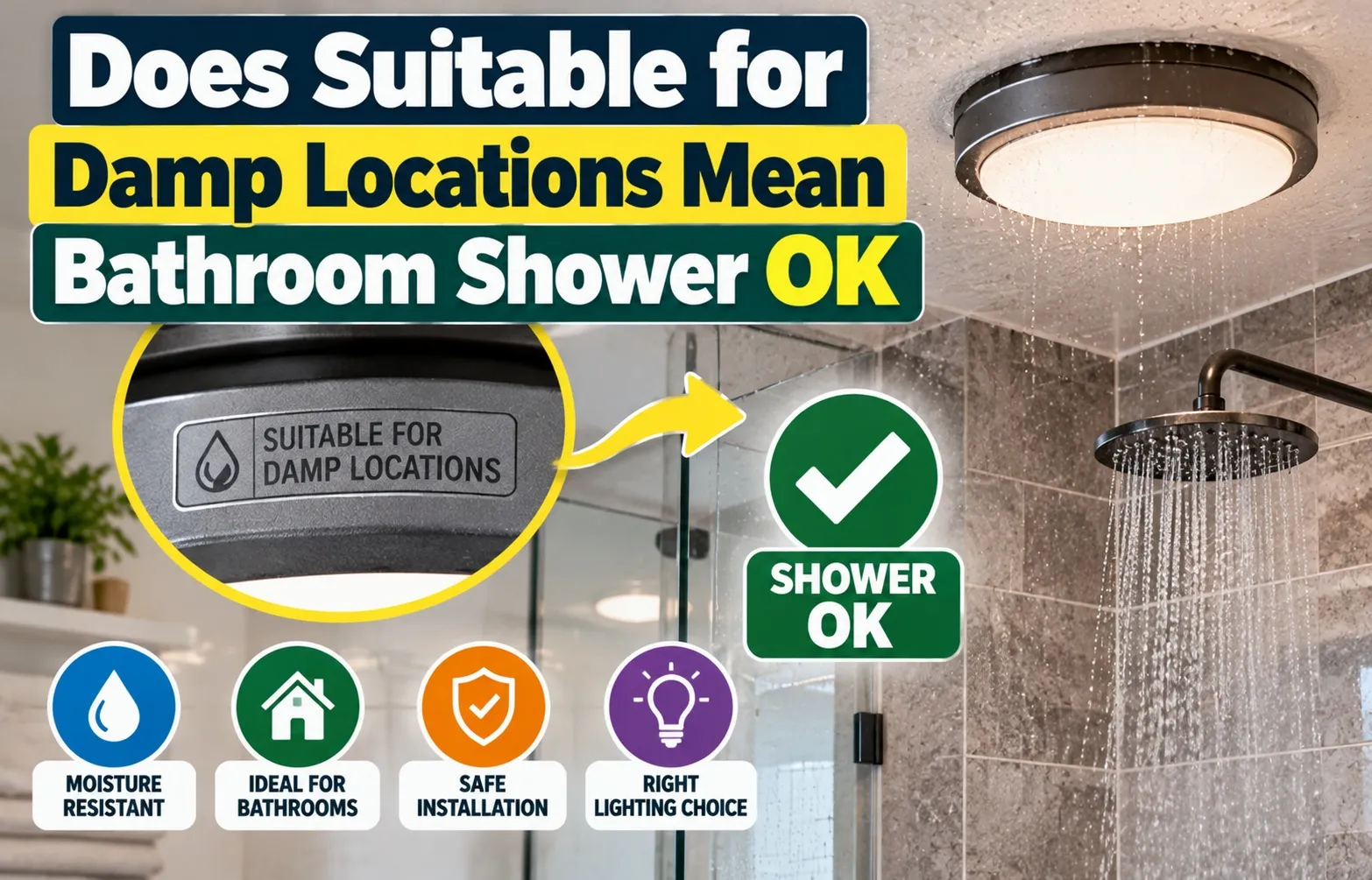 Installing a damp-rated fixture inside a shower enclosure violates national electrical safety codes and creates a severe safety hazard. Shower stalls fall under a direct splash zone where high-pressure water streams, splashing water, or handheld wands can force moisture past standard damp-rated seals. Water contacting live electrical components can cause immediate corrosion, short circuits, electrical shock, or fire.
To safely illuminate or ventilate a shower stall, you must strictly install a fixture that carries an explicit UL Listing or ETL Listing for Wet Locations. Wet-rated fixtures feature specialized rubber gaskets, enclosed housings, and moisture-tight diffusers designed specifically to repel liquid water exposure.
- Damp Location Rating: Built to handle trapped humidity, vapor, and air condensation. Ideal for general ceiling areas and vanity sconces located outside the shower enclosure.
- Wet Location Requirement: Built to withstand direct water contact, liquid splashing, and continuous water spray. Mandatory inside shower enclosures, wet wet rooms, and directly over bathtubs.
Damp-Rated vs. Wet-Rated Fixtures at a Glance
To ensure proper compliance with bathroom shower safety standards, review how electrical fixture ratings differ by exposure level, permitted water exposure, and approved bathroom placement zones:
Decoding NEC Code & UL Safety Standards
National safety standards govern how electrical fixtures are tested, rated, and installed to protect building occupants from electric shock hazards and electrical fires. When selecting fixtures for high-moisture spaces, understanding the underlying regulatory frameworks—specifically the National Electrical Code (NEC) and Underwriters Laboratories (UL) testing criteria—is critical for safety and building code compliance.
What Does Suitable for Damp Locations Actually Mean Under National Code?
Under the National Electrical Code, a damp location is defined as an area protected from weather and not subject to beating liquid, but subject to moderate degrees of moisture. Typical examples include partially protected locations, covered porches, basements, and general bathroom areas located away from direct liquid spray.
To receive a damp location mark under the UL damp vs. wet location electrical guidelines, lighting manufacturers must build products that resist ambient vapor and air condensation. However, these fixtures are not tested to resist water jets, splashes, or submersion.
- Vapor-tight seal protection: Designed to prevent airborne steam from accumulating around internal wiring connections.
- Condensation tolerance: Internal wiring and socket contacts feature basic corrosion resistance against air moisture.
- Environmental boundary: Strictly restricted to areas where liquid water will never drip, splash, or flow directly onto the housing.
What Qualifies as a Wet Location Under NEC Article 410?
NEC Article 410 sets strict installation rules for luminaires, lamp holders, and flush-mounted recessed light fixtures installed in damp and wet locations. According to NEC Article 410, any fixture installed directly within a shower compartment, over a bathtub rim up to specified clearance thresholds, or anywhere subject to beating liquids must be explicitly marked as suitable for wet locations.
The UL 1598 standard governs the structural testing for these luminaires. To achieve a UL 1598 wet location rating, a fixture undergoes rigorous water spray testing, ensuring that no liquid penetrates the internal electrical compartment or reaches live electrical terminals during direct exposure.
- Direct splash protection: Approved for spaces where water droplets, direct shower spray, or heavy splashing occur regularly.
- Enclosed and gasketed construction: Features fully sealed glass lenses and non-corrosive trims to isolate high-voltage wiring.
- Safety transformer integration: Often requires low-voltage systems (such as 12V DC LED configurations) when installed in immediate splash zones to minimize electric shock hazards.
Why Gasketed Seals and Sealed Housings Matter
The primary engineering distinction between damp-rated and wet-rated luminaires lies in physical moisture barriers and liquid shedding mechanisms. A standard damp-rated trim typically uses open gaps or loose-fitting baffles that allow air movement. If exposed to direct water spray, water easily penetrates these openings, causing short circuits or premature component breakdown.
In contrast, wet-rated shower lights rely on specialized engineering features to create a liquid-tight barrier:
- Gasketed trim design: Heavy-duty silicone or neoprene rubber gaskets form a tight seal between the fixture housing and the ceiling surface, preventing water from leaking behind drywall or tile.
- Water-resistant housing: Seamless, corrosion-resistant aluminum or stainless steel enclosures prevent internal moisture accumulation and protect electrical junction boxes.
- Sealed diffusers: Tempered glass or shatter-resistant polycarbonate lenses are permanently sealed into the faceplate to block direct spray from reaching the lamp socket.
Bathroom Moisture Zone Mapping: Where Each Fixture Belongs
Safe bathroom lighting placement relies on clear physical boundaries defined by proximity to water sources. Electrical codes classify bathroom spaces into precise safety zones to ensure that fixtures match the exact moisture levels, spray intensity, and water exposure of each specific area.
Zone 0 & Zone 1: The Direct Water Contact Zone (Wet-Rated Only)
The interior of a shower stall and the space immediately above a bathtub present the highest electrical risk in any bathroom. Fixtures placed inside these boundaries are directly exposed to pressurized water streams, direct splashing, and heavy condensation buildup.
Understanding the exact physical limits of Zone 0 and Zone 1 ensures that you install the correct recessed shower trim or surface-mounted light fixture:
- Zone 0 (Inside the Shower Tray or Basin Base): Includes the interior footprint of the shower tray or bathtub interior. Any fixture installed in this zone must be specifically rated for continuous water exposure or submersion and must operate on a low-voltage safety system (such as 12V DC).
- Zone 1 (Up to 8 Feet Above Shower/Tub Rim): Extends vertically up to 8 feet (2.4 meters) from the top rim of the bathtub or shower basin floor, covering the entire width of the enclosure. Due to intense steam concentration and potential spray from a handheld wand, all fixtures in Zone 1 strictly require an explicit Wet Location rating.
- Over-Tub Fixture Height Clearance: If your bathroom ceiling height clearance allows a hanging pendant or chandelier to sit more than 8 feet above the tub rim, a damp-rated fixture is permissible under NEC rules, provided it cannot be reached while standing inside the tub.
Zone 2: The Transition Zone (Damp-Rated Permitted)
Zone 2 covers the perimeter area immediately surrounding the direct splash area. While fixtures in this zone are unlikely to receive direct pressurized water spray, they are continuously exposed to airborne steam, high humidity, and surface splash mist.
This perimeter region represents the primary area where damp-rated fixtures offer optimal safety and compliance:
- Shower Perimeter Radius: Extends 60 centimeters (approximately 2 feet) horizontally outward from the edge of Zone 1, reaching up to a height of 2.25 meters above the floor.
- Vanity Wall Sconce Placement: Mirror side lights and vanity wall sconce fixtures located adjacent to sinks or 2 feet away from glass shower doors fit safely into Zone 2 when carrying a damp location rating.
- Enclosed Exhaust Fans: Ventilation units mounted outside the immediate shower stall boundary fall into Zone 2 and require a damp location rating.
Unzoned Areas: Standard Bathroom Space
Unzoned areas consist of any bathroom space lying outside Zones 0, 1, and 2. In these regions, direct water splashing is absent, and moisture remains limited to standard room vapor levels.
Although unzoned areas experience the lowest water exposure within the bathroom, selecting the correct rating remains essential for long-term reliability:
- General Ceiling Recessed Lighting: Downlights positioned in central walkways or over dry toilet areas can safely utilize standard damp-rated trims.
- High Ceiling Clearance Areas: Vaulted ceiling sections positioned well clear of water spray sources are fully compliant with damp-rated fixtures.
- Dry Powder Rooms: Half-baths lacking showers or bathtubs carry minimal moisture risk, allowing standard damp-rated lighting across all ceiling heights.
What Happens If You Install a Damp-Rated Light in a Shower?
Installing an improperly rated lighting fixture in a shower stall leads to systemic structural, electrical, and legal consequences. Because damp-rated fixtures lack liquid-tight silicone gaskets and sealed enclosures, water vapor and direct splashing quickly migrate past open baffles, leading to expensive building repairs and severe electrical hazards.
Electrical Short Circuits and Corrosion Hazards
The failure sequence of installing a damp-rated light fixture inside a shower enclosure follows a predictable, highly hazardous progression:
- Moisture Infiltration: High-pressure water spray and heavy steam easily penetrate an unsealed electrical junction box and un-gasketed trim faceplate.
- Socket Oxidization: Trapped water accumulates on metal lamp sockets, initiating rapid oxidation and corrosion buildup across electrical contacts.
- Arc Fault Risk: Corroded wiring terminals create high electrical resistance, generating extreme heat that elevates short circuit and arc fault risk.
- Fixture Failure: Repeated current surges trigger circuit breaker trips, burn out internal LED driver circuits, or shatter hot glass lamp bulbs upon cold water contact.
Moisture Intrusion Wall Mold and Tile Degradation
Beyond immediate electrical failures, installing the wrong fixture creates severe structural issues within ceiling framing and wall cavities. Without a sealed neoprene gasket to block water migration, continuous shower steam leaks around the ceiling cutout opening.
This persistent ceiling cutout leak traps elevated levels of humidity inside closed joist spaces and behind surrounding wall materials:
- Mold Behind Shower Tile: Moisture accumulating behind tile backer boards creates an unseen environment for toxic black mold growth, which decays drywall cores and rots structural timber studs.
- Tile Delamination: Water damage behind wall surfaces degrades thin-set mortar adhesives, causing shower floor and wall tiles to loosen, crack, or completely buckle away from substrate boards.
- Ceiling Staining: Damp ceiling cutouts allow trapped water to seep downward, causing blistering drywall paint, sagging plaster, and brown water stains around recessed light trims.
Voided Home Insurance and Building Inspection Failures
Using improper fixtures inside shower splash zones carries significant financial and regulatory penalties that extend beyond home maintenance:
- Building Code Non-Compliance: Local municipal building inspectors will flag non-wet-rated shower fixtures during home sales or renovation inspections, requiring complete re-installation prior to permit sign-off.
- Voided Property Insurance: In the event of an electrical fire or structural water damage caused by non-code-compliant fixtures, insurance adjusters can deny claims due to improper installation.
- Manufacturer Warranty Denial: Lighting manufacturers strictly disclaim warranties if a damp-rated product exhibits internal rust or shorting from installation in a wet location.
Translating IP Ratings to Damp & Wet Classifications
When purchasing modern LED fixtures, recessed downlights, or imported architectural lighting, manufacturers frequently specify Ingress Protection (IP) codes instead of traditional UL damp or wet terminology. Understanding the IP rating translation system ensures proper code compliance and prevents water damage when evaluating international or specialized luminaire specifications.
IP Ratings vs. UL Damp Wet Classifications Explained
The Ingress Protection (IP) standard uses a two-digit code defined by international standards. The first digit represents solid particle and dust resistance, while the second digit indicates liquid moisture protection. Correlating these numerical codes with North American UL ratings bridges the gap between imported products and national electrical standards.
Review how standard IP codes correspond directly to damp and wet location environments:
Recommended IP Ratings for Shower Enclosures
When shopping for an LED shower downlight or accent fixture, you must look past basic damp location labels and verify that the hardware meets strict water jet resistance thresholds. A dust-tight fixture featuring a high second-digit water rating ensures that pressurized stream cleaning or direct handheld shower spray will not compromise internal electrical components.
- Demand IP65 or Higher: Always select fixtures rated IP65, IP66, or IP67 when installing downlights directly inside a shower enclosure or above a bathtub zone.
- Verify Gasket Integrity: Ensure that the manufacturer includes factory-installed silicone sealing rings behind the trim bezel to lock out moisture at the drywall interface.
- Avoid IP44 in Wet Zones: Never install an IP44-rated fixture inside a shower stall, as splash water and direct steam jets can bypass the lower sealing threshold.
Frequently Asked Questions
Can a damp-rated light be installed over a bathtub?
A damp-rated light fixture can only be installed over a bathtub if the ceiling height clearance provides more than 8 feet (2.4 meters) of vertical space measured directly from the tub rim. If the fixture sits below this 8-foot bathtub light clearance threshold or can be reached while standing inside the tub, local building codes mandate an explicit wet-rated luminaire protected by a ground-fault circuit interrupter (GFCI).
Is an exhaust fan in a shower required to be wet-rated?
Yes, any exhaust fan installed directly inside a shower stall boundary or over a bathtub enclosure must be a wet-rated exhaust fan equipped with a moisture seal and GFCI-protected circuit wiring. Standard damp-rated ventilation fans mounted within direct shower spray zones risk motor corrosion, short circuits, and electrical safety violations under national bathroom remodel code standards.
How do you know if a ceiling light is wet-rated?
To verify if a ceiling downlight is wet-rated, check the physical product specification sheet, packaging box, or internal fixture housing for an official UL wet location label or ETL wet location mark. Additionally, wet-rated fixtures usually feature visible continuous rubber or silicone gaskets sealing the trim faceplate and a fully enclosed, liquid-tight glass or polycarbonate diffuser lens.
What happens if water gets behind shower tiles around a fixture?
When water leaks past an unsealed ceiling cutout or tile boundary around an un-gasketed light fixture, persistent moisture collects inside closed wall and joist cavities. This trapped dampness degrades tile adhesive backer boards, causes surrounding wall tiles to crack or delaminate, and rapidly fosters toxic black mold growth behind shower wall surfaces.

Oscar Vance | Master Plumber & Drainage Expert
Meet Oscar Vance, a licensed master plumber sharing practical solutions on residential repairs, preventive maintenance, and thoughtful home upkeep.