What Does ECM Stand For in HVAC?
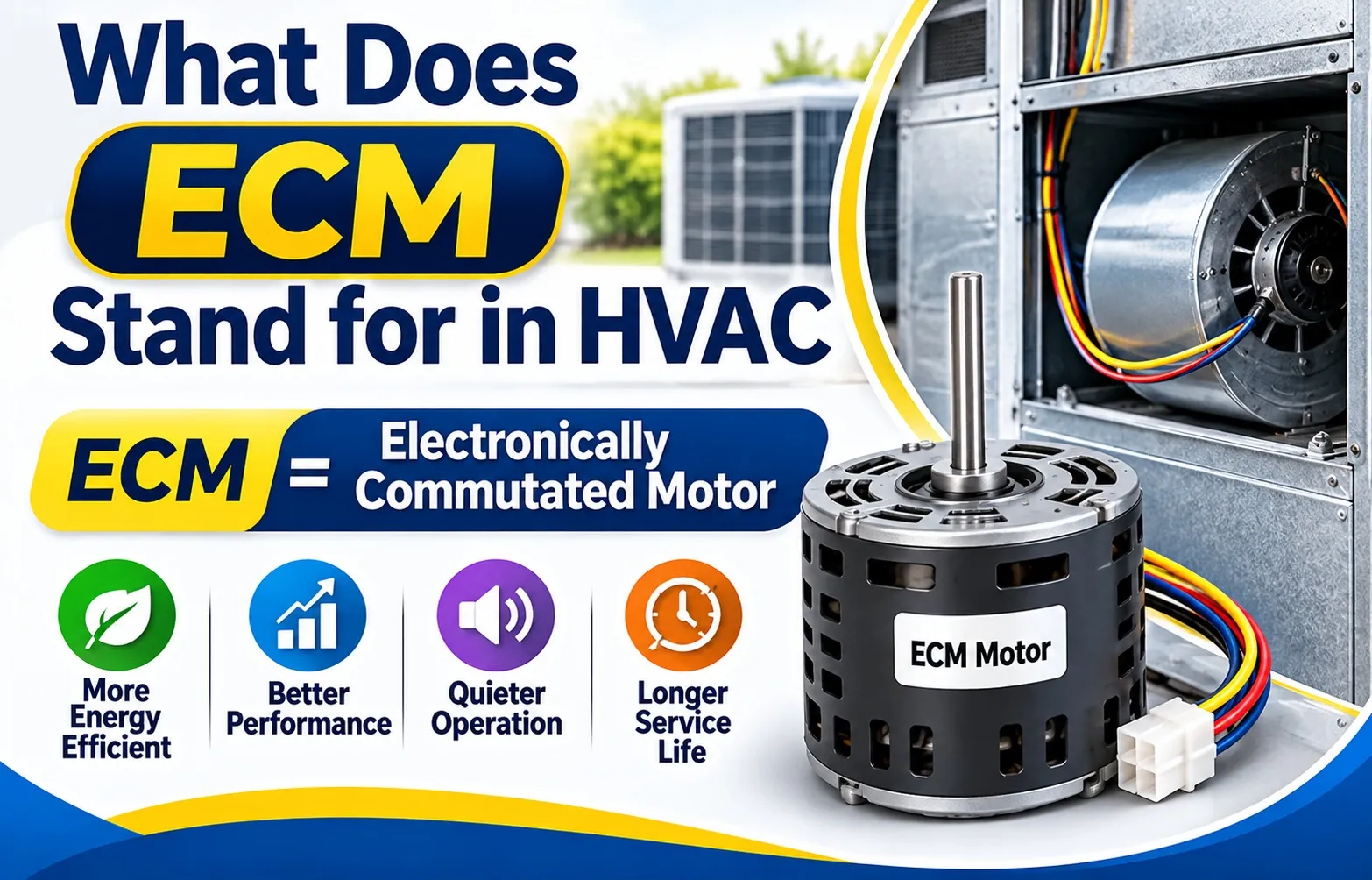 In HVAC systems, ECM stands for Electronically Commutated Motor. It is an advanced, high-efficiency brushless DC electric motor controlled by an integrated microprocessor and inverter, designed to dynamically regulate fan speed, torque, and airflow.
What Is an Electronically Commutated Motor?
Unlike traditional induction motors that operate at fixed speeds based on electrical line frequency, an ECM utilizes onboard electronics to adjust its rotational speed continuously. This enables modern furnaces, air handlers, and heat pumps to deliver precise climate control while minimizing energy waste.
A Quick 30-Second Summary of ECM Technology
- Full Form: Electronically Commutated Motor.
- Motor Classification: Brushless Direct Current (BLDC) motor combined with an internal electronic control module and inverter.
- Primary HVAC Applications: Indoor blower fans, variable-speed air handlers, and high-efficiency circulating pumps.
- Core Performance Benefit: Reduces electrical consumption by 30% to 50% compared to legacy Permanent Split Capacitor (PSC) motors while enhancing humidity regulation.
How an ECM Motor Works in Your HVAC System
Electronically Commutated Motors transform HVAC energy efficiency by converting standard alternating current (AC) power into direct current (DC) power via an onboard inverter board. This engineering leap enables precise, dynamic control over motor rotation rather than relying on fixed electrical line frequencies.
The Technology Behind Electronically Commutated Motors
An ECM bridges the gap between conventional motors and advanced digital automation. Inside the housing, a permanent magnet rotor interacts with an electronically switched stator field, eliminating the electrical slip inherent in older induction designs.
- Inverter Control Board: Rectifies incoming AC line voltage into DC power and digitally manages electronic commutation.
- Permanent Magnet Rotor: Produces a powerful magnetic field without relying on induced rotor currents, drastically reducing internal heat and friction.
- Stator Windings: Energized in precise electronic sequences by the onboard module to smoothly rotate the rotor.
AC vs. DC: How the Internal Microprocessor Regulates Speed and Torque
The onboard microprocessor utilizes advanced pulse-width modulation (PWM) to regulate the voltage and frequency delivered to the motor windings. This creates a responsive feedback loop that automatically adapts to fluctuating static pressure inside your ductwork.
- Pulse-Width Modulation (PWM): Rapidly switches power on and off at high frequencies to fine-tune RPM and energy draw.
- Constant Torque: Automatically adjusts voltage output to maintain consistent rotational force regardless of external resistance.
- Variable Speed Operation: Ramps airflow up or down smoothly to match precise heating and cooling demands without abrupt mechanical shifts.
Types of ECM Motors: Constant Torque vs. Variable Speed
Modern HVAC systems utilize different categories of Electronically Commutated Motors depending on the complexity of the heating and cooling equipment. Understanding these variations helps homeowners and technicians identify specific performance capabilities and replacement requirements.
Constant Torque ECMs (X13 Motors)
Constant torque ECMs—commonly referred to as X13 motors—are engineered to deliver consistent rotational force across varying levels of external static pressure. They serve as efficient, direct upgrades to older single-speed motors while utilizing simplified multi-tap low-voltage wiring configurations.
- X13 Design: Balances high efficiency with cost-effective manufacturing, making them standard in mid-tier residential furnaces and air handlers.
- Multi-Tap Inputs: Uses preset speed taps connected to the control board to establish fixed airflow levels for heating and cooling cycles.
- Static Pressure Adaptability: Automatically compensates for minor filter restrictions to maintain consistent torque output under varying loads.
Fully Variable-Speed (Constant Airflow) ECMs
Fully variable-speed ECMs are advanced communicating systems that continuously adjust their CFM (cubic feet per minute) output to maintain precise airflow management. They communicate directly with smart thermostats to optimize indoor humidity control and balanced temperature distribution.
- True Airflow Regulation: Dynamically ramps RPM up or down to push exact volumes of air through complex or restrictive duct layouts.
- Communicating Systems: Integrates with advanced digital controls to monitor system diagnostics and fine-tune operating parameters in real time.
- Maximum Efficiency: Delivers the highest SEER performance ratings by running at ultra-low speeds during long, continuous filtration and heating cycles.
ECM vs. PSC Motor: The Ultimate Comparison Table
Choosing between an Electronically Commutated Motor and a legacy Permanent Split Capacitor motor comes down to balancing upfront equipment costs with long-term electricity savings. Understanding these performance contrasts helps clarify why modern HVAC manufacturers have transitioned away from older single-speed designs.
Side-by-Side Comparison: ECM Motors vs. PSC Motors
The following comparison table outlines the critical engineering and financial differences between modern ECM technology and traditional induction blower motors across key operational metrics.
Key Differences That Matter to Homeowners
Evaluating real-world performance requires looking beyond basic technical specifications. The shift from a Permanent Split Capacitor motor to an advanced digital drive directly impacts monthly utility bills, indoor acoustics, and system reliability.
- Substantial Electricity Savings: Because electronic commutation minimizes resistive heat losses, ECM blowers draw a fraction of the wattage required by legacy induction units, significantly cutting seasonal power bills.
- Enhanced Comfort and Quiet Operation: Traditional PSC motors slam on at full speed, creating an audible rush of air and mechanical hum. ECMs ramp up gradually, eliminating disruptive startup noises while maintaining steady indoor temperatures.
- Extended Motor Lifespan: Reduced internal operating temperatures and brushless engineering minimize mechanical wear on bearings and windings, allowing high-efficiency motors to outlast older induction models when properly protected.
The Homeowner’s Dilemma: ECM Repair Costs & Why They Fail
Facing a failed Electronically Commutated Motor often catches homeowners off guard due to steep diagnostic and replacement expenses. Understanding the mechanical vulnerabilities and electronic sensitivities of these units helps clarify why repairs require specialized expertise.
Why Are ECM Blower Motors So Expensive to Replace?
Replacement quotes for modern HVAC blower motors frequently range between $600 and $1,500 including labor. Unlike older induction motors that consist of simple copper windings, ECMs integrate complex microprocessors, inverter control boards, and precision electronics.
- Advanced Manufacturing: The integration of onboard computer components and brushless design increases initial manufacturing expenses.
- Proprietary OEM Parts: Most units require specific original equipment manufacturer (OEM) modules tailored to exact furnace communication protocols.
- Specialized Labor: Diagnosing variable-speed communication signals requires advanced technical training and specialized testing tools. For deep technical data on motor design standards, consult Regal Rexnord Technical Insights.
Module Replacement vs. Full Motor Assembly
When an ECM system stops functioning, it does not always mean the entire motor is broken. The system is split into two distinct parts: the electronic control module (top cap) and the motor mechanical assembly.
- Control Module Failure: Sensitive logic boards are vulnerable to power fluctuations and moisture, often failing while the underlying motor windings remain completely functional.
- Targeted Repair Savings: In many cases, technicians can replace just the electronic module rather than swapping out the entire heavy motor assembly, lowering repair costs.
- Diagnostic Necessity: Proper testing is required to verify whether the issue stems from the module board, the main HVAC control board, or physical bearing wear.
Why Do ECM Motors Fail Prematurely? (The Power Surge Threat)
Because Electronically Commutated Motors rely heavily on sensitive microchips and printed circuit boards, they face unique environmental and electrical risks. Power irregularities remain the leading cause of premature electronic burnout.
- Power Surges and Lightning: Sudden voltage spikes from electrical grid fluctuations or nearby lightning strikes easily fry delicate onboard inverters.
- Moisture Condensation: Humidity and water dripping onto the control housing cause terminal corrosion and short circuits.
- Restricted Airflow: Clogged air filters force the motor to work harder, generating excessive internal heat that degrades internal electronic components over time.
Pro-Tip: How an HVAC Surge Protector Saves You $1,000
Standard household power strips do not protect high-draw HVAC equipment from major electrical surges. Installing a dedicated, hardwired surge protector directly at your furnace or outdoor disconnect box provides vital defense.
- Defends Sensitive Electronics: Absorbs voltage spikes before they reach the delicate microprocessors inside your ECM control module.
- Cost-Effective Insurance: A relatively inexpensive surge suppressor can prevent a catastrophic $1,000+ repair bill.
- Warranty Protection: Many modern HVAC manufacturers now recommend or require dedicated surge protection to keep electronic component warranties valid.
Common Signs of a Failing ECM Blower Motor
Recognizing the early indicators of a failing Electronically Commutated Motor can prevent sudden heating or cooling outages. Catching symptoms before complete electronic failure saves homeowners emergency service costs and minimizes diagnostic troubleshooting time.
Weak or Erratic Airflow from Vents
When an ECM blower motor begins experiencing internal module wear or communication issues, it may fail to ramp up to correct operating speeds. This results in sluggish air delivery across your living spaces and uneven indoor comfort.
- Inconsistent Room Temperatures: Certain rooms feel stuffy or under-conditioned while others receive proper airflow.
- Sluggish Blower Response: Noticeable delays between thermostat calls and actual airflow emerging from supply vents.
- Reduced CFM Output: The system struggles to push air through standard residential duct networks due to internal regulation errors.
High-Pitched Whining or Unusual Humming Noises
Unlike mechanical induction motors that hum uniformly under normal strain, a failing ECM often produces distinct acoustic anomalies. Internal bearing wear or electronic feedback loops generate unusual operational sounds during startup and running cycles.
- High-Pitched Whine: Electrical or mechanical resonance indicating bearing degradation or inverter component stress.
- Intermittent Humming: The motor attempts to spin but fails to initiate proper commutation across its stator windings.
- Abrupt Tonal Shifts: Sudden changes in pitch while the system ramps up or down during a heating or cooling cycle.
Furnace Control Board Error Codes
Modern HVAC equipment features onboard diagnostic LEDs that flash specific codes when communication fails between the main control board and the ECM. Monitoring these flashing patterns provides precise guidance during diagnostic troubleshooting.
- Communication Faults: Error codes indicating lost low-voltage signals or pulse-width modulation transmission failures.
- Overcurrent Protection Trips: Flashing codes signaling that the internal module shut down to protect itself from a power surge or locked rotor.
- Manufacturer Diagnostic Sequences: Consult your specific furnace manual or technical panel label to decode flash sequences accurately.
Complete Blower Failure
When power surges or extreme thermal stress destroy the onboard inverter module, the blower motor stops running entirely. The system may run its draft inducer fan or call for heat, but no air circulates through the home.
- Total Lack of Air Movement: Zero airflow at registers despite the thermostat showing an active heating or cooling call.
- No Response to Power Checks: High voltage reaches the module, but the internal logic board fails to engage the motor.
- Blown Fuses or Tripped Breakers: Severe internal short circuits within the electronic module can cause system fuses to blow repeatedly.
Frequently Asked Questions About HVAC ECM Motors
Clear, direct answers to common questions help homeowners and technicians quickly resolve technical uncertainties regarding Electronically Commutated Motors.
Does the ECM control the air conditioner?
Yes, the Electronically Commutated Motor manages airflow for both heating and cooling cycles when integrated into your air handler or furnace blower. It regulates blower speeds dynamically during air conditioning operation to optimize indoor dehumidification and cooling efficiency.
- Cooling Airflow Regulation: Adjusts dynamically to maintain optimal airflow across the indoor evaporator coil during air conditioning cycles.
- Dehumidification Enhancement: Runs at lower, continuous speeds to extract more moisture from indoor air, improving overall summer comfort.
- Communicating Integration: Receives precise signals from advanced thermostats to match cooling output with home thermal loads.
What is the average lifespan of an HVAC ECM motor?
An HVAC ECM motor typically lasts between 10 and 15 years, matching the average operational lifespan of a modern furnace or air handler. However, its longevity depends heavily on power grid stability, filter maintenance, and environmental moisture levels.
- Expected Longevity: Designed for a decade or more of continuous, high-efficiency operation under normal residential conditions.
- Filter Maintenance Impact: Regular air filter changes prevent excessive static pressure buildup that strains internal motor components.
- Surge Vulnerability: Unprotected electrical spikes can cut short an ECM’s lifespan prematurely compared to rugged legacy induction motors.
How can you test an ECM motor module?
Testing an ECM module requires verifying that both high-voltage line power and low-voltage communication signals are reaching the control board. Technicians use specialized testers to check whether the module receives proper inputs before condemning the entire assembly.
- High-Voltage Verification: Confirms that proper 115V or 230V electrical supply is actively reaching the motor inputs.
- Low-Voltage Signal Check: Tests the PWM or serial communication lines coming from the main furnace control board.
- Specialized Diagnostic Tools: Uses dedicated ECM motor testers to bypass thermostat signals and check internal module responsiveness.
Can I replace an ECM motor with a cheaper PSC motor?
In most modern high-efficiency HVAC systems, replacing an ECM with a traditional Permanent Split Capacitor motor is not recommended or practical. Doing so sacrifices efficiency ratings, alters designed airflow, and can cause heating exchangers to overheat.
- Efficiency Loss: Dramatically drops system efficiency and increases monthly electricity consumption.
- Airflow Incompatibility: Modern variable-speed cabinets rely on precise ECM pressure adjustments that legacy PSC motors cannot replicate.
- Safety and Warranty Risks: Altering factory-specified motor configurations can violate manufacturer warranties and lead to premature equipment failure.

Oscar Vance | Master Plumber & Drainage Expert
Meet Oscar Vance, a licensed master plumber sharing practical solutions on residential repairs, preventive maintenance, and thoughtful home upkeep.