What Does RLA Stand For in HVAC?
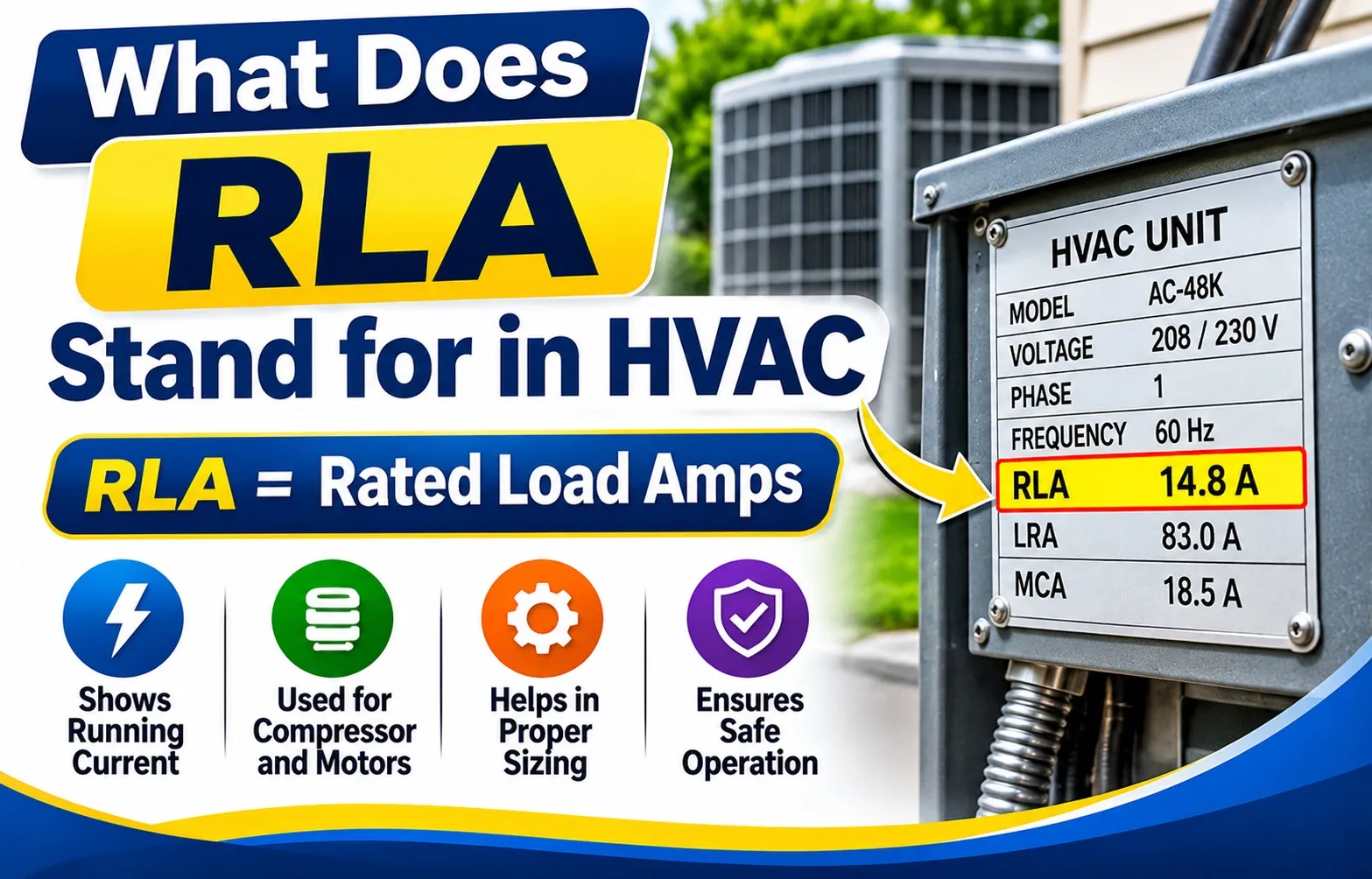 RLA stands for Rated Load Amps (frequently referred to as Running Load Amps). In HVAC systems, it defines the maximum electrical current in amperes that a compressor motor can safely handle under continuous operating conditions without overheating.
What is Rated Load Amps?
Rated Load Amps represents the upper electrical threshold established by manufacturers for hermetic compressor motors. Exceeding this amperage rating places extreme thermal and mechanical stress on internal motor windings.
Key characteristics of RLA include:
- Maximum Safe Threshold: It acts as the absolute upper limit for continuous current draw, rather than a normal operating target.
- Engineering Specification: Calculated during rigorous factory testing to prevent premature thermal overload or insulation breakdown.
- Nameplate Identification: Printed clearly on the outdoor unit’s technical specifications data plate for technician reference.
Why HVAC Technicians Rely on RLA Ratings
HVAC professionals utilize RLA specs during routine maintenance and diagnostic inspections to evaluate compressor health. Comparing actual operating current against the nameplate rating helps technicians quickly identify underlying system malfunctions.
Primary field applications for RLA values include:
- Component Matching: Verifying that wires, contactors, and overcurrent protection devices safely match electrical demands.
- Diagnostic Testing: Measuring running current with a digital clamp meter to spot airflow restrictions or refrigerant imbalances.
- Preventative Maintenance: Catching abnormal amp draws early before they cause internal thermal overloads or permanent motor failure.
RLA vs. FLA vs. LRA: What’s the Difference?
Understanding HVAC electrical specifications requires distinguishing between multiple current ratings found on system components. Each acronym measures electrical load differently under operational conditions.
RLA (Rated Load Amps) Explained
RLA measures the maximum continuous current a hermetic compressor motor can draw safely. It serves as an upper threshold guideline established during design testing.
Key traits of RLA include:
- Applies specifically to sealed compressor motors.
- Calculated to prevent damage to internal compressor windings.
- Acts as a diagnostic boundary rather than an ideal operating target.
FLA (Full Load Amps) for Fans and Blowers
FLA indicates the full-load current rating designated for open or non-hermetic motors. This rating applies to system components like condenser fan motors and indoor blower assemblies.
Important characteristics of FLA include:
- Standard electrical rating for continuous motor operation.
- Applies to external fan motors cooled by surrounding air flow.
- Monitored by technicians to ensure fan circuits avoid overloads.
LRA (Locked Rotor Amps) Startup Surge
LRA represents the massive electrical surge drawn the exact instant a compressor motor or fan attempts to spin while stationary. This high amp draw occurs momentarily before the rotor achieves normal operating speed.
Key aspects of LRA include:
- Usually spans five to seven times higher than normal RLA values.
- Lasts for a fraction of a second during initial startup.
- Helps technicians evaluate starting capacitor health and electrical supply limits.
MCC (Maximum Continuous Current) vs. RLA
MCC defines the absolute maximum current a compressor can draw before internal thermal protectors trip. For deeper technical distinctions, consult the Copeland electrical definitions guide.
Core differences involve:
- MCC represents absolute component limits under extreme stress.
- RLA is typically a lower, conservative rating designated for field service use.
- Both specifications protect compressor windings from catastrophic thermal failure.
Quick Comparison Matrix
Myth vs. Reality: Should a Compressor Normally Run at RLA?
A common misconception among property owners and junior technicians is that a compressor should operate right at its Rated Load Amps rating. In reality, sustained operation at RLA signals severe system distress and shortens equipment life.
RLA is a “Red Line” Maximum Cap, Not a Normal Target
Operating a compressor continuously at its Rated Load Amps indicates abnormal system stress rather than peak performance. RLA acts strictly as a red-line safety maximum established by manufacturers to prevent internal winding degradation.
Key implications of reaching or exceeding RLA include:
- Thermal Overload Risk: Sustained high amp draw overheats compressor windings, triggering the internal thermal overload relay to shut the system down.
- Drastic Lifespan Reduction: Running at maximum amp capacity accelerates wear and tear on mechanical components and electrical insulation.
- Indicator of System Faults: An operating current matching RLA usually points toward restricted airflow, dirty coils, or refrigerant overcharging.
What Normal Operating Amps Look Like in the Field
Under healthy operating conditions, a properly charged and maintained compressor typically draws only 60 to 70 percent of its listed RLA. Real-world operating current fluctuates dynamically based on outdoor weather conditions and internal system pressures.
Factors influencing actual operating current include:
- Ambient Temperature: Extreme outdoor heat increases head pressure, causing the compressor to draw higher operating current.
- Electrical Load Balancing: Proper line voltage ensures the motor maintains torque efficiently without spiking amp draw.
- System Maintenance: Clean coils and correct refrigerant charges keep actual running amps safely below the RLA threshold.
Diagnostic Framework: What Causes High RLA Draw in HVAC Compressors?
When an HVAC compressor draws current at or above its Rated Load Amps, it indicates a critical system malfunction requiring immediate field diagnosis. Technicians use professional diagnostic tools to uncover the root cause before the thermal overload trips permanently or damages the compressor windings.
Dirty Condenser Coils & High Head Pressure
Restricted airflow across outdoor condenser coils prevents proper heat rejection, causing head pressure and operating current to skyrocket. When coils are blocked by dirt, debris, or cottonwood, the compressor struggles to compress refrigerant, driving amp draw dangerously close to or past the RLA threshold.
Measuring operating current with a digital clamp meter while inspecting coil cleanliness is the first diagnostic step.
- Heat Rejection Failure: Trapped heat builds excessive high-side pressure in the system.
- Increased Workload: The compressor motor works harder against elevated head pressure, consuming excess electrical current.
- Corrective Action: Thoroughly washing coils with a specialized cleaner restores heat transfer and drops amp draw back to normal levels.
Refrigerant Overcharge or Non-Condensables
An overcharge of refrigerant or trapped non-condensables like air and moisture forces the system to operate under excessive pressure. This surplus mass overworks the compressor motor, increasing electrical resistance and elevating running amps toward the maximum RLA limit.
Technicians verify system charge and detect anomalies by evaluating subcooling and superheat metrics against manufacturer specifications.
- Excess Mass: Extra refrigerant volume crowds the condenser, elevating operating pressures.
- Non-Condensable Contamination: Air or moisture in closed loops creates artificial pressure spikes and motor strain.
- Corrective Action: Recovering excess refrigerant or evacuating and recharging the system alleviates abnormal compressor stress.
Failing Run Capacitors Causing Phase Imbalance
A degrading run capacitor fails to supply proper phase shift, causing uneven winding currents and severe electrical imbalance inside the motor. This imbalance forces the compressor to draw higher amperage through remaining active windings, quickly overheating the unit.
Checking capacitance with a reliable multimeter identifies failing components before they cause permanent motor failure or thermal overload trips.
- Microfarad Degradation: Capacitors dropping below acceptable thresholds fail to support smooth motor rotation.
- Winding Stress: Unequal current distribution across motor windings drives up localized heat and amp draw.
- Corrective Action: Replacing a weak or ruptured run capacitor instantly restores electrical balance and lowers operating amperage.
Low Line Voltage and Motor Stress
When incoming electrical supply voltage drops below acceptable manufacturer tolerances, inductive motors respond by drawing higher amperage to maintain required torque. This inverse relationship between voltage and current is a frequent hidden driver of high RLA operation.
Testing line voltage directly at the contactor terminals under load reveals electrical supply bottlenecks that threaten compressor health.
- Ohm’s Law Effect: Lower voltage requires the motor to pull more current to deliver the same mechanical power output.
- Wire and Connection Resistance: Corroded terminals or undersized supply wires exacerbate voltage drop issues.
- Corrective Action: Repairing electrical connections or resolving utility supply issues protects the compressor from chronic overheating.
Calculations & Rules of Thumb: Converting LRA to RLA
When an outdoor unit’s technical nameplate becomes faded, scratched, or entirely missing, technicians frequently need to estimate Rated Load Amps directly from the known Locked Rotor Amps. While exact mathematical conversion is impossible due to variable motor designs, industry rules of thumb offer reliable approximations.
Can You Convert LRA to RLA? (The Industry Rule of Thumb)
Yes, you can estimate Rated Load Amps from Locked Rotor Amps using standard industry divisors when nameplate data is missing. Field technicians generally divide the known LRA value by a factor between 4 and 6, depending on the compressor’s specific motor design and compressor tonnage.
Key guidelines for using this estimation formula include:
- Standard Divisor: Dividing LRA by 5 is the most common industry average for standard residential scroll and reciprocating compressors.
- Calculation Example: A compressor with an LRA of 60 divided by 5 yields an estimated RLA of approximately 12 amperes.
- Field Utility: This calculation serves as a valuable temporary baseline when verifying electrical specifications before replacing fuses or contactors.
Why Calculations Remain Estimates (Manufacturer Variances)
Calculations derived from LRA remain approximations because different engineering brands utilize unique internal winding geometries, varying motor efficiencies, and specialized internal overloads. Two compressors sharing identical locked-rotor current draw can feature completely different continuous RLA ratings.
Factors causing variance in the locked rotor current ratio include:
- Motor Efficiency Differences: Modern high-efficiency scroll compressors possess different electrical characteristics compared to older legacy units.
- Phase Variations: Single-phase and three-phase motors scale starting surge currents differently relative to their continuous running loads.
- Precision Limits: Relying strictly on formulas without manufacturer confirmation can lead to improperly sized electrical components or nuisance breaker trips.
How to Verify Specs When Nameplates Fade
When weather-beaten outdoor unit nameplates prevent reading electrical specifications directly, technicians must rely on manufacturer documentation and alternative system data. Cross-referencing the equipment model number with official parts catalogs or service manuals ensures absolute accuracy for maintenance work.
Reliable verification steps when nameplates are illegible include:
- Model and Serial Lookup: Locate the complete model number stamped on the indoor air handler or preserved on hidden cabinet panels.
- Manufacturer Support: Contact distributor technical support lines with the serial number to retrieve original factory engineering sheets.
- Empirical Meter Testing: Use a digital clamp meter to monitor actual operating current under stable conditions to ensure it remains well below estimated thresholds.
Frequently Asked Questions About RLA in HVAC
Addressing common technical questions clarifies how Rated Load Amps applies to everyday HVAC diagnostics, equipment specifications, and electrical sizing protocols.
Where is the RLA rating located on an air conditioner?
The RLA rating is printed directly on the outdoor unit’s technical specification data plate or nameplate. This metallic or weather-resistant sticker is typically located near the electrical access panel.
Key details found on the data plate include:
- Component Ratings: Clear listings for compressor RLA, fan FLA, and system LRA.
- Electrical Boundaries: Voltage requirements, minimum circuit ampacity, and maximum fuse sizes.
- Equipment Identification: Model numbers, serial numbers, and factory-charged refrigerant volume.
What happens if a compressor draws more current than its RLA?
When a compressor draws electrical current exceeding its RLA, internal motor windings experience rapid thermal stress. This abnormal condition threatens component integrity and safety.
Consequences of drawing current above RLA include:
- Thermal Overload Activation: Built-in thermal sensors trip to interrupt power and protect the motor from burning out.
- Winding Insulation Breakdown: Excessive heat melts protective varnish on copper windings, causing short circuits.
- Premature Compressor Failure: Chronic high amp draw permanently ruins the compressor, requiring a full system replacement.
Is RLA the same as MCA (Minimum Circuit Ampacity)?
No, RLA and MCA measure entirely different electrical parameters. RLA specifies the maximum running current for the compressor motor alone, while MCA determines the minimum wire gauge required to safely supply power to the entire outdoor unit.
Core distinctions between electrical metrics include:
- Scope of Measurement: MCA incorporates the total combined electrical load of both the compressor and condenser fan motor.
- Installation Sizing: Electricians use MCA alongside Maximum Overcurrent Protection (MOCP) values to size branch circuit wiring and breakers correctly.
- Operational vs. Safety: RLA guides compressor diagnostics, whereas MCA ensures overall electrical code compliance during installation.

Oscar Vance | Master Plumber & Drainage Expert
Meet Oscar Vance, a licensed master plumber sharing practical solutions on residential repairs, preventive maintenance, and thoughtful home upkeep.