How Much Does HVAC Trade School Cost?
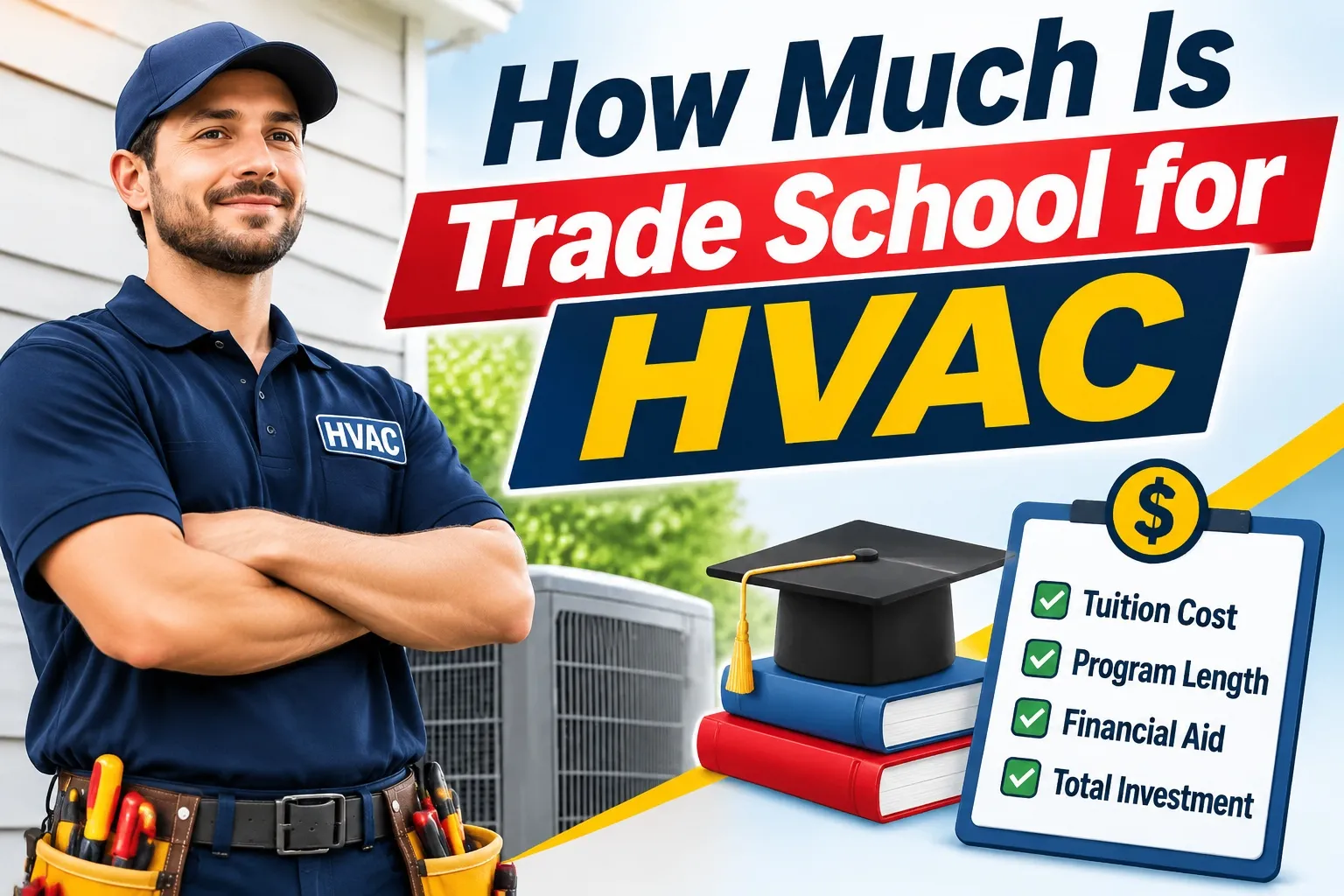 HVAC trade school programs typically cost between $1,200 and $35,000, depending on the type of credential, program length, and whether you choose a public community college or a private technical institution. This initial financial investment paves the way for a stable career in a high-demand mechanical trade.
National Average Cost Ranges for HVAC Training
Tuition expenses vary significantly according to the depth of the curriculum and the specific educational format. Evaluating these standard tiers helps prospective students align their training goals with realistic financial planning.
- Certificate and Short-Term Programs (6 to 12 months): Ranging from $1,200 to $15,000, these focused courses prioritize essential mechanical principles for rapid entry into the workforce.
- Public Community College Programs (1 to 2 years): Ranging from $3,000 to $6,000 for in-state residents, community colleges offer accredited education at subsidized rates.
- Associate Degree Programs (2 years): Ranging from $15,000 to $35,000 at private vocational schools, these comprehensive programs combine technical training with general education credits.
Key Factors Influencing HVAC Program Costs
Multiple variables account for the wide financial spectrum seen across vocational training providers. Recognizing these cost drivers ensures you can evaluate programs accurately beyond just the base tuition sticker price.
- Institutional Funding Model: Public community colleges receive state tax subsidies that significantly reduce out-of-pocket tuition expenses for local students.
- Depth of Hands-On Lab Training: Programs with advanced diagnostic simulators, commercial HVAC training units, and extensive workshop hours often carry higher facility fees.
- Residency and Location: Out-of-state tuition fees at public institutions or attending private academies in major metropolitan areas generally command higher rates.
HVAC Training Program Types and Detailed Cost Breakdown
Choosing the right educational pathway directly influences your upfront tuition investment, hands-on lab hours, and how quickly you can enter the HVAC workforce. Evaluating public, private, and earn-while-you-learn options allows prospective technicians to balance budget constraints with career readiness.
Public Community Colleges ($3,000 – $6,000)
Public community colleges provide structured certificate and associate degree paths ranging from $3,000 to $6,000 in total tuition for local residents. These institutions offer government-subsidized programs, making them one of the most cost-effective entry points for structured technical training.
- In-State vs. Out-of-State Tuition: Local residents pay significantly lower rates due to state tax support, whereas out-of-state students may face doubled or tripled tuition fees.
- Comprehensive Curriculum: A standard community college HVAC program spans 12 to 24 months, integrating foundational electrical theory with extensive mechanical lab practice.
- Financial Aid Eligibility: Accredited public colleges qualify for federal FAFSA funds, Pell Grants, and state workforce development grants to offset expenses.
Private Vocational & Trade Schools ($10,000 – $31,000)
Private technical institutions specialize in accelerated, hands-on career training with total program costs running between $10,000 and $31,000. While more expensive than public colleges, these dedicated trade schools prioritize rapid certification and intensive workshop hours.
- Accelerated Scheduling: Most private vocational programs compress training into 6 to 10 months, allowing students to enter the job market much faster.
- Modern Equipment Access: Private schools frequently update their labs with commercial-grade HVAC systems, smart thermostats, and modern diagnostic gear.
- Dedicated Career Services: These institutions often maintain robust contractor networks and job placement assistance to help graduates secure employment quickly.
Union & Employer-Sponsored Apprenticeships ($500 – $2,000)
Apprenticeships eliminate heavy upfront tuition entirely by combining paid on-the-job training with classroom instruction, requiring only $500 to $2,000 in initial out-of-pocket costs for basic gear and administrative fees. Trainees earn wages while learning directly from master technicians.
- Earn While You Learn: Sponsored through contractors or a local United Association (UA local) union hall, apprentices receive a progressive hourly wage that increases as they gain field experience.
- Employer-Covered Training: Sponsoring companies or union training funds typically cover all instructional costs, textbooks, and certification exam fees.
- Rigorous Selection Process: Because spots are fully funded and highly competitive, applicants must often pass aptitude tests and interviews to secure an apprenticeship slot.
6-Week Fast-Track Bootcamps vs. Traditional Programs: Which is Better?
Navigating the 6 week HVAC training cost requires understanding what accelerated trade school programs deliver compared to standard 9-month or 2-year curricula. While fast-track bootcamps provide rapid entry into the field, prospective students must weigh the intensity of compressed schedules against the depth of hands-on mechanical practice.
What Do 6-Week HVAC Bootcamps Actually Cover?
Accelerated 6-week HVAC bootcamps typically cost between $1,500 and $4,000, focusing strictly on foundational theories and rapid preparation for mandatory testing. These intensive courses prioritize getting students licensed quickly rather than providing exhaustive diagnostics training.
- Core Electrical & Mechanical Basics: Instruction concentrates on basic residential wiring, thermodynamics, and simple refrigeration cycles.
- EPA Universal Certification Prep: A primary objective of most short bootcamps is preparing students to pass the mandatory EPA Section 608 certification exam before graduation.
- Basic Troubleshooting: Students receive compressed overviews of common system malfunctions, though actual field application is limited.
Pros and Cons of Accelerated Training
Choosing an accelerated trade school format offers distinct financial advantages for career-switchers, but the reduction in hands-on lab hours creates a steeper learning curve once you land an entry-level position.
- Lower Upfront Costs: Shorter program duration means significantly reduced tuition outlays and lower overall financial commitment.
- Fast Workforce Entry: Graduates enter the job market in weeks, beginning to earn a technician’s salary instead of sitting in extended classrooms.
- Limited Lab Practice: Reduced hands-on lab hours mean students miss out on complex troubleshooting scenarios involving advanced commercial systems.
Employer Perspectives: Do They Respect Short Certificates?
Contractors value initiative and baseline credentials, but many employers prefer candidates who have completed comprehensive programs with extensive workshop experience.
- Immediate Foot in the Door: A short certificate combined with a valid EPA certification proves you possess basic safety knowledge and professional drive.
- Heavy Reliance on OJT: Bootcamp graduates typically require months of close mentorship under a lead technician to become fully independent in the field.
- Commercial Contractor Preferences: Larger commercial HVAC companies often favor 9-month or 2-year vocational graduates who require less foundational hand-holding.
The Hidden Costs of HVAC School (What Schools Don’t Tell You)
Standard trade school advertisements often highlight base tuition while omitting essential out-of-pocket expenses required to graduate and work. Understanding these hidden trade school fees prevents unexpected financial strain during your training program.
Essential Tool Kits and Diagnostic Equipment ($300 – $1,500)
Professional HVAC technicians cannot work without specialized hardware, meaning students must budget an extra $300 to $1,500 for professional-grade gear. Essential mechanical instruments form the core of daily diagnostic testing, and programs rarely include them in standard tuition prices.
- Digital Multimeter: Crucial for testing electrical circuits, voltage, and continuity, costing $100 to $300 for reliable contractor models.
- Manifold Gauges: Used to measure system pressures and diagnose refrigerant charge levels accurately during lab simulations.
- Hand Tool Sets: Heavy-duty pliers, tubing cutters, screwdrivers, and specialized wrenches designed for tight residential and commercial service spaces.
Mandatory Certification Exams (EPA Section 608 & OSHA)
Legal compliance and safety certifications require separate testing fees that rarely appear in initial enrollment brochures. Securing your credentials to legally handle refrigerants and job-site hazards involves distinct registration costs before entering the workforce.
- EPA Section 608 Certification Fee: Mandatory federal testing for handling regulated refrigerants typically runs between $100 and $250 depending on the testing center.
- OSHA 10 Card: General safety training cards required by commercial contractors cost around $50 to $100 for course registration.
- State Registration Fees: Some regions require apprentice licensing cards or background check fees before starting official field work.
Textbooks, Lab Fees, and Safety Gear
Administrative overhead, technical manuals, and protective equipment add hundreds of dollars to your overall education expenses. Technical manuals change frequently, forcing students to purchase brand-new textbook bundles rather than discounted used copies.
- Technical Textbooks & Software: Digital learning portals and electrical schematic workbooks often cost $300 to $600 per program.
- Lab and Facility Fees: Consumable supplies like copper tubing, brazing gas, and electrical components incur institutional usage fees.
- Personal Protective Equipment: Steel-toed safety boots, safety glasses, and heavy-duty work gloves are mandatory for workshop entry.
Avoiding Overpriced School-Branded Tool Bundles
Veteran technicians on industry forums heavily caution students against purchasing pre-packaged tool bundles sold directly by trade schools. These branded packages often feature massive markups for entry-level gear that fails under heavy field conditions.
- High-Interest Financing Traps: Private vocational school loans frequently carry high interest rates when used to bundle tool kits and textbook costs directly into tuition.
- Buy Individual Brand Names: Purchase professional-grade tools piece-by-piece from trusted industrial supply houses to guarantee lifetime warranties.
- Check Used Marketplaces: Sourcing basic hand tools secondhand or from retiring technicians saves hundreds of dollars during your first semester.
State-by-State HVAC Training Costs & Licensing Requirements
HVAC trade school costs and mandatory state regulations vary drastically across high-demand regions, directly influencing your upfront educational budget and long-term career setup. Evaluating local pricing structures and legal credentialing requirements ensures you select a program that aligns with regional compliance and income expectations.
HVAC School Costs in California
California HVAC school cost ranges from $1,300 at public community colleges up to $15,000 at private technical institutes, reflecting high regional demand for climate control specialists. State residents benefit heavily from subsidized public tuition rates, though private vocational options provide accelerated completion timelines.
- Public Community College Options: In-state tuition rates average around $1,300 to $2,500 total, making local colleges an extremely affordable pathway for structured technical education.
- Private Technical Schools: Comprehensive private programs in major metropolitan centers can run between $10,000 and $18,000, often bundled with equipment packages.
- Local Prevailing Wage Advantage: High regional demand across the state pushes technician compensation higher, allowing graduates to recoup training investments rapidly.
Texas HVAC Training & Licensing Expenses
Texas technical trade school programs generally cost between $5,000 and $15,000, accompanied by specific state-mandated registration and licensing fees. The state’s booming construction and real estate sectors maintain a constant need for certified mechanical service professionals.
- Vocational School Tuition: Private trade academies throughout Houston, Dallas, and San Antonio average roughly $8,000 to $14,000 for standard certificate courses.
- State Licensing Fees: Texas requires registration and licensing paperwork, including application fees of around $50, exam fees near $90, and an initial license fee of $115.
- Employment Pipelines: Many Texas programs partner directly with local commercial contractors, facilitating smooth transitions from classroom training to paid field technician roles.
Ohio and Florida Program Pricing
Ohio and Florida present distinct regional pricing dynamics, with Florida trade schools averaging between $10,000 and $23,000 due to year-round air conditioning demands. Ohio technical programs offer balanced pricing through extensive network partnerships and public vocational centers.
- Florida Training Variations: Accelerated programs at technical colleges in Florida frequently range from $12,000 to $23,000, driven by heavy residential cooling requirements.
- Ohio Public and Private Balance: Ohio students frequently utilize public career-technical centers or community colleges where tuition remains well under $6,000.
- Florida HVAC Certification Pathways: Local programs place heavy emphasis on immediate EPA universal compliance and state-specific contractor licensing preparation.
Why State Licensing Rules Matter for Your Career Path
Navigating state licensing exams and regulatory mandates is vital because working without proper credentials can result in legal penalties or severe career roadblocks. Every jurisdiction enforces distinct testing criteria for residential versus commercial mechanical work.
- Scope of Practice Regulations: Certain states require separate licensing tiers for minor residential repairs versus high-capacity commercial system installations.
- Continuing Education Requirements: Most state licenses mandate annual or biennial renewal fees paired with verified continuing education hours to maintain active standing.
- Reciprocity Limitations: Licensing credentials do not always cross state lines automatically, requiring technicians to verify interstate reciprocity agreements if relocating.
HVAC School ROI, Payback Period, and Earning Potential ($100k/Year Path)
Evaluating HVAC ROI requires analyzing how quickly your post-graduation earnings offset initial training expenses. According to official data tracked by the U.S. Bureau of Labor Statistics, heating, air conditioning, and refrigeration mechanics earn strong median wages that allow technicians to recoup their vocational investments within months of entering the workforce.
Calculating Your Tuition Payback Period
Calculating your tuition payback period depends entirely on your initial education costs and your starting wage differential compared to non-skilled entry pay. Most graduates recover their total school investment in less than a year of full-time employment.
- Upfront Outlay Comparison: Spending $5,000 on a community college program or $12,000 on a private trade school is offset rapidly by skilled technical starting pay.
- Net Earnings Difference: The financial gain is measured by subtracting what you would earn without training from your new technician starting salary.
- Rapid Amortization: Because technical wages scale quickly past the entry tier, full financial payback is frequently achieved within the first 6 to 12 months on the job.
Entry-Level vs. Journeyman Salaries
Entry-level HVAC salaries typically start between $40,000 and $48,000 per year, while certified journeyman technicians command significantly higher base pay. As practical experience accumulates, earning potential expands through advanced diagnostics and specialized system knowledge.
- Starting Technician Pay: New graduates entering the field receive foundational hourly wages that reflect their initial period of on-the-job mentorship.
- Journeyman Milestone Progression: After 3 to 5 years of verified field experience, technicians transition to journeyman status with substantial wage bumps.
- Commercial HVAC Pay Advantages: Commercial and industrial service technicians often earn higher average pay due to the complex nature of large-scale mechanical cooling systems.
The Roadmap to Earning $100,000+ in HVAC
Reaching a six-figure income in the HVAC industry is entirely attainable by leveraging overtime hours, acquiring advanced commercial certifications, or transitioning into business ownership. Strategic career planning turns standard trade positions into lucrative entrepreneurial ventures.
- Overtime and Emergency On-Call Pay: Peak heating and cooling seasons generate heavy overtime opportunities and emergency call bonuses that significantly boost annual earnings.
- Advanced Commercial Specializations: Mastering industrial refrigeration, building automation controls, and chiller systems commands top-tier contractor billing rates.
- Independent Business Ownership: Launching your own independent HVAC service contracting business eliminates income caps, allowing top operators to scale well past $100,000 annually.
Is HVAC Trade School Worth It? (HVAC vs. Electrician & Plumber)
Determining whether trade school is worth it for HVAC involves weighing long-term job security, specialized earning potential against other major trades, and daily working conditions. Entering the mechanical service industry provides a debt-free alternative to traditional four-year degrees while securing high-demand technical skills.
Job Security and Market Demand
Trade job security in the HVAC sector remains exceptionally high due to continuous residential and commercial growth, strict energy efficiency standards, and an aging workforce nearing retirement age. Heating and cooling systems are mandatory structural necessities rather than discretionary expenses, protecting technicians from economic downturns.
- Recession-Resistant Essential Services: Climate control maintenance, emergency repairs, and indoor air quality upgrades are critical year-round regardless of broader economic shifts.
- Aging Infrastructure Replacement: Millions of commercial buildings and residential homes require continuous system upgrades to comply with modern environmental regulations.
- Retirement Deficit: As veteran technicians retire, a massive labor shortage creates immediate job openings and high starting placement rates for program graduates.
HVAC vs. Electrician vs. Plumber: Which Pays Better?
Comparing HVAC vs. electrician salary and plumbing vs. HVAC reveals closely matched earning tiers across the major building trades, where ultimate income depends heavily on specialization, location, and overtime. While electricians and plumbers often command slightly higher median base pay in specific commercial sectors, HVAC technicians match or exceed earnings through seasonal peak-demand emergency calls.
- Electrical Trade Earnings: Electricians average strong median wages, benefiting from high-paying industrial wiring and renewable energy solar installation contracts.
- Plumbing Trade Compensation: Plumbers maintain steady high earning potential due to strict municipal licensing codes and urgent residential repair requirements.
- HVAC Earning Dynamics: HVAC technicians balance solid base salaries with lucrative summer cooling and winter heating emergency overtime opportunities.
Physical Demands and Working Conditions
Understanding the physical demand of mechanical trades helps prospective students prepare for active, hands-on work environments that differ entirely from traditional office settings. Technicians frequently navigate challenging physical spaces while solving complex mechanical and electrical problems.
- Environmental Exposure: Field technicians work in hot attics, cold rooftops, mechanical rooms, and crawlspaces, requiring resilience against seasonal weather extremes.
- Lifting and Ergonomics: Handling heavy condensing units, compressors, and steel tool bags places moderate strain on the back, knees, and hands.
- Mental Problem-Solving: Modern HVAC work requires heavy cognitive engagement, diagnosing computerized control boards, refrigerant pressures, and complex electrical schematics.
How to Pay for HVAC School Without Massive Debt
Funding your HVAC education without taking on heavy debt is entirely possible by utilizing federal financial aid, workforce development grants, employer-sponsored programs, and avoiding high-interest private vocational loans. Strategic financial planning allows prospective students to graduate debt-free and launch their mechanical careers on solid economic footing.
Using FAFSA and Federal Pell Grants
Submitting the Free Application for Federal Student Aid (FAFSA) opens doors to federal Pell grants and low-interest student loans that significantly reduce out-of-pocket tuition expenses for accredited trade programs. Because qualified vocational schools and community colleges participate in federal student aid programs, students should complete their FAFSA forms early every academic cycle.
- Federal Pell Grant Eligibility: Need-based federal grants provide direct financial assistance that does not require repayment, covering major portions of tuition and lab costs.
- Subsidized vs. Unsubsidized Loans: When borrowing is necessary, federal loans offer substantially lower interest rates and flexible income-driven repayment options compared to commercial alternatives.
- Accreditation Requirement: Ensure your chosen HVAC training institution holds proper accreditation so your enrollment status qualifies for federal financial assistance.
State Workforce Development Grants & Scholarships
State and local workforce initiatives offer targeted financial aid—such as WIOA grants—to train workers for high-demand technical careers like heating, ventilation, and air conditioning. These regional programs often cover 100% of tuition, safety gear, and certification testing expenses for qualifying candidates.
- WIOA Grant Funding: Dislocated workers, career changers, and low-income students can access state American Job Center funding specifically earmarked for vocational and technical education.
- Industry and Manufacturer Scholarships: HVAC equipment manufacturers, supply distributors, and local contractor associations routinely provide annual merit and need-based scholarships.
- State-Specific Career Grants: Many states provide unique vocational incentive grants to boost enrollment in critical infrastructure and mechanical trades.
Employer Tuition Assistance and Paid Apprenticeships
Many commercial HVAC contracting companies and union local chapters provide employer tuition reimbursement or sponsor complete apprenticeship programs where trainees earn wages while learning. This earn-while-you-learn approach completely bypasses the need for traditional student debt.
- Contractor Tuition Reimbursement: Local mechanical service companies frequently cover ongoing education costs in exchange for a signed employment commitment after graduation.
- Sponsored Union Apprenticeships: United Association (UA local) union halls and contractor associations pay apprentices an hourly wage while covering all classroom instruction and book fees.
- Direct Industry Pathways: Working directly as a helper or installer while your employer funds your advanced certifications ensures immediate, debt-free career advancement.
How to Avoid High-Interest Trade School Loans
For-profit private trade schools frequently partner with predatory lenders offering high-interest institutional loans that can trap graduates in restrictive multi-year debt cycles. Prospective students must carefully scrutinize all financing agreements and avoid predatory credit offers before signing enrollment contracts.
- Scrutinize APRs and Fees: Private vocational school loans can carry exorbitant interest rates far exceeding standard federal loan limits or traditional personal banking options.
- Avoid Padded Tuition Packages: Watch out for institutional loan structures that force students to finance overpriced tool kits, software bundles, and supplies directly into their principal debt balance.
- Read the Fine Print: Always evaluate the total repayment cost over time rather than focusing solely on low monthly payment claims advertised by trade school recruiters.

Oscar Vance | Master Plumber & Drainage Expert
Meet Oscar Vance, a licensed master plumber sharing practical solutions on residential repairs, preventive maintenance, and thoughtful home upkeep.