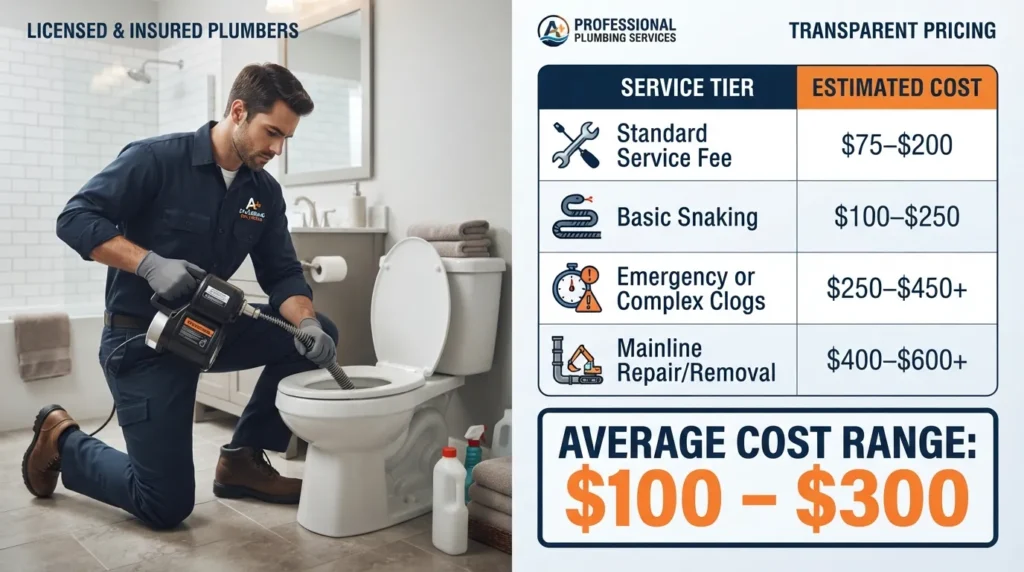
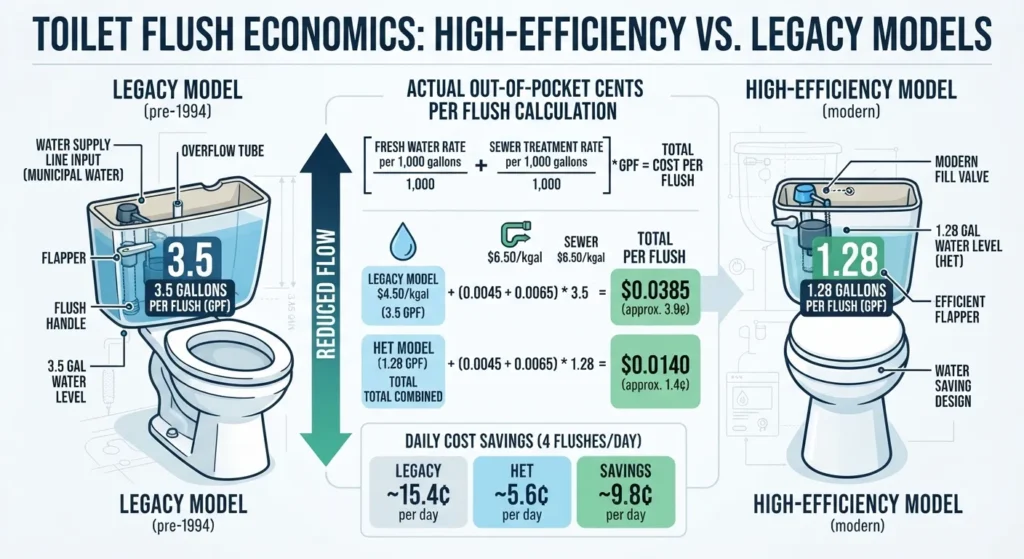
Plumbing Camera Inspection Cost by Type of Service
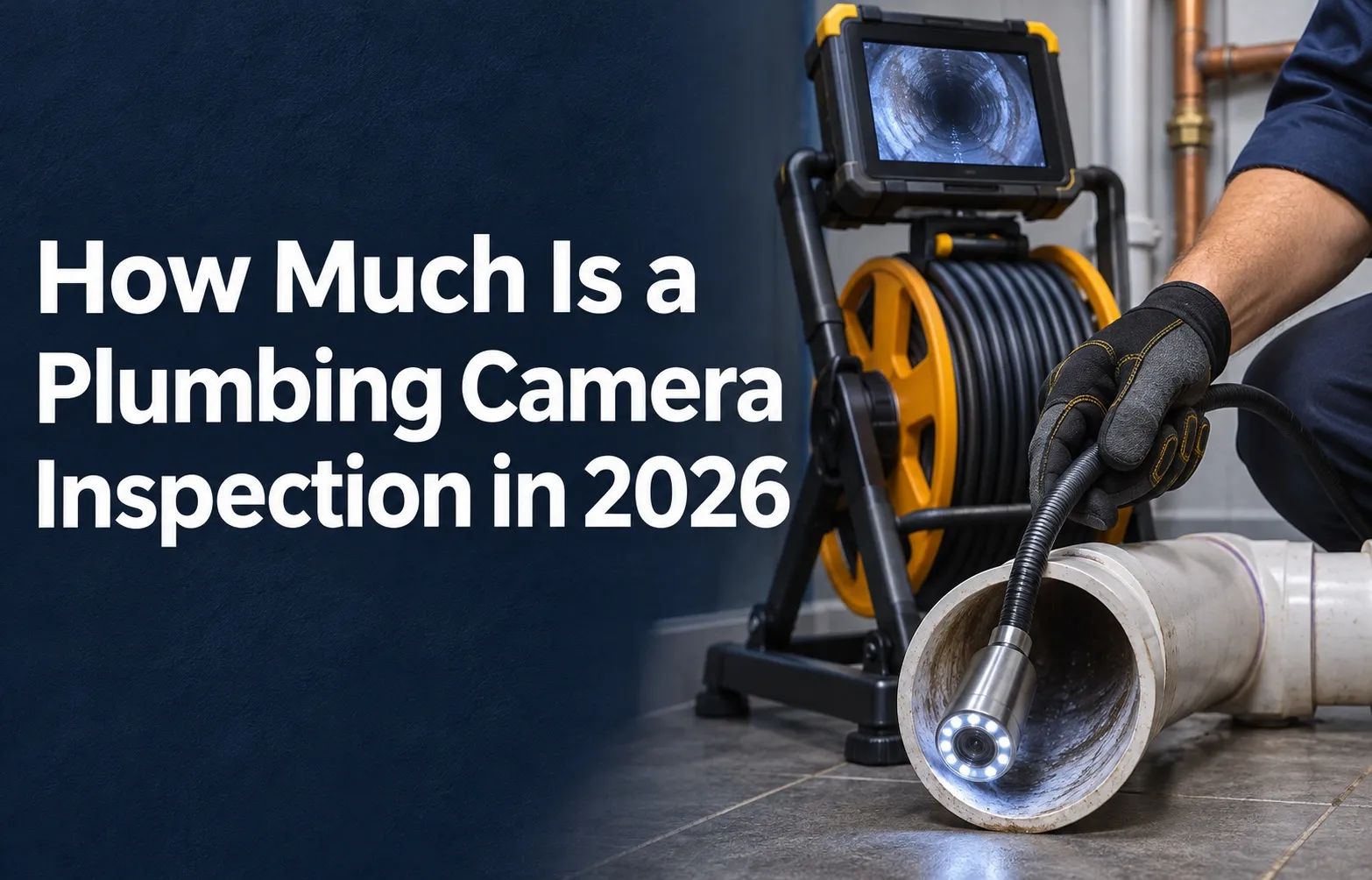 Plumbing camera inspection pricing varies significantly depending on the resolution of the camera head, the length of the pipe run, and whether you need formal video documentation. Understanding the five distinct service tiers helps homeowners and homebuyers select the exact diagnostic level required without overpaying for commercial-grade equipment.
Basic Drain Line Inspection ($150 – $350)
A basic drain line inspection costs between $150 and $350 and covers a straightforward visual diagnostic of short indoor branch pipes or easily accessible residential lines. Technicians feed a compact push-rod sewer camera into the drain while you watch the live monitor together on-site.
- Best Use Case: Pinpointing localized clogs, lost jewelry, or minor buildup in 1.5-inch to 3-inch kitchen, bathroom, or laundry drain lines.
- What Is Included: Up to 30 to 45 minutes of diagnostic labor and a verbal explanation of the pipe condition.
- Key Limitation: This tier typically excludes downloadable video recordings, formal written defect reports, and above-ground depth locating.
HD Camera & Real Estate Sewer Scope ($250 – $600)
A high-definition real estate sewer scope runs $250 to $600 and provides a complete diagnostic recording of the main sewer lateral from the house out to the municipal street tie-in. Homebuyers rely on this tier during their inspection contingency period to uncover hidden structural defects before closing.
- Equipment Used: High-resolution push-rod sewer cameras equipped with high-lumen LED rings capable of illuminating dark 4-inch and 6-inch cast iron or clay pipes.
- Deliverables Included: A time-stamped digital video file (delivered via USB drive or cloud link) alongside a written summary documenting pipe materials, root intrusion, offset joints, or sagging bellies.
- Negotiation Value: Documented footage gives buyers objective leverage to request $3,000 to $15,000+ in seller repair credits when failing sewer lines are discovered.
Camera Inspection Paired with Drain Cleaning ($300 – $600)
Bundling a camera inspection with mechanical drain cleaning costs $300 to $600 total and is the most practical option when dealing with an active backup. Because submerged camera lenses cannot see through murky sewage, plumbers must clear the obstruction before filming the pipe walls.
- How Bundled Pricing Works: Many plumbing companies charge their standard $200 to $350 drain augering fee and discount the post-clearing camera check to $100 to $200.
- Diagnostic Purpose: Confirming that tree roots, grease, or paper blockages were fully removed and verifying whether a structural crack caused the backup in the first place.
- Upgrade Consideration: Heavy scale or dense root masses may require hydro-jetting rather than standard cabling, which increases the combined service total.
Specialty 360-Degree & Self-Leveling Cameras ($600 – $1,500+)
Specialty inspections using 360-degree pan-and-tilt or self-leveling camera heads cost $600 to $1,500 or more for complex plumbing networks and commercial properties. These advanced systems eliminate guesswork on sprawling properties where standard push cameras lose orientation or cannot reach secondary branches.
- Self-Leveling Camera Head: Automatically keeps the video horizon upright as the cable twists through multiple 45-degree and 90-degree fittings, making it clear whether water is pooling on the pipe floor.
- 360-Degree Lateral Launch Camera: Uses a robotic crawler and secondary launch lens to inspect individual side branches connecting into a main line without digging multiple access points.
- Ideal Applications: Long rural sewer laterals exceeding 100 to 200 feet, multi-family apartment buildings, municipal connections, and post-repair engineering sign-offs.
General Home Inspection Add-On ($100 – $250)
Adding a sewer scope onto a scheduled general home inspection costs just $100 to $250 because the inspector is already on-site and avoids a separate trip charge. Multi-inspector firms frequently offer this discounted package rate when booked simultaneously with a standard buyer walkthrough.
- Cost Savings: Saves $100 to $250 compared to hiring an independent plumbing contractor for a standalone visit.
- Verification Tip: Confirm beforehand that your general home inspector uses a true self-leveling main-line camera with recording capability rather than a short entry-level borescope.
- Access Requirement: The property must have an accessible basement, crawlspace, or exterior ground-level cleanout cap, as general home inspectors rarely pull toilets during standard walkthroughs.
What Affects the Cost of a Sewer Camera Inspection?
Beyond the camera tier itself, six operational and structural factors determine your final sewer camera inspection invoice. Line length, access point difficulty, pipe age, and timing can easily add $100 to $700 onto a baseline quote if not clarified upfront.
Sewer Line Length & Pipe Layout (50–100 Feet Average)
Most residential sewer laterals span 50 to 100 feet from the house to the street main, which fits comfortably within standard push-rod camera cable limits and base labor estimates. Properties set far back from the road or featuring complex multi-branch layouts require longer cable deployment and extra technician time.
- Standard Suburban Runs (50–100 ft): Typically covered under baseline inspection rates with minimal cable friction or setup time.
- Extended or Rural Laterals (100–200+ ft): May require heavy-duty reels, longer push cables, or higher per-foot/hourly rates when reaching distant property lines or septic tanks.
- Branching & Turns: Multiple Y-junctions, cleanout branches, and 45-degree or 90-degree bends slow camera advancement and increase diagnostic complexity.
Access Point Difficulty (Cleanout vs. Pulling a Toilet)
Having a clear cleanout access point keeps your inspection straightforward and affordable, whereas entering through a bathroom fixture adds noticeable labor. When no exterior or basement cleanout exists, plumbers often have to pull and reset a toilet to reach the drain line.
- Accessible Cleanout Point: Removing a threaded cap on an exterior yard cleanout, basement floor drain, or utility stack lets technicians insert the camera in minutes with zero extra fixture fees.
- Toilet Pull and Reset ($100 – $250 Extra): Unbolting, lifting, and reinstalling a toilet—complete with a replacement wax ring and closet bolts—adds labor time and risk of flange or seal issues.
- Roof Vent or Tight Crawlspaces: Accessing lines from a steep roof vent or cramped crawlspace increases setup time and safety precautions.
Sonde Locating & Yard Depth Marking (+$50 – $150)
Finding a crack on video is only half the job; pinpointing where it sits underground requires pipe depth locating with a sonde transmitter. Plumbers typically charge an extra $50 to $150 to trace the line above ground and mark exact spots and depths on your yard.
- How Sonde Locating Works: A small radio-frequency sonde transmitter inside or behind the camera head emits a signal tracked on the surface with a calibrated receiver.
- Depth & Route Readouts: The above-ground locator displays estimated burial depth (often 3 to 10+ feet deep), helping contractors plan trenching or spot repairs accurately.
- Surface Marking: Technicians use marking paint, flags, or GPS notes so you know precisely where roots, offsets, or bellies sit beneath landscaping or driveways.
Pipe Material & Home Age (Clay, Cast Iron & Orangeburg)
Older sewer lines made of vitrified clay, corroding cast iron, or deteriorating Orangeburg pipe demand slower, more cautious scoping than modern PVC. Fragile or rough interior walls increase the chance of snagging a camera head or missing subtle structural weaknesses.
- Vitrified Clay Pipe: Common in mid-century homes, clay resists chemical corrosion but is prone to root intrusion at pipe joints and cracking from soil shifts.
- Cast Iron Scaling: Aging cast iron often develops heavy interior rust buildup—known as cast iron scaling—that narrows pipe diameter and mimics or hides cracks.
- Orangeburg Pipe: Bituminous fiber pipe used roughly from the 1940s to 1970s can blister, oval, or collapse, requiring gentle handling so the camera does not get wedged.
Emergency & After-Hours Dispatch Fees ($300 – $700)
Booking a camera inspection during an active sewage backup, at night, on weekends, or on holidays triggers steep dispatch surcharges. Emergency plumber dispatch fees commonly push urgent diagnostic calls into the $300 to $700 range before repairs even begin.
- After-Hours & Weekend Surcharges: Technicians on standby outside regular weekday business hours command higher overtime labor rates.
- Urgent Situation Premiums: Active backups or standing water often require immediate clearing first, compounding total same-day costs.
- Scheduling Tip: If wastewater is still draining slowly without active overflow, waiting for standard daytime hours can save hundreds of dollars.
Regional Labor Rates & National Chains (e.g., Roto-Rooter)
Where you live and whether you hire a local independent plumber or a large franchise like Roto-Rooter noticeably shifts your quote. High-cost metro areas charge higher hourly labor rates than smaller towns, while national chains carry distinct pricing structures.
- Roto-Rooter Camera Inspection Cost & Model: Large national chains offer 24/7 availability, standardized dispatch processes, and brand guarantees, though their base rates and diagnostic fees often run higher than small local shops.
- Independent Local Plumbers: Smaller licensed contractors frequently offer lower overhead and more flexible pricing, though availability and recorded reporting options vary by company.
- Quote Comparison Rule: Always compare apples to apples—confirm whether a quote includes video files, sonde locating, and travel/dispatch fees before deciding.
Can You Camera a Clogged Sewer Line? (And How to Avoid Paying Twice)
You cannot perform a complete sewer camera inspection on a fully clogged pipe because underwater lenses cannot see through murky, standing sewage. Attempting to film an active blockage often leaves homeowners stuck paying full diagnostic fees for an aborted scan before paying again to clear the line.
Why Sewer Cameras Fail in Standing Water & Active Blockages
High-definition sewer cameras rely on bright LED rings to illuminate dry or lightly flowing pipe walls, but submerged lenses reflect suspended waste particles like headlights in thick fog. Once the camera head enters a standing water blockage, the video feed turns completely dark or cloudy brown, making structural diagnosis impossible.
- Zero Visibility Through Sewage: Murky wastewater blocks light transmission, hiding hairline cracks, offset pipe joints, and early tree root intrusion.
- Equipment Snagging Risks: Pushing a flexible fiberglass rod blindly into dense grease, root balls, or a collapsed section can wedge or damage an expensive camera head.
- Masked Pipe Defects: Standing water caused by an acute clog makes it impossible to distinguish a temporary blockage from a permanent bellied or sagging pipe.
The Incomplete Scope Billing Trap (Real Homeowner Warning)
A common frustration among homeowners is booking a standalone inspection during a slow-drain episode, only for the technician to stop 20 or 25 feet down the line at a solid obstruction. Without a clear upfront agreement, you can get billed full price for an incomplete sewer camera inspection and then quoted a second full fee to re-film after clearing.
- First Charge (Aborted Inspection): The plumber hits standing water, pulls the camera back, and collects the full $250 to $350 diagnostic fee despite seeing less than a third of the pipe.
- Second Charge (Line Clearing): To restore flow, you must pay $200 to $350 for mechanical drain snaking or augering, or $400 to $800+ for high-pressure hydro-jetting.
- Third Charge (Re-Scope Fee): Some contractors charge an additional post-clearing camera fee to inspect the remaining 50 to 75 feet of newly opened pipe.
3 Questions to Ask Before Booking to Protect Your Wallet
Confirming billing policies over the phone before dispatching a truck prevents surprise double-charging if your line is actively backed up. Ask every plumbing company these three specific questions before scheduling your appointment:
- “If you hit standing water, do you pause and credit the inspection toward clearing?” Reputable plumbers will roll your initial diagnostic fee into a bundled drain snaking or hydro-jetting package and finish the camera run afterward at no extra scope charge.
- “Is a downloadable MP4 or USB video file included in the base quote?” Ensure your final receipt includes full unedited footage of the cleared line from the cleanout to the city main rather than a brief verbal summary.
- “Does your price include locating and marking any breaks?” Clarify whether pinpointing tree root intrusion, an offset pipe joint, or a bellied or sagging pipe above ground is part of the quoted rate or billed separately.
Are Free Plumbing Camera Inspections Really Free?
Promotional offers advertising a free plumbing camera inspection or a $49 sewer check are rarely unconditional—they almost always require purchasing an expensive drain-clearing service first. Understanding how these loss-leader promotions operate helps homeowners avoid high-pressure sales pitches and biased repair recommendations.
How the “Free Camera Inspection With Any Drain Clearing” Offer Works
Plumbing companies advertise a free plumbing camera inspection as a marketing hook to get a technician inside your home during a clog emergency. The camera check is only waived after you agree to pay $300 to $850 or more for mechanical snaking or hydro-jetting.
- Mandatory Service Minimums: If the technician arrives and finds your line is already clear, or you decline their drain-clearing quote, standard trip and diagnostic fees still apply.
- Stripped-Down Deliverables: Promotional scans usually include a quick look on the truck monitor while the plumber is on-site, excluding downloadable MP4 video files or written inspection reports.
- Extra Charges for Locating: Pinpointing pipe depth and marking problem spots on your lawn with a sonde transmitter almost always triggers an additional $100 to $150 charge.
High-Pressure Trenchless Repair Upsells to Watch Out For
Commission-based drain companies frequently use discounted camera checks as a lead-generation funnel for five-figure excavation or trenchless pipe lining contracts. Because an untrained homeowner cannot easily tell cosmetic pipe aging from imminent collapse, aggressive salespeople can frame routine wear as an urgent emergency.
- Common Scare Tactics: Technicians may zoom in on harmless surface oxidation inside older cast-iron pipes or minor root hairs at clay joints to push an immediate $10,000 to $15,000 CIPP cured-in-place pipe liner.
- The Independent Advantage: Paying $250 to $350 upfront to an independent sewer scope inspector—a specialist who performs diagnostics only and sells zero repair work—guarantees an objective assessment.
- Protect Yourself Before Signing: Always request the raw video file and gather at least one second opinion plumbing quote from a licensed local contractor before authorizing trenchless pipe lining or yard excavation.
DIY Plumbing Camera Rental vs. Buying vs. Hiring a Pro
Renting a sewer camera from a hardware store costs roughly $140 to $275 per day, while consumer borescopes sell for $60 to $150 online. Although DIY options save money upfront on simple indoor clogs, they rarely match the illumination, reach, or underground locating accuracy of a professional sewer inspection.
Cost & Capability Comparison Table (Rent vs. Buy vs. Pro)
Comparing upfront expenses against technical capabilities shows exactly where DIY equipment works well and where hiring a licensed specialist prevents costly diagnostic blind spots.
How Much Does Home Depot Charge to Rent a Plumbing Camera?
A Home Depot plumbing camera rental typically runs $95 to $160 for a four-hour window and $140 to $275 for a full 24-hour period, excluding refundable security deposits and optional damage protection. Inventory varies by store location, so high-demand drain inspection reels often require advance reservation.
- Rental Rates & Deposits: Expect to pay roughly $150 to $220 for a standard 24-hour sewer line camera inspection rental at most regional tool centers, plus a $100 to $250 deposit hold.
- Checking Live Availability: You can verify exact local rates, reel cable lengths, and store stock directly through the Home Depot Tool Rental catalog before driving to a branch.
- Cleanup & Return Fees: Rental centers require renters to sanitize and wipe down the push cable after retrieving it from a sanitary sewer line to avoid cleaning penalties.
Why DIY Borescopes & Rentals Often Miss Expensive Sewer Defects
While a sewer line camera inspection rental can confirm whether a major blockage exists, DIY units frequently fail to capture the subtle structural defects that lead to $5,000+ repairs. Three technical limitations separate consumer and rental gear from commercial diagnostic rigs:
- Weak Illumination in 4-Inch Pipes: A $60 to $150 DIY borescope or endoscope camera relies on tiny tip LEDs designed for tight 1.5-inch sink drains, leaving the walls of a 4-inch main sewer drain dark and unreadable, while flimsy wires coil up instead of pushing forward.
- Missing 512Hz Sonde Locator Equipment: Most store-rented cameras either lack an active transmitter or omit the handheld 512Hz sonde locator receiver, meaning you might see a broken pipe on screen without knowing where to dig in your yard.
- Missed Hairline Cracks & Pipe Bellies: Without a self-leveling camera head and trained eye, homeowners routinely overlook early joint separation or a subtle negative pipe slope—known as a pipe belly—where standing water traps solids and causes chronic backups.
Is a Sewer Camera Inspection Worth the Cost?
Paying $250 to $500 for a sewer camera inspection is worth the investment whenever a hidden pipe defect could trigger a $4,000 to $18,000+ main sewer line replacement cost. A single diagnostic video scan eliminates guesswork, prevents unnecessary yard digging, and gives homebuyers documented leverage during price negotiations.
4 Scenarios Where a Camera Inspection Pays for Itself
Scheduling a professional sewer scope delivers immediate financial protection in four specific high-risk situations:
- Buying a Pre-1990 Home or Lot with Mature Trees: Older clay, cast iron, or Orangeburg laterals frequently harbor hidden tree roots in sewer lines or corroded joints; discovering damage during your homebuyer contingency period lets you negotiate a $3,000 to $15,000+ seller repair credit before closing.
- Recurring Backups Across Multiple Fixtures: If toilets gurgle or floor drains back up every few months despite repeated snaking, video footage reveals whether a collapsed section or severe pipe belly is trapping waste.
- Foul Sewer Gas Odors or Soggy Yard Patches: Persistent sulfur smells indoors or unexplained lush, sunken grass outside often signal a cracked underground pipe leaking wastewater into surrounding soil.
- Before Major Remodeling or Slab Foundation Work: Verifying that existing under-slab drain lines are structurally sound prevents tearing up brand-new flooring or concrete foundations months after a renovation finishes.
When You Can Safely Skip a Camera Inspection
Not every slow drain justifies spending hundreds of dollars on video diagnostics. You can skip a full main-line camera inspection in two straightforward scenarios:
- Isolated Single-Fixture Clogs: If water drains slowly in only one bathroom sink, shower, or tub while every other fixture flows normally, the culprit is almost certainly a localized P-trap clog caused by hair or soap buildup rather than a main sewer failure.
- Verified Brand-New Construction: Newly built homes with modern PVC piping typically pass municipal pressure and camera inspections prior to occupancy, making an extra scope unnecessary if the builder provides post-installation footage.
Frequently Asked Questions About Plumbing Camera Inspections
Direct answers to common homeowner questions help clarify appointment timelines, toilet access rules, equipment costs, and insurance coverage before scheduling a diagnostic visit.
How long does a plumbing camera inspection take?
A standard residential plumbing camera inspection takes 30 to 90 minutes from arrival to completion. Simple scans through an easily accessible cleanout often finish in under 45 minutes, while longer main lines requiring sonde depth locating or pulling a toilet take closer to 90 minutes.
- Cleanout Access Only: 30 to 45 minutes for setup, camera feed, and video review.
- With Yard Locating & Marking: 60 to 90 minutes to trace pipe depth above ground and document defect coordinates.
Can a sewer camera go down the toilet?
A standard push-rod sewer camera should never be forced through an installed toilet because tight internal porcelain P-traps will shatter the bowl or trap the camera head. When no exterior or basement cleanout exists, a plumber must unbolt and lift the toilet off its toilet flange first.
- Toilet Removal Labor: Pulling and resetting a toilet with a new wax ring typically adds $100 to $250 to your total bill.
- Alternative Access Points: Technicians will always check for a yard cleanout, basement floor cap, or roof vent before recommending toilet removal.
How much does a plumber camera cost to buy?
Consumer drain endoscopes designed for short sink or tub traps cost $60 to $250, whereas commercial-grade self-leveling push-rod systems cost $2,500 to $10,000 or more. Professional rigs include 200-foot fiberglass reels, sapphire lenses, DVR recording monitors, and integrated 512Hz sonde transmitters.
- DIY Borescopes ($60 – $250): Suitable only for small 1.5-inch to 2-inch indoor drains without locating capability.
- Pro Sewer Systems ($2,500 – $10,000+): Built to withstand rough cast iron and clay mains while recording high-definition inspection reports.
Does homeowners insurance cover a plumbing camera inspection?
Standard homeowners insurance policies rarely cover routine plumbing camera inspections, gradual pipe wear, or tree root intrusion. However, homeowners insurance sewer diagnostic coverage may apply if a camera scan is required to trace the source of a sudden, accidental water backup covered under an endorsement.
- Excluded Scenarios: Pre-purchase real estate scopes, preventive maintenance, and slow age-related pipe deterioration.
- Potentially Reimbursable Scenarios: Sudden, accidental pipe bursts or covered water-backup claims where diagnostic documentation is mandated by the adjuster.

Home Improvement Researchers & Guides Editors
Meet the Nest Team, a collective of dedicated researchers, home improvement enthusiasts, and industry writers sharing practical guides, thorough category research, and trusted solutions for residential repairs and thoughtful home upkeep.