How Plumbing Billing Actually Works (Flat-Rate vs. Hourly Labor)
A 20-minute plumbing fix often costs $200 or more because homeowners pay for mobile workshop overhead, licensed skill, and minimum time blocks rather than stopwatch minutes alone. Understanding how dispatch fees, one-hour minimums, and flat-rate menus interact prevents surprise invoices when the plumber hands you the final bill.
Service Call / Dispatch Fee vs. First-Hour Labor
A service call fee—also called a trip charge or diagnostic fee—covers the cost of driving a stocked service van to your home and performing a hands-on diagnostic assessment. Even when a technician spends 20 minutes tracing a hidden leak, fuel, commercial auto insurance, tool wear, and driving time are already built into that trip.
Many plumbing companies waive or credit the dispatch fee if you approve the repair, while others charge a separate diagnostic fee plus labor. Always confirm before booking whether the fee rolls into your first billable hour or stands alone if you only want an inspection.
- Standalone Diagnostic Fee: You pay the trip charge alone if you decline the repair or decide to get competing quotes.
- Credited Trip Charge: The dispatch fee is subtracted from your approved repair total or replaces the initial inspection charge.
- Combined First-Hour Rate: Some shops charge a higher first-hour rate that already bakes in the truck roll instead of listing a separate dispatch line item.
Flat-Rate Menu Pricing vs. Time-and-Materials
Flat-rate pricing gives you a set price from a standard task book before work begins, regardless of whether the plumber finishes in 35 minutes or 75 minutes. Time-and-materials billing charges an hourly labor rate plus the cost of parts, usually with a one-hour minimum.
Flat-rate menus protect you from slow troubleshooting or unexpected minor hiccups, whereas time-and-materials can save money on straightforward jobs with minimal parts. Watch out for parts markup under either model, as plumbers routinely add 20% to 50% over retail supply cost to cover warranty backing and restocking.
- Flat-Rate Menu Pricing: Predictable upfront quote based on the specific repair task; rewards technician efficiency rather than dragging out billable hours.
- Time-and-Materials Billing: Transparent breakdown of hourly labor plus materials, subject to a one-hour minimum and parts markup.
- Parts & Supply Markup: Covers the time spent sourcing exact valves, cartridges, or fittings so you do not have to run to a hardware store mid-job.
3 Real-World Invoice Scenarios (How Your Final Bill Is Calculated)
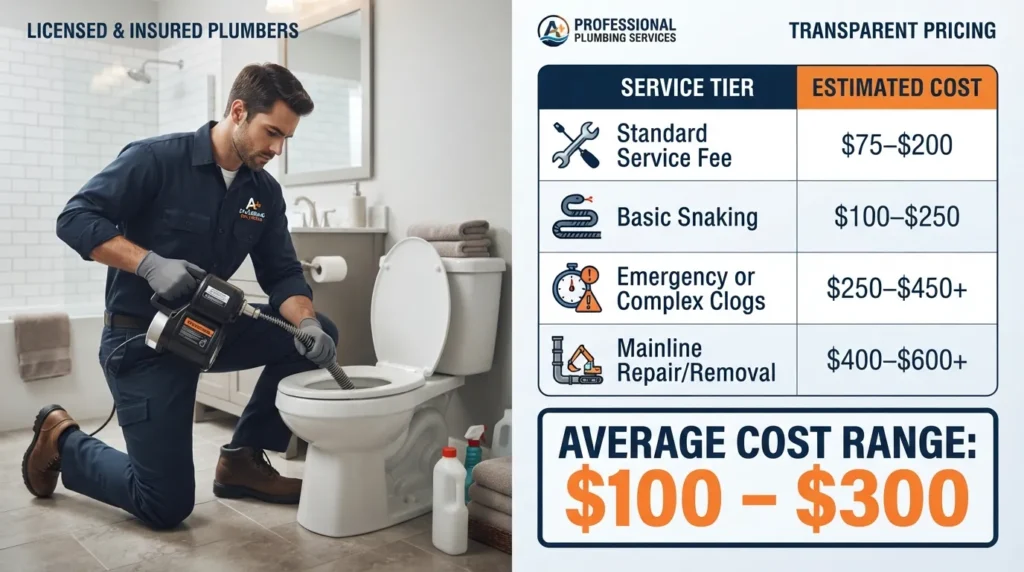
Seeing the math side by side shows why short jobs rarely cost under $150 and how longer repairs scale. These three realistic examples assume a $95 standard dispatch fee (credited toward approved work) and a $120/hour journeyman rate with a one-hour minimum.
- Verify Dispatch Credit Terms: Ask whether the trip fee is waived, credited, or stacked on top of your first billable hour before the truck rolls.
- Confirm Minimum Labor Blocks: Check if labor is billed in one-hour minimums or half-hour increments after the first hour.
- Request Itemized Parts & Labor: Have the plumber separate labor, parts markup, and any disposal or permit fees on the written estimate before work starts.
2026 Plumbing Labor Price List by License Tier & Common Repair
Residential plumbing labor rates range from $45 to $225+ per hour depending on technician licensing, while complete common repairs typically land between $100 and $650. Matching your specific issue to the right technician tier and itemized price sheet prevents overpaying for routine maintenance.
Hourly Rates by Plumber License Level (Apprentice vs. Journeyman vs. Master)
State licensing boards classify plumbers into three distinct tiers based on classroom hours, field apprenticeships, and state exam certifications. Hiring a master plumber for a simple drain clog wastes money, whereas complex gas-line or main sewer permitting legally requires top-tier credentials.
- Apprentice Plumber: Works under a licensed journeyman or master; ideal for labor-heavy tasks like trenching or hauling fixtures at lower hourly rates.
- Journeyman Plumber: Completes 4 to 5 years of field training and passes state licensing exams; handles 85% of everyday residential service calls independently.
- Master Plumber: Holds the highest state credential, carries full bonding authority to pull municipal permits, and designs complex water supply and drain-waste-vent layouts.
Average Total Cost for Common Plumbing Repairs (2026 Price Sheet)
Total job prices combine your initial service call fee (usually credited toward labor), billable repair hours, and replacement components. Use this 2026 plumbing labor price list to benchmark local quotes before authorizing work.
- Exposed vs. Concealed Pipes: Accessible under-sink or basement pipe repairs stay near the $200 mark, while leaks buried behind tile or drywall add extra labor for access cuts.
- Customer-Supplied Fixtures: Buying your own faucet or garbage disposal saves on contractor parts markup, though most plumbers will not warranty labor on owner-supplied hardware.
- Multi-Task Efficiency: Adding a second minor fix—such as swapping a cartridge while the plumber is already on site for a drain snaking—typically adds only 30 minutes of labor rather than a second dispatch fee.
6 Factors That Drive Up Your Plumbing Service Call Bill
Your final plumbing invoice depends heavily on when you call, where you live, and how accessible your pipes are—often pushing a routine visit well above baseline estimates. Strong trade demand and licensed labor standards also shape market pricing, as documented in the U.S. Bureau of Labor Statistics Plumbers Occupational Outlook.
Emergency, Weekend & After-Hours Multipliers (1.5x to 3x Surge)
Calling an emergency plumber outside standard weekday hours typically adds a $150 to $400+ after-hours dispatch fee and applies a 1.5x to 3x rate multiplier on labor. Evening, weekend, and holiday calls compensate technicians for on-call availability and urgent dispatch scheduling.
- Weekday Evenings & Weekends: Most shops apply a 1.5x to 2x labor multiplier after business hours or on Saturdays and Sundays.
- Major Holidays: Holiday dispatches frequently jump to 2x or 3x baseline rates on top of elevated call-out charges.
- True vs. Non-Urgent Issues: Shutting off a localized angle stop for a dripping faucet or running toilet lets you wait for standard weekday rates instead of paying emergency premiums.
Geographic Location & High-Cost States (e.g., California vs. National Average)
California plumbing rates and major coastal metro prices routinely run 20% to 45% higher than the national average due to commercial insurance, state licensing rules, higher operating overhead, and local demand. Rural routes outside a shop’s core zone can also trigger a travel zone surcharge.
Pipe Accessibility, Specialized Equipment & Permit Fees
Repairs on exposed supply lines cost far less than locating a slab leak under concrete or cutting open finished walls and ceilings. Specialized diagnostics like a sewer camera inspection or hydro-jetting—along with required plumbing permit fees—add distinct line items beyond basic hand tools.
- Tight & Hidden Access: Crawlspaces, attics, finished tile walls, and concrete slabs slow down labor and often require separate drywall or masonry restoration.
- Specialized Diagnostic & Clearing Gear: Video pipe locating, electronic leak detection, and high-pressure hydro-jetting carry separate equipment charges for stubborn root or grease blockages.
- Municipal Permits & Inspections: Major water heater swaps, main sewer work, or gas-line modifications may require city permits and code inspections passed directly to the homeowner.

Home Improvement Researchers & Guides Editors
Meet the Nest Team, a collective of dedicated researchers, home improvement enthusiasts, and industry writers sharing practical guides, thorough category research, and trusted solutions for residential repairs and thoughtful home upkeep.