Why Windstorm Certification Is a Whole-Roof System, Not Just a Shingle Label
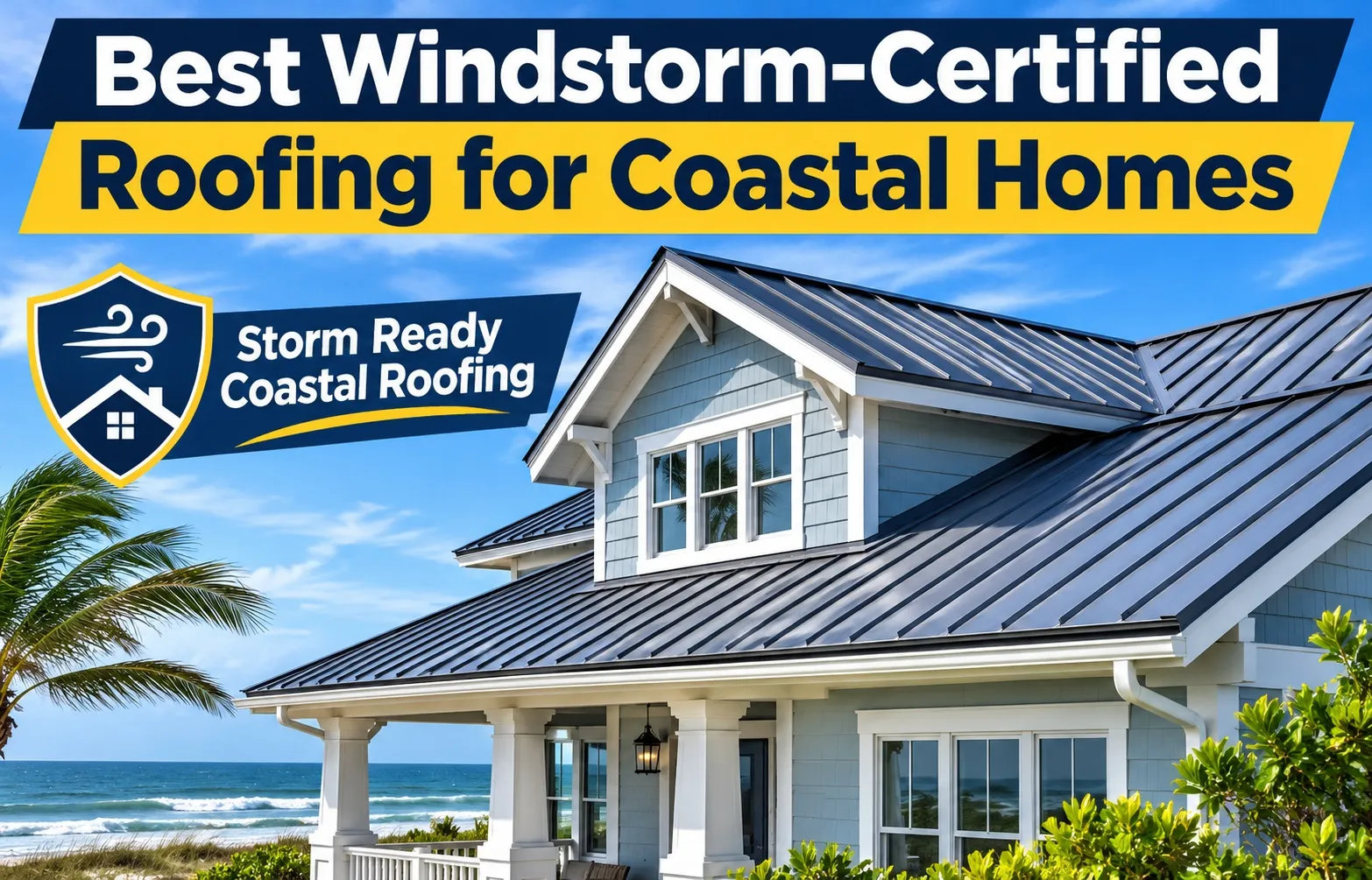 Finding the best windstorm-certified roofing for coastal homes starts with separating marketing labels from structural performance. A high wind-speed rating on a shingle bundle or metal panel does not certify an entire roof unless every connected layer and fastener meets approved windstorm testing.
Coastal storms test roofs through combined high wind uplift, driving rain, and salt-laden air. No roofing system is truly hurricane-proof, yet a properly engineered assembly significantly lowers structural failure and water intrusion risk.
What “Windstorm-Certified” Actually Covers Beyond the Top Layer
A windstorm-certified roof assembly evaluates how the outer covering, underlayment, decking, fasteners, and perimeter trim work together under tested wind loads. Passing a wind tunnel or uplift test as a complete system carries far more real-world weight than a standalone material claim.
- Roof covering and attachment: Shingles, metal panels, or tiles must match the exact nailing or clip pattern required by the test approval.
- Decking and secondary barrier: Roof sheathing attachment and a sealed roof deck or self-adhering underlayment help block wind-driven rain if top coverings lift.
- Perimeter and flashing components: Drip edges, ridge caps, and wall flashings must resist peeling forces where wind pressure concentrates.
- Inspection and code documentation: Permits, product approvals, and post-installation verification confirm the installed roof matches the tested design.
Why Roof Edges, Fasteners, and Unsealed Decks Fail First in Coastal Storms
In coastal hurricanes and severe gales, roofs frequently fail at transition points and fasteners rather than flat field areas alone. Once wind peels back an edge or corrodes a fastener, uplift forces cascade across adjacent sections.
- Perimeter uplift concentration: Roof corners and eaves experience intense suction forces that pry loose under-secured drip edges and starter courses.
- Salt-air corrosion on hardware: Coastal humidity and salt spray accelerate rust on standard fasteners and exposed metal components, weakening holding power over time.
- Wind-driven rain through unsealed decks: If outer shingles or panels blow off and deck seams remain unsealed, heavy rain can penetrate directly into the attic and living space.
How Regional Standards and Programs (ASTM, UL, FORTIFIED, HVHZ, TDI) Fit Together
Coastal roofing standards operate across two levels: product-level laboratory tests and whole-system or regional compliance programs. Understanding both prevents homeowners from assuming a tested shingle automatically satisfies strict coastal jurisdiction rules.
- Laboratory wind and impact tests: Standards such as ASTM D3161 Class F (110 mph fan-induced wind), ASTM D7158 Class H (150 mph uplift resistance), and UL 2218 Class 4 impact testing measure specific material resistance under defined test conditions.
- Whole-building windstorm frameworks: Programs like the Insurance Institute for Business & Home Safety (IBHS) FORTIFIED Roof emphasize sealed roof decks, stronger edge metal, and upgraded fastening as an integrated system.
- State and high-velocity coastal codes: Regions with severe wind exposure enforce strict requirements such as the Florida Building Code, Miami-Dade High Velocity Hurricane Zone (HVHZ) Notice of Acceptance (NOA) approvals, and Texas Department of Insurance (TDI) windstorm listings.
Best Windstorm-Certified Roofing Systems for Coastal Homes Compared
The best windstorm-certified roofing system for coastal homes combines high uplift resistance, strong salt-air corrosion protection, and a code-compliant deck and fastener assembly. Standing-seam aluminum leads for severe coastal exposure and lifecycle cost, while impact-resistant asphalt shingles or wind-rated tile and metal alternatives fit specific budgets and structural setups.
Choosing between materials requires weighing upfront price against long-term durability near saltwater. Even a high-rated covering underperforms if fasteners rust prematurely or roof edges lack proper wind-resistant attachment.
Standing-Seam Aluminum and Corrosion-Resistant Metal Systems
A standing-seam aluminum roof offers a strong balance of light weight, high wind-uplift performance, and natural resistance to salt-air corrosion. Unlike uncoated or standard painted steel, aluminum forms a protective oxide layer that helps prevent rust when coastal moisture and salt spray settle on the roof.
- Concealed fastener advantages: Hidden clips and standing seams reduce exposed screw penetrations where wind-driven rain and thermal movement can stress panels.
- Hardware compatibility: Pair aluminum panels with corrosion-resistant clips, marine-grade stainless steel fasteners where specified, and compatible flashing to avoid galvanic corrosion.
- Lifecycle value: Higher initial installation costs are often offset over decades by long service life, low routine maintenance, and potential wind-mitigation benefits.
High-Wind Architectural and Impact-Resistant Asphalt Shingles (GAF, Owens Corning, CertainTeed)
Architectural asphalt shingles and impact-resistant shingles give coastal homeowners a lower upfront entry cost while meeting demanding wind and impact benchmarks when installed per manufacturer and code specifications. Proper fastener selection—such as corrosion-resistant ring-shank nails—and strict nailing patterns are critical in high-wind zones.
- GAF Timberline ArmorShield II: Combines impact-resistant construction with high-wind ratings when installed according to specifications and relevant regional approvals.
- GAF Timberline HDZ: Offers wide availability, laminated architectural styling, and high-wind fastening options when paired with approved system components.
- Owens Corning TruDefinition Duration: Uses a reinforced fastening zone known as SureNail to improve nail pull-through resistance under strong wind uplift.
- CertainTeed Landmark Solaris Platinum AR: Provides algae resistance and regional code approvals suited to warm, high-sunlight coastal environments.
Wind-Rated Tile, Stone-Coated Steel, and Secondary Water Barriers
Clay or concrete tiles and stone-coated steel systems can deliver strong coastal wind performance when engineered and fastened for high-velocity wind zones. However, heavy tile requires framing capable of supporting the dead load, and every system benefits from a continuous secondary water barrier beneath the covering.
- Wind-rated tile and stone-coated steel: Require engineered attachment methods—such as approved clips, battens, or high-wind fastening schedules—to prevent uplift and projectile damage.
- Secondary water barriers: Membranes like MFM Roofing Underlayment Ultra HT Wind & Water Seal help seal around fasteners and protect the roof deck if outer shingles or panels are damaged.
- Maintenance trade-offs: Periodic inspections of sealants, flashings, and any loose or cracked elements keep windstorm protection intact over time.
Side-by-Side Comparison: Wind Rating, Salt-Air Durability, Cost, and Maintenance
Use the table below to compare how common coastal roofing approaches stack up across wind performance, corrosion resistance, cost profile, and upkeep.
How to Choose the Right System for Your Coast, Roof Geometry, and Budget
Selecting the right roof for coastal wind zones depends on your exact shoreline exposure, local windstorm rules, roof geometry, and realistic budget. Two homes with similar square footage can need very different roofing specifications based on elevation, wind speed maps, and existing structural conditions.
Taking time to align material choice with code requirements and home structure avoids costly rework during permitting or storm recovery. Watch the walkthrough below for additional coastal and hurricane-resistant roofing considerations.
Matching Roof Selection to Coastal Wind Zones and State Rules
Wind design pressures vary sharply along coastlines, barrier islands, and inland bays. While Florida Building Code approvals and TDI windstorm listing rules receive heavy attention, homeowners along other Atlantic, Gulf, or coastal wind zones must still verify local municipal amendments and insurer requirements.
- Check local wind-speed and exposure categories: Homes closer to open water or on elevated terrain often face higher wind loads and stricter uplift requirements.
- Confirm regional approvals and FORTIFIED designation rules: Verify whether your jurisdiction accepts specific product approvals or whether pursuing a FORTIFIED designation requires a designated evaluator and documented installation steps.
- Account for salt-spray distance: Direct ocean spray demands higher corrosion resistance than sheltered bayside or inland locations.
Steep Pitches, Older Structures, and Existing Framing Considerations
Roof replacement on older homes introduces structural and steep-slope roofing factors that do not appear on brand-new builds. Steeper pitches affect worker safety, staging, and fastener angles, while aging rafters or sheathing may need reinforcement before new materials go down.
- Evaluate roof pitch and access: Steeper roof pitches can shed water quickly and alter wind-pressure profiles, but they increase labor complexity, safety setups, and installation time.
- Inspect decking and framing condition: Older homes may have plank decking with gaps, softened wood around past leaks, or undersized connections that need upgrading to meet current wind uplift standards.
- Plan for tear-off surprises: Stripping old roofing during a roof replacement often reveals hidden rot or outdated ventilation that affects final scope and schedule.
Comparing Upfront Costs, Maintenance, and Long-Term Value Without Pricing Traps
Online roofing quotes and retail listings often display inconsistent numbers—ranging from single-bundle or partial-material figures to full-system estimates—without clarifying labor, flashing, or code upgrades. True cost comparison requires evaluating total installed scope alongside maintenance requirements and long-term value.
- Compare apples-to-apples installation quotes: Confirm whether a bid includes tear-off, deck re-nailing, underlayment upgrades, edge metal, permits, and required coastal fasteners.
- Factor in ongoing maintenance requirements: Budget for periodic inspections, debris clearing, and sealant or flashing upkeep so warranties and windstorm performance stay intact.
- Weigh upfront cost vs. long-term value: A lower-cost roof that needs earlier replacement or higher storm maintenance may cost more over ownership than a durable, code-compliant system built for coastal longevity.
Coastal Installation Mistakes and Inspection Bottlenecks That Void Protection
Even a windstorm-certified roofing system can fail during a severe coastal storm or fail a mandatory windstorm inspection if field execution cuts corners. Improper fastener swaps, rushed perimeter flashing, and missing paperwork frequently undermine tested wind resistance and insurance eligibility.
Catching installation errors and inspection gaps early protects both structural safety and homeowner documentation. For official assembly criteria, review the IBHS FORTIFIED Roof standards alongside local building code rules. The walkthrough below highlights key coastal installation and performance factors.
Salt-Spray Corrosion on Fasteners, Clips, and Flashing
Salt spray corrosion attacks exposed or under-rated metal hardware rapidly in coastal environments, weakening roof connections long before the roof covering reaches the end of its expected service life. Substituting cheaper fasteners or incompatible metals can trigger rust and galvanic wear.
- Avoid unapproved fastener swaps: Using standard coated nails or screws instead of specified aluminum fasteners or stainless steel fasteners compromises pull-out resistance as corrosion spreads.
- Match clip and panel metallurgy: Pair aluminum panels and clips with compatible corrosion-resistant hardware so dissimilar metals do not accelerate galvanic deterioration.
- Protect cut edges and flashings: Field-cut metal edges, exposed nail heads, and unsealed penetrations need proper coatings and compatible sealants to resist coastal moisture.
Perimeter Edge Attachment and Sealed Deck Execution Details
High coastal winds test roof perimeters and deck seams first, making edge flashing, drip edge, and underlayment execution decisive during storms. Rushing deck prep or leaving gaps in secondary water barriers turns minor wind damage into interior water intrusion.
- Anchor edge flashing and drip edge securely: Follow exact fastener spacing and flange dimensions so high suction forces at eaves and rakes do not peel trim away from the roof deck.
- Complete a sealed roof deck properly: Apply self-adhering underlayment or approved seam tapes cleanly over decking joints and valleys so the deck resists wind-driven rain if outer coverings lift.
- Follow manufacturer installation instructions strictly: Deviating from approved fastening patterns, overlap widths, or adhesive temperatures can void both wind ratings and manufacturer warranties.
Documentation and Inspection Pitfalls That Cost Windstorm Credit
Passing a windstorm inspection requires verifiable proof that the installed assembly matches approved product listings and local code requirements. Missing records or unverified mid-project changes often delay sign-off or cost windstorm insurance credits.
- Keep product approval numbers on file: Retain labels, spec sheets, and product approval numbers for shingles, panels, underlayment, clips, and fasteners before installation begins.
- Schedule inspections before covering critical layers: Deck nailing, secondary water barriers, and edge metal often need verification while still visible prior to final covering installation.
- Verify permit and evaluator sign-offs: Confirm municipal building permits, engineering details, and third-party windstorm evaluation records are closed out and archived for future insurance renewals.
Windstorm Insurance, Roof Age, and Key Homeowner Questions
Roof condition, wind-mitigation features, and documented code compliance play a major role in windstorm insurance premiums and policy renewals along the coast. Laws such as Florida Statute 627.0629 require insurers to recognize verified wind-mitigation features, though underwriting rules and credits vary by state and carrier.
Understanding how insurers evaluate roof age, materials, and storm damage helps homeowners avoid surprises at renewal or claim time. The video below covers additional coastal roofing standards, inspections, and homeowner guidance.
How Do Insurance Companies View Metal Roofs—and What Is the Biggest Drawback?
Insurers generally view certified, properly anchored metal roof insurance profiles favorably for wind resistance and potential wind-mitigation credits, provided documentation confirms code-compliant installation. The biggest drawback is typically higher upfront installation cost, along with potential denting from severe hail or wind-borne debris and noise or expansion details if poorly installed.
- Wind and mitigation recognition: Documented uplift ratings, sealed roof decks, and proper attachment can support wind-mitigation credits where state rules and carriers allow.
- Upfront cost and dent exposure: Higher initial expense is a primary hurdle, while hail impact or falling branches can cause cosmetic or functional dents depending on gauge and alloy.
- Installation and corrosion caveats: Substandard fasteners, poor seam work, or mismatched metals near salt water can reduce real-world durability and underwriting appeal.
Does a New Roof Affect Home Insurance, and Is a 20-Year-Old Roof Insurable?
A new roof often improves eligibility and may lower or stabilize windstorm insurance premiums when paired with current code compliance and wind-mitigation documentation. Whether a 20-year-old roof is insurable depends on roof age limits set by the insurer, material type, and verified physical condition.
- Impact of a new roof: Updating an aging roof to current windstorm standards can broaden carrier options, support policy renewals, and qualify for mitigation discounts.
- 20-year-old roof insurability: Older shingle roofs frequently face stricter underwriting, actual cash value settlements, or renewal limits, whereas well-maintained metal or tile roofs may remain insurable longer depending on inspection results.
- Inspection proof matters: Clear photos, permits, and wind-mitigation reports help demonstrate remaining service life when underwriting scrutiny rises.
What Is the 25% Roof Replacement Rule and How Do Adjusters Evaluate Claims?
The 25% rule for roofing generally refers to building code provisions—most notably in Florida’s building code context—requiring an entire roof section or system to be brought up to current code when more than 25% of the roof area is repaired or replaced within a specified window. An insurance adjuster evaluates claims by separating sudden covered storm damage from pre-existing wear, age, or maintenance neglect.
- Code trigger vs. insurance coverage: A 25% code threshold governs permitted work scope, while your policy terms determine whether code-upgrade coverage pays extra costs.
- How adjusters inspect damage: Adjusters document wind lift, missing or creased shingles, bruised decking, and moisture intrusion while checking for wear from age or prior leaks.
- Keep complete records: Maintenance logs, inspection reports, and pre-storm photos help clarify what changed during the storm event.
What Should You Avoid Saying to an Insurance Adjuster About Your Roof?
When speaking with an insurance adjuster, stick strictly to factual observations of what happened and when, without guessing causes or volunteering speculation about wear. Casual guesses about old age, prior leaks, or deferred maintenance can complicate claim review.
- Do not guess the cause of damage: Avoid speculating on wind speeds or structural causes; describe observed damage and let the inspection and policy terms govern findings.
- Avoid downplaying or guessing roof history: Do not estimate installation dates or blame past leaks if you are unsure; rely on permits, invoices, and inspection records.
- Do not admit to unverified maintenance neglect: Keep statements accurate and concise, and provide written documentation of routine care or prior repairs when relevant.

Oscar Vance | Master Plumber & Drainage Expert
Meet Oscar Vance, a licensed master plumber sharing practical solutions on residential repairs, preventive maintenance, and thoughtful home upkeep.