Does Plumbing Work When Power Is Out?
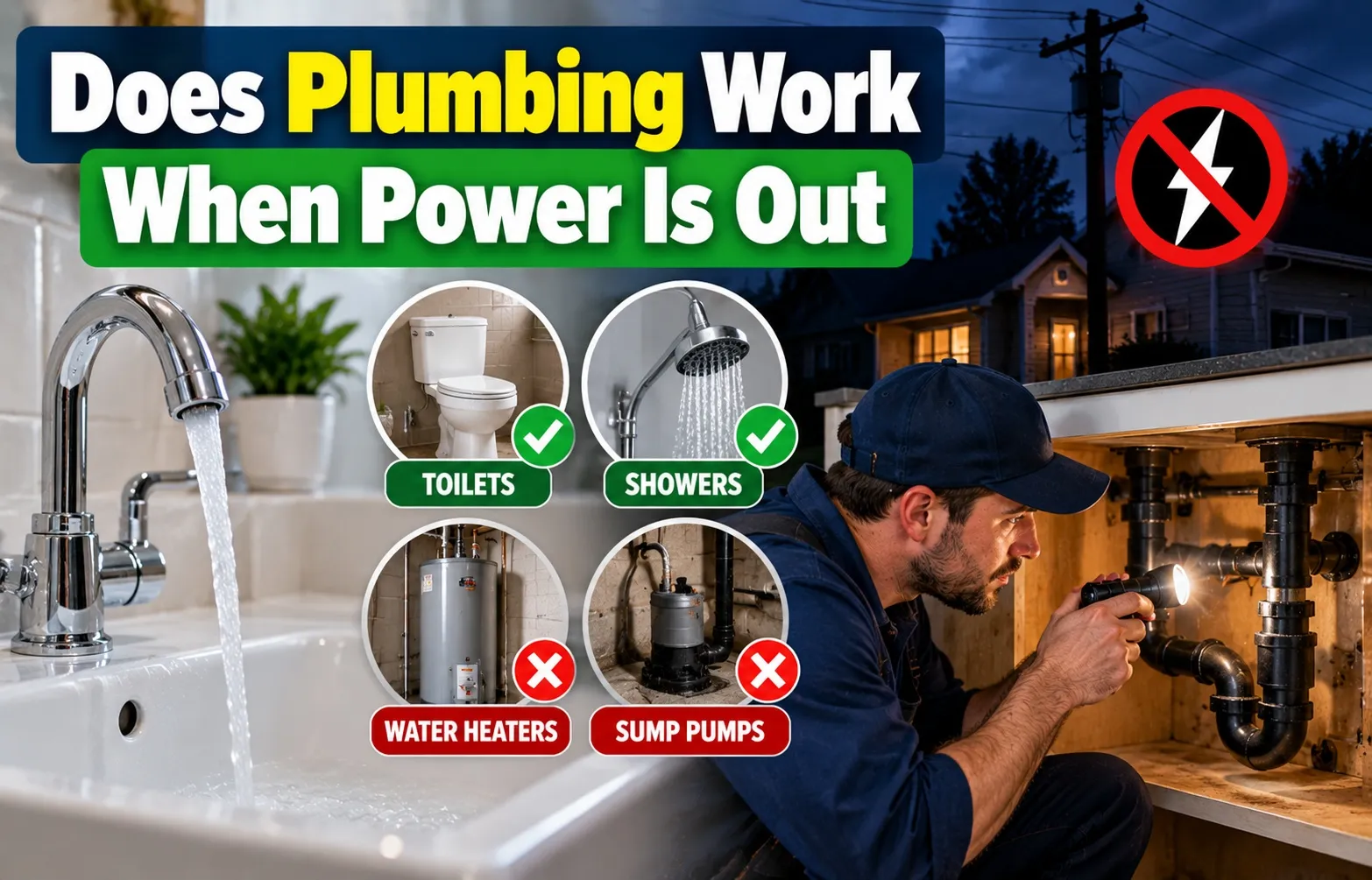 Standard municipal plumbing systems continue to function during a power outage because they rely on gravity and municipal pressure rather than household electricity. However, plumbing features that depend on home electrical components—such as private well pumps, electric water heaters, and sump pumps—will stop working immediately unless connected to a backup power source.
Water Supply Mechanics: City Water vs. Private Well Systems
Understanding whether your plumbing functions during a blackout depends entirely on your home’s underlying water source infrastructure. While municipal city water utilizes elevated gravity-fed towers, private well networks rely directly on heavy-duty electrical pump systems that halt without active power.
How City Water Operates via Gravity Water Towers
Elevated municipal water towers create reliable hydraulic head pressure using gravity alone, meaning household taps keep flowing even when a regional power grid fails. Municipal treatment plants and primary pumping facilities utilize industrial backup diesel generators to maintain continuous storage tank levels during short-term blackouts.
- Municipal Time Limits: In prolonged multi-day blackouts, fuel supplies for backup generators can run low, leading to declining water pressure across the municipal distribution network.
- Boil Water Advisories: When pressure drops significantly or treatment plants lose complete power, municipalities frequently issue mandatory boil water notices due to back-siphonage risks and potential contaminant intrusion.
Private Wells & The Pressure Tank Countdown
Submersible well pumps require continuous 240V AC power from your home electrical panel to draw water up from deep underground aquifers. Contrary to popular belief, a well system does not stop the exact microsecond the power cuts out; instead, it relies on a pre-charged pressure bladder tank to maintain temporary system pressure.
- Drawdown Volume: A standard pressure tank holds between 5 to 30 gallons of usable water under compressed air pressure, providing a short window of water availability before the tank’s drawdown volume is fully exhausted.
- Generator Power: Restoring continuous water flow during an extended blackout requires connecting the well pump circuit to a portable inverter generator or a permanent whole-home standby generator system.
The 32-Gallon Pressure Tank Countdown
If your home operates on a private well equipped with a standard 32-gallon pressure bladder tank, the usable drawdown volume is typically about 25% of total tank capacity (roughly 8 gallons of actual water). Here is how that stored volume translates during an active power failure:
- Toilet Flushes: A standard gravity toilet consumes about 1.6 gallons per flush, allowing roughly 4 to 5 complete flushes before system pressure drops completely to zero.
- Faucet Runs: Running a bathroom sink faucet at 1.5 gallons per minute exhausts the remaining drawdown storage in approximately 5 minutes of continuous use.
Can You Flush Your Toilet When the Power Goes Out?
Yes, standard residential toilets will continue to flush normally during a power outage because they operate entirely on gravity rather than electricity. However, specialty plumbing systems—such as basement sewage ejector toilets, macerating toilet units, and smart toilets with electronic flush mechanisms—will fail immediately when power is lost.
Standard Gravity-Flush Toilets & The Gravity Fill Trick
A standard toilet relies on a mechanical tank flapper and a gravity-fed siphonic trapway inside the porcelain bowl to clear waste. When you press the flush lever, water rushes down from the tank, creating a natural siphon that pulls waste down the drain without needing any electrical connection.
- Refill Process: As long as your municipal water pressure or well pressure tank remains active, the toilet fill valve will automatically refill the tank after every flush.
- The Bucket-Flush Method: If your home loses water pressure completely, you can still flush a standard toilet manually by pouring approximately 1 gallon of stored water directly into the toilet bowl to force a siphon action.
How to Bucket-Flush a Toilet Without Running Water
Follow these steps to manually flush a standard gravity toilet when municipal supply or well pressure is unavailable:
- Gather water: Fill a bucket or container with roughly 1 to 2 gallons of water (pool water, rain catchment, or gray water works fine).
- Pour rapidly into the bowl: Pour the water directly into the center of the toilet bowl in one quick, steady motion from about waist height. Do not pour into the tank.
- Trigger the siphon: The sudden weight and volume of water will automatically activate the bowl’s siphonic trapway, flushing waste down the sewer line without needing tank refill pressure.
Specialty Toilets That Fail Without Electricity
Modern homes often feature specialized toilets designed for below-grade basements or luxury electronic comfort features. These systems depend directly on home electricity and will malfunction if operated during a blackout.
- Sewage Ejector Toilets: Basement toilets located below the main sewer line dump waste into a holding pit equipped with an electric sewage ejector pump. While the bowl may physically clear once, the electric pump cannot lift waste up to the street sewer line without power, causing the pit to overflow.
- Macerating Toilets (e.g., Saniflo): Upflush toilets use high-speed electric rotating blades to grind waste into small particles before pumping it vertically through small-diameter pipes. Without power, the blades will not rotate, leading to immediate system blockages and sewage backup.
- Smart Toilets & Electronic Bidet Seats: High-end smart toilets rely on electronic sensors, heated seats, and motorized flush valves. While some models feature an emergency manual pull-cord or backup battery pack for basic flushing, luxury wash features and heated air dryers will shut down completely.
Master Plumber Safety Warning: Avoid Upflush & Macerating Bucket Flushes
Never attempt a bucket flush on a macerating or upflush toilet during a power failure. Because these systems rely on active motorized grinding and pumping mechanisms to clear waste from the basin, pouring water into a non-powered unit will quickly overflow the macerator housing, leaking raw sewage directly into your basement living space.
Will Hot Water Work During a Power Outage?
Whether you have hot water during a power outage depends directly on the fuel source and ignition technology of your water heater. While older atmospheric gas water heaters function perfectly without electricity, all electric storage tanks, hybrid heat pump units, and modern tankless systems will stop heating new water as soon as the power cuts out.
Traditional Gas Water Heaters: Standing Pilot Light vs. Electronic Ignition
A common misconception is that all gas water heaters work without electricity. In reality, your gas unit’s ability to operate during a blackout relies on how its burner ignites and how combustion gases vent from your home.
- Standing Pilot Light (Millivolt Systems): Traditional gas water heaters with a continuously burning pilot light require no household power. They use a thermocouple or thermopile (millivolt generator) that converts heat from the pilot flame into a tiny electrical current to operate the gas control valve autonomously.
- Electronic Ignition & Power Venting: Modern energy-efficient gas water heaters use electronic igniters (hot surface igniters), motorized draft dampers, or power-vent blower fans. These components require standard 120V electrical outlet power to ignite the gas or blow exhaust gases through PVC pipes, causing the entire unit to shut down during a blackout.
Plumber Inspection Tip: Does Your Gas Water Heater Need Electricity?
You can instantly tell if your gas water heater requires power without reading technical manuals by inspecting its exhaust vent pipe setup:
- Metal B-Vent (Gageless/Non-Electric): If a standard metal exhaust pipe extends vertically straight up through your roof, you likely have an atmospheric unit with a standing pilot light that operates without power.
- Plastic PVC Pipe (Power-Vented/Electric-Dependent): If a white or gray plastic PVC/ABS pipe exits horizontally through an exterior wall, your system relies on an electric motor fan to force exhaust outside. It will not operate without electrical power.
Electric Storage Tank Water Heaters
Electric tank water heaters rely on high-voltage 240V heating elements controlled by internal thermostats. The moment power fails, these heating elements cease functioning immediately.
- Thermal Retention: A standard 40 to 50-gallon insulated storage tank retains its internal temperature remarkably well. You can expect existing hot water inside the tank to remain usable for 12 to 24 hours, provided you strictly limit consumption.
- Conservation Strategy: Avoid taking showers or running faucets unnecessarily to keep the remaining hot water stored inside the insulated lining for urgent hygiene needs.
Tankless Water Heaters (On-Demand Gas & Electric)
All modern tankless (instantaneous) water heaters—including gas-powered models—fail instantly during a power outage. Because on-demand systems do not store pre-heated water in a reservoir, hot water access drops to zero immediately.
- Digital Control Boards: Gas tankless units use digital circuit boards, water flow sensors, automatic electronic ignition coils, and internal anti-freeze heating elements that require continuous 120V electric power.
- Electric Tankless Limits: Electric tankless systems require massive power draws (often up to 120-150 amps across multiple circuits) to heat water instantly, making them impossible to run on small portable backup batteries.
Hybrid Heat Pump Water Heaters
Hybrid heat pump water heaters combine a specialized top-mounted compressor unit with traditional electrical heating elements to achieve high energy efficiency ratings.
- Control Modules & Compressors: Both the high-efficiency heat pump compressor and the digital user-interface control module rely on active 240V electrical service.
- Complete Shutdown: Without power, the heat pump compressor cannot extract ambient heat from surrounding air, rendering the appliance completely inoperable until grid electrical service is restored.
Drainage & Sewage Systems: Preventing Blackout Basement Flooding
While wastewater draining from sinks, tubs, and main sewer lines relies on downward gravity pitch to function during a blackout, homes with basements face severe flooding hazards. Heavy severe storms that cause power outages simultaneously surge rainwater into foundation drains, putting properties at risk if primary electrical pumps fail.
Standard Gravity Drainage Lines
Standard household wastewater laterals operate entirely without electricity by using a natural downward slope (typically 1/4 inch of drop per foot of pipe). Graywater from sinks and showers, alongside blackwater from standard toilets, flows through your indoor drain lines directly into the municipal sewer main or septic tank via gravity.
- Backwater Valve Protection: During severe rainstorms, municipal storm sewers can become overwhelmed. Installing a mechanical backwater valve prevents public main sewer surcharges from backing up into your home drains during a blackout.
- Gravity Flow Mechanics: As long as the wastewater pipe maintains an unobstructed downward pitch away from the foundation, normal drainage continues uninterrupted without grid power.
The Critical Sump Pump Failure Point
Standard primary sump pumps are the single leading cause of basement water damage during storm-related power blackouts. Because primary pumps rely on standard 120V electrical outlet power, they stop pumping water out of the sump pump pit the moment electricity fails—allowing groundwater to quickly flood basement living spaces.
- Deep-Cycle AGM Battery Backups: A secondary battery-backup pump system uses a heavy-duty deep-cycle AGM battery to power an auxiliary 12V pump, providing automated protection for several hours during an outage.
- Water-Powered Backup Sump Pumps: Operating exclusively on municipal water pressure, water-powered backup pumps use a Venturi effect to siphon water out of the pit without requiring any electrical power or batteries.
- Portable Inverter Generators: Running a heavy-duty extension cord from a portable inverter generator directly to your primary sump pump ensures continuous operation during extended grid outages.
Septic System Drainfields & Effluent Lift Pumps
How a residential septic system behaves during a power failure depends entirely on the terrain layout between the septic tank and the soil absorption area (septic drainfield).
- Standard Gravity Septic Systems: Conventional systems rely strictly on slope. Wastewater flows from the house into the septic tank, where solids settle, and liquid effluent flows by gravity into the drainfield. These systems function normally without power.
- Engineered Systems with Effluent Lift Pumps: Homes on high-water tables or steep grades use an electric effluent pump inside a pump chamber to force liquid wastewater up to a mound or pressure-dosed drainfield. When power cuts out, the pump chamber can hold only a limited volume (typically 100–200 gallons) before overflowing, requiring strict water conservation.
Essential Emergency Protocols Before and During a Power Outage
Preparing your home’s plumbing before a major storm protects your water supply and prevents catastrophic structural damage during extended blackouts. Following established safety protocols ensures access to emergency sanitation water while safeguarding your drinking water from potential system contamination.
Why You Should Fill Your Bathtub Before a Severe Storm
Filling a clean bathtub with water prior to a severe weather event creates a crucial reservoir of non-potable graywater for emergency utility use. This pre-stored supply is designed specifically for bucket-flushing toilets and basic cleaning when municipal water pressure drops or well pumps fail.
- Sanitation Maintenance: Bathtub storage provides 30 to 50 gallons of ready-to-use water, allowing a household to flush standard toilets for several days without relying on active water service.
- Potability Warning: Bathtub water is non-potable and should never be used directly for drinking or cooking unless properly filtered and disinfected, as bathtubs harbor bacteria, soap scum, and chemical residues.
Water Safety & Potability During Prolonged Outages
During extended power failures, municipal distribution networks can lose required hydraulic pressure. When pressure inside underground water mains drops below safe operating levels, negative pressure creates a back-siphonage effect that can pull soil pathogens, agricultural runoff, and groundwater contaminants into clean water supply lines.
- Monitor Official Notices: Pay close attention to local health authority announcements regarding active Boil Water Advisories in your municipality.
- Boil Thoroughly: Bring tap water to a rolling boil for at least 1 full minute before drinking, cooking, or brushing teeth to destroy biological contaminants, in accordance with federal safety recommendations outlined in the Ready.gov Emergency Water Guidelines.
- Use Disinfection Alternatives: If boiling is impossible due to power or gas line loss, use 8 drops of unscented household liquid chlorine bleach per gallon of clear water and let it stand covered for 30 minutes before consumption.
Winter Power Outages: Preventing Frozen & Burst Pipes
Losing electrical power during sub-freezing winter storms quickly drops indoor home temperatures, putting hidden water pipes inside exterior walls at severe risk of freezing and bursting.
- Allow Faucet Drip: Set indoor faucets farthest from the water meter or pressure tank to a slow, continuous trickle to keep water moving and relieve interior pipe pressure.
- Expose Concealed Piping: Open sink cabinet doors under kitchen and bathroom counters to allow warm ambient indoor air to circulate directly around vulnerable supply lines.
- Isolate Exterior Lines: Shut off the indoor supply valves serving outdoor hose bibbs, disconnect garden hoses, and drain remaining water from exterior spigots before temperatures plunge.
Frequently Asked Questions About Plumbing During Power Outages
Can you take a shower with no electricity?
Yes, you can take a shower without electricity if your home uses municipal city water and a traditional gas water heater. However, if you rely on a private well pump, electric water heater, or tankless system, you will lose water pressure or hot water almost immediately during a blackout.
Do faucets still work if the power goes out?
Faucets continue to supply water during a power outage if your home is connected to a municipal water system using gravity water towers. If your water comes from a private well, taps will stop flowing as soon as the pressure tank’s stored supply is exhausted.
Can you run major appliances like dishwashers or washing machines?
No, you cannot run dishwashers or washing machines during a power outage. Even if municipal water pressure remains active, these appliances rely on electric motors, internal water fill valves, heating elements, and electronic control boards that require continuous electrical power to operate.
How long will water pressure last during a power outage?
Municipal water pressure typically lasts 24 to 48 hours during a power outage through gravity-fed water towers and facility backup generators. For private well systems, water pressure lasts for only 1 to 5 toilet flushes or roughly 5 to 30 gallons of stored water.

Oscar Vance | Master Plumber & Drainage Expert
Meet Oscar Vance, a licensed master plumber sharing practical solutions on residential repairs, preventive maintenance, and thoughtful home upkeep.