How Much Does a Plumber Cost to Unclog a Toilet?
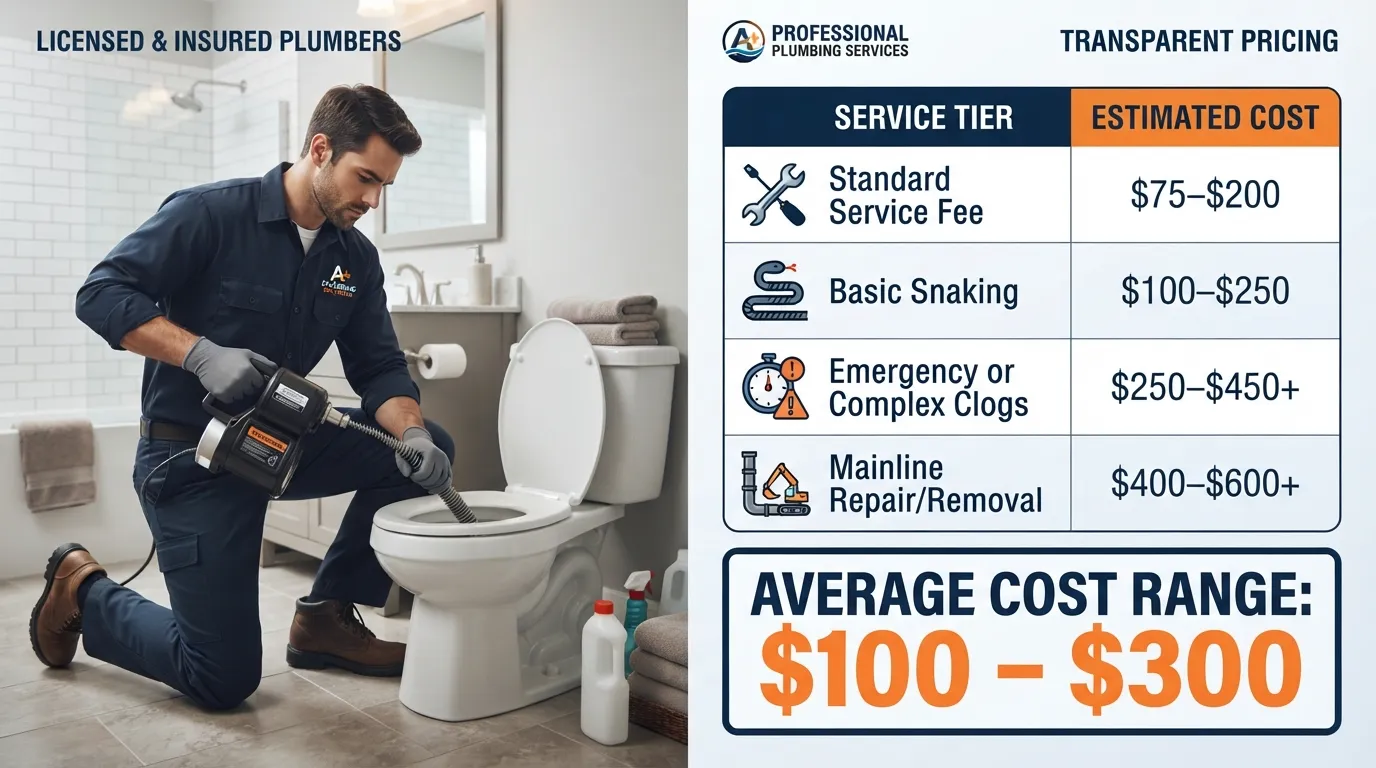
Hiring a professional plumber to unclog a toilet typically costs between $100 and $300 for standard residential service. The exact pricing depends heavily on the severity of the blockage, whether specialized equipment like a motorized auger is required, and your local labor rates.
Most standard clogs caused by everyday waste or excessive toilet paper fall on the lower end of this pricing spectrum. However, emergency calls, after-hours dispatch, or complex blockages involving main sewer lines will significantly increase the total service fee.
Average Cost at a Glance
Understanding how pricing breaks down helps you budget accurately for emergency plumbing interventions. Standard pricing tiers reflect different levels of service complexity and time commitments required by licensed technicians.
- Standard Service Call Fee: $75 to $200 just for the plumber to arrive and diagnose the issue, which is sometimes applied toward the final repair bill.
- Basic Auger / Snake Service: $100 to $250 for standard manual or motorized routing to clear localized trap or flange blockages.
- Severe Main Line Clearing: $250 to $600+ if the clog extends deep into the main sewer line and requires heavy-duty hydro-jetting or toilet removal.
- Emergency / After-Hours Rate: $200 to $450+ flat or hourly rates for nights, weekends, and holidays.
What’s Included in This Price
Professional plumbing services cover much more than simply running a snake down your drain. A transparent invoice from a certified plumbing contractor ensures safety, cleanliness, and long-term functionality for your bathroom fixtures.
- Professional Diagnosis: Identifying whether the obstruction is localized in the toilet trap, the branch drain, or the main sewer stack.
- Safe Mechanical Clearing: Utilizing professional-grade toilet augers (closet augers) designed with rubber protection guards to prevent porcelain scratching and cracking.
- Post-Service Testing: Conducting multiple flush cycles to verify that water drains smoothly and that no hidden leaks exist around the wax ring seal.
- Site Cleanup: Sanitizing the immediate work area and properly disposing of any extracted debris or hazardous waste in compliance with hygiene standards.
Cost Breakdown by Service Type
Plumbing service costs vary significantly depending on the complexity of the intervention required to resolve the blockage. Simple localized obstructions demand basic tools, whereas stubborn or recurring blockages require advanced mechanical or diagnostic interventions.
Evaluating the appropriate service type ensures you understand how contractors calculate their rates, helping you anticipate whether you are paying a standard flat rate or an hourly diagnostic fee.
Standard Auger Snaking Cost $100–$250
Using a professional toilet auger or closet auger is the standard, least invasive method for clearing routine blockages trapped inside the porcelain trap or immediate drain line. This service usually takes less than an hour and is included in the baseline professional plumbing rate.
- Tool Used: A hand-cranked or motorized drain snake equipped with a protective rubber sleeve to safeguard porcelain.
- Best For: Excessive toilet paper, feminine hygiene products, or minor foreign objects caught near the bowl.
- Billing Structure: Typically billed as a fixed flat rate combined with the standard service call fee.
Toilet Removal Pulling the Toilet Cost $200–$550
When a foreign object is jammed too far past the built-in trap or when a severe structural blockage occurs beneath the base, the plumber must physically unbolt and lift the entire toilet fixture. This process allows direct access to the floor drain pipe.
- Procedure: Disconnecting the water supply, unbolting the floor flange, lifting the fixture, clearing the obstruction, and resetting the toilet.
- Additional Material Costs: Requires replacing the wax ring seal and potentially installing new supply lines or closet bolts.
- Best For: Children’s toys, heavy plastic objects, or calcified mineral buildups lodged deep in the trapway.
Camera Inspection Cost $150–$450
If a toilet clog recurs frequently despite being cleared multiple times, a plumber will recommend a sewer camera inspection to diagnose hidden underlying plumbing failures. A waterproof fiber-optic camera is fed down the line to pinpoint structural defects.
- Diagnostic Capability: Identifies root intrusions, cracked sewer pipes, collapsed lines, or severe offset joints.
- Value Addition: Prevents unnecessary guesswork, digging, or repeated short-term snake rentals.
- Deliverables: Many modern plumbers provide digital video footage or snapshots of the pipe interior for your records.
Hydro Jetting Cost $400–$800+
Hydro jetting utilizes high-pressure water streams ranging from 1,500 to 4,000 PSI to scour the interior walls of your drain and sewer lines completely clean. It goes beyond simple snaking by blasting away grease, scale, and heavy sludge accumulation.
- Mechanism: A specialized high-pressure hose with a multi-directional nozzle strips away decades of accumulated buildup.
- Safety Precaution: Requires professional handling to prevent high-pressure water from damaging older or fragile cast iron/clay pipes.
- Best For: Whole-house main line clogs, heavy scale buildup, or recurring multi-fixture backups.
Comparison Table Service Type vs Price Range
What Factors Affect the Final Price?
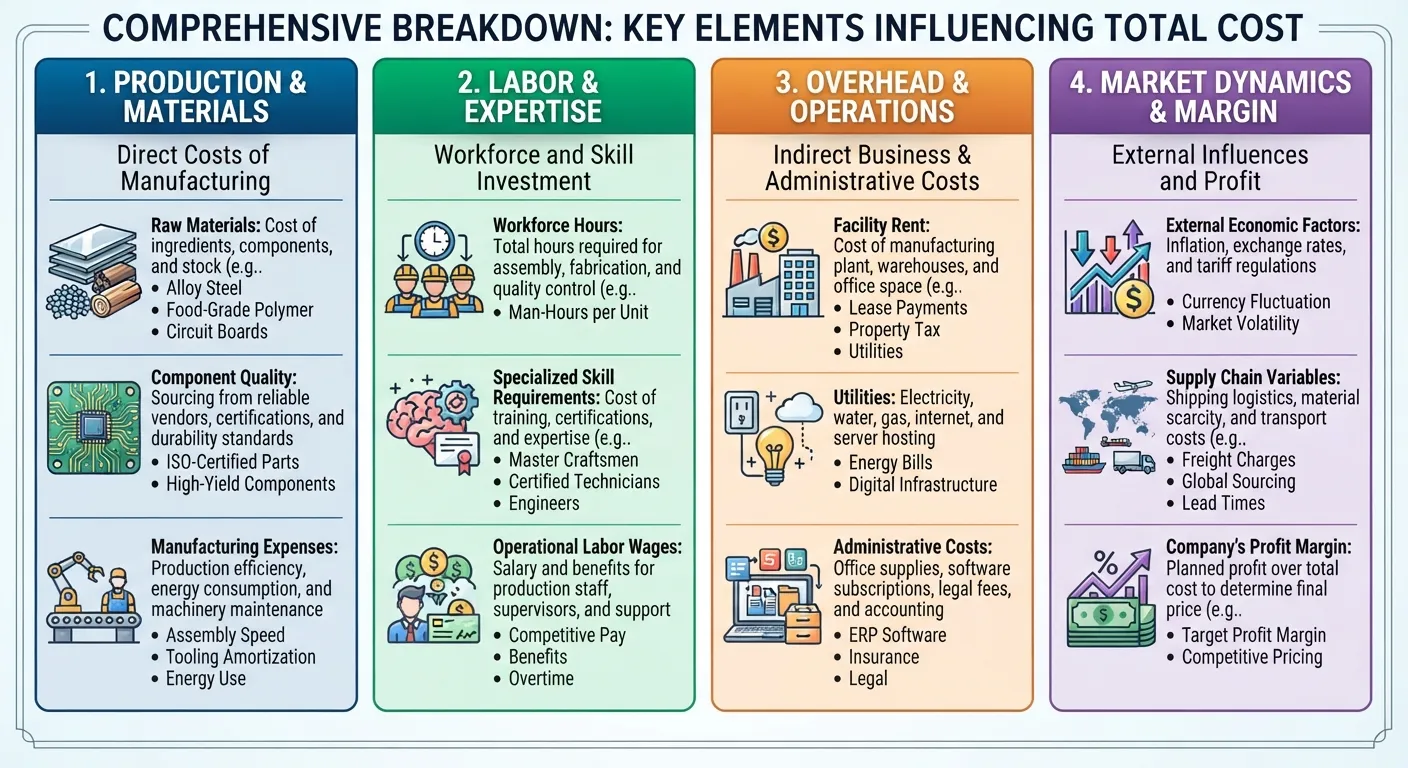
Plumbing service invoices rarely feature a flat universal price because multiple operational variables directly influence labor and material costs. Understanding these distinct pricing drivers helps you anticipate extra charges before a technician begins work.
Evaluating your specific situation against regional norms and time constraints ensures you are prepared for standard industry billing practices.
Service Call Trip Fees
Most professional plumbing contractors charge an upfront diagnostic or dispatch fee just to send a truck and a licensed technician to your residential property.
- Average Cost: Typically ranges between $75 and $200 depending on your distance from the home office.
- Credit Application: Many reputable companies apply this trip fee directly toward the cost of the repair if you approve the quote.
- Diagnostic Value: Covers fuel, vehicle wear, and the professional expertise required to accurately identify the source of the plumbing failure.
Emergency Night & Weekend Rates +20-50%
Plumbing emergencies rarely happen during standard business hours, meaning after-hours calls incur premium labor multipliers.
- Timing Windows: Rates increase significantly for late-night dispatches, weekend calls, and national holidays.
- Surcharge Structure: Expect flat emergency fees or hourly labor rates that are marked up by 20% to 50% above standard weekday pricing.
- Decision Strategy: If the toilet is your home’s only working bathroom, paying the emergency fee is often unavoidable; otherwise, shutting off the water and waiting until morning saves money.
Severity & Complexity of the Clog
The amount of time and physical labor required to clear an obstruction directly dictates the final bill.
- Simple vs. Stubborn: A five-minute pass with a hand auger is billed at the minimum base tier, while a multi-hour extraction involving mainline clearing takes extensive labor.
- Hidden Complications: Finding underlying structural issues like collapsed lines or deteriorated flange bolts turns a simple fix into a major repair.
- Equipment Demands: Utilizing high-end diagnostic cameras or hydro-jetting equipment increases operational costs over basic hand tools.
Your Location Urban vs Rural Pricing Variance
Geographic location is a primary external driver of plumbing service costs across different metropolitan and suburban regions.
- Cost of Living Adjustments: Plumbers operating in high-density urban centers or high-cost-of-living metropolitan areas charge higher hourly rates to offset overhead.
- Travel Distance Surcharges: Rural properties located far outside a contractor’s primary service radius often incur higher trip fees or mileage surcharges.
- Market Competition: Areas with a high concentration of licensed plumbers tend to feature more competitive baseline pricing structures.
Is Hydro Jetting Worth It? Deep Dive
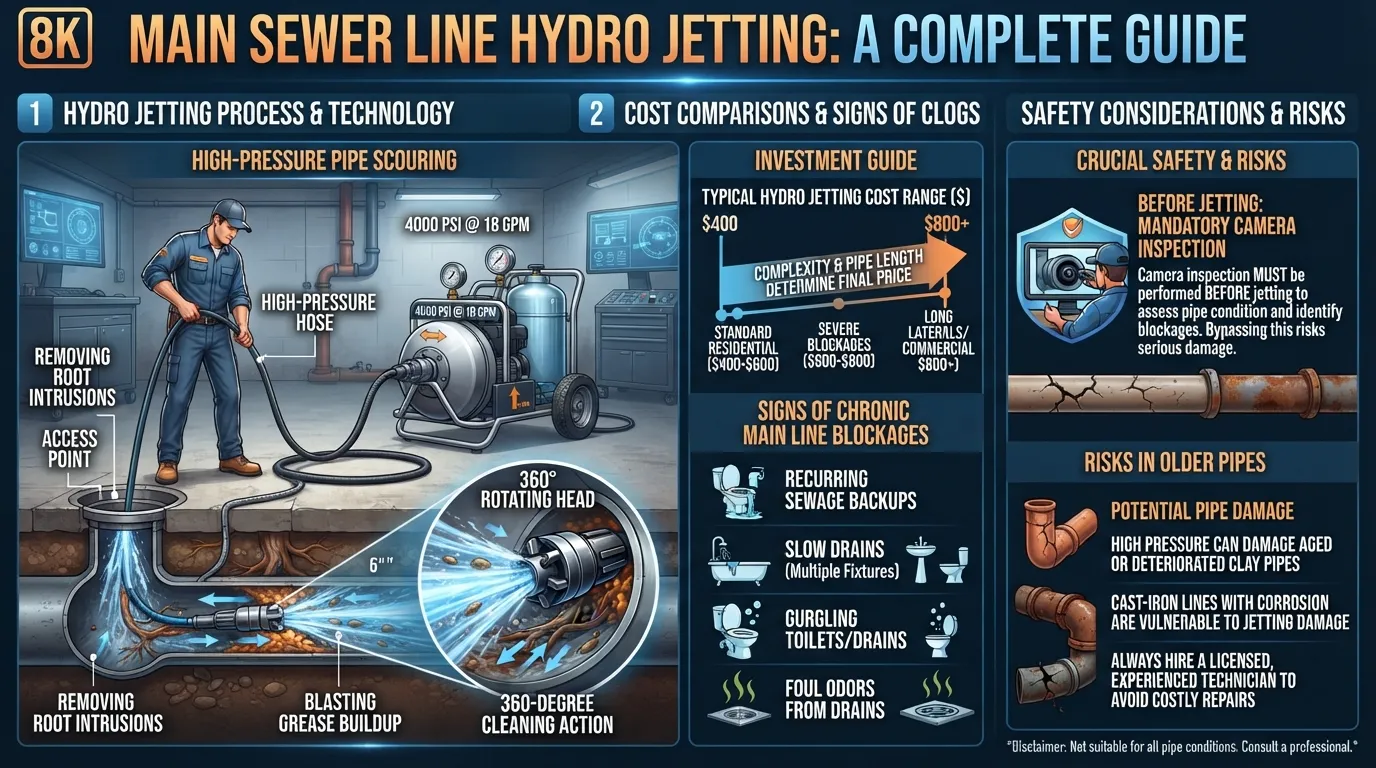
Hydro jetting is a heavy-duty cleaning method that utilizes high-pressure water streams ranging from 1,500 to 4,000 PSI to completely scour pipe walls. While more expensive than traditional snaking, it offers a permanent reset for chronically blocked main sewer lines.
Determining whether this advanced service justifies the investment requires examining its operational mechanics, long-term preventative value, and potential safety risks to older plumbing networks.
What Is Hydro Jetting & How It Works
Hydro jetting is an advanced drain-clearing technique that pumps water at ultra-high pressures through a specialized multi-directional nozzle hose. Unlike standard snakes that only punch a small hole through a clog, hydro jetting cleans the entire circumference of the pipe.
- The Machine Setup: Powered by a commercial-grade motor, water tank, and pressure pump mounted on a service truck or portable cart.
- 360-Degree Scouring: Rear-facing jets propel the nozzle forward while cutting through debris, scraping away grease, scale, and mineral deposits.
- Root and Sludge Elimination: Effectively strips away invasive tree roots and thick organic buildup that standard cables leave behind.
Is Hydro Jetting Worth the Cost?
Although hydro jetting carries a higher initial price tag—typically ranging from $400 to $800+ for main lines—it is highly cost-effective over time for properties prone to recurring backups.
- Long-Term Prevention: Restores pipes to a near-factory-new condition, drastically reducing the frequency of emergency plumber visits.
- Comprehensive Clean: Eliminates the bacterial slime and grease layers that attract future blockages.
- Commercial-Grade Results: Ideal for multi-family units, older homes with stubborn buildup, or properties sharing a heavy mainline drain.
Signs You Actually Need Hydro Jetting
Not every simple toilet clog warrants high-pressure water blasting. Plumbers generally recommend hydro jetting when specific indicators point to systemic pipe restriction.
- Recurring Backups: The toilet or household drains clog repeatedly within weeks of being snaked.
- Multiple Fixture Clogs: Flushing the toilet causes water to bubble up, back up, or gurgle in your bathtub or shower drain.
- Slow Drainage System: All sinks, tubs, and toilets in the house drain sluggishly despite localized plunging.
Disadvantages Risks of Hydro Jetting
High-pressure water jetting is a powerful intervention that carries inherent risks if misapplied on vulnerable or degraded plumbing systems.
- Pipe Damage Risk: Extremely high pressure can rupture fragile, cracked, or heavily deteriorated clay, Orangeburg, or old cast-iron pipes.
- Mandatory Camera Inspection: A professional plumber must always perform a preliminary video scoping to verify structural pipe integrity before turning on the jetter.
- Higher Upfront Expense: Requires specialized technician training and equipment, making it significantly costlier than basic mechanical snaking.
How Long Does Hydro Jetting Take?
Most residential hydro jetting procedures are efficient, minimizing disruption to your daily routine while delivering immediate results.
- Standard Duration: The majority of residential water jetting jobs are completed within 1 to 2 hours.
- Preparation Time: Initial setup, sewer cleanout location, and camera scoping add an extra 30 to 45 minutes.
- Job Complexity: Severe root intrusion or heavily calcified main lines may extend total labor time.
Roto-Rooter vs Local Independent Plumber Price Comparison
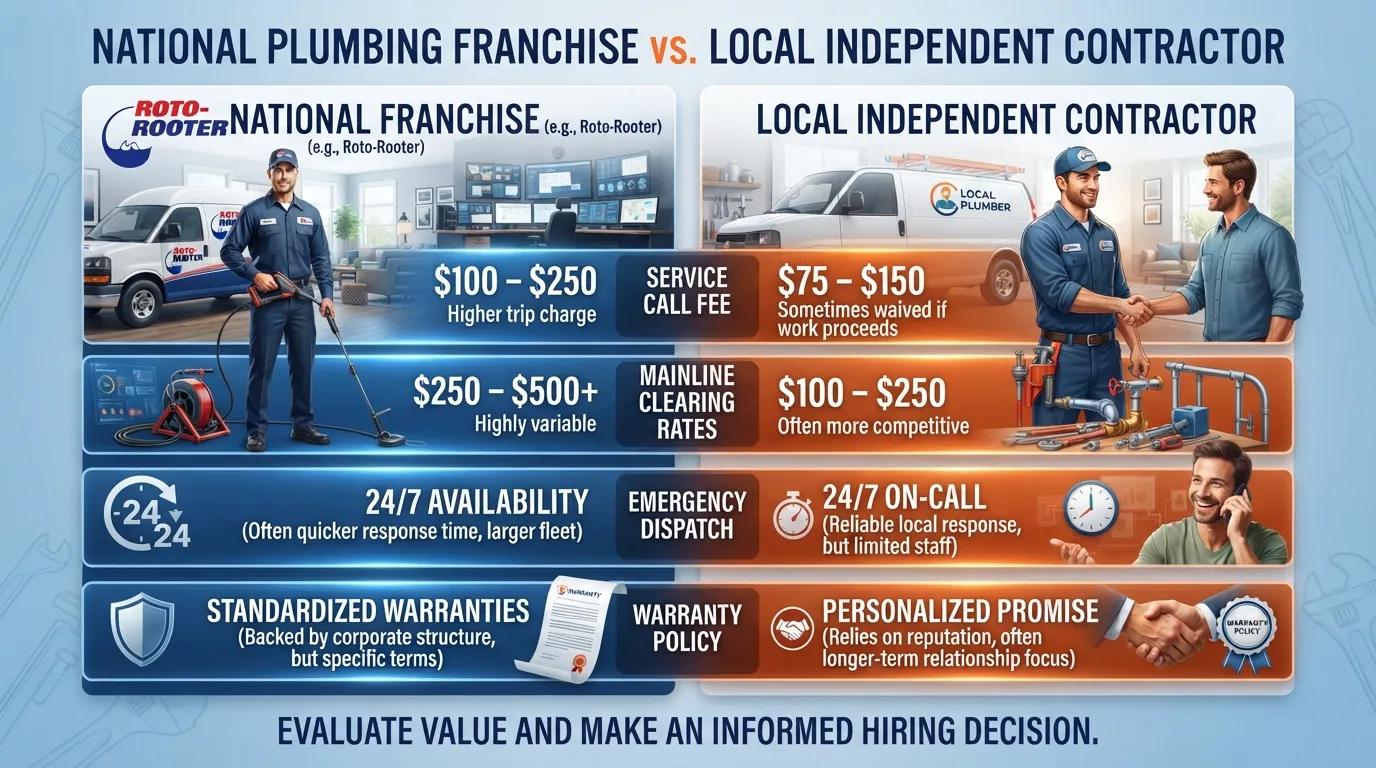
Choosing between a national franchise like Roto-Rooter and a local independent plumbing contractor comes down to balancing guaranteed national availability, brand reputation, and localized pricing structures. Understanding how these providers bill for emergency drain clearing helps you secure the best value for your budget.
Examining franchise overhead against independent contractor flexibility highlights distinct operational differences that ultimately impact your final invoice.
Roto-Rooter’s Typical Pricing Structure
As a nationwide plumbing franchise, Roto-Rooter operates with standardized corporate dispatch systems, 24/7 availability, and proprietary equipment. Their pricing reflects high brand recognition and immediate service guarantees.
- Service Call Fees: Typically ranges from $100 to $250 just for dispatching a technician, which may vary depending on municipal market costs.
- Sewer Line Clearing: Standard main line cleaning or clearing a stubborn blockage generally falls between $250 and $500+.
- Emergency Premiums: After-hours, holiday, and late-night dispatching incur higher labor multipliers compared to independent contractors.
- Warranty Backing: Corporate backing often includes standardized service warranties and reliable customer support protocols.
Local Independent Plumber Average Rates
Independent local plumbing operators usually run lower overhead businesses, allowing them to offer more flexible flat-rate pricing or lower hourly labor charges.
- Service Call Fees: Generally ranges from $75 to $150, with many independent shops waiving the fee if you approve the repair work.
- Drain and Toilet Clearing: Standard clearing rates hover between $100 and $250, making them slightly more budget-friendly for minor blockages.
- Personalized Service: Direct communication with the owner-operator often results in transparent, non-commission-based recommendations.
- Scheduling Flexibility: While highly responsive, smaller independent teams may lack the 24/7 dispatch fleet size of national franchises during major regional storms.
Which Option Gives Better Value?
Determining which provider delivers superior value depends entirely on the urgency and complexity of your plumbing emergency.
- Choose Roto-Rooter When: You need guaranteed 3:00 AM emergency dispatch on a holiday, require specialized corporate warranties, or live in an area where local availability is sparse.
- Choose an Independent Plumber When: You want competitive, budget-friendly rates for standard repairs, prefer supporting local small businesses, or need a trusted long-term contractor for routine maintenance.
- Cost-Benefit Analysis: For standard daytime toilet clogs, local independent plumbers usually offer the most cost-effective solution; for complex after-hours main line failures, national brands provide unmatched dispatch speed.
DIY vs Calling a Professional

Deciding whether to tackle a stubborn toilet clog yourself or hire a licensed professional depends on your comfort level, available tools, and the severity of the backup. Attempting a safe DIY method first can save you the cost of a standard service call fee.
Evaluating when a home remedy crosses the line into a professional repair prevents accidental porcelain damage, messy overflows, and costly plumbing disasters.
Toilet Auger Snake Cost & How to Use It $15–$30
A manual toilet auger—also known as a closet auger—is a specialized hardware store tool designed specifically to break up clogs trapped inside porcelain bowls without scratching the surface.
- Tool Investment: Costs between $15 and $30 at any local home improvement store, making it a budget-friendly alternative to a professional visit.
- Rubber Protector Guard: Features a built-in rubber sleeve that shields the outer bowl rim from unsightly scratches and chips during operation.
- Mechanism: A crank handle rotates a flexible steel cable down the drain trap to hook or break apart dense toilet paper and waste accumulations.
Try This Before Calling a Plumber
Following a systematic troubleshooting process helps clear minor obstructions safely before you spend money on professional labor fees.
- Stop Flushing Immediately: Prevent an unwanted bathroom flood by refraining from repeated flushing when the bowl water level remains high.
- Use a Flange Plunger: Ensure you use a cup-style plunger with an extended flap (flange plunger) rather than a flat sink plunger to create an airtight seal over the drain hole.
- Apply Warm Water and Dish Soap: Pour a cup of dish soap and a bucket of hot (not boiling) tap water into the bowl to help lubricate and loosen grease or paper jams.
- Deploy a Closet Auger: Feed the manual snake into the drain opening, crank gently when you feel resistance, and retract the cable to pull out or break the obstruction.
When DIY Fixes Actually Fail
Recognizing the boundary between a manageable home fix and a systemic plumbing failure protects your home from severe water damage and wasted effort.
- Persistent Backups Across Fixtures: If flushing the toilet causes water to bubble up in your bathtub or bathroom sink, the blockage is in the main sewer line, requiring heavy-duty professional equipment.
- Lodged Hard Plastic Objects: Children’s toys, toiletries, or hard plastic items wedged tightly past the trap require a plumber to pull the entire toilet fixture.
- Repeated Clog Recurrence: If your toilet clogs continuously week after week despite successful manual plunging, underlying pipe defects or root intrusions are present.
When to Call a Plumber for a Clogged Toilet Warning Signs
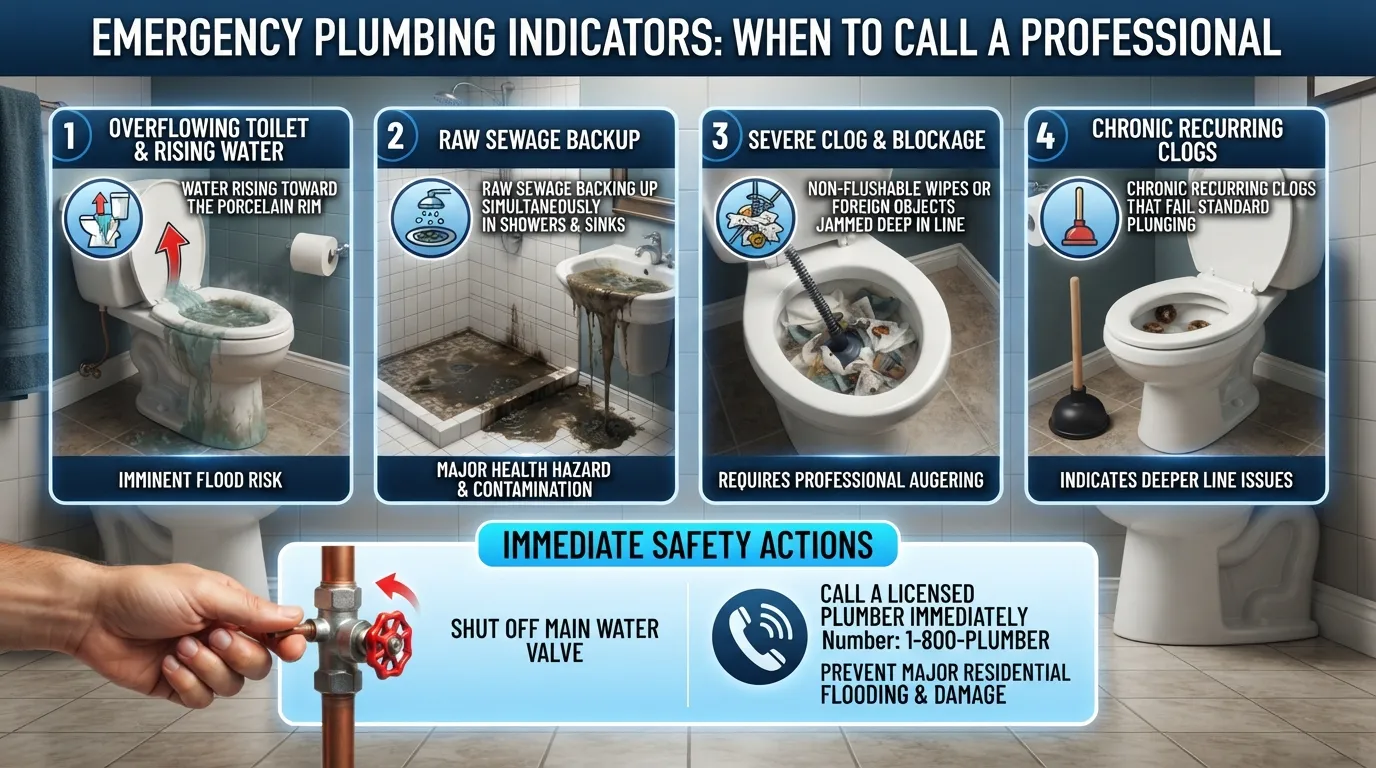
Recognizing the critical warning signs of a failing drainage system prevents minor bathroom inconveniences from escalating into costly structural property damage. While a simple plunger handles routine blockages, systemic failures require immediate professional intervention.
Knowing exactly when to drop the DIY tools and call a licensed plumber ensures your home’s plumbing network remains safe, sanitary, and fully operational.
Water Overflowing or Rising Instead of Draining
An uncontrolled rise in water levels that threatens to spill over the porcelain rim indicates a severe, complete blockage in the trap or branch line.
- Immediate Action Required: Shut off the water supply valve located behind the toilet base immediately to prevent severe bathroom flooding.
- Health Hazard: Overflowing black or gray wastewater introduces harmful bacteria into your living space, demanding prompt sanitization.
- Professional Solution: Requires specialized mechanical augering or total blockage extraction by a certified technician.
Multiple Drains Clogging at the Same Time Main Line Signal
When a toilet backup coincides with slow-draining showers, gurgling bathtubs, or sinks backing up, the problem extends far beyond a single bathroom fixture.
- Main Sewer Line Failure: Indicates a major blockage or structural collapse in your home’s primary lateral sewer line connecting to municipal infrastructure.
- System-Wide Impact: Gravity and branch lines are failing because wastewater has nowhere else to escape.
- Advanced Intervention: Demands heavy-duty main line clearing, professional snake runs, or high-pressure hydro jetting.
Recurring Clogs Despite Plunging
If your toilet requires constant plunging or blocks every few days despite seemingly successful clearings, a deeper underlying defect is at fault.
- Hidden Obstructions: Mineral scaling, calcification, or trapped foreign objects catch toilet paper continuously.
- Venting or Pipe Pitch Issues: Improper drain slope or blocked vent stacks prevent adequate airflow, causing chronic sluggishness.
- Diagnostic Need: Requires a professional video camera inspection to pinpoint the root cause inside the pipe network.
Non-Flushable Items Stuck Wipes Toys Foreign Objects
Items marketed as “flushable” wipes, paper towels, feminine hygiene products, or children’s toys do not dissolve like standard toilet paper.
- Knotting and Bunching: Synthetic fibers weave together tightly inside the trap or branch pipe, creating an impenetrable synthetic plug.
- Hard Plastic Hazards: Toys or plastic caps wedge tightly against pipe curves, blocking all water flow.
- Extraction Protocol: Often requires pulling the entire toilet fixture to safely remove the trapped object without damaging the porcelain.
Can You Clear a Main Sewer Line Clog Yourself?
Attempting to clear a main sewer line clog without professional equipment or experience is strongly discouraged for several safety reasons.
- Equipment Limitations: Store-bought hand snakes lack the length, torque, and cutting power required to penetrate dense main line blockages or tree roots.
- Backflow Risks: Forcing a massive main line clog can push raw sewage backward into your home’s lower-level showers and floor drains.
- Cost-Effective Expertise: Hiring a licensed plumber with professional-grade machinery ensures the issue is resolved safely on the first visit.
Related Cost Toilet Flange Replacement
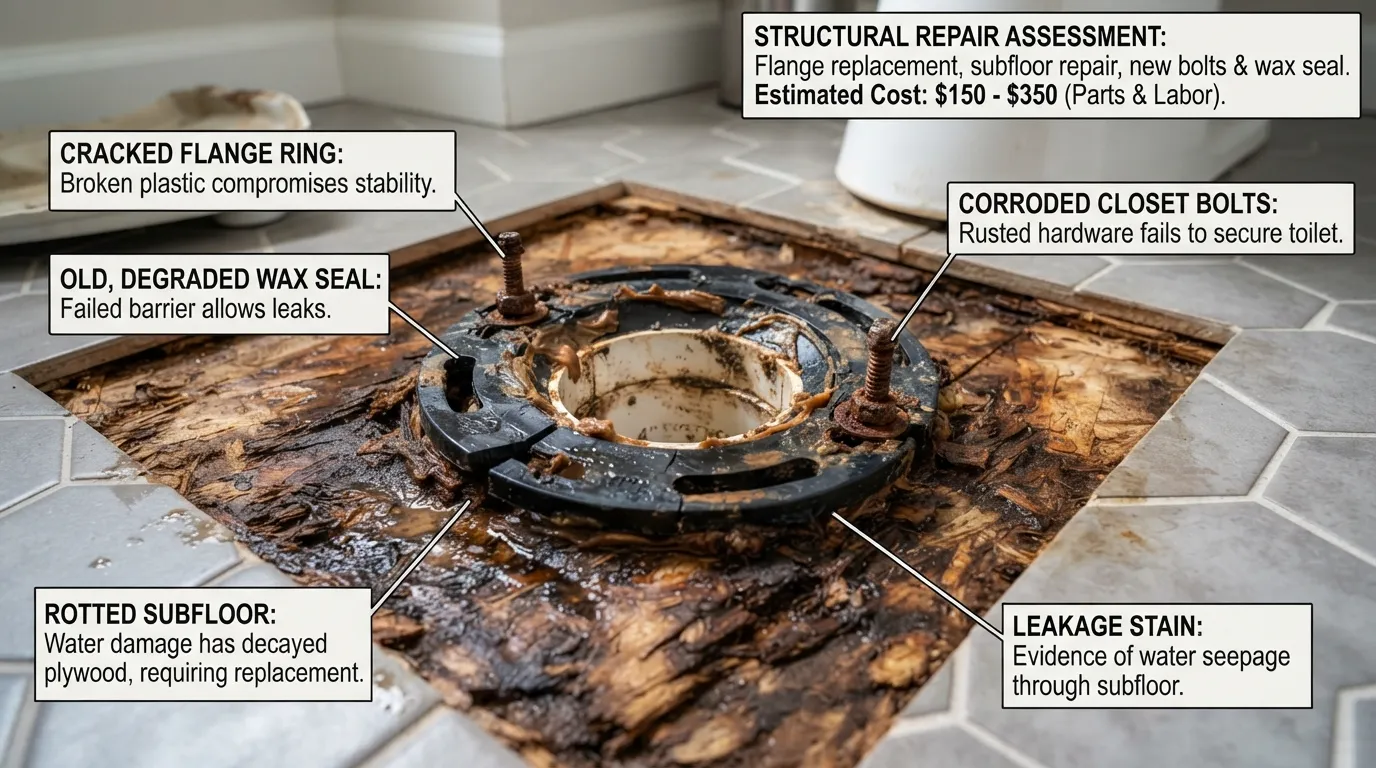
When dealing with stubborn toilet clogs or invasive repairs, plumbers occasionally discover underlying structural damage to the toilet flange. The flange is the critical anchor connecting your porcelain toilet bowl directly to the floor drain pipe.
Understanding replacement costs and recognizing warning signs prevents unexpected add-on charges from surprising you when your final repair invoice arrives.
What Is a Toilet Flange & Why It Cracks
The toilet flange anchors the fixture securely to the subfloor while creating a watertight seal into the drainage pipe via a wax ring.
- Structural Purpose: Holds the closet bolts that keep the toilet from rocking or shifting during daily use.
- Common Causes of Damage: Age-related PVC/cast iron brittleness, aggressive rocking of a loose toilet, or corrosion in metal rings.
- Failure Impact: A broken flange breaks the watertight seal, leading to subfloor rot, foul odors, and severe bathroom leaks.
Average Cost to Replace a Toilet Flange
Replacing a damaged toilet flange involves unbolting the toilet, removing the old ring, securing a new replacement, and installing a fresh wax ring.
- Total Cost Range: Typically ranges between $150 and $350 including parts and labor.
- Labor Intensive: If the flange is tied into cast iron or subfloor wood damage is present, labor hours increase, pushing costs toward the higher end.
- Material Variations: PVC and ABS replacement rings are inexpensive, while heavy-duty cast iron repair brackets require more technical labor.
Signs Your Flange Needs Replacement, Not Just Unclogging
Certain symptoms indicate that your plumbing issue extends far beyond a simple drain blockage into structural hardware failure.
- Wobbling Base: The toilet rocks back and forth even after tightening the floor bolts completely.
- Seepage Around the Base: Water pools around the base of the toilet after every flush, independent of tank condensation or supply line leaks.
- Rotting Subfloor: Soft flooring or water stains appearing directly around the toilet indicate chronic leakage from a broken flange seal.
How to Find a Fair Priced Reliable Local Plumber
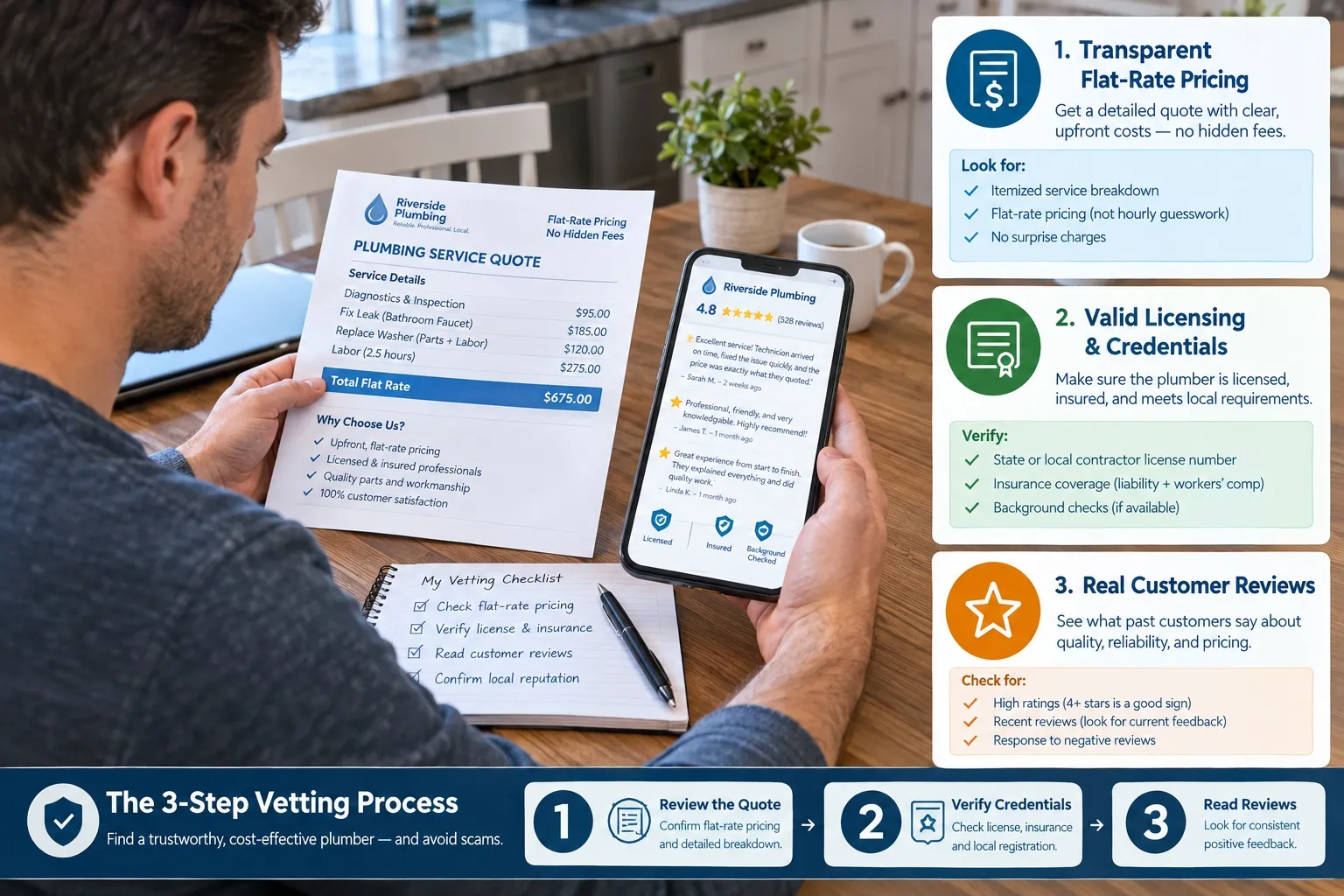
Finding a trustworthy, fairly priced local plumber ensures you get transparent pricing without falling victim to hidden fees, inflated emergency markups, or unnecessary repairs. Evaluating contractors based on clear credentials and upfront estimates protects your budget during plumbing emergencies.
Comparing local service options against national benchmarks—such as the Angi drain cleaning cost guide—helps you verify that your local quotes align with standard industry averages.
Get Multiple Quotes Before Booking
Reaching out to at least two or three local plumbing contractors prevents you from overpaying for routine drain clearing services.
- Upfront Estimates: Ask companies for a clear written breakdown covering the trip fee, labor rates, and estimated time before dispatching a truck.
- Diagnostic Transparency: Ensure quotes specify whether the trip fee will be waived or credited toward the final repair bill if you approve the service.
- Competitive Leverage: Having multiple price points helps you identify outlier quotes that are either suspiciously low or excessively inflated.
Questions to Ask Before Hiring Flat Rate? Warranty?
Asking the right targeted questions before work begins prevents unexpected billing surprises once the technician finishes clearing your toilet.
- Flat Rate vs. Hourly: Clarify whether the plumber charges a guaranteed flat rate for the job or an open-ended hourly rate plus materials.
- Workmanship Warranty: Ask if they offer a guarantee or warranty period on the drain clearing service in case the toilet clogs again a few days later.
- Licensing and Insurance: Verify that the technician is fully licensed, bonded, and insured to protect your residential property against accidental damage.
Red Flags of Overcharging
Being aware of common contractor warning signs protects you from predatory pricing tactics and dishonest diagnostic claims.
- Pressure Tactics: Technicians who demand immediate authorization for expensive main line replacements without providing video evidence or alternative options.
- Vague Pricing Structures: Plumbers who refuse to give a clear estimate before starting work or quote extremely low trip fees followed by hidden labor hikes.
- Pushing Unnecessary Add-ons: Insisting on full hydro-jetting or major pipe relining for a simple, localized paper clog trapped in the toilet bowl trap.
Real Homeowner Experiences What People Actually Paid
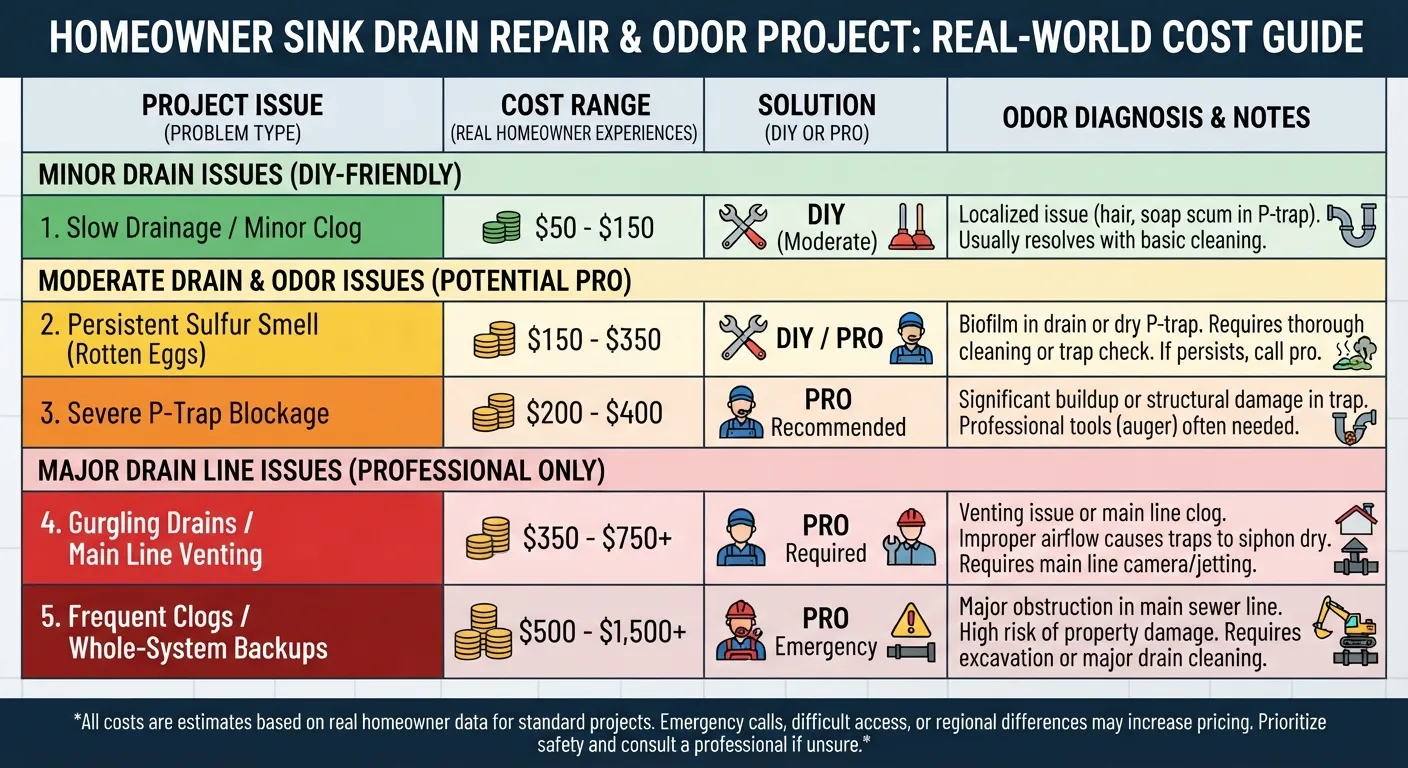
Analyzing real-world community discussions from homeowner forums reveals what people actually pay for professional toilet clearing services. While standard rates hover between $100 and $300, actual experiences vary wildly based on timing, urgency, and contractor selection.
Reviewing these authentic peer insights helps you calibrate your expectations and avoid common pricing pitfalls reported across residential neighborhoods.
What Homeowners Report Paying Community Insights Summary
Crowdsourced feedback from property owners who recently hired professionals for stubborn toilet clogs highlights typical spending patterns.
- Standard Daytime Service: Most homeowners report paying between $125 and $225 for a standard weekday auger service that takes under 30 minutes.
- Emergency After-Hours Dispatches: Night and weekend calls frequently result in total bills ranging from $350 to $550 due to mandatory emergency service markups.
- Unnecessary Upselling Encounters: Several homeowners note being quoted over $1,000 for main line hydro-jetting when a simple toilet auger would have resolved the issue.
Common Complaints About Overpricing
Examining where transactions go wrong helps you spot predatory billing practices before handing over payment to a service technician.
- Hidden Trip Fees: Homeowners frequently express frustration when diagnostic fees are doubled unexpectedly upon arrival despite telephone quotes.
- Vague Hourly Estimates: Complaints often center around technicians who start work without providing a signed flat-rate estimate, leading to inflated labor charges.
- High-Pressure Sales tactics: Reports of technicians claiming minor clogs require immediate, expensive sewer line replacements to exploit homeowner panic.
Practical Takeaway From Real Cases
Applying lessons learned from other homeowners ensures you maintain firm control over your plumbing repair budget.
- Insist on Written Estimates: Always get a guaranteed flat-rate price in writing before the plumber starts running equipment down your drain.
- Try Basic DIY First: A $20 manual toilet auger resolves a significant percentage of clogs that might otherwise cost $200 in professional labor.
- Verify Contractor Integrity: Stick with trusted independent operators or highly vetted local companies with transparent pricing models.
Frequently Asked Questions (FAQ)
Addressing common queries regarding toilet unclogging costs, professional fees, and DIY troubleshooting provides immediate clarity. These direct answers target popular search engine features to help you resolve your plumbing concerns quickly.
How much should it cost to unblock a toilet?
Professional toilet unblocking typically costs between $100 and $300 for standard residential service. This price usually covers a basic service call fee and manual augering or snaking by a licensed technician.
Will a clogged toilet eventually clear on its own?
A toilet clogged with standard organic waste and toilet paper may eventually dissolve over several hours, but blockages caused by solid objects, excessive paper, or wipes will not clear on their own and require mechanical intervention.
How do you unblock a severely clogged toilet?
Severely blocked toilets require a professional-grade motorized closet auger, pulling the toilet fixture entirely to remove trapped foreign objects, or utilizing high-pressure drain clearing techniques.
Does hydro jetting have any disadvantages?
The primary disadvantage of hydro jetting is that excessively high water pressure can rupture old, cracked, or heavily deteriorated pipes if a preliminary video camera inspection is not performed beforehand.
How much does Roto-Rooter charge to unclog a sewer line?
Roto-Rooter generally charges between $250 and $500+ for standard sewer line cleaning and clog removal, with prices varying based on the severity of the blockage and local market rates.
How can I fix a clogged toilet without calling a plumber?
You can attempt to clear a clogged toilet using a flange plunger, applying hot water and dish soap to lubricate the line, or operating an affordable $15 to $30 manual toilet auger purchased from a hardware store.
How much does it cost to have a plumber replace a toilet flange?
Replacing a damaged toilet flange typically costs between $150 and $350 for parts and labor, depending on whether the subfloor requires repair or if the flange is connected to heavy cast-iron piping.
I accidentally flushed wipes, but the toilet isn’t clogged — what should I do?
If you flushed “flushable” wipes and the toilet is currently draining fine, monitor the plumbing closely over the next few days and avoid flushing additional wipes, as synthetic fibers frequently catch further down in the main sewer line.

Oscar Vance | Master Plumber & Drainage Expert
Meet Oscar Vance, a licensed master plumber sharing practical solutions on residential repairs, preventive maintenance, and thoughtful home upkeep.