Sewer Line Repair vs Replacement Cost on Average
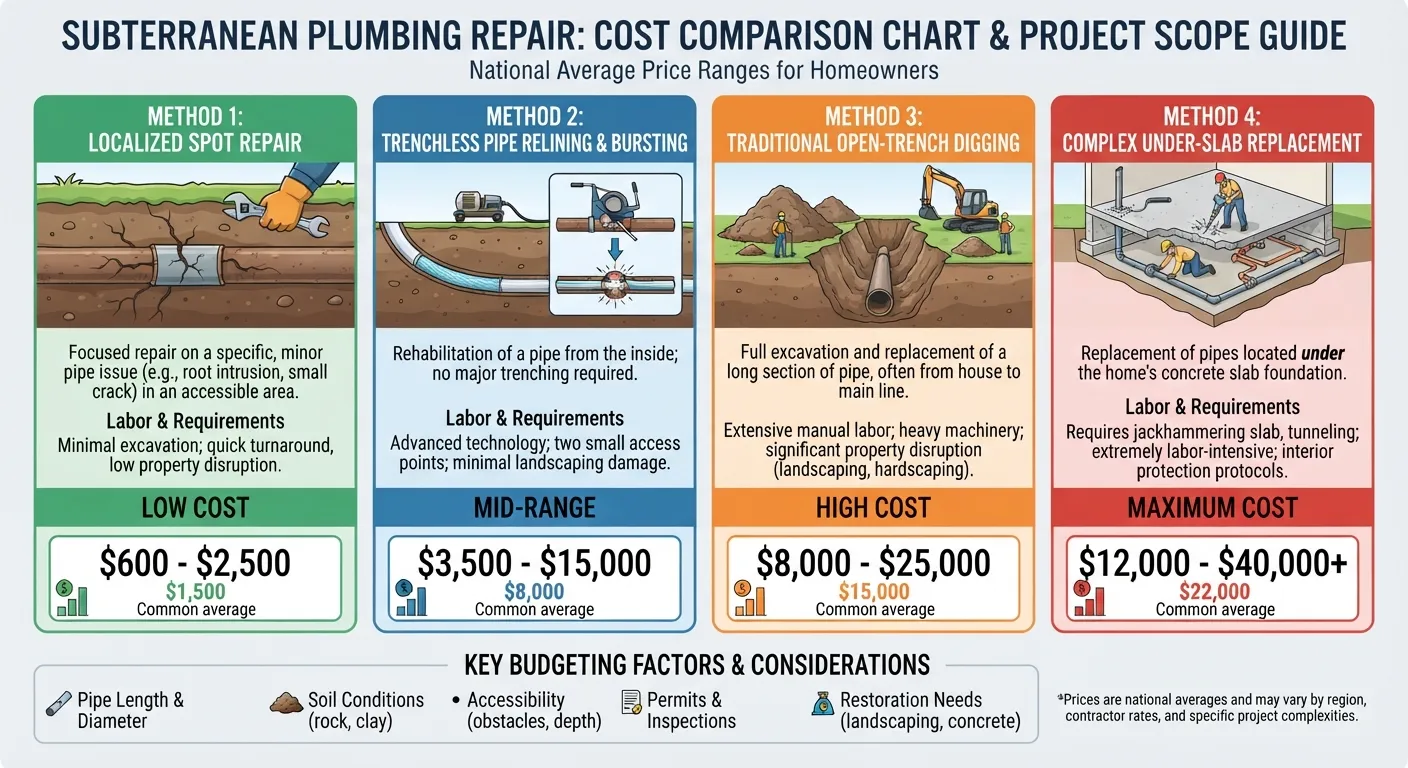
Sewer line repairs typically range from $1,500 to $4,000 for localized spot fixes, while full sewer line replacements cost between $4,000 and $20,000 depending on the depth, length, and excavation method required. Understanding these financial benchmarks immediately helps homeowners budget accurately for unexpected plumbing failures.
What Does Sewer Line Repair vs Replacement Cost on Average?
The total investment for subterranean plumbing fixes depends heavily on whether you need a minor pipe patch or a total system overhaul. Minor root intrusion or localized cracks can often be fixed cost-effectively, whereas collapsed pipes require extensive excavation or advanced trenchless lining.
- Localized Spot Repairs: Ideal for isolated damage, root penetration, or single joint leaks.
- Trenchless Technology: Minimally invasive pipe bursting or Cured-In-Place Pipe (CIPP) lining that preserves landscaping.
- Traditional Trenching: Heavy excavation required for severely collapsed, bellied, or heavily offset cast iron and clay pipes.
Sewer line pricing is frequently calculated on a linear foot basis, with overall labor and materials running between $50 to $250+ per foot. Estimating project expenditure by linear footage gives property owners a reliable baseline before requesting custom contractor quotes.
- Average Sewer Line Cost Per Linear Foot
- The final price per linear foot depends heavily on the chosen repair technique, digging depth, and regional labor market rates. Standard trenchless methods usually cost more in specialized materials, while traditional digging incurs heavier labor and restoration fees.
- Traditional Open-Trench: Ranges from $50 to $150 per linear foot for standard soil excavations.
- Trenchless Pipe Lining (CIPP): Averages $80 to $200 per linear foot depending on pipe diameter and resin quality.
- Trenchless Pipe Bursting: Typically spans $100 to $250 per linear foot for pulling new high-density lines.
Real Example Cost to Replace 50 Feet of Sewer Line
Calculating a standard 50-foot residential service run illustrates how different methodologies translate into final project totals. Homeowners replacing a standard length from foundation to street can expect distinct financial scaling based on the insertion technique.
- Traditional Open-Trench Example: At $100 per foot, a 50-foot run totals approximately $5,000, excluding heavy yard restoration or concrete patching.
- Trenchless Relining Example: At $150 per foot, a 50-foot lining project totals around $7,500 while keeping lawns and sod completely intact.
- Trenchless Pipe Bursting Example: At $200 per foot, replacing a collapsed 50-foot line via bursting reaches $10,000 for upgraded structural durability.
How Pipe Length Impacts Total Price
While per-foot averages provide a solid baseline, shorter runs often carry higher minimum flat-rate mobilization charges from contractors. Conversely, extremely long runs benefit from scaling efficiencies but increase risks regarding hidden obstacles.
- Mobilization Minimums: Contractors frequently charge flat minimum fees for small runs under 20 feet to cover equipment transport.
- Depth Multipliers: Lines running deeper than standard frost lines require shoring and added safety protocols, increasing foot rates.
- Obstacle Surcharges: Longer sewer runs increase the statistical likelihood of encountering tree roots, utility lines, or rock formations.
Trenchless vs Traditional Which Is Cheaper?
Trenchless sewer repair is often slightly higher in upfront material costs than traditional digging, but it proves significantly cheaper overall by eliminating heavy landscaping, driveway demolition, and restoration expenses. Choosing excavation-free methods saves homeowners thousands in hidden post-project cleanup bills.
Is Trenchless Sewer Repair Cheaper?
While open-trench digging appears budget-friendly on initial contractor bids, property restoration costs quickly drive the total price tag higher. Homeowner discussions on forums like Quora consistently highlight that saving a mature lawn or paved driveway makes trenchless pipe bursting and CIPP lining the more economical long-term choice.
- Upfront Material Variances: Trenchless techniques utilize specialized resins and hydraulic equipment that carry higher baseline material expenses.
- Restoration Savings: Traditional trenching leaves behind destroyed sod, patios, and sprinkler systems that cost thousands to repair.
- Labor Efficiency: Excavation-free methods require smaller crews and fewer working days on-site, reducing labor hour billing.
Pros & Cons Comparison Table
When Trenchless Isn’t an Option
Despite its widespread popularity, trenchless technology cannot solve every underground plumbing crisis. Structural failures or severe alignment issues require traditional excavation to physically rebuild the drainage path.
- Completely Collapsed Pipes: If a pipe has caved in entirely, a trenchless bursting head or lining tube cannot pass through.
- Severe Bellies or Sags: Low spots holding standing water prevent proper slope maintenance, requiring physical trench re-grading.
- Offset or Disconnected Joints: Major pipe displacement makes it impossible to pull new lining material or push a bursting head straight.
Terminology Clarified Sewer Line vs Sewer Main vs Drain Line
Homeowners often use plumbing terms interchangeably, but distinguishing between a standard drain line, a sewer lateral, and a municipal sewer main prevents costly miscommunication with contractors. Clear definitions ensure you understand exactly which section of your home drainage network requires service.
What’s the Difference Between a Sewer Line and a Drain Line?
Drain lines collect wastewater from individual sinks, tubs, and toilets inside your home and route it downward. The sewer line (or sewer lateral) is the primary single pipe that aggregates all that wastewater and carries it out of your house toward the street.
- Internal Drain Lines: Smaller pipes (PVC or ABS) branching through walls and floors from showers, sinks, and washing machines.
- Main Sewer Line: A wider pipe (typically 3 to 4 inches in diameter) that takes the combined effluent from all interior drains away from the building foundation.
- Scope of Failure: A clogged drain line usually affects only one plumbing fixture, whereas a blocked sewer line causes multiple toilets and drains to back up simultaneously.
What’s the Difference Between a Sewer Line and a Sewer Main?
Your private sewer line connects your individual residential plumbing to the publicly maintained municipal sewer main running beneath the public street or easement. Understanding where private responsibility ends and city liability begins is vital for determining repair billing.
- Private Sewer Lateral: The homeowner is entirely responsible for maintaining, repairing, and replacing the line from the house out to the property line or curb.
- City Sewer Main: The large municipal trunk line owned by the city or local utility district that handles wastewater from an entire neighborhood.
- The Tap/Connection Point: The transition point where your private lateral ties into the city main is often a heavily regulated zone requiring specialized permits.
Simple Visual Table Explaining the Home Plumbing System Layout
How Deep Is a Sewer Line Buried?
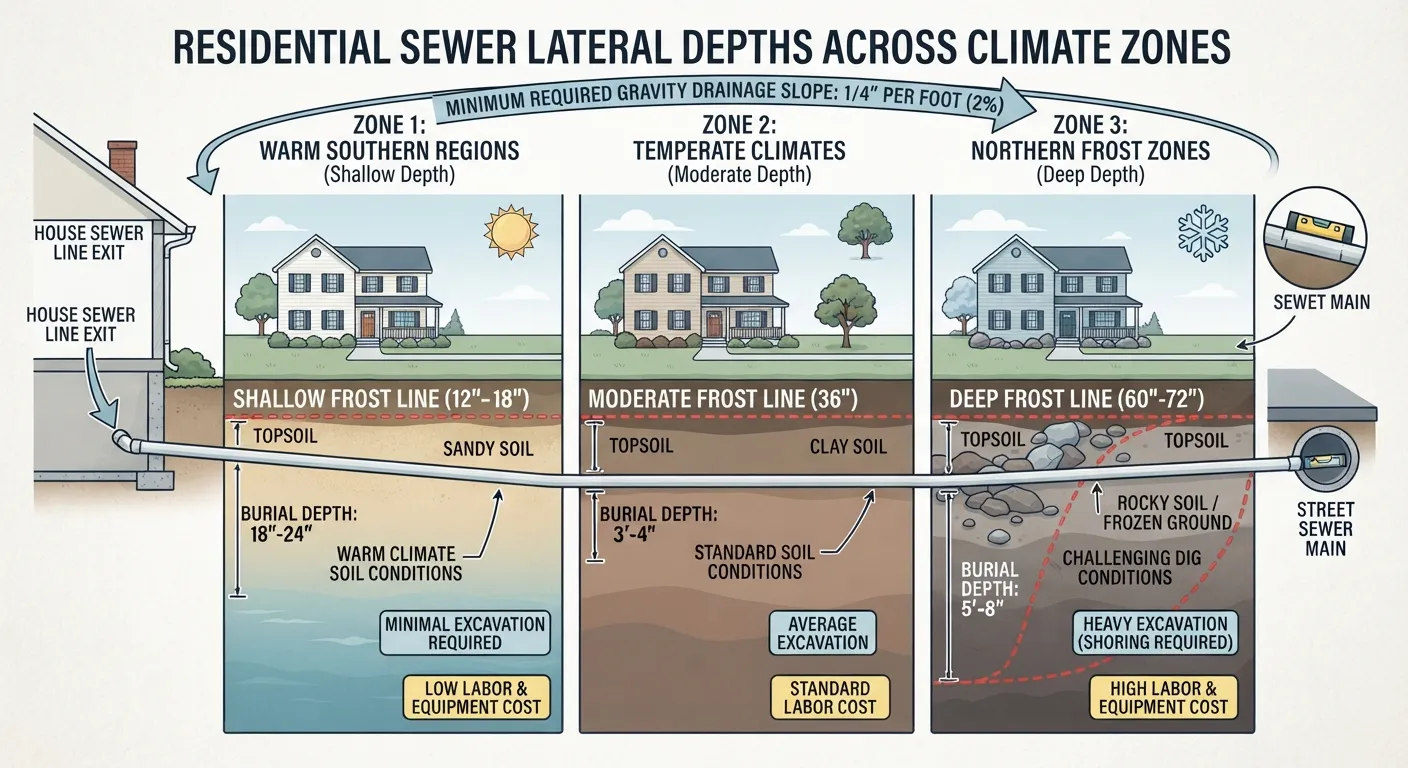
Residential sewer lines are typically buried between 18 inches and 10 feet deep, with exact placement dictated by regional frost lines, local building codes, and municipal gravity-drain connection points. Knowing your pipe’s burial depth helps explain why excavation labor quotes fluctuate so drastically.
Typical Burial Depth by climate zone frost line consideration
Plumbers must bury sewer lines deep enough beneath the ground to prevent standing water inside the pipe from freezing and cracking the conduit during winter freezes. Consequently, burial depths vary significantly depending on your geographic region.
- Warm Southern Climates: Lines may be buried as shallow as 18 inches to 2 feet since freezing temperatures are rare.
- Moderate Temperate Regions: Standard burial depths range from 3 to 4 feet to safely clear seasonal frost penetration.
- Cold Northern Climates: Frost lines extending 5 to 8 feet underground require deep trenching and heavy insulation protocols.
Why Depth Increases Repair Replacement Cost
Deeper sewer lines require significantly more heavy machinery, complex shoring equipment, and physical labor hours to excavate safely. OSHA safety regulations mandate trench shoring or sloping for any excavation deeper than 5 feet to prevent fatal cave-ins, driving up project overhead.
- Increased Soil Removal: Deeper trenches require removing and later backfilling massive volumes of earth, adding heavy equipment hours.
- Safety Shoring Requirements: Trenches exceeding 5 feet require hydraulic shoring boxes or trench shields, which carry equipment rental surcharges.
- Municipal Tie-in Depth: If the city main is deeply buried in the public street, your private line must slope downward continuously to match that drop, increasing overall installation depth.
How Long Does a Sewer Line Last? Lifespan & Replacement Frequency
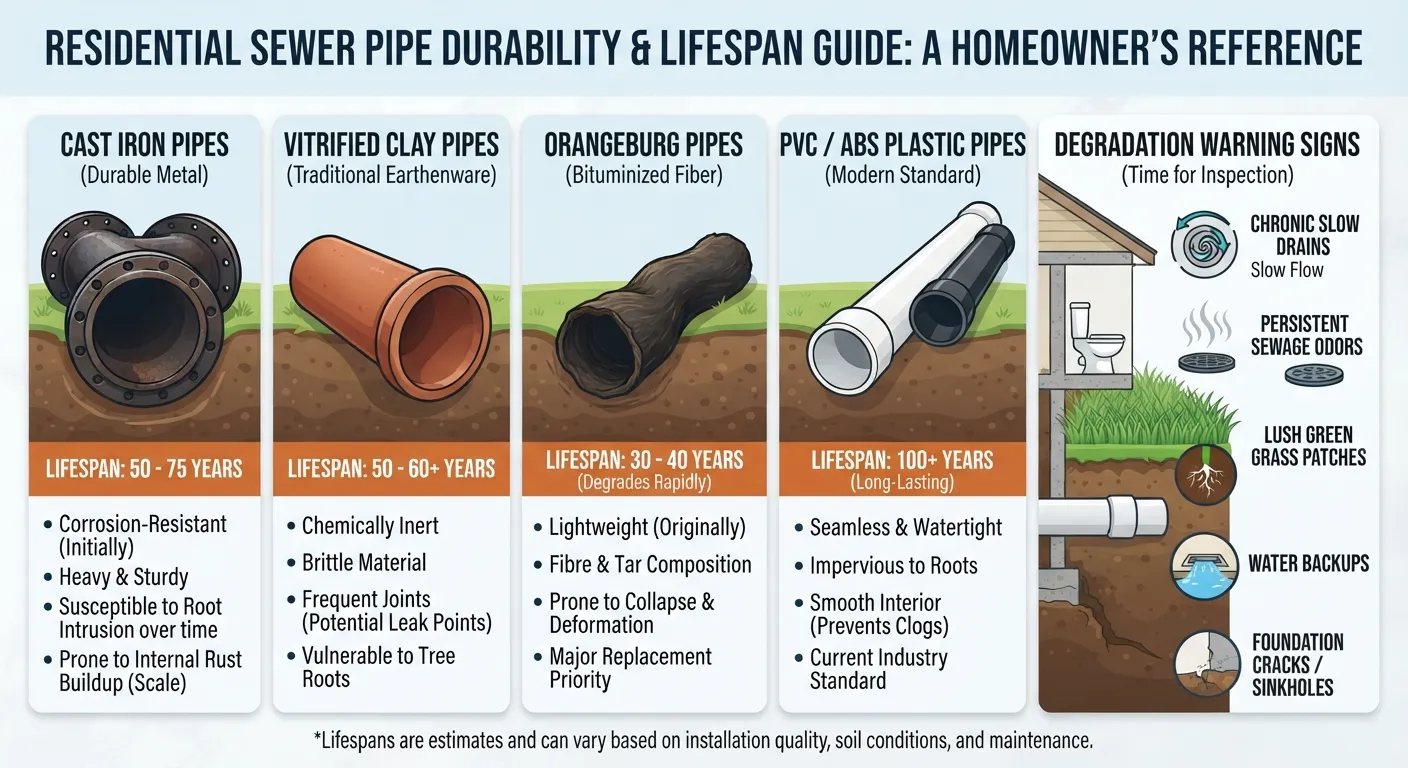
Residential sewer lines typically last anywhere from 30 to 100+ years, depending heavily on the original installation material, soil chemistry, and root intrusion pressures. Knowing the expected lifespan of your specific pipe material helps you anticipate catastrophic failures before they happen.
Lifespan by Pipe Material Clay Cast Iron Orangeburg PVC
Different eras of home construction utilized distinct underground piping materials, each possessing unique durability ratings and degradation patterns. Understanding your home’s vintage provides an immediate indicator of remaining pipe health.
- Cast Iron (50–75 Years): Common in mid-century homes, cast iron resists heavy loads but eventually rusts and scales internally from the bottom up.
- Vitrified Clay (50–60+ Years): Highly durable against chemical corrosion, but vulnerable to root infiltration at its numerous mortar-sealed joints.
- Orangeburg (30–40 Years): Made of compressed wood cellulose and tar, this brittle material frequently deforms, collapses, and fails prematurely.
- PVC / ABS Plastic (100+ Years): Modern plastic piping offers smooth interior walls, root-resistant sealed joints, and maximum longevity.
Signs Your Sewer Line Is Reaching End of Life
Aging sewer lines rarely fail overnight; instead, they exhibit chronic warning signs that indicate structural fatigue and complete material breakdown. Recognizing these indicators lets you budget for a replacement before raw sewage backs up into your living spaces.
- Frequent Slow Drains: Multiple plumbing fixtures draining sluggishly at the same time despite interior snaking or clearing.
- Persistent Yard Odors: Unexplained sewage smells lingering in your yard, particularly near the underground path of the lateral line.
- Lush Green Patches: A sudden patch of bright green, thriving grass over the sewer line caused by wastewater leaking out to fertilize the lawn.
Warning Signs You Need Sewer Line Repair or Replacement
Catching structural sewer degradation early prevents catastrophic property damage and thousands of dollars in emergency mitigation. Recognizing the subtle, compounding red flags allows homeowners to schedule professional camera inspections before a total line collapse occurs.
Slow or Gurgling Drains
When multiple plumbing fixtures throughout your home drain sluggishly at the same time, or emit audible gurgling sounds, trapped air and restricted flow indicate a main sewer blockage. Ignoring these early warning signs almost invariably leads to complete system backups.
- Simultaneous Sluggishness: Sinks, showers, and tubs backing up or draining slowly together point directly to the main lateral.
- Trapped Air Bubbles: Gurgling noises happen when wastewater struggles to pass around an obstruction, pushing air back up through plumbing traps.
- Fixture Interference: Flushing a toilet causes water to bubble up into the bathtub or shower drain.
Sewage Smell in Yard or Basement
A properly functioning closed sewer system should never emit foul odors inside your living spaces or across your property. Persistent, pungent gas smells point to cracks, loose joints, or venting failures along the underground lateral line.
- Basement Odors: Unexplained sulfur or raw sewage smells lingering in utility rooms, crawlspaces, or basements.
- Outdoor Hotspots: Strong foul odors concentrated outdoors over the specific path where your sewer line runs toward the street.
- Broken Vent Stacks: While often tied to roof vents, persistent sewer gas smells paired with slow drains signal deep line breaches.
Frequent Backups or Clogs
If you find yourself repeatedly plunging toilets, using chemical drain cleaners, or calling professional rooters every few weeks, the issue isn’t a localized fixture clog. Chronic blockages mean roots, collapses, or heavy pipe bellies are trapping waste persistently.
- Recurring Blockages: The same drain clogging repeatedly despite mechanical snaking or hydro-jetting clearance.
- Basement Floor Drain Backups: Wastewater bubbling up through the lowest point in your home—usually the basement floor drain—during heavy usage.
- Washing Machine Overflows: Running the laundry causes nearby toilets or floor drains to back up with greywater.
Lush/Soggy Patches in the Yard
A cracked or broken underground sewer pipe constantly leaks nutrient-rich wastewater into the surrounding soil, creating unnatural surface anomalies. Unexplained green turf or soggy indentations serve as clear physical giveaways.
- Abnormally Green Turf: A vibrant, fast-growing strip of grass running across your lawn directly above the buried sewer line.
- Soggy Ground Depressions: Soft, marshy patches or indentations in the yard that remain wet even during dry weather spells.
- Insect Infestations: An unexpected increase in rodents, flies, or gnats attracted to exposed underground organic waste.
Foundation Cracks or Settling
Severe, long-term sewer leaks washing away surrounding soil beneath your home can compromise structural stability. Unchecked underground erosion causes structural settling, resulting in interior wall cracks and jammed doors.
- Sub-Slab Erosion: Leaking sewer lines wash away structural foundation fill, causing localized soil settling.
- Sticking Doors and Windows: Foundation shifting caused by underground water saturation makes interior doors difficult to open or close.
- Interior Wall Cracks: Drywall cracks forming near corners or door frames as the concrete slab drops unevenly.
Is It Cheaper to Repair or Replace a Sewer Line? Decision Framework
Deciding whether to patch a damaged sewer line or replace the entire system requires weighing immediate upfront costs against long-term maintenance liabilities. Evaluating the age of your plumbing and the extent of structural damage helps determine the most cost-effective path forward.
When Repair Makes Sense
Localized spot repairs or trenchless relining are significantly cheaper when damage is restricted to a small, isolated area of an otherwise healthy pipe network. If your overall plumbing system is modern and made of durable PVC, minor fixes save thousands in labor.
- Localized Root Intrusion: Tree roots invading a single pipe joint that can be cleared and sealed via spot lining.
- Single Crack or Break: Isolated damage caused by shifting soil or minor ground settling over a short section.
- Younger Pipe Material: Cast iron or PVC lines under 30 years old experiencing isolated joint failures.
When Full Replacement Is the Smarter Investment
Pouring money into recurring spot repairs on an aging, failing sewer line is a waste of capital. Total replacement becomes the mandatory, smarter investment when structural integrity is completely compromised across the entire run.
- Widespread Material Collapse: Fragile Orangeburg pipes or severely rusted cast iron failing across multiple sections.
- Severe Bellies or Sags: Sunken pipe segments holding standing water that cannot be fixed with minor patches.
- Repeated Emergency Callouts: Spending hundreds annually on rooter services and hydro-jetting without fixing underlying structural defects.
Simple Decision Checklist
Will Insurance Pay for Sewer Line Replacement?
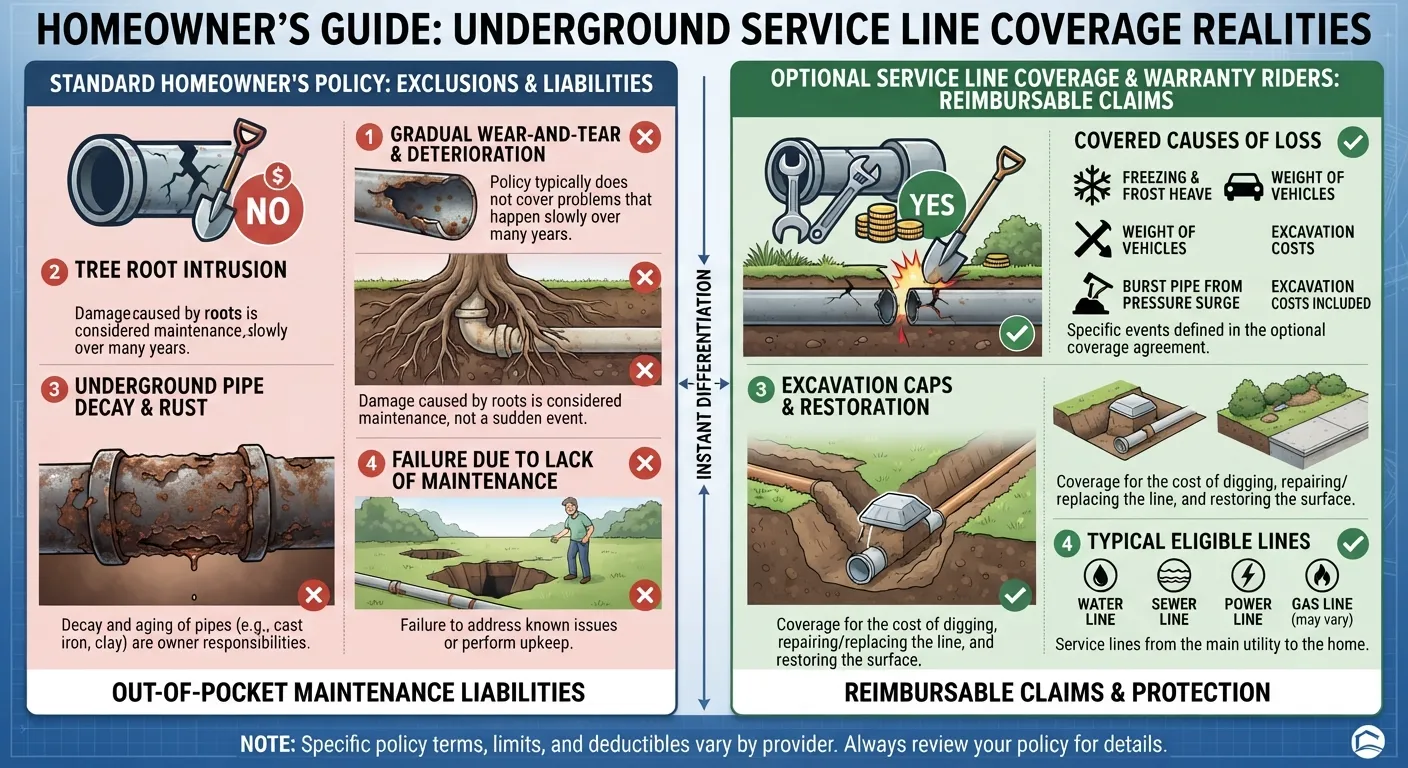
Standard homeowners insurance policies rarely cover sewer line repairs or replacements because damages are typically classified as gradual wear and tear. However, understanding specific policy endorsements and optional service line riders can help homeowners recover unexpected excavation costs.
What Standard Homeowners Insurance Typically Covers and Doesn’t
Most basic hazard and property insurance policies protect your home from sudden, accidental interior water damage caused by plumbing failures, but they explicitly exclude the underground lateral pipe connecting your house to the street.
- Interior Water Damage: Insurance usually covers ruined drywall, flooring, and furniture if a backed-up sewer line overflows inside your home.
- Underground Pipe Exclusion: The exterior sewer lateral itself is excluded because insurers view maintenance and ground settling as homeowner responsibilities.
- Accidental External Damage: Coverage may apply only if an unexpected acute event—such as a heavy contractor vehicle driving directly over and crushing the shallow pipe—causes the failure.
Sewer Line Warranty Service Line Coverage Plans
Because standard policies fall short, many homeowners purchase optional service line endorsements through their current insurance provider or enroll in third-party municipal warranty programs (such as HomeServe) to mitigate catastrophic risk.
- Insurance Endorsements: Low-cost riders added to your standard homeowners policy that specifically cover underground water and sewer line breaks.
-
Utility-Affiliated Warranties: Optional programs often billed directly through your local water or utility service provider to cover exterior repairs.
- Coverage Limits: Review policy caps carefully, as some third-party plans cap payouts at $5,000 or $10,000, which may fall short of deep trenchless replacements.
When Insurance Denies a Claim
Insurers regularly deny sewer line claims based on specific policy exclusion clauses. Knowing these common denial triggers helps you avoid filing unsuccessful claims that could increase your overall risk profile.
- Gradual Wear and Tear: Pipes deteriorating over 50 years due to rust, scale buildup, or standard corrosion.
- Tree Root Intrusion: Insurers classify root growth as a predictable maintenance issue rather than an unpreventable sudden accident.
- Pre-Existing Neglect: Failures resulting from known prior drainage issues that the homeowner delayed addressing.
Do You Need a Permit to Replace a Sewer Line?
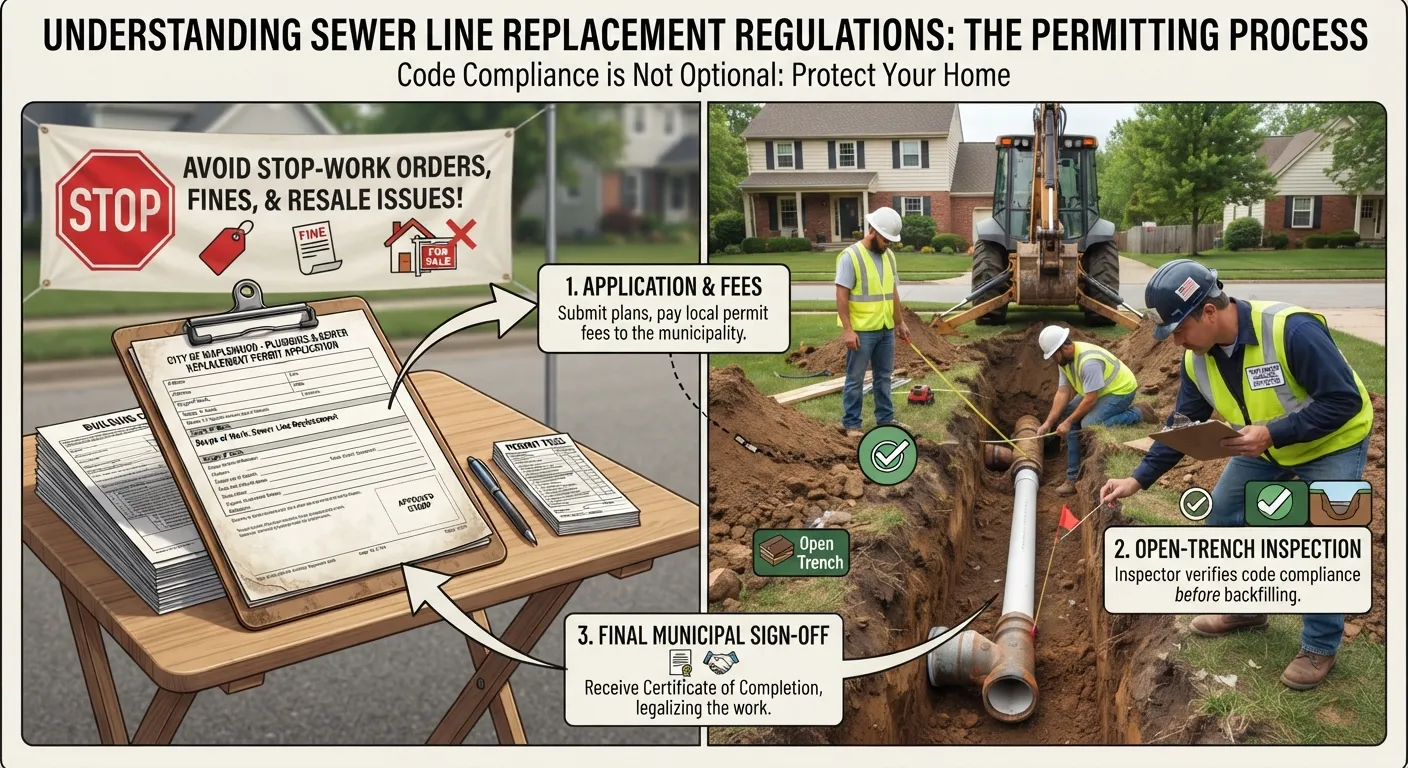
Replacing or repairing a main sewer line almost always requires an official plumbing permit issued by your local municipal building department. Skipping this mandatory regulatory step can result in steep municipal fines, failed property sales, and forced excavation of completed work.
When a Permit Is Required
Any project involving the breaking, replacement, or new installation of a sewer lateral connecting to public infrastructure triggers municipal permit requirements. Local governments must ensure that all subterranean plumbing work complies with public health codes and structural safety standards.
- Full Line Replacements: Anytime a contractor excavates or pulls a new pipe from the house out to the street tie-in.
- Substantial Trenchless Relining: Many municipalities require permits for CIPP lining and pipe bursting to track structural alterations.
- Deep Spot Repairs: Major repairs involving trenching near property easements or public right-of-ways.
Typical Permit Cost & Process
Plumbing permits generally range from $50 to $500 depending on your city, county, and the total valuation of the repair project. Licensed plumbing contractors typically handle pulling the permit and scheduling the mandatory inspections as part of their service package.
- Application and Fee: Submitted to the local building department prior to breaking ground, detailing the scope of work.
- Open Trench Inspection: A municipal plumbing inspector must physically view the exposed pipe, bedding, and slope before the trench is backfilled.
- Final Sign-Off: A final post-repair inspection ensures proper drainage and verifies that all street or sidewalk surfaces were restored correctly.
Risks of Skipping a Permit
Attempting to bypass the permit process to save time or money introduces severe legal, financial, and safety liabilities. Unpermitted plumbing work creates major complications down the road.
- Municipal Stop-Work Orders: Code enforcement officers can halt active construction projects immediately and issue heavy financial penalties.
- Home Sale Complications: Unpermitted sewer work becomes a major red flag during real estate title searches and homebuyer structural inspections.
- Loss of Contractor Recourse: Unlicensed or unpermitted work voids installer warranties, leaving you entirely financially liable for future failures.
Legal Responsibility & Liability Shared Lines Neighbor Disputes
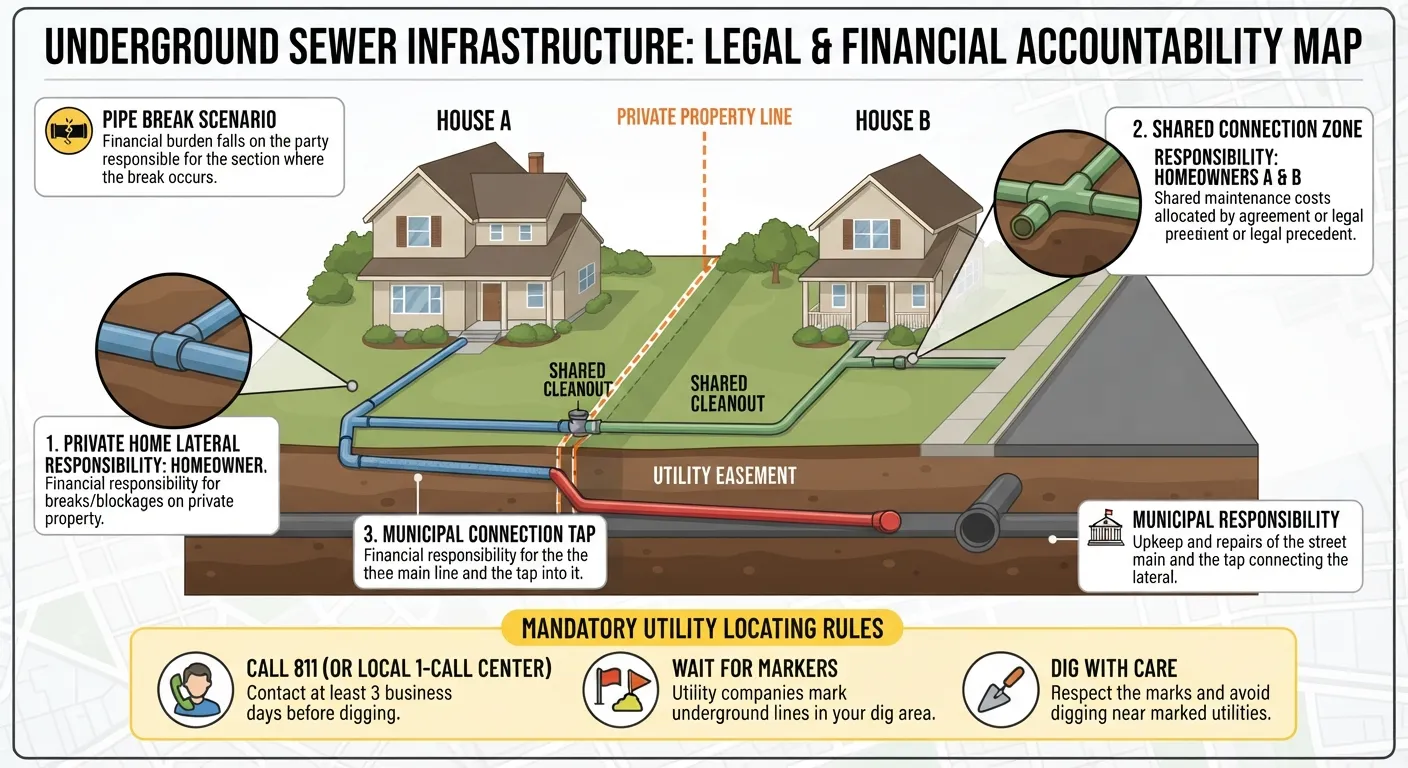
Determining financial liability for underground sewer lines becomes complex when lines cross property boundaries, serve multiple homes, or intersect with public easements. Understanding local property laws and recorded easement agreements prevents expensive neighbor disputes and ensures you only pay for your legal share of repairs.
Who Pays When a Shared Sewer Line Breaks?
Shared sewer lines—frequently found in older urban townhomes, duplexes, or subdivided lots—bind all connected property owners into a joint maintenance obligation. Title deeds or municipal bylaws typically outline how repair and replacement costs are legally divided among users.
- Joint Liability Covenants: Legal agreements tied directly to property deeds that outline shared drainage infrastructure responsibilities.
- Cost-Sharing Formulas: Expenses are usually split equally among connected households or proportioned based on water usage volume.
- Default Risks: If one neighbor refuses to pay for an emergency fix, municipal authorities may issue health citations to all connected parties.
If a Neighbor’s Line Runs Through Your Property — Who’s Responsible?
When a neighbor’s sewer lateral physically crosses underneath your yard to reach the street main, financial responsibility remains entirely with the property owner whose home generates the wastewater. However, physical access rights are strictly governed by recorded land easements.
- Owner Maintenance Duty: The neighbor using the line is financially liable for clearing blockages, relining, or replacing the pipe.
- Legal Easement Rights: Recorded property easements legally grant neighbors and licensed contractors access to excavate across your land for repairs.
- Restoration Obligations: Contractors or neighbors performing repairs are legally required to restore your lawn, sod, and landscaping back to original condition.
Liability During Neighbor’s Construction Projects
Accidental sewer line damage caused by a neighbor’s landscaping, fencing, or home addition project shifts full financial liability onto the property owner or contractor performing the excavation. Failing to locate underground utilities before digging creates immediate tort liability.
- Mandatory Utility Locating: Local digging laws require calling utility locators before heavy machinery breaches private or shared yards.
- Contractor Insurance: If an excavation crew strikes and crushes your shallow sewer lateral, their commercial liability policy covers total replacement.
- Pre-Project Camera Inspections: Conducting a sewer scope prior to neighboring construction protects you from disputed blame over pre-existing pipe damage.
How to Determine If It’s the City’s Main Line or Your Private Line
The legal dividing line between private homeowner responsibility and public utility liability usually sits at your property boundary, the street curb, or a designated municipal cleanout connection point. Determining exact ownership clarifies who pays for main line blockages.
- Private Lateral Ownership: Homeowners own and maintain everything from the home foundation out to the edge of the public right-of-way.
- Municipal Connection Tap: The physical saddle or tee fitting connecting your private lateral to the city main falls under local utility jurisdiction.
- Plumbing Archives: City building departments and municipal sewer maps maintain historical plat records documenting exact public versus private transition points.
DIY vs Hiring a Licensed Plumber
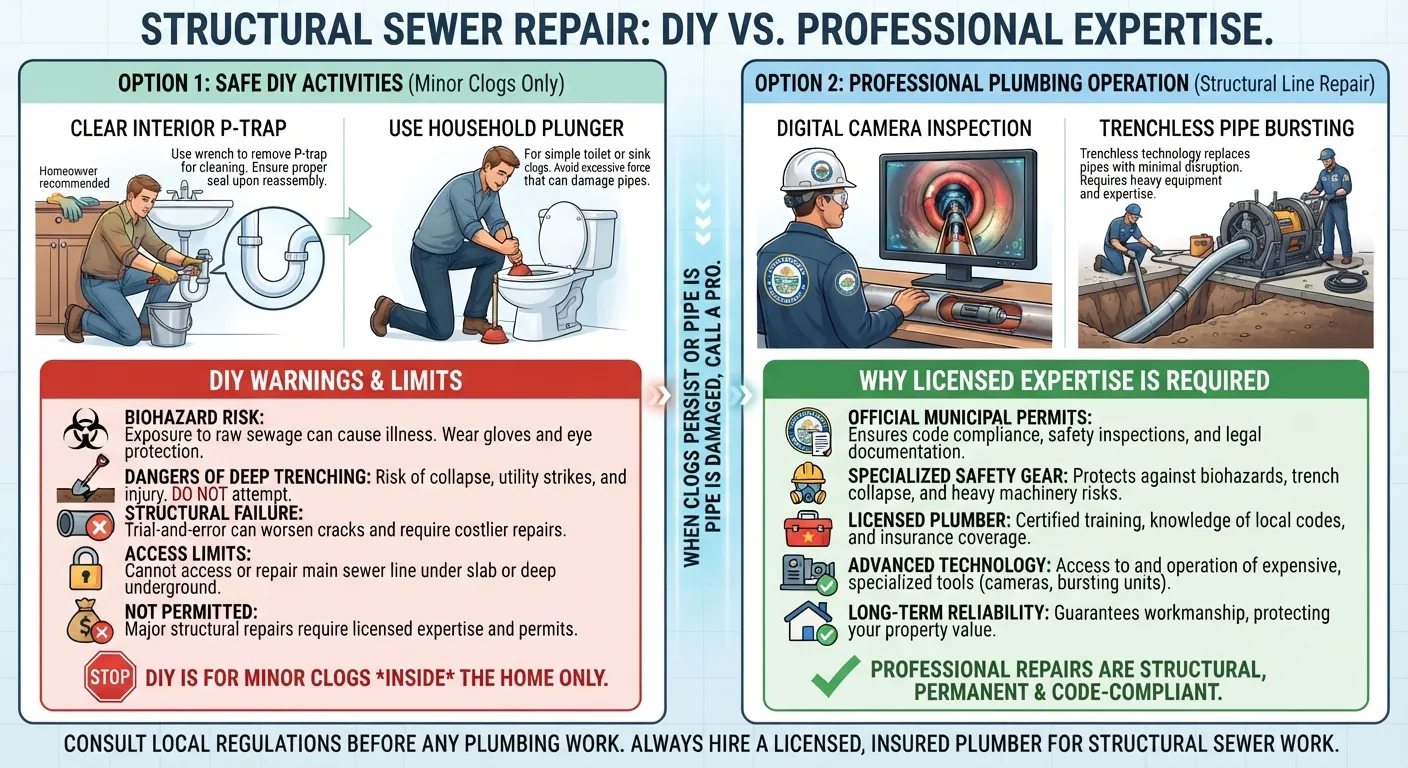
While minor drain clearing tasks are DIY-friendly, tackling main sewer line repairs or replacements independently poses severe health hazards, legal code violations, and financial risks. Understanding the boundary between manageable home plumbing maintenance and professional excavation ensures safety and structural integrity.
What You Can and Can’t Safely DIY
Homeowners can safely handle basic interior fixture maintenance, but underground sewer infrastructure demands specialized heavy machinery, trench safety gear, and licensed technical expertise. Knowing your limits prevents turning a minor backup into a catastrophic property disaster.
- Safe DIY Tasks: Plunging standard sink blockages, clearing accessible P-traps, or using small homeowner drain snakes on interior branch lines.
- Restricted Tasks: Operating heavy mechanical rooters from main cleanouts without professional training, which risks twisting or puncturing aging pipes.
- Strictly Professional Work: Any excavation, trenchless pipe bursting, CIPP resin curing, or structural lateral replacement.
Why Camera Inspection $100–$400 Is Worth It Before Any Work
Investing in a professional video camera inspection before authorizing any repairs provides definitive visual proof of your pipe’s condition, eliminating guesswork and preventing unnecessary contractor upselling. Seeing the interior of your line ensures you pay only for the exact repairs needed.
- Precise Problem Location: High-definition cameras with radio sonde transmitters pinpoint the exact depth and surface location of breaks or roots.
- Distinguishing Damage Types: A camera scan instantly reveals whether you are dealing with a minor root clog or a completely collapsed pipe.
- Transparent Contractor Bids: Arming yourself with inspection footage keeps plumbing contractors honest and accurate with their repair estimates.
Risks of DIY Sewer Line Work
Attempting to excavate or repair a main sewer line without professional credentials introduces substantial health risks and severe legal liabilities that far outweigh any initial labor savings.
- Biohazard Exposure: Contact with raw sewage introduces dangerous pathogens, bacteria, and toxic gases like hydrogen sulfide.
- Trench Collapse Dangers: Unshored underground trenches deeper than 5 feet can cave in instantly, resulting in fatal crushing injuries.
- Code and Permitting Penalties: Unpermitted or improper DIY plumbing work violates local health codes, creating nightmares during future home resale processes.
National Companies vs Local Plumbers Pricing Comparison
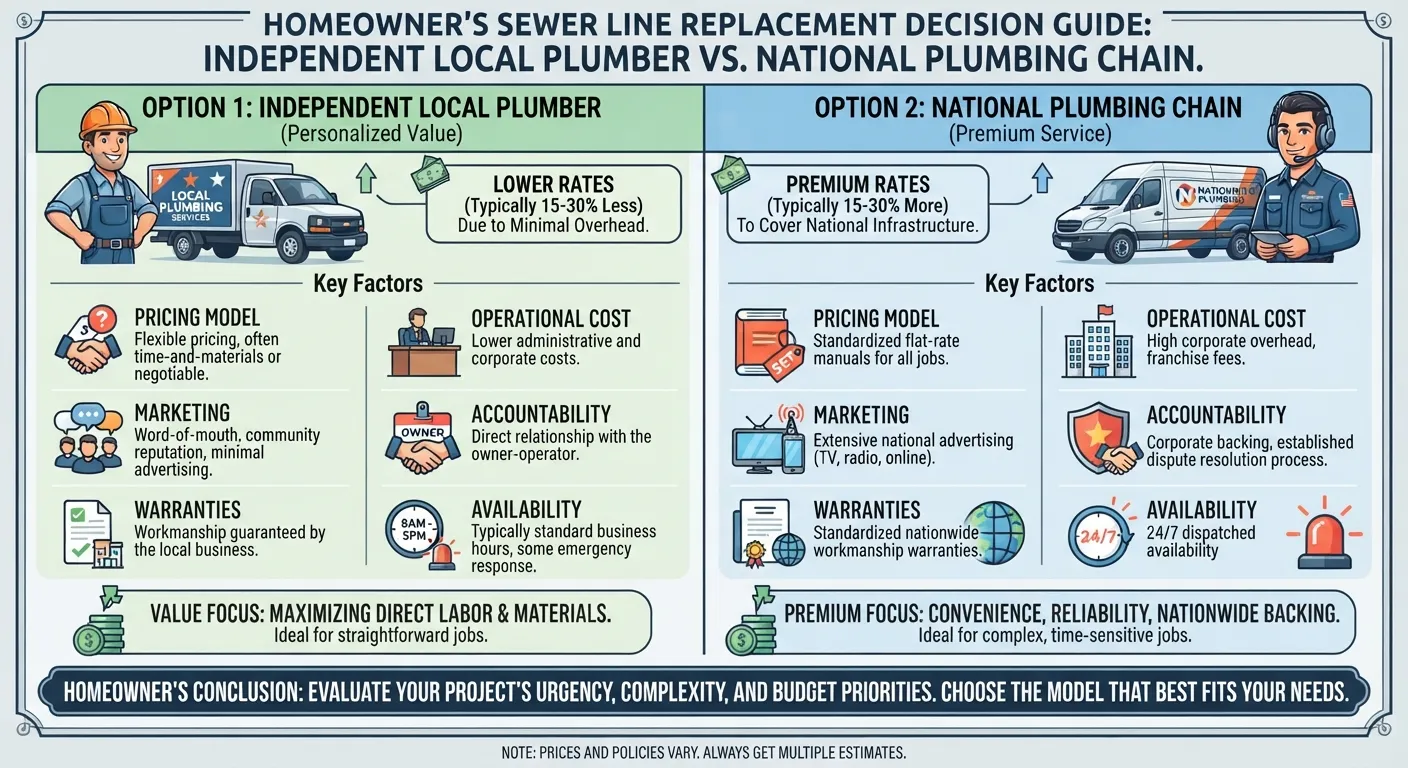
Choosing between large national franchise chains like Roto-Rooter and independent local plumbing contractors significantly impacts both your total project cost and customer service experience. Understanding how their pricing structures differ helps you select the right partner for your sewer replacement project.
Average Pricing: National Chains vs Independent Local Plumbers
National plumbing franchises typically charge 15% to 30% higher rates than independent local operators due to heavy corporate overhead, national advertising campaigns, and standardized dispatch fees. Local family-owned shops often provide more competitive, flexible pricing structures.
- National Franchise Rates: Higher upfront service call fees, standardized flat-rate pricing manuals, and premium labor billing.
- Independent Local Plumbers: More flexible negotiating room, lower administrative overhead, and hourly or competitive flat-rate tiering.
- Emergency Surcharges: National chains offer 24/7 dispatched availability but frequently apply steeper after-hours emergency premiums.
What You’re Paying Extra For Warranty Availability Brand Trust
While national brands cost more, that higher price tag often buys robust corporate backing, standardized warranties, and guaranteed technician availability. Weighing these intangible benefits against lower local prices guides your decision.
- Brand-Backed Warranties: National chains offer extensive nationwide workmanship warranties that remain valid even if you move across the country.
- Guaranteed Availability: 24/7 call centers and massive fleets ensure a technician arrives quickly during severe middle-of-the-night backups.
- Reputation Accountability: Large corporate entities maintain strict customer service dispute resolutions to protect their public brand image.
Frequently Asked Questions About Sewer Line Repair and Replacement
Get direct, concise answers to the most common questions homeowners ask about sewer line costs, replacement methods, and project logistics.
How much does it cost to have a sewer line fixed?
Minor spot repairs typically cost between $500 and $3,000, while full sewer line replacements range from $4,000 to $20,000 depending on the length, depth, and excavation method used.
What is the cheapest way to replace a sewer line?
Trenchless pipe relining (CIPP) is often the most cost-effective long-term solution because it eliminates expensive property restoration, landscaping, and driveway demolition costs associated with traditional digging.
Can a sewer line be replaced without digging?
Yes, trenchless technologies like cured-in-place pipe (CIPP) lining and pipe bursting rehabilitate or replace underground pipes using only small entry and exit access pits.
How much does it cost to replace a sewer line under a concrete slab?
Replacing a sewer line running beneath a concrete slab or structural foundation ranges from $15,000 to $50,000+ due to the intensive labor required for slab breaking, tunneling, and structural repouring.
How much does it cost to install a new sewer line?
Installing a brand-new sewer line connection for a newly constructed home or a major addition typically costs between $3,000 and $7,000, varying by distance to the municipal main.
Is it dangerous to go into a sewer line?
Entering or directly working inside a sewer line or deep excavation trench is extremely dangerous due to toxic sewer gases (like hydrogen sulfide), biohazardous pathogens, and the risk of fatal trench cave-ins.
Conclusion Key Takeaways & Next Steps
Navigating sewer line repairs or replacements requires balancing upfront investments against long-term durability and property protection. Making an informed decision ensures your plumbing system remains reliable for decades.
What Determines Your Final Cost
Project pricing ultimately hinges on the specific repair methodology, total linear footage, underground depth, and regional labor rates. Understanding these core cost drivers helps you evaluate contractor bids accurately.
- Method Selection: Spot repairs and trenchless CIPP lining offer lower restoration overhead, while traditional open-trenching handles total collapses.
- Depth and Length: Deeper burial requirements and extended runs increase excavation complexity and material totals.
- Property Restoration: Factoring in hardscape, driveway, and landscaping repairs prevents unexpected end-of-project expenses.
Get a Professional Camera Inspection Before Deciding
Never authorize major sewer replacement work without first reviewing a high-definition video camera inspection. Pinpointing the exact nature and location of your plumbing failure guarantees you pay only for necessary repairs.
- Schedule a Scope: Hire a licensed professional to run a camera through your main lateral line.
- Review Footage Together: Ask the technician to point out root intrusions, cracks, or structural bellies.
- Compare Contractor Bids: Use your inspection footage to solicit transparent, accurate quotes from multiple local plumber

Oscar Vance | Master Plumber & Drainage Expert
Meet Oscar Vance, a licensed master plumber sharing practical solutions on residential repairs, preventive maintenance, and thoughtful home upkeep.