Introduction What Is a Pipe Fitting?
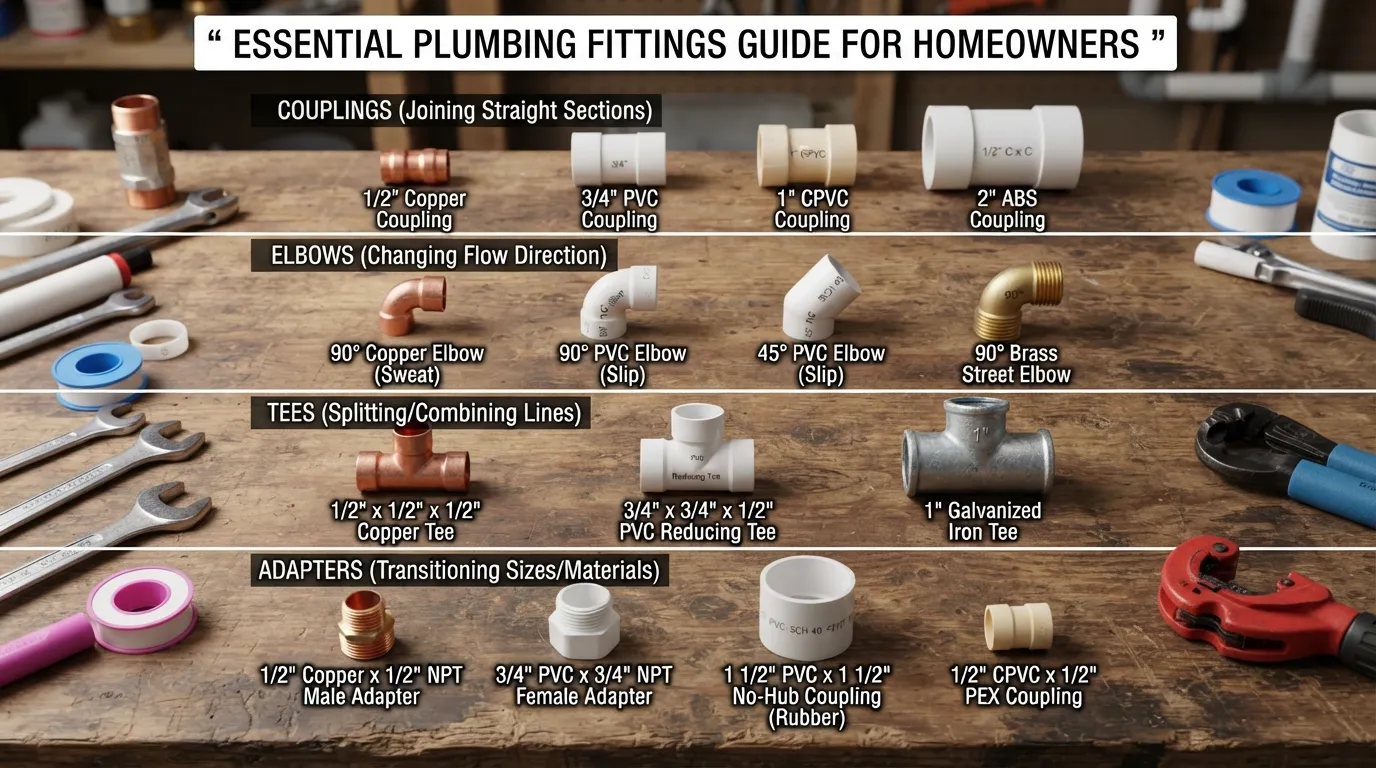
A pipe fitting is a standardized plumbing connector used in pipe systems to join straight sections of pipe, adapt to different shapes or sizes, and regulate or measure fluid flow. These components ensure secure, leak-free transitions across residential, commercial, and industrial fluid transport networks.
What Is a Pipe Fitting?
Pipe fittings are mechanical hardware components installed within plumbing and industrial piping layouts to change direction, branch off, combine lines, or seal system ends securely. They are manufactured from various materials—including copper, PVC, brass, and stainless steel—to match the specific pressure, temperature, and fluid requirements of the system.
- Direction Control: Directs fluid flow around architectural obstacles using angled connectors.
- System Branching: Splits a single main pipeline into multiple secondary channels.
- Diameter Adaptation: Transitions fluid seamlessly between pipes of differing diameters.
- Termination: Securely seals off dead ends or access points for maintenance.
The 4 Main Types of Plumbing Fittings at a Glance
Different plumbing connectors serve distinct structural and operational functions within a network. The following comparison highlights their core attributes, operational angles, and standard applications.
The 4 Core Types of Plumbing Fittings Explained in Detail
Plumbing networks rely on four fundamental categories of fittings to redirect, branch, extend, and terminate fluid or waste lines. Mastering these core connectors ensures efficient assembly, pressure management, and long-term system integrity across residential and industrial projects.
Elbow Fittings 90° and 45°
Elbow fittings are essential plumbing connectors designed to alter the direction of fluid flow within a pipe layout. The 90-degree elbow creates a sharp right-angle turn, whereas the 45-degree elbow offers a gradual bend to minimize flow friction.
- Directional Navigation: Seamlessly routes pipelines around building framing, corners, and spatial obstacles.
- Friction Reduction: Gradual 45° bends reduce pressure drops compared to sharp right-angle turns.
- Common Applications: Widely utilized in water supply lines, vent stacks, and drainage networks.
Avoid using a sharp 90-degree elbow on horizontal DWV (Drain, Waste, and Vent) lines where solids are present; it frequently causes clogs. Instead, use a combination of two 45-degree elbows or a long-sweep elbow to maintain smooth waste flow.
Tee Fittings
A tee fitting is a 3-way plumbing connector featuring one main run and a perpendicular branch outlet configured at a 90-degree angle. It is engineered to split a single stream into two separate paths or combine two independent flows into one.
- Flow Division: Efficiently splits a main water supply line to feed multiple fixtures or appliances.
- Flow Combination: Merges secondary drainage or supply lines back into a primary trunk line.
- Structural Integrity: Maintains uniform pressure distribution across branching junctions.
When installing tees in pressurized supply lines, always ensure the branch direction aligns with the intended flow vector to prevent turbulence, water hammer, and pressure losses.
Coupling Fittings
A coupling fitting is a short, straight cylindrical connector used to join two separate sections of pipe together inline. Standard couplings connect pipes of identical outer diameters, while a reducing coupling transitions between pipes of different sizes.
- Line Extension: Seamlessly bridges straight pipe runs during extended installations or repairs.
- Diameter Transition: Reducing couplings safely step down pipe sizes without disrupting flow velocity.
- Permanent Bonding: Available in slip-on, threaded, and compression styles depending on the pipe material.
When repairing a broken pipe section using a standard coupling, ensure you use a slip coupling without interior stops (or cut the stops out) so it can slide entirely over one pipe end before being repositioned onto the joint.
Cap and Plug Fittings
Cap and plug fittings are terminal components used to securely close off the open ends of a piping system. A cap fits over the external diameter of a pipe end, whereas a plug threads or inserts directly into the internal opening.
- System Termination: Permanently or temporarily seals unused pipeline branches and dead ends.
- Pressure Testing: Enables closed-loop hydrostatic pressure testing of newly installed plumbing lines.
- Maintenance Access: Plugs are frequently installed on cleanout tees to allow easy debris removal.
When sealing threaded plugs or caps for high-pressure or gas lines, always apply appropriate thread sealant tape or pipe dope to prevent micro-leaks under stress.
Understanding Piping Materials and Fittings
To see how different materials and physical components integrate into comprehensive fluid networks, review the video walkthrough below.
Beyond the Basic 4 Other Common Fitting Types
Advanced plumbing systems require specialized connectors beyond standard elbows and tees to manage complex alignments, pressure differentials, and material transitions. Integrating these specialized components ensures code-compliant, adaptable, and serviceable piping networks.
Union Fittings
A union fitting is a three-piece mechanical connector that links two pipes while allowing future disassembly without cutting the pipeline. It consists of a nut, a male end, and a female end, making it invaluable for maintenance-heavy setups.
- Non-Destructive Disconnection: Enables quick removal of inline appliances like water heaters or pumps.
- Alignment Relief: Simplifies final connections in tight or rigid piping layouts.
- Leak Prevention: Uses a precision-machined metal-to-metal or O-ring seat to ensure a tight seal under pressure.
Always install unions near shut-off valves and equipment that require periodic replacement or servicing to drastically cut down future labor time.
Reducer Fittings Concentric vs. Eccentric
Reducer fittings bridge pipes of differing diameters to regulate flow velocity and pressure across transitional zones. A concentric reducer maintains a symmetrical cone shape, whereas an eccentric reducer features a flat side aligned with one edge of the pipe.
- Concentric Reducer: Keeps the centerline constant; ideal for vertical lines or symmetrical pump connections.
- Eccentric Reducer: Aligns along one flat side; critical in horizontal liquid lines to prevent air pockets, or in suction lines to prevent cavitation.
- Velocity Control: Smoothly steps fluid velocity up or down without creating destructive turbulence.
Never use a concentric reducer on the suction side of a horizontal water pump; trapped air pockets will cause cavitation and permanently damage the impeller.
Adapter Fittings
Adapter fittings are hybrid connectors designed to transition between entirely different pipe materials, sizing standards, or connection types. They bridge incompatible system architectures safely and securely.
- Material Transitions: Connects plastic PVC lines to copper, cast iron, or galvanized steel pipes.
- Thread Conversion: Converts male or female threaded pipe ends to solvent-weld, soldered, or compression connections.
- Standard Bridging: Adapts National Pipe Thread (NPT) standards to specialized plumbing interfaces.
When transitioning between dissimilar metals like copper and galvanized steel, always use a dielectric union or brass adapter to prevent galvanic corrosion.
Cross Fittings
A cross fitting is a four-way junction featuring one inlet and three outlets—or two inlets and two outlets—arranged in a precise 90-degree cross configuration. They are specialized components built for complex spatial routing.
- Multi-Directional Flow: Splits a single central stream into four separate perpendicular paths simultaneously.
- Space Efficiency: Replaces multiple tees in tight spaces where multiple branch lines converge.
- Industrial Use: Frequently deployed in fire protection sprinkler grids and specialized hydronic heating setups.
Avoid cross fittings in standard residential drainage systems, as opposing water streams colliding head-on create severe turbulence, pressure spikes, and potential clogs.
Plumbing Fittings by Material PVC PEX Copper & More
Plumbing fitting material selection dictates operating temperature limits, pressure thresholds, and joining techniques. Identifying existing infrastructure materials ensures proper repair protocols and prevents catastrophic piping failures across legacy and modern systems.
PVC Fittings
PVC (polyvinyl chloride) fittings are rigid, durable polymer connectors primarily utilized in drainage, waste, vent (DWV), and cold-water irrigation lines. They are easily recognizable by their bright white or dark gray coloring and solid, unyielding structure.
- Visual Identification: Rigid white, gray, or cream-colored plastic bodies with smooth, solvent-welded joints.
- Joining Method: Permanently bonded using chemical primer and solvent cement that chemically melts the plastic surfaces together.
- System Limitations: Standard Schedule 40 PVC deforms at temperatures above 140°F (60°C) and cannot be used for pressurized domestic hot water lines.
If you spot flexible blue or red plastic tubing secured with metal rings, it is PEX, not PVC; attempting to use PVC solvent cement on PEX will result in immediate, catastrophic joint failure.
PEX Fittings
PEX (cross-linked polyethylene) fittings are paired with flexible plastic piping used extensively in modern hot and cold domestic water supply distribution. They provide exceptional freeze resistance and require specialized mechanical connection systems rather than chemical glues.
- Visual Identification: Flexible, pliable tubing colored red (hot), blue (cold), or white, connected via brass or poly alloy barbed fittings secured by metal crimp rings.
- Joining Method: Compressed mechanically using copper crimp rings, stainless steel cinch clamps, or expansion rings.
- Flexibility Benefits: Requires significantly fewer fittings overall due to the ability of the pipe to bend around minor structural corners.
Look closely at the connection points; if you see a metallic copper or stainless steel ring clamping a flexible colored pipe over a barbed fitting, the system is definitively PEX.
Copper Fittings
Copper fittings are traditional, metallic connectors used in high-end water supply lines, hydronic heating circuits, and gas distribution networks. They are prized for their exceptional longevity, antimicrobial properties, and resistance to UV degradation.
- Visual Identification: Rigid metallic reddish-brown appearance, often displaying silver or gold solder rings visible at the joint interfaces.
- Joining Method: Permanently joined using torch-applied lead-free solder, mechanical press tools, or brass compression nuts.
- Thermal Tolerance: Easily handles high water temperatures and pressures without expanding, sagging, or degrading.
A dull green patina (oxidation) on copper pipe surfaces is completely normal and acts as a protective shield, but active blue-green crusting at fittings indicates slow weeping leaks requiring immediate attention.
Galvanized Steel & Cast Iron Fittings
Galvanized steel and cast iron fittings dominate legacy residential and commercial plumbing systems, primarily serving large-diameter drain lines, vent stacks, and older steel water supply risers. They are exceptionally heavy and prone to long-term internal corrosion.
- Galvanized Steel: Heavy threaded steel fittings coated in a dull gray zinc armor to resist rust; common in homes built before the 1960s.
- Cast Iron: Massive, heavy-duty fittings joined with rubber no-hub couplings and stainless steel worm-gear clamps in modern drainage infrastructure.
- Corrosion Vulnerability: Galvanized water lines suffer from internal mineral scale buildup that severely restricts water flow over decades.
Never attempt to thread modern PVC or plastic adapters directly onto old, corroded galvanized steel threads without using a transition dielectric nipple; mismatched thread pitches and rusted metal will cause immediate leaks.
PEX Fittings and Connection Mechanics
To examine how flexible PEX tubing and specialized mechanical fittings are installed in modern construction, watch the detailed walkthrough below.
Plumbing Fittings by Connection Method
Plumbing connections rely on distinct mechanical and chemical joining methods to ensure pressure retention, structural reliability, and ease of maintenance. Choosing the correct attachment technique depends entirely on the pipe material, system operating pressure, and whether future disassembly is required.
Threaded Fittings NPT
Threaded fittings utilize tapered screw threads—standardized as National Pipe Thread (NPT)—to create a tight mechanical seal. They are widely used in metal piping systems, gas lines, and removable valve assemblies.
- Design Mechanics: Features matching male and female tapered threads that wedge tightly together as they are screwed down.
- Sealant Requirements: Requires PTFE thread-seal tape or approved pipe joint compound to fill microscopic gaps and prevent leaks.
- Common Materials: Commonly manufactured from brass, black iron, stainless steel, and rigid PVC.
Never overtighten metal-to-plastic NPT threaded connections; excessive torque will crack the female plastic fitting, resulting in a catastrophic leak.
Slip Solvent Weld Fittings
Slip or solvent-weld fittings use a chemical fusion process to permanently weld thermoplastic pipes together. They are the absolute industry standard for PVC and ABS drain, waste, and vent (DWV) systems.
- Design Mechanics: Features a smooth, unthreaded socket (hub) that slides entirely over the exterior diameter of a matching pipe.
- Chemical Bonding: Primer softens the plastic resin, allowing solvent cement to chemically fuse the molecules of the pipe and fitting into a single solid piece.
- Permanently Waterproof: Creates a joint that is structurally stronger than the pipe itself once fully cured.
Always apply both purple primer and clear solvent cement; skipping the primer prevents the chemical softening needed to form a permanent molecular bond under pressure.
Compression Fittings
Compression fittings join pipes mechanically without requiring soldering, gluing, or threading. They are frequently utilized under kitchen sinks and bathroom vanities for supply stop valves and chrome-plated supply tubes.
- Design Mechanics: Consists of a body, a brass compression ring (ferrule), and a tightening compression nut.
- Sealing Action: Tightening the nut compresses the brass ferrule tightly against the pipe wall and interior fitting seat.
- Disassembly: Allows the connection to be taken apart and reassembled during fixture replacements or repairs.
Always ensure the copper or plastic supply tube is cut squarely and deburred before sliding the ferrule on; a jagged cut prevents the ring from sealing evenly around the pipe circumference.
Push-to-Connect Fittings
Push-to-connect fittings provide a fast, tool-free connection method compatible with copper, PEX, and CPVC piping. Brands like SharkBite have made these popular for rapid emergency repairs and tight-space installations.
- Design Mechanics: Utilizes an internal stainless steel grab ring with sharp teeth that bite into the pipe and an O-ring that creates a watertight seal.
- Installation Speed: Requires simply cutting the pipe clean, deburring the edge, and pushing the pipe firmly into the fitting until it clicks.
- Universal Compatibility: Bridges dissimilar pipe materials seamlessly without requiring specialized adapters or torches.
Always use a depth-gauge tool to mark the insertion depth on the pipe before pushing it into a push-to-connect fitting; incomplete insertion means the internal O-ring will fail to seal properly.
The 135 Rule Why Fitting Angle Choice Actually Matters
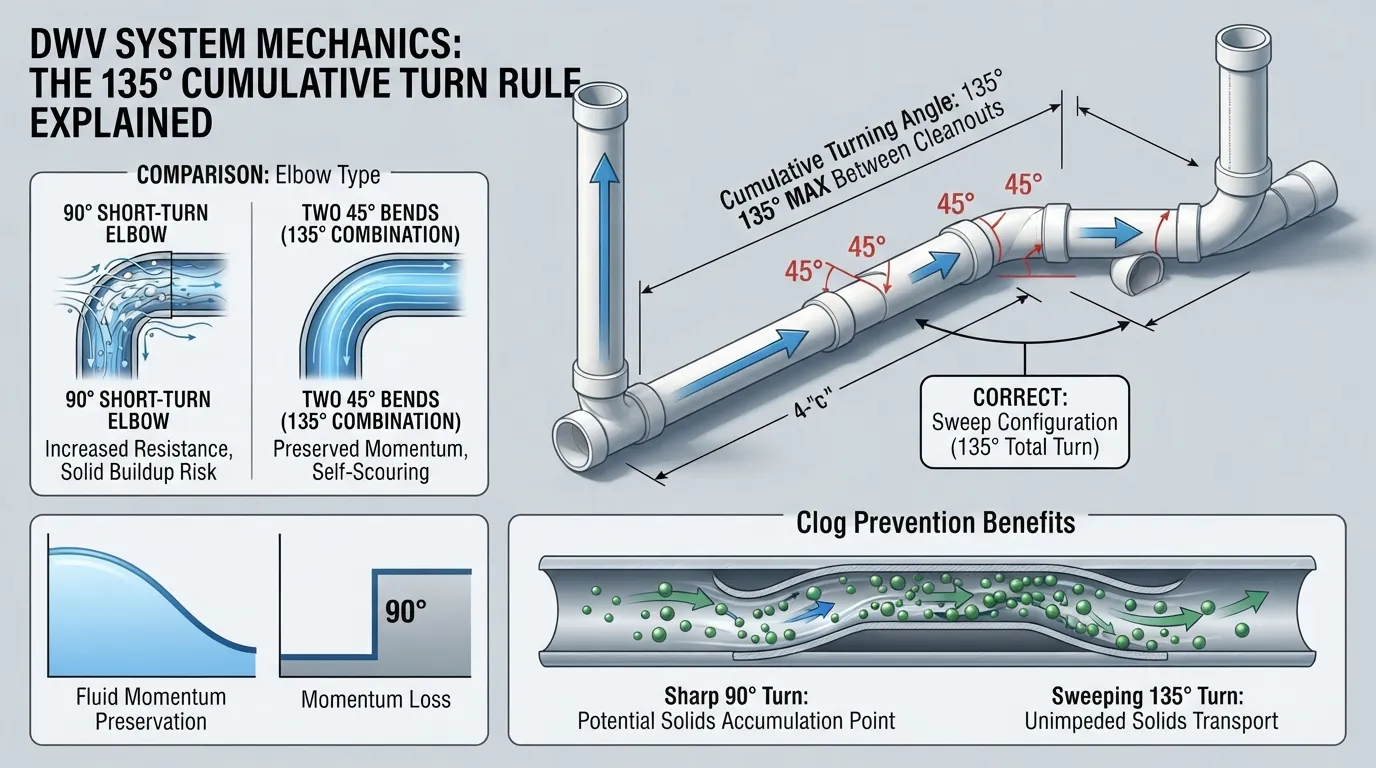
The 135 rule in plumbing dictates that a horizontal drain line must not exceed a cumulative 135 degrees of total direction change between cleanout access points or vent connections. Governed by the International Plumbing Code (IPC), this regulation prevents fluid friction losses and structural clogs in DWV networks.
What Is the 135 Rule in Plumbing?
The 135 rule establishes a critical limit on how sharply and frequently a horizontal drainage pipe can bend before requiring a cleanout or system reset. Every time a pipe changes course, fluid velocity drops and turbulence increases.
- Cumulative Angle Limit: Total aggregate bends between cleanouts cannot exceed 135 degrees without adding physical access points.
- Classic Fitting Math: A standard 90-degree turn paired with a 45-degree turn equals exactly 135 degrees of direction change.
- Gravity Dependence: Unlike pressurized supply lines, gravity drainage systems rely entirely on momentum and correct pipe slope to transport suspended solids.
Municipal inspectors routinely flag rough-in layouts where multiple sharp bends are stacked together without an intermediate cleanout, violating standard drainage code limits.
Why Plumbers Use Two 45° Elbows Instead of One 90° on Drain Lines
A single sharp 90-degree short-turn elbow on a horizontal drain line creates an abrupt wall that forces wastewater to tumble and lose kinetic energy instantly. Using two 45-degree fittings spaced apart spreads the direction change over a gradual curve.
- Momentum Preservation: Sweeping bends maintain continuous fluid velocity so water and solid waste travel together smoothly.
- Debris Suspension: Gradual transitions prevent heavy particles and grease from dropping out of suspension and settling at the joint.
- Long-Sweep Alternatives: Plumbers frequently substitute a standard short-turn 90 with a long-sweep elbow to achieve a similar friction-reducing effect.
Never lay a standard sanitary tee flat on its back in a horizontal drainage run; it creates an immediate perpendicular dead-wall that violates code and guarantees a clog.
What Happens If This Rule Is Ignored
Ignoring angle limits and stacking excessive turns into a drainage network initiates a cascade of operational failures that worsen over time. Neglecting the 135 rule compromises both daily plumbing performance and legal compliance.
- Chronic Clogs: Debris, hair, and soap scum snag on turbulent corners, resulting in recurring backups in the exact same spot.
- Sewer Gas Leaks: Severe backpressure and turbulence can siphon water out of nearby P-traps, allowing dangerous sewer gases to enter living spaces.
- Inspection Failures: Remodel layouts that fail to account for aggregate fitting angles will not pass local building safety inspections, delaying project completion.
Always map out your horizontal drainage fittings on paper during a bathroom or kitchen remodel to verify your total turning angles before gluing pipe joints together.
Plumbing Fittings vs Plumbing Systems Don’t Confuse These
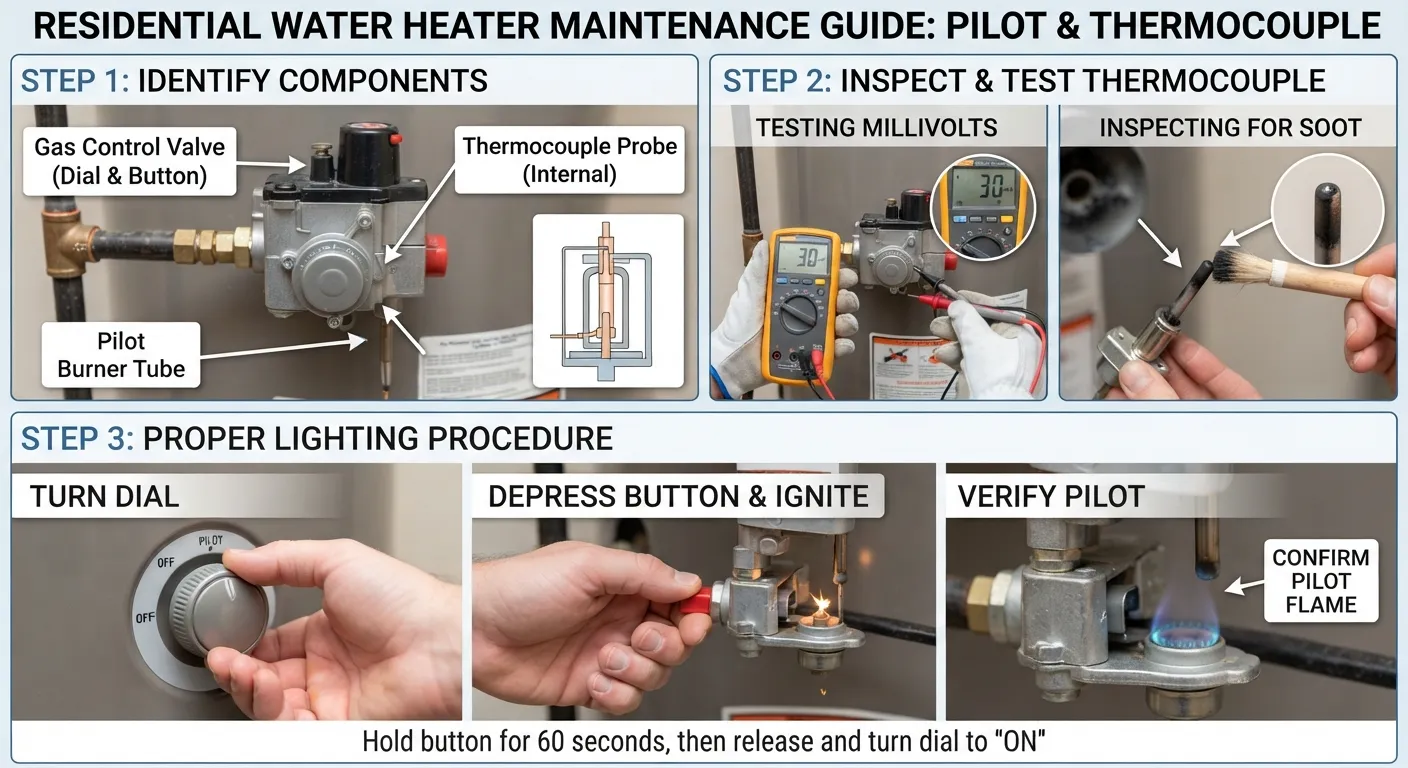
Understanding the distinction between plumbing fittings and plumbing systems prevents critical installation errors and clarifies overall infrastructure design. While individual connectors manage local joints, comprehensive plumbing networks coordinate total fluid distribution and waste removal.
Fitting vs System the Key Difference
Plumbing fittings are the individual, localized hardware components used to join, bend, or terminate pipes, whereas a plumbing system is the complete network of pipes, fixtures, valves, and vents operating throughout a structure. Fittings act as the individual building blocks that make complex system routing possible.
- Fittings: Physical connectors like elbows, tees, couplings, and valves that secure joints and direct fluid pathways.
- Systems: Comprehensive networks engineered to supply clean water, remove waste, or regulate internal air pressure.
- Interdependence: Every specialized system requires specific fitting materials and joining methods to function safely under code requirements.
Using a fitting rated only for low-pressure drainage (such as a DWV PVC fitting) inside a high-pressure water supply network will result in a catastrophic blowout.
The 4 Main Plumbing System Types
A complete building infrastructure relies on four distinct, interconnected plumbing networks to maintain health, safety, and operational efficiency. Each system utilizes unique pipe diameters, slope requirements, and fitting specifications.
- Water Supply System: Delivers pressurized hot and cold potable water from municipal mains or private wells directly to fixtures and appliances.
- Drainage System (DWV): Gravity-fed network of large-diameter pipes designed to carry liquid and solid waste out of the building safely.
- Venting System: A network of vertical air pipes connected to the drainage system that equalizes atmospheric pressure and prevents trap siphoning.
- Stormwater & Non-Potable Systems: Specialized networks for managing rainwater runoff, greywater recycling, or landscape irrigation infrastructure.
Never cross-connect potable water supply lines with non-potable or drainage systems; doing so violates sanitary codes and creates severe public health contamination risks.
Plumbing FittingsPipes That Are No Longer Used
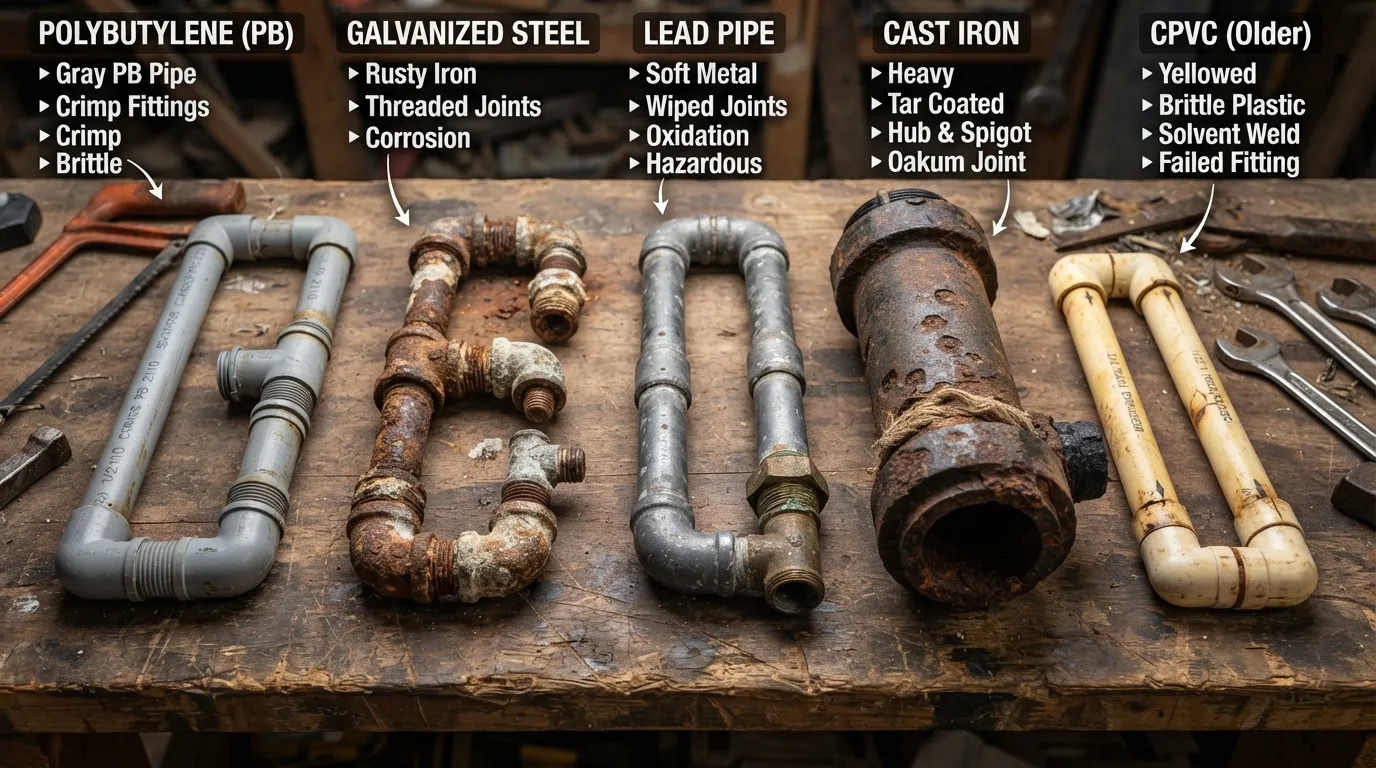
Legacy plumbing infrastructure often contains materials and fittings that have been outlawed due to severe health hazards, structural failures, or chemical instability. Identifying these deprecated components is crucial during home inspections, renovations, and emergency repairs.
Lead Pipe Fittings Why They Were Banned
Lead pipes and solder fittings were utilized for centuries due to their exceptional malleability and corrosion resistance. However, widespread medical evidence linking cumulative lead poisoning to neurological damage, developmental delays, and organ failure led to strict regulatory bans.
- Health Hazards: Leached heavy metals directly into drinking water supplies, posing severe risks to children and pregnant individuals.
- Regulatory Bans: The U.S. Safe Drinking Water Act severely restricted lead content in 1986, eventually culminating in the total ban of lead pipes and high-lead solders.
- Visual Identification: Dull gray, extremely soft metal pipes that can be easily scratched with a coin, often featuring bulging, bulbous wiped-lead joints.
If your home was built before the mid-1980s and features lead service lines or brass fixtures containing high lead content, professional pipe remediation and whole-home filtration are strongly recommended.
Polybutylene Fittings Why They Failed
Polybutylene (PB) was a popular, flexible gray or black plastic piping material installed in millions of homes between the 1970s and 1990s as a cheap alternative to copper. The system relied heavily on plastic insert fittings secured by aluminum or copper metal crimp rings.
- Chemical Breakdown: Oxidants and chlorine disinfectants present in treated municipal tap water reacted with the polybutylene plastic, causing fittings and pipes to become brittle from the inside out.
- Catastrophic Failures: Metal crimp rings regularly cut into degrading plastic fittings under pressure, resulting in sudden, catastrophic joint blowouts and extensive property damage.
- Class Action Legacy: Widespread structural failures led to a massive class-action lawsuit and a complete halt to polybutylene manufacturing by the mid-1990s.
Polybutylene piping is virtually uninsurable by many modern homeowners insurance companies; discovering PB lines during a real estate transaction typically mandates a complete PEX or copper repipe.
How to Choose the Right Fitting for Your Project
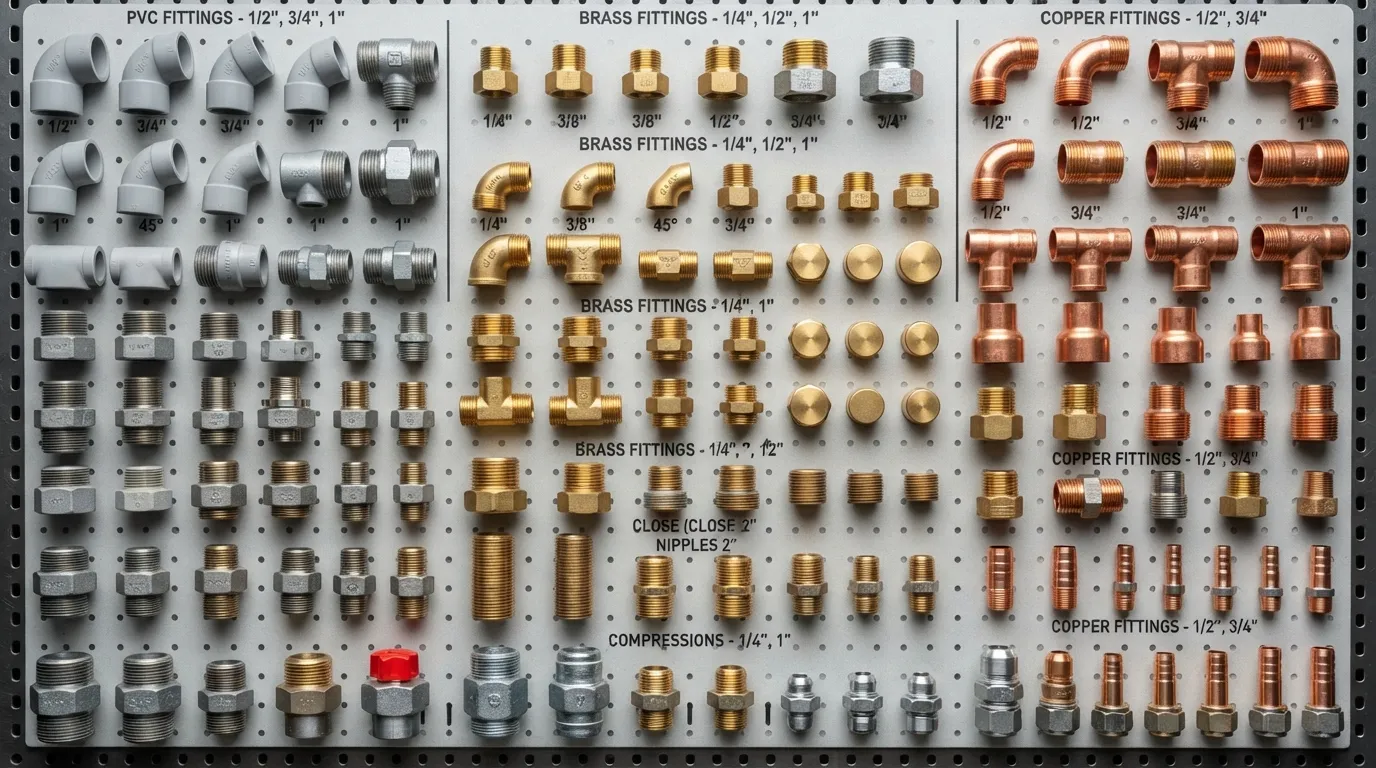
Selecting the correct plumbing fitting requires careful evaluation of material compatibility, operating pressure, and thermal limits. Choosing the right connector prevents leaks, ensures building code compliance, and protects your plumbing infrastructure from premature failure.
Match the Fitting Material to Your Pipe
Never mix incompatible piping materials or joining methods without an engineered transition adapter. The fitting material must match or be metallurgically and chemically compatible with the existing pipe network.
- Polymer Matching: Use Schedule 40 or 80 PVC fittings with PVC pipe, and CPVC fittings strictly with CPVC pipe using proper solvent cement.
- Metal Compatibility: Connect copper to copper via soldered or press joints; use brass adapters when transitioning between dissimilar metal types to prevent galvanic corrosion.
- Manufacturer Guidelines: Always verify that proprietary fittings (such as expansion PEX fittings) are certified for use with your exact brand and tubing standard.
Never use ABS cement on PVC pipe or vice versa; these distinct plastic formulations require separate chemical compounds and will fail to bond if interchanged.
Consider Water Pressure & Temperature
Operating conditions dictate whether a fitting can safely handle household water supply pressures or high-temperature demands. Exceeding a fitting’s rating can cause sudden structural blowouts.
- Pressure Limits: Ensure fittings are rated for your home’s PSI; standard residential municipal water pressure typically ranges between 50 and 80 PSI.
- Thermal Thresholds: Confirm that plastic fittings handling domestic hot water lines or heating loops are rated for temperatures up to 180°F or higher.
- DWV vs. Pressure: Remember that low-pressure drain, waste, and vent (DWV) fittings are never rated to withstand pressurized water supply lines.
If your home operates with a high-pressure booster pump or aggressive thermal expansion, install a thermal expansion tank and verify all fitting pressure ratings exceed maximum peak spikes.
When a DIY Fix Is Fine vs. When to Call a Licensed Plumber
Knowing your personal skill limitations prevents minor repairs from turning into expensive water damage catastrophes. While simple surface repairs are manageable, structural alterations require certified expertise.
- Safe DIY Scope: Replacing a P-trap under a sink, swapping out a toilet supply line, or fixing an accessible PVC drain slip-joint.
- Call a Licensed Plumber: Main sewer line replacements, gas line modifications, structural load-bearing pipe relocations, and whole-home repiping projects.
- Code Compliance: Professional plumbers ensure work complies with local building codes, venting requirements, and permit mandates.
Always shut off the main water supply valve and drain downstream pressure before attempting any plumbing fitting replacement or repair.
Visual Guide Plumbing Fitting Names & Pictures
Visually identifying an unknown plumbing fitting can be challenging during repairs or home inspections. Reviewing a comprehensive visual layout of fitting shapes, names, and functions ensures you select the exact replacement component required for your plumbing project.
Labeled Diagram All Fitting Types in One Chart
To help you quickly match physical hardware to its proper terminology, the structured reference guide below outlines the appearance and core application of every major fitting type.
Download Our Free Printable Fittings Cheat Sheet
Keep a handy technical reference guide at your workbench or job site. Our printable cheat sheet includes high-resolution illustrations, dimension charts, and material specifications for every standard plumbing fitting.
- Field Reference: Instantly cross-reference fitting names, thread counts, and connection styles while shopping at the hardware store.
- Material Compatibility Guide: check tables showing which glues, solders, or tapes correspond to each fitting category.
- Code Compliance Checklist: Built-in reminders for the 135 rule, DWV slope requirements, and cleanout spacing.
Print out and laminate a copy of our fittings cheat sheet to keep inside your tool bag or workshop wall for instant project guidance.
Frequently Asked Questions About Plumbing Fittings
Find direct, expert answers to the most common questions regarding plumbing fitting types, identification methods, and installation codes.
What are the four types of fittings?
The four core types of plumbing fittings are elbows (used to change direction), tees (used to branch or combine flow), couplings (used to join straight pipe runs inline), and caps and plugs (used to seal pipe ends).
What are the names of all types of plumbing fittings?
Comprehensive plumbing systems utilize a wide range of connectors beyond the basics, including unions (for removable joints), reducers (concentric and eccentric for changing pipe sizes), adapters (for material transitions), cross fittings (for four-way junctions), and specialized valves and flanges.
What are some common fittings used in plumbing?
The most frequently installed fittings in residential and commercial plumbing include 90-degree elbows, 45-degree elbows, standard tees, slip couplings, threaded adapters, and compression fittings found beneath sinks and behind water supply connections.
What is the 135 rule for plumbing?
The 135 rule dictates that horizontal drain, waste, and vent (DWV) piping must not exceed a cumulative 135 degrees of total direction change between cleanout access points or vent connections, preventing clogs and maintaining fluid momentum.
How do I tell if I have PEX or PVC?
You can easily distinguish between the two by their physical properties: PVC is rigid, thick-walled, usually white or gray, and joined with chemical solvent cement; PEX is flexible, pliable, colored red, blue, or white, and joined using mechanical brass fittings secured by metal crimp rings.
What type of plumbing is no longer used?
Deprecated materials that are no longer permitted in modern plumbing installations due to severe health and structural hazards include lead pipes and high-lead solder (banned due to poisoning risks) and polybutylene plastic piping (outlawed due to catastrophic chemical degradation and fitting blowouts).
Conclusion & Final Expert Tip
Mastering plumbing fittings—from basic elbows and tees to advanced unions, adapters, and material-specific connectors—is essential for building safe, leak-free, and code-compliant fluid networks. Understanding how each component interacts with water pressure, thermal limits, and drainage dynamics ensures your next project stands the test of time.
Always dry-fit your piping layout and fittings completely before applying primer, solvent cement, torch solder, or thread tape. Taking a few extra minutes to verify your alignment and turning angles prevents costly mistakes and ensures every connection seals perfectly on the first try.
About the Author & Reviewer
This comprehensive guide on plumbing fittings and pipe connectors was researched, structured, and authored by the editorial team at Home Improvement Nest, dedicated to delivering rigorous, practical, and authoritative home maintenance resources.

Oscar Vance | Master Plumber & Drainage Expert
Meet Oscar Vance, a licensed master plumber sharing practical solutions on residential repairs, preventive maintenance, and thoughtful home upkeep.

Pingback: Do You Need a Plumber to Replace Outdoor Spigot? DIY vs Pro