The Definitive Verdict on Bathroom Floor Materials
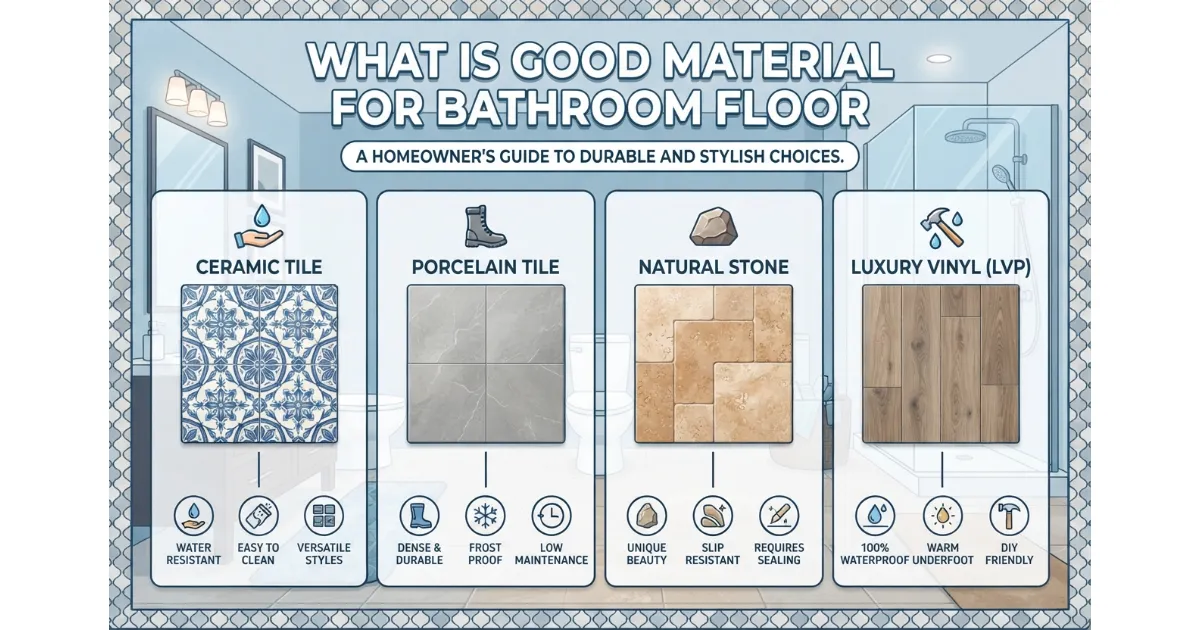 Porcelain tile is the undisputed best overall choice for any bathroom floor material due to its extreme density, ultra-low porosity, and exceptional durability. While porcelain leads the market for wet areas, luxury vinyl plank (LVP/LVT) provides an affordable, DIY-friendly waterproof option, and sealed natural stone delivers unmatched luxury.
- Best Overall: Porcelain tile for maximum waterproof density and lifetime durability.
- Best Budget & DIY: LVP/LVT for easy click-lock installation and moisture defense.
- Best Luxury: Sealed natural stone for high-end aesthetic elegance.
Selecting the ideal bathroom floor material goes far beyond simply matching your home’s interior decor. Bathrooms are demanding environments subject to constant humidity, standing water, steam, and everyday cleaning chemicals. An exceptional bathroom floor must successfully combine slip-resistant safety, complete waterproof protection, and structural resilience against high foot traffic while resisting mold and mildew growth.
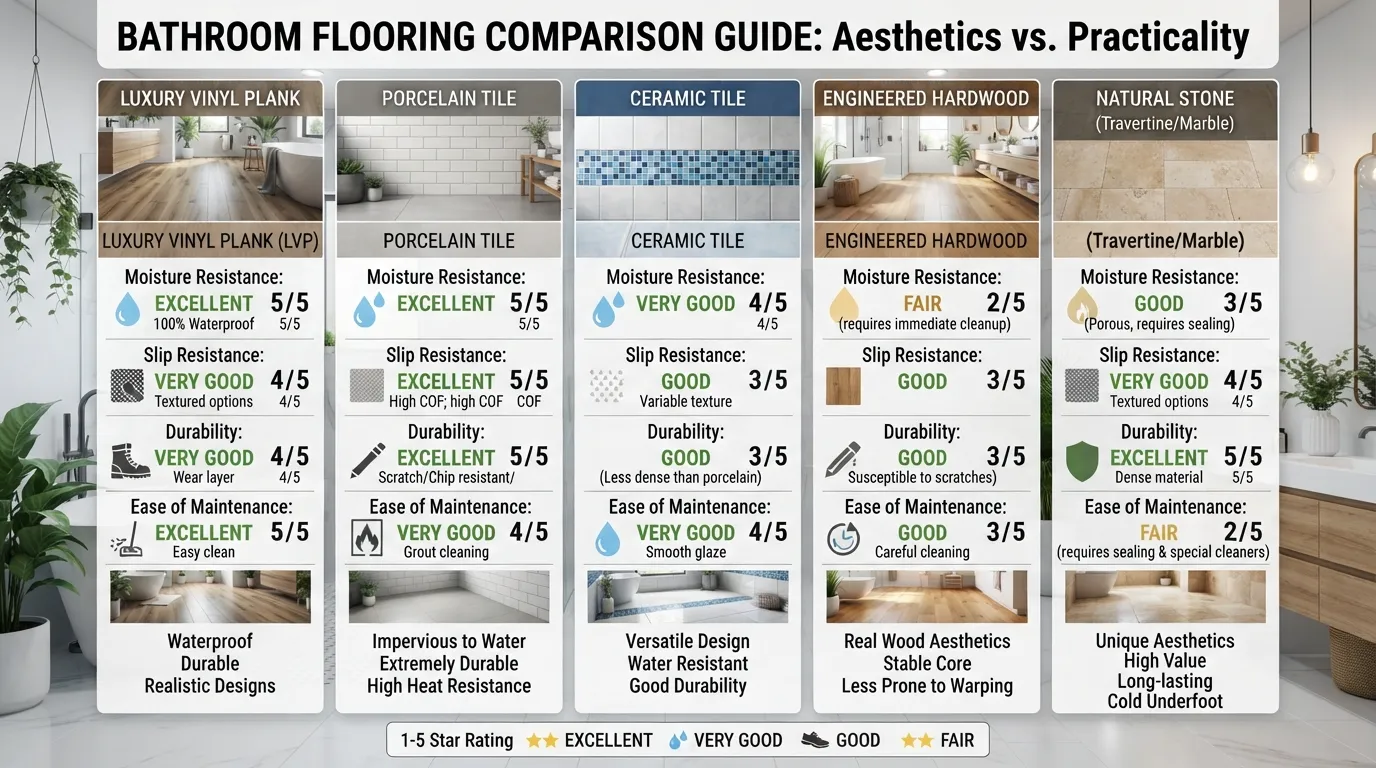
Bathroom Flooring Options at a Glance
How to Read This Table
When reviewing bathroom flooring materials, understand that true waterproof options block moisture penetration entirely at the core level, whereas water-resistant materials only withstand surface splashes for a limited time. Pay close attention to maintenance demands, porosity, and installation complexity before making your final selection.
What Makes a Good Bathroom Floor?
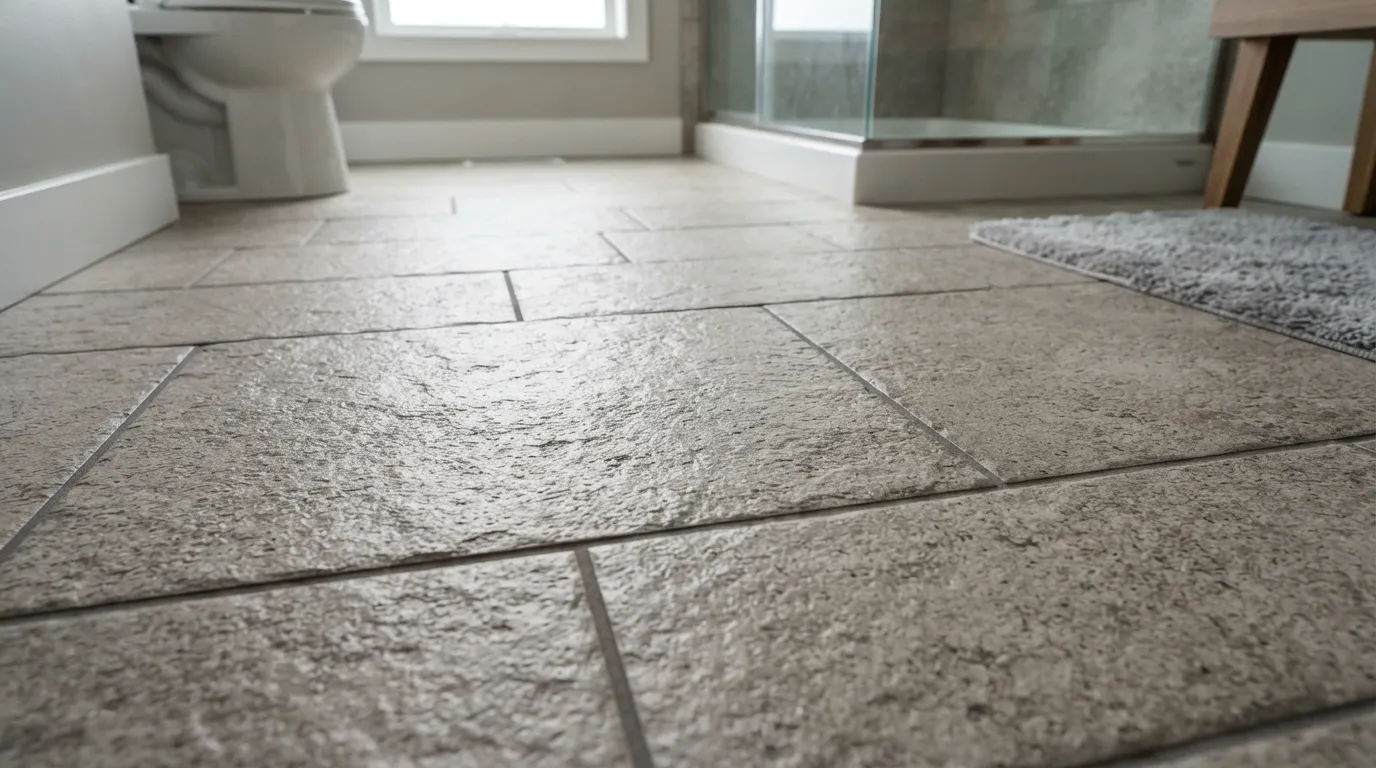
True waterproof materials prevent moisture penetration entirely at the core level, whereas water-resistant options only withstand quick surface splashes. Even if a tile is completely waterproof, vulnerable grout lines, perimeter seams, and compromised subfloors can still allow destructive leaks if not paired with a quality waterproof membrane.
- Core Defense: Prevents water absorption directly into the flooring material.
- Subfloor Vulnerability: Gaps and unsealed joints let moisture rot wooden structural subfloors.
Slip Resistance
Bathroom floors face constant moisture from showers, tubs, and wet feet, creating a serious slip hazard. Selecting materials with textured finishes or high slip-resistance ratings prevents dangerous falls in high-humidity areas.
- Textured Finishes: Matte or embossed surfaces provide essential traction when wet.
- Safety Focus: Critical in households with children, elderly family members, or walk-in showers.
Durability and Porosity
Porosity dictates how easily a material absorbs liquids, staining agents, and bacteria. Highly dense materials withstand heavy daily foot traffic and thermal shock without cracking or warping over time.
- Porcelain Density: Highly refined clays fired at extreme temperatures yield ultra-low porosity.
- Ceramic Porosity: Slightly more porous composition requires proper glazing to block moisture.
Maintenance and Grout Lines
Cleaning a bathroom floor largely depends on the surface area and frequency of grout lines. Minimizing grout lines or using stain-resistant epoxy grout drastically reduces scrubbing effort and mold accumulation.
- Grout Maintenance: Porous cementitious grout absorbs dirt, soap scum, and moisture easily.
- Seamless Options: Large-format tiles or seamless sheets drastically cut down cleaning time.
Comfort Underfoot and Warmth
Hard tiles and stone can feel uncomfortably cold during chilly mornings, impacting daily bathroom comfort. Factoring in underfoot warmth or compatibility with radiant heating systems enhances overall room usability.
- Thermal Conductivity: Stone and tile conduct cold temperatures easily unless paired with heating mats.
- Alternatives: Vinyl and rubber offer softer, naturally warmer surfaces for bare feet.
Budget and Installation Difficulty
Balancing material costs with labor and installation complexity prevents unexpected overspending during a renovation. DIY-friendly floating options save on professional installation fees, while rigid stone requires specialized cutting tools.
- Material Expenses: Ranging from economical vinyl planks to high-end custom stone slabs.
- Labor Impact: Professional tile setting and waterproof membrane installations increase total project costs.
Porcelain Tile: Best Overall Choice
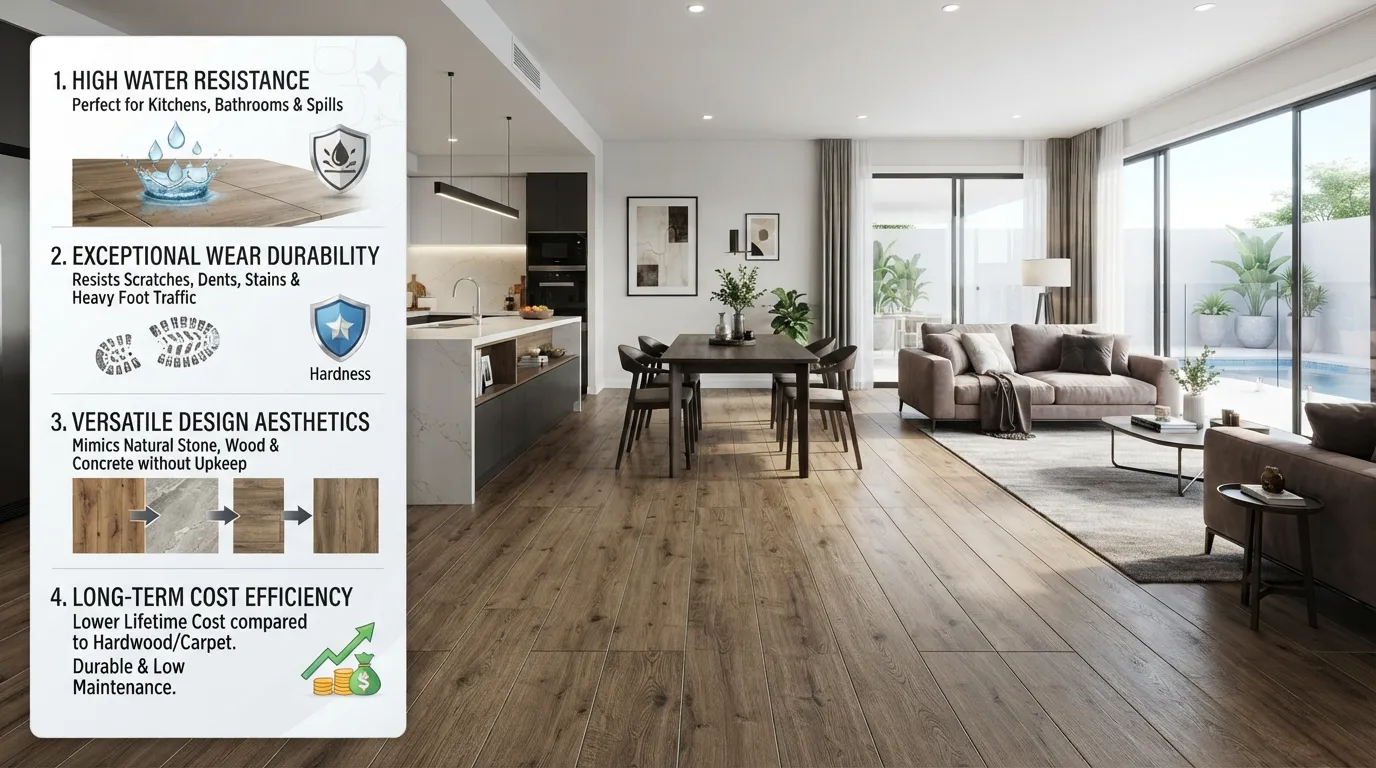 Porcelain tile dominates bathroom flooring because it is crafted from finer, denser clays fired at much higher temperatures than standard ceramic. This manufacturing process produces an exceptionally low water absorption rate of under 0.5 percent, making it impervious to steam, standing water, and humidity.
- Unmatched Density: Resists heavy impacts, cracking, and structural fatigue over decades of use.
- Complete Impermeability: Blocks moisture from entering the core, preventing hidden mold and subfloor rot.
- Longevity: Lasts a lifetime when installed correctly with a proper waterproof membrane.
Pros and Cons
Evaluating the advantages and drawbacks of porcelain tile helps ensure it aligns with your specific installation requirements and household lifestyle.
- Pros: 100 percent waterproof, highly durable, highly scratch-resistant, and low-maintenance.
- Cons: Hard underfoot, cold without radiant heating, heavy weight, and difficult to cut for DIYers.
Best Finishes and Sizes
Choosing the correct surface finish and tile dimensions directly impacts both visual appeal and daily bathroom safety.
- Matte and Textured Finishes: Provide essential slip resistance under wet conditions compared to slippery polished finishes.
- Large-Format Tiles: Minimize total grout lines for easier cleaning, though they require perfectly flat subfloors to prevent lippage.
- Rectified Edges: Allow for ultra-thin, clean grout lines for a sleek, modern architectural aesthetic.
Porcelain vs Ceramic Tile
While both materials look similar on the surface, porcelain’s superior density and lower porosity make it far better suited for high-moisture full bathrooms compared to standard ceramic tile.
- Porcelain Advantage: Higher clay density and lower water absorption withstand heavy bathroom traffic and standing water.
- Ceramic Limitation: More porous and softer body is better reserved for dry accent walls or low-traffic powder rooms.
Who Should Choose Porcelain?
Porcelain tile is the ideal solution for homeowners prioritizing long-term durability, waterproof reliability, and timeless design over budget shortcuts or soft underfoot comfort.
- Active Households: Perfect for busy family bathrooms, master ensuites, and frequent shower usage.
- Design Versatility: Available in realistic wood-look, stone-look, and concrete-look patterns to match any decor.
Ceramic Tile Budget-Friendly Classic
While ceramic and porcelain belong to the same ceramic tile family, their composition and manufacturing differences impact their performance in wet spaces. Understanding these structural variations helps you decide where ceramic is a smart choice and where porcelain is mandatory.
When Ceramic Is Enough
Ceramic tile remains a reliable, cost-effective flooring choice for low-traffic residential areas where heavy moisture exposure is limited. It provides the classic look of tile without driving up project material costs.
- Guest Bathrooms: Perfect for half-baths and secondary guest suites with occasional use.
- Budget Renovation Projects: Low material costs and softer bodies make ceramic easier and cheaper to cut and install.
When to Skip It
Because ceramic has higher porosity than porcelain, exposing it to extreme wetness or heavy impacts can cause structural failure over time.
- High-Traffic Family Bathrooms: Constant daily wear from children and heavy traffic can chip glazed surfaces.
- Wet Rooms and Walk-In Showers: Continuous standing water puts porous ceramic at risk of moisture absorption and cracking.
Glazed vs Unglazed and Slip Concerns
The surface glaze on ceramic tile acts as a protective shield against stains and moisture, but finish selection determines safe footing.
- Glazed Ceramic Protection: The baked-on liquid glass layer seals out dirt and water, making maintenance simple.
- Slip Hazards: High-gloss glazed finishes become dangerously slick when wet, requiring textured or matte alternatives for safety.
Luxury Vinyl Plank LVP and Tile LVT
Luxury vinyl plank and tile feature core materials—such as stone plastic composite (SPC) or wood plastic composite (WPC)—that are 100 percent waterproof and will never swell when exposed to standing water. However, while the planks themselves are impervious to moisture, improper installation around perimeter expansion gaps, toilet flanges, and bathtub edges can still allow water to seep underneath.
- Core Integrity: Pure vinyl and rigid composite cores do not absorb water or warp from humidity.
- Perimeter Sealing: Using 100 percent silicone sealant along baseboards and joints stops water from reaching the subfloor.
Pros and Cons
Evaluating the strengths and limitations of luxury vinyl helps determine if it fits your specific lifestyle and room layout.
- Pros: 100 percent waterproof surface, comfortable and warm underfoot, budget-friendly, and very DIY-friendly.
- Cons: Can puncture under sharp dropped objects, vulnerable to direct sunlight fading, and requires a perfectly flat subfloor.
Click-Lock vs Glue-Down in Bathrooms
Choosing the correct installation method dictates how well your vinyl floor withstands bathroom moisture fluctuations over time.
- Click-Lock Floating Floors: Fast and easy for DIYers, but require a tight locking mechanism to prevent water from slipping between joints.
- Glue-Down Flooring: Fully adhered directly to the subfloor with moisture-resistant adhesive, preventing water pooling underneath and ideal for larger bathrooms.
Best Heavy-Duty Vinyl: What to Look For
Not all vinyl flooring is rated for demanding bathroom environments; selecting commercial-grade specifications ensures long-term performance.
- Wear Layer Thickness: Look for a minimum 20-mil wear layer to resist scratching, scuffing, and heavy daily foot traffic.
- Rigid SPC Core: Stone plastic composite cores resist denting from heavy bathroom fixtures and resist subfloor telegraphing.
Can Vinyl Go on Bathroom Walls Too?
Extending luxury vinyl planks or tiles onto bathroom accent walls creates a modern, cohesive look while providing extra splash protection around tubs and vanities.
- Vertical Applications: Thin glue-down vinyl planks or click-lock boards can be adhered to drywall using construction adhesive.
- Moisture Barrier: Provides a wipe-clean, water-resistant wall surface behind vanities or lower wainscoting sections.
LVP vs Tile: Which One Is Better for You?
Deciding between vinyl and traditional tile depends on whether you value underfoot comfort and budget or lifetime stone-like permanence.
- Choose LVP If: You want a warm, softer surface, easy weekend DIY installation, and lower overall material costs.
- Choose Tile If: You want maximum impact resistance, high-end stone aesthetics, and a permanent structural floor.
Natural Stone Luxury with Extra Care
Natural stone delivers unmatched high-end luxury and organic beauty, but each stone type reacts differently to bathroom moisture, acids, and heavy use. Choosing the correct variety ensures your investment retains its elegance over time.
- Marble: Classic and sophisticated look, but highly porous and sensitive to acidic bathroom cleaners and standing water.
- Granite: Exceptionally hard, dense, and water-resistant, making it a reliable, low-maintenance choice for bathroom floors.
- Slate: Naturally slip-resistant with a textured cleft surface, offering great traction and earthy beauty for wet areas.
- Travertine: Features unique natural voids that require careful filling and regular sealing to prevent moisture accumulation.
Why Stone Needs Sealing and How Often
Because natural stone is inherently porous, liquids and oils penetrate beneath the surface quickly if left unprotected. Applying a high-quality penetrating sealer creates an invisible barrier against moisture and staining agents.
- Initial Sealing: Apply a professional-grade sealer immediately after installation and grout curing.
- Maintenance Schedule: Reapply a penetrating sealer every 6 to 12 months depending on bathroom foot traffic and water exposure.
Stains, Etching, and Slipperiness
Natural stone requires careful daily upkeep because household chemicals and moisture can alter its finish and safety profile. Understanding these risks prevents permanent surface damage.
- Chemical Etching: Acidic products like hair dye, bath bombs, and citrus cleaners permanently dull polished marble surfaces.
- Slip Hazards: Polished stone becomes dangerously slick when wet; always select honed or textured finishes for bathroom safety.
Is Stone Worth the Cost?
Natural stone flooring involves a higher upfront material and professional installation expense, along with ongoing maintenance requirements.
- High Investment: Material and specialized labor costs range from $8 to $25+ per square foot.
- Aesthetic Value: Worth the investment for homeowners seeking authentic luxury, unique veining, and long-term property appeal.
Other Materials: Mosaic Epoxy Rubber Laminate and Bamboo
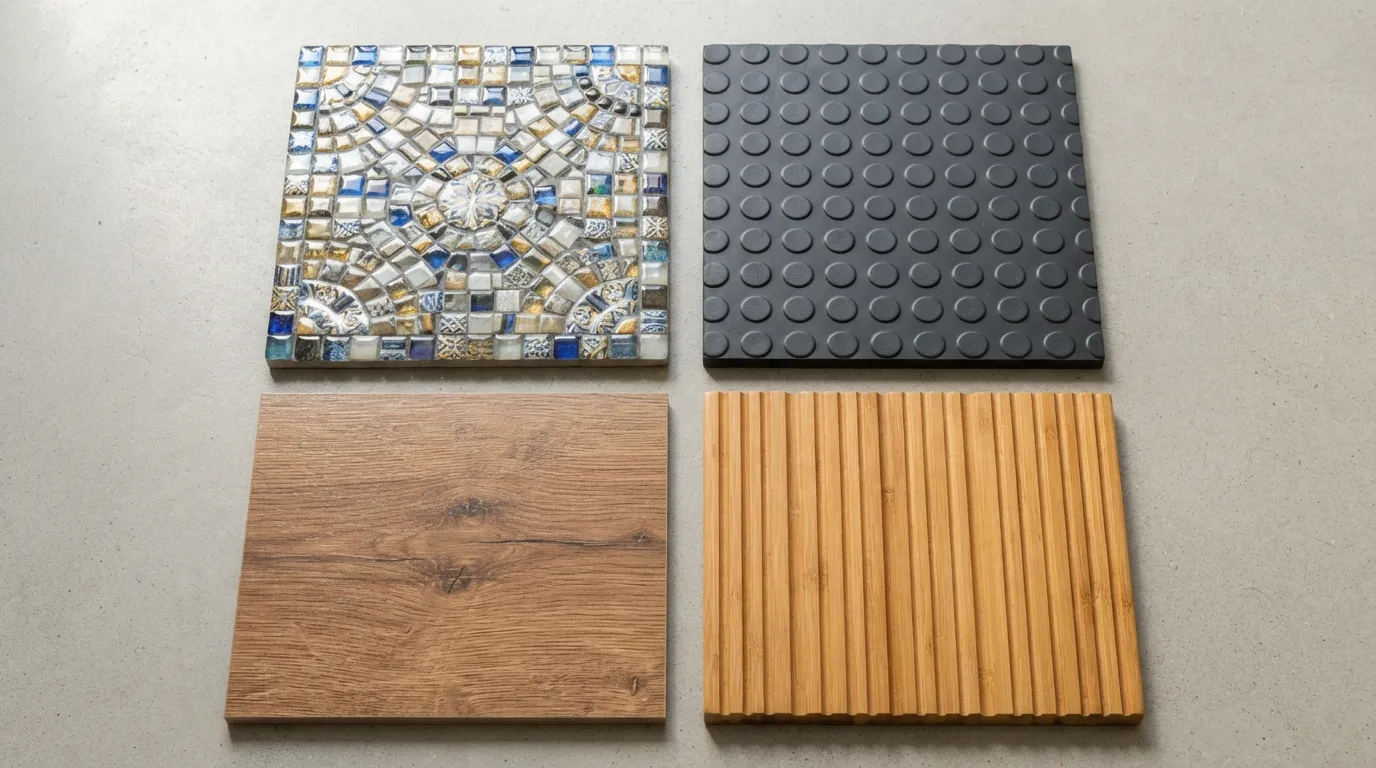 Mosaic tiles consist of small porcelain, ceramic, or stone pieces mounted on mesh sheets, making them exceptionally popular for walk-in shower floors and compact bathrooms. Their dense network of grout lines provides superior slip resistance under wet conditions.
- Enhanced Traction: High density of grout joints prevents slipping by offering extra grip for bare feet.
- High Grout Maintenance: Requires frequent cleaning and sealing to prevent mold and mildew growth within the grout lines.
Epoxy Flooring for Bathrooms
Seamless poured epoxy floors create a 100 percent waterproof, high-gloss surface that completely eliminates grout lines and moisture intrusion points. While popular in modern industrial designs, proper professional installation is required to ensure slip safety.
- Seamless Protection: Zero joints or seams mean water has nowhere to leak through to the subfloor.
- Slip Additives Required: Must be mixed with anti-slip grit during application to prevent slick hazards when wet.
Rubber Flooring
Rubber flooring provides a resilient, high-traction surface that is increasingly used in accessible bathrooms, senior living spaces, and family homes. It offers unmatched underfoot comfort and exceptional shock absorption.
- Superior Slip Resistance: Naturally grippy texture remains secure even under standing shower water.
- Accessibility Focus: Soft cushioning protects against falls and provides ergonomic comfort for prolonged standing.
Laminate in a Bathroom: Should You?
Standard laminate flooring should generally be avoided in bathrooms because its high-density fiberboard core swells and warps irreversibly when exposed to standing water or heavy steam. While manufacturers offer water-resistant laminate, edge swelling remains a major risk.
- Core Vulnerability: Trapped moisture causes tongue-and-groove joints to buckle and delaminate permanently.
- Verdict: Avoid in full bathrooms and master ensuites; restrict strictly to dry powder rooms with proper sealing.
Bamboo in a Bathroom: Should You?
Bamboo is often marketed as an eco-friendly hardwood alternative, but it performs poorly in high-humidity environments. Even strand-woven varieties absorb moisture, leading to cupping, expansion, and fungal rot.
- Moisture Sensitivity: Fluctuating humidity causes bamboo planks to expand and distort over time.
- Verdict: Skip bamboo entirely for full bathrooms featuring tubs, showers, or frequent steam exposure.
Temporary Cover Options
If you are renting or want to update an ugly bathroom floor without tearing out existing tiles, temporary peel-and-stick vinyl tiles or outdoor interlocking deck tiles provide quick visual fixes.
- Peel-and-Stick Vinyl: Inexpensive temporary stickers allow you to test designs without permanent demolition.
- Moisture Risk: Water can still seep beneath temporary adhesive layers, making regular surface drying critical.
Slip Resistance How to Choose a Safe Bathroom Floor
Bathrooms are among the most hazardous rooms in a home due to the lethal combination of hard surfaces, soap runoff, and standing water. A glossy floor that feels perfectly secure when dry can instantly turn into a slick surface when wet, leading to severe slips, falls, and impact injuries.
- Soap and Shampoo Residue: Surfactants from personal care products reduce friction between feet and the floor.
- High-Impact Environments: Hard ceramic tiles and stone offer zero cushioning during a fall, magnifying injury risks.
Understanding Slip Ratings
Selecting safe flooring requires looking past visual aesthetics and evaluating official international and national slip-resistance standards. The ANSI A326.3 slip-resistance standard provides crucial metrics for measuring dynamic friction.
How to Test Slip Resistance at Home
Before purchasing thousands of dollars of tile, you can perform a quick, hands-on wet traction test using physical samples to evaluate safety under real conditions.
- The Soap-and-Water Test: Place a tile sample flat on the ground, pour soapy water over it, and firmly test the grip with your hand or shoe sole.
- Evaluate Drag Resistance: If the surface feels slick or slides instantly under minor pressure, reject it for primary wet zones.
Matte vs Textured vs Glossy
Surface finishes dictate how well a floor performs when exposed to bathroom moisture and humidity.
- Glossy Finishes: Highly reflective and elegant, but dangerously slick when wet; avoid entirely in bathrooms.
- Matte Finishes: Offer moderate friction and diffuse light nicely without slickness hazards.
- Textured / Cleft Surfaces: Provide the ultimate physical grip for barefoot traffic in showers and wet rooms.
Adding Grip to an Existing Floor
If you already have a slippery bathroom floor installed, several aftermarket remedies can improve traction without a full renovation.
- Anti-Slip Chemical Etchants: Micro-treads can be etched into porcelain or ceramic surfaces to boost grip when wet.
- Rubber Bath Mats: Strategically placed non-slip mats cover high-risk areas outside tubs and walk-in showers.
Best Bathroom Flooring for Your Situation
 Accessibility-focused bathrooms require prioritizing maximum slip resistance, seamless transitions, and comfortable underfoot support for aging in place. High-traction textured tiles or cushioned rubber surfaces prevent slips while supporting mobility aids.
- Zero-Threshold Transitions: Eliminates tripping hazards between the hallway and the bathroom entrance.
- High-Traction Surfaces: Ensures secure footing for walkers, wheelchairs, and bare feet in wet zones.
Best Flooring for Kids’ Bathrooms
Children’s bathrooms demand durable, impact-resistant flooring that handles frequent splashing, dropped bath toys, and rigorous daily cleaning. Water-resistant resilient materials or dense porcelain tiles stand up effortlessly to heavy family use.
- Impact Resistance: Withstands heavy dropped objects without cracking or shattering.
- Hygienic Maintenance: Seamless options or stain-resistant tiles make wiping up bath splashes quick and simple.
Best Flooring for a Small Bathroom
Compact half-baths and powder rooms benefit from design tricks that visually expand the square footage while maintaining waterproof integrity. Using large-format tiles or light-colored continuous materials reduces visual clutter.
- Large-Format Tiles: Minimizes grout lines, creating an open, expansive aesthetic in tight spaces.
- Reflective Light Colors: Bright tones maximize natural and artificial light to make small rooms feel larger.
Best Flooring for a Master Bathroom Luxury Look
Master ensuites allow homeowners to invest in premium aesthetics, bespoke materials, and luxurious tactile comfort. Sealed natural stone, high-end patterned porcelain, or large-format marble elevate the entire home’s interior design.
- Organic Elegance: Authentic veining and unique stone textures deliver sophisticated visual depth.
- Custom Layouts: Intricate mosaic accents or slab installations create a spa-like personal retreat.
Best Budget-Friendly Bathroom Flooring
Renovating on a tight budget does not mean sacrificing water protection or modern style. Standard ceramic tiles and luxury vinyl planks provide incredible performance and visual appeal at an affordable price point.
- Cost Efficiency: Material and installation costs stay low without compromising waterproof durability.
- High-End Visuals: Modern manufacturing mimics stone and hardwood realistically for a fraction of the cost.
Easiest Bathroom Flooring to Install Yourself
Weekend DIYers looking to save on professional labor costs should focus on floating click-lock or peel-and-stick materials that require minimal specialized tools. Luxury vinyl planks are the gold standard for DIY bathroom updates.
- Click-Lock Installation: Planks snap together easily around toilets and vanities with basic utility knives.
- No Wet Saws Required: Eliminates the need for renting heavy tile cutters or mixing mortar beds.
Best Flooring with Underfloor Heating
Cold winter mornings make radiant underfloor heating a luxurious and practical bathroom upgrade. Choosing materials with high thermal conductivity ensures your floors heat up quickly and efficiently.
- Porcelain and Stone Compatibility: Conduct heat rapidly and retain warmth exceptionally well for bare feet.
- Vinyl Limitations: Requires checking manufacturer temperature limits to prevent adhesive breakdown or warping.
Best Flooring for Damp or Humid Bathrooms
Bathrooms lacking proper ventilation suffer from chronic humidity, lingering steam, and condensation buildup. 100 percent waterproof materials with inorganic cores completely resist moisture-induced warping and mold growth.
- Impermeable Cores: Porcelain tiles and rigid SPC vinyl prevent moisture from triggering rot or fungal expansion.
- Vapor Barrier Protection: Proper subfloor sealing stops trapped humidity from attacking structural subfloor framing.
What Will It Really Cost?
Evaluating bathroom flooring expenses requires looking beyond raw material prices to understand total installed costs. Labor rates, subfloor preparation, and specialized setting materials significantly impact your overall renovation budget.
Hidden Costs People Forget
Many bathroom remodeling budgets fail because homeowners only account for the surface flooring product while ignoring critical preparatory and structural requirements.
- Subfloor Repair: Fixing water-damaged wood subfloors or rotted framing discovered after tearing up old flooring.
- Waterproofing Membrane: Investing in liquid or sheet waterproofing systems to protect the subfloor from moisture intrusion.
- Self-Leveling Compound: Pouring concrete leveling agents to smooth out uneven subfloor surfaces before tile or vinyl installation.
- Grout, Mortar, and Sealer: Additional expenses for thin-set mortar, specialized grout, expansion trims, and protective stone sealers.
- Old Floor Demo & Disposal: Labor or dumpster fees required to tear out and haul away heavy old tile or glued flooring.
Cheapest Way to Cover a Bathroom Floor
If you are working with an ultra-tight budget and need an immediate, clean upgrade without professional labor expenses, smart material choices make all the difference.
- DIY Click-Lock LVP: Installing budget-friendly luxury vinyl planks yourself eliminates contractor installation charges entirely.
- Standard Ceramic Tile: Choosing economical ceramic tiles and tackling basic layout work keeps overall material bills low.
DIY vs Professional: Where Does It Make Sense to Save?
Determining whether to tackle a bathroom floor yourself or hire a professional depends on your tool access, skill level, and the specific material chosen.
- Where DIY Shines: Laying floating luxury vinyl plank or peel-and-stick tiles requires basic utility knives and saves hundreds in labor costs.
- When to Hire Pros: Installing heavy porcelain tiles, precise wet-saw cuts, pouring self-leveling beds, and applying liquid waterproofing membranes require professional expertise.
Installation Essentials That Decide How Long Your Floor Lasts
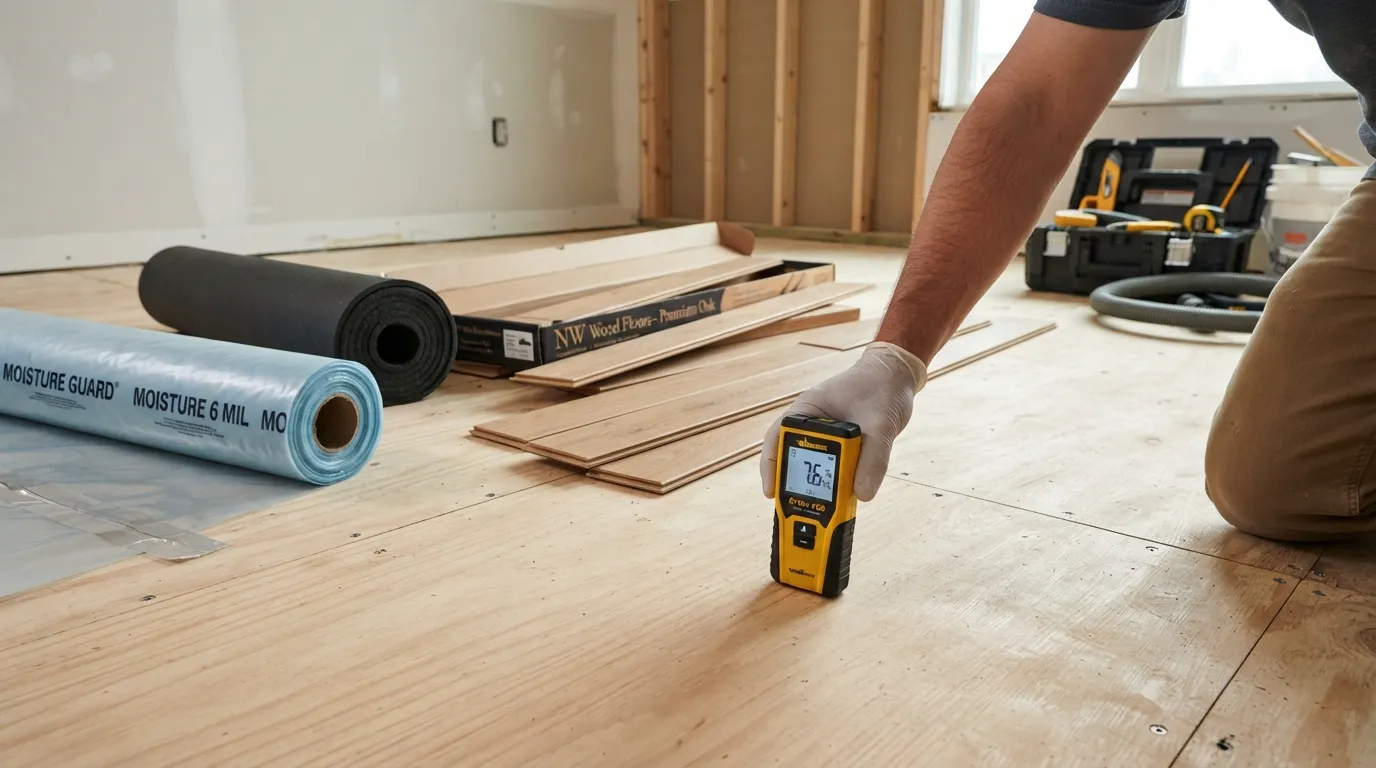 The long-term success of any bathroom floor depends almost entirely on the quality and stability of the underlying subfloor. If the subfloor flexes, sags, or remains uneven, even the most expensive tiles will eventually crack, pop loose, or allow water to seep through.
- Flatness Standards: Subfloors must be flat within 1/8 inch over a 10-foot span to prevent lippage in tiles and bouncing in floating planks.
- Structural Rigidity: Plywood or concrete subfloors must be completely dry, clean, and rigid enough to eliminate deflection under heavy foot traffic.
Waterproofing Membrane: Do You Need It?
Many homeowners mistakenly believe that waterproof tiles or vinyl planks eliminate the need for a waterproof subfloor system. In reality, grout lines, perimeter gaps, and structural joints are inherently vulnerable to moisture.
- Liquid or Sheet Membranes: Applying a professional-grade waterproof membrane over backer boards creates an impenetrable secondary barrier.
- Subfloor Protection: Prevents chronic humidity and accidental spills from rotting wooden joists and growing hidden mold.
How Much Slope Should a Bathroom Floor Have?
Proper drainage slope is critical for wet rooms, walk-in showers, and open bathroom layouts to prevent standing water accumulation. Without adequate pitch toward the drain, water pools and creates slip hazards or moisture damage.
- Drainage Pitch: Shower floors require a consistent slope of 1/4 inch per foot toward the drain to ensure fast, complete water evacuation.
- General Bathrooms: Main bathroom floors remain level, but transition areas must slope gently away from door frames.
Which Tiles Need Soaking Before Installation?
While modern porcelain and dense ceramic tiles do not require pre-soaking, certain porous or specialty materials react differently to dry thinset mortar.
- Porous Terracotta and Natural Stone: Highly absorbent tiles may need light dampening or sealing so they do not suck moisture out of the mortar too quickly.
- Standard Tiles: Standard porcelain and ceramic tiles should be wiped clean of dust rather than soaked, ensuring optimal adhesive bond strength.
Choosing Grout: Cement vs Epoxy
Grout selection dictates both the visual aesthetic and the ongoing cleaning maintenance required for tile floors. Weighing traditional cement against modern epoxy helps prevent staining and cracking.
- Cement Grout: Economical and easy to apply, but porous and prone to absorbing dirt, stains, and mildew unless sealed regularly.
- Epoxy Grout: 100 percent waterproof, chemical-resistant, and stain-proof, though it costs more and requires faster installation.
Sealing and Curing Time
Rushing the curing and sealing process can compromise the structural integrity of your newly installed floor. Allowing adequate drying time ensures maximum bond strength and moisture defense.
- Mortar Curing: Allow thin-set mortar and grout to cure for at least 48 to 72 hours before heavy walking or moisture exposure.
- Sealer Application: Apply penetrating sealers to natural stone and cement grout only after complete curing to lock out water permanently.
Cleaning Maintenance and Mold Prevention
Maintaining a pristine bathroom floor requires tailored cleaning routines depending on whether you chose porcelain, luxury vinyl, or natural stone. Using the correct cleaning agents preserves protective finishes and extends the life of your flooring.
- Porcelain & Ceramic: Sweep or vacuum loose debris weekly, then mop with warm water and a mild, pH-neutral cleaner.
- Luxury Vinyl Plank (LVP): Dust mop regularly and wipe up spills immediately; mop with a damp microfiber pad using gentle vinyl-safe cleansers.
- Natural Stone: Clean exclusively with stone-safe, neutral-pH solutions to avoid chemical etching or wearing down protective sealers.
How to Keep Grout Clean
Grout lines are notoriously prone to absorbing dirt, body oils, and soap scum due to their porous nature. Regular scrubbing and preventative maintenance keep grout lines looking bright and sanitary.
- Routine Scrubbing: Use a soft-bristled brush with a mixture of warm water and baking soda or oxygen bleach to lift embedded stains.
- Penetrating Grout Sealer: Apply a clear penetrating sealer annually to create an invisible barrier against moisture and discoloration.
Preventing Mold and Mildew
High humidity and standing moisture create the ideal breeding ground for mold and mildew colonies in bathrooms. Effective moisture control and air circulation eliminate fungal growth before it starts.
- Exhaust Ventilation: Run your bathroom exhaust fan during showers and leave it operating for at least 20 minutes afterward to clear trapped steam.
- Surface Drying: Squeegee glass shower doors and wipe down pooling water near tubs and sink bases regularly.
Products to Avoid
Using harsh chemical cleaners or abrasive scouring pads can permanently ruin delicate bathroom flooring materials. Always verify product compatibility before applying any heavy cleaner.
- Harsh Acids and Bleach: Strong bleach solutions and acidic cleaners will etch natural stone and degrade cement grout.
- Abrasive Scouring Pads: Steel wool and rough scrubbing pads scratch high-gloss vinyl and polished stone surfaces instantly.
Regional Climate Note
Homes located in hot, humid climates experience accelerated condensation buildup and slower moisture evaporation rates inside bathrooms. In these regions, upgrading to high-capacity ventilation fans and applying breathable sealants is critical to prevent chronic subfloor dampness.
- High Humidity Control: Dehumidifiers or continuous ventilation help counteract regional moisture accumulation.
- Vapor Management: Ensure subfloors feature heavy-duty vapor barriers to stop moisture from migrating upward through the framing.
Bathroom Floor Trends 2026: Colour and Style
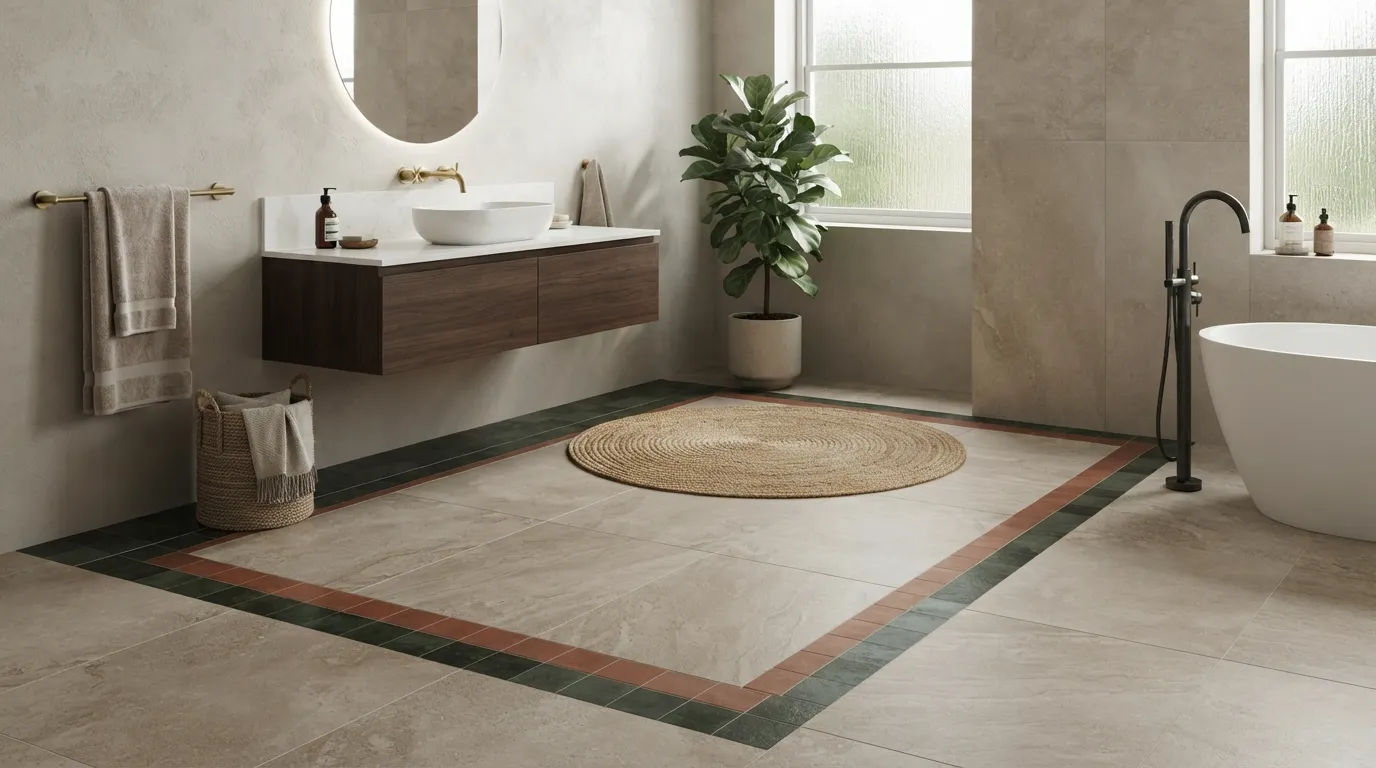 Bathroom flooring design features a strong shift toward raw natural elements, tactile surfaces, and comforting organic tones. Modern architectural choices merge luxury aesthetics with high-performance practicality for contemporary residential spaces.
- Travertine-Effect Porcelain: The definitive look of the year, offering warm beige hues and subtle mineral textures without the high maintenance of real stone.
- Terrazzo and Speckled Effects: Polished quartz and stone chips set into smooth porcelain give floors a playful yet refined character.
- Earthy Neutrals & Warm Khakis: Moving away from cold grays, shades like universal khaki, warm taupe, and soft clay create a grounding foundation.
Should the Floor Be Lighter or Darker Than the Walls?
Balancing the visual weight between your bathroom floor and walls defines the overall sense of space and proportion. Choosing the correct contrast ratio alters how large or intimate the room feels.
- Darker Floors with Lighter Walls: Grounds the room solidly, adding classic architectural depth and hiding minor surface dust effectively.
- Lighter Floors with Darker Walls: Bounces light upward and visually expands compact powder rooms, making tighter square footage feel airy.
What Makes a Bathroom Outdated?
Certain design choices quickly date a bathroom interior, often signaling poor moisture management or fleeting stylistic fads that lose appeal over time.
- Shiny, Slippery Gloss Tiles on Floors: High-gloss tiles look dated and pose a severe slip hazard when wet.
- Busy, Tiny Mosaics Everywhere: Wrapping an entire room in small, overly colorful tiles creates visual clutter and excessive grout lines.
Tile Size Pattern and Layout Ideas
Creative layout patterns and oversized dimensions transform standard materials into high-end design statements that enhance functionality.
- Large-Format Slabs: Extra-large tiles minimize grout lines to create a unified, seamless surface that simplifies cleaning.
- Chevron and Herringbone Layouts: Adds dynamic movement and sophisticated geometric rhythm to narrow bathroom floors.
Colour Choices That Hide Dirt and Water Marks
Selecting practical flooring colors minimizes daily cleaning fatigue by masking minor water spots, hair, and dust particles between regular cleanings.
- Variegated Earth Tones: Mid-tone beiges, greiges, and subtle stone-look patterns camouflage stray dust and dried water drops seamlessly.
- Avoid Pure Gloss Black or White: Solid black shows every single speck of dust and water spot, while bright white highlights hair and grime instantly.
Common Mistakes to Avoid
 Choosing a high-gloss polished tile for a master shower or heavy-traffic bathroom floor creates a severe safety hazard. We frequently encounter this mistake during home inspections where homeowners prioritized showroom sparkle over practical traction, resulting in dangerous slip-and-fall accidents when soapy water hits the floor.
- Slick When Wet: Polished surfaces lose nearly all friction under water and soap runoff.
- Prevention: Always select matte or textured finishes rated for wet barefoot spaces.
Skipping Waterproofing Because the Tile Is Waterproof
Many DIY renovators assume that installing porcelain or vinyl flooring eliminates the need for a dedicated subfloor waterproofing membrane. In one recent renovation rescue project, we found that trapped moisture had entirely rotted the plywood subfloor beneath “waterproof” tiles because grout joints and perimeter gaps were left unsealed.
- Vulnerable Gaps: Water inevitably finds its way through grout lines and wall joints.
- Prevention: Always apply a liquid or sheet waterproofing membrane over backer boards before laying tile.
Using Laminate or Solid Wood
Attempting to save money by installing standard laminate or solid hardwood in a full bathroom almost always leads to catastrophic structural failure. We observed a bathroom where a beautiful laminate floor buckled, swelled, and delaminated within just four months due to everyday shower steam and humidity.
- Core Expansion: High-density fiberboard and natural wood warp permanently when exposed to moisture.
- Prevention: Restrict bathroom flooring strictly to 100 percent waterproof materials like porcelain, ceramic, or rigid core LVP.
Wrong Grout or Skipping Sealer
Using standard cementitious grout in wet areas without applying a protective sealer leads to rapid staining, mold growth, and structural crumbling. In multiple older homes we inspected, unsealed grout had absorbed so much body soap and moisture that it required complete demolition.
- Porous Absorption: Unsealed grout absorbs dirt and bacteria easily, turning dark and unsanitary.
- Prevention: Opt for stain-proof epoxy grout or commit to applying a penetrating sealer annually.
Ignoring Slope and Drainage
Failing to establish a proper drainage pitch toward the shower drain causes standing water to pool against walls and vanity bases. We stepped into a master bathroom remodel where a flat shower floor led to chronic puddling, grout deterioration, and warped baseboards.
- Pooling Risks: Standing water accelerates mold growth and creates slip hazards.
- Prevention: Ensure walk-in shower floors maintain a consistent 1/4 inch per foot slope toward the drain.
Choosing Only by Look
Selecting bathroom flooring purely based on color swatches or aesthetic trends without considering durability, slip resistance, and maintenance is a recipe for regret. We often meet homeowners who installed delicate marble tiles in high-traffic kids’ bathrooms, only to watch them etch, scratch, and stain within weeks.
- Form vs. Function: Beautiful materials can fail rapidly if they cannot handle moisture and heavy wear.
- Prevention: Always balance your aesthetic goals with the specific demands of your household and room layout.
Frequently Asked Questions About Bathroom Flooring
Porcelain tile is the most durable option for a bathroom. Its refined clays are fired at extremely high temperatures, creating an ultra-dense, low-porosity surface that resists heavy impacts, scratches, and lifelong moisture wear without cracking or structural degradation.
What flooring is 100% waterproof?
Porcelain tile, ceramic tile, rigid core luxury vinyl plank (SPC/WPC), and seamless poured epoxy are 100 percent waterproof at the core level. They will never swell, buckle, or warp when exposed directly to standing water or high steam environments.
What’s the easiest flooring to put in a bathroom?
Click-lock luxury vinyl plank (LVP) is the easiest bathroom flooring to install yourself. The planks lock together seamlessly around toilets and vanities using simple utility knives, eliminating the need for heavy tile saws, mortar mixing, or professional labor.
What is the most affordable way to cover a bathroom floor?
Installing budget-friendly luxury vinyl planks or standard ceramic tiles yourself is the most affordable way to update a bathroom floor. Choosing DIY floating or glue-down vinyl cuts out contractor labor costs entirely while keeping material bills low.
What is the best budget-friendly bathroom flooring option?
Luxury vinyl plank (LVP) and standard ceramic tile provide the best budget-friendly performance. Both materials deliver reliable water resistance and attractive stone or wood aesthetics for a fraction of the cost of premium natural stone.
Should a bathroom floor be lighter or darker than the walls?
A darker floor paired with lighter walls grounds the room with architectural depth and hides minor dust. Conversely, a lighter floor with darker walls bounces light upward, visually expanding compact powder rooms and tight square footage.
Can you use laminate flooring in a bathroom?
Standard laminate flooring should be avoided in full bathrooms because its high-density fiberboard core swells, buckles, and delaminates permanently when exposed to standing water or steam. Restrict water-resistant laminate strictly to dry powder rooms.
How well does bamboo flooring work in a bathroom?
Bamboo performs poorly in bathrooms and should be avoided. Even strand-woven bamboo absorbs humidity and fluctuating moisture, leading to cupping, expansion, and fungal rot in full bathrooms.
What is the best flooring for a small bathroom?
Large-format porcelain tiles or continuous light-colored flooring materials work best in small bathrooms. Minimizing grout lines and reflecting light creates an open, expansive visual illusion in tight spaces.
What is the best bathroom flooring for seniors?
Textured matte porcelain tiles or cushioned rubber flooring are best for seniors and aging-in-place bathrooms. They offer high slip resistance when wet, reduce impact risks from falls, and support smooth, zero-threshold mobility.
Which flooring works best for damp bathrooms?
Rigid core SPC vinyl and porcelain tile work best in chronically damp or poorly ventilated bathrooms. Their inorganic, non-porous cores completely resist moisture-induced mold growth and structural warping.
How much slope should a bathroom floor have?
Walk-in shower and wet room floors require a consistent slope of 1/4 inch per foot toward the drain to ensure fast, complete water evacuation and prevent standing puddles.
Conclusion and Decision Checklist
Final Verdict
Choosing the ideal bathroom floor requires balancing waterproof reliability, slip safety, and your personal renovation budget. While porcelain tile remains the gold standard for long-term durability and wet-area performance, luxury vinyl plank offers an unbeatable combination of DIY ease and budget-friendly comfort.
Quick Decision Checklist
- Budget: Choose luxury vinyl plank or standard ceramic tile for low-cost, high-performance updates.
- Installation: Select click-lock LVP for quick DIY weekend projects, or hire professionals for heavy tile and stone setting.
- Household Demographics: Opt for textured matte tiles or cushioned rubber surfaces in senior-accessible or kids’ bathrooms.
- Slip Risk: Always verify matte or textured finishes to prevent dangerous falls in wet zones.
- Humidity Management: Use inorganic, 100 percent waterproof cores like porcelain or rigid SPC vinyl in poorly ventilated bathrooms.
- Underfloor Heating: Prioritize porcelain or natural stone if you plan to install radiant heating mats.

Oscar Vance | Master Plumber & Drainage Expert
Meet Oscar Vance, a licensed master plumber sharing practical solutions on residential repairs, preventive maintenance, and thoughtful home upkeep.