What Do Plumbing Jobs Cost in 2026?
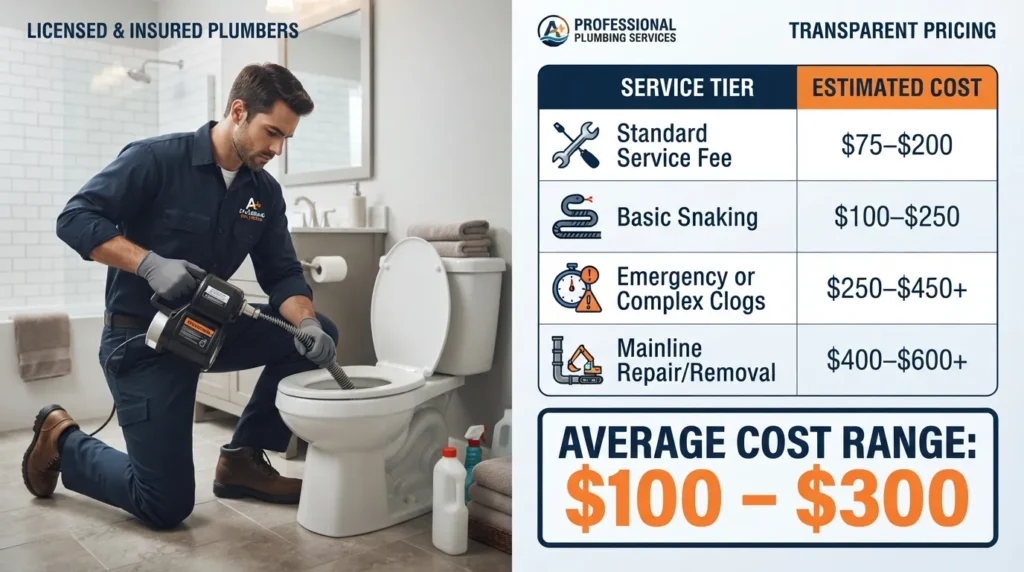
 Hiring a professional residential plumber typically costs between $150 and $500 for standard repairs, with national hourly rates averaging $75 to $150 per hour. Total project costs depend heavily on the nature of the issue, labor rates in your region, and whether the service is scheduled during regular business hours or as an emergency call-out.
Average Plumber Rates at a Glance
Understanding current industry pricing helps you budget effectively for everything from routine maintenance to unexpected plumbing emergencies. Residential plumbing rates vary based on specialized skill requirements, material costs, and geographical location, but standard benchmarks remain consistent across most markets.
- Hourly Rate: $75 to $150 per hour for standard residential plumbing labor and diagnostics.
- Service Call / Dispatch Fee: $75 to $150 upfront fee covering travel and initial problem inspection.
- Emergency Rate: $150 to $300+ per hour for after-hours, weekend, or holiday urgent interventions.
- Small Job Range: $150 to $350 for minor tasks like fixing a leaky faucet, unclogging a drain, or replacing a toilet flapper.
- Big Project Range: $1,000 to $4,500+ for major installations, whole-home repiping, or complex sewer line replacements
How Do Plumbers Charge? Pricing Models Explained
Plumbers utilize several distinct pricing models depending on the complexity of the project, diagnostic time required, and industry standards. Understanding whether a contractor bills by the hour, charges a flat rate, or operates on a time-and-materials basis ensures you can evaluate quotes accurately and avoid unexpected charges.
Hourly Rate and When It Applies
Hourly billing typically ranges from $75 to $150 per hour for a licensed plumber, while a master plumber can command $100 to $200+ per hour. This model is most commonly applied to diagnostic work, troubleshooting complex leaks behind walls, or undefined tasks where the total scope of labor cannot be accurately predetermined before opening up pipes.
- Best suited for exploratory troubleshooting and multi-step diagnostic investigations.
- Labor clocks usually start when the technician arrives at your home (some include travel time).
- Often accompanied by a standard service call or dispatch fee.
Flat-Rate Pricing and When It Is Better
Flat-rate pricing provides a fixed, upfront price for a clearly defined job, regardless of how long the repair actually takes the plumber to complete. Contractors calculate flat rates by factoring in estimated labor time, material costs, overhead, and a standard profit margin to give homeowners price certainty.
- Ideal for straightforward installations like replacing a water heater, installing a garbage disposal, or swapping out toilets.
- Protects the homeowner from paying extra if the plumber runs into minor, predictable delays.
- Eliminates guesswork so you know the exact financial commitment before work begins.
Time-and-Materials Pricing
Time-and-materials pricing breaks down total project expenses into two distinct categories: the hourly labor cost and the exact wholesale or retail price of replacement parts, fixtures, and piping. This model is frequently used for custom renovations or major remodeling projects.
- Provides transparent itemization for specialized or rare plumbing parts.
- Requires a detailed contract or estimate cap to prevent runaway labor hours.
- Commonly used when dealing with unpredictable historical plumbing infrastructure in older homes.
What Is a Service Call Fee?
A service call or dispatch fee is a standard flat charge—usually ranging from $75 to $150—billed just to have a licensed plumber travel to your home and diagnose your plumbing issue. Yes, this fee is completely normal and standard practice across the home services industry to cover fuel, vehicle maintenance, and technician travel time.
- Many reputable plumbing companies will credit the service call fee directly toward the cost of the repair if you hire them to complete the work.
- Always ask upfront whether the dispatch fee is rolled into the final repair bill or billed as a separate, non-refundable diagnostic charge.
Minimum Charges and Travel Fees
Most plumbing companies enforce a minimum service charge, which is often equivalent to one hour of labor plus the service call fee, even if the actual fix takes only ten minutes (such as tightening a loose valve). Travel fees may also apply if you live outside the company’s standard metropolitan service radius.
- Protects plumbing businesses from losing money on minor service calls due to transit time.
- Encourages homeowners to bundle multiple small repairs together into a single visit to maximize value.
Hourly vs. Flat Rate: Which Is Better for You?
Choosing between hourly and flat-rate pricing depends on the predictability of the plumbing task at hand. Review the structural comparison below to determine which model aligns best with your specific repair project.
Plumbing Job Price List
Consulting an up-to-date plumbing price list helps homeowners accurately budget for everything from basic fixture swaps to extensive mainline sewer replacements. Labor costs fluctuate based on project complexity, regional demand, and the underlying condition of your existing pipe network.
Common Plumbing Jobs: Cost and Time Table
The structured cost reference guide below outlines national average price ranges, estimated completion times, and the primary factors driving expenses for the ten most frequent residential plumbing repairs and installations.
Download: Printable Plumbing Price List
Keep a physical copy of our complete plumbing labor price list handy for quick project estimates and contractor negotiations.
- Includes detailed line items for specialized fixtures, emergency multipliers, and regional variance factors.
- Formatted cleanly for easy offline viewing or printing for your home binder.
- Directly updated to match current home service industry benchmarks.
Small Plumbing Jobs: Cost Breakdown 1-3 Hours
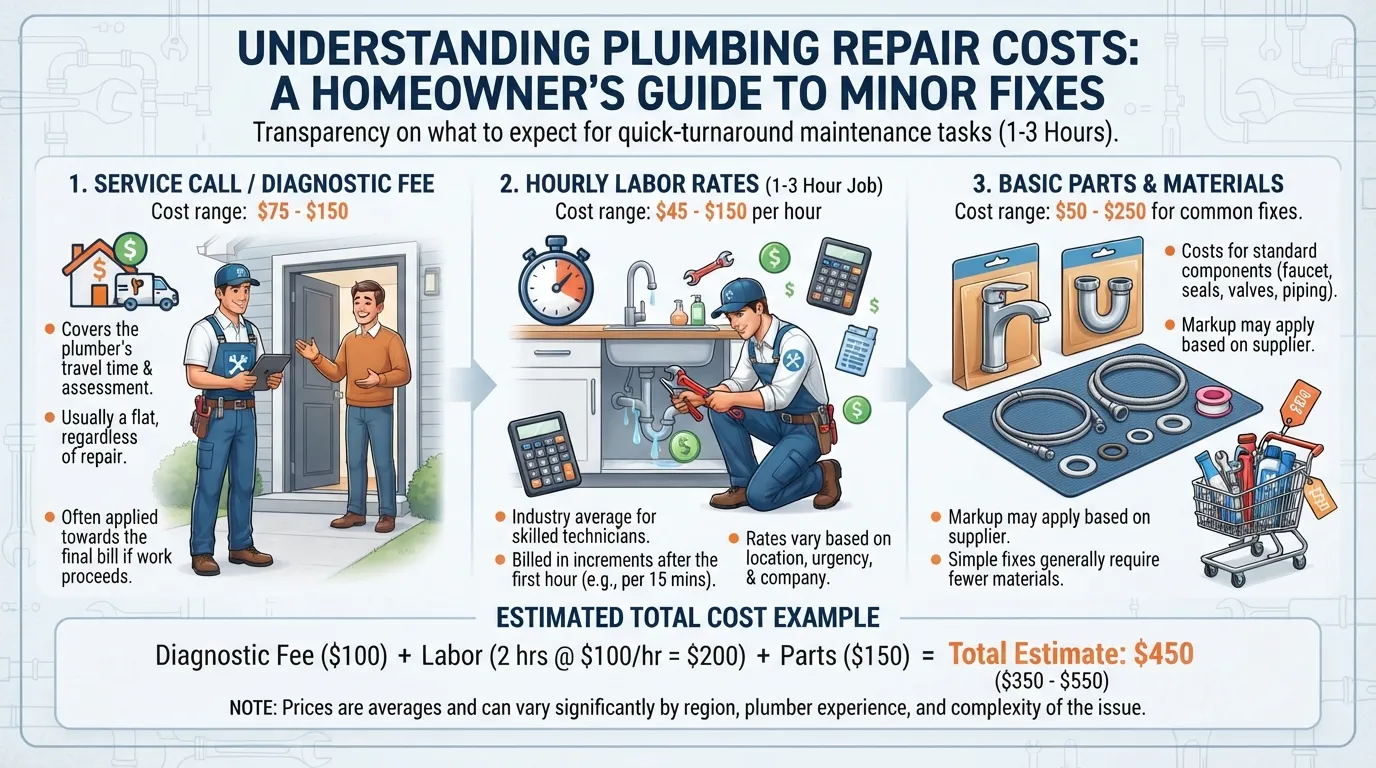 Minor plumbing repairs typically take between one to three hours and are usually billed either as a flat rate or at an hourly rate plus a standard service call fee. Review the detailed labor-versus-parts breakdowns, completion timelines, and cost drivers for the most common quick plumbing fixes below.
How Much Does Drain Clearing Cost?
Clearing a clogged residential drain generally costs between $100 and $350, with a national average of $210, taking roughly 1 to 2 hours to complete. Standard mechanical snaking sits at the lower end, while intensive hydro jetting for grease or root blockages pushes toward the higher end.
- Labor vs. Parts Split: Labor accounts for approximately 85% to 90% of the total bill, as specialized machinery or augers are reused across multiple jobs.
- What Increases the Price: Severe main line blockages, stubborn tree root intrusion, and hard-to-access cleanout ports require advanced equipment and extended labor time.
- Real-Job Example: Clearing a hair-clogged bathroom sink using a small hand auger typically runs around $125 total for a 45-minute service visit.
How Much Does Toilet Repair Cost?
Professional toilet repairs range from $100 to $250, averaging around $175, and take between 1 and 3 hours depending on whether the entire mechanism or just a minor component needs replacement. Common fixes include swapping a worn flapper, replacing a faulty fill valve, or resetting a leaking toilet wax ring.
- Labor vs. Parts Split: A balanced 50/50 split for minor hardware, shifting to 70% labor if pulling and resetting a heavy ceramic toilet bowl.
- What Increases the Price: Rotted subflooring beneath the toilet flange, cracked porcelain tanks, or corroded shut-off valves that require complete replacement.
- Real-Job Example: Replacing a running toilet’s fill valve and flapper assembly usually costs roughly $150 including parts and 60 minutes of labor.
How Much Does It Cost to Fix a Leaking Pipe?
Fixing a minor leaking pipe typically costs between $150 and $400, averaging $275, with completion times ranging from 1 to 2 hours for accessible sections like exposed basement supply lines or under-sink P-traps. Concealed leaks behind walls require drywall cuts and significantly more labor.
- Labor vs. Parts Split: Approximately 80% labor and 20% materials, covering copper connectors, PVC segments, or flexible P-trap replacements.
- What Increases the Price: Inaccessible pipe locations inside finished drywall, structural concrete slabs, or aged galvanized steel piping that crumbles upon contact.
- Real-Job Example: Repairing a leaking plastic P-trap and supply line underneath a kitchen sink generally runs about $200 for parts and labor.
Faucet and Fixture Installation Cost
Installing a new kitchen or bathroom faucet costs between $150 and $535, with an average price tag of $340, taking roughly 1 to 2 hours of labor. This total usually assumes you have already purchased the physical fixture and the plumber is providing professional installation and connection.
- Labor vs. Parts Split: 90% labor and 10% incidental materials like plumber’s putty, PTFE tape, or new flexible water supply lines.
- What Increases the Price: Rusted, seized mounting nuts on antique sinks, difficult tight-space configurations, or conversion from 3-hole to single-hole setups.
- Real-Job Example: Replacing a standard single-handle bathroom sink faucet with homeowner-supplied hardware averages around $220 in professional labor.
Garbage Disposal Installation Cost
Replacing or installing a new garbage disposal ranges from $200 to $450, averaging $325, and generally takes 1 to 2 hours. The unit’s horsepower rating, mounting assembly compatibility, and electrical connection requirements dictate where the final cost lands.
- Labor vs. Parts Split: Roughly a 50/50 split when the plumber supplies a mid-range 1/2 HP or 3/4 HP continuous-feed disposal unit.
- What Increases the Price: Lack of an existing under-sink electrical outlet requiring a certified electrician, or old mounting flanges that demand complete sink strainer basket replacement.
- Real-Job Example: Swapping out a burned-out 1/3 HP disposal for a new unit using existing mounts takes about 90 minutes and totals $275.
Large Plumbing Projects: What They Really Cost
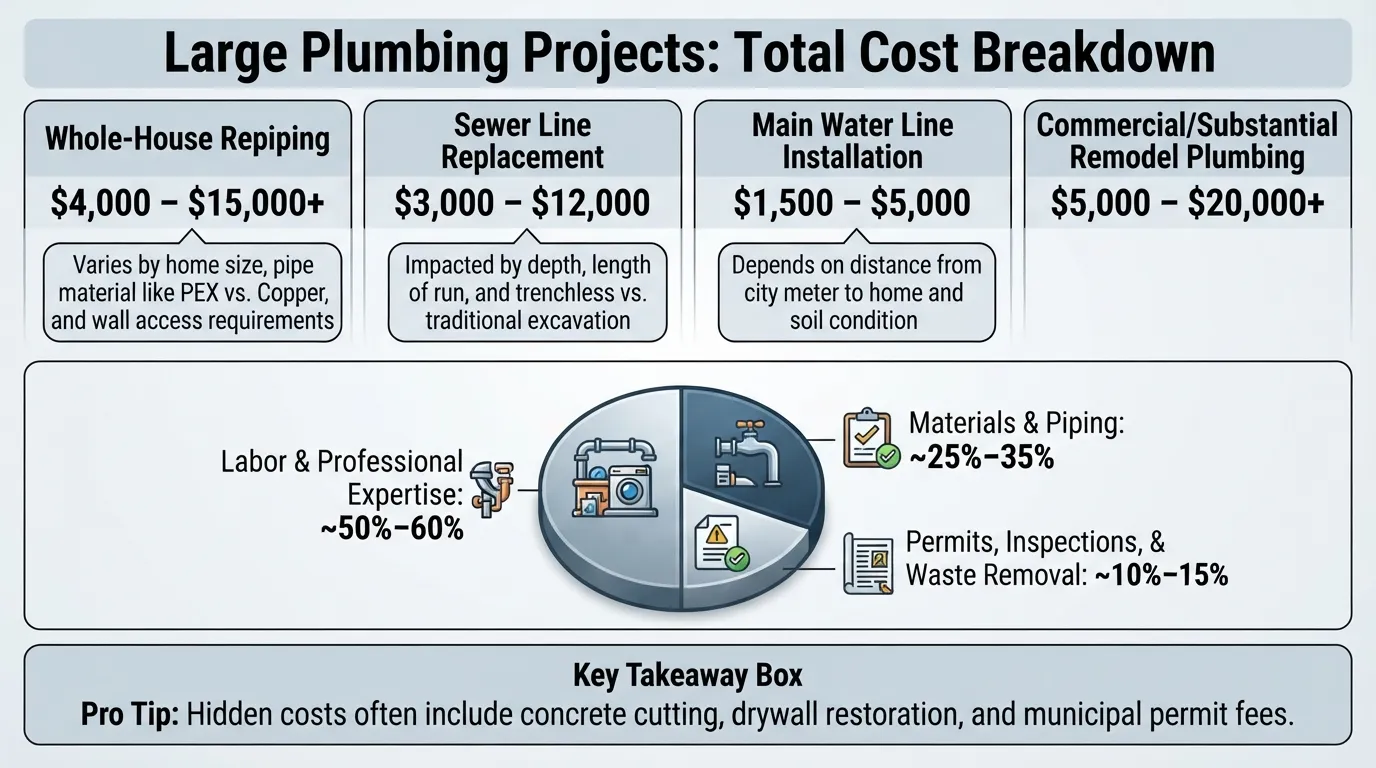 Major plumbing overhauls require significant financial investment, extensive labor, and specialized equipment. Because project scopes vary wildly based on home layout and infrastructure age, understanding the exact cost drivers helps you evaluate contractor estimates realistically.
Water Heater: Repair vs. Replacement Cost
Repairing a water heater typically costs between $145 and $690, while a complete replacement ranges from $790 to $2,070 for standard tank models, and $1,500 to $3,500+ for high-efficiency tankless systems. Installation takes anywhere from 3 to 6 hours.
- Why the range is so wide: Upgrading from an electric tank to a gas tankless system often requires retrofitting gas lines, electrical venting, and heavy-duty wall mounts, which can triple the baseline labor cost.
- Labor vs. Parts Split: Repairs skew heavily toward parts (heating elements, thermostats), whereas full replacements reflect a balanced 50/50 split between equipment cost and installation labor.
Main Water Line Repair or Replacement
Repairing a main water line ranges from $400 to $1,500, while a total replacement costs between $1,500 and $5,000 depending on the length of the run. This project typically spans 1 to 3 days from initial excavation to final backfilling.
- Why the range is so wide: The distance from your municipal meter to your home’s shut-off valve, combined with surface obstacles like concrete driveways or mature landscaping, dictates the amount of heavy digging required.
- Key Cost Factors: Trenching through soft soil is far cheaper than breaking through reinforced concrete or tunneling beneath permanent structures.
Sewer Line Replacement: Trenchless vs. Traditional
Replacing a damaged sewer line costs between $3,000 and $10,000, with an average of $6,500, over a 2 to 5 day timeline. Trenchless pipe bursting or relining sits at the higher end of equipment costs but saves thousands in property restoration.
- Why the range is so wide: Traditional open-trench excavation requires hiring landscapers or paving crews to rebuild destroyed lawns and driveways afterwards, whereas trenchless methods preserve your yard surface.
- Diagnostic Requirement: A professional sewer camera inspection ($250 to $500) is mandatory beforehand to locate root intrusions, bellied pipes, or collapsed segments accurately.
- Why the range is so wide: Material choice dictates the baseline (flexible PEX piping is significantly cheaper and faster to install than rigid copper pipes) and multi-story homes require extensive drywall cutting.
- Square Footage Impact: Small single-story ranch homes fall on the low end ($4,000–$6,000), while large two-story properties with multiple bathrooms push past $12,000.
Permits Inspections and Warranty Costs
Major plumbing interventions—such as water heater replacements, sewer line upgrades, and whole-home repiping—frequently require local municipal building permits and subsequent official inspections, adding $50 to $300 in administrative fees.
- Why the range is so wide: Municipal permit fees vary drastically by city and county, and some comprehensive commercial-grade permits require engineered drawings.
- Warranty Value: Reputable contractors include workmanship warranties (typically 1 to 5 years) and manufacturer guarantees on parts, protecting your investment against premature installation failure.
Emergency and After-Hours Plumbing Costs
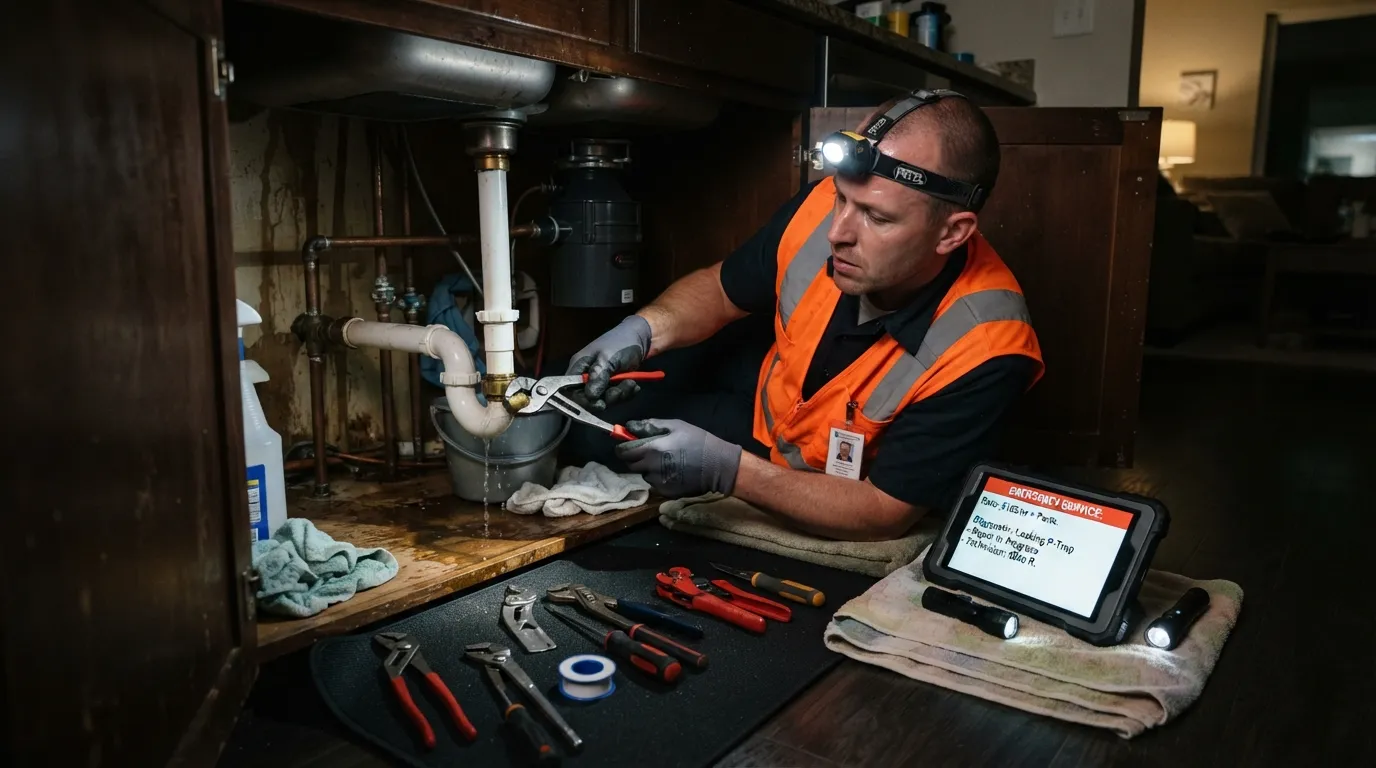 Calling an emergency plumber outside of standard business hours—such as late at night, on weekends, or during national holidays—incurs premium labor multipliers and increased dispatch fees. Understanding these urgent pricing structures helps you decide whether an issue requires immediate intervention or can safely wait until morning.
How Much Extra Do Plumbers Charge at Night and on Weekends?
After-hours and weekend emergency plumbing rates typically range from $150 to $350+ per hour, reflecting a 1.5x to 3x multiplier over standard weekday labor rates. Companies charge premium pricing to compensate technicians for disrupted schedules and to cover immediate emergency mobilization costs.
- Holiday Surcharges: Emergency calls placed on major holidays (like Thanksgiving or Christmas) command the highest labor multipliers in the industry.
- Immediate Dispatch: Technicians are pulled from on-call rotations, resulting in higher minimum hour requirements.
Emergency Service Call Fees
An emergency dispatch or service call fee generally runs between $150 and $350+, which is significantly higher than the standard $75 to $150 daytime fee. This upfront cost covers the immediate deployment of a service van and technician outside normal operating hours.
- Often billed as a flat non-refundable fee before diagnostic work or emergency mitigation begins.
- Rarely credited back toward the repair bill in after-hours scenarios due to the premium nature of emergency dispatching.
Urgent Leak Repair and Emergency Drain Clearing Costs
Fixing a catastrophic issue like a burst pipe or an overflowing main sewer line during an emergency call-out costs between $300 and $1,200+ depending on the severity of water damage mitigation required. Emergency drain clearing for backed-up main lines at midnight usually starts around $250 to $500.
- Burst Pipes: Requires immediate isolation, section replacement, and sometimes emergency water extraction assistance.
- Sewer Backups: Demands heavy-duty snaking or hydro jetting to prevent hazardous wastewater from flooding living areas.
True Emergency or Can It Wait Until Morning?
Knowing how to triage plumbing failures prevents unnecessary emergency expenditure. Review the operational checklist below to determine if your situation requires an immediate callout or can wait for regular business hours.
- True Emergency (Call Now): Main water line breaks, active flooding, sewage backing up into tubs/sinks, or a completely frozen and cracking supply pipe.
- Can Wait Until Morning: A single dripping faucet, a slow-running bathroom sink, a continuously running toilet that can be shut off via the wall valve, or a malfunctioning water heater with lukewarm water.
How to Avoid Emergency Rates
Mitigating the risk of after-hours pricing comes down to proactive home maintenance and knowing the vital components of your plumbing system before a disaster strikes.
- Locate Your Main Shut-Off Valve: Knowing how to instantly turn off the main water supply limits catastrophic water damage while you wait for a standard daytime appointment.
- Schedule Routine Inspections: Catching aging water heaters or root-invaded sewer lines during regular weekday hours prevents sudden midnight failures.
What Affects the Cost of a Plumbing Job?
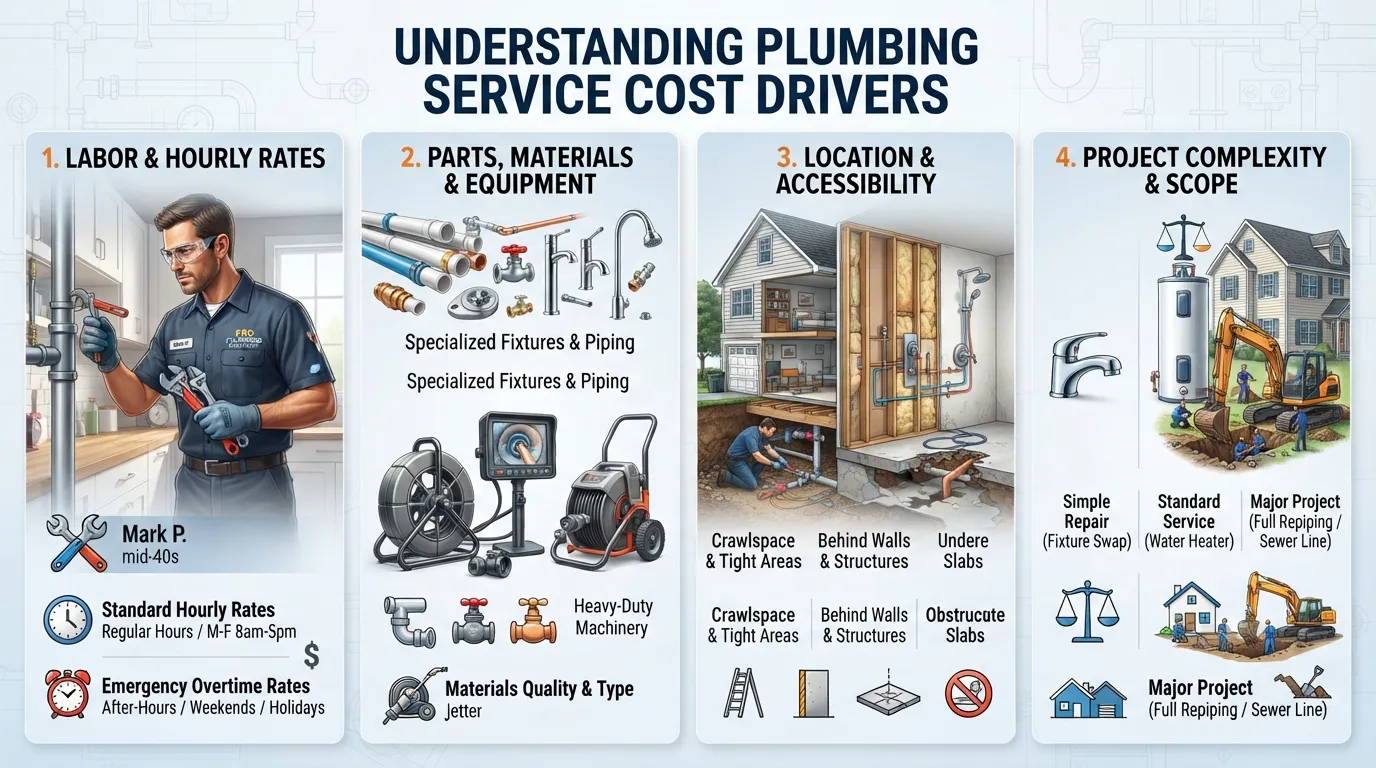 Plumbing estimates can vary dramatically from house to house, even for the exact same repair. Moving beyond vague generalizations, understanding the specific technical, logistical, and structural drivers behind plumbing pricing ensures you can evaluate contractor quotes with complete confidence.
Job Complexity and Accessibility
The physical location of a pipe or fixture heavily influences total labor time. A leaky joint exposed in an open basement ceiling takes minutes to fix, whereas that exact same leak hidden beneath a concrete foundation slab or tucked inside a cramped crawlspace requires intensive excavation or drywall demolition.
- Slab Leaks: Breaking through concrete and tunneling underground demands specialized heavy machinery and days of labor.
- Crawlspaces and Attics: Restricted movement and difficult working angles increase physical strain and extend repair times.
Materials and Fixture Quality
The physical components selected for your repair or installation dictate baseline hardware costs. Standard PVC drain pipes and economical brass fixtures keep budgets low, while high-end designer faucets, touchless smart valves, or rigid copper pipe networks elevate material expenses.
- Fixture Grade: Big-box store components are priced differently than luxury commercial-grade architectural fixtures.
- Pipe Material: Upgrading from outdated galvanized steel to modern cross-linked polyethylene (PEX) or copper impacts both material costs and labor time.
Pipe Age and Home Condition
Older homes with aging infrastructure present unpredictable challenges. When a plumber touches brittle cast iron drains, corroded galvanized supply lines, or degraded polybutylene piping, adjacent fittings frequently crumble, turning a simple repair into a much larger restoration project.
- Fragile Infrastructure: Historic homes require delicate hand-working rather than modern high-speed power tools.
- Code Upgrades: Modernizing old connections often triggers mandatory code compliance updates for surrounding valves and venting.
Time of Day and Urgency
When you schedule service drastically impacts the bottom line. Routine weekday appointments leverage standard hourly rates, while emergency calls placed during nights, weekends, or statutory holidays activate premium labor multipliers and increased dispatch fees.
- Standard Hours: Most cost-effective window for non-urgent upgrades and scheduled maintenance.
- After-Hours Dispatch: Commands a 1.5x to 3x labor multiplier to cover urgent mobilization and on-call technician disruption.
Licensed Plumber vs. Handyman
While hiring an unbonded handyman for minor plumbing tasks may appear cheaper upfront, it frequently backfires. Licensed master and journeyman plumbers invest years in rigorous apprenticeships, ensuring code compliance, proper torque specifications, and liability protection.
- Licensing Assurance: Certified plumbers protect your property warranty and adhere strictly to municipal plumbing codes.
- Liability Protection: Professional plumbing contractors carry comprehensive liability insurance to cover accidental water damage.
Permits and Local Code Requirements
Major municipal overhauls—such as water heater replacements, sewer line installations, or whole-home repiping—frequently require official local permits and subsequent code inspections, adding modest administrative fees to your project total.
- Regulatory Compliance: Ensures your home remains legal and fully insurable for future real estate resale transactions.
- Inspection Fees: Vary by municipality but safeguard the structural integrity of your plumbing system.
Why Are Plumbers So Expensive?
Homeowners often experience sticker shock when reviewing plumbing invoices, but professional pricing reflects substantial business overhead necessary to deliver safe, reliable trade services.
- Licensing and Insurance: Premium commercial liability insurance and state licensing fees protect homeowners against catastrophic property damage.
- Vehicle and Tooling: Fully stocked service vans carry thousands of dollars in diagnostic cameras, hydro jetters, and specialized pressing tools.
- Non-Billable Travel: Technicians spend significant unbilled time driving between dispersed service calls, sourcing specialized parts, and managing disposal fees.
Plumbing Costs by Location
Geographical location is one of the most powerful determinants of plumbing repair and installation costs. Labor markets, local cost of living indices, municipal permitting fees, and regional climate challenges create significant price variations between major metropolitan hubs and rural communities.
Why Prices Differ by City and State
Plumbing service rates scale directly with the local economy and overhead expenses. Densely populated urban centers with high costs of living—such as San Francisco, New York, or Los Angeles—feature elevated hourly rates to offset steep commercial rent, fuel prices, and wages.
- Labor Market Demand: High-growth regions face severe skilled trades shortages, driving up contractor bidding power.
- Climate Factors: Northern states require frost-protection measures and specialized pipe insulation, whereas southern regions deal with corrosive mineral-heavy water or shifting clay soils.
Regional Cost Comparison Table
The comparative overview below outlines how standard residential plumbing labor rates and service call fees fluctuate across different regional markets within the United States.
How to Get a Local Price Range
To establish an accurate baseline for your specific neighborhood rather than relying solely on national averages, take a targeted local approach before booking a service technician.
- Get Multiple Local Quotes: Solicit written estimates from at least three licensed contractors operating specifically within your zip code.
- Check Community Boards: Consult local neighborhood groups or regional homeowner forums to see what verified neighbors recently paid for similar repairs.
Plumbing Costs Outside the US
For international homeowners evaluating global benchmarks, professional plumbing rates scale similarly based on local trade wages. In the United Kingdom, certified plumbers typically charge between 40 to 80 GBP per hour. In Australia, standard hourly rates range from 90 to 150 AUD, while Singapore residential plumbing service call-outs and minor repairs average 50 to 120 SGD depending on urgency.
Is Your Plumbing Quote Fair? How to Check
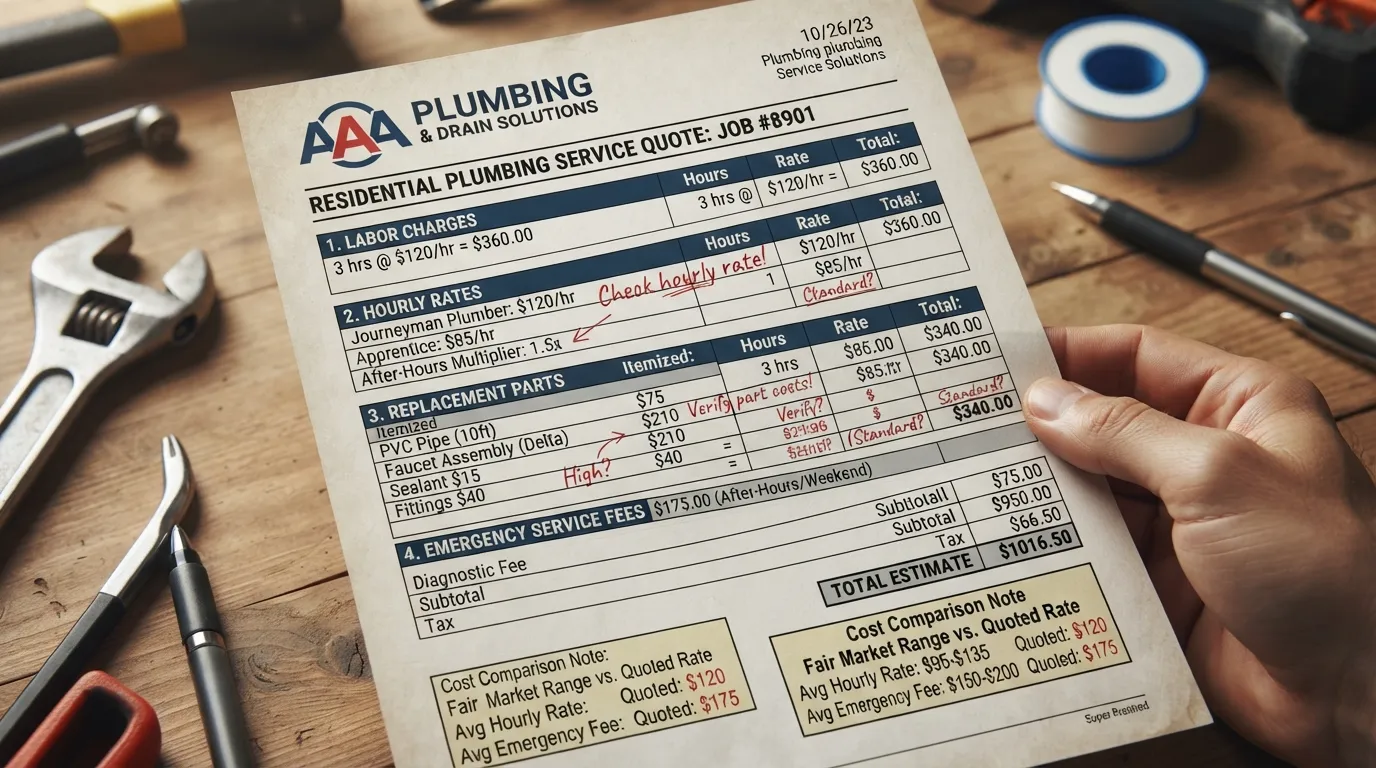 Receiving a plumbing estimate can often leave homeowners wondering if the numbers are reasonable. Verifying a quote before signing a contract protects you from inflated labor fees, unitemized extra charges, and substandard workmanship.
How to Read a Plumbing Estimate
A professional plumbing estimate should never be a single lump-sum figure scrawled on a notepad. It must be broken down into clear, distinct cost categories so you know precisely what you are paying for.
- Clear Line Items: Separate itemization for diagnostic service fees, labor hours, and specific replacement parts or fixtures.
- Scope of Work: A detailed written description of the exact repairs, pipe materials, or installation procedures to be performed.
- Payment Terms: Clear milestones outlining deposit maximums, progress payments, and final payment schedules upon completion.
Quote Check: Compare Against the Price Table
Take your contractor’s written estimate and cross-reference the individual line items against national or regional benchmark averages. If a plumber quotes $800 to clear a standard residential drain that typically averages $210, request an immediate justification for the surcharge.
- Check Hourly vs. Flat Rate: Ensure the pricing model matches the type of work being performed (flat rate for clear swaps, hourly only for open-ended diagnostics).
- Evaluate Material Markups: Standard plumbing supply markups generally range from 10% to 20% over wholesale value; excessive parts pricing is a common sign of padding.
Red Flags of Overcharging
Protecting yourself from predatory contractors requires watching out for common warning signs during the initial bidding and consultation process.
- Vague or Missing Details: Quotes that state only “Plumbing Repairs” with a high lump-sum total and no breakdown.
- High-Pressure Tactics: Insisting you sign immediately on the spot under false claims that an minor issue is an catastrophic emergency.
- Cash-Only Demands: Requests to bypass checks, credit cards, or formal invoicing in exchange for a cash discount, which eliminates your financial paper trail.
- Unlicensed Operators: Contractors who cannot or will not provide a valid state license number or proof of active liability insurance.
Questions to Ask Before Hiring
Before authorizing any plumbing work to begin, ask your technician or company representative these four critical clarifying questions:
- Is the service call fee credited? Clarify whether the upfront dispatch fee is rolled into the final repair cost or billed separately.
- What warranty is included? Confirm the duration of both the contractor’s workmanship guarantee and the manufacturer’s parts warranty.
- What specific brand of parts are you installing? Ensure they use commercial-grade, code-compliant hardware rather than cheap, short-lived alternatives.
- What is the estimated timeline? Establish how long the water will need to be shut off and when the project will be fully completed.
How to Verify a Plumber’s License
Verifying that your contractor holds an active, clean license is the single most effective way to guarantee accountability. You can look up credentials directly through official regulatory portals, such as the California Contractors State License Board (CSLB) or your local state’s equivalent consumer protection agency, to check for active status, bonding, and past disciplinary actions.
Get 2 to 3 Quotes: How to Compare Them
Never rely on a single plumbing estimate for major projects exceeding $500. Solicit written quotes from at least three independent, licensed local contractors to establish a reliable market baseline.
- Compare Scope, Not Just Price: Ensure the lowest bid isn’t omitting critical steps like post-repair pressure testing or municipal permit fees.
- Weigh Communication and Professionalism: Punctuality, transparent explanations, and clear written communication are often direct indicators of overall service quality.
DIY vs. Hiring a Plumber: What Is Worth Doing Yourself?
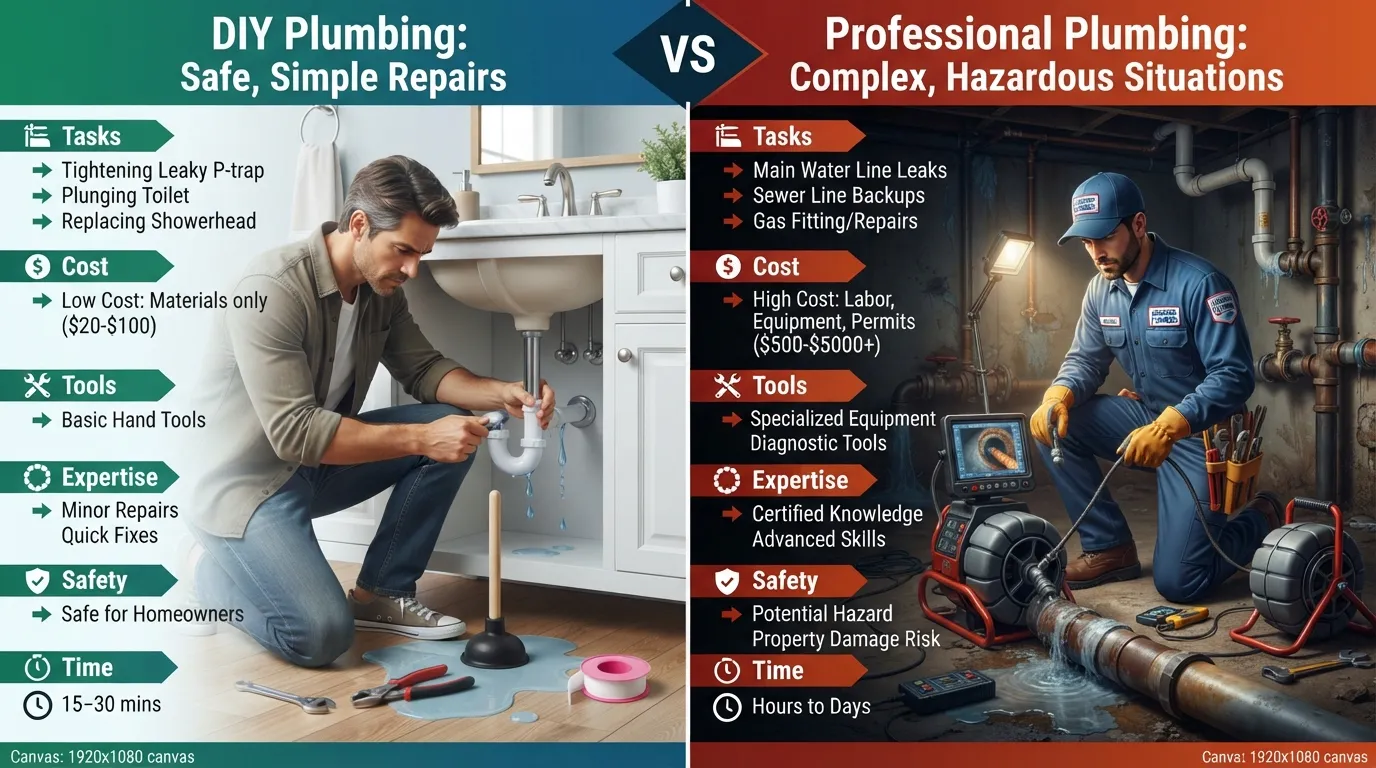 Tackling minor home maintenance tasks yourself can save hundreds of dollars in professional service fees. However, knowing your technical limitations is crucial, as botched plumbing repairs often cause catastrophic water damage that dwarfs initial professional costs.
Plumbing Jobs Safe for DIY
Simple preventative maintenance and basic cosmetic swaps require minimal tooling and carry very little risk of structural damage, making them ideal weekend projects for handy homeowners.
- Unclogging Toilets and Sinks: Using a standard flange plunger or a manual hand auger to clear minor hair and debris blockages.
- Replacing Toilet Flappers: Swapping out a worn rubber flapper to stop a running toilet tank in under 15 minutes.
- Cleaning Faucet Aerators: Unscrewing and soaking mineral-clogged aerator screens in vinegar to restore proper water flow.
- Swapping Showerheads: Replacing an old, low-flow showerhead with a new model using basic tongue-and-groove pliers and thread seal tape.
Jobs You Should Never DIY
Certain plumbing interventions involve high pressure, hazardous gas lines, or strict municipal building codes that demand certified professional expertise to avoid legal penalties and dangerous property damage.
- Gas Line Modifications: Installing or altering gas supply lines for stoves or water heaters carries extreme explosion and carbon monoxide risks.
- Water Heater Replacements: Handling 240-volt electrical connections, high-pressure relief valves, and heavy gas burners requires specialized training.
- Mainline Sewer and Water Repairs: Excavating underground utilities without proper permits can sever municipal feeds and incur severe fines.
- Permit-Required Projects: Any major structural repiping or bathroom addition that legally mandates municipal plan reviews and licensed sign-offs.
How Much Can You Save With DIY?
Taking on minor repairs yourself eliminates standard hourly labor charges ($75–$150/hr) and dispatch fees ($75–$150), leaving you responsible only for the retail cost of raw materials.
- Real-World Example: Replacing a leaking bathroom faucet cartridge yourself costs around $15 to $35 for the replacement part, saving you approximately $200 to $300 in professional labor and service call fees.
- Routine Upkeep: Regularly clearing P-traps and changing refrigerator water filters prevents emergency service calls entirely.
When DIY Goes Wrong: Cost of Fixing a Failed Repair
Attempting advanced plumbing repairs without proper experience frequently backfires, turning a simple $150 fix into an expensive emergency intervention.
- Hidden Water Damage: A cross-threaded fitting or unsealed pipe joint hidden inside a wall can slowly leak for weeks, rotting studs and generating thousands of dollars in mold remediation and drywall repair.
- Emergency Call-Out Surcharges: If a midnight DIY disaster causes a pipe to burst, you will be forced to pay premium after-hours emergency rates ($150–$350+/hr) for a licensed plumber to bail you out.
How to Save Money on Plumbing Costs
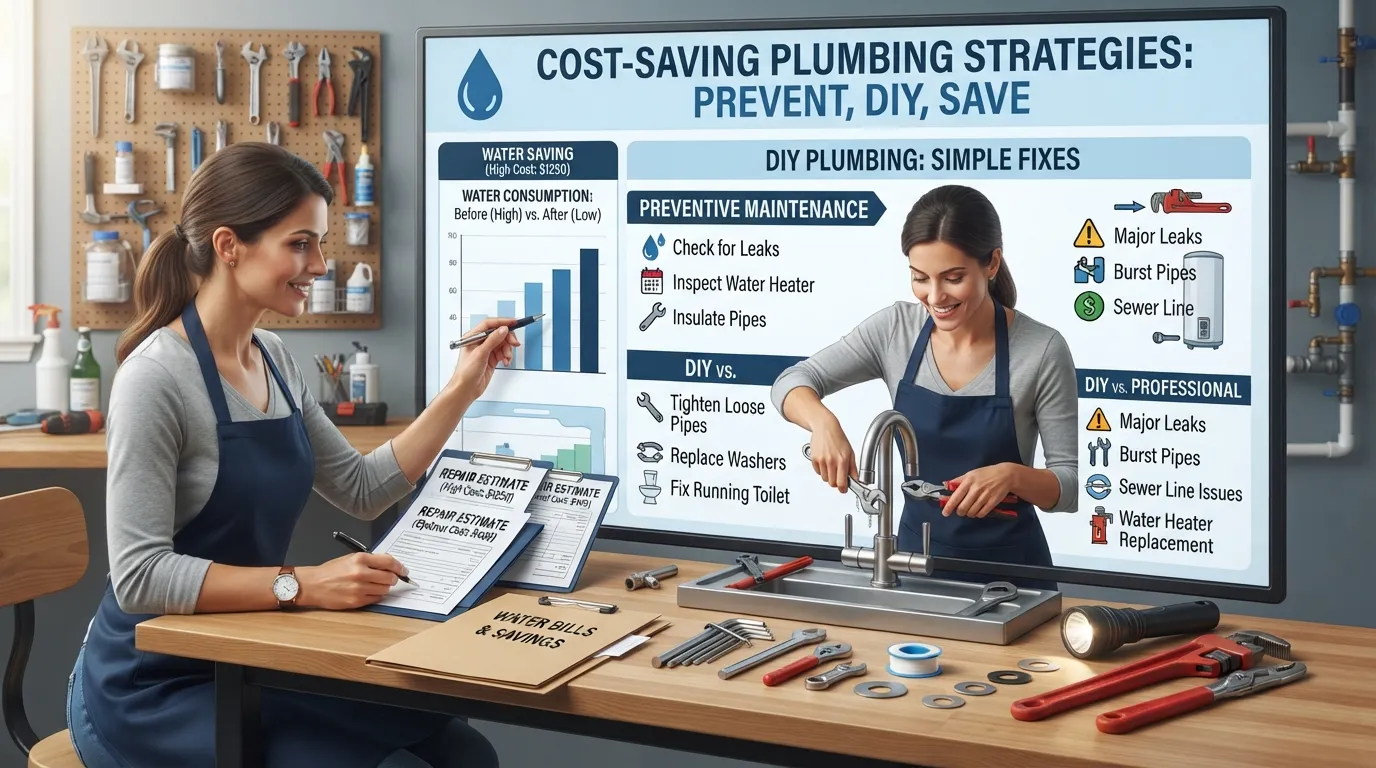 Professional plumbing services are an essential investment, but home maintenance expenses can quickly add up if you do not approach them strategically. Implementing smart scheduling habits, leveraging maintenance discounts, and catching minor issues early can save you hundreds of dollars on repair bills.
Bundle Multiple Repairs in One Visit
Most plumbing companies enforce a standard service call or dispatch fee just to show up at your home. If you call a plumber out solely to tighten a single dripping faucet, you pay that full travel and diagnostic fee for a five-minute fix.
- Make a consolidated household list of all minor quirks—such as a running toilet, a loose bathroom handle, and a slow-draining utility sink—before booking an appointment.
- Bundling these tasks into a single scheduled service visit spreads the fixed dispatch cost across multiple repairs, maximizing your overall value.
Schedule During Regular Hours
Never call a plumber for a non-urgent repair outside of normal business hours unless it is an absolute flooding emergency. After-hours, weekend, and holiday call-outs trigger steep labor multipliers ranging from 1.5x to 3x standard rates.
- Reserve weekend and evening calls strictly for catastrophic failures like burst supply pipes or major sewage backups.
- Wait for regular weekday operating hours to schedule routine installations, non-leaking fixture swaps, and general inspections.
Ask for a Service Fee Credit Toward the Repair
When you contact a plumbing contractor to schedule service, always inquire about their dispatch fee policy upfront. Many reputable companies waive or credit the initial service call fee directly toward the labor cost if you hire them to complete the repair.
- Clarify this policy before the technician arrives so you can negotiate or choose a company that credits diagnostic fees.
- Avoid contractors who treat dispatch fees as pure profit without offering any credit toward authorized repair work.
Preventive Maintenance
Proactive care prevents catastrophic plumbing failures that command expensive emergency interventions. Simple yearly habits extend the operational lifespan of your home’s most critical water systems.
- Annual Water Heater Flush: Flushing sediment and mineral buildup from your tank once a year improves heating efficiency and prevents premature tank failure.
- Drain Care: Avoid pouring grease down kitchen disposals and use monthly hot water flushes with baking soda and vinegar to keep secondary drain lines clear.
Warning Signs to Fix Early
Ignoring minor plumbing anomalies is the fastest way to turn a cheap, 30-minute fix into a multi-thousand-dollar structural disaster. Pay close attention to subtle red flags around your home.
- Unexplained Water Bill Spikes: A sudden increase in your municipal water bill often points to a hidden slab leak or running toilet.
- Musty Odors or Damp Drywall: Early detection of slow pipe leaks prevents rampant mold growth and rotting framing timbers.
Plumbing Job Cost Calculator and Free Price List
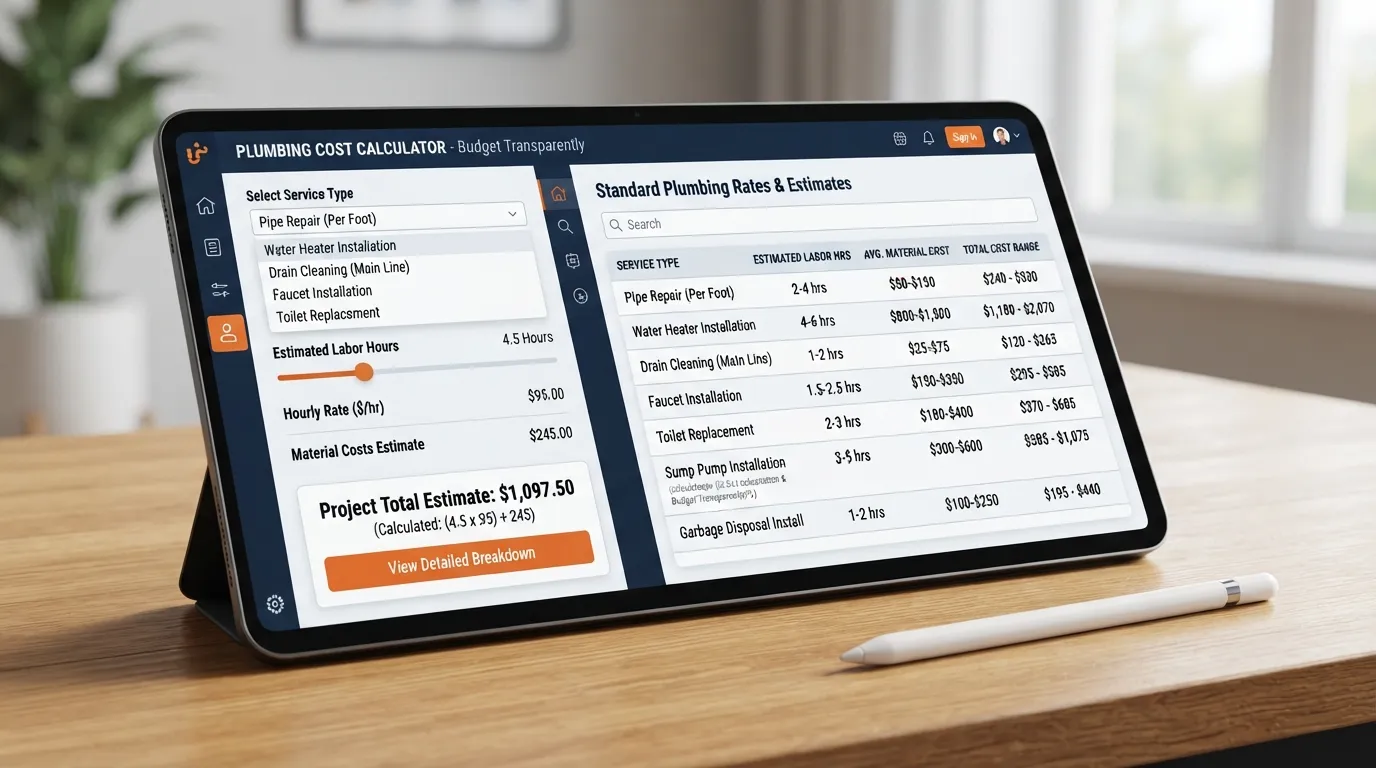 Calculating an accurate estimate for your home plumbing project requires factoring in labor rates, parts quality, geographic location, and project urgency. Use our interactive estimation framework and downloadable reference guides below to project your expenses precisely.
Estimate Your Plumbing Job Cost
Use the interactive calculation tool below to estimate your total plumbing project investment based on specific labor hours, regional adjustments, and emergency service requirements
Download the Plumbing Price List PDF
Keep our comprehensive, offline-ready plumbing cost estimator guide handy for your contractor negotiations and household binder planning.
- Includes full line-item breakdowns for fixtures, pipe replacement, and seasonal maintenance.
- Formatted cleanly for rapid printing or digital tablet viewing.
- Directly updated to reflect current 2026 home service industry benchmarks.
How the Calculator Estimates
Our plumbing cost estimator utilizes aggregated contractor survey data, regional labor index coefficients, and standard material markup formulas to generate reliable baseline figures.
- Data Transparency: Calculations reflect actual contractor invoicing trends across residential repair markets.
- Variable Adjustments: Estimates incorporate baseline service call fees, standard parts costs, and localized labor multipliers.
How Much Do Plumbers Earn?
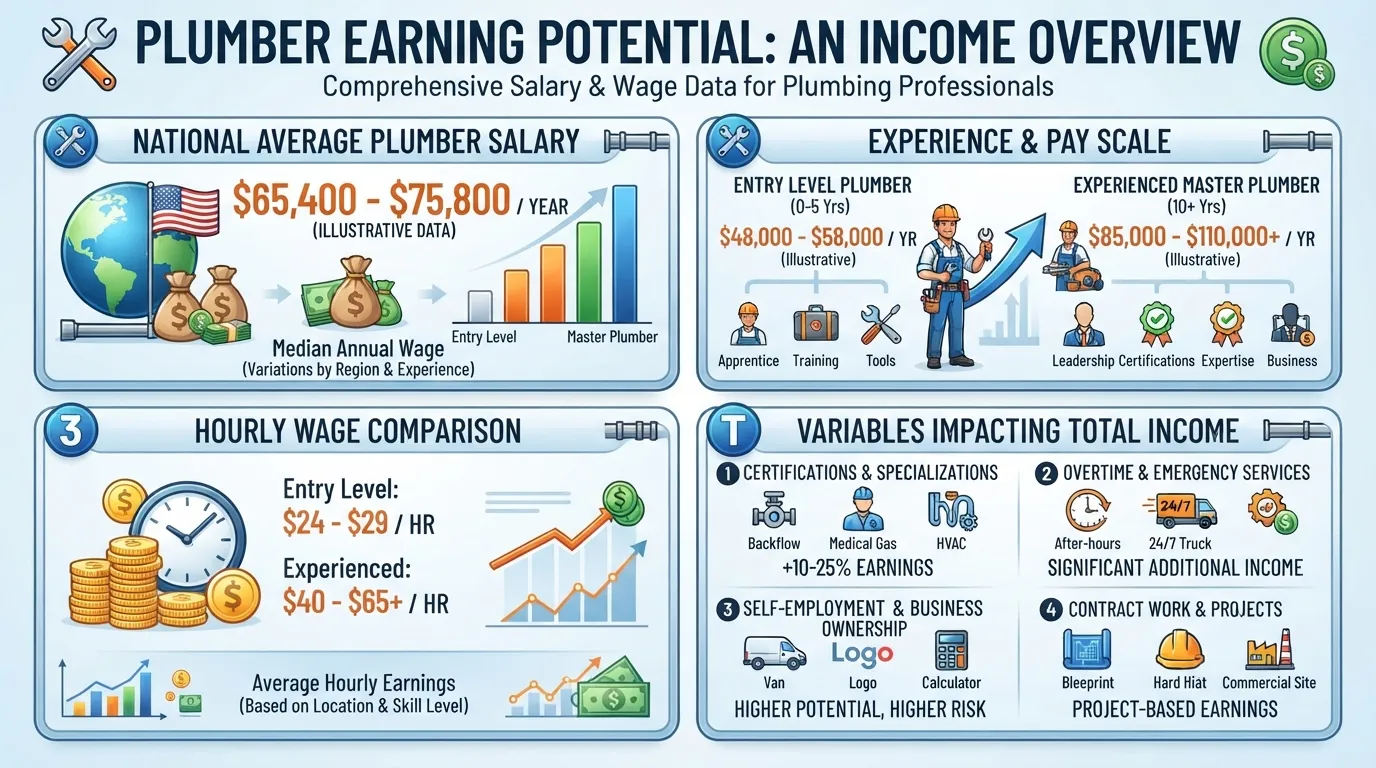 While homeowners often experience sticker shock when reviewing hourly plumbing rates between $75 and $150+, those figures do not represent the individual technician’s take-home pay. Professional plumbing compensation is balanced against significant operational expenses and business overhead.
Do High Hourly Rates Mean Plumbers Earn That Much?
Hourly billing rates cover far more than just a technician’s wages. A large portion of every service charge goes toward business overhead, commercial vehicle maintenance, specialized diagnostic tools, liability insurance, and non-billable driving time between dispersed job sites.
- Technicians earn a competitive hourly wage or commission, but company overhead absorbs the remainder of the hourly fee.
- Unbilled travel time, fuel costs, and continuous safety training reduce net profit margins for plumbing contractors.
Which Plumbing Specialties Pay the Most?
Master plumbers, commercial plumbing specialists, and certified backflow or medical gas installers consistently command the highest salaries in the trade. Specialized certifications and extensive apprenticeships allow these professionals to manage complex infrastructure projects that standard residential technicians cannot touch.
FAQs
Find direct, expert answers to the most frequently asked questions about residential plumbing costs, service call fees, and contractor pricing models.
How much does a plumber charge per hour?
Professional residential plumbers typically charge between $75 and $150 per hour for standard labor, while master plumbers or specialized technicians can command $100 to $200+ per hour. Total hourly costs depend on your geographical region, project complexity, and whether the work is scheduled during normal weekday business hours.
Is it normal to pay a plumber just to come to my house?
Yes, paying a service call or dispatch fee ranging from $75 to $150 is standard practice across the home services industry. This upfront charge covers technician travel time, vehicle operation, and initial diagnostic troubleshooting, and many reputable companies will credit this fee directly toward your repair bill.
How much does a plumber charge to fix a leaking pipe?
Fixing a minor, accessible leaking pipe typically costs between $150 and $400, averaging around $275 for 1 to 2 hours of labor. However, concealed leaks located behind finished drywall, beneath concrete slabs, or within aged galvanized piping require extensive demolition and will significantly increase total project costs.
Do plumbers charge more at night or on weekends?
Yes, after-hours, weekend, and holiday emergency plumbing calls incur premium labor multipliers ranging from 1.5x to 3x standard weekday rates. Emergency hourly labor typically jumps to $150 to $350+ per hour, accompanied by increased emergency dispatch fees to compensate technicians for disrupted schedules.
How much does a plumber charge for common repairs?
Common residential plumbing repairs generally range from $100 to $450 depending on the fixture. Clearing a standard clogged drain averages $210, repairing a running toilet costs around $175, installing a new kitchen faucet averages $340, and replacing a garbage disposal typically runs about $325.
How much does a plumber charge for a travel fee?
Standard travel or dispatch fees generally range from $75 to $150, which covers basic transportation within a company’s local service radius. Additional travel surcharges may apply if you reside in a remote rural area far outside the contractor’s standard metropolitan coverage zone.
How do you price a plumbing job?
Plumbers price jobs using hourly rates for exploratory diagnostics, flat-rate pricing for straightforward, predictable installations, or time-and-materials billing for custom renovation projects. Contractors calculate these figures by factoring in estimated labor time, material costs, local overhead, and business insurance.
Why are plumbers so expensive?
Professional plumbing rates reflect substantial business overhead necessary to deliver safe, licensed trade work. High hourly charges cover comprehensive liability insurance, state licensing fees, thousands of dollars in specialized diagnostic tooling and vehicle maintenance, and non-billable travel time between dispersed job sites.
How much does a licensed plumbing contractor charge for a service call?
A licensed plumbing contractor typically charges a service call or dispatch fee between $75 and $150 during regular business hours, increasing to $150 to $350+ for urgent after-hours dispatches. This fee covers the initial travel and diagnostic assessment required to evaluate your home’s plumbing issue.

Oscar Vance | Master Plumber & Drainage Expert
Meet Oscar Vance, a licensed master plumber sharing practical solutions on residential repairs, preventive maintenance, and thoughtful home upkeep.