Why Were Copper Pipes Replaced in Plumbing?
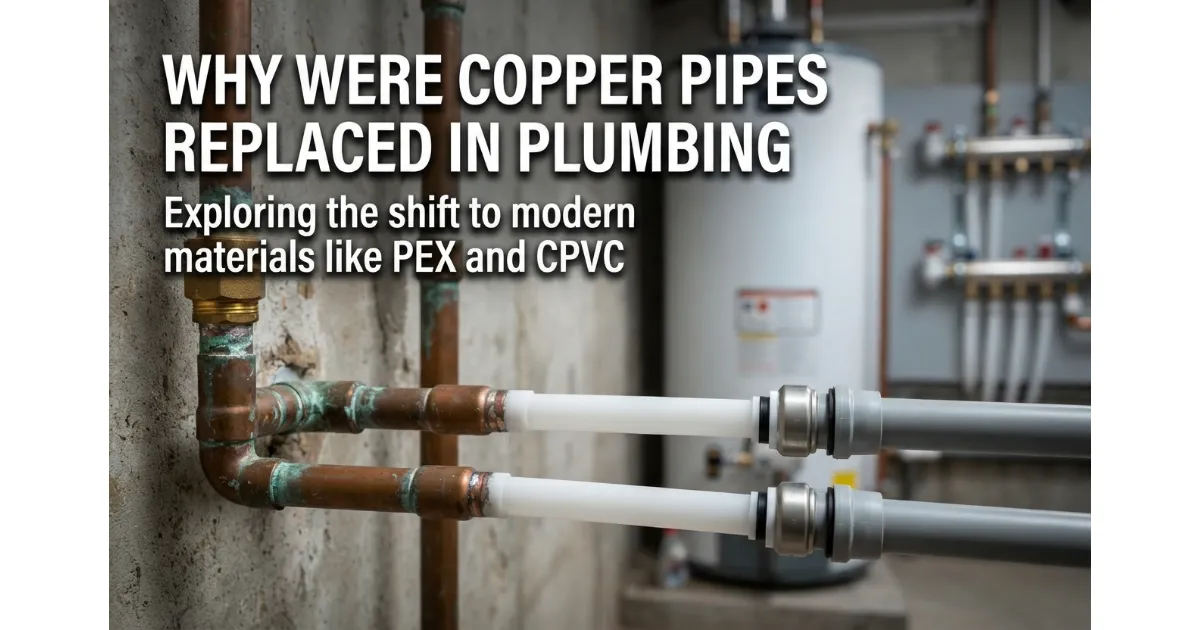 Copper pipes have not been entirely abandoned in modern plumbing, but alternatives like PEX and CPVC have largely taken over due to lower material costs, rapid installation without soldering, superior flexibility, and better tolerance against freezing. However, copper remains prized for structural durability, though aggressive water chemistry can cause corrosion and pinhole leaks over time.
Key Drivers Behind Material Shifts
- Cost-Effectiveness: PEX and PVC significantly reduce both material acquisition and labor expenses during extensive repiping projects.
- Installation Speed: Eliminating the need for complex open-flame soldering drastically cuts down project completion times.
- Flexibility: PEX bends smoothly around structural obstacles, minimizing the requirement for extra fittings and joints.
- Freeze Resistance: PEX expands dynamically under freezing temperatures, reducing the likelihood of pipe bursts compared to rigid copper.
- Corrosion Resistance: Plastic alternatives resist chemical breakdown from acidic or aggressive water conditions that typically trigger pinhole leaks in copper.
How Plumbing Pipes Changed Over Time
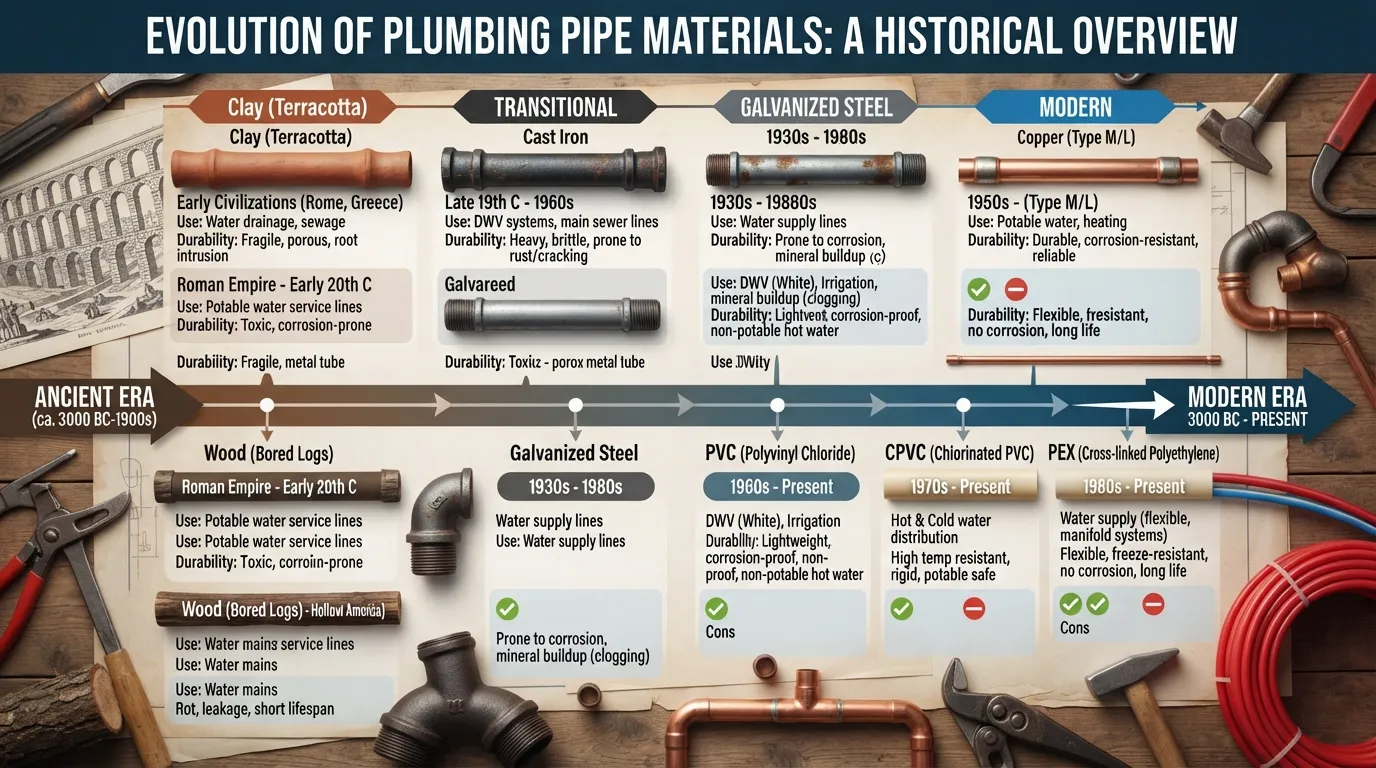 Residential plumbing infrastructure has evolved drastically over the past century to improve water safety, durability, and cost efficiency. Different materials dominated specific decades before giving way to more advanced synthetic alternatives.
- Late 1800s to 1930s: Lead pipes were widely deployed for service lines and interior plumbing before toxicity risks became widely known.
- 1930s to 1960s: Galvanized steel became the standard for residential water distribution, though prone to internal rust accumulation.
- 1960s to 1990s: Copper tubing emerged as the elite industry standard for its longevity, heat tolerance, and reliability.
- 1970s to 1990s: Early plastics like polybutylene and CPVC entered the market, paving the way for flexible alternatives.
- Late 1990s to Present: PEX (cross-linked polyethylene) gained sweeping code approvals and revolutionized modern installations.
Why Copper Became the Standard in the Mid-20th Century
Copper naturally superseded galvanized steel because it offered superior resistance to interior scaling, blockages, and structural rust. It withstood high water pressure, handled hot water distribution effortlessly, and proved structurally reliable for decades. Furthermore, copper was fully recyclable, making it an attractive, eco-friendly metal for builders during post-war housing booms.
What Year Did Houses Stop Using Copper Pipes?
There is no single calendar year when houses universally stopped using copper plumbing. Instead, the shift away from copper has been a gradual transition driven by regional building codes and material economics. While custom and high-end residential builders still utilize copper for specific lines, mainstream residential construction largely pivoted toward PEX throughout the 2000s due to labor savings and installation flexibility.
Why Did Aluminum and Galvanized Pipes Fail Earlier Than Copper?
While aluminum was occasionally experimented with or utilized in specialized industrial components, residential piping relied primarily on galvanized steel rather than structural aluminum. Galvanized pipes failed prematurely because mineral deposits and rust progressively choked the interior diameter over decades, drastically reducing water pressure and eventually leaking at threaded joints.
When Did They Stop Using Lead Solder on Copper Joints?
The transition away from toxic components in copper systems reached a major milestone when the U.S. Congress amended the Safe Drinking Water Act in 1986. This federal action officially prohibited the use of lead-based solders and flux containing more than 0.2% lead in public water systems and residential plumbing infrastructure, forcing contractors to adopt safe, lead-free alternative joining alloys.
Reasons Plastic Pipes Took Over
Copper is a globally traded commodity whose pricing is subject to sharp market volatility, tariffs, and inflation. In contrast, synthetic polymers like PEX and PVC are far cheaper to manufacture at scale, significantly lowering overall material expenses for residential construction and remodeling.
2. Faster, Easier Installation
Traditional copper piping requires meticulous open-flame torch soldering (sweating) or expensive press fittings for every single joint. PEX tubing uses modern crimp rings, expansion rings, or push-fit connectors, allowing contractors to complete entire installations in a fraction of the time and with lower labor overhead.
3. Flexibility and Fewer Fittings
Rigid copper mandates a multitude of 45-degree and 90-degree elbows, couplings, and joints to navigate through building framing. PEX bends effortlessly around studs and obstacles, drastically reducing the number of subterranean and in-wall joints where leaks traditionally originate.
4. Freeze Resistance
Rigid copper pipes have zero structural elasticity; when water freezes inside them, the ice expansion causes the metal to split or burst. PEX possesses natural expansion memory, meaning it can stretch and accommodate freezing water before contracting back safely as the ice thaws.
5. Corrosion and Water Chemistry Problems
Aggressive water chemistry—such as highly acidic or mineral-heavy water—causes internal scaling and pinhole leaks in copper over time. Plastic pipes are chemically inert to these aggressive water profiles, preventing the electrochemical breakdown that plagues metallic systems.
6. Copper Theft and Price Volatility
Vacant properties, remodeling sites, and open construction frames are frequent targets for copper theft due to the high scrap value of the metal. Plastic pipes possess virtually no secondary resale scrap value, completely eliminating this costly job-site liability.
7. Plumbing Code Approvals Opened the Door
Early model building codes initially restricted plastic alternatives, but updates to national and international plumbing standards in the late 20th century officially approved PEX and CPVC. Once code compliance was achieved, mainstream builders rapidly transitioned to plastic systems to optimize profit margins.
What Plumbers Say: Real-World Notes
Experienced residential plumbers note that installation speed and flexibility are the ultimate deciding factors on modern job sites. While master plumbers still respect copper for its longevity and UV resistance, the ability to snake a continuous run of PEX through tight attic and crawlspace framing without torches has fundamentally transformed residential contracting.
Copper vs PEX vs CPVC vs PVC: Full Comparison
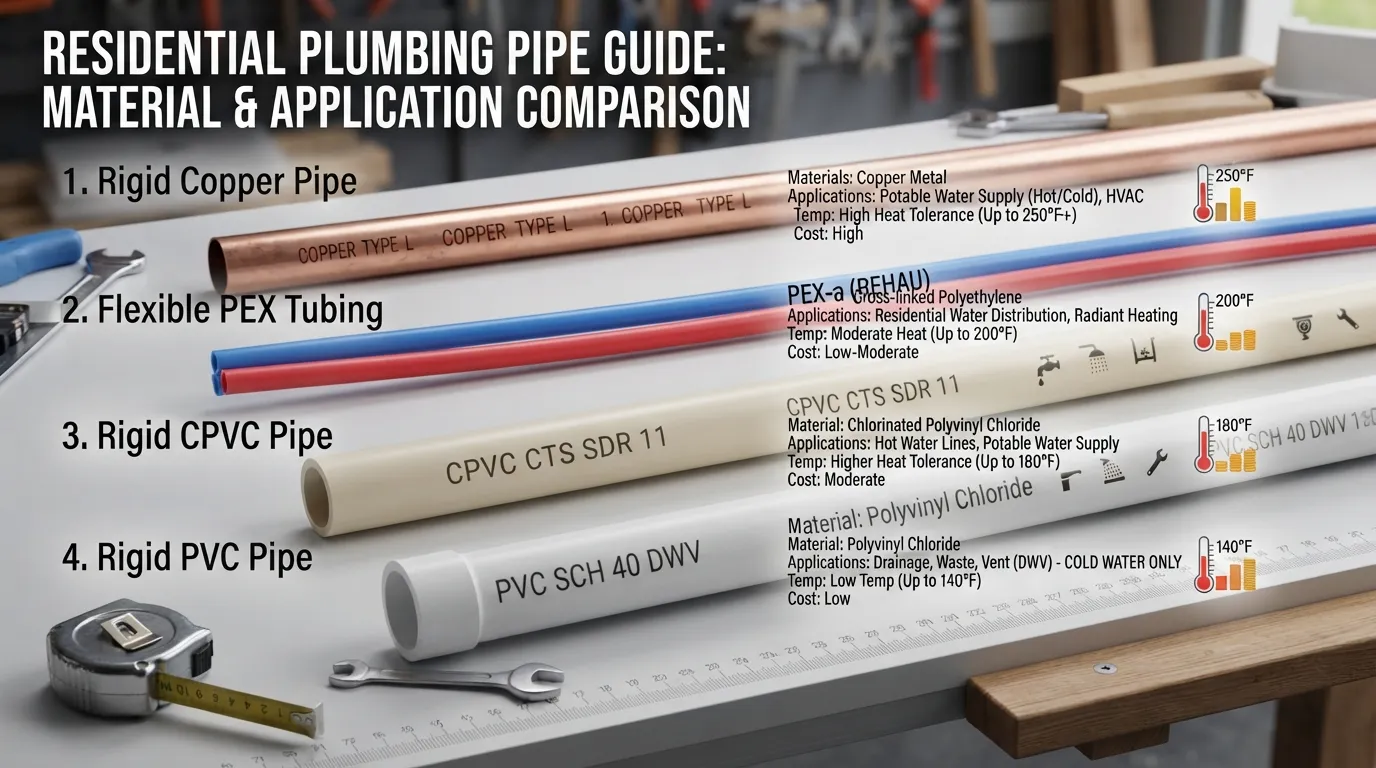 Copper is traditionally classified into Type K (thickest walls, underground), Type L (standard residential supply), and Type M (thinnest walls). Its greatest strengths include unmatched longevity, excellent structural rigidity, and complete resistance to UV radiation. Conversely, its primary weaknesses are high material costs, susceptibility to pinhole leaks from aggressive water, and vulnerability to theft.
PEX A B C: Strengths and Weaknesses
PEX comes in three main manufacturing variants: PEX-A (expansion method, highly flexible, kink-resistant), PEX-B (rigid crimp style, high burst strength), and PEX-C (cold-formed electron beam method). All forms provide exceptional freeze resilience and budget-friendly installation, but degrade quickly if exposed to direct outdoor sunlight (UV light).
CPVC and PVC: Where Each One Fits
Homeowners often confuse PVC and CPVC, but they serve entirely different plumbing roles:
- PVC (Polyvinyl Chloride): Strictly utilized for cold-water mains, main drainage, waste lines, and vent (DWV) systems. It melts under high temperatures and cannot handle pressurized hot supply water.
- CPVC (Chlorinated PVC): Specially treated with extra chlorine to handle high temperatures and indoor potable water supply lines, though it can become brittle over long durations.
What Is the Difference Between Copper and ABS or Steel Pipes?
ABS (Acrylonitrile Butadiene Styrene) is a black plastic pipe used exclusively for underground drainage and vent stacks, whereas copper handles pressurized interior drinking water. Galvanized steel, an older metallic piping choice, features a zinc coating that eventually rusts internally, whereas copper and modern plastics resist internal scaling far more effectively.
PPR and Regional Options Optional Short Note
Polypropylene Random Copolymer (PPR) is another thermal-fusion plastic piping system frequently deployed across Europe, the Middle East, and South Asia for hot and cold water distribution. Unlike PEX or PVC which use mechanical crimps or glues, PPR pipes and fittings are thermally melted together into a single homogeneous piece.
Is Copper Still Used in Plumbing Today?
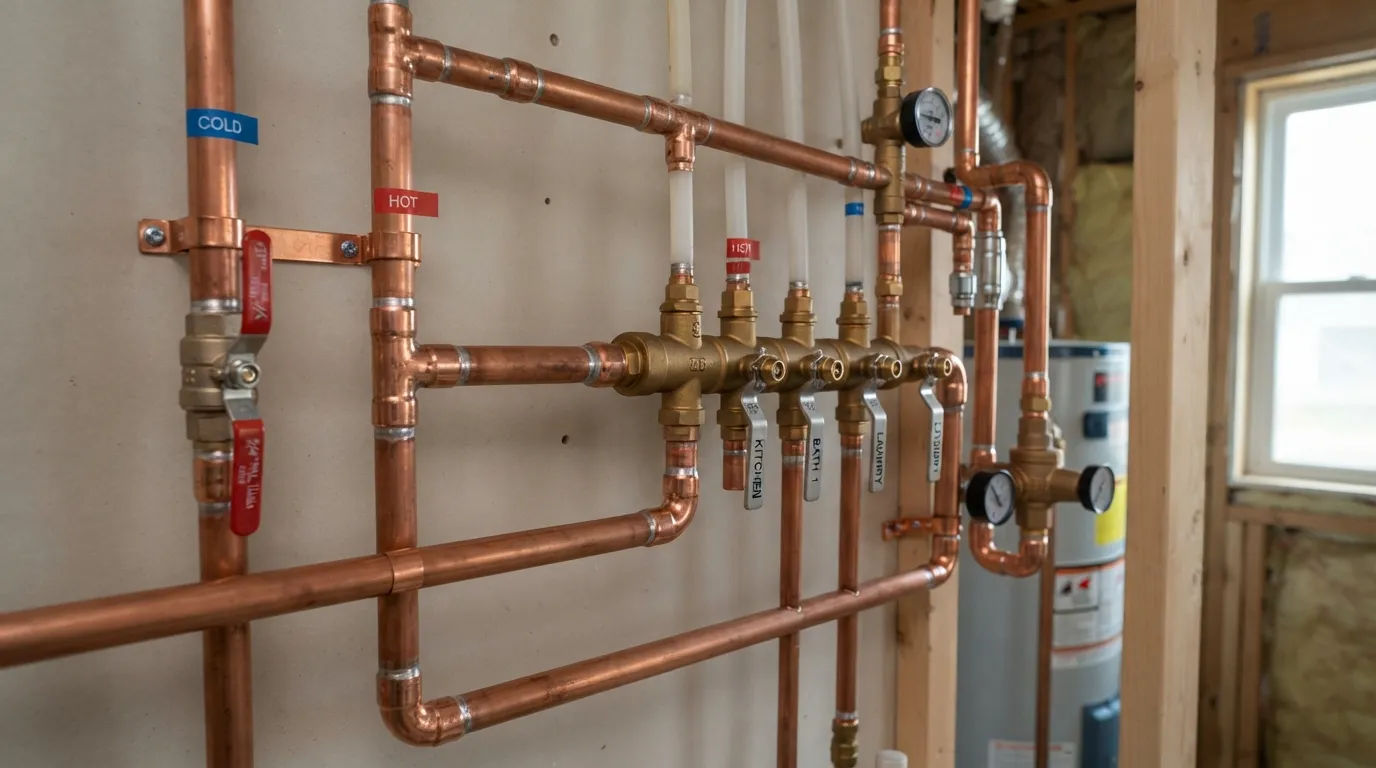 Yes, residential builders and homeowners can still construct or repipe houses using copper. While PEX dominates standard mass-market construction, copper remains the preferred material for exposed basement runs, luxury custom homes, and exterior applications where piping is subjected to direct UV sunlight or potential rodent damage that would compromise plastic lines.
Do New Homes Use PEX or Copper?
The vast majority of newly constructed suburban homes utilize flexible PEX piping for their internal supply distribution networks due to labor savings. However, most modern builds still incorporate copper or brass stub-outs beneath sinks, at water heater connections, and in main service entry points to comply with specific local building codes and temperature thresholds.
Why Some Plumbers Are Going Back to Copper
While plastic remains popular, a subset of master plumbers and high-end builders increasingly advocate for copper in specific projects. Their preference stems from long-term durability confidence, zero chemical leaching concerns, superior structural rigidity, and a growing consumer demand for traditional, time-tested materials that do not rely on synthetic polymers.
Why Did Copper Disappear From Pools and Other Uses?
While copper tubing is still utilized in pool heater heat exchangers, extensive copper distribution lines largely disappeared from pool sanitation loops due to aggressive pool chemistry. High chlorine levels, sanitizing chemicals, and low pH water rapidly corrode copper tubing, causing rapid wall thinning, blue-green water staining, and premature pinhole leaks.
The Downsides of PEX What Competitors Avoid Saying
While PEX has revolutionized residential contracting, it has distinct vulnerabilities that contractors rarely emphasize. PEX degrades rapidly under direct UV sunlight, meaning it cannot be used outdoors or exposed near windows. Furthermore, its organic polymer walls are susceptible to rodent chewing, potential chemical degradation from high chlorine or chloramine levels, and permanent structural kinks if bent too tightly.
What Happens to PEX Pipe After 50 Years?
Manufacturers estimate a service lifespan of 30 to 50 years for modern PEX systems. However, industry experts honestly acknowledge that true 50-year field data does not yet exist because PEX has only been widely installed in North American housing for a few decades. Long-term performance depends heavily on water temperature, municipal disinfectant levels, and proper structural protection.
Fittings Matter More Than Tubing
System failures in PEX networks rarely happen along the straight tubing runs; instead, leaks typically occur at the connection joints. Different connection mechanisms perform varyingly over time:
- Crimp Rings: Copper or stainless steel rings squeezed mechanically over barbed fittings.
- Clamp Rings: Stainless steel cinch clamps secured with a ratcheting tool.
- Expansion Systems (PEX-A): Utilizes memory-expansion rings that contract tightly around fittings for maximum flow capacity.
Is PEX Bad or Is Bad Installation Bad?
Experienced master plumbers emphasize that most PEX failures stem from poor installation practices rather than inherent material defects. Common job-site errors include over-stretching expansion rings in freezing weather, using unapproved brass fittings prone to dezincification, and failing to allow adequate slack for thermal expansion and contraction along long runs.
How Long Do Copper Pipes Last vs PEX?
Copper pipes routinely last between 50 and 70 years, often outliving the original owners of a home. However, their actual longevity is heavily dictated by local water chemistry, pH levels, and professional installation quality. Aggressive, acidic, or mineral-heavy water can significantly accelerate internal pitting, reducing that lifespan down to a couple of decades.
Copper vs PEX Life Expectancy
Do Copper Pipes Ever Need to Be Replaced?
Copper pipes do not need to be replaced simply because of their age if they remain structurally sound and leak-free. However, total system replacement becomes mandatory when homes experience widespread pinhole leaks, severe internal mineral scaling, or structural water damage behind drywall and concrete slab foundations.
Warning Signs Your Copper Pipes Are Going Bad
Catching failing copper plumbing early prevents catastrophic structural flooding and costly wall repairs. Watch closely for these diagnostic indicators:
- Green or Blue Patina: Visible verdigris buildup or powdery corrosion crusting around pipe joints and fittings.
- Pinhole Leaks: Frequent, localized micro-leaks forcing isolated patches or entire sections of pipe to be cut out.
- Discolored Water: Brownish or metallic-tasting water flowing from the tap, signaling internal metal degradation.
- Drop in Water Pressure: Gradual restriction caused by internal mineral pitting and scale accumulation.
- Repeated Repairs: Needing a plumber multiple times within a short window for recurring joint and line failures.
Simple Checks You Can Do at Home
Homeowners can perform basic diagnostic checks to evaluate the health of their accessible plumbing systems. Inspect exposed basement and utility room lines with a flashlight for discoloration, check aerator screens for metallic debris, and use a test kit to evaluate your water’s pH and hardness levels. If you discover persistent corrosion or unexplained water pressure drops, call a licensed plumber to conduct a professional pressure test and leak detection audit.
Are Copper and Plastic Pipes Safe for Drinking Water?
Copper pipes are widely recognized as safe for potable drinking water and have a decades-long safety track record. However, health concerns can arise in older homes featuring legacy lead-based solder joints or in properties with highly corrosive water that causes trace metals to leach into the supply.
Lead Solder in Old Copper Plumbing: What Changed
Homes built before the 1986 Safe Drinking Water Act amendments frequently utilized lead solder to bind copper pipe joints together. For comprehensive guidance on identifying and managing these risks, homeowners should consult the EPA: Basic Information about Lead in Drinking Water. If your house was constructed during this era, testing your tap water and installing certified NSF-rated filtration systems is strongly recommended.
Does Copper Purify Water? Myth vs Fact
While scientific studies confirm that copper possesses natural antimicrobial properties capable of eliminating surface bacteria, drinking water flowing through copper pipes is not actively “purified” to clinical standards. While copper vessels and traditional copper cups impart trace ions, they do not replace standard municipal purification or eliminate organic contaminants.
Are PEX and PVC Safe for Drinking Water?
Modern PEX and CPVC pipes utilized for potable water supply must pass rigorous health standards, most notably NSF/ANSI 61 certification, which limits chemical leaching. While studies show that some synthetic lines can occasionally cause minor taste or odor changes during initial use, certified materials comply with strict federal safety thresholds.
When to Test Your Water
Property owners should conduct professional or mail-in water testing under specific circumstances to ensure safety. Key testing triggers include purchasing a home built before 1990, noticing unusual water discoloration or metallic tastes, experiencing frequent plumbing repairs, or after completing major repiping work.
How Much Does Repiping Cost?
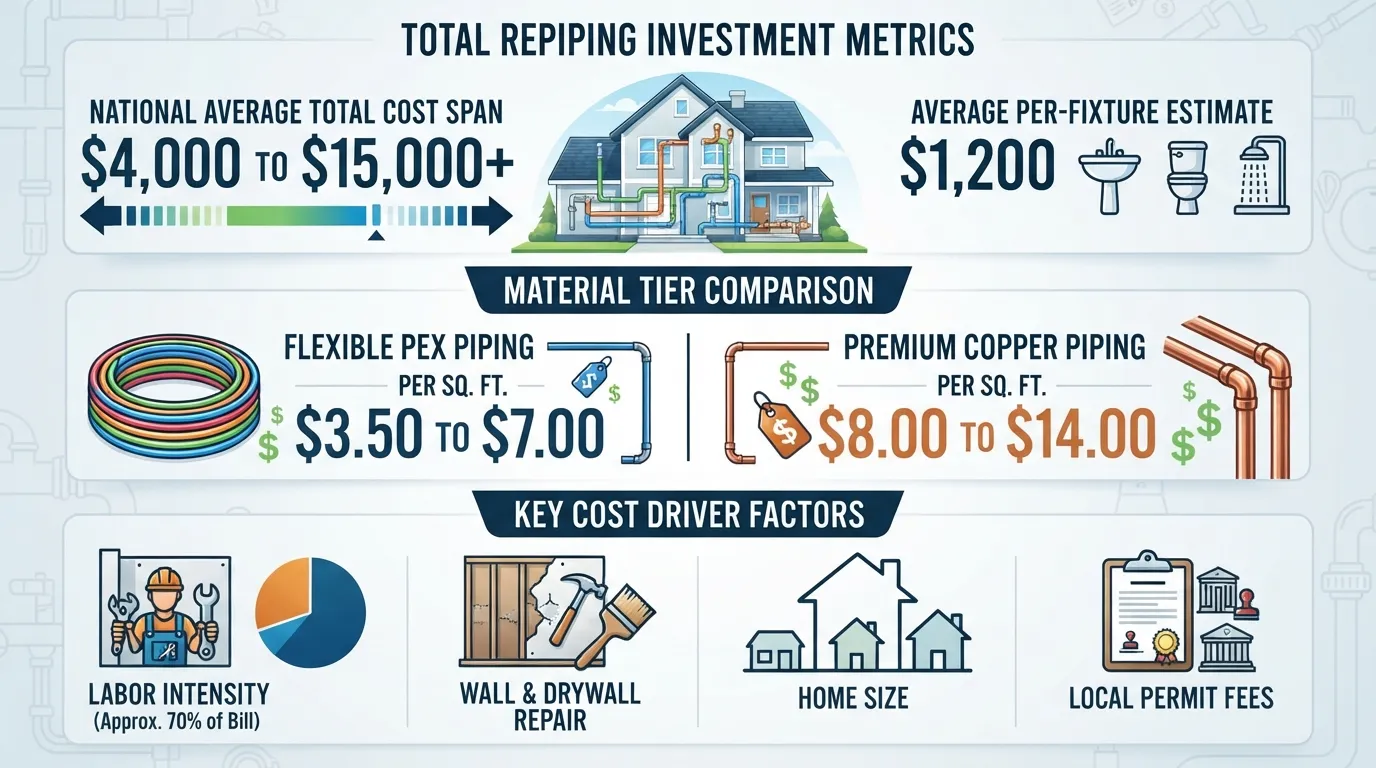 Repiping a standard 2,000-square-foot home generally ranges from $4,000 to $15,000, depending heavily on material choices and regional labor rates. PEX repiping typically runs on the lower end ($4,000 to $8,000), while a premium copper repipe often ranges from $8,000 to $15,000+ due to the labor-intensive nature of cutting, fitting, and torch-soldering metal lines.
Material Cost vs Labour Cost Breakdown
Labor accounts for the vast majority of a whole-house repiping bill, typically consuming 60% to 75% of the total estimate. While copper raw materials cost significantly more than synthetic PEX tubing, the primary driver of savings in modern repipes is the drastic reduction in installation labor hours achieved through flexible runs and push-to-connect or crimp fittings.
Hidden Costs People Forget
Homeowners planning a repipe often budget strictly for the plumbing estimate while overlooking crucial secondary expenses. Common hidden costs include:
- Drywall Patching and Painting: Cutting access holes through walls and ceilings requires professional drywall repair and repainting.
- Municipal Permits: Local building permits and mandatory safety inspections add modest administrative fees.
- Temporary Lodging or Water Disruption: Multi-day projects often mean living without running water, sometimes necessitating temporary accommodations.
- Fixture Upgrades: Replacing outdated shut-off valves, supply lines, and faucets during the retrofit.
Is Repiping Always Necessary?
A complete whole-house repipe is not always required at the first sign of trouble. Plumbers often recommend partial repipes or targeted spot repairs when leaks are isolated to a single vertical stack, an old water heater connection, or a specific crawlspace line, provided the remainder of the plumbing network retains structural integrity.
A Decision Guide for Your Situation
 For ground-up new construction, flexible PEX is the industry standard for interior distribution because it speeds up rough-in timelines and reduces contractor labor overhead. However, savvy builders still incorporate copper or brass stub-outs at critical high-temperature transitions and exposed utility connections.
If You’re Repairing or Repiping an Older Home
When retrofitting older housing stock, PEX is typically chosen because flexible tubing can be snaked through existing wall cavities with minimal drywall demolition. If the home already features rigid copper and only a localized pinhole leak occurred, a targeted spot repair with copper is usually faster and simpler than a total overhaul.
If You Have Hard Acidic or Aggressive Water
Aggressive or acidic water chemistry rapidly accelerates pitting corrosion and pinhole leaks in metallic copper tubing. Homes with severe water quality profiles are generally better suited for inert plastic systems like PEX or CPVC, provided proper whole-house water filtration is installed.
If You Live in a Cold Climate Freeze Risk
Properties located in freezing geographic regions benefit greatly from PEX plumbing due to its natural expansion memory. While rigid copper pipes easily split and burst when trapped water freezes solid, PEX stretches safely to accommodate ice formation before contracting back as temperatures rise.
If You’re on a Tight Budget vs Long-Term Value
If upfront project affordability is your primary constraint, PEX offers significantly lower material and labor costs. Conversely, homeowners prioritizing decades-long durability, traditional rigidity, and non-synthetic materials often find long-term value in investing in premium copper repiping.
UK EU Middle East South Asia
Plumbing material standards vary considerably across global regions due to local building regulations and municipal codes. While North America heavily leans toward copper and PEX, European and Middle Eastern markets frequently utilize Polypropylene Random Copolymer (PPR) or multilayer composite pipes fused with thermal welding techniques for robust residential water distribution.
Frequently Asked Questions
Why did plumbers stop using copper tubing?
Plumbers have not completely abandoned copper, but they frequently opt for flexible alternatives like PEX because plastic significantly reduces material costs, eliminates open-flame torch soldering, and speeds up installation times. However, copper remains valued for durability and exposed lines.
Can you still build houses with copper pipes?
Yes, homeowners and builders can still construct or repipe houses using copper. While PEX dominates standard mass-market construction due to lower labor expenses, copper is still chosen for luxury custom builds, exposed basement runs, and UV-exposed areas.
What year did houses stop using copper pipes?
There is no single year when houses universally stopped using copper plumbing. The transition away from copper has been a gradual shift driven by regional building codes and material economics, with mainstream residential construction heavily adopting PEX throughout the 2000s.
Do copper pipes ever need to be replaced?
Copper pipes do not require replacement solely based on their age if they remain structurally sound and leak-free. Total system replacement becomes necessary only when homes experience widespread pinhole leaks, severe internal mineral scaling, or structural water damage.
What is the lifespan of copper pipe in a house?
Copper pipes typically last between 50 and 70 years, often outliving other home components. However, aggressive water chemistry, high acidity, and high-velocity water flow can cause internal pitting corrosion that significantly shortens this expected service life.
Do new homes use PEX or copper?
The vast majority of newly constructed homes utilize flexible PEX piping for internal water distribution because it drastically cuts installation labor. Most modern builds still incorporate short copper or brass stub-outs beneath sinks and at water heater connections.
What is the downside to PEX plumbing?
The primary disadvantages of PEX plumbing include extreme sensitivity to ultraviolet (UV) light—preventing outdoor use—susceptibility to rodent chewing, potential chemical leaching from high chlorine levels, and vulnerability to permanent kinks if bent too sharply.
What is the life expectancy of copper vs PEX pipes?
Copper pipes generally last between 50 and 70+ years depending on water chemistry, whereas PEX pipes have an estimated service lifespan of 30 to 50 years. True 50-year field data for PEX remains limited due to its relatively recent introduction.
Is copper still used in plumbing?
Yes, copper is still actively used in modern plumbing systems. Master plumbers and custom builders regularly install copper for main water service lines, exposed indoor runs, and high-temperature connections where rigid durability and UV resistance are required.
Are copper pipes better than lead pipes?
Copper pipes are vastly superior and infinitely safer than historical lead pipes. Lead is a potent neurotoxin that leaches easily into drinking water, posing severe public health risks, whereas copper is an approved, durable potable water material.
Why are water pipes made of copper?
Water pipes were traditionally made of copper because the metal offers exceptional structural strength, withstands high water pressure, handles hot water distribution effortlessly, resists internal scaling, and possesses natural antimicrobial surface properties.

Oscar Vance | Master Plumber & Drainage Expert
Meet Oscar Vance, a licensed master plumber sharing practical solutions on residential repairs, preventive maintenance, and thoughtful home upkeep.