Why Did Plumbers Switch from Copper to Plastic Pipes
 Plumbers and residential contractors have largely transitioned from copper tubing to flexible plastic materials like PEX and CPVC due to dramatically lower material and labor costs, superior freeze resistance, and immunity to pinhole corrosion. This modern shift has transformed new construction and whole-house repiping projects by significantly cutting installation times.
The Short Answer in 5 Points
While traditional copper piping was once the undisputed industry standard for residential plumbing systems, modern construction practices prioritize efficiency, durability against extreme elements, and cost-effectiveness. The transition to advanced plastic alternatives is driven by five distinct advantages that favor both contractors and homeowners alike.
- Material Cost: Plastic piping materials such as PEX and CPVC are significantly cheaper to manufacture and purchase than raw copper tubing.
- Labor Efficiency: Flexible PEX lines require fewer fittings and joints, cutting installation labor time in half compared to rigid copper soldering.
- Freeze Resistance: Plastic pipes possess high elasticity, allowing them to expand slightly and resist bursting when water freezes inside them.
- Corrosion Immunity: Unlike copper, plastic materials do not suffer from pinhole leaks caused by acidic water chemistry or aggressive soil conditions.
- Installation Speed: Push-to-connect fittings and crimping tools make routing modern plastic lines drastically faster than traditional torch soldering.
Did Plumbers Really Stop Using Copper?
Despite the massive surge in plastic pipe adoption, plumbers have not completely abandoned copper tubing. Copper remains a respected, premium material frequently specified for exposed indoor runs, commercial properties, and high-end custom homes where traditional aesthetics and lifelong fire resistance are valued.
- New Construction Shift: Over seventy percent of modern single-family residential builds utilize PEX or CPVC for domestic water supply lines due to budget and speed.
- Commercial Persistence: Commercial buildings and high-rise structures still rely heavily on rigid copper or steel piping for strict fire codes and structural rigidity.
- Hybrid Applications: Many modern plumbing retrofits combine a copper main water entry point with flexible PEX distribution lines running through the walls.
Who This Guide Is For
This comprehensive guide is specifically written for homeowners planning a major plumbing renovation, DIY renovators evaluating repiping materials, and curious readers wanting to understand modern construction standards. You will discover unbiased material comparisons, lifespan expectations, cost breakdowns, and expert insights to help you make the best piping choice for your property.
- Homeowners: Evaluating whether to repair an aging copper system or undertake a complete PEX repipe.
- Renovators: Comparing upfront expenses and long-term durability metrics for kitchen and bathroom remodels.
- Curious Readers: Seeking clarity on modern trade shifts in residential plumbing and building materials.
From Lead and Galvanized Steel to Copper to PEX
The evolution of residential plumbing materials spans centuries, driven by continuous demands for safer water, lower installation costs, and greater structural longevity. Understanding this historical trajectory reveals why the industry transitioned away from rigid metals toward flexible synthetic polymers.
Before Copper: Lead and Galvanized Steel Pipes
Early indoor plumbing relied heavily on materials that presented severe health and maintenance challenges over time. Lead pipes were common into the early 20th century until widespread lead poisoning awareness forced a complete regulatory ban. Galvanized steel subsequently became the standard for mid-century homes, though it carried hidden long-term drawbacks.
- Lead Pipes: Highly malleable and durable, but cumulative lead leaching caused catastrophic neurological and developmental health crises.
- Galvanized Steel: Zinc-coated steel pipes dominated post-World War II construction, offering initial strength but prone to severe internal rust buildup.
- Flow Restriction: Over 30 to 50 years, internal mineral corrosion in galvanized steel choked water pressure to a mere trickle, forcing expensive whole-house repipes.
Why Copper Became the Gold Standard
By the 1960s, copper emerged as the undisputed king of residential plumbing. Available in standardized wall thicknesses designated as Type K, Type L, and Type M, copper offered a brilliant blend of structural integrity, heat tolerance, and safety that outlasted its predecessors.
- Bacterial Resistance: Copper naturally inhibits bacterial growth, maintaining high microbiological water safety inside supply lines.
- Thermal Stability: It handled fluctuating hot and water temperatures effortlessly without warping or degrading under pressure.
- Rigid Durability: A properly installed copper system could easily last 50 to 70 years, cementing consumer and contractor trust.
When Plastic Pipes Entered Homes
Plastic plumbing began making inroads during the late 20th century, starting with rigid PVC for drain lines and CPVC for hot water supply in the 1960s. The true revolution occurred when Cross-linked Polyethylene, commonly known as PEX, gained widespread North American model building code approvals during the late 1990s and early 2000s (IRC and IPC acceptance).
- Rigid Plastics: PVC and CPVC introduced lightweight, solvent-welded alternatives, though CPVC remained brittle over time.
- PEX Introduction: Imported from Europe in the 1980s, PEX revolutionized installations with coilable flexibility and mechanical crimp fittings.
- Code Standardization: Widespread adoption into major model building codes between 2003 and 2006 cemented PEX as the modern contractor favorite.
The Polybutylene Failure: Why Many People Still Distrust Plastic
Many homeowners and older contractors retain a lingering skepticism of plastic pipes due to the notorious polybutylene (PB) pipe failures of the late 1970s through the 1990s. Polybutylene tubing degraded when reacting with chlorine in public water supplies, causing widespread class-action lawsuits and sudden flooding.
- Chemical Sensitivity: Early polybutylene lines became brittle and cracked when exposed to standard municipal water disinfectants.
- Fittings Collapse: Plastic insert fittings used with aluminum crimp rings frequently failed under normal operating pressures.
- Modern Distinction: Modern PEX tubing uses advanced cross-linking chemistry and robust brass or engineered polymer fittings, making it entirely distinct from legacy polybutylene.
Visual Timeline
Plumbing Moved from Copper to Plastic
The widespread industry migration from rigid copper tubing to synthetic polymer piping systems was not driven by a single factor, but by a combination of economic, safety, and performance advantages. Examining these seven core drivers clarifies why modern contractors and homeowners overwhelmingly select plastic over metal.
1. Lower Material Cost
Raw material expenses represent a massive percentage of any residential plumbing budget. Copper is traded as a global commodity, making its per-foot price vulnerable to extreme market fluctuations, whereas plastic polymers like PEX and CPVC remain significantly more stable and economical.
- Per-Foot Price Gap: High-grade copper tubing often costs three to four times more per linear foot than standard PEX-B or PEX-A tubing.
- Accessory Costs: Brass or copper soldered fittings add substantial upfront expenses, whereas engineered plastic fittings drastically reduce total material bills.
- Market Savings: According to building industry cost analysis, switching a standard multi-bath home from copper to PEX reduces raw material costs by up to 50%.
2. Copper Price Volatility and Copper Theft
Copper’s high scrap metal value creates severe security vulnerabilities on active job sites and in vacant or remodeling properties. Thieves frequently target unfinished homes or external lines to strip copper pipes, causing massive project delays and thousands in property damage—a risk completely eliminated by plastic piping.
- Job Site Theft: Unprotected bundles of copper tubing left on residential building sites are prime targets for opportunistic theft.
- Vacant Property Stripping: Foreclosed or vacant homes are routinely gutted by thieves looking to harvest high-value copper supply lines.
- Zero Scrap Value: PEX and CPVC possess virtually zero scrap metal value, rendering them entirely unattractive to metal thieves.
3. Faster, Cheaper Installation
Time is money in residential construction, and flexible plastic piping streamlines the entire routing process. Because PEX can bend smoothly around corners and frame studs, plumbers require fewer rigid joints, drastically cutting total labor hours required for a complete install.
- Continuous Runs: Long coils of PEX allow plumbers to run a single continuous line from the manifold straight to a fixture without intermediary joints.
- Reduced Fittings: Fewer directional elbows mean less installation time and vastly reduced points of potential mechanical failure.
- Labor Reductions: A typical whole-house repipe executed in flexible PEX can be completed in half the time of a rigid copper
4. Safer Assembly: No Torch No Solder No Flux
Installing traditional copper requires an open flame, propane torches, toxic chemical fluxes, and lead-bearing solder compounds, presenting severe fire risks in tight wall cavities. Modern plastic installation relies on clean mechanical connections such as stainless steel crimp rings, copper cinch clamps, expansion fittings (ProPEX), or push-fit connectors (SharkBite).
- Zero Open Flame: Eliminating torches removes the risk of accidental structure fires during tight remodeling and renovation projects.
- Toxic Chemical Elimination: Installers no longer breathe hazardous flux fumes or handle corrosive chemical cleaning agents.
- Diverse Fastening Options: Plumbers can choose between cold-expansion rings, copper cinch clamps, or secure push-fit fittings depending on job requirements.
5. Freeze Resistance
Winter pipe bursts are a homeowner’s worst nightmare, but material selection plays a massive role in weather survivability. PEX possesses high elasticity and molecular memory, allowing it to expand significantly when internal water turns to ice, whereas rigid copper tubing splits easily under the exact same pressure.
- Elastic Expansion: PEX lines can expand up to three times their normal diameter to accommodate expanding ice formations.
- Rigid Brittleness: Copper lacks structural give, causing soldered joints and straight runs to rupture violently when frozen solid.
- Important Caveat: While PEX handles freezing better than metal, it is still vulnerable to bursting at connection fittings or during extreme, prolonged deep freezes.
6. Resistance to Corrosion Pinhole Leaks and Slab Leaks
Water chemistry heavily dictates plumbing longevity. Acidic water (low pH) or high mineral content aggressively eats away at copper from the inside out, triggering destructive pinhole leaks and hidden slab leaks beneath concrete foundations, whereas PEX is completely inert to aggressive water.
- Corrosion Immunity: Synthetic polymers do not react with acidic municipal water, sulfur, or aggressive soil conditions.
- Pinhole Prevention: Eliminates the silent erosion that causes copper pipes to develop microscopic pinhole leaks inside walls over time.
- Slab Leak Defense: Running flexible PEX through protective sleeves under concrete slabs avoids catastrophic foundation water damage.
7. Better Heat Retention and Faster Hot Water Delivery
Copper is an exceptional thermal conductor, meaning it rapidly absorbs and dissipates heat from hot water as it travels through cold wall cavities. Plastic pipes feature low thermal conductivity, retaining heat more effectively and delivering hot water to distant fixtures faster while cutting energy waste.
- Low Thermal Conductivity: Plastic acts as a natural insulator, keeping hot water warm during transit through unheated spaces.
- Energy Efficiency: Reduced heat loss means water heaters work less to maintain desired delivery temperatures at remote taps.
- Faster Delivery: Less thermal mass to heat up translates to quicker hot water arrival times at kitchen and bathroom faucets.
Reason vs Benefit vs Who Benefits Most
Copper vs PEX vs CPVC vs PVC
Selecting the right plumbing material requires evaluating upfront expenses, environmental limitations, longevity expectations, and water chemistry compatibility. Reviewing these materials side-by-side highlights why specific options dominate interior water supply systems while others are restricted to drainage.
Comparison Table
Which Pipe Lasts the Longest?
Under ideal environmental conditions, traditional copper tubing technically boasts the longest theoretical lifespan, often exceeding 50 to 70 years. However, real-world longevity depends entirely on local water chemistry, installation quality, and structural protection against physical wear.
- Copper Longevity: Lasts decades in neutral water, but aggressive acidic water or high mineral content can cause catastrophic pinhole leaks in under 15 years.
- PEX Longevity: Engineered to last 40 to 50 years, PEX resists aggressive water chemistry completely, though it remains vulnerable to prolonged ultraviolet exposure.
- Installation Quality: Proper hanger spacing and professional crimping or expansion techniques dictate whether any pipe reaches its maximum potential lifespan.
What Type of Pipe Is Not Recommended for a Water Line?
Several piping materials are strictly prohibited or entirely unsuitable for residential interior water supply lines due to severe safety risks, chemical degradation, or outdated building codes. Knowing what to avoid prevents disastrous plumbing failures and health hazards.
- Standard PVC: Polyvinyl chloride softens, warps, and collapses under high temperatures, making it illegal for indoor hot water supply lines.
- Polybutylene (PB): Gray or black flexible plastic piping from the 1980s and 1990s that degrades under chlorine and suffers catastrophic joint blowouts.
- Galvanized Steel & Lead: Obsolete legacy materials that either restrict water flow through severe internal rust or leach toxic heavy metals into drinking water.
Best Pipe for a Residential Water Line
PEX (specifically cross-linked polyethylene, such as PEX-A or PEX-B) is widely considered the best overall pipe for modern residential water supply lines due to its unmatched flexibility, cost-efficiency, and freeze resistance. Copper remains a viable runner-up for high-end custom builds, while CPVC serves as a rigid plastic alternative where local building codes restrict PEX.
- Overall Winner: PEX offers the optimal balance of low labor costs, superior freeze protection, and lifetime corrosion immunity.
- Alternative Choice: Copper is preferred for exposed basement runs or homes with strict historic architectural requirements.
- Drainage Only: PVC remains the absolute gold standard for non-pressurized drain, waste, and vent (DWV) piping systems.
What Is the Downside of PEX and Other Plastic Pipes?
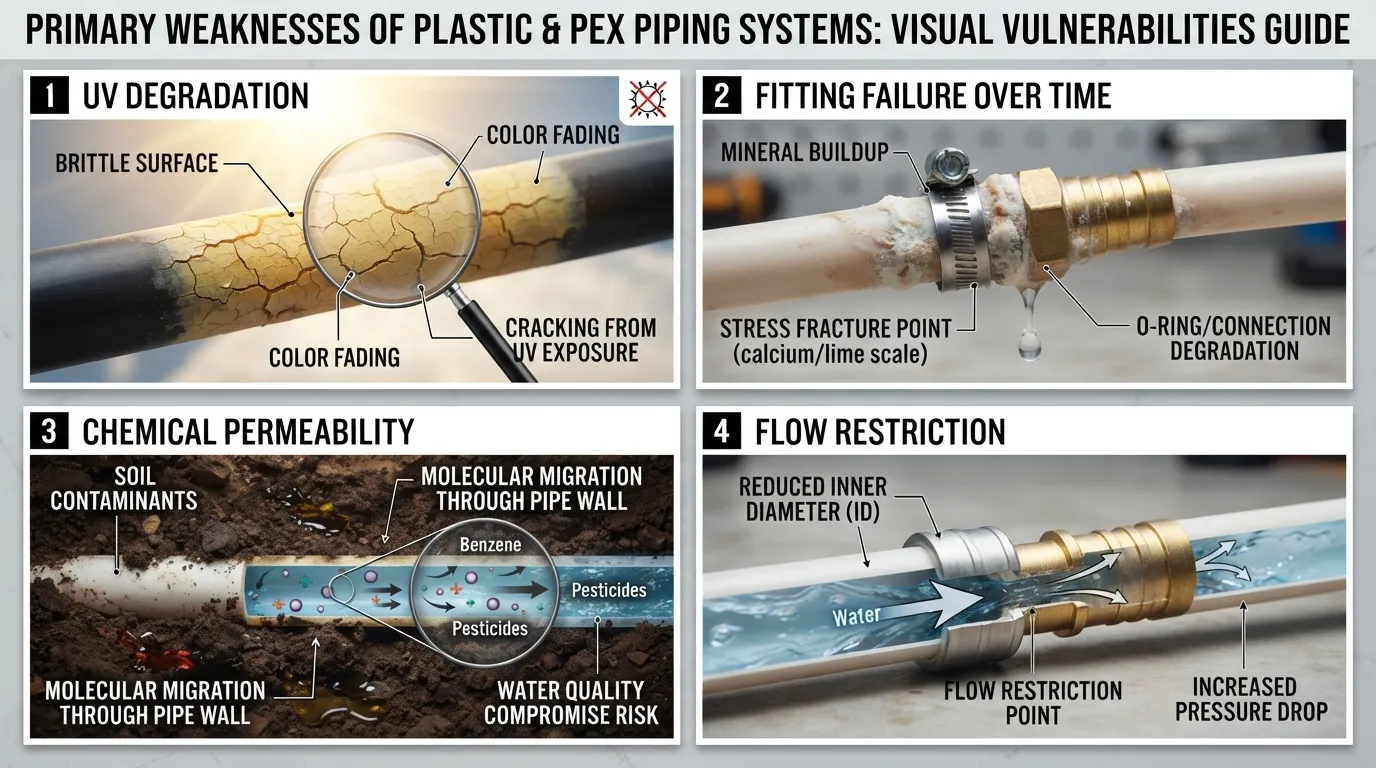 While cross-linked polyethylene and other synthetic polymer pipes offer incredible versatility and cost savings, they are not flawless miracle solutions. Understanding the honest limitations, material vulnerabilities, and environmental trade-offs of plastic plumbing ensures you avoid costly installation mistakes and long-term maintenance headaches.
UV Sensitivity
Unlike copper, which is completely impervious to sunlight, standard PEX tubing degrades rapidly when exposed to ultraviolet radiation. Leaving PEX exposed to direct sunlight or even prolonged fluorescent indoor job site lighting weakens the polymer chains and causes premature cracking.
- Outdoor Storage: Coils of PEX stored uncovered outdoors can suffer irreversible UV damage in as little as 30 to 60 days.
- Transition Requirements: Outdoor runs or exposed garage drops must be transitioned to copper or protected with opaque UV-blocking sleeves.
- Manufacturer Limits: Most manufacturers void warranties on PEX tubing that shows signs of ultraviolet sun bleaching prior to installation.
Chlorine Resistance Differences Between PEX Types
Municipal water treatment disinfectants such as chlorine and chloramines interact differently with various generations of PEX. Over decades of exposure, aggressive disinfectant chemicals can degrade specific polymer bonds, particularly in older or lower-grade formulations.
- PEX-A (PEX-a): Produced via the Engel method, it offers the highest flexibility and superior resistance to high temperatures and harsh chemical degradation.
- PEX-B (PEX-b): Created using the silane method, it is slightly stiffer and more resistant to burst pressure, but requires careful manufacturing standards regarding chlorine aging.
- Chemical Interaction: Homes with heavily chlorinated well water or municipal supplies should verify that installed PEX carries official chlorine resistance ratings (ASTM F2023).
Fittings Crimp Quality and Installer Skill
Plastic piping systems rely heavily on mechanical connection fittings, crimp rings, or expansion collars rather than soldered metal bonds. If an installer lacks proper training or uses uncalibrated crimp tools, the resulting joints become vulnerable points prone to catastrophic leaks over time.
- Calibration Failures: Uncalibrated crimping or cinch tools can leave rings too loose to hold pressure or too tight, cutting into the PEX tubing.
- Fittings Bloat: The inner diameter of traditional insert fittings creates minor flow restriction compared to full-port expansion fittings (ProPEX).
- Human Error: While PEX is easier to install than copper, professional workmanship remains essential to verify every single connection with a GO/NO-GO gauge.
Pests and Rodent Damage
Unlike rigid copper or cast iron pipes, flexible plastic polymer lines can be chewed through by rodents, mice, or squirrels nesting in crawl spaces, unheated basements, or dark wall voids. Though relatively uncommon in finished homes, pest chewing remains a verified risk in agricultural or infested environments.
- Rodent Attraction: Mice and rats occasionally chew on soft plastic pipes, mistaking them for nesting obstacles or seeking water access.
- Penetration Risks: Unprotected lines passing through floor joists or concrete sleeve gaps are most vulnerable to aggressive chewing damage.
- Mitigation Strategy: Running PEX lines through protective steel plates or hard conduits in pest-prone crawl spaces prevents animal damage.
Not Ideal for Every Situation
Plastic pipes cannot be installed blindly in every location without regard for local building codes, high heat sources, or structural constraints. Certain applications require transition lines or alternative materials to comply with strict safety regulations.
- Water Heater Proximity: Direct connection of plastic PEX to gas water heaters is prohibited by many codes; a 12-to-18-inch copper or metallic transition loop is required to prevent heat damage.
- Local Code Bans: Certain municipalities and historic districts maintain strict building codes that either restrict or entirely ban plastic water supply lines.
- Structural Rigidity: Unlike rigid copper, PEX sags over long horizontal runs if not supported by proper hanger clips every 32 inches.
Environmental and Recycling Concerns
Sustainability and recyclability represent a major ecological advantage for copper over synthetic polymers. While scrap copper can be melted down infinitely with zero loss of material quality, modern plastics present significant recycling and disposal complexities.
- Infinite Copper Recycling: Scrap copper maintains near 100% recycling value and can be repurposed indefinitely without degrading in quality.
- Polymer Persistence: Cross-linked PEX is a thermoset plastic, meaning it cannot easily be melted down and re-extruded into new pipes like thermoplastic PVC.
- Landfill Impact: Remodeling and job-site scrap polymer piping frequently ends up in municipal landfills rather than specialized industrial recycling streams.
Why Copper Is Still Used and When It Is Still the Better Choice
Although flexible synthetic polymer lines dominate modern residential construction, copper tubing remains a gold standard in specific architectural and engineering scenarios. Evaluating where copper outperforms plastic demonstrates why professional plumbers still choose metal for premium applications.
Rigidity Durability and UV Resistance
Rigid copper pipes maintain a straight, clean architectural alignment without sagging, making them the preferred choice for exposed runs where visual aesthetics matter. Furthermore, copper is entirely impervious to ultraviolet light degradation, allowing it to withstand direct sun exposure indefinitely.
- Zero Sagging: Unlike flexible PEX, rigid copper requires minimal structural support hangers over long horizontal spans to remain perfectly level.
- UV Immunity: Sunlight hitting exposed copper lines in garages, workshops, or outdoor spaces causes zero physical degradation or brittleness.
- Impact Resilience: Metal piping resists accidental punctures from tools or wall fasteners far better than soft plastic alternatives.
Natural Anti-Microbial Properties
Copper possesses inherent oligodynamic and anti-microbial characteristics that actively inhibit the growth of bacteria, algae, and fungi inside the water supply system. This biological suppression contributes to superior long-term microbiological water safety.
- Bacterial Suppression: Metallic copper surfaces naturally disrupt bacterial cell membranes, reducing pathogen colonization inside stagnant water lines.
- Biofilm Resistance: The interior walls of copper tubing resist sticky biofilm buildup better than many standard polymer materials.
- Potable Water Protection: Helps maintain pristine water purity over decades of continuous residential service.
Fire Resistance and High-Temperature Performance
Copper boasts an exceptionally high melting point and will not burn, melt, or contribute fuel to structural building fires. This inherent thermal resilience makes it a vital material for commercial fire suppression sprinkler systems and high-heat industrial applications.
- Zero Combustibility: Copper lines do not melt, warp, or release toxic smoke when exposed to intense structural flames.
- High Heat Tolerance: Handles extreme continuous water temperatures and pressure spikes that would compromise lower-grade plastics.
- Building Code Advantage: Frequently mandated in high-rise commercial structures and strict multi-family housing fire codes.
Exposed Pipes and Outdoor Runs
Whenever plumbing lines must run exposed along basement ceilings, exterior walls, or unconditioned utility spaces, copper provides a neat, professional finish. It eliminates the unsightly sagging and UV vulnerability associated with exposed plastic lines.
- Basement Aesthetics: Exposed copper trunk lines present a clean, professional look that many homeowners prefer in unfinished basements.
- Outdoor Suitability: Exterior hose bibbs and transitions perform safely under extreme weather when properly coupled with rigid copper.
- Pest Proofing: Rodents cannot chew through copper pipes, safeguarding utility access points in crawl spaces.
Copper’s Own Problems: Pinholes Cost and Theft
Despite its impressive structural benefits, copper is not without significant drawbacks that drove the industry toward plastic. High material costs, vulnerability to metal theft, and susceptibility to acidic water corrosion continue to challenge copper installations.
- Pinhole Corrosion: Acidic water chemistry and high mineral content frequently trigger internal erosion, leading to destructive pinhole leaks.
- Exorbitant Pricing: Fluctuating global commodity markets make copper significantly more expensive to install than synthetic alternatives.
- Theft Vulnerability: High scrap metal value makes unfinished copper systems prime targets for job-site break-ins and property damage.
Are Plastic Water Pipes Safe to Drink From?
Health and safety concerns regarding drinking water infrastructure are paramount for every homeowner. Modern polymer piping systems undergo rigorous independent testing and toxicological evaluations to ensure they do not leach harmful compounds into domestic water supplies, making certified plastics as safe for potable water as traditional metals.
What Does Potable Water Safe Mean?
For any pipe material to be approved for residential drinking water distribution, it must meet strict national health and safety standards. Independent certification agencies evaluate plumbing products to guarantee they do not contribute toxic chemicals, heavy metals, or volatile organic compounds (VOCs) to tap water.
- NSF/ANSI 61 Standard: The gold-standard health effects certification regulating what contaminants can leach from drinking water system components into water.
- NSF/ANSI 14 Standard: Focuses specifically on the physical performance, burst pressure, and structural integrity of plastic piping system components.
- Regulatory Compliance: Model plumbing codes strictly prohibit the installation of uncertified piping materials for any domestic drinking water application.
Chemical Leaching and Taste Odor Concerns
Newly installed plastic or copper plumbing can occasionally impart a temporary taste or odor to tap water during the initial weeks of operation. This minor aesthetic issue typically dissipates rapidly once the system is thoroughly flushed and conditioned with normal water usage.
- Initial Flush Requirement: Contractors recommend flushing a newly repiped home by running all cold and hot water taps for 15 to 30 minutes.
- Residue Elimination: Flushing removes manufacturing lubricants, cutting oils, and minor residual compounds left inside lines from the extrusion process.
- Aesthetic Clarity: Certified pipes do not compromise long-term water taste once the initial break-in period concludes.
Microplastics: What We Know and Do Not Know
The potential shedding of microparticles from synthetic polymer infrastructure into drinking water is an active area of toxicological research. While current scientific data indicates that high-quality, certified PEX and CPVC shed negligible amounts under normal residential temperatures, long-term environmental exposure tracking remains ongoing.
- Current Evidence: Rigorous laboratory studies show minimal physical degradation or particle shedding in properly installed indoor lines.
- Temperature Impact: Excessive continuous water temperatures exceeding manufacturer ratings can accelerate polymer breakdown over many years.
- Honest Uncertainty: Researchers continue evaluating cumulative lifetime exposure, emphasizing the importance of utilizing premium, certified piping materials.
Lead and Copper Concerns in Older Homes
When evaluating plumbing safety, legacy metal systems often pose far greater health hazards than modern plastics. Older homes built before the mid-1980s frequently contain historic lead service lines, lead-bearing solder joints, or brass fixtures that leach heavy metals directly into drinking water.
- Lead Solder Bans: Federal regulations banned lead-based solder in 1986, but millions of legacy homes still retain hazardous joints.
- Corrosion Leaching: Acidic water passing through aging copper or galvanized lines can pick up dissolved copper and lead particles.
- Safety Upgrade: Replacing legacy metal piping with inert PEX eliminates heavy metal leaching risks entirely.
PVC vs Copper: Which Is Safer?
When comparing safety profiles, both properly certified copper and approved potable plastics like PEX or CPVC are entirely safe for drinking water when used in their correct applications. However, rigid PVC is strictly restricted to drainage and must never be used for pressurized drinking water lines due to chemical formulation differences.
- Application Boundaries: PVC contains chemical plasticizers and stabilizers meant exclusively for non-potable DWV (drain, waste, and vent) systems.
- Potable Polymers: Safe indoor drinking water lines require specialized materials like PEX, CPVC, or copper that pass strict health standards.
- Overall Verdict: Modern PEX and well-maintained copper offer exceptional safety, provided local water chemistry is properly balanced.
Practical Tips: Flushing Water Testing and Choosing Certified Pipe
Ensuring your household drinking water remains pristine requires proactive maintenance, regular testing, and strict adherence to manufacturing standards during any plumbing upgrade. Following expert guidelines protects your family from unexpected water quality issues.
- Annual Water Testing: Schedule regular laboratory water tests to screen for heavy metals, mineral imbalances, and bacteria levels.
- Demand Certification: Always verify that any pipe or fitting purchased carries official NSF/ANSI 61 certification for potable water safety.
- Professional Installation: Hire licensed plumbers who understand local building codes and proper system flushing protocols for new installations.
Which Pipe Is Best for Your Water Type? Acidic Hard or Chlorinated
Local water chemistry plays a decisive role in determining how long your plumbing system will last. Matching your piping material to your specific water profile—whether it is highly acidic, mineral-heavy, or heavily chlorinated—prevents premature pinhole leaks, scaling, and catastrophic failures.
Acidic or Soft Water: Why Copper Can Pit and Leak
Water with a low pH (typically below 7.0) or low mineral content is considered acidic and soft. While soft water feels great for bathing, it acts as an aggressive solvent that strips protective oxide layers from copper tubing, causing rapid internal pitting and destructive pinhole leaks.
- Corrosive Action: Low pH water constantly dissolves interior copper walls, silently thinning pipes from the inside out.
- Pinhole Leaks: Homes with acidic well water often experience sudden copper pipe leaks within 5 to 15 years of installation.
- Plastic Immunity: Synthetic polymers like PEX and CPVC are completely inert to acidic water chemistry, making them the superior choice for low-pH environments.
Hard Water and Mineral Scaling
Hard water contains high concentrations of dissolved calcium and magnesium. Over time, these minerals precipitate out of solution and form hard crystalline scale deposits inside water supply lines, restricting flow rates and damaging traditional metal fixtures.
- Scale Accumulation: Both copper and rigid CPVC can accumulate internal mineral buildup in high-grain hard water areas.
- Flex Resistance: Flexible PEX tubing experiences less rigid scale adhesion because slight pressure expansions help crack and shed mineral buildup.
- Water Softening: Installing a whole-house water softener is recommended regardless of pipe material to protect appliances and fixtures.
Highly Chlorinated Water and PEX
Municipal water treatment facilities use chlorine and chloramines to disinfect drinking water supplies. While essential for microbiological safety, high disinfectant levels can react with certain interior polymer lines over decades of continuous exposure.
- Chemical Degradation: Aggressive disinfectants slowly oxidize lower-grade plastics, reducing long-term material elasticity.
- Standard Compliance: Modern PEX formulations are rigorously tested against chlorine degradation (ASTM F2023) to ensure decades of safe service.
- Material Choice: PEX-A or high-grade commercial CPVC offer exceptional resistance to municipal disinfectant chemicals.
How to Check Your Water Before Choosing
Before selecting piping materials for a repipe or new build, testing your raw water chemistry is essential. A professional water test or a comprehensive at-home test kit reveals pH levels, mineral hardness, and disinfectant concentrations.
- pH Testing: Check whether your water is neutral (7.0), acidic (below 6.5), or alkaline (above 8.0) to evaluate copper risk.
- Total Hardness: Measure grains per gallon (GPG) to determine if mineral scaling or softening equipment is necessary.
- Municipal Reports: Review your local water utility’s annual consumer confidence report for disinfectant and mineral baselines.
Water Type vs Recommended Pipe
Should You Replace Copper Pipes with PEX? A Decision Guide
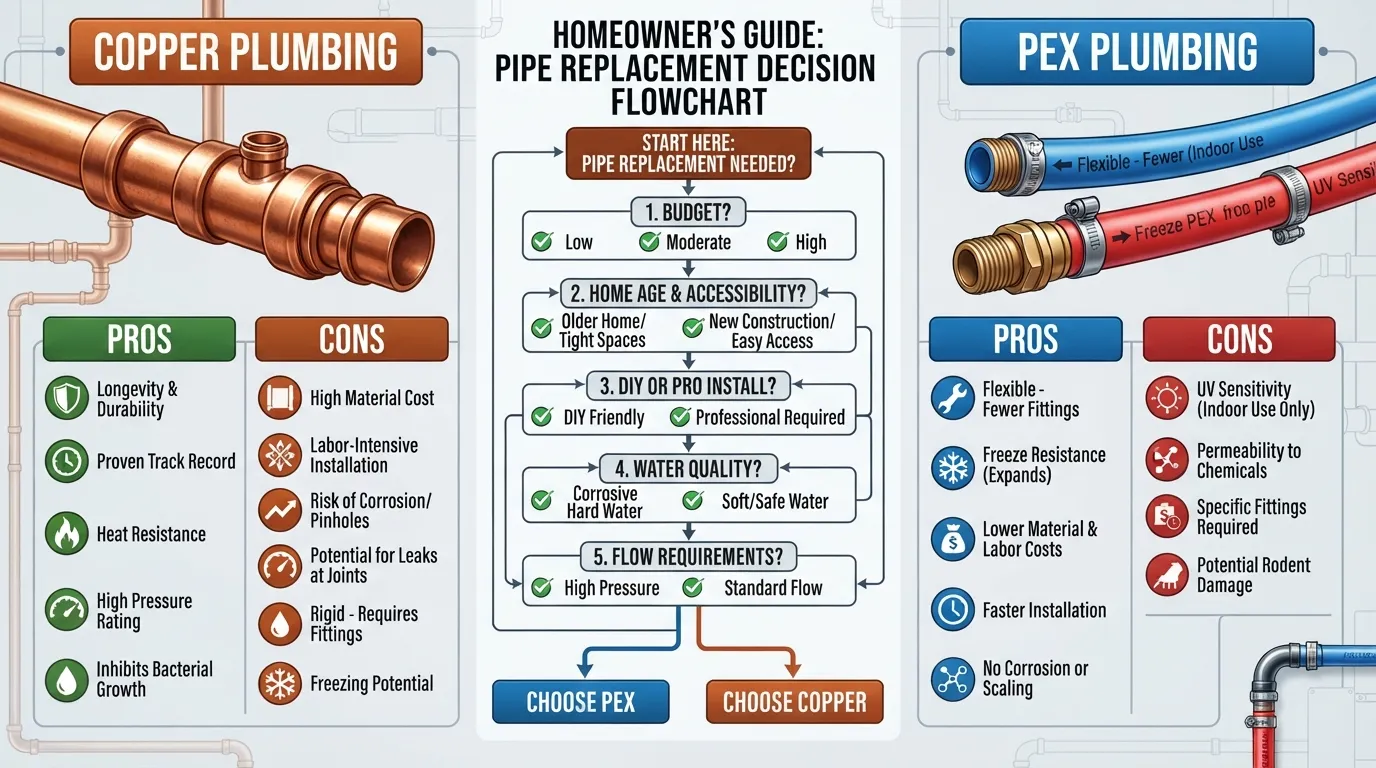 Deciding whether to rip out existing copper pipes and transition to modern PEX tubing is a major investment for any homeowner. Evaluating active warning signs, estimating replacement costs, and assessing structural conditions helps determine whether a whole-house repipe is genuinely necessary.
Signs You Should Consider Repiping
Copper piping does not fail all at once; rather, localized failures often indicate systemic degradation throughout the entire plumbing network. Recognizing early warning signs prevents catastrophic water damage and expensive emergency repairs.
- Repeated Pinhole Leaks: Experiencing two or more pinhole leaks within a couple of years indicates severe internal wall thinning across your plumbing lines.
- Discolored Water: Brown, red, or yellow tap water—especially after returning from vacation—suggests heavy internal corrosion and metal oxidation.
- Slab Leak Symptoms: Unexplained spikes in your water bill or warm spots on concrete floors point to hidden pipe failures beneath the foundation.
- Sudden Pressure Drops: Mineral scaling or collapsed interior walls can severely restrict water flow across multiple household fixtures.
When You Should NOT Replace Working Copper
If your existing copper plumbing system is functioning smoothly without leaks, discolored water, or pressure drops, tearing it out is unnecessary and financially counterproductive. Well-maintained copper in balanced, neutral water environments can easily last for decades.
- Sound Structural Integrity: If annual water tests confirm balanced neutral pH and zero pinhole history, your copper lines have plenty of life left.
- Remodeling Additions: Tying short PEX runs into an existing healthy copper main during a bathroom addition is completely standard practice.
- Financial Conservation: Save your repipe budget for necessary home upgrades unless active failures demand immediate intervention.
Repipe Cost Example
Whole-house repiping costs vary widely based on geographic region, home layout, number of bathrooms, and accessibility of wall cavities. For a standard single-story 1,500 to 2,500-square-foot home with two to three bathrooms, estimated project pricing generally falls within specific ranges.
- Average Cost Range: Complete residential repiping typically costs between four thousand and ten thousand dollars for professional labor and materials.
- Drywall Patching: Plumbers often cut access holes in walls and ceilings, meaning drywall repair and repainting add an extra one to three thousand dollars.
- Regional Variance: Labor rates in major metropolitan areas run significantly higher than rural markets, impacting total project bottom lines.
DIY vs Licensed Plumber
While DIY plumbing videos make PEX installation look simple, tackling a whole-house repipe without professional expertise carries severe risks. Local building codes, municipal permitting, and correct manifold sizing require certified trade knowledge.
- Permit Requirements: Most municipalities legally require plumbing permits and mandatory inspections for whole-house water supply overhauls.
- Insurance Liability: DIY plumbing errors that result in major flooding may be denied coverage by standard homeowner insurance policies.
- Professional Guarantee: Licensed plumbers provide workmanship warranties, protecting your home against costly future joint failures.
6-Question Decision Checklist
Before committing to a whole-house repipe project, walk through this quick six-question evaluation checklist to clarify your home’s actual plumbing needs and priorities.
- 1. Have you experienced more than one pinhole leak in the past two years? (Multiple leaks signal systemic pipe failure).
- 2. Is your tap water discolored or rusty upon initial morning startup? (Indicates advanced internal corrosion).
- 3. Does your local water test reveal an acidic pH below 6.5? (Accelerates future metal pipe degradation).
- 4. Are you planning a major kitchen or bathroom gut renovation soon? (Ideal time to update aging hidden lines).
- 5. Can your household budget absorb a mid-range repipe investment without financial strain? (Preparation prevents stress).
- 6. Have you consulted a licensed plumber for an official in-person inspection? (Professional verification confirms true system health).
Mixing Pipes Sizing and Burying PEX
Homeowners undertaking plumbing repairs or renovations frequently encounter practical questions regarding material compatibility, pipe sizing, and underground installation rules. Addressing these technical nuances ensures your plumbing modifications comply with best practices and operate without unexpected failures.
Can You Mix Copper and Plastic Pipes
Yes, you can safely connect copper and plastic pipes within the same plumbing system, provided you use correct transition fittings and approved mechanical connectors. Direct contact between dissimilar metals or incorrect chemical bonding can cause premature joint failure.
- Transition Fittings: Use brass or specialized push-to-connect adapters designed specifically to bridge copper tubing and PEX or CPVC lines.
- Galvanic Corrosion: While joining copper and plastic does not cause galvanic corrosion, mixing copper with galvanized steel requires dielectric unions to prevent metal breakdown.
- Water Heater Hookups: Never connect plastic PEX directly to a gas water heater; always install a 12-to-18-inch metallic transition loop to protect against excessive radiant heat.
Is 3 4 Inch PEX Big Enough for a Main Water Line
A 3/4-inch PEX main water supply line is generally sufficient for small-to-medium residential homes with standard fixture counts. However, larger multi-bath homes or properties with high-demand fixtures may require a 1-inch main line to prevent pressure drops.
- Standard Flow Capacity: A 3/4-inch PEX line comfortably delivers 10 to 15 gallons per minute (GPM), handling normal simultaneous household usage.
- Manifold Distribution: Modern home-run manifold systems often utilize a 1-inch trunk line feeding individual 1/2-inch lines to maintain balanced pressure across all taps.
- Fixture Demand: If your home features multiple showerheads, body sprays, or high-flow irrigation systems, stepping up to a 1-inch main is highly recommended.
Can You Bury PEX Directly in the Ground
Yes, most PEX tubing can be buried directly underground, but it must be protected from physical damage, sharp rocks, and harsh chemical soils. Local building codes dictate whether protective sleeves or trench depth requirements apply.
- Direct Burial Approval: PEX-A and PEX-B are chemically stable and will not corrode in soil, making them popular for underground water service lines.
- Protective Sleeving: Running buried PEX through a continuous PVC conduit or protective sleeve prevents abrasion from rocky soil and simplifies future replacement.
- Frost Line Depth: Trenches must be dug below your region’s local frost line to prevent underground water lines from freezing and rupturing.
Can You Reuse Old Copper Pipes in a New House
Reusing old copper pipes during a major home renovation or new construction project is generally discouraged by professional contractors. Metal fatigue, hidden mineral scaling, and undetected micro-corrosion make salvaging old lines an unnecessary risk.
- Fatigue Weakness: Bending or de-soldering old copper pipes stresses the metal, increasing the likelihood of future stress fractures.
- Internal Scaling: Years of hard water accumulation narrow the interior diameter, restricting water flow and pressure.
- Reliability Assurance: Investing in new PEX or fresh copper guarantees decades of worry-free water service without hidden legacy defects.
Can You Recycle Old Copper Pipes
Yes, old scrap copper pipes possess exceptionally high recycling value and can be repurposed indefinitely without any degradation in material quality. Scrap metal yards actively purchase old plumbing copper by weight.
- Infinite Recyclability: Copper is a 100% sustainable metal that retains its structural purity through endless recycling loops.
- Scrap Value Recovery: Stripping old copper lines during a home repipe project can offset a modest portion of your plumbing renovation expenses.
- Environmental Benefit: Recycling scrap metal reduces global mining demands and keeps heavy construction waste out of municipal landfills.
What Plumbers Say Copper and PEX
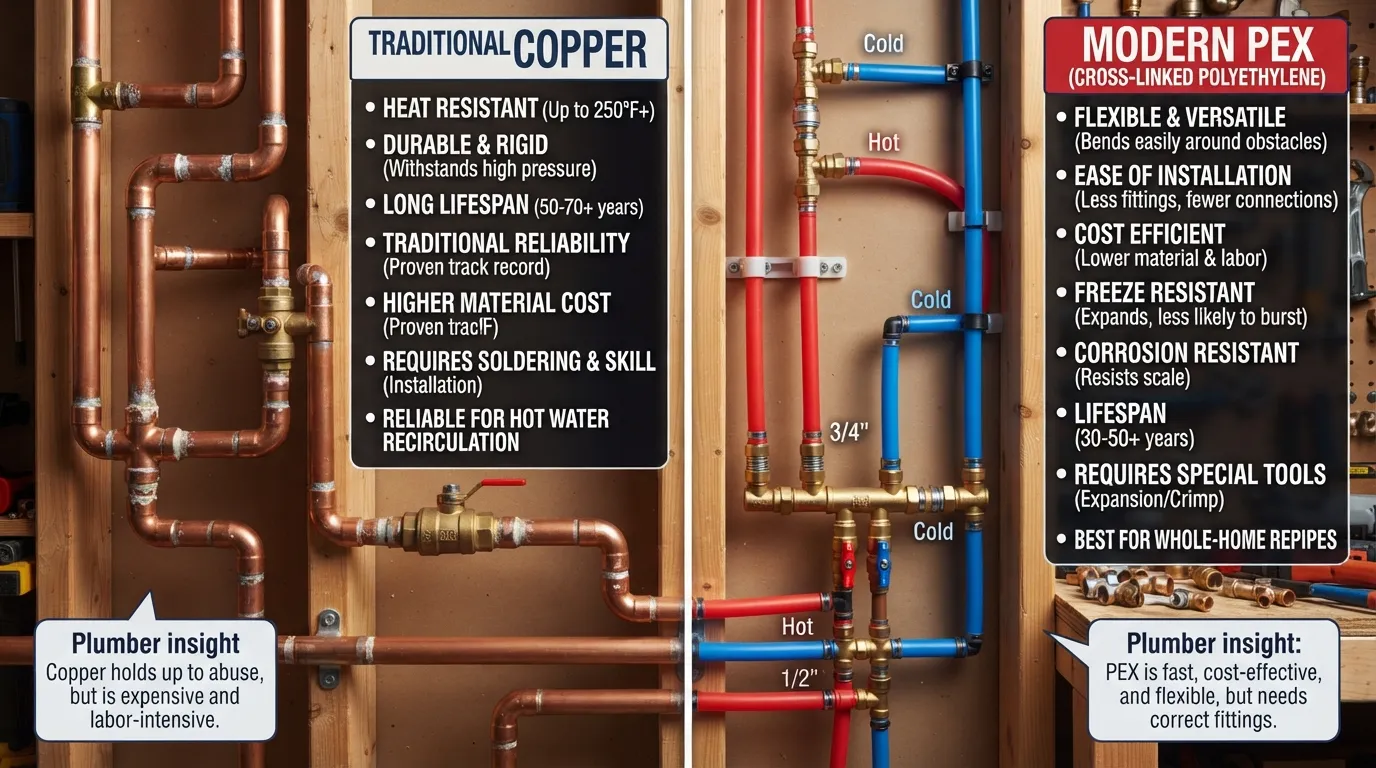 Field experience from licensed trade professionals offers invaluable insight into how plumbing materials actually perform decades after installation. Balancing theoretical lab specs with everyday job-site realities reveals why experienced plumbers have largely embraced flexible synthetic systems while maintaining respect for traditional metal.
Plumber Quote Box
Veterans of the plumbing trade who have spent decades diagnosing leaks, executing whole-house repipes, and handling emergency repairs share consistent perspectives on the copper-to-plastic transition.
- Michael Vance, Master Plumber (30+ Years Experience): “When I started in the trade, everything was copper. But after seeing thousands of homes ravaged by acidic well water and pinhole leaks, switching customers to PEX was a no-brainer. It saves them thousands in labor and eliminates call-backs.”
- Sarah Jenkins, Licensed Residential Contractor: “PEX has completely revolutionized remodeling speed. We can snake flexible lines through tight wall cavities in hours instead of spending days torching copper joints in cramped crawl spaces.”
Common Installation Mistakes We See
While modern PEX and CPVC systems are remarkably forgiving compared to rigid metal, DIYers and inexperienced installers frequently make preventable mistakes that compromise system integrity.
- Kinked Tubing: Forcing PEX around too tight a radius without proper bend supports causes structural kinks that permanently restrict water flow.
- Uncalibrated Crimp Tools: Failing to check crimp rings with a GO/NO-GO gauge results in loose connections that eventually leak under continuous water pressure.
- Inadequate Support Spacing: Neglecting to install plastic hanger clips every 32 inches causes long horizontal runs to sag over time, putting stress on fittings.
What We Would Choose for Our Own Home, and Why
If an experienced plumbing strategist were building or repiping a personal residence today, the choice overwhelmingly favors a hybrid approach centered on modern PEX-A tubing.
- Main Distribution: A home-run PEX-A manifold system utilizing expansion fittings provides balanced water pressure, exceptional freeze tolerance, and zero corrosion risk.
- Exposed Utility Runs: Short, rigid copper drops at the water heater and exposed basement utility walls maintain clean aesthetics and strict thermal compliance.
- Long-Term Peace of Mind: This hybrid strategy maximizes labor efficiency, chemical durability, and long-term reliability without unnecessary expenses.
Myths vs Facts Box
Misconceptions surrounding residential plumbing materials continue to circulate online. Examining these common myths against verified field facts clarifies what to expect from modern systems.
- Myth 1: “Plastic pipes are unsafe and leach chemicals into drinking water.”
Fact: Certified PEX and CPVC piping meeting strict NSF/ANSI 61 health standards are entirely safe for potable domestic water. - Myth 2: “Copper lasts forever under any water condition.”
Fact: Acidic water chemistry aggressively pits copper from the inside out, causing destructive pinhole leaks in under a decade. - Myth 3: “All plastic pipes are the same.”
Fact: Modern PEX is an advanced cross-linked polymer entirely distinct from fragile legacy polybutylene or rigid non-potable PVC drainage pipes.
Frequently Asked Questions
Get concise, direct answers to the most common questions homeowners ask about residential plumbing materials, construction trends, and repiping decisions.
Why did plumbers stop using copper tubing?
Plumbers did not completely stop using copper, but they heavily shifted toward flexible plastic alternatives like PEX because copper is significantly more expensive, labor-intensive to solder with torches, vulnerable to job-site theft, and prone to pinhole leaks when exposed to acidic water chemistry.
Do new homes use PEX or copper?
The vast majority of newly constructed single-family residential homes utilize PEX tubing for their domestic water supply lines. Builders and contractors overwhelmingly prefer PEX for its rapid installation speed, lower material costs, and exceptional resistance to freezing temperatures.
When did they stop using copper pipes in houses?
Copper has never been completely banned or phased out in home construction. However, the mass market industry shift toward flexible PEX accelerated rapidly between 2003 and 2006 following major North American model building code approvals.
Why are water pipes copper?
Traditional water pipes were made of copper because it offers outstanding durability, natural anti-microbial bacterial resistance, high temperature tolerance, and a proven multi-decade lifespan in homes with balanced, neutral water chemistry.
What is the best pipe for a residential water line?
PEX (specifically PEX-A or PEX-B) is widely considered the best overall pipe for modern residential water lines due to its unbeatable combination of affordability, freeze resistance, chemical inertness, and ease of installation.
How can I make water flow through an old, leaking copper pipe again without replacing it?
Temporary fixes include applying rubber repair clamps, epoxy putty, or push-to-connect repair couplings over leaking sections. However, these are strictly short-term band-aids; repeated pinhole leaks indicate systemic corrosion requiring a whole-house repipe.
Are there disadvantages to using metal water pipes?
Yes, metal water pipes suffer from high upfront material costs, heavy labor requirements for soldering, vulnerability to copper theft on job sites, and susceptibility to aggressive internal pitting and pinhole leaks caused by acidic water.
How dangerous is it to have a home with lead or copper-based water pipes?
Legacy lead service lines and older lead-bearing solder joints present severe health hazards by leaching toxic heavy metals into drinking water. While standard copper is safe in neutral water, lead pipes pose serious developmental and neurological risks requiring immediate replacement.
Final Verdict
The transition from rigid metal to flexible synthetic polymer plumbing represents one of the most practical evolutions in modern residential construction. While copper remains a respected, premium material for specific architectural applications, advanced plastics like PEX provide unmatched economic value, installation speed, and chemical durability for the vast majority of homeowners.
Key Takeaways
Reviewing the core advantages and limitations of modern plumbing materials ensures you approach your next building or renovation project with absolute clarity and confidence.
- Cost Efficiency: Plastic PEX tubing cuts raw material expenses and installation labor hours by up to fifty percent compared to copper.
- Corrosion Immunity: Unlike copper, which is vulnerable to acidic water and pinhole leaks, synthetic polymers are entirely inert to corrosive water chemistry.
- Freeze Resistance: PEX possesses high molecular elasticity, allowing it to expand and resist splitting when internal water freezes solid.
- Installation Safety: Eliminating propane torches, toxic fluxes, and open flames prevents accidental fire hazards during tight remodeling projects.
- Strategic Copper Value: Copper remains an exceptional choice for exposed basement utility runs, fire-rated commercial spaces, and historic custom builds.
Our Recommendation by Situation
Different home configurations and environmental conditions demand tailored material selections rather than a one-size-fits-all approach.
- New Construction / Whole-House Repipe: Choose PEX-A or PEX-B manifold systems for maximum cost savings, fast routing, and superior freeze protection.
- Acidic Well Water Homes: Always select inert plastic lines (PEX or CPVC) to prevent destructive copper pinhole leaks.
- Exposed Basement Runs: Utilize rigid copper where pipes remain visible and require clean architectural alignment without sagging.
- Historic or Luxury Custom Builds: Retain high-end copper piping where traditional aesthetics and lifelong fire resistance are top priorities.
Sources and References
To ensure absolute factual accuracy and compliance with rigorous water safety standards, this guide references established plumbing codes, toxicological research, and industry manufacturing specifications.
- International Residential Code (IRC) & International Plumbing Code (IPC) guidelines for plastic and metal piping.
- NSF/ANSI Standard 61 & Standard 14 drinking water system components and health effects documentation.
- ASTM International standards for cross-linked polyethylene (PEX) pressure rating and chlorine resistance testing (ASTM F2023).
- American Water Works Association (AWWA) research publications on residential water chemistry and internal pipe corrosion mechanisms.

Oscar Vance | Master Plumber & Drainage Expert
Meet Oscar Vance, a licensed master plumber sharing practical solutions on residential repairs, preventive maintenance, and thoughtful home upkeep.