Best Lead-Free Solders for Copper Pipes
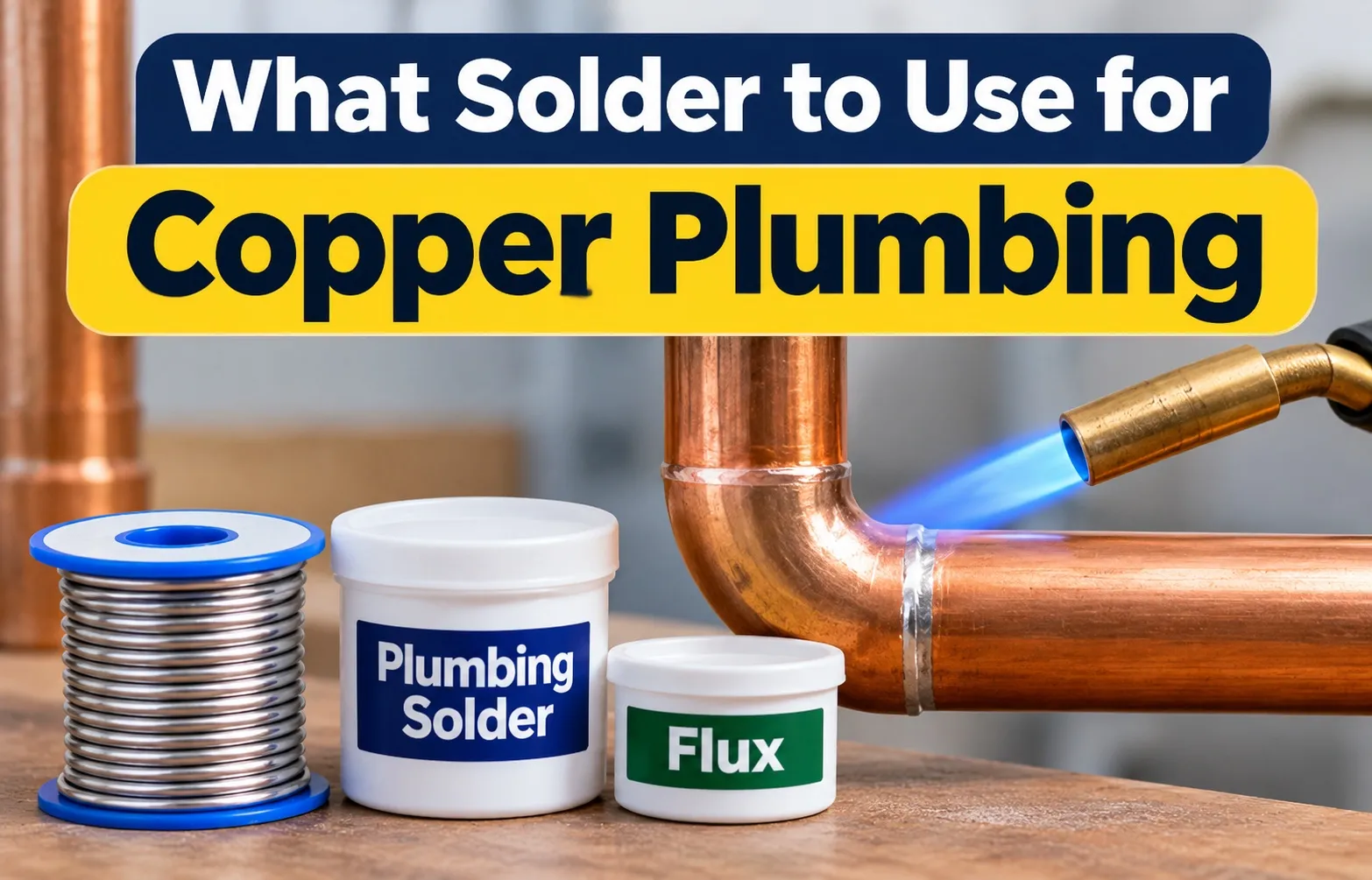 Selecting between lead-free plumbing alloys comes down to pipe diameter, fitting tolerance, and how quickly you want the molten metal to solidify. Both 95/5 tin-antimony and silver-bearing alloys meet strict potable water codes, yet each behaves differently under a propane or MAP-Pro torch.
95/5 Tin-Antimony Solder (The Plumber’s Daily Standard)
Composed of 95% tin and 5% antimony, 95/5 solder is the primary workhorse for everyday residential copper supply lines. It delivers an impressive tensile strength of roughly 5,500 PSI and transitions rapidly from liquid to solid between 450°F and 464°F.
- Narrow Pasty Range: With only a 14°F gap between its solidus and liquidus temperatures, 95/5 sets up almost immediately once you pull the torch away, minimizing the risk of disturbing the joint while cooling.
- Ideal Pipe Sizes: Performs best on clean, snug-fitting 1/2-inch and 3/4-inch Type L or Type M copper pipes where capillary action draws thin liquid solder cleanly into the cup.
- Cost Efficiency: Because it contains no silver, 95/5 tin-antimony is significantly more economical per spool for whole-house repipes and new construction rough-ins.
Tin-Silver & Tin-Copper-Silver Alloys (Best for Gap-Filling & DIYers)
Silver-bearing lead-free solders—such as Oatey Safe-Flo and Harris Bridgit—blend tin with small percentages of silver, copper, or nickel to improve flow control. These alloys melt across a wider temperature range (typically 420°F to 460°F), giving you a longer working window before the joint freezes.
- Superior Gap-Filling Capability: A wider pasty range creates a slightly thicker molten bead that bridges minor imperfections or slightly loose tolerances in worn copper fittings without dripping out.
- Easier Vertical & Overhead Control: When you sweat copper pipe on overhead joists or vertical risers, silver-bearing alloys cling smoothly inside the fitting cup rather than running down the pipe wall.
- Best for Larger Diameters: Excels on 1-inch and larger copper water mains, manifold headers, and heavy-wall brass valves where maintaining uniform heat across the entire joint takes extra time.
Solders You Must Never Use on Copper Plumbing
Using the wrong spool of solder on household water pipes violates building codes, creates severe health hazards, and leads to premature joint failures behind finished walls. Even if an older spool sits in your toolbox from past projects, keep lead-based and electronics solders completely away from potable copper plumbing.
50/50 Tin-Lead Solder (Illegal for Drinking Water)
Traditional 50/50 solder (50% tin, 50% lead) is strictly prohibited by federal and local plumbing codes for any pipe carrying drinking water. Under the U.S. EPA Safe Drinking Water Act lead-free requirements, solder used in potable water systems cannot contain more than 0.2% lead.
- Severe Health Hazards: Standing water inside copper pipes leaches toxic lead directly from 50/50 joints into your tap water, posing irreversible neurological risks, especially to children and pregnant women.
- Failed Plumbing Inspections: Building inspectors routinely test newly sweated copper joints with lead-swab kits; failing a lead test forces a complete tear-out and repipe at your own expense.
- Narrow Non-Potable Exceptions: While 50/50 lead solder is still sold in hardware stores for sheet-metal roof flashing, gutters, and certain non-potable drain applications, keeping it out of your plumbing kit prevents accidental cross-use.
60/40, 63/37, and Rosin/Acid-Core Electrical Solders
Electronics and sheet-metal solders—including 60/40 tin-lead, 63/37 eutectic wire, rosin-core, and acid-core spools—are engineered for circuit boards or ductwork, never pressurized water lines. Not only do most of these alloys contain high percentages of lead, but their internal flux cores actively ruin copper pipe joints.
- Why Rosin-Core Solder Fails: Rosin flux is too weak to strip heavy oxidation from thick copper plumbing fittings and leaves behind a gummy, non-water-soluble residue that blocks smooth capillary action and causes cold leaks.
- Why Acid-Core Solder Causes Pinhole Leaks: Acid-core solder contains aggressive zinc-chloride or hydrochloric acids that cannot be flushed out with water, slowly eating through copper pipe walls from the inside out and causing pinhole leaks months later.
How to Read a Solder Spool Label Before Buying
Before walking out of Home Depot, Lowe’s, or a local plumbing supply house, inspect the front and side labels on the solder spool to verify four exact specifications:
- “Lead-Free” Designation: Prominently printed on the spool face (often color-coded in green or blue packaging to distinguish it from red-labeled lead spools).
- ASTM B32 Compliance: Confirms the alloy meets the American Society for Testing and Materials standard for plumbing solder compositions.
- NSF/ANSI 61 Certification: Guarantees the metal has been independently tested and certified safe for contact with drinking water.
- “Solid Wire” (No Core): Plumbing solder must be solid metal wire (typically 1/8-inch or 0.118-inch diameter) paired with separate external plumbing paste flux.
Don’t Forget the Flux: Matching Paste Flux to Lead-Free Solder
You absolutely need flux when sweating copper pipes to eliminate microscopic surface oxides and enable capillary action. Without flux, molten solder simply balls up and rolls off the hot copper surface instead of drawing into the joint.
Why Lead-Free Solder Requires High-Heat Plumbing Flux
Lead-free alloys like 95/5 tin-antimony and tin-silver require higher working temperatures (roughly 450°F to 465°F) than old lead solders. Cheap or outdated petroleum-based fluxes burn away prematurely at these elevated temperatures, leaving behind charred residue that causes severe oxidation.
- Thermal Protection: High-heat plumbing flux remains active under a propane or MAP-Pro torch, protecting the bare copper until the fitting reaches the exact melting point of lead-free solder.
- Surface Preparation: Before brushing on your flux, always prep your copper fittings and pipes by cleaning them thoroughly with an emery cloth and smoothing edges with a deburring tool.
- Eliminating Dry Joints: Even with clean copper fittings, failing to use a heat-stable flux stops capillary action entirely, creating hidden voids and joint failures under pressure.
Water-Soluble Paste Flux vs. Tinning Flux (Which to Buy?)
Selecting the right flux formula depends on code requirements for drinking water and the condition of your metal surfaces. Using certified products protects your plumbing system from long-term internal corrosion.
- Water-Soluble Paste Flux (ASTM B813): Standard pastes like Oatey No. 95 meet strict ASTM B813 standards and dissolve completely when water lines are pressurized, flushing harmlessly out of the system.
- Tinning Flux: This advanced formula suspends microscopic particles of lead-free solder directly in the paste, coating stubborn or older copper fittings with a thin metallic layer as heat builds.
- Application Technique: Use a clean flux brush to apply a thin, even layer to both the outside of the pipe and inside of the fitting cup immediately after sanding to lock out air and moisture.
Step-by-Step: How to Sweat Copper Pipe Without Cold Joints
Mastering the art of sweating copper pipe requires precise thermal control, proper surface preparation, and patience. Follow this proven three-step trade sequence to eliminate leaks and ensure every joint pulls solid lead-free solder all the way around.
Step 1: Mechanical Prep (Clean, Ream, and Dry-Fit)
The secret to avoiding a cold solder joint begins long before you strike a torch. Solder will never bond to oxidized copper, burrs, or oily residue.
- Scrape and Shine: Scrub the outside of the pipe end and the inside of the fitting cup using an emery cloth or wire fitting brush until the metal shines with bright, raw copper.
- Ream the Edges: Use a pipe reamer or deburring tool to clear away interior burrs left by your tubing cutter, preventing turbulent water flow and turbulence restriction.
- Avoid Finger Oils: Never touch the newly cleaned mating surfaces with bare fingers; skin oils leave a microscopic barrier that repels flux and solder.
Step 2: Flux Application & Heating the Fitting (Not the Solder)
Apply your water-soluble plumbing paste flux immediately after dry-fitting your pipes to seal out ambient air. Proper torch control dictates whether the joint draws solder successfully.
- Torch Selection: Fire up your propane torch or MAP-Pro gas torch (such as a Bernzomatic setup), keeping the blue tip of the flame dancing around the lower third of the fitting cup.
- Heat the Cup, Not the Pipe: Aim your flame at the heavy body of the fitting cup rather than the pipe itself; the fitting absorbs heat and draws solder upward via capillary action.
- Watch the Flux Reaction: Pay close attention as the paste flux bubbles, liquefies, and turns slightly clear or greenish, signaling that the copper has reached the correct activation temperature.
Step 3: Feeding the Solder & Wiping the Joint
Once the fitting is fully heated, remove the direct flame and let physics do the work. Overheating the joint burns the flux and ruins the seal.
- Feed Opposite the Flame: Touch your lead-free wire solder to the bottom or side of the joint opposite where your torch was just focused. If the copper is hot enough, the wire will melt instantly on contact.
- Rely on Capillary Action: Let capillary action draw roughly 1/2-inch to 3/4-inch of molten solder entirely around the circumference of the fitting until a neat, shiny silver ring appears.
- Clean and Cool: Remove the solder wire, allow the joint to cool naturally for a minute, and wipe away remaining flux residue with a damp rag to prevent long-term corrosion.
Troubleshooting: Why Won’t Solder Stick to Copper Pipe?
When molten solder balls up and refuses to draw into a copper fitting, a specific physical barrier is usually sabotaging your thermal transfer. Diagnosing the root cause immediately saves you from wasting materials and enduring recurring water leaks.
The #1 Culprit: Residual Water in the Pipe (And How to Stop It)
If a single drop of moisture lingers inside a wet copper line, your joint will never reach the ~450°F required to melt lead-free solder. Because water boils at 212°F, it continuously absorbs thermal energy and turns into steam, acting as an absolute heat sink that freezes the metal.
- The White Bread Trick: Stuffing a plain piece of white crustless bread deep up the pipe temporarily blocks trickling water long enough to sweat the joint; the bread dissolves harmlessly into mush when the water is turned back on.
- Jet Sweat Tools: Inserting a professional Jet Sweat tool into an active water line plugs the pipe internally with a rubber gasket, letting you solder cleanly before pulling the plug out.
- Shop Vac Extraction: Hooking up a wet/dry shop vac to an open end or low-point drain allows you to suction standing water completely out of the vertical riser.
Overheating and “Burning” the Flux
Leaving your torch flame trained on one side of a fitting for too long destroys your paste flux. Instead of protecting the metal, excessive heat turns the flux into a blackened, carbonized crust of burned flux that aggressively repels solder.
- Recognizing the Failure: If the copper turns dark brown or black and the solder beads up like water on a waxed car, the flux is completely dead.
- The Correct Fix: You cannot salvage a burned joint by adding more flux or heat. You must let the pipe cool, pull the fitting apart, re-sand the copper to bright metal, and start over.
Poor Cleaning or Uneven Heating on Thick Brass Valves
Connecting thin-walled copper tubing to heavy-duty cast components often results in cold joints due to uneven mass and thermal absorption. Brass ball valves and heavy adapters require significantly more heat than standard copper lines.
- Type L vs. Type M Copper: Thicker-walled Type L copper takes longer to reach soldering temperature than thin-walled Type M copper, requiring deliberate torch movement across both pipes.
- Thermal Mass Balance: When sweating onto a brass ball valve, direct 70% of your torch flame onto the heavy valve body and only 30% onto the copper tube so both components reach soldering temperature simultaneously.
Solder vs. SharkBite & Alternatives: When Should You Sweat Pipes?
While sweating copper with lead-free solder remains the gold standard for permanent residential plumbing, modern flame-free alternatives offer distinct advantages in specific repair scenarios. Choosing the right connection method depends on whether the joint will be permanently sealed inside a wall or left accessible for emergency maintenance.
Sweating Copper vs. SharkBite Push-to-Connect Fittings
A properly sweated copper joint fuses two pieces of metal into a monolithic, rigid connection that easily lasts 50+ years behind drywall. Conversely, SharkBite fittings rely on internal stainless steel teeth and a rubber EPDM O-ring to grip the outside of the pipe without heat.
- Long-Term Reliability & Cost: Copper solder fittings cost pennies per joint and never degrade over decades, whereas push-to-connect fittings cost $10 to $25 each and depend on a synthetic EPDM O-ring that can stiffen or fail if subjected to pipe movement or high pressure spikes.
- When SharkBite Wins: Push-to-connect fittings are unmatched for emergency wet-line repairs where water cannot be fully shut off, or inside tight stud bays filled with dry framing and insulation where an open torch flame poses a severe fire hazard.
- Why Plumbers Prefer Solder Behind Walls: Most licensed plumbers reserve SharkBite fittings for exposed, accessible utility spaces and insist on traditional lead-free solder whenever pipes are permanently enclosed behind tile or drywall.
ProPress & Compression Fittings (Other No-Flame Alternatives)
If you want a permanent, flame-free copper connection without relying on push-to-connect fittings, two mechanical alternatives deliver proven trade performance:
- Copper ProPress Fittings: Widely used by commercial and residential contractors, ProPress fittings use a specialized battery-powered hydraulic crimping tool to permanently deform a copper fitting and internal EPDM O-ring onto the pipe in seconds, even with residual water present.
- Brass Compression Fittings: Ideal for exposed under-sink angle stops and appliance supply lines, compression fittings tighten a brass ferrule ring against the copper tubing using two wrenches—creating a watertight mechanical seal with zero heat or specialized power tools.
Frequently Asked Questions
Can you use too much flux when soldering copper pipe?
Yes, applying excessive paste flux pushes unreacted chemicals inside the copper pipe during assembly. Once heated, that trapped residue runs down the interior wall, creating acidic localized hotspots that accelerate pitting corrosion and eventually cause premature pinhole leaks.
- Best Practice: Brush only a thin, even coat onto the male pipe end and inside the fitting cup, then thoroughly flush newly installed water lines with cold water before putting them into service.
What solder is required for copper plumbing in California?
California enforces strict potable water rules under the AB 1953 California lead-free law (Health & Safety Code § 116875), which mandates a weighted average lead content of no more than 0.25% across wetted surfaces. Standard lead-free 95/5 tin-antimony and tin-silver solders certified to NSF/ANSI 61 fully comply with California plumbing codes.
Can you use plumbing solder on copper HVAC refrigerant lines?
No, standard plumbing solder cannot withstand the extreme operating pressures and thermal vibration of air conditioning or heat pump refrigerant lines. HVAC technicians join copper refrigerant tubing using high-temperature HVAC brazing (above 1,100°F) with a 15% silver brazing rod such as Sil-Fos, rather than soft plumbing solder.
What solder should you use for copper electrical wire instead of pipes?
For splicing copper electrical wire or circuit components, use 60/40 tin-lead or lead-free rosin-core electronics solder instead of solid plumbing wire. Plumbing paste flux contains corrosive chemicals that eat through fine copper wire strands and ruin electrical conductivity over time.

Oscar Vance | Master Plumber & Drainage Expert
Meet Oscar Vance, a licensed master plumber sharing practical solutions on residential repairs, preventive maintenance, and thoughtful home upkeep.