How Long Does It Take to Learn Plumbing
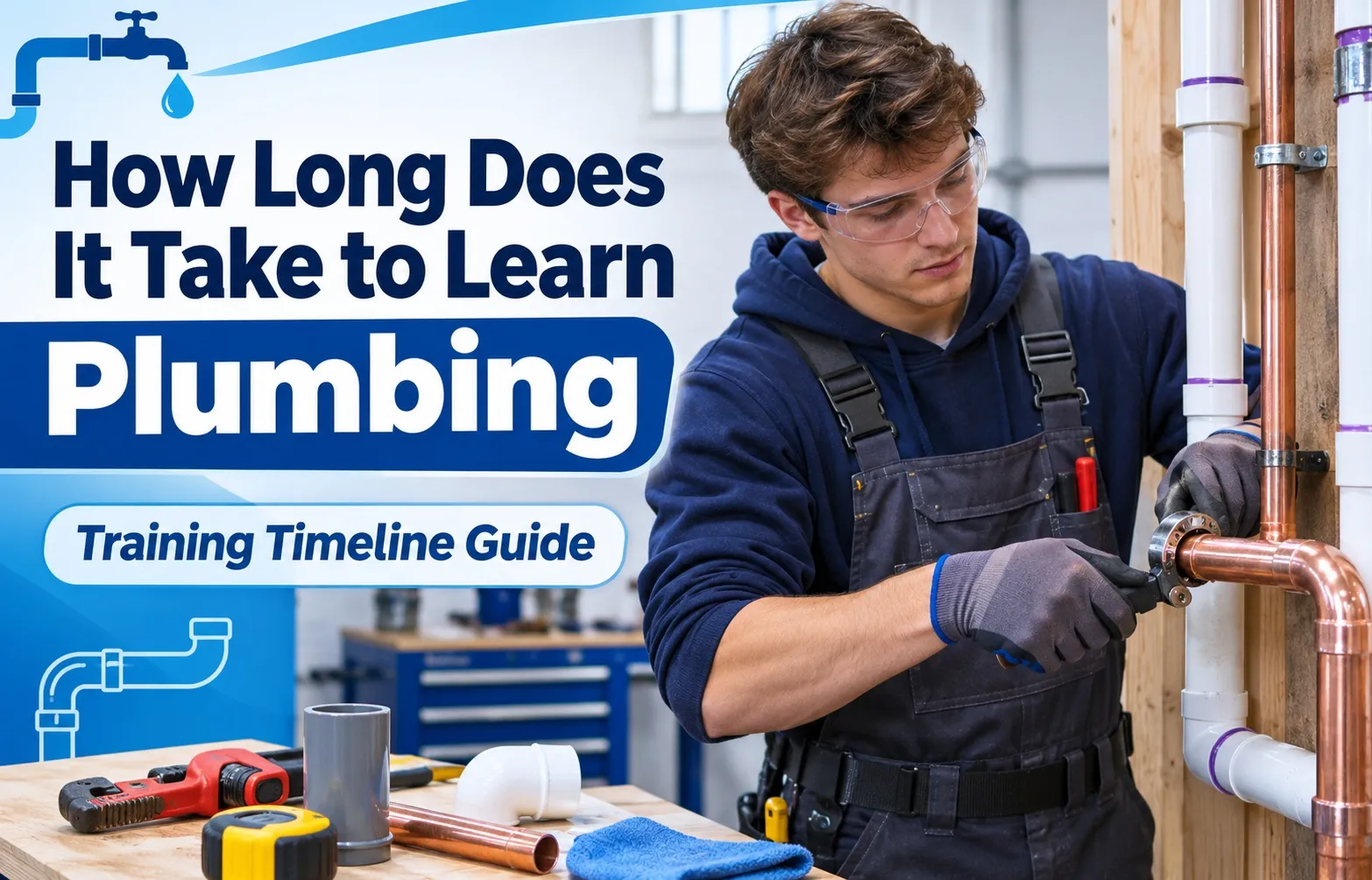 Learning plumbing takes anywhere from 6 weeks for basic entry-level helper readiness to 4 or 5 years of combined training and field experience to become a fully licensed professional. Achieving advanced master plumber status generally requires 7 to 10 years of consistent industry practice.
Whether you are looking to start a lucrative vocational career or simply want to understand the educational milestones involved, mapping out the precise commitment helps you choose the right training pathway from day one.
The Core Timeline at a Glance
The journey from a complete beginner to an independent trade professional is structured around distinct milestones and competency tiers. Each stage requires specific combinations of classroom hours, practical field hours, and state-regulated examinations.
- Weeks 1 to 6 (Helper Readiness): Short-term vocational courses or basic safety bootcamps prepare candidates to enter the workforce as an entry-level plumbing helper.
- Years 1 to 4/5 (Plumbing Apprenticeship): The foundational stage combining paid on-the-job training under master supervision with structured technical instruction.
- Years 4 to 5 (Journeyman Plumber): Upon logging required field hours and passing board exams, candidates earn their journeyman license to work independently.
- Years 7 to 10+ (Master Plumber): Advanced leadership status allowing professionals to run contracting businesses, pull commercial permits, and supervise other tradespeople.
Why the Timeline Varies: Training vs. Licensing
A common point of confusion for career switchers is the distinction between finishing a formal educational program and legally practicing the trade. Completing a trade school certificate does not automatically grant authorization to work without supervision.
Regional regulations enforced by local licensing boards dictate the exact legal requirements for professional certification. Key variables that alter your personal timeline include:
- State and Municipal Regulations: Different states require varying thresholds of logged field hours before candidates are permitted to sit for state licensing board exams.
- Training Format: Full-time vocational programs accelerate classroom learning, whereas part-time night classes extend the instructional phase while allowing students to maintain outside employment.
- Union vs. Non-Union Programs: Structured union apprenticeships often follow strict hour-tracking schedules, while non-union paths may offer flexible employment arrangements.
The Three Training Pathways Compared: Time, Cost, and Commitment
Entering the plumbing profession requires choosing among three distinct educational routes, each balancing upfront costs, time commitments, and career outcomes differently. Weighing these options allows prospective tradespeople to match their financial situation and lifestyle with professional goals.
Route 1: Short-Term Intro & Helper Courses (1 to 3 Months)
Short-term introductory courses provide the fastest entry into the field by teaching basic pipe-fitting terminology, safety protocols, and foundational tool handling over a span of 1 to 3 months. These programs do not grant a professional license, but they immediately qualify graduates for entry-level helper positions.
Key structural features of short-term programs include:
- Rapid Workforce Entry: Ideal for individuals wanting to test the trade before committing years to formal schooling.
- Basic Skill Acquisition: Covers fundamental safety regulations, hand tools, and material identification.
- Employment Status: Graduates enter job sites strictly as an entry-level plumbing helper under direct supervision.
Route 2: Vocational Trade School Certificate Programs (6 Months to 2 Years)
Vocational trade school and technical school certificate programs provide comprehensive classroom and lab instruction over 6 months to 2 years. These structured programs dive deep into plumbing blueprints, advanced building codes, and complex drainage systems before students ever step foot on a commercial job site.
Important advantages and limitations of technical school tracks:
- Comprehensive Theory: Deep classroom immersion in municipal plumbing codes and hydraulic mathematics.
- Hands-On Lab Training: Practical shop practice involving soldering, PVC welding, and fixture installation.
- Licensing Prerequisite: While it builds strong technical knowledge, trade school alone does not replace required field hours for state examinations.
Route 3: The Traditional Apprenticeship (4 to 5 Years) The Gold Standard
The traditional apprenticeship is the ultimate industry standard, combining 4 to 5 years of paid, hands-on field experience with mandatory classroom instruction. Operating on an earn-while-you-learn model, apprentices earn a percentage of journeyman wages while logging the exact hours required by state boards.
Core pillars of the traditional apprenticeship model:
- Earn-While-You-Learn Structure: Trainees receive hourly compensation during field work, offsetting or eliminating student debt.
- Balanced Requirements: Typically pairs 2,000 annual hours of on-the-job training with 144 to 200 hours of yearly classroom study.
- Direct Licensure Pathway: Upon completion, graduates automatically qualify to sit for their journeyman licensing exam.
Comparison Table: Cost, Time, and Career Readiness
Step-by-Step Career Progression Milestones in Plumbing
Advancing through the plumbing profession follows a structured, multi-tier career ladder designed to ensure safety, technical mastery, and regulatory compliance. Understanding these milestones helps you map out your professional growth from an entry-level worker to an independent contractor.
Stage 1: Plumbing Helper / Apprentice (Years 0–5)
Entering the trade as a helper or apprentice marks the foundational stage of your career, where you earn an hourly wage while working directly under licensed professionals to master basic tool handling, safety protocols, and foundational pipe-fitting techniques across thousands of active job sites.
Key responsibilities and requirements during this stage include:
- Safety Certification: Earning an OSHA safety certification early to ensure job-site compliance and hazard awareness.
- Hands-On Practice: Assisting senior plumbers with material staging, trench digging, and basic pipe-fitting assembly.
- Hour Tracking: Meticulously logging every shift to meet state licensing board requirements for graduation.
Stage 2: Journeyman Plumber (Passing the State Exam)
Reaching the journeyman level represents a major career milestone that grants you the legal authority to work independently, install complex plumbing systems, and manage service calls without direct oversight once you successfully pass your regional licensing board’s rigorous examinations.
Core elements of transitioning to a journeyman include:
- Comprehensive Testing: Passing both a rigorous practical and written exam covering blueprint reading, water supply mathematics, and safety laws.
- Independent Operations: Diagnosing plumbing failures, installing residential fixtures, and executing repairs solo.
- Mentorship Role: Guiding newly entered helpers and apprentices on active job sites.
Stage 3: Master Plumber (Years 7–10+)
Becoming a master plumber is the pinnacle of the trade, requiring 7 to 10 years of total industry experience and advanced testing to unlock the ability to run your own contracting business, pull commercial permits, and supervise teams of apprentices.
Privileges and responsibilities unlocked at the master level:
- Business Ownership: Establishing independent plumbing contracting businesses, hiring staff, and bidding on commercial projects.
- Permit Authority: Legally pulling official municipal permits and designing large-scale plumbing infrastructure layouts.
- Advanced Accountability: Ensuring all work performed by junior staff strictly adheres to municipal and state codes.
Understanding the 2,000 Field Hours and 144 Classroom Hours Rule
The core metric governing every plumbing career progression is the annual requirement of completing 2,000 hours of supervised on-the-job training paired with 144 to 200 hours of technical classroom instruction to ensure complete compliance with local building codes.
Why this standardized framework matters for your career:
- Regulatory Standard: State licensing boards enforce these exact ratios to maintain high industry competency and public safety.
- Theory Meets Practice: Classroom hours teach complex math and local building codes, while field hours build real muscle memory.
- Path to Licensure: Accumulating these structured hours over 4 to 5 years is the only legal pathway to sit for your journeyman evaluation.
State-by-State Regulations and How Local Laws Dictate Your Timeline
Regional regulations and state licensing board requirements directly alter how fast you can become a licensed professional, as mandatory hour thresholds and examination standards vary drastically across different jurisdictions. Understanding these geographic differences is critical for anyone planning a smooth transition into the trade. For detailed national data on industry standards and employment projections, you can review the U.S. Bureau of Labor Statistics Plumber Overview.
Why Location Matters in Plumbing Training
Geographic location dictates not only the length of your apprenticeship but also the specific types of mechanical systems and safety protocols you must master. Climate differences, environmental hazards, and municipal infrastructure designs mean training requirements are rarely identical across state lines.
- Varying Hour Thresholds: Some state boards mandate strict 2,000-hour annual field minimums, while other regions accept alternative credit combinations or accelerated technical school hours.
- Climate-Specific Codes: Northern jurisdictions focus heavily on freeze-prevention, insulation standards, and heavy winter loads, whereas coastal or drought-prone regions enforce strict water conservation and backflow prevention codes.
- Scope of Practice Rules: Certain regional authorities permit apprentices to perform specific installation tasks earlier in their training than restricted urban or heavily regulated municipal districts.
Navigating State Licensing Boards and Local Codes
State licensing boards establish the overarching legal framework for professional testing, background checks, and credential renewals, while local building codes govern daily installation practices. Navigating these overlapping authorities requires meticulous documentation of your training hours and adherence to municipal standards.
- Licensing Board Oversight: Each state board sets unique criteria for moving from helper to journeyman, frequently including mandatory ethics modules or board-administered practical evaluations.
- Reciprocity Agreements: Certain states maintain interstate reciprocity agreements that allow fully licensed journeymen to transfer their credentials across borders without restarting the apprenticeship clock.
- Local Code Compliance: Municipalities frequently enforce localized code amendments that exceed baseline state rules, making local municipal code familiarity essential for passing official building inspections.
The Financial Reality Check: Debt vs. Paid Training and Earning Potential
Evaluating the financial aspect of entering the plumbing industry reveals a stark contrast between traditional education debt and the lucrative earn-while-you-learn model. Understanding these financial dynamics helps prospective tradesmen map out a secure path toward high-paying trade careers.
Paying for School vs. Earn-While-You-Learn
Traditional trade school programs require paying significant upfront tuition costs without immediate financial returns, whereas structured plumbing apprenticeships utilize an earn-while-you-learn model that pays an hourly wage from day one. This financial structure allows trainees to graduate debt-free while building hands-on mastery.
Financial distinctions between training formats include:
- Upfront Tuition Burden: Vocational certificates and technical schools require out-of-pocket tuition or student loans before employment begins.
- Graduated Hourly Apprentice Pay: Apprentices earn a percentage of journeyman wages that increases systematically every year as their technical skills advance.
- Zero-Debt Advantage: Earning an income while completing required classroom hours prevents student loan accumulation, creating an immediate positive net worth.
Earning Potential: Can Plumbers Make $100,000+?
Professional plumbers routinely earn six-figure incomes once they reach journeyman or master status, especially when factoring in overtime, specialized commercial plumbing contracts, and independent business ownership. Plumbing consistently ranks among the most financially rewarding trade careers available today.
Key factors that drive six-figure plumber earnings:
- Overtime and Emergency Rates: After-hours call-outs, weekend repairs, and emergency service contracts command premium hourly rates and overtime pay.
- Commercial and Industrial Scaling: Handling complex piping layouts, specialized systems, and commercial permits significantly elevates base salaries.
- Contracting and Business Ownership: Master plumbers who launch their own independent companies control their profit margins, turning high-level skills into substantial enterprise wealth.
Overcoming Common Barriers: Age, Experience, and Career Switching in Plumbing
Entering the plumbing trade later in life is increasingly common, with mature apprentices bringing valuable discipline, life experience, and reliability to the job. Age is rarely a barrier in the skilled trades, where contractors prioritize strong work ethics and mechanical aptitude over youthful inexperience.
Is It Too Late to Start Plumbing in Your 30s or 40s?
Starting a plumbing career in your 30s or 40s is entirely feasible and frequently welcomed by employers. Mature apprentices possess established professional habits, accountability, and communication skills that make them exceptionally dependable on active commercial and residential job sites.
Why starting later in life offers distinct professional advantages:
- Professional Reliability: Mature workers typically display superior punctuality, focus, and adherence to workplace safety regulations.
- Long-Term Financial Security: Transitioning mid-career into a high-demand trade provides decades of steady, recession-resistant earning potential.
- Sustainable Physical Demands: Modern power tools, mechanized pipe cutters, and hydraulic equipment reduce heavy physical strain, making the trade sustainable across all age brackets.
How Transferable Skills Give Career Switchers an Edge
Career switchers entering the plumbing industry do not start from scratch because they bring valuable transferable skills from previous occupations. Strong customer service backgrounds, problem-solving capabilities, and basic mechanical aptitude significantly accelerate a beginner’s integration into the trade.
Key competencies that help career switchers excel early:
- Client Communication: Prior experience in customer-facing roles helps professionals explain complex repairs and pricing clearly to homeowners.
- Analytical Problem-Solving: Critical thinking from prior industries helps trainees troubleshoot unexpected system failures and plumbing bottlenecks efficiently.
- Basic Mechanical Aptitude: Familiarity with hand tools, spatial reasoning, and measurements speeds up the mastery of pipe-fitting tasks.
What a First-Day Job Site Actually Looks Like (Practical Insights)
Stepping onto your first job site as a newly hired plumbing helper involves structured orientation, safety briefings, and shadowing experienced tradespeople. Understanding first-year helper expectations helps new entrants navigate their initial days on site with confidence and clarity.
What a beginner can expect during their first week on the job:
- Job-Site Orientation: Reviewing mandatory safety protocols, wearing required personal protective equipment (PPE), and learning site hazard rules.
- Material Organization: Assisting senior plumbers by hauling tools, staging PVC and copper pipes, and keeping workspaces clean.
- Shadowing and Observation: Spending significant time watching licensed plumbers assemble fixtures and solder joints before performing hands-on work.
Frequently Asked Questions About Learning Plumbing
Addressing common questions about trade difficulty, employment speeds, and sector differences provides clarity for prospective tradespeople while capturing essential search engine intent and community insights.
Is plumbing a hard skill to learn?
Plumbing is a challenging trade that blends physical coordination with complex mathematical and spatial reasoning. While anyone can grasp basic pipe-fitting with dedication, mastering municipal codes and achieving long-term success requires continuous professional development over several years.
- Technical Knowledge: Memorizing local building codes and understanding water supply mathematics demand rigorous study.
- Physical Demands: Maneuvering in tight crawlspaces and lifting heavy materials requires solid stamina.
- Continuous Growth: Modern smart home systems and new piping materials require ongoing training throughout your career.
How fast can I get a job as a plumbing helper with zero experience?
You can secure an entry-level helper position within just 1 to 3 months by completing a short vocational course, earning basic safety certifications, or directly applying to local contractors. Many beginners utilize self-paced learning resources to master terminology before hitting job sites.
- Short-Term Prep: Completing a basic 6-week orientation course builds instant familiarity with tools and terminology.
- Direct Outreach: Visiting local plumbing shops in person often yields faster hiring results than online job boards.
- Reliability Focus: Contractors prioritize punctuality, clean driving records, and work ethic over prior experience when hiring helpers.
What is the difference between residential plumbing and commercial plumbing training timelines?
Residential plumbing training typically moves faster, focusing on straightforward single-family home systems, whereas commercial plumbing apprenticeships require a longer, more rigorous timeline to master massive infrastructure, heavy industrial equipment, and complex blueprint specifications.
- Residential Scope: Focuses on domestic water heaters, bathroom fixtures, and smaller PEX or copper lines.
- Commercial Scale: Involves multi-story drainage networks, cast-iron stacks, and commercial-grade backflow preventers.
- Timeline Impact: Commercial specialists often require extended blueprint training and specialized system certifications.

Oscar Vance | Master Plumber & Drainage Expert
Meet Oscar Vance, a licensed master plumber sharing practical solutions on residential repairs, preventive maintenance, and thoughtful home upkeep.