How Long Does a Landlord Have to Fix Plumbing Issues?
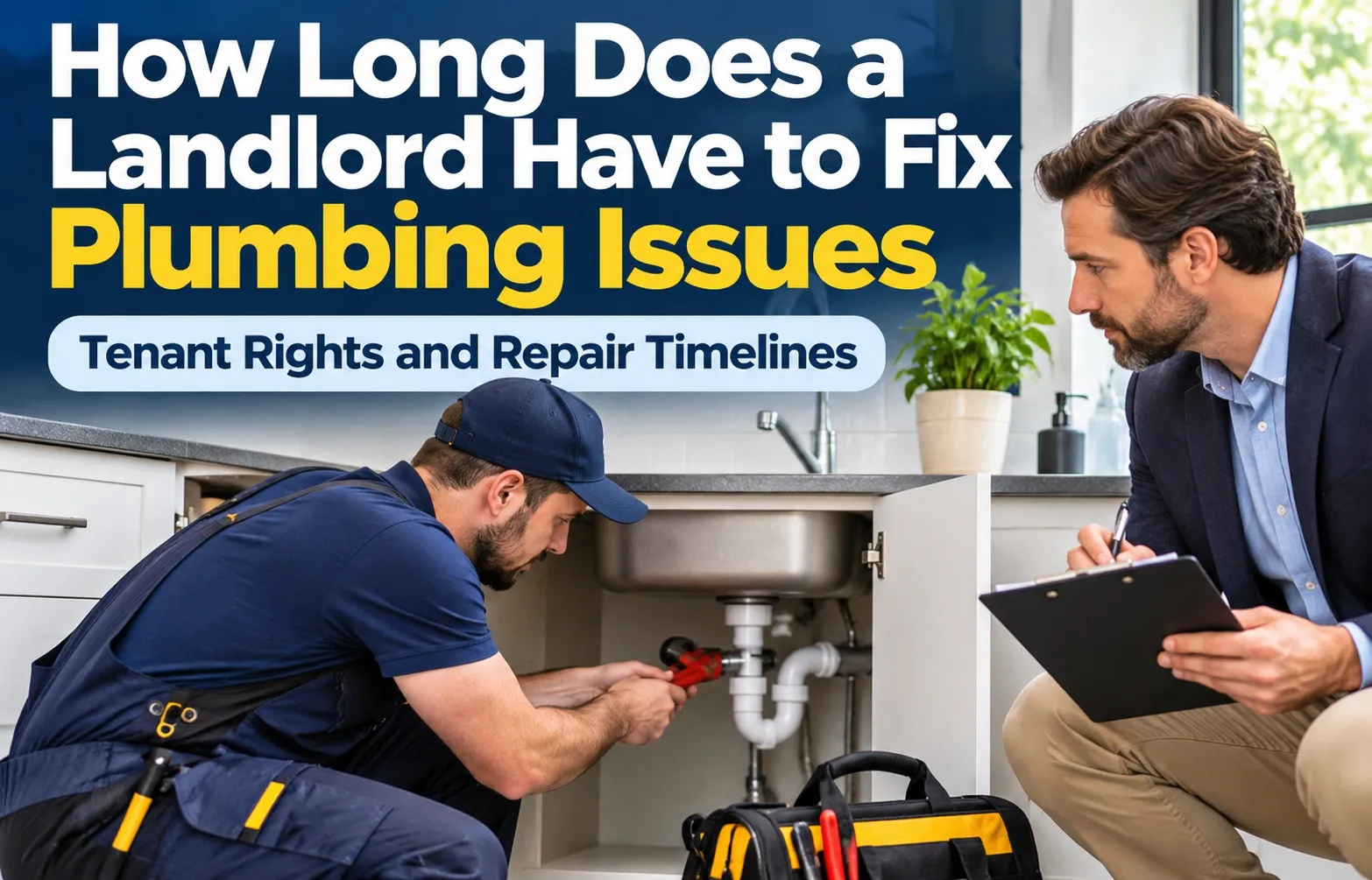 In most jurisdictions, a landlord has 24 to 48 hours to initiate repairs for emergency plumbing issues and up to 14 to 30 days to address non-emergency or routine repairs. The legal deadline begins immediately after the tenant provides official written notice of the defect.
Failure to resolve serious plumbing defects within these established windows violates the implied warranty of habitability, giving tenants legal grounds to pursue statutory remedies under local housing code standards.
Timeline Overview: Emergency vs. Routine
Plumbing defects are legally categorized by severity, which directly dictates the mandatory repair window assigned to the property manager or landlord:
- Emergency Plumbing Issues (24 to 48 Hours): Severe problems that pose an immediate risk to tenant health, physical safety, or property integrity require action within 1 to 2 days. Examples include total loss of running water, major sewer line backups, active flooding, or a completely non-functional toilet in a single-bathroom unit.
- Urgent Plumbing Issues (3 to 7 Days): Significant defects that severely impact daily living without causing immediate structural destruction usually require resolution within a week. Examples include failing water heaters, severe slow drains affecting multiple fixtures, or substantial supply line leaks.
- Routine or Non-Emergency Plumbing Issues (14 to 30 Days): Minor defects that cause minor inconvenience fall under a general standard of reasonable time, capping out at 30 days. Examples include dripping faucets, running toilets, slow bathroom sinks, or minor cosmetic water stains.
Why State and Local Laws Change the Clock
While general standards dictate the repair framework, specific landlord repair timelines are codified at state and municipal levels. State property codes set overarching statutes, but city-level housing maintenance codes frequently establish far stricter compliance windows for landlords.
Local statutes modify repair timelines through several specific legal mechanisms:
- Municipal Housing Codes: Densely populated metropolitan areas often mandate a strict 24-hour repair window for critical habitability defects, overriding broader state allowances.
- Written Notice Mandates: The statutory clock generally does not start on verbal notification. Formal written notice sent via certified mail, official tenant portals, or direct electronic communication is legally required to establish the exact timestamp for repair compliance.
- Weather and Extreme Conditions: Local emergency statutes may shorten repair timelines during severe weather events, such as freezing temperatures that threaten pipe integrity or municipal water shortages.
Plumbing Timeline Matrix by Severity and Fixture
Landlord repair obligations depend entirely on how severely a plumbing defect threatens tenant health, habitability, or property safety. Categorizing plumbing failures by urgency clarifies precisely when legal action must be taken.
Emergency Plumbing (24 to 48 Hours)
Emergency plumbing failures require immediate landlord intervention within 24 to 48 hours because they pose an imminent threat to human health, sanitation, or structural integrity. Tenants experiencing these hazards can escalate matters rapidly if management fails to respond.
- Burst Pipes: Uncontrolled water flow that threatens electrical systems and structural drywall requires emergency shut-off and professional repair within 24 hours.
- Sewage Backups: Raw waste flooding living areas represents a severe biohazard, mandating immediate remediation within 24 hours under health codes.
- Total Loss of Running Water: Complete deprivation of potable water makes a residential property legally uninhabitable, requiring same-day or 24-hour action.
- Broken Toilet (Single Bathroom): A completely non-functional toilet violates sanitation habitability rules and demands service within 24 to 48 hours.
Urgent Plumbing (3 to 7 Days)
Urgent plumbing issues significantly disrupt daily living and risk secondary damage, though they do not present an immediate threat to life or health. Landlords are legally expected to resolve these defects within 3 to 7 days following formal notification.
- Leaking Ceiling: Water intrusion from upper floors or a roof penetration risks mold growth and structural decay, requiring action within 3 to 5 days.
- Failing Water Heaters: Intermittent hot water supply or severely compromised heating capacity must typically be restored within 3 to 7 days.
- Severe Slow Drains: Significant blockages affecting major household fixtures require timely clearance to prevent complete backup.
Routine or Minor Plumbing (Up to 30 Days)
Routine maintenance issues cause inconvenience rather than habitability violations, falling under a general reasonable time standard that defaults to 30 days under most state statutes.
- Dripping Faucet: Constant water drips or minor valve leaks require resolution within standard maintenance windows.
- Slow-Running Sink: Minor buildup causing slow drainage can be scheduled during routine property maintenance rounds.
- Cosmetic Leaks: Minor external pipe condensation or non-structural aesthetic flaws are addressed within the standard 30-day window.
Comprehensive Fixture-by-Fixture Breakdown (Table Format)
The following reference matrix matches specific plumbing problems to their corresponding severity classifications and mandatory legal response windows:
State-by-State Legal Standards and Local Plumbing Regulations
Landlord repair obligations are governed primarily by state property statutes and municipal housing codes, establishing distinct legal timelines, notice requirements, and tenant remedies across different jurisdictions.
California Tenant Plumbing Regulations
Under the California Civil Code and the statewide implied warranty of habitability, landlords are legally mandated to maintain functional plumbing and sanitation. Emergency plumbing defects require action within 24 to 48 hours, whereas routine maintenance defaults to a 30-day standard. Tenants can verify formal legal steps through the California Courts Self-Help Guide.
- Emergency Response: Severe leaks, raw sewage overflow, and loss of water require intervention within 24 to 48 hours.
- Statutory Notice: Written notice triggers the legal repair window, though true emergencies permit expedited action.
- Repair and Deduct: California law permits qualified tenants to fix critical plumbing issues and deduct costs from rent if landlords fail to act within a reasonable time.
New York Housing Maintenance Codes
New York real property law and the rigorous New York City Housing Code hold landlords to strict habitability standards regarding plumbing systems, hot water supply, and structural water drainage.
- Hot Water and Sanitation: Complete loss of hot water or functional toilet facilities constitutes an immediate emergency requiring resolution within 24 hours.
- Municipal Enforcement: NYC and other major municipalities enforce stricter local codes that supersede broader state statutes, carrying heavy penalties for non-compliant landlords.
- Rent Impairment: Tenants experiencing prolonged plumbing failures can file housing code violations and pursue rent reductions through administrative housing courts.
Texas Property Code Timelines
The Texas property code governs landlord repair obligations through specific statutory notice requirements and defined response windows following formal tenant communication.
- Seven-Day Statutory Window: Landlords are generally allowed a reasonable time of 7 days after receiving written notice to remedy conditions that materially affect physical health or safety.
- Written Notice Mandate: Texas law explicitly requires tenants to send repair requests via certified mail or formal tracking channels to establish legal compliance.
- Emergency Exemptions: True structural emergencies or hazards threatening immediate bodily harm require landlords to mitigate risks far faster than the standard 7-day rule.
Florida Landlord-Tenant Statute 83
Under Florida statutes, Chapter 83 outlines landlord responsibilities to maintain plumbing, structural integrity, and compliance with applicable housing and health codes.
- Seven-Day Notice to Cure: If a landlord fails to maintain plumbing fixtures, tenants must typically provide a 7-day written notice specifying the defect and demanding repair.
- Habitability Standards: Failure to correct plumbing issues that render a dwelling untenable allows tenants to withhold rent or terminate the lease agreement lawfully.
- Local Ordinances: County and city building codes across Florida frequently impose supplemental requirements for water supply and waste disposal maintenance.
The Liability Question Who Actually Pays for Plumbing Repairs?
Determining financial responsibility for plumbing repairs depends on identifying the root cause of the damage. Landlords are legally required to maintain structural pipes and fix issues resulting from aging infrastructure, whereas tenants bear financial liability when plumbing failures stem from misuse or negligence.
When the Landlord is 100% Responsible (Wear, Tear, and Structural Issues)
Property owners carry sole financial liability for plumbing repairs caused by systemic failure, structural degradation, or normal wear and tear. Landlords cannot legally charge tenants or deduct repair costs from a security deposit when failures occur within standard infrastructure limits.
- Tree Root Intrusion: External tree roots invading underground pipes or disrupting the main sewer line fall entirely under landlord responsibility.
- Aging Pipe Infrastructure: Corrosion, pinhole leaks, pipe fatigue, or joint failures resulting from old plumbing systems are structural maintenance liabilities.
- Fixture Wear and Tear: Worn washers, corroded valve seats, failing water heater elements, and degraded gaskets require landlord-funded maintenance.
When the Tenant is Liable (Misuse and Improper Flushing)
Tenants become financially responsible for plumbing repairs when damage results from intentional misuse, unauthorized modifications, or tenant negligence. If improper actions trigger a blockage or rupture, the landlord can bill the tenant directly for plumbing invoices.
- Flushed Wet Wipes and Foreign Objects: Flushing non-flushable items—such as wipes (even those labeled “flushable”), paper towels, feminine hygiene products, or trash—constitutes tenant negligence.
- Grease and Food Accumulation: Pouring cooking oils, animal fats, or fibrous food waste down kitchen drains leads directly to tenant liability for line clearing.
- Unreported Leaks: Failing to report an active, visible leak promptly can make a tenant partially liable for secondary water or structural damage caused by neglect.
How Fault is Proved (Plumber Inspections and Documentation)
Resolving disputes over plumbing liability relies on objective professional evaluation. Licensed plumbers inspect the physical blockage or break to pinpoint the exact source of damage.
- Camera Line Inspections: Plumbers feed video cameras down main sewer lines to capture clear evidence of tree root intrusion versus compact blockages of non-flushable debris.
- Detailed Service Invoices: Plumber write-ups state the exact cause of failure (e.g., “Cleared clog consisting of flushable wipes” vs. “Collapsed galvanized pipe”). These invoices serve as primary evidence for security deposit deductions or legal disputes.
- Historical Maintenance Records: Documented histories of pre-existing plumbing issues help establish whether a problem is a recurring structural failure or an isolated tenant-caused blockage.
Step-by-Step Action Plan and Legal Remedies for Tenants
When a landlord fails to address critical plumbing failures, tenants must follow a precise legal protocol to protect their rights and compel action. Executing proper documentation, issuing a formal demand, and understanding available statutory remedies ensures full legal compliance and accountability.
Step 1: Document the Damage Safely
Securing undeniable evidence of a plumbing defect is the foundational step before initiating formal legal action. Tenants must capture clear timestamps, photographs, and professional assessments immediately upon discovery to prevent landlords from disputing the severity or origin of the property damage.
- Photographic and Video Evidence: Take high-resolution photos and videos showing active leaks, pooled water, ruined personal belongings, or severe sewage backups.
- Communication Logs: Keep exact records of all phone calls, text messages, emails, and maintenance tickets submitted to property management regarding the plumbing failure.
- Professional Assessments: Obtain an independent assessment or inspection report from a licensed plumber to establish undeniable proof of structural or system failure.
Step 2: Issue a Formal Written Notice (Free Template Included)
Submitting a formal written maintenance request is legally required to start the statutory clock for landlord repair obligations. Verbal phone calls or casual conversations do not provide the paper trail necessary to enforce tenant rights in court or housing hearings.
- Certified Delivery: Deliver the written notice via certified mail with return receipt requested or through official, trackable tenant management portals.
- Specific Defect Details: Clearly outline the exact plumbing defect, its precise location within the unit, and the exact date it was first discovered.
- Explicit Timeframes: Specify a reasonable legal timeline based on defect severity for repairs to be successfully completed.
Step 3: Explore Legal Remedies (Repair and Deduct, Escrow, and Lease Termination)
When a landlord ignores a formal notice or refuses to fix severe plumbing hazards, tenants can exercise statutory legal remedies. Depending on state laws, these authorized actions protect tenants from living in uninhabitable conditions without facing wrongful eviction or financial penalties.
- Repair and Deduct Law: State statutes permit tenants to hire a licensed plumber independently, pay for the fix, and deduct the exact cost from their next month’s rent payment.
- Rent Withholding and Escrow Account: Certain jurisdictions allow rent withholding by depositing monthly rent into a court-ordered escrow account until the landlord completes the required plumbing repairs.
- Breach of Lease and Termination: Severe, unaddressed habitability violations can legally constitute a breach of lease, allowing tenants to break the agreement and vacate without penalty.
- Code Enforcement Complaint: Filing an official code enforcement complaint with the local municipal health or building department triggers mandatory government inspections and legal fines for the landlord.
Frequently Asked Questions
Navigating plumbing disputes requires quick, clear answers to urgent legal and practical questions. Below are direct solutions to the most common challenges tenants face when dealing with delayed or ignored repairs.
Can my landlord legally leave me without a working toilet for days?
No, a landlord cannot legally leave a tenant without a functional toilet for multiple days, especially in a single-bathroom unit. Under standard habitability codes, a broken or non-functioning toilet in a single-restroom dwelling is classified as a severe working toilet emergency.
- 24 to 48 Hour Limit: Housing regulations mandate that landlords initiate toilet repairs within 24 to 48 hours of receiving formal written notice.
- Multiple Bathrooms Exception: If the rental unit features multiple bathrooms and one remains fully operational, repair urgency shifts from an immediate emergency to an urgent repair window of 3 to 7 days.
- Temporary Accommodations: If repairs take longer due to part availability, landlords are often required to provide temporary sanitation solutions or alternative housing arrangements.
What should I do if my landlord completely ignores my plumbing maintenance request?
If a landlord ignoring maintenance requests leaves severe plumbing defects unaddressed, tenants must immediately escalate through formal legal channels to protect their rights.
- Notify Local Housing Authority: Contact your municipal housing authority or building inspector to request an emergency health inspection. Official citations carry mandatory correction deadlines and financial penalties for non-compliant landlords.
- Consult a Tenant Rights Lawyer: Seek advice from legal aid or a specialized tenant rights lawyer to evaluate options such as lease termination, rent withholding, or filing a civil lawsuit for damages.
- Exercise Statutory Remedies: Where allowed by local statutes, utilize repair-and-deduct rights after verifying all pre-notice conditions have been strictly fulfilled.
Can I withhold rent if my apartment has a major plumbing leak?
Yes, but withholding rent legally requires strict adherence to statutory procedures. Simply stopping rent payments without following state-specific legal steps can lead to an eviction notice for non-payment.
- Establish Habitability Violation: The leak must be substantial—such as active flooding, raw sewage, or structural damage—rendering the unit legally uninhabitable.
- Follow Formal Escrow Rules: Most jurisdictions require tenants to deposit withheld funds into a court-monitored escrow account or neutral holding account rather than retaining the cash personally.
- Provide Mandatory Notice: Tenants must issue proper written notice specifying the failure and allow the statutory cure period to elapse before withholding any rental payments.

Oscar Vance | Master Plumber & Drainage Expert
Meet Oscar Vance, a licensed master plumber sharing practical solutions on residential repairs, preventive maintenance, and thoughtful home upkeep.