How Much Does It Cost to Replace Polybutylene Plumbing?
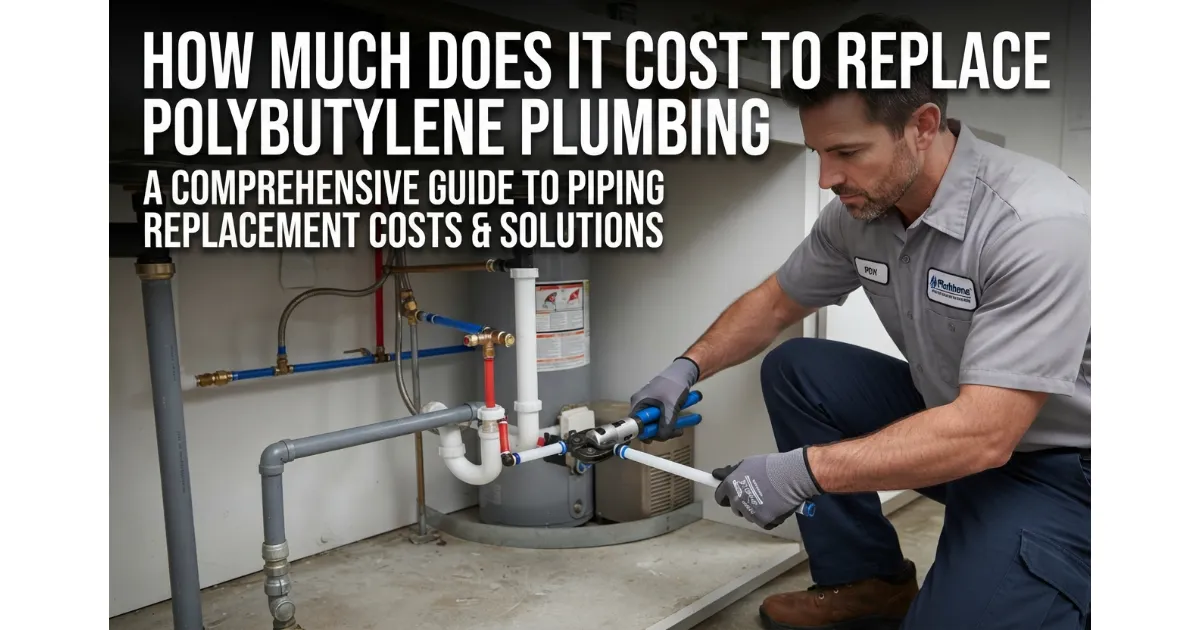 Replacing polybutylene plumbing in a standard home typically ranges from $4,000 to $15,000, with most homeowners spending around $8,000 for a complete whole-house upgrade. The final replacement cost heavily depends on home square footage, the number of bathrooms, chosen pipe materials like PEX or copper, and local labor rates in 2026.
Cost at a Glance
- Whole-House Repipe: $4,000 to $15,000+ depending on overall square footage and layout complexity.
- Partial Repair / Emergency Fix: $500 to $2,500 for targeted section replacements or leak corrections.
- Per Fixture Cost: $300 to $800 per connected plumbing fixture or bathroom hookup.
- Project Timeline: 2 to 5 days for a full residential system replacement by certified professionals.
Why These Numbers Vary So Much
Every residential plumbing layout presents unique challenges, including drywall restoration, multi-story access requirements, and the specific piping material you select to replace the old gray pipes. The following detailed breakdown will guide you through material comparisons, labor factors, and hidden budgeting considerations to help plan your project effectively.
Polybutylene Replacement Cost by Home Size and Type
Total project pricing scales directly with your home’s square footage, structural layout, and choice of replacement material. Flexible PEX systems generally offer a faster retrofit option, whereas rigid copper installations demand intensive labor hours that elevate final estimates.
Cost per Square Foot
Professional whole-house repiping typically spans between $2.00 to $5.00 per square foot for PEX materials, scaling up to $4.50 to $9.00 per square foot when using rigid copper. This metric includes both linear footage of piping runs and local labor allocation.
- Material expenses: Account for a smaller portion, running $0.40 to $2.00 per linear foot for PEX and $2.00 to $8.00 for copper.
- Labor overhead: Plumbers charge $45 to $200 per hour, driving the bulk of total square footage investments.
Cost per Fixture or Bathroom
When calculating smaller scopes or localized updates, contractors often price work by individual fixtures. Expect to budget between $100 to $350 per fixture (such as sinks, toilets, and showers) for targeted partial interventions.
- Bathroom fixture groups generally average $400 to $1,000 per room depending on accessibility.
- Kitchen sink and appliance supply lines average $250 to $600 for localized retrofits.
Partial Replacement vs Whole-House Repipe
Opting for a partial repipe is rarely recommended for polybutylene plumbing because degradation happens molecularly throughout the entire system due to water oxidants. While a partial repair ($500 to $2,500) works for an emergency fix behind a single wall, a whole-house repipe is vital to prevent subsequent failures elsewhere.
Example Quotes Illustrative Breakdown
Review these three realistic scenarios to evaluate how different home configurations impact final contractor estimates:
- Small 2-Bed / 1-Bath Ranch (900 sq ft): $3,200 total using PEX. Includes 1 main bathroom, kitchen hookup, laundry connection, and minor drywall patching.
- Standard 3-Bed / 2-Bath Home (1,800 sq ft): $6,800 total using PEX. Includes 2.5 bathrooms, kitchen, water heater re-connection, and multi-story vertical pipe drops.
- Large 2-Story 4-Bath Home (3,200 sq ft): $13,500 total using a hybrid copper-PEX setup. Includes complex multi-zone manifold routing and extensive wall restoration.
What Affects the Cost of Replacing Polybutylene Pipes?
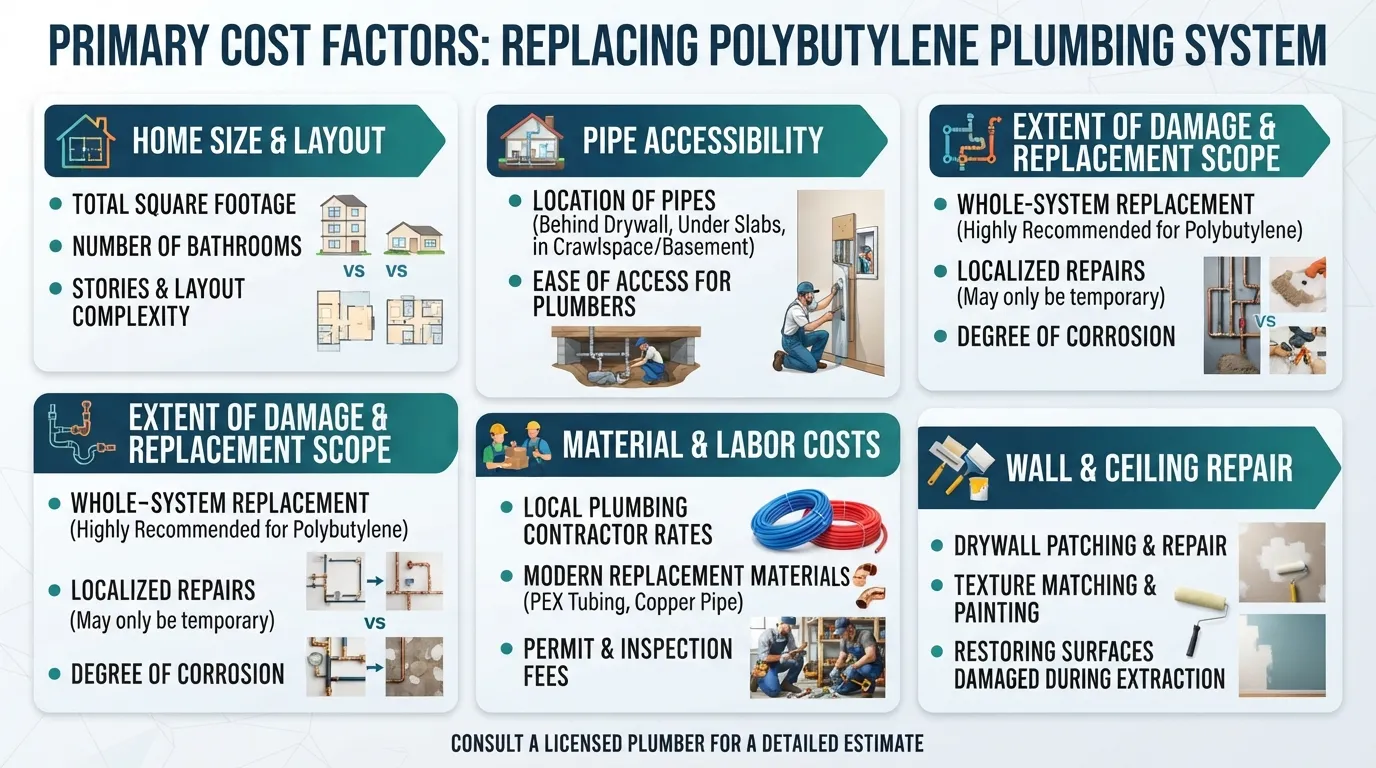 Professional plumbing labor accounts for 60% to 80% of your total repipe bill, with rates typically falling between $45 and $200 per hour per technician. Because replacing polybutylene requires cutting open walls, threading new lines, and pressure-testing the entire system, labor-heavy hours quickly accumulate.
- Master plumbers and certified repipe specialists generally charge on the higher end of the hourly spectrum.
- Larger crews can complete a whole-house job in 2 to 3 days, minimizing daily household disruption.
Slab Foundation vs. Crawl Space vs. Basement
The architectural foundation of your home heavily dictates how easily plumbers can access existing water supply lines. Crawl spaces and full basements provide straightforward entry, whereas homes built on concrete slab foundations face complex, expensive routing requirements.
- Crawl Space / Basement: Offers easy clearance, significantly lowering labor time and patching expenses.
- Slab Foundation: Often requires tunneling underneath the foundation or rerouting pipes up through the attic and down interior walls to bypass breaking through concrete.
Number of Fixtures and Length of Pipe Runs
Total project pricing scales directly with how many water supply endpoints your home contains. Every bathroom, kitchen sink, laundry station, and outdoor hose bib adds linear footage and connection complexity.
- Homes with multiple bathrooms, wet bars, and bidets require intricate manifold systems that increase material consumption.
- Longer linear runs from the main water meter to distant upstairs bathrooms require more pipe joints and secure anchoring.
Wall and Ceiling Access
Polybutylene pipes are hidden behind drywall, plaster, and ceiling boards, meaning contractors must cut access points to remove old lines and install new ones. Unfinished utility areas or garages keep costs low, while high-end custom finishes demand careful cutting and professional drywall restoration.
- Drywall repair and texture matching are rarely included in basic plumbing quotes and can add $500 to $2,500 to total out-of-pocket costs.
- Multi-story vertical drops require strategic access cuts in upper-level closets and hallways.
Your Location
Regional labor markets and local municipal permitting fees create noticeable price variations across different states and metropolitan areas. High-cost-of-living urban centers naturally command higher contractor hourly rates than rural districts.
- Local plumbing permits typically cost between $150 and $500 depending on municipal requirements and mandatory building inspections.
- Comparing multiple local quotes ensures competitive pricing tailored to your specific geographic market.
Specialist Repipe Company vs. General Plumber
Choosing the right professional team impacts both execution speed and long-term project guarantees. General plumbers handle everyday repairs, whereas dedicated repipe specialists utilize streamlined processes to finish whole-house upgrades in days.
- Repipe Specialists: Provide turnkey service including temporary water setups, pipe replacement, and coordinated drywall patching with comprehensive warranties.
- General Plumbers: Ideal for smaller exploratory fixes or partial upgrades but may lack specialized crews for rapid whole-house execution.
PEX vs. Copper vs. CPVC: Which Replacement Costs What?
Polyethylene (PEX) is widely recognized by modern plumbers as the best overall replacement material for polybutylene plumbing systems. Its unique flexibility allows technicians to snake lines through existing wall cavities with minimal structural cutting, drastically cutting total project labor costs compared to rigid alternatives.
PEX: Cost Pros and Cons
PEX material runs between $0.40 and $2.00 per linear foot, making it a budget-friendly and efficient choice for full residential upgrades. When evaluating options, contractors typically choose between PEX-A (most flexible, expansion fittings) and PEX-B (rigid, crimp fittings).
- Pros: Excellent freeze resistance, immune to corrosion or scale buildup, and reduces water hammer noise.
- Cons: Cannot be exposed directly to UV sunlight and can degrade if subjected to severe, chronic chemical imbalances in local water supplies.
- Total Impact: Keeps overall whole-house repipe costs significantly lower due to faster installation times.
Copper: Cost Pros and Cons
Copper (typically Type L or Type M) is the traditional gold standard of plumbing, with material expenses ranging from $2.00 to $10.00+ per linear foot. It demands expert soldering and torch work, which increases specialized labor hours.
- Pros: Exceptional longevity (50 to 70+ years), natural antimicrobial properties, and high structural rigidity.
- Cons: High material cost, vulnerable to pinhole leaks from acidic water chemistry, and susceptible to freezing in uninsulated spaces.
- Total Impact: Pushes total project estimates 20% to 40% higher than flexible plastic alternatives.
CPVC: When It Makes Sense
Chlorinated polyvinyl chloride (CPVC) costs $0.50 to $1.00 per linear foot for raw materials. While rigid like copper and resistant to chemical corrosion, it is less common for full whole-house polybutylene retrofits because it can become brittle over time.
- Pros: Highly affordable material, handles high water temperatures well, and maintains rigid structural runs.
- Cons: Prone to snapping under heavy impact or structural settling, making it better suited for localized repairs than complete repipes.
Total Project Cost Comparison
Review the comprehensive whole-house breakdown below comparing total installed expenses across different replacement materials:
Our Recommendation by Situation
Selecting the right replacement material depends on your specific financial goals, property timeline, and structural environment:
- For Tight Budgets: Choose PEX to minimize labor hours and overall replacement expenses while securing long-term reliability.
- For Maximum Longevity & Resale: Opt for rigid copper if you live in a custom home where traditional luxury and multi-decade durability are top priorities.
- For Hybrid Appproaches: Utilize copper for exposed main risers or outdoor stub-outs, and transition to PEX for hidden indoor branch lines.
Hidden Costs Most Cost Guides Skip
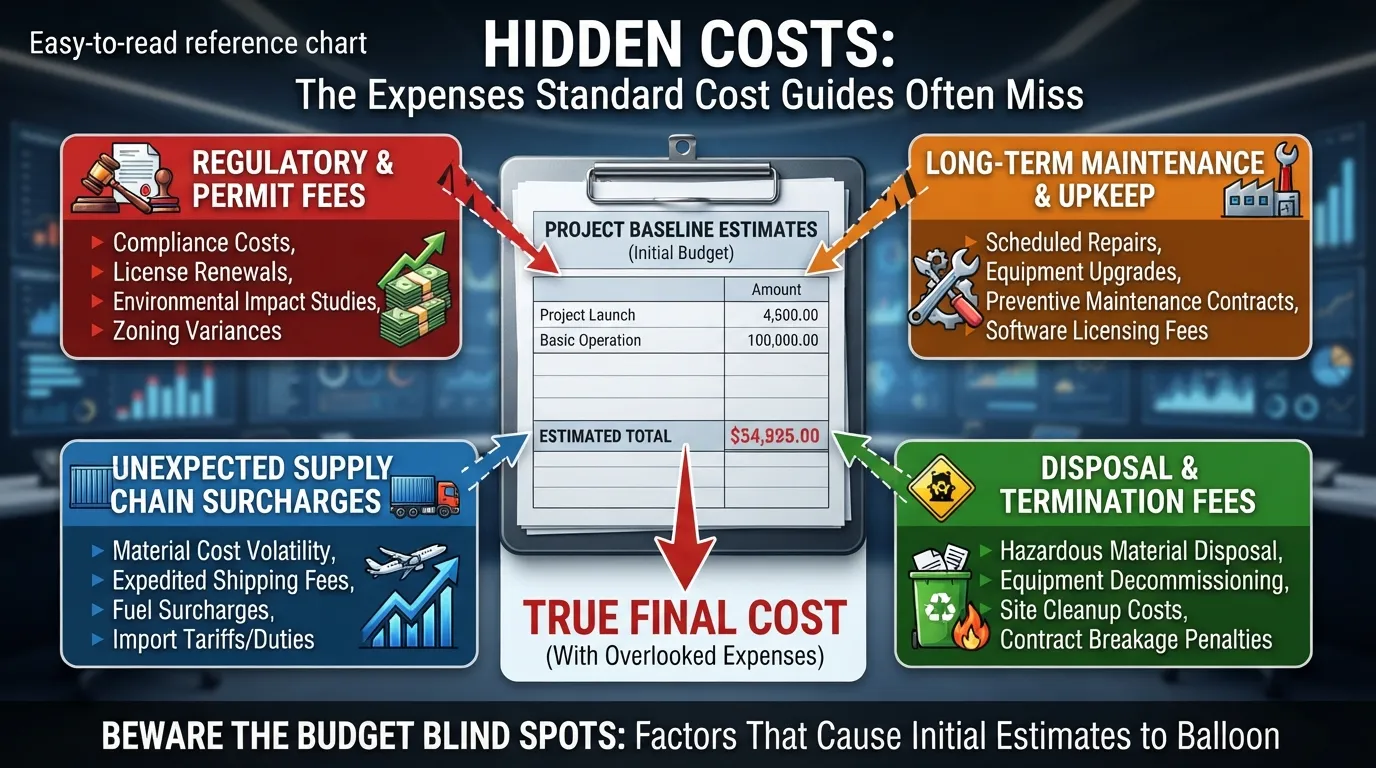 Plumbers must cut access holes through drywall and plaster to extract old polybutylene lines and thread new ones. Professional drywall repair and patching typically ranges from $1.50 to $4.00 per square foot, which quickly adds up across a multi-room house.
- Standard plumbing quotes often exclude patching, meaning you must hire a separate drywall contractor.
- Larger holes cut around manifold connections and corner joints require specialized framing and backing support.
Painting, Texture Matching and Ceiling Repairs
Once drywall holes are patched, matching unique wall textures (such as knockdown, orange peel, or popcorn ceilings) and repainting entire surfaces creates unexpected secondary expenses. Professional painters and texture specialists charge $300 to $1,500 depending on the number of repaired rooms.
- Blending paint patches into aged, sun-faded walls often requires painting entire accent walls or rooms for seamless visual uniformity.
- Ceiling cuts in hallways or entryways demand specialized scaffolding and overhead texturing expertise.
Tile, Flooring, and Cabinet Access
If supply lines run underneath tiled bathroom floors, behind custom kitchen cabinetry, or through baseboard units, contractors may need to demolish hard surfaces to reach failing joints. Cabinet modifications and tile replacements add $500 to $2,000 to total out-of-pocket project costs.
- Kitchen sink retrofits frequently require temporarily detaching or cutting lower cabinet back panels.
- Bathroom remodels or vanity adjustments may be necessary if water supply shut-off valves are relocated during the repipe.
Permits and Inspections
Most local municipalities require plumbing permits for full-house repiping to ensure the new installation complies with building codes. Municipal permit and inspection fees generally range from $50 to $500 based on your geographic location.
- Failing to pull proper permits can create legal and insurance complications when you decide to sell your home.
- Reputable contractors usually bundle permit coordination into their final proposal, but always verify before signing.
Water Damage from Past Leaks
Because polybutylene pipes degrade silently over time, opening up walls often reveals hidden mold, rotted framing studs, or subfloor water damage. Emergency remediation and structural drying services can add $1,000 to $4,000 if past slow leaks went undetected.
- Inspectors should check insulation batts for trapped moisture and mildew during the pipe extraction phase.
- Replacing compromised wooden studs ensures your walls remain structurally sound before new drywall goes up.
Temporary Living Costs and Water Shutoffs
Whole-house repiping leaves your home without running water for 8 to 10 hours a day over a 2- to 4-day period. While most homeowners stay put, some choose to budget for hotel stays or dining out while bathroom and kitchen facilities are offline.
- Contractors generally restore water service every evening so families can use basic facilities overnight.
- Portable water tanks or temporary exterior hose hookups are often provided by specialized repipe crews.
Is Patching Included in the Quote?
Always ask your contractor explicitly whether “drywall repair and paint finishing” is written into the contract scope. Many low initial bids only cover the plumbing labor and pipe materials, leaving you responsible for hiring separate trades to restore your walls to pre-project condition.
Does Homeowners Insurance Cover Polybutylene Replacement?
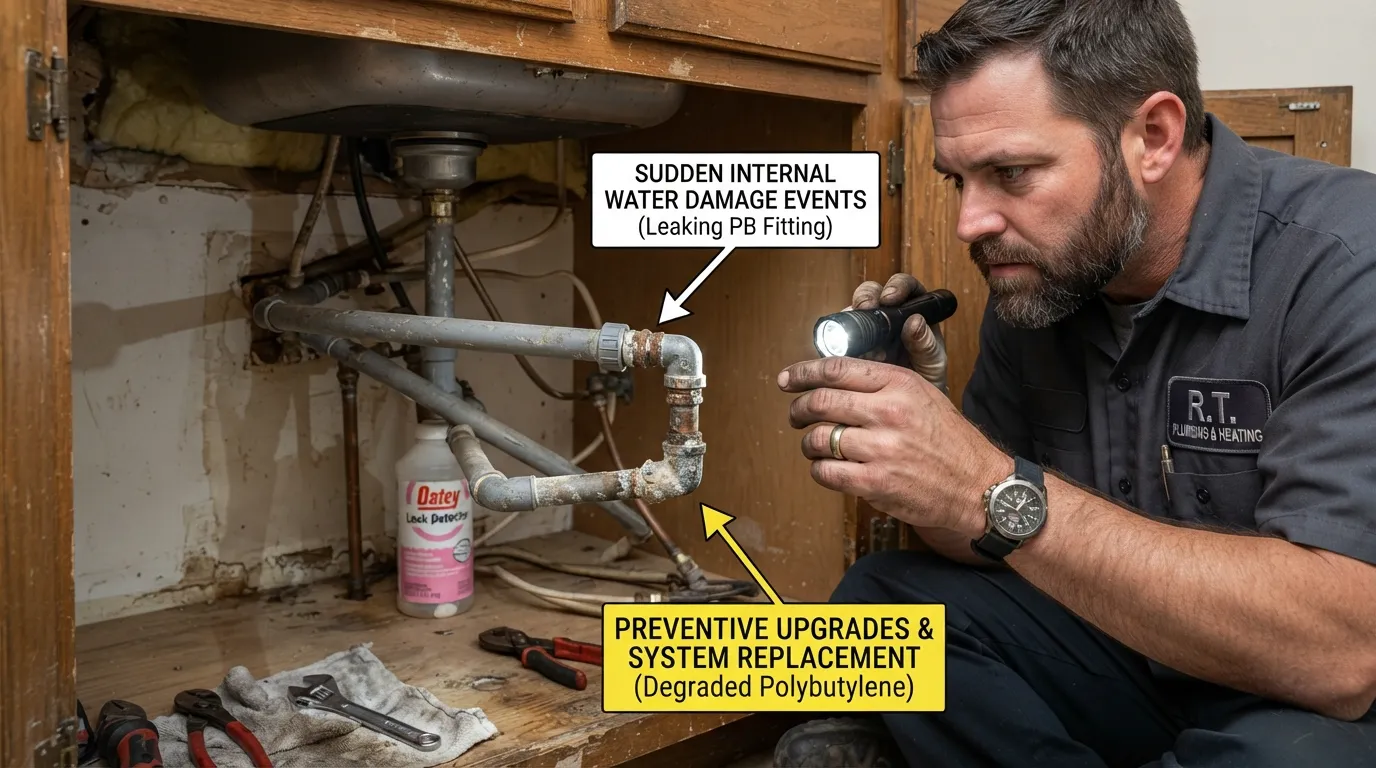 Homeowners insurance generally does not cover the preventative replacement of polybutylene plumbing. Insurance policies classify whole-house repiping as routine home maintenance and wear-and-tear improvement rather than sudden accidental property damage.
When Insurance Covers Water Damage and When It Doesn’t
While insurance companies will not pay to upgrade your old pipes proactively, they may cover the secondary water damage caused if a polybutylene pipe bursts unexpectedly. However, payout approval depends heavily on how the damage occurred.
- Sudden Failures: Insurance typically covers structural drying, ruined drywall, and warped flooring if a fitting instantly snaps and floods a room.
- Gradual Seepage: Claims are frequently denied if inspectors determine that a slow leak went unnoticed over several weeks or months due to neglected maintenance.
Can Insurers Deny or Non-Renew Policies With Polybutylene?
Yes. Many insurance providers maintain strict underwriting guidelines regarding polybutylene plumbing because of its documented failure history. If an inspector identifies active gray plastic pipes during a routine audit, your carrier may issue a policy cancellation notice or refuse coverage renewal until the entire system is replaced.
- Some insurers demand a signed plumbing certificate verifying the home has been completely repiped before underwriting a new policy.
- Finding alternative coverage with polybutylene installed often results in high-risk surcharges or mandatory plumbing exclusions.
How Polybutylene Affects Your Premium
Maintaining outdated polybutylene pipes can inflate your annual insurance premiums or limit your carrier options. Industry reports and repipe contractors note that homeowners facing high-risk surcharges or coverage restrictions can save thousands over time, with one repipe specialist estimating that unaddressed risks can compound into thousands in added premiums and denied claims over the life of a policy.
- Upgrading to modern PEX or copper eliminates high-risk policy exclusions and qualifies your home for standard, lower-tier insurance rates.
- Providing an updated plumbing certificate to your carrier after a complete repipe often triggers an immediate premium discount.
Questions to Ask Your Insurance Agent
Before scheduling a repipe or filing a claim, consult your insurance provider directly to understand how your specific policy handles old plumbing infrastructure:
- Does my current policy exclude water damage claims caused by polybutylene pipe or fitting failures?
- Will replacing the system with PEX or copper qualify my home for a reduced annual premium?
- What specific documentation or contractor certification does the company require after the repipe is finished?
Does Replacing Pipes Pay for Itself?
While a whole-house repipe requires an upfront investment of $4,000 to $15,000, it ultimately protects your financial assets by preventing catastrophic indoor flooding. Eliminating polybutylene protects your home’s resale value, secures standard homeowners insurance, and saves you from emergency water damage repairs.
Should You Replace Polybutylene Plumbing? Lifespan Signs and Risk
Polybutylene pipes have an expected real-world lifespan of only 10 to 15 years when exposed to standard chlorinated municipal water. Because production of these gray plastic pipes ceased in the mid-1990s, any active polybutylene system currently operating in a home is running well past its original design expiration window.
Why Polybutylene Fails
The core structural breakdown is caused by chemical oxidants, such as chlorine and chloramines, added to public water supplies. These disinfectants react with the polybutylene material and plastic or metal fittings over time, causing the inner walls to flake, crack, and become brittle until a sudden rupture occurs.
How to Identify Polybutylene Pipes
Polybutylene is most commonly recognized as a flexible, dull gray plastic pipe (though occasionally found in blue or black). To confirm what you have, inspect areas where water lines are exposed or enter the home:
- Look directly above or around your water heater, where main distribution lines branch out.
- Check under kitchen and bathroom sinks or where the main water supply line enters through the basement or crawl space.
- Search for stamped code markings on the pipe exterior, such as the standard designation “PB2110”.
Is All Grey Pipe Polybutylene?
No. Not every gray plastic pipe in a residence is polybutylene. Modern materials like gray PEX tubing or gray PVC electrical/drain conduits can look similar at a quick glance, which is why checking stamped text labels or consulting a licensed home inspector is essential before panicking.
Warning Signs It’s Time to Act
Because polybutylene failure often happens from the inside out without warning, any sign of system distress requires immediate professional attention:
- Unexplained drops in household water pressure or sputtering faucets caused by internal flaking blocking valves.
- Frequent pinhole leaks, weeping joints, or damp spots appearing near pipe connections.
- Flaking, scaling, or chalky discoloration on the outer surface of the pipe or fittings.
Replace Now or Wait?
If your home still contains original polybutylene plumbing, waiting for a leak to happen is a high-stakes gamble that frequently leads to catastrophic indoor flooding and insurance claim denials. Proactively replacing the entire system with modern PEX or copper eliminates structural vulnerability, protects your property value, and ensures lasting peace of mind.
How a Whole House Repipe Works and How Long It Takes
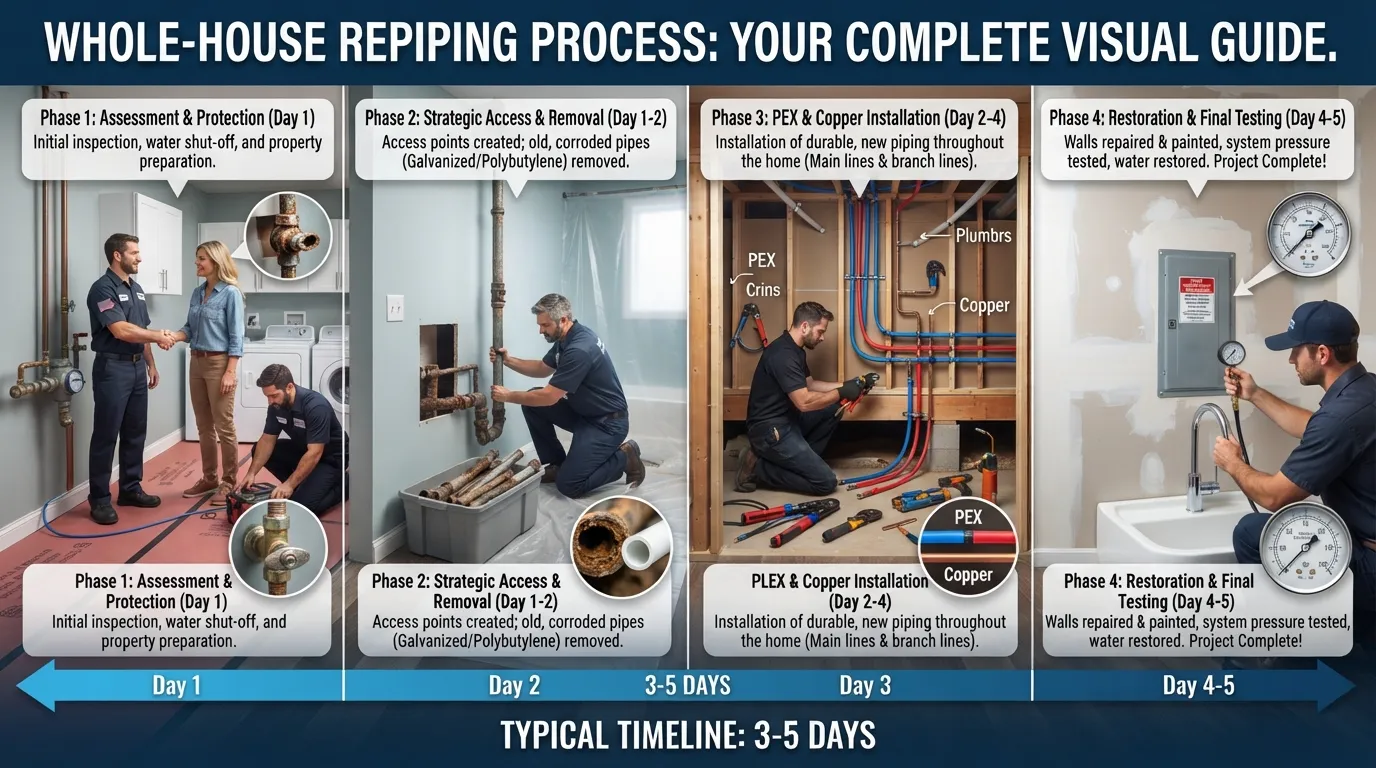 A standard whole-house repipe typically takes between 2 to 5 days to complete, depending on the home’s square footage, layout complexity, and number of bathrooms. Specialized plumbing crews using advanced PEX systems often complete standard residential homes in as little as 1 to 2 days.
Step by Step Repipe Process
Professional plumbing teams follow a structured, multi-phase workflow to extract old polybutylene lines and install modern supply networks with minimal disruption:
- Initial Inspection & Routing Plan: Technicians map out the home’s layout to determine optimal manifold placement and line paths.
- Opening Strategic Access Points: Small, targeted access holes are cut into drywall and ceilings to reach vertical drops and pipe junctions.
- System Water Shutoff & Drain: Main water service is turned off, and existing lines are drained completely before pipe removal begins.
- Running New PEX or Copper Lines: Technicians snake flexible PEX tubing or solder rigid copper through walls, floors, and attic spaces.
- Pressure Testing & Code Inspection: The newly installed system undergoes rigorous pressure testing and municipal code inspection before walls are closed up.
- Drywall Patching & Cleanup: Access panels are repaired, and living areas are restored to a clean, professional finish.
Can You Stay in Your Home During a Repipe?
Yes, homeowners can almost always remain in their houses throughout the repipe process. While water service is temporarily shut off during active daytime working hours (usually from 8:00 AM to 4:00 PM), professional crews typically restore running water every evening so your family has full access to basic facilities overnight.
How to Prepare Your Home
Proper preparation allows plumbing crews to work efficiently and protects your personal belongings from accidental damage or construction dust:
- Clear items out from under kitchen and bathroom sinks to grant technicians direct access to water supply lines and shut-off valves.
- Move furniture, clothing, and stored goods away from walls and hallway access points where workers will need clearance.
- Secure household pets in a safe, isolated room or boarding facility away from heavy foot traffic and noise.
What a Good Day-by-Day Schedule Looks Like
Understanding the expected daily milestones helps manage expectations while your plumbing system is being completely upgraded:
- Day 1: Crew arrival, final walkthrough, water shutoff, removal of old accessible polybutylene pipes, and initial routing of new main supply lines.
- Day 2: Branch line connections to individual fixtures, manifold installation, and rigorous pneumatic pressure testing to guarantee leak-free joints.
- Day 3 (If Applicable): Final municipal inspection sign-off, water service restoration, and coordinated drywall patching or cleanup services.
Can You Fix Polybutylene Yourself? SharkBite PEX Fittings and Partial Repairs
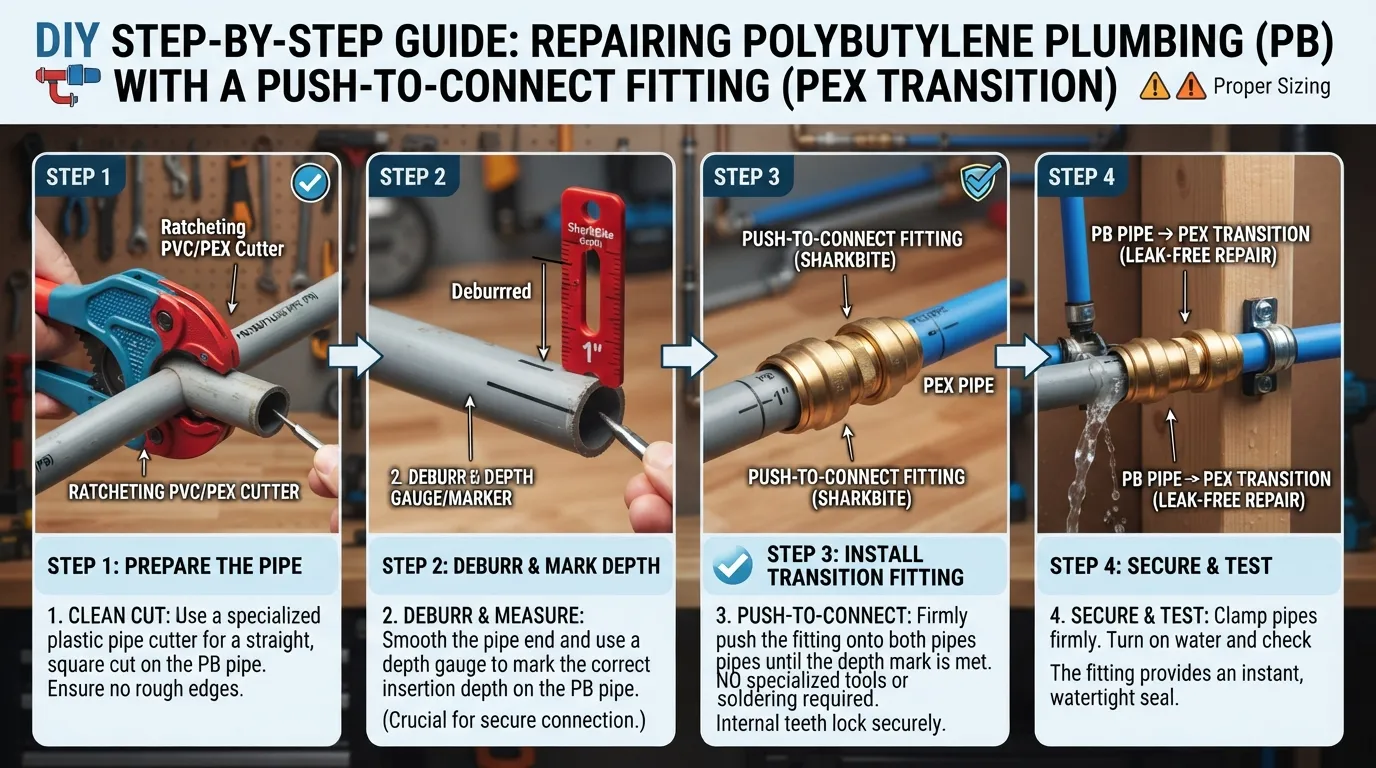 Yes, SharkBite push-to-connect fittings can technically connect to polybutylene pipe, but only if you use a specific transition coupling designed to bridge the outer diameter difference between polybutylene and standard copper or PEX sizing. However, manufacturers and professional plumbers strictly recommend push fittings as a temporary emergency patch rather than a permanent solution.
Can You Use PEX Fittings on Polybutylene Pipe?
Standard PEX crimp or clamp rings should never be directly attached to polybutylene piping. Polybutylene features a slightly different outside diameter and outer wall rigidity than PEX, meaning standard PEX crimps will inevitably leak or slip under standard household water pressure.
- Specialized transition adapters with approved inserts are required to safely bridge polybutylene to modern PEX tubing.
- Using incorrect fittings voids plumbing product warranties and dramatically increases the risk of sudden fitting blowouts.
Temporary Repair vs. Permanent Fix
Using a push-to-connect coupling or a patch kit can buy you time to shut off water and stop an active leak behind a wall. However, because polybutylene degrades molecularly from chemical oxidants across the entire network, patching one failing joint simply shifts pressure to another vulnerable section nearby.
When DIY Is a Bad Idea
While DIY plumbing repairs save money on minor household fixes, attempting a whole-house polybutylene replacement or complex structural rerouting yourself is rarely advised.
- Building Codes & Permits: Municipalities require licensed plumbers to pull permits and pass rigorous pressure inspections for complete system replacements.
- Insurance & Warranty: DIY installations lack certified contractor paperwork, which can lead to denied insurance claims if a future leak causes property damage.
Cost of a Single Leak Repair vs. Whole-House Repipe
Hiring a plumber for an emergency single-leak patch costs $150 to $500 per visit, whereas a complete whole-house repipe ranges from $4,000 to $15,000. While patching feels cheaper upfront, repeatedly paying for emergency localized repairs after each subsequent pipe failure quickly eclipses the cost of a permanent, single-investment whole-house upgrade.
Mobile Homes Condos and Buying or Selling a House
 Replacing polybutylene plumbing in a mobile or manufactured home typically costs between $1,500 and $3,500, making it significantly more affordable than a standard site-built house. Because mobile homes feature accessible underbelly crawl spaces and straightforward linear layouts, plumbing technicians can complete the entire repipe in just one day.
- Underbelly insulation and vapor barriers must be carefully cut and re-sealed during the process to protect against moisture intrusion.
- PEX tubing is the universal standard for manufactured home retrofits due to its superior flexibility and vibration resistance.
Condos and Townhomes
Repiping a condo or townhome introduces unique structural challenges regarding shared walls, vertical riser stacks, and Homeowners Association (HOA) regulations. Depending on your building’s master deed, individual owners may only be responsible for branch lines inside their unit, while exterior risers fall under HOA jurisdiction.
- Always consult your HOA board and property management guidelines before scheduling any invasive plumbing work.
- Coordinating water shutoffs for adjacent units requires advance building-wide notification and approval.
Should You Buy a House With Polybutylene Plumbing?
Buying a house with polybutylene plumbing is not an immediate dealbreaker, but it does require careful financial planning and professional inspection. Rather than walking away from a great property, budget for an immediate whole-house repipe and use the estimated repair costs as leverage during negotiations.
Can You Sell a House With Polybutylene Pipes?
Yes, you can sell a house with polybutylene pipes, but real estate disclosure laws in most regions require you to explicitly disclose known plumbing vulnerabilities to prospective buyers. Failing to disclose failing or aged gray pipes can result in post-closing legal liabilities and lawsuits for misrepresentation.
How to Negotiate the Price
When purchasing or selling a home with active polybutylene, negotiations typically center on whether the seller will complete the repipe prior to closing or offer a financial concession. Buyers generally prefer requesting a seller credit or price reduction so they can hire their own preferred contractor and oversee a lifetime-warrantied PEX installation.
Mortgage and Appraisal Issues
Aging polybutylene plumbing can occasionally trigger complications during mortgage underwriting and home appraisals. Strict lenders or FHA/VA appraisers may flag active leaks or uninsured plumbing risks as structural defects, requiring professional remediation or a certified plumbing clearance letter before final loan approval.
Polybutylene Lawsuit and Ban: What Homeowners Should Know
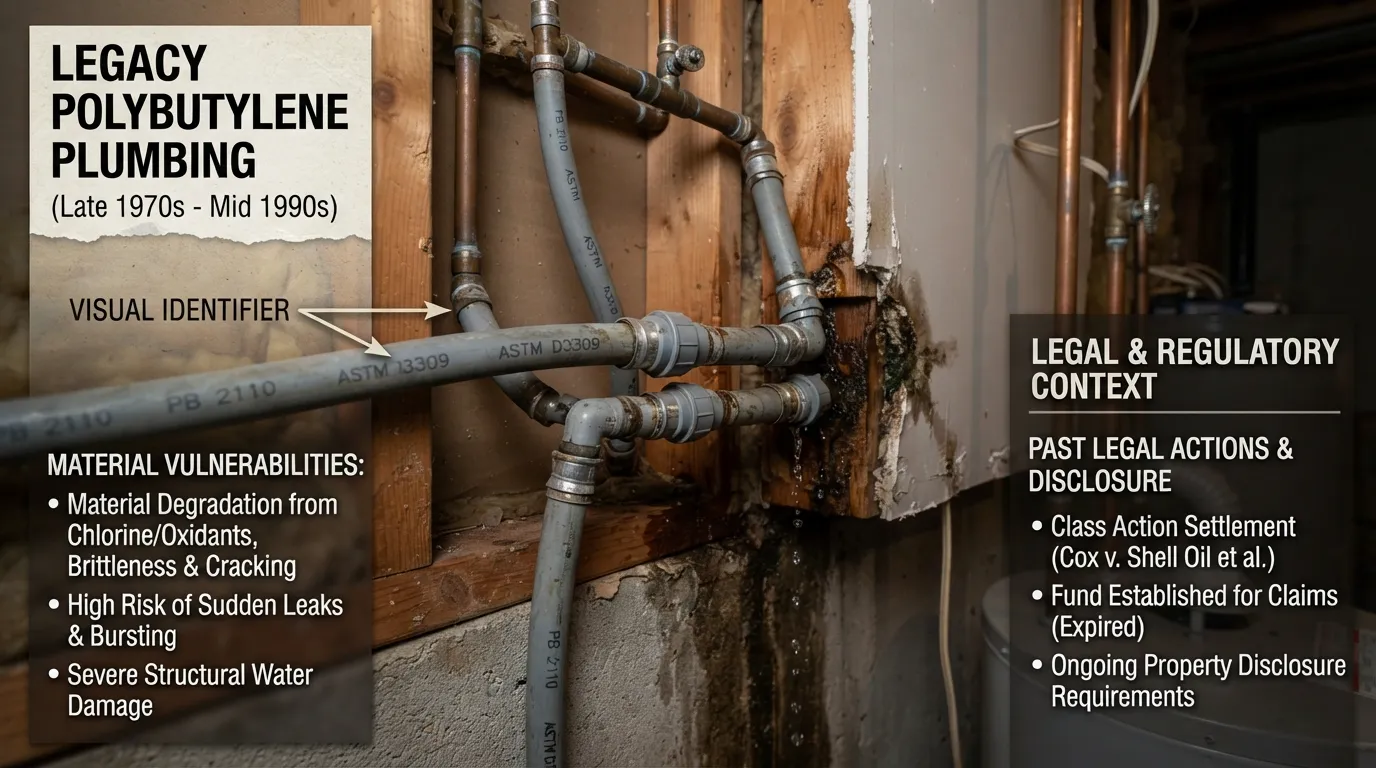 Polybutylene plumbing was widely installed in residential construction from the late 1970s through the mid-1990s, with an estimated millions of homes utilizing the gray plastic material. Following massive rates of system degradation and premature cracking, manufacturers completely ceased production and distribution of polybutylene piping by 1995.
Is Polybutylene Plumbing Illegal?
Polybutylene is often colloquially described as “banned,” but strictly speaking, building codes do not force existing homeowners to rip out functional systems. Rather, model plumbing codes and building authorities removed polybutylene from approved lists for new construction, meaning it cannot be installed in modern builds, though legacy systems grandfathered into older homes remain legal until they fail or are proactively replaced.
What Happened With the Class-Action Lawsuit?
A landmark multi-state class-action lawsuit, known as Cox v. Shell Oil Co., was settled in 1995 for roughly $1 billion. The lawsuit targeted manufacturers over defective pipe materials and metal fittings that reacted poorly to common public water disinfectants like chlorine and chloramines.
Can You Still Get Reimbursed?
No. The funds established under the original class-action settlement have long since expired. The formal claims filing deadlines for the historical settlement passed years ago (typically closing in the early 2000s), meaning current homeowners dealing with failing gray pipes must finance their own whole-house replacements. For further historical and legal context on property claims, you can review details via resources like the Polybutylene Lawsuit Information Center.
How to Choose a Contractor and Get Accurate Quotes
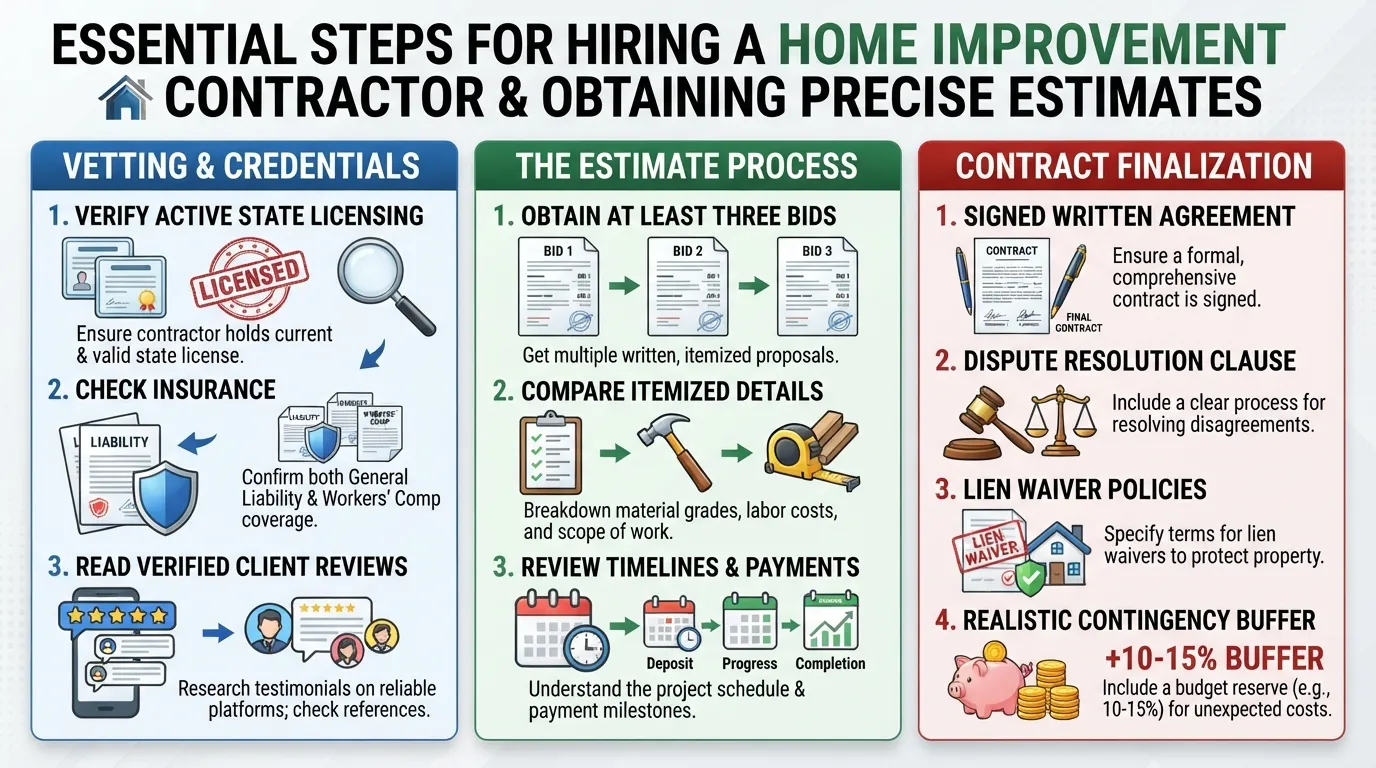 Hiring an experienced repipe specialist ensures your home’s water supply system is upgraded correctly without unexpected structural surprises. Before signing any contract, interview candidates using this targeted checklist:
- Are you fully licensed, bonded, and insured specifically for whole-house plumbing and repipe work in this state?
- How many polybutylene repipe projects has your crew completed in the past year?
- Do you handle drywall patching and texture matching in-house, or will I need to hire a separate subcontractor?
- What kind of workmanship and material warranty do you provide upon project completion?
What a Good Quote Should Include
A professional, reliable plumbing estimate should never be a single lump-sum figure scrawled on a napkin. Look for a fully itemized proposal that clearly breaks down every phase of the project:
- Specific pipe and fitting materials used (e.g., PEX-A expansion tubing vs. rigid copper Type L).
- Labor costs, estimated project duration, and daily water service restoration schedules.
- Municipal permit acquisition fees and mandatory inspection scheduling.
- Explicit details regarding drywall access cuts, patching responsibilities, and debris cleanup.
Red Flags in Quotes
Protect yourself from unreliable contractors, lowball scams, and hidden fee traps by watching out for common warning signs. Avoid any plumbing company that exhibits these behaviors:
- Demanding full upfront payment before any materials or workers arrive at your property.
- Providing vague, unitemized estimates that lump labor, materials, and drywall repair into a single mystery number.
- Refusing to pull local building permits or suggesting you pull them yourself as the homeowner.
- Pushing high-pressure sales tactics or claiming you must sign immediately to lock in a temporary rate.
How Many Quotes Should You Get?
Always secure at least three independent itemized quotes from licensed local contractors before committing to a repipe project. Comparing multiple proposals helps you identify fair market pricing, evaluate different material recommendations, and spot outliers who either underbid to win work or overcharge for standard labor.
Ways to Lower the Cost
Whole-house repiping is a significant financial investment, but several smart planning strategies can help reduce your out-of-pocket expenses:
- Bundle your repipe project with other planned home improvements, such as a bathroom remodel or water heater replacement, to optimize labor efficiency.
- Clear out furniture, personal items, and under-sink clutter beforehand so plumbing crews can start working immediately without delays.
- Choose flexible PEX tubing over rigid copper to significantly cut down on expensive installation and soldering hours.
Financing and Payment Options
Because unexpected plumbing failures rarely align with personal savings, many reputable repipe companies offer flexible consumer financing plans. Look for providers offering 0% APR promotional periods, low monthly installment loans, or home equity financing solutions to make your system upgrade manageable.
Polybutylene Replacement FAQs
How much does it cost to replace polybutylene pipes with PEX?
Replacing polybutylene pipes with flexible PEX typically ranges from $3,000 to $9,500 for an average single-family home. Because PEX material is affordable ($0.40 to $2.00 per foot) and allows plumbers to snake lines through walls with minimal structural cutting, it keeps overall labor hours and project costs significantly lower than rigid alternatives.
How much does it cost to replace polybutylene pipes in a mobile home?
Replacing polybutylene plumbing in a mobile or manufactured home generally costs between $1,500 and $3,500. Because mobile homes feature accessible underbelly crawl spaces and straightforward linear layouts, licensed plumbing technicians can typically complete the entire system replacement in just one single day.
Is polybutylene plumbing illegal?
No, existing polybutylene plumbing is not strictly illegal, and building codes do not force homeowners to rip out functional systems. However, model building codes removed polybutylene from approved lists for new construction in the mid-1990s, meaning legacy systems remain legal until they fail or are proactively replaced.
Can I replace only part of my polybutylene plumbing?
While you can perform a localized patch for $500 to $2,500 to fix an active leak behind a wall, partial replacements are not recommended. Because polybutylene degrades molecularly from chemical oxidants across the entire network, repairing one section simply leaves the remaining aged pipes vulnerable to subsequent failures.
How long do polybutylene pipes last?
Polybutylene pipes have a real-world lifespan of roughly 10 to 15 years when exposed to chlorinated public water supplies. Because manufacturing completely ceased by 1995, any active polybutylene system currently operating in a residence is running well past its original design expiration window and carries a high risk of sudden rupture.

Home Improvement Researchers & Guides Editors
Meet the Nest Team, a collective of dedicated researchers, home improvement enthusiasts, and industry writers sharing practical guides, thorough category research, and trusted solutions for residential repairs and thoughtful home upkeep.