When Did the White House Get Indoor Plumbing?
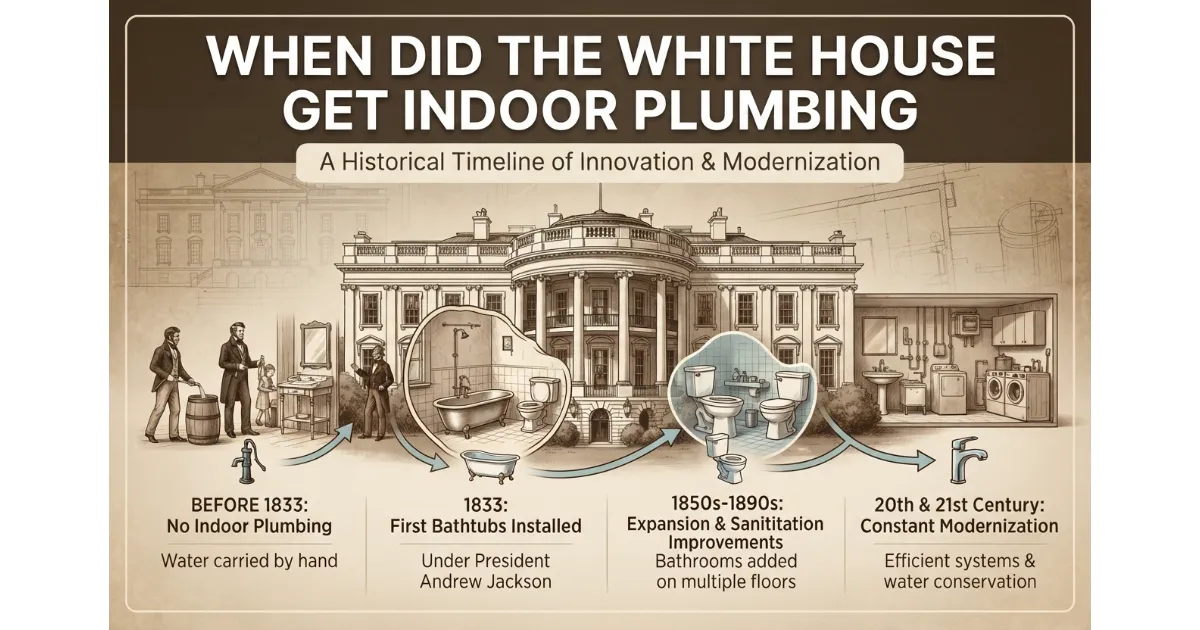 Indoor running water first reached the White House in 1833 under President Andrew Jackson, establishing a primitive supply system. Comprehensive indoor plumbing featuring hot and cold running water on the residential second floor followed in 1853 under President Franklin Pierce.
Key Dates at a Glance
- 1833: President Andrew Jackson installs the first crude indoor running water system, pumping spring water from nearby Boiling Spring into the building via iron pipes.
- 1853: President Franklin Pierce oversees a major overhaul that introduces modern bathing rooms and piped hot and cold water to the residential floor.
- 1876: Advanced sanitary drainage and improved ventilation systems are added to combat lingering hygiene and structural issues.
- 1948–1952: The Truman administration undertakes a total interior gutting and reconstruction, completely replacing outdated lead and iron pipes with modern copper and steel plumbing.
Why You’ll See Different Dates Online
Historical accounts often conflict because the White House underwent piecemeal upgrades rather than a single plumbing installation. Some sources credit 1833 for the first running water, while others point to 1853 or the Truman renovation as the milestone for true modern plumbing.
White House Plumbing Timeline: From Jefferson to Truman
Timeline in Plain English
The evolution of White House plumbing spans over a century of continuous trial and error. What began as primitive wooden barrels and attic cisterns under Thomas Jefferson eventually transformed through milestones like Andrew Jackson’s iron pipes and Franklin Pierce’s heated water systems. The massive mid-century Truman reconstruction finally unified the complex into a dependable, modern utility network.
Why Do Sources Disagree on the Date? 1833 vs 1853 vs Fillmore
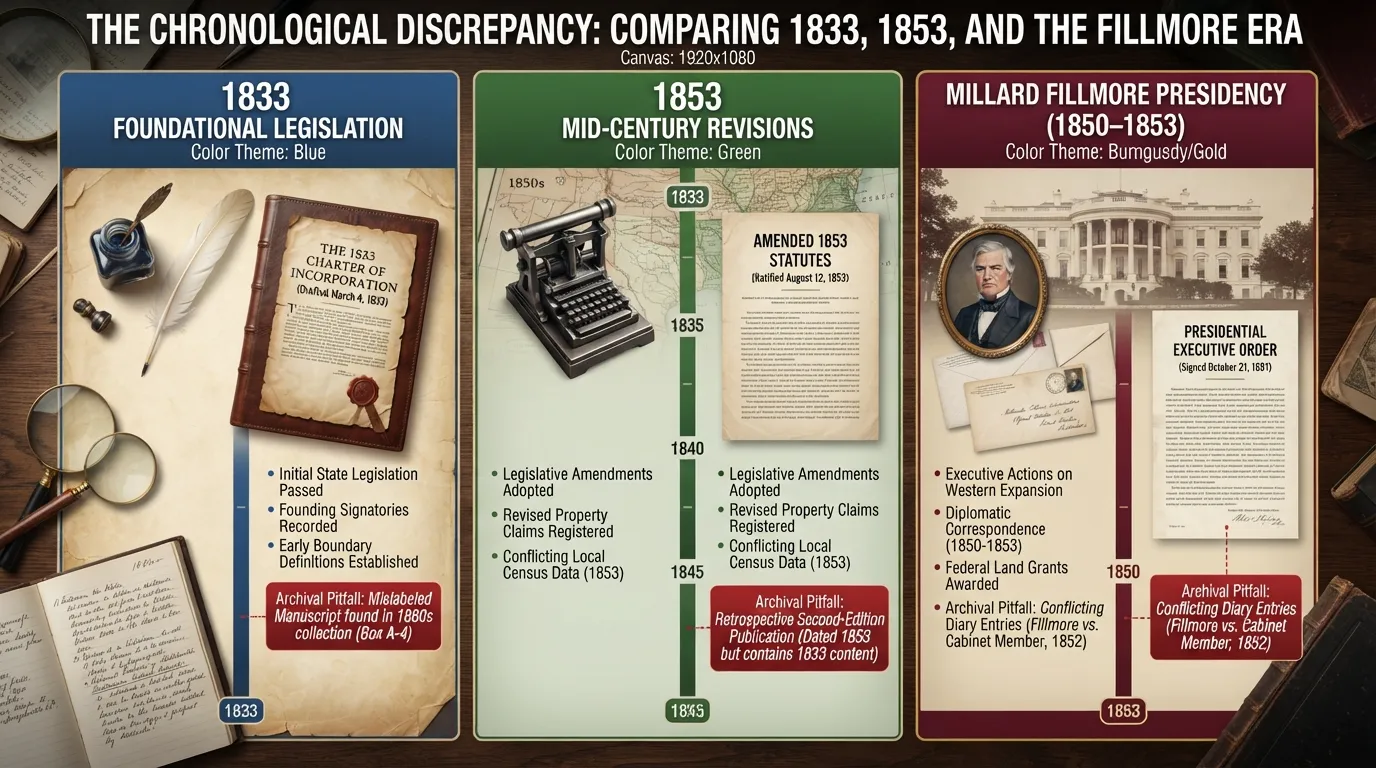 Historical confusion often arises because writers and researchers use terms like running water, central plumbing, and flush toilets interchangeably. In reality, these milestones occurred decades apart during distinct presidential administrations.
- Garden Pump & Cisterns: Manual systems used to haul water from outside or collect rainwater without indoor pipes.
- Indoor Running Water: The mechanical transportation of water through pipes directly into a building, first introduced by Andrew Jackson in 1833.
- Central Plumbing: The integration of network-wide piped hot and cold water supplies to multiple stories, achieved under Franklin Pierce in 1853.
- Flush Toilet: Modern sanitary porcelain waste systems that evolved gradually alongside mid-to-late 19th-century structural upgrades.
What 1833 Actually Means
The year 1833 marks the moment Andrew Jackson had iron pipes laid to pump spring water from Boiling Spring directly into the building. However, this early system was strictly limited in scope and did not supply pressurized running water throughout the entire executive mansion.
What 1853 Actually Means
The year 1853 signifies the formal introduction of comprehensive, second-floor indoor plumbing featuring advanced taps for hot and cold running water. This upgrade turned the executive living quarters into a functional residential space with dedicated bathing rooms.
Why Pierce and Fillmore Both Get Credit
Historical archives frequently conflict, attributing early 1850s plumbing expansions to either Millard Fillmore or Franklin Pierce. Because structural improvements spanned multiple years around their terms, exact administrative credit remains blurred in secondary records.
According to the White House Historical Association, piecemeal appropriations and delayed construction timelines mean overlapping presidential terms often share historical credit for single infrastructure projects.
How to Verify Historical Plumbing Claims
Verifying contradictory historical claims requires cross-referencing primary government ledgers, congressional appropriations, and architectural blueprints. Relying on secondary summaries alone often perpetuates dates that confuse simple pipe installations with full-scale modern plumbing overhauls.
How Did People in the White House Live Before Plumbing?
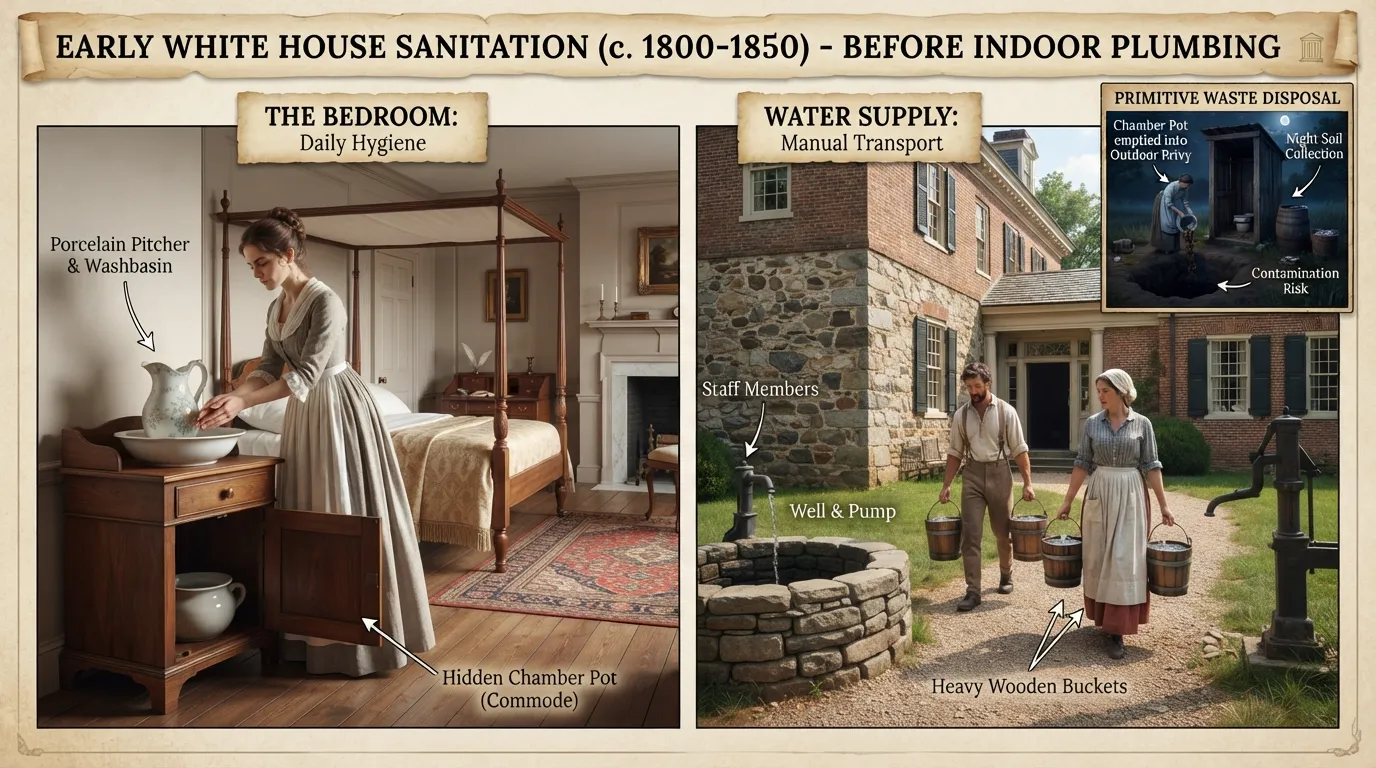 Before indoor plumbing was established, the White House relied on outdoor outhouses and wooden privies located on the mansion grounds. These primitive structures required staff and residents to step outside regardless of weather, reflecting standard 18th and early 19th-century sanitary practices.
Portable Bathtubs and Hand-Carried Water
Personal hygiene required servants to manually haul water from outdoor pumps or rainwater cisterns into the living quarters. For bathing, residents used portable metal tubs, such as a tin bathtub utilized during the James Madison era around 1814, which had to be filled and emptied by hand.
Jefferson’s Attic Cistern and Wooden Pipes
President Thomas Jefferson introduced early engineering attempts by installing an attic cistern connected to wooden pipes to catch rainwater. While this system provided a rudimentary supply, it lacked pressure and leaked frequently, offering only temporary relief from manual water hauling.
John Quincy Adams and the Garden Pump
During his presidency, John Quincy Adams relied on a garden pump installed near the mansion to help manage daily water collection. This pump served as a vital external station for drawing groundwater before iron infrastructure modernized the delivery system.
What Did People Use Instead of Toilet Paper in the 1700s?
In the 1700s and early 1800s, people did not have modern commercial toilet paper and instead used readily available materials. Common alternatives included old rags, hemp, leaves, corncobs, or discarded paper waste.
How Running Water Actually Reached the White House
In 1833, President Andrew Jackson revolutionized executive mansion utilities by piping spring water directly from a natural source near Franklin Square. Engineer Robert Leckie oversaw the project, which utilized pumps and a reservoir system to channel spring water through iron pipes into the executive mansion.
Fire Protection First, Bathing Second
The primary motivation behind piping water into the White House was fire protection rather than personal luxury, heavily influenced by the 1814 burning of Washington by British forces. Having a dependable on-site water reservoir ensured that the mansion could quickly combat flare-ups before they destroyed the historic structure again.
The East Wing “Bathing Room”
Following the installation of iron pipes, an early designated bathing room was established in the East Wing of the building. This modest room provided residents with unprecedented access to running water, marking a significant upgrade from portable metal tubs.
Why the White House Was Late
Despite being the nation’s premier executive residence, the White House lagged behind private commercial innovations like Boston’s Tremont Hotel, which had introduced advanced indoor plumbing and private water closets as early as 1829. Public funding and bureaucratic delays kept government infrastructure behind private luxury trends.
Watch a short walkthrough of how presidential bathing evolved.
Who Installed the First Bathtub and Flush Toilet?
President Millard Fillmore is frequently credited in popular folklore with installing the first bathtub and flush toilet in the White House around 1850. However, modern historical consensus reveals this story is largely a fabricated myth, with actual permanent sanitary installations and running hot water materializing more definitively under Franklin Pierce by 1853.
The Millard Fillmore Bathtub Story: Fact or Folklore?
The persistent legend claims that Fillmore installed a luxurious bathtub and had water piped into the executive mansion against congressional resistance. Historians have since traced this tale to a satirical 1910 essay by H.L. Mencken, which was published as fiction but later mistaken and cited widely as genuine historical fact.
Pierce’s 1853 Second-Floor Bathroom with Hot and Cold Water
While Fillmore’s mythical bathtub remains folklore, President Franklin Pierce oversaw a genuine and heavily documented plumbing overhaul in 1853. This project successfully brought centralized hot and cold running water directly to dedicated bathing facilities on the residential second floor.
How Presidents Bathed Before Permanent Tubs
Before permanent bathroom fixtures and indoor plumbing were standardized, presidents relied on temporary setups. Servants hand-carried water from outdoor pumps or rainwater cisterns into private quarters, filling portable tin or copper wash tubs for daily hygiene.
Plumbing for the Family Not the Servants?
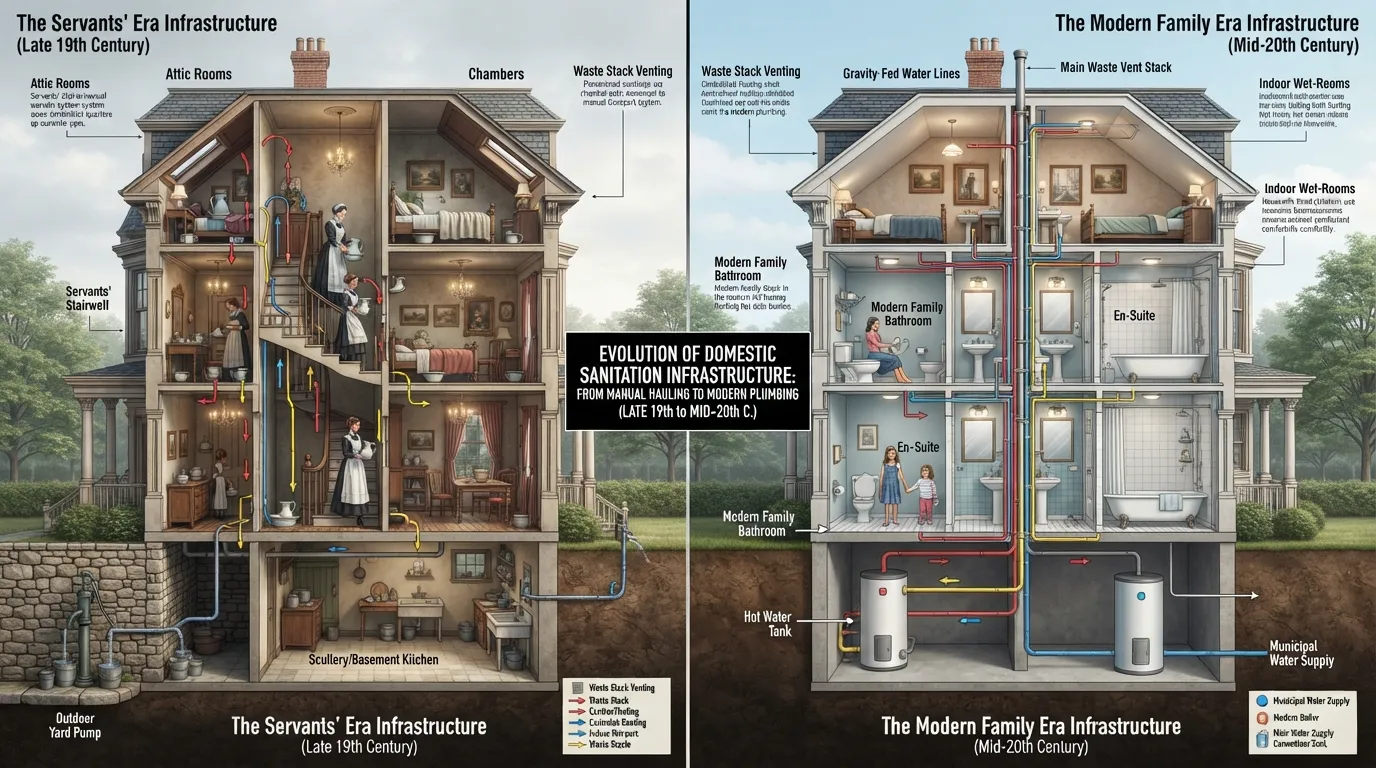 When indoor running water and central plumbing were first installed in the White House, luxury amenities were strictly reserved for the first family and esteemed guests. Residential upgrades under Andrew Jackson and Franklin Pierce focused on the primary executive living spaces, leaving domestic staff without immediate access to indoor washing facilities.
Staff Living and Working Conditions in the 1800s
Throughout the 19th century, the domestic staff, cooks, and groundskeepers experienced drastically different living and working conditions compared to the presidential family. Servants continued relying on outdoor facilities, manual water hauling, and basement washrooms long after private second-floor bathrooms were modernized for executive use.
From the 1876 Attic Tank to the Truman Reconstruction
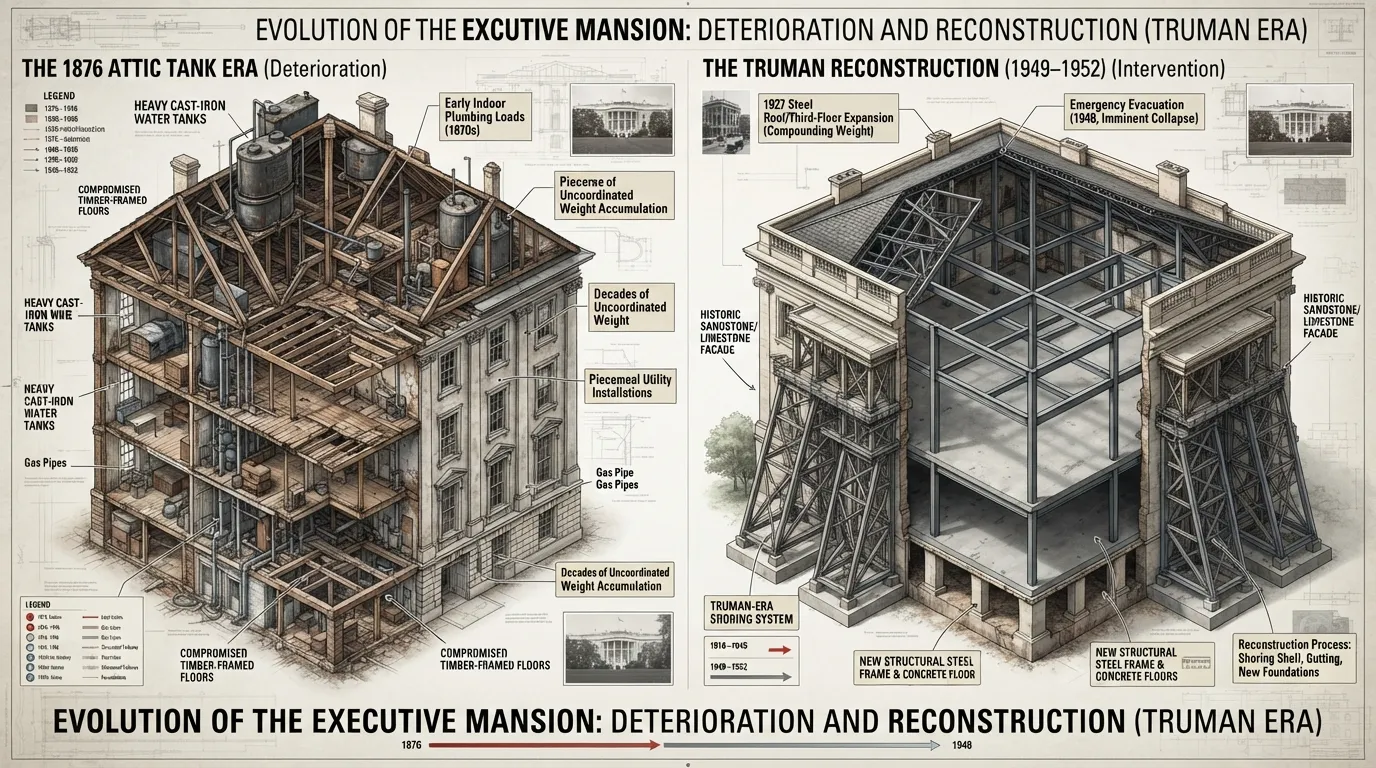 By the late 19th century, increasing water demands led to the construction of a massive 2,000-gallon tank in the White House attic during the Ulysses S. Grant era. This tank significantly improved water pressure throughout the upper living quarters, though aging lead and iron pipes continued to cause chronic leaks and contamination worries.
Why the Mansion Was Falling Apart by the 1940s
Decades of piecemeal repairs and accumulating structural weight severely compromised the executive mansion’s integrity by the mid-20th century. Decaying wooden floor beams, rusted pipes, and shifting foundations caused floors to sag noticeably, prompting urgent safety concerns.
Truman Reconstruction 1948–1952
President Harry S. Truman oversaw a massive interior gutting of the White House from 1948 to 1952, during which workers completely gutted the interior while leaving only the exterior sandstone walls standing. The multi-million dollar project entirely replaced decaying 19th-century lead and iron pipes with an advanced, modern copper and steel plumbing network.
Which President Gutted the White House?
President Harry S. Truman is the president who completely gutted the White House. Prompted by severe structural decay and sagging floors, the administration temporarily relocated the family to Blair House while engineers rebuilt the interior from the ground up.
Watch a short discussion on the massive engineering effort behind the project in this [White House History Moments segment](https://www.youtube.com/watch?v=dNeLXZA4tvE).
White House Plumbing Today
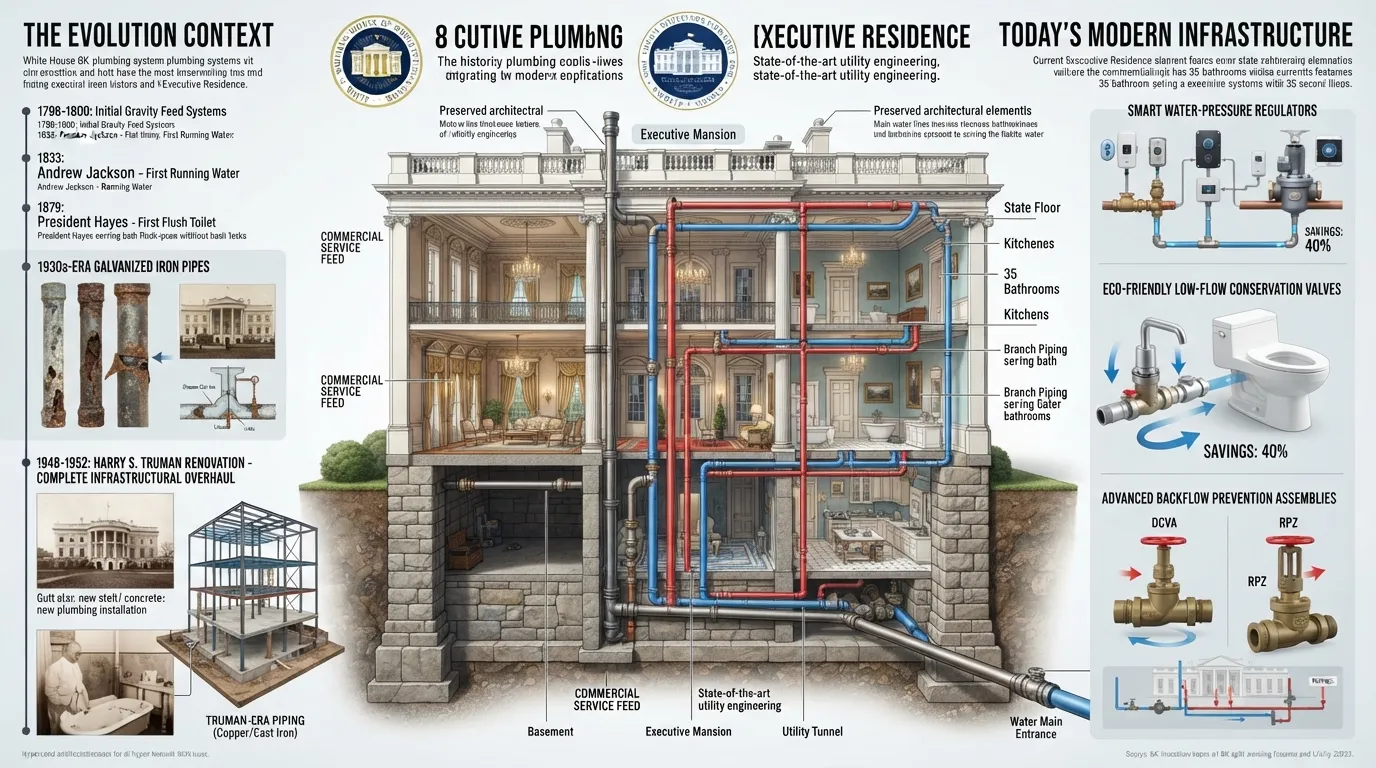 The White House is a massive complex featuring 132 rooms, six levels, and a total of 35 bathrooms according to official White House Historical Association architectural records. This count includes a mix of full residential suites, private half-baths, staff restrooms, and utility facilities distributed throughout the various floors.
The White House Plumbing Team and Maintenance Challenges
Maintaining a historic structure with modern mechanical demands requires a dedicated, full-time engineering and plumbing staff. These professionals manage continuous wear-and-tear, high-pressure water demands during large state events, and aging infrastructure beneath centuries-old masonry.
Famous Plumbing Stories: Taft’s Oversized Tub and LBJ’s Water Pressure
President William Howard Taft famously ordered an extra-large custom bathtub installed to accommodate his size, which famously sparked a legendary photograph of four men sitting inside it. Later, President Lyndon B. Johnson was known for demanding intense shower water pressure, famously prompting white-house plumbers to modify bathroom fixtures for maximum output.
Recent Renovation Claims
Discussions surrounding modern White House plumbing updates frequently surface in online forums and news cycles whenever minor repairs or infrastructure modernization projects occur. Historians emphasize that ongoing maintenance is standard for a 200-year-old active residence, balancing historic preservation with cutting-edge utility needs.
When Did Indoor Plumbing Become Common in America?
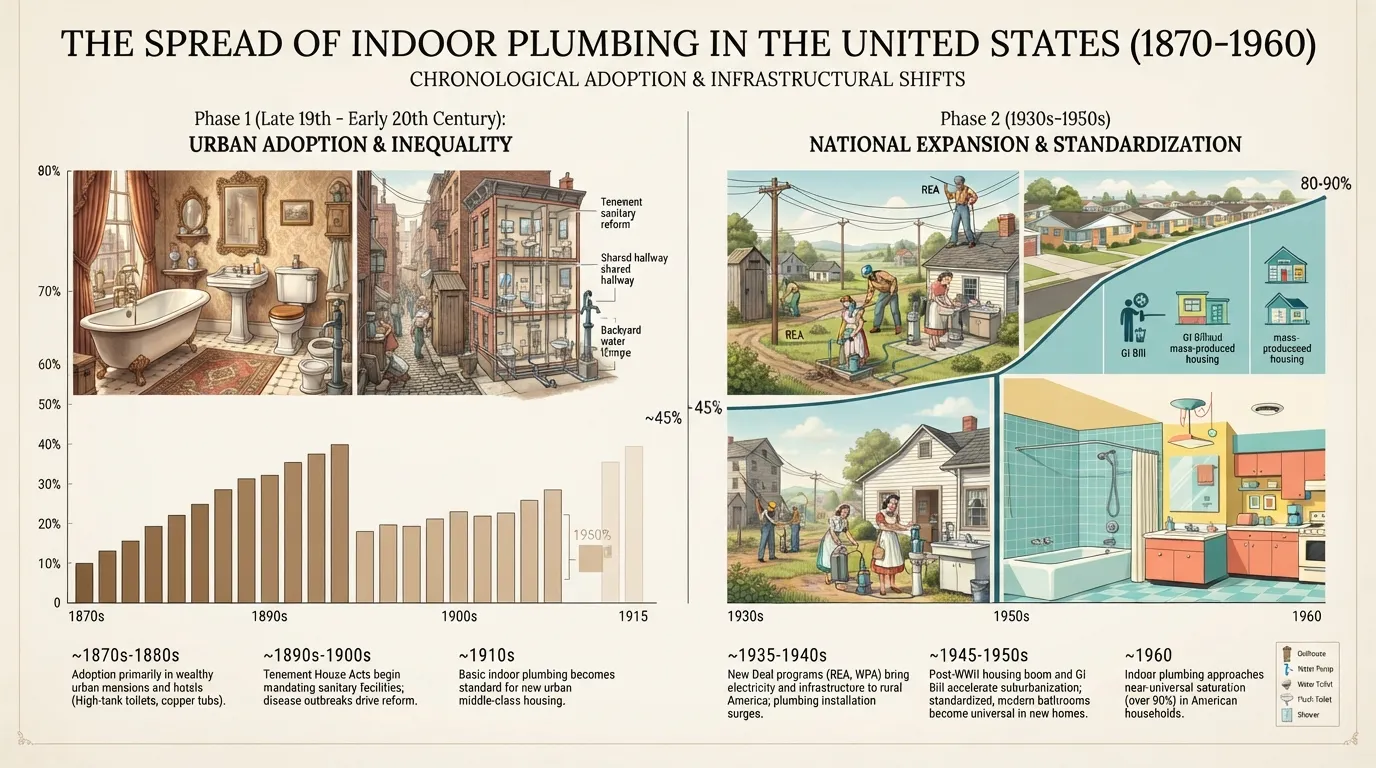 Indoor plumbing arrived in elite urban properties decades before it became a standard feature for the general public. Luxury hotels like Boston’s Tremont Hotel in 1829 and the private mansions of the wealthy were the earliest adopters of indoor water systems, serving as technological showcases long before municipal infrastructure caught up.
When Most American Homes Had Indoor Plumbing
Widespread adoption of indoor plumbing across ordinary American households accelerated dramatically during the mid-20th century. According to historical U.S. Census Bureau data, roughly half of all American homes still lacked complete indoor plumbing facilities as late as 1940, with coverage expanding rapidly to two-thirds by 1950 and reaching near-universal adoption by the end of the century.
How the White House Compares
The White House received its earliest experimental running water systems nearly a century before complete indoor plumbing became a standard baseline for the average American household. While executive residents enjoyed piped spring water and early bathing rooms in the 19th century, ordinary citizens largely relied on outdoor pumps, wells, and outhouses well into the 1940s and 1950s.
Watergate Plumbers vs Real White House Plumbers
 The White House “Plumbers” were a covert special investigations unit established in July 1971 during the Nixon administration. Their primary mission was to stop the leaking of classified government documents, such as the Pentagon Papers, to the news media.
Why the Name Has Nothing to Do with Pipes
Despite their title, the Watergate Plumbers had absolutely nothing to do with building maintenance, pipes, or actual plumbing. The nickname was coined because their job was specifically to “plug leaks” of secret information coming out of the administration.
Frequently Asked Questions
When did the White House get indoor plumbing?
Indoor running water first reached the White House in 1833 under President Andrew Jackson through iron pipes from a nearby spring. Comprehensive central plumbing featuring hot and cold running water on the residential second floor followed in 1853 under President Franklin Pierce.
Who was the first president to have a toilet in the White House?
While popular folklore attributes the first toilet and bathtub to Millard Fillmore around 1850, historians have debunked this as a myth. Actual documented permanent plumbing installations and modern second-floor bathing facilities were established under President Franklin Pierce by 1853.
Which president gutted the White House for renovation?
President Harry S. Truman completely gutted the interior of the White House between 1948 and 1952. Prompted by severe structural decay and sagging floors, workers rebuilt the entire interior framework from the ground up while preserving only the exterior sandstone walls.
Did the White House have an outhouse?
Yes, before indoor running water and plumbing infrastructure were established, early presidents and staff relied on outdoor outhouses and wooden privies located on the mansion grounds. Residents also used portable metal tubs and hand-carried water for daily hygiene.
How many toilets does the White House have?
According to official White House Historical Association architectural records, the White House features a total of 35 bathrooms. This total includes a mix of full suites, half-baths, and staff restrooms distributed across the building’s six levels.
When did indoor plumbing become common in America?
Widespread adoption of indoor plumbing across ordinary American households accelerated during the mid-20th century. U.S. Census Bureau data shows that about half of American homes lacked complete indoor plumbing in 1940, with coverage expanding rapidly to two-thirds by 1950.
Which president added the swimming pool to the White House?
President Franklin D. Roosevelt had an indoor swimming pool installed in the West Wing in 1933, funded by public donations to aid in his physical therapy for polio. President Gerald Ford later had an outdoor pool built on the grounds in 1975.
Key Takeaways
- 1833 Milestone: President Andrew Jackson introduced the first running water system by laying iron pipes to pump spring water into the executive mansion.
- 1853 Modernization: President Franklin Pierce oversaw the installation of central plumbing, bringing piped hot and cold water to the second-floor living quarters.
- Debunked Myths: Popular tales attributing the first bathtub and toilet to Millard Fillmore in 1850 stem from satirical fiction rather than historical fact.
- The 1948–1952 Truman Overhaul: Severe structural decay prompted President Harry S. Truman to completely gut the interior and replace all aging lead and iron pipes.
- Modern Infrastructure: Today, the White House features 132 rooms and 35 bathrooms, maintained continuously to balance historic preservation with modern utility standards.

Oscar Vance | Master Plumber & Drainage Expert
Meet Oscar Vance, a licensed master plumber sharing practical solutions on residential repairs, preventive maintenance, and thoughtful home upkeep.