Plumbing Business Startup Costs at a Glance
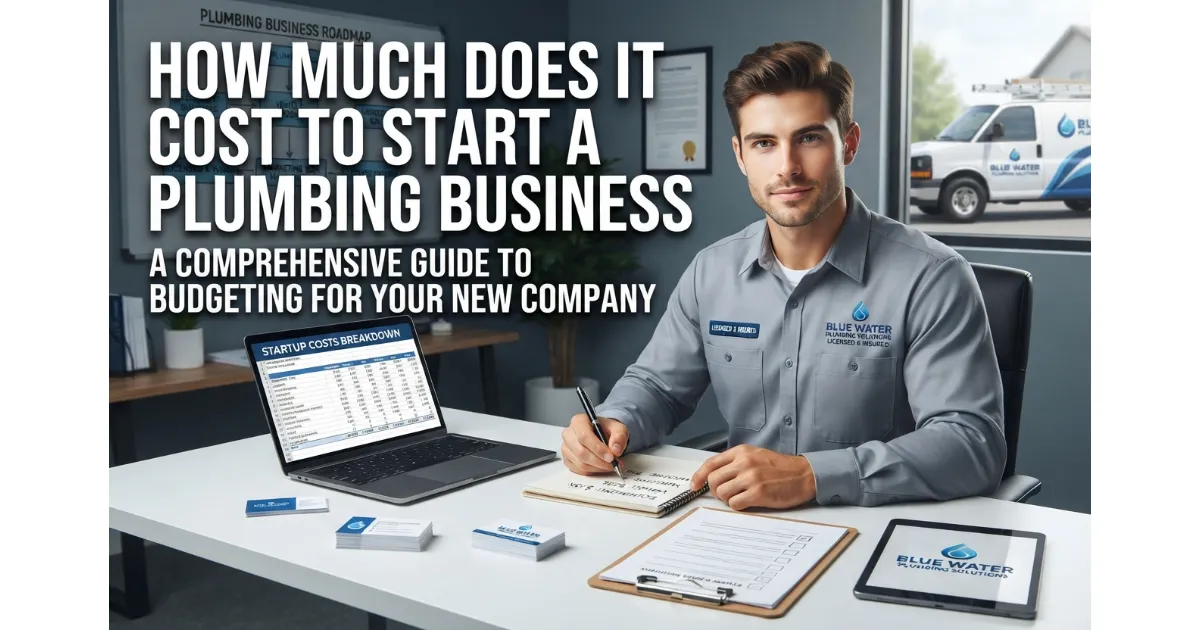 Understanding total plumbing business startup costs helps you avoid underfunding your venture. While baseline expenses vary based on scale, having an accurate financial blueprint ensures smooth operations from day one.
Lean vs Standard vs Full-Scale Startup Cost
A lean setup typically requires around $23,000 when accounting for minor licensing, marketing, and insurance, whereas a high-end operation easily pushes past $108,800 due to new fleet vehicles and extensive specialized equipment.
Why the $5,000 Figure Only Works in One Situation
The ultra-low $5,000 startup figure is frequently cited online, but it is deeply misleading for most aspiring entrepreneurs. This budget only works if you satisfy specific conditions:
- Pre-Owned Vehicle: You already own a dependable service vehicle or cargo van free of monthly payments.
- Existing Hand & Power Tools: You possess professional-grade pipe wrenches, threading machines, and safety gear.
- Minimal Initial Inventory: You only purchase basic fittings and replacement parts as immediate jobs require them.
If you lack these assets, attempting to launch on a $5,000 startup budget will leave you critically undercapitalized and unable to handle unexpected repairs or client emergencies.
What These Totals Include
Your total startup budget must account for distinct categories required to get your doors open legally and efficiently. A balanced budget covers several core components:
- Licensing and Permits: State contractor licenses, local business permits, and initial legal fees.
- Vehicle and Upfitting: Down payments, wrapping, shelving units, and ladder racks.
- Tools and Equipment: Drain snakes, inspection cameras, testing gauges, and safety gear.
- Insurance and Working Capital: General liability coverage, bonding, and emergency cash reserves.
Note that these figures represent one-time setup expenses and initial working capital cushions. They exclude ongoing monthly expenditures like fuel, software subscriptions, ongoing vehicle maintenance, and recurring advertising costs, which must be managed through steady cash flow.
Detailed Breakdown of One-Time Startup Costs
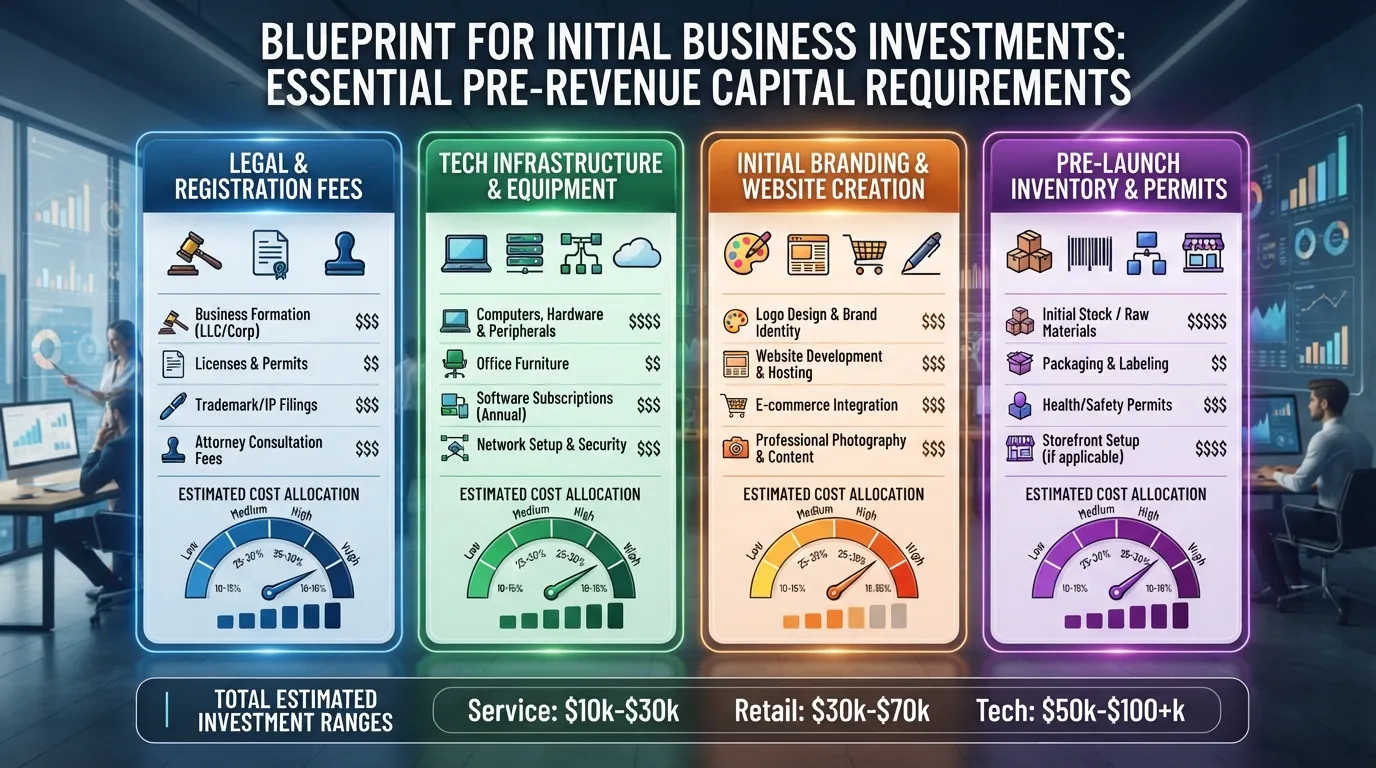 Launching a plumbing venture requires a clear financial roadmap. Breaking down expenses item-by-item helps you secure adequate working capital without overspending on non-essential items early on.
Licensing Permits and LLC Formation $400–$3,300
Legally establishing your trade authority involves filing for an LLC, paying state contractor license fees, and pulling local municipal permits. Master plumber exam fees and municipal registration fees ensure your business operates within state compliance.
- What is included: State filing fees, master plumber exam costs, local trade permits, and registered agent services.
- How to save money: File state paperwork directly online rather than paying third-party legal document services.
Service Vehicle: Used vs New Van $12,000–$60,000
Your vehicle functions as your mobile storefront. Choosing between a pre-owned cargo van and a brand-new high-roof model dictates the largest single portion of your capital expenditure.
- What is included: Down payment or cash purchase price for a reliable commercial work vehicle with adequate payload capacity.
- How to save money: Buy a certified pre-owned utility van with under 80,000 miles rather than financing a brand-new dealership model.
Van Upfitting and Branding $2,000–$9,500
An organized van protects your gear and projects professionalism. Interior storage systems keep pipes, fittings, and tools secured during transit.
- What is included: Heavy-duty shelving units, partition bulkheads, ladder racks, and full vinyl vehicle wrapping or decals.
- How to save money: Install modular aluminum shelving yourself instead of paying a specialized upfitting center for labor.
Tools and Equipment: What to Buy and What to Rent $3,000–$15,000
Plumbing requires robust mechanical assets. While hand tools are essential purchases, expensive diagnostic units can be rented until steady cash flow justifies ownership.
- Hand tools: Pipe wrenches, tubing cutters, torches, and torque keys bought immediately.
- Press tools: Battery-powered copper press kits for rapid, flame-free fitting connections.
- Sewer camera: Push-rod digital cameras used for diagnostic line inspections.
- Hydro-jetter: High-pressure water cleaning units for heavy commercial grease and root clearance.
- Drain snake: Heavy-duty motorized drum machines for clearing main sewer lines.
Initial Parts Inventory $1,000–$5,000
Having common parts on hand ensures you can complete standard residential calls on the first visit without running back to the supply house.
- What is included: Copper tubing, PEX piping, PVC fittings, valves, wax rings, connectors, and common faucet cartridges.
- How to save money: Stock only high-frequency items and lean on local wholesale distributors for specialty parts as needed.
Insurance and Bonds in Year 1 $3,600–$11,000
Clients and municipalities require proof of financial protection before allowing you to touch residential or commercial water systems.
- What is included: General liability coverage, commercial auto insurance, worker’s compensation, and contractor license bonds.
- How to save money: Bundle your general liability and auto policies through a single provider to secure multi-policy discounts.
Marketing and Business Setup $1,000–$5,000
Getting your phone to ring requires a polished digital presence and local search optimization from day one.
- What is included: Professional logo design, branded uniforms, a mobile-optimized website, and initial Google Local Services Ads setup.
- How to save money: Use streamlined website builders and launch organic local SEO alongside a modest ad budget.
Monthly Running Costs and How Much Cash You Need for the First 6 Months
Most plumbing startups fail not from a lack of technical skill, but from underestimating ongoing overhead and working capital. Factoring in recurring monthly expenses keeps your business solvent while you build a recurring client base.
Recurring Monthly Expenses
Fixed overhead and variable operational expenses continue every month regardless of how many service calls you complete. Managing these outflows carefully prevents cash crunches during seasonal slow periods.
- Vehicle Fuel and Maintenance: Local travel between jobs adds up quickly, averaging $300 to $600 monthly depending on your service radius.
- Insurance Installments: Monthly payments for general liability, commercial auto, and workers’ compensation policies.
- Software and Communications: Field service management, scheduling applications, and dedicated mobile phone lines.
- Professional Services: Monthly bookkeeping and CPA support to keep your financial records clean and compliant.
What Google Local Services Ads Really Cost per Lead
Generating consistent phone calls requires active marketing spend, with digital platforms acting as your primary pipeline for emergency plumbing repairs.
- Pay-Per-Lead Models: Platforms like Google Local Services Ads charge per verified customer phone call or message, often ranging from $25 to $75+ per lead depending on your local market competition.
- Conversion Rates: Expect a standard closing rate where roughly half of all inbound leads turn into paid service appointments.
- Budget Allocation: Dedicate a minimum of $500 to $1,500 monthly to digital ad spend to maintain a steady flow of emergency calls.
How Much Working Capital Do You Need?
Working capital bridges the gap between completing a job, invoicing the client, and receiving payment. A robust cash cushion protects your business against unexpected equipment failures and delayed collections.
- 3-Month Lean Cushion: Suitable if you have immediate recurring contracts and low personal living expenses, requiring roughly $10,000 to $15,000 in reserve cash.
- 6-Month Secure Cushion: The gold standard for independent plumbers, requiring $20,000 to $40,000 to cover all fixed overhead, vehicle payments, and personal wages while scaling up.
- Formula Strategy: Multiply your expected monthly fixed overhead by six and add that total directly to your initial equipment budget.
Sample Month-by-Month Cash Flow for Year 1
Taxes You Should Set Aside
Failing to plan for taxes is the fastest way to trigger an IRS audit and massive financial penalties for a newly established service business.
- Self-Employment Tax: As an owner-operator, you must cover both the employee and employer portions of Social Security and Medicare, accounting for roughly 15.3 percent of net earnings.
- Quarterly Estimated Taxes: The IRS and state tax agencies require you to file and pay estimated taxes four times a year rather than waiting for an annual return.
- Sales Tax Compliance: Ensure you collect appropriate state sales taxes on retail parts and hardware sold directly to consumers during service calls.
Licensing and Legal Requirements: Can You Start Without a License?
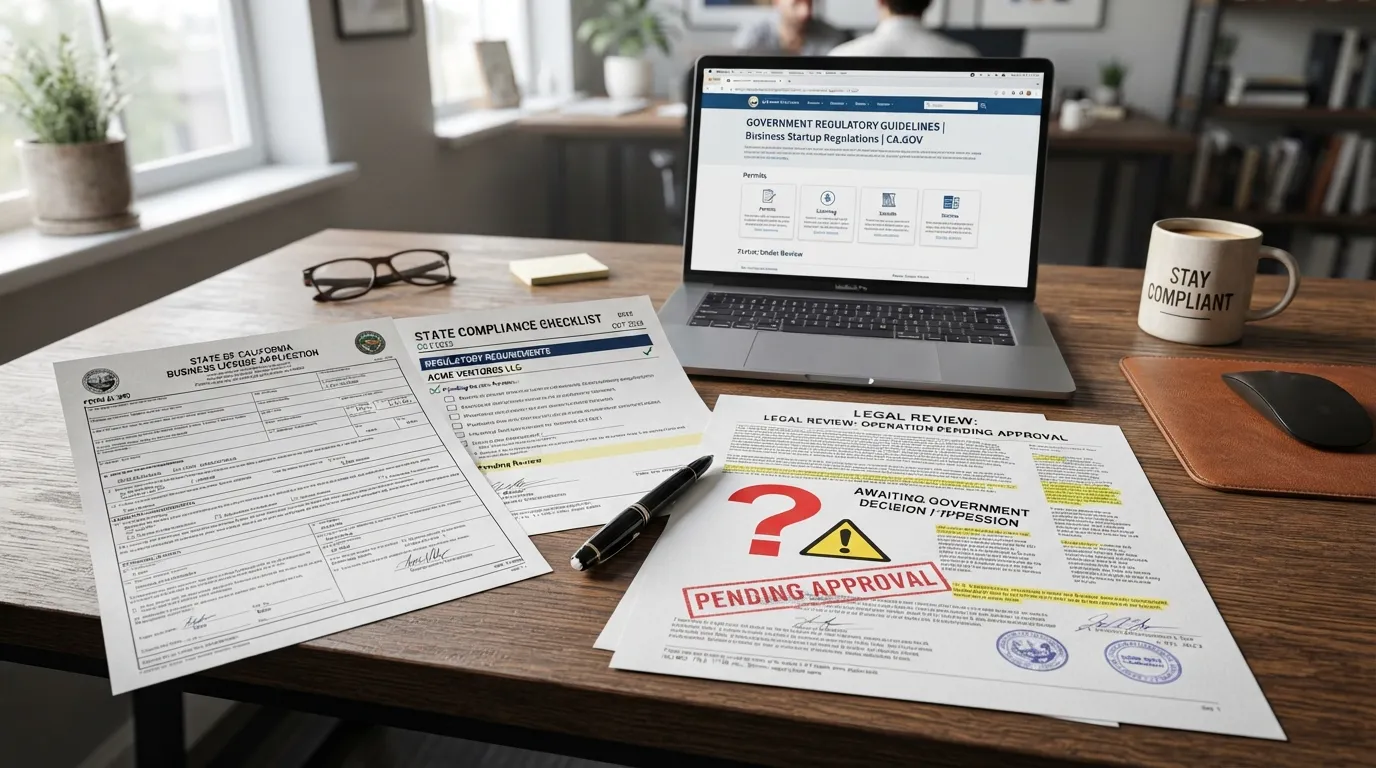 Navigating state regulations and trade laws is mandatory before taking on paying plumbing clients. Operating outside legal compliance risks heavy fines, lawsuits, and the forced closure of your business.
What License Do You Need to Start a Plumbing Business?
Most jurisdictions require a master plumber license or a licensed contractor credential to legally contract plumbing work, pull municipal permits, and hire technicians.
- Journeyman vs Master: While a journeyman plumber can install pipes under supervision, only a licensed master plumber holds the legal authority to own and operate an independent contracting business.
- State Contractor Board: You must register your business entity with your state licensing board and provide proof of trade competency.
Can You Run a Plumbing Business Without a License?
No, you cannot legally offer contract plumbing services to the public without meeting state licensing requirements.
- Strict Legal Penalties: Performing plumbing work without a license is classified as a misdemeanor in many states, carrying severe fines and potential jail time.
- State Variations: Enforcement levels vary widely by region, but municipal inspectors actively crack down on unlicensed operators advertising online.
Can You Start a Plumbing Business Without Being a Plumber?
Yes, you can launch a plumbing company as an entrepreneur even if you do not hold a plumbing license yourself, provided you structure the business correctly.
- Qualifying Agent Model: You can legally hire or partner with a licensed master plumber to act as your company’s qualifying agent or responsible master plumber.
- Ownership Restrictions: Some state boards require the qualifying master plumber to hold a designated equity stake or maintain active operational control of the trade side of the business.
Business Structure: LLC vs Sole Proprietorship
Choosing the correct legal structure safeguards your personal assets from catastrophic liability claims and commercial lawsuits.
- Sole Proprietorship: Easy to set up, but offers zero personal asset protection if a customer sues over a major flood or structural failure.
- Limited Liability Company (LLC): Creates a distinct legal shield between your personal finances and your commercial operations, making it the preferred choice for trade contractors.
Bonding and Insurance Requirements
Contractor bonds and liability policies prove financial responsibility and reassure property owners that they are protected against damages.
- Surety Bonds: Mandatory in most states to guarantee that you will complete jobs in compliance with local building codes.
- General Liability Insurance: Essential coverage that pays out if your work causes accidental property damage or flooding in a client’s home.
How to Check Your State’s Rules
Every state regulates trade contractors differently, requiring direct verification through official channels before launching operations.
- State Licensing Boards: Visit your state’s department of commerce, labor, or dedicated contractor licensing board website to review current trade prerequisites.
- Local Building Departments: Contact your county or city permit office to confirm municipal business tax receipts and local registration rules.
How Costs Change by Business Type and State
 Plumbing business startup costs are not one-size-fits-all. Your geographic location, service focus, and operational scale heavily dictate your exact capital requirements and overhead thresholds.
Solo Owner-Operator vs Small Team vs Full-Scale
Scaling your operation from a solo van to a multi-truck enterprise changes your financial requirements exponentially.
- Solo Owner-Operator ($10,000–$35,000): Focuses on residential repairs with a single van, keeping equipment and insurance overhead to a bare minimum.
- Small Team ($45,000–$75,000): Involves adding a second vehicle, hiring a journeyman assistant, and increasing advertising spend to feed multiple schedules.
- Full-Scale Operation ($75,000–$100,000+): Operates a multi-truck fleet, commercial warehouse space, administrative staff, and heavy specialized excavation equipment.
Residential Service vs Commercial Plumbing: Cost Differences
The type of clients you target dictates the caliber of tools and safety equipment you must purchase upfront.
- Residential Service: Focuses on water heaters, faucet replacements, and drain clogs, requiring standard hand tools and moderate inventory.
- Commercial Plumbing: Demands heavy-duty machinery, high-pressure hydro-jetters, core drills, and higher commercial liability insurance limits.
Drain-Cleaning-Only Business: Cheaper Way to Start?
Launching a specialized drain-cleaning venture is a popular and cost-effective workaround for entrepreneurs with limited capital.
- Reduced Licensing Barriers: Some states have less restrictive licensing requirements for specialized drain cleaning compared to full master plumbing installations.
- Lower Equipment Threshold: You only need a service van, camera lines, and motorized drain snakes, cutting tool expenses by half.
If You Already Own a Van and Tools: Your Real Cost
Possessing existing assets fundamentally changes your financial entry point, slashing your initial cash outlay drastically.
- Asset Leverage: Skipping van down payments and hand tool purchases drops your immediate startup expenditure closer to the $5,000–$8,000 range.
- Capital Reallocation: You can redirect your saved funds straight into digital marketing, insurance policies, and initial working capital reserves.
How to Start a Plumbing Business with Little or No Money
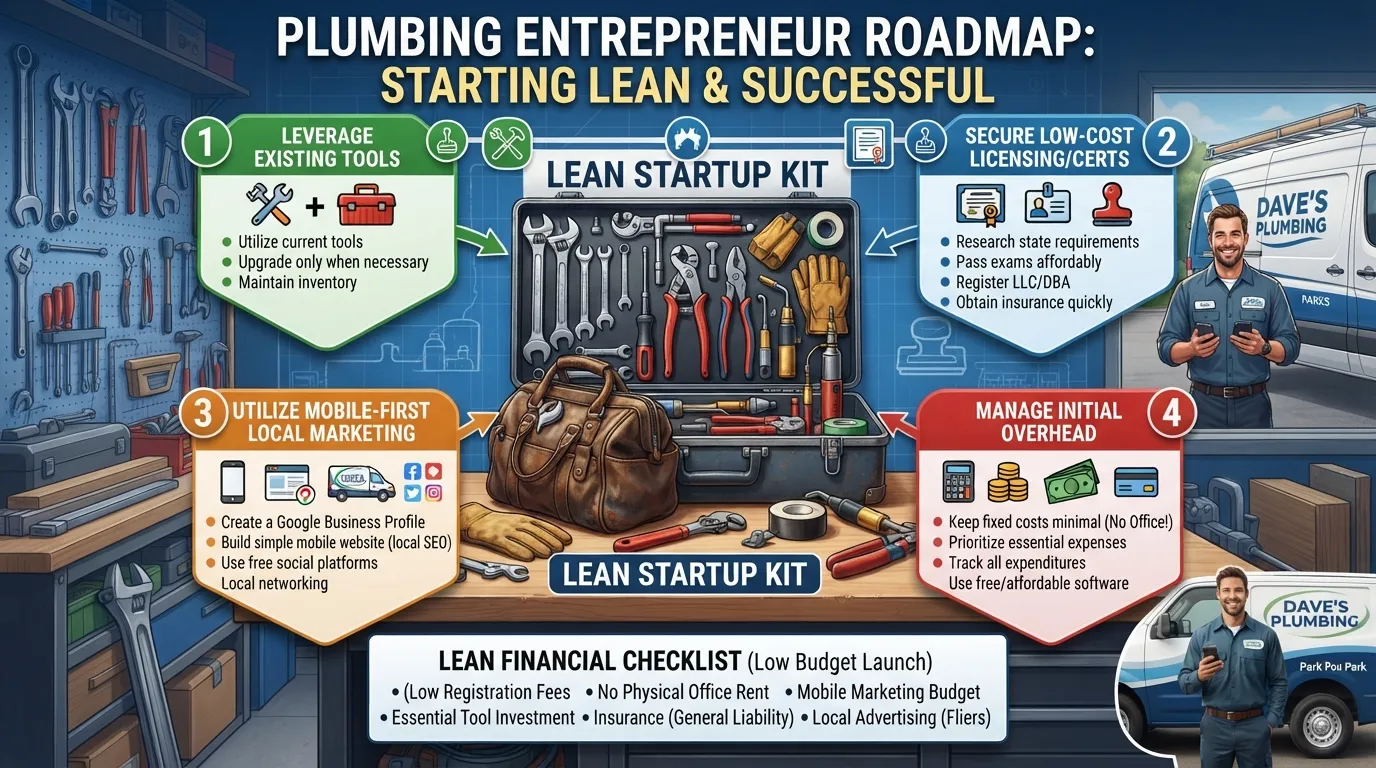 Launching a trade enterprise without a massive cash reserve is entirely possible if you leverage strategic financing, equipment leasing, and a phased launch approach. Building a sustainable business model on a shoestring budget requires disciplined capital allocation.
Financing a Van and Tools: Lease vs Loan vs Used
Acquiring major operational assets without draining your personal bank account depends on choosing the right financing structure.
- Vehicle Leasing: Lowers monthly cash outflows and lets you drive a reliable, warrantied van, though you will not own the asset at the end of the term.
- Equipment Loans: Spreads the purchase cost of expensive press tools and cameras over several years while building equity in your gear.
- Pre-Owned Equipment: Purchasing certified used machinery preserves upfront cash and avoids rapid depreciation hits.
Business Loans, Equipment Financing and Lines of Credit
Securing external funding helps bridge the gap between startup expenses and steady incoming cash flow.
- SBA Microloans: Government-backed loans designed to provide small business owners with startup capital at favorable interest rates.
- Equipment Financing: Uses the purchased machinery itself as collateral, making approvals easier for new startup ventures.
- Business Lines of Credit: Provides a flexible revolving credit pool to draw from when unexpected emergency repairs or slow collection cycles occur.
Start Part-Time While Employed Side-Hustle Route
Launching your plumbing venture on weekends and evenings while keeping your day job eliminates the pressure of immediate personal income needs.
- Income Security: Your day job covers your living expenses while 100 percent of your side-job revenue goes directly back into your business savings.
- Gradual Scaling: Allows you to build a loyal local client base and purchase tools incrementally before cutting the cord on full-time employment.
Rent Expensive Equipment Until Demand Justifies Buying
Tying up thousands of dollars in specialized machinery that sits idle for weeks destroys early cash flow.
- Rental Strategy: Rent heavy sewer cameras, hydro-jetters, and core drills only on the specific days you have paid commercial jobs requiring them.
- Markup Pass-Through: Bill the equipment rental cost directly into your customer estimate as a specialty line item.
Mistakes to Avoid When Borrowing
Mismanaging debt during your startup phase can quickly choke your operations and trigger bankruptcy.
- Over-Borrowing: Taking out more capital than necessary leads to high interest payments and undisciplined spending on non-essential van customizations.
- Ignoring Cash Flow: Forgetting that loan repayments are due every month regardless of seasonal slow periods in plumbing demand.
Pricing Your Services and Hitting a 15–25% Profit Margin
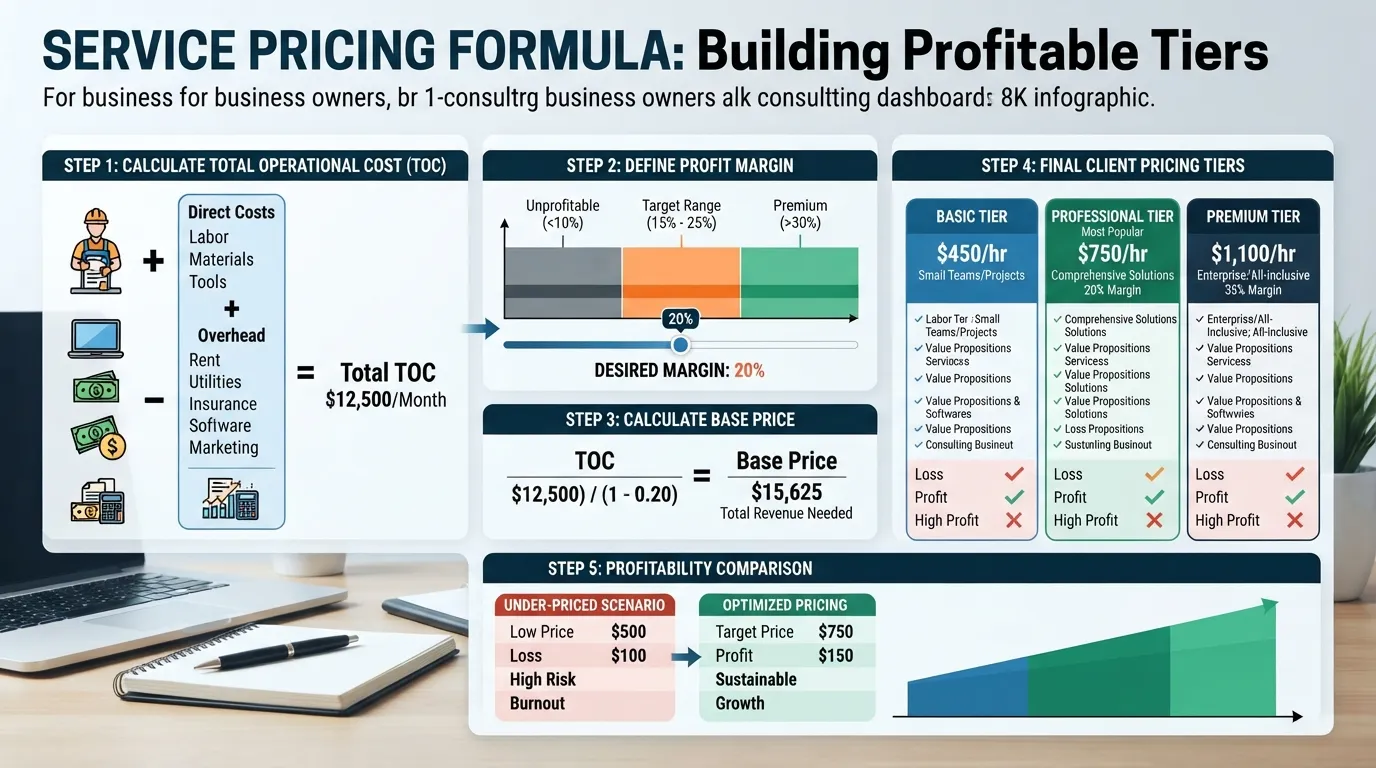 Pricing your plumbing services correctly is the single most important factor determining whether your business thrives or goes bankrupt. Relying on guesswork or copying local competitor rates without knowing your exact costs will quickly drain your working capital.
How to Calculate COGS and Overhead for a Plumbing Business
Before setting any customer-facing rates, you must understand your baseline operating expenses and Cost of Goods Sold (COGS).
- Calculating COGS: Add up the direct material costs for each specific job, including replacement pipes, valves, fixtures, and disposal fees.
- Calculating Overhead: Total all your monthly fixed expenses—such as vehicle insurance, fuel, software subscriptions, marketing, and loan payments—and divide by your billable hours.
Flat-Rate Pricing vs Hourly Pricing
Moving away from traditional hourly billing to structured flat-rate pricing dramatically increases your revenue and consumer trust.
- Flat-Rate Pricing: Uses a standardized pricing book to quote a fixed total price for a specific repair before work begins, rewarding your efficiency.
- Hourly Pricing: Charges customers by the hour plus materials, which penalizes you for working quickly and often leads to customer disputes over the final bill.
Worked Example: Pricing a Water Heater Replacement
To see how profitable pricing works in practice, consider a standard residential water heater replacement project.
- Material & Disposal Cost (COGS): $900 for the water heater tank, connectors, expansion tank, and old unit disposal fee.
- Allocated Labor & Overhead: $300 covering 3 hours of technician time, vehicle fuel, and daily operational overhead.
- <Target Profit Markup (30%): Adding a $360 margin brings the total customer flat-rate quote to $1,560, ensuring a healthy net return.
Plumbing Business Profit Margin: What Is Realistic?
Understanding industry benchmarks helps you evaluate whether your pricing strategy is keeping pace with healthy business standards.
- Gross Profit Margins: Well-run plumbing companies typically target 60% to 75% gross margins on service labor and parts.
- Net Profit Margins: A healthy, mature plumbing business aims for a 15% to 25% net profit margin after all operating expenses and taxes are paid.
How Long Until You Break Even?
Reaching your financial break-even point depends heavily on your initial startup capital and how quickly your customer acquisition engine ramps up.
- Break-Even Timeline: Most lean owner-operator plumbing businesses achieve monthly break-even status between months 4 and 6 of operations.
- Cash Flow Lag: Keep in mind that breaking even on paper is different from having cash in the bank, especially if clients take 30 days to pay invoices.
How Much Do Plumbing Business Owners Make?
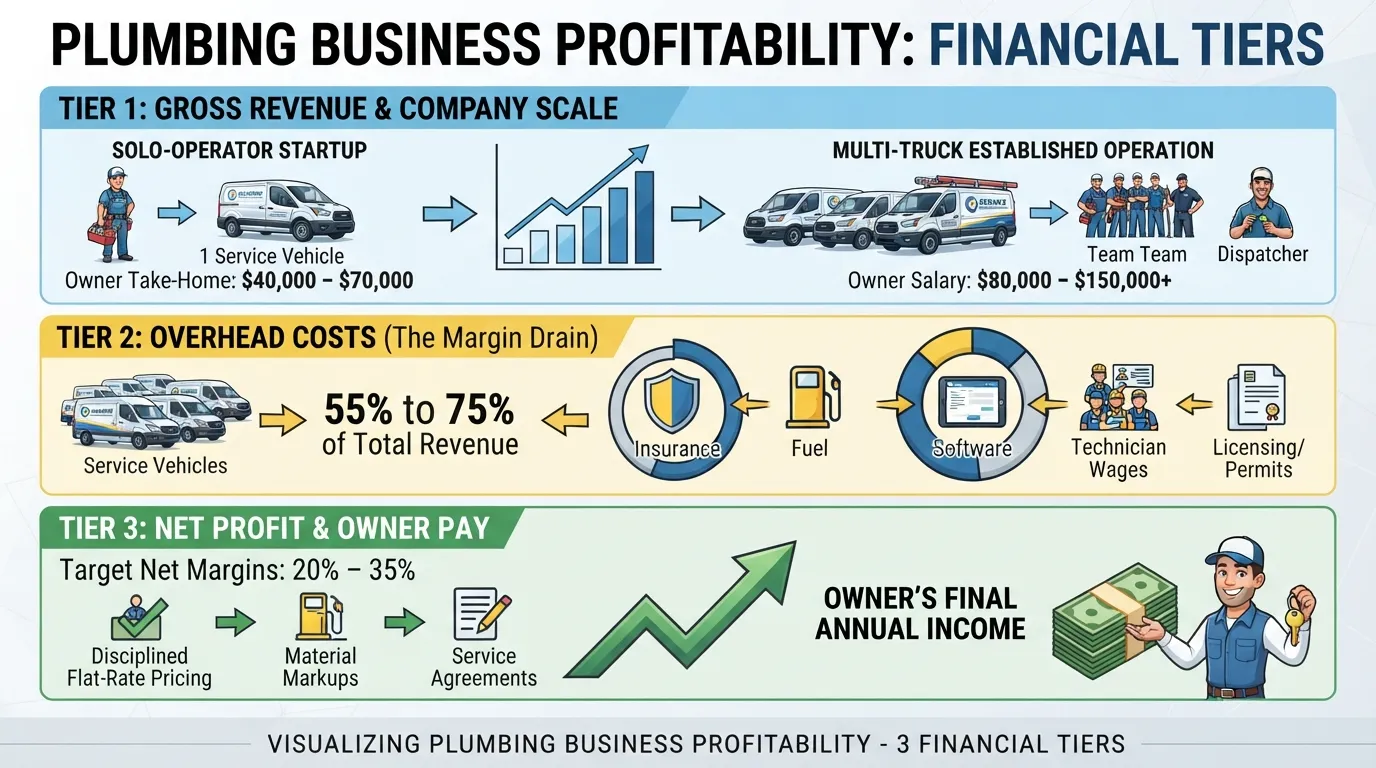 Plumbing business ownership offers substantial earning potential that far exceeds traditional W-2 employment wages. According to the U.S. Bureau of Labor Statistics, skilled trade professionals enjoy steady demand, while business owners who scale their operations capture significantly higher profit margins.
Plumbing Business Owner Salary: Typical Range
An owner-operator’s personal income varies depending on whether they work in the field full-time or manage a growing team of technicians from an office.
- Solo Owner-Operator Income: Typically takes home between $75,000 and $120,000 annually by combining technician wages with company net profits.
- Established Multi-Truck Owner: Owners who step out of day-to-day wrenching to manage operations frequently earn $150,000 to $250,000+ per year.
Can a Plumber Make $200,000?
Crossing the $200,000 annual income threshold is an achievable milestone for skilled trade entrepreneurs who optimize their business model.
- High-Margin Services: Focusing heavily on emergency repairs, tankless water heater installations, and whole-home repiping drives up revenue per billable hour.
- Leveraging Technicians: Scaling past a one-man van to manage a two- or three-truck operation allows you to multiply your billable hours and capture profit from every employee.
Can a Plumbing Business Owner Become a Millionaire?
Yes, scaling a plumbing business into a multi-million-dollar enterprise with multiple service vehicles and recurring commercial maintenance contracts can generate high net worth and strong equity value over a 10- to 15-year career.
Which Plumbing Work Pays the Most?
Certain specialty services command premium billing rates and generate the highest return on investment for your truck space.
- Emergency After-Hours Calls: Midnight water heater failures and main sewer backups command double-time or emergency dispatch fees.
- Whole-House Repiping: Replacing outdated polybutylene or galvanized pipes with PEX or copper generates thousands of dollars in single-job revenue.
- Commercial Maintenance Contracts: Long-term service agreements with restaurants and retail centers provide reliable monthly cash flow.
Plumbing vs HVAC: Who Pays More?
Both mechanical trades offer top-tier earning potential, though their revenue models feature distinct operational differences.
- Plumbing Revenue Consistency: Plumbing features higher emergency frequency and steady repair demand year-round, regardless of seasonal weather changes.
- HVAC Equipment Spikes: HVAC businesses experience massive seasonal revenue spikes during peak summer and winter months tied to complex system replacements.
Is Starting a Plumbing Business Worth It?
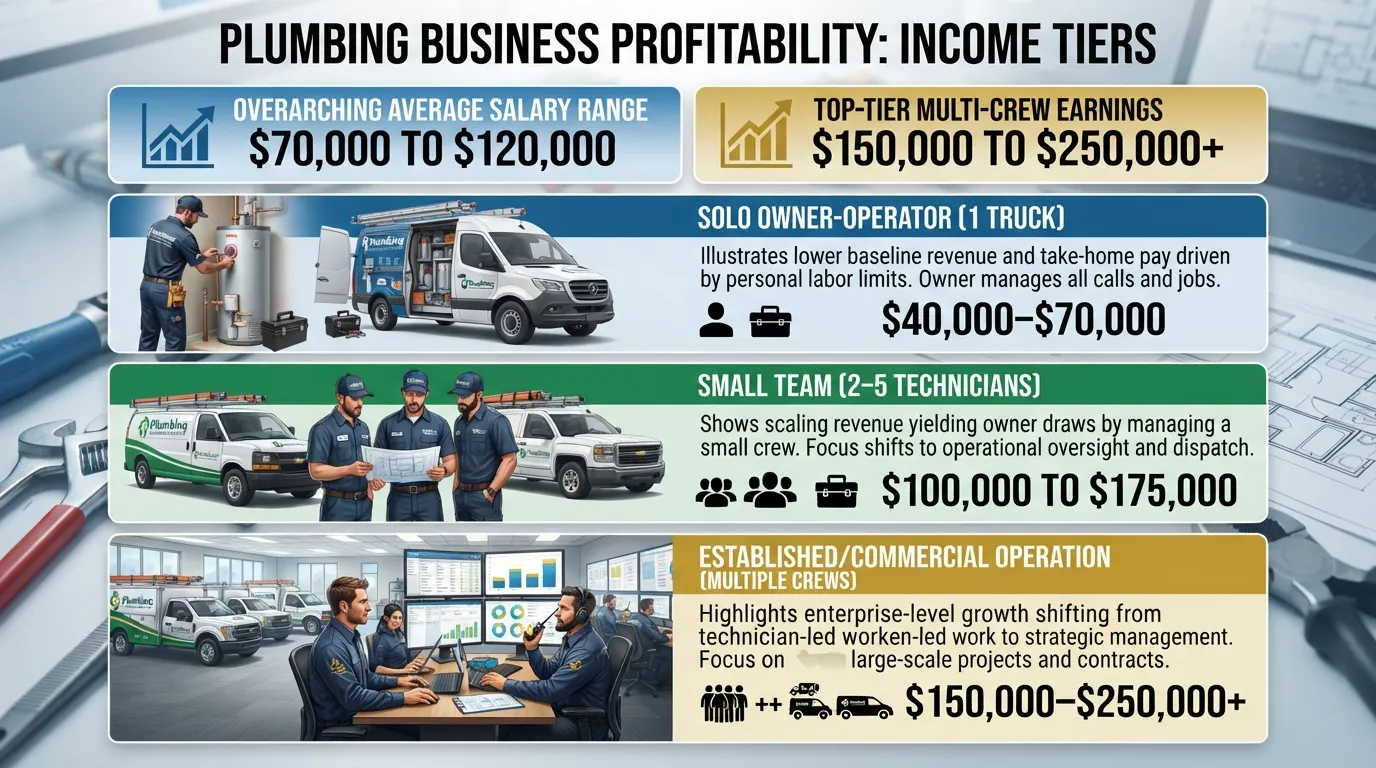 Deciding to launch an independent plumbing venture is a major life choice that balances high income potential against physical labor and operational stress. Evaluating the real pros and cons helps you determine if trade entrepreneurship aligns with your long-term career goals.
Pros: Demand Margins and the Skilled Labor Shortage
Plumbing remains one of the most recession-resistant and lucrative service trades you can enter today.
- Recession-Proof Demand: Broken pipes and overflowing toilets cannot wait for economic booms; emergency plumbing is always essential.
- High Profit Margins: Well-managed service businesses capture robust net returns on billable labor and parts markup.
- Labor Shortage Advantage: A severe nationwide shortage of skilled tradespeople means established independent plumbers enjoy immense pricing power and consistent call volumes.
Cons: Startup Risk On-Call Work and Physical Demands
Independence comes with significant operational trade-offs that every aspiring owner must accept before launching.
- Startup Risk: Initial cash outflows and slow early months put heavy financial pressure on your personal savings.
- Unpredictable On-Call Hours: Emergencies happen at night and on weekends, often disrupting your personal and family life.
- Physical Toll: Crawling through tight spaces, lifting heavy water heaters, and working in extreme weather takes a heavy toll on your body.
Start Your Own Business or Join an Existing Company?
Choosing between launching an independent startup and staying employed as a lead technician requires weighing your risk tolerance.
- Independent Ownership: Offers unlimited income potential, full schedule control, and equity building, but carries all financial and legal risk.
- W-2 Employment or Management: Provides a steady paycheck, paid time off, and zero liability, but caps your maximum earning potential.
Who Should Not Start a Plumbing Business Yet
Entrepreneurship is not for everyone, and launching too early can lead to financial disaster.
- Lack of Field Experience: Anyone without hands-on trade background or a licensed master partner should not attempt to run a plumbing service company.
- Inadequate Cash Reserves: Starting with zero emergency savings guarantees failure during the first slow month or unexpected vehicle breakdown.
Quick Self-Check
Answer these five questions honestly to evaluate your readiness to launch an independent plumbing business:
- Do you hold the required master license or have a confirmed agreement with a qualified master plumber?
- Have you saved at least three to six months of operating overhead and personal living expenses?
- Are you comfortable managing customer complaints, bookkeeping, and local marketing?
- Do you have reliable transportation and basic professional tools ready to deploy?
- Are you prepared to handle the physical demands and unpredictable hours of trade ownership?
Hidden Costs and Common Mistakes That Drain New Plumbing Businesses
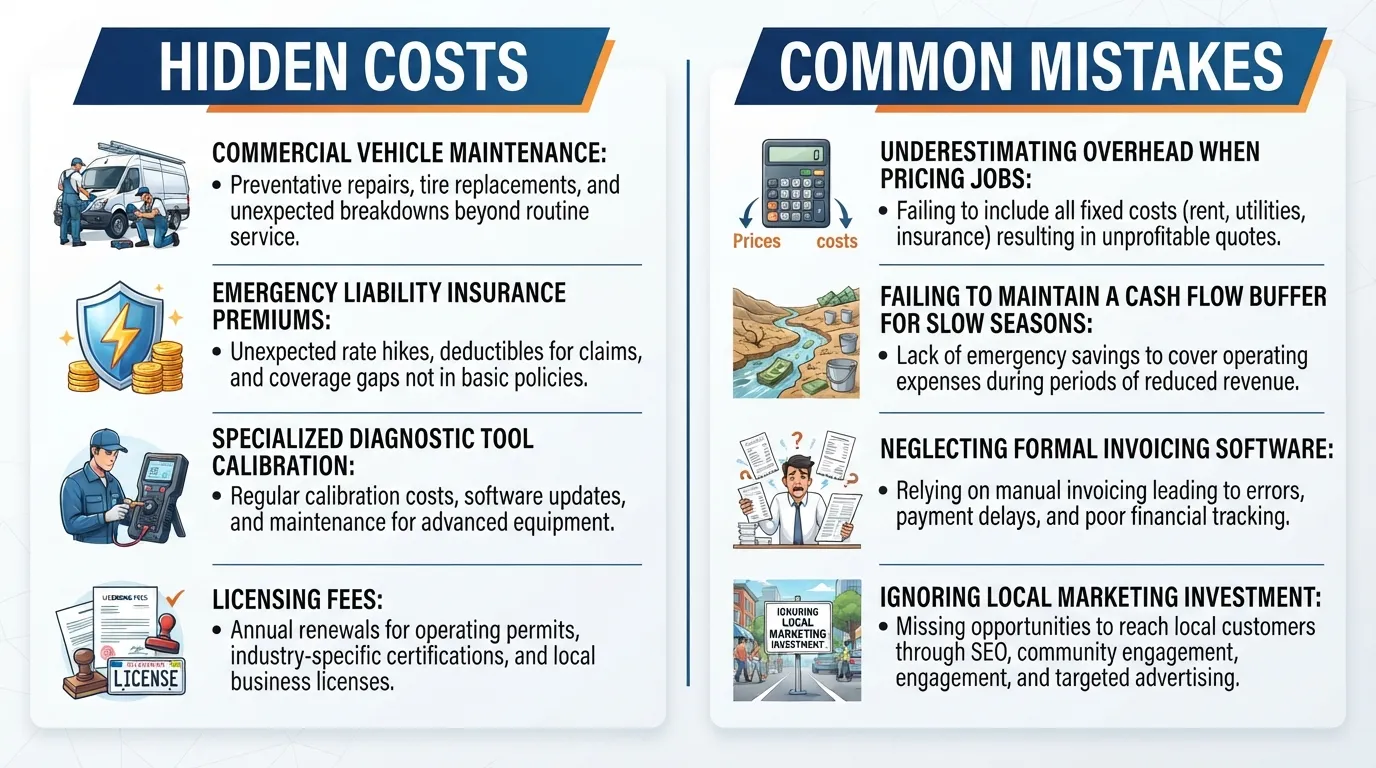 Most plumbing startups do not fail from a lack of technical skill; they collapse due to hidden overhead expenses and preventable operational mistakes. Anticipating these financial traps safeguards your working capital during your critical first year.
Using a Personal Auto Policy Instead of Commercial Auto
Attempting to save money by keeping your service van on a personal auto policy is a catastrophic legal and financial gamble.
- Claim Denial Risk: If you get into an accident while carrying tools, ladders, or copper pipe, personal insurance providers will deny coverage upon discovering the vehicle was used for commercial trade work.
- Legal Liability: An uninsured commercial accident can result in devastating personal lawsuits that wipe out your home and savings.
Underpricing Based on Competitors
Copying the cheap rates of established local competitors who bought their equipment decades ago will instantly starve your new business of profit.
- Ignoring True Costs: Competitors with paid-off trucks and bulk inventory can survive on razor-thin margins that will bankrupt a startup paying vehicle notes and commercial insurance.
- The Race to the Bottom: Pricing too low leaves zero room for warranty callbacks or unexpected job complications.
Callbacks Warranty Work and Bad Debt
Unplanned expenses tied to free warranty repairs and uncollectible customer invoices can bleed your cash reserves dry.
- Warranty Callbacks: If a fitting leaks a week after installation, you must return to fix it on your own dime, losing billable hours on active jobs.
- Bad Debt: Customers refusing to pay after a service call due to manufactured disputes leave you with unrecoverable labor costs.
Buying Expensive Equipment Too Early
Tying up thousands of dollars in high-end specialty machinery before your client volume justifies it is a major cash flow killer.
- Idle Depreciation: Buying a $6,000 hydro-jetter or a $10,000 camera reel that sits in your garage for three weeks out of the month destroys your return on capital.
- Financing Traps: High-interest equipment loans on underutilized assets create crushing fixed monthly overhead.
Skipping Bookkeeping and Tax Planning
Failing to maintain clean financial records from day one creates a nightmare during tax season and hides your true profit margins.
- Mixed Bank Accounts: Commingling personal and business funds makes tracking job profitability impossible and invites IRS audits.
- Quarterly Tax Surprises: Failing to set aside funds for self-employment tax leaves you facing massive penalties at the end of the year.
Hiring Too Soon
Bringing on your first employee before your recurring revenue can comfortably sustain payroll creates massive financial stress.
- Payroll Obligations: Employees expect a paycheck every Friday, regardless of whether your weekly customer invoices have actually been paid yet.
- Overhead Multipliers: Beyond hourly wages, your first hire triggers workers’ compensation insurance, payroll taxes, and administrative burdens.
Checklist to Launch Your Plumbing Business
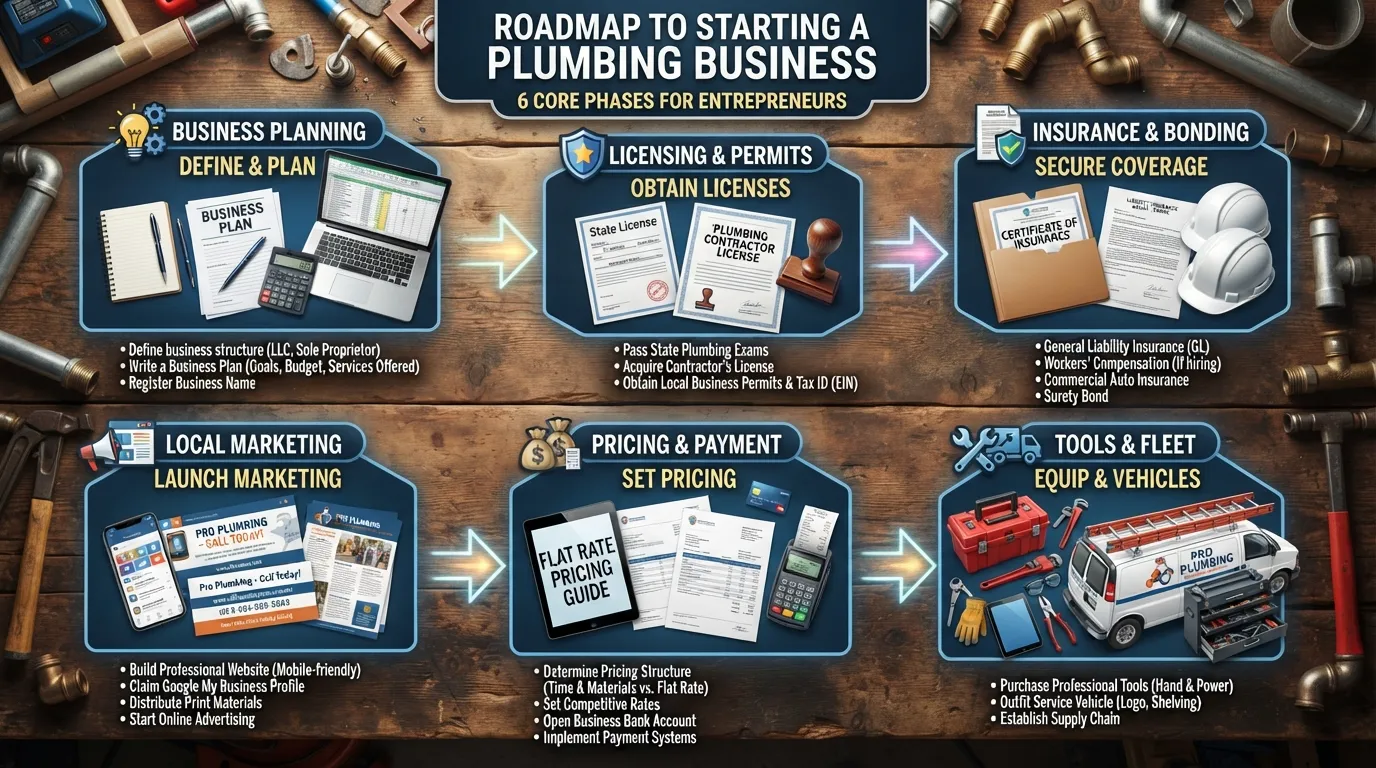 Executing your launch with a structured, chronological roadmap eliminates guesswork and ensures you meet all legal, financial, and operational requirements. Following a proven sequence protects your capital and positions your business for immediate profitability.
10-Step Startup Checklist
Use this comprehensive numbered workflow to take your plumbing business from an initial idea to a fully operational, revenue-generating enterprise:
- Secure Licensing: Pass your master plumber exam or officially partner with a qualified master plumber to act as your state qualifying agent.
- Form Your Legal Entity: Register your Limited Liability Company (LLC) with your state department of commerce to protect your personal assets.
- Acquire Insurance and Bonds: Purchase general liability coverage, commercial auto insurance, and mandatory contractor license bonds.
- Secure Your Service Vehicle: Buy or lease a reliable commercial van and equip it with safety partitions and ladder racks.
- Acquire Essential Tools: Purchase foundational hand and power tools while renting specialized equipment like hydro-jetters until demand justifies ownership.
- Build a Flat-Rate Pricing Book: Establish a transparent, professional pricing system that accounts for your direct material costs, overhead, and profit margins.
- Set Up Field Software: Invest in an all-in-one mobile scheduling, invoicing, and customer management application.
- Launch Your Digital Presence: Build a mobile-optimized website and claim your official Google Business Profile to capture local search traffic.
- Acquire Your First Customers: Launch targeted Google Local Services Ads and ask friends, family, and past contacts for early referrals and reviews.
- Establish Bookkeeping Systems: Set up dedicated business bank accounts and integrate automated expense tracking with a certified local accountant.
Free Startup Budget Calculator and Downloadable Checklist
To streamline your pre-launch planning, consider utilizing digital tools and template assets to keep your financials organized.
- Interactive Spreadsheets: Download or build a dynamic budget calculator where you can plug in your local vehicle lease rates, insurance quotes, and tool costs.
- Printable Task Trackers: Keep a physical copy of your launch checklist posted on your office wall to mark off milestones as you complete them.
Your First 90 Days: What to Focus On
Your initial three months in business set the operational foundation for long-term survival and growth.
- Month 1 (Setup and Compliance): Finalize licensing, vehicle wraps, insurance policies, and basic digital marketing assets.
- Month 2 (Lead Generation and Execution): Turn on local search ads, complete your first wave of service calls, and relentlessly pursue 5-star Google reviews.
- Month 3 (Cash Flow and Optimization): Review your profit margins, tighten up your flat-rate pricing book, and ensure your bookkeeping systems are running cleanly.
Frequently Asked Questions
Get direct, authoritative answers to the most common questions aspiring trade entrepreneurs ask about launching and scaling a plumbing business.
How much money do I need to start a plumbing company?
Most owner-operator plumbing businesses require $10,000 to $50,000 to start. A lean setup can cost around $5,000 if you already own a reliable vehicle and essential hand tools, while multi-truck operations with new fleet vans and specialized machinery frequently surpass $100,000 in upfront capital and working reserves.
Is plumbing a good business to start?
Yes, plumbing is an exceptionally strong and recession-resistant business due to constant, non-discretionary demand for emergency repairs. Combined with a nationwide shortage of skilled tradespeople, independent plumbing companies enjoy robust profit margins and excellent pricing power when paired with professional management.
Can I run a plumbing business without a license?
No, you cannot legally contract plumbing services to the public without meeting state licensing requirements. Operating without an active trade or contractor license violates municipal laws, exposes you to severe fines or misdemeanor charges, and instantly voids your general liability insurance coverage.
Can I start a plumbing business without being a plumber?
Yes, you can launch a plumbing enterprise as an entrepreneur without holding a trade license yourself, provided you legally hire or partner with a licensed master plumber to act as your company’s qualifying agent or responsible managing employee for state board compliance.
How much do plumbing business owners make a year?
Solo owner-operators typically take home between $75,000 and $120,000 annually by combining field wages with company net profits. Established owners who scale into multi-truck operations and step away from daily wrenching regularly capture annual incomes ranging from $150,000 to $250,000 or more.
Can a plumber make $200,000?
Yes, clearing $200,000 a year is an achievable milestone for skilled trade entrepreneurs who focus on high-margin specialty services like tankless water heaters and whole-home repiping, or who scale their operations past a single van to manage a small team of productive technicians.
What type of plumbing makes the most money?
Emergency after-hours repairs, whole-house repiping, and commercial maintenance contracts generate the highest revenue and return on investment. Emergency service calls command premium dispatch fees, while commercial contracts secure reliable, high-volume cash flow.
Who pays more HVAC or plumbing?
Both mechanical trades offer top-tier earning potential, but plumbing features steadier year-round repair demand and lower initial equipment inventory costs. HVAC experiences massive seasonal revenue spikes during extreme summer and winter weather linked to complex full-system replacements.
Is a plumbing business profitable?
Yes, a well-managed plumbing business is highly profitable, typically targeting 60% to 75% gross margins on labor and parts. Mature companies with disciplined overhead and flat-rate pricing models routinely achieve healthy net profit margins between 15% and 25%.
Will AI replace plumbers?
No, artificial intelligence cannot replace plumbers. Physical trade work requires hands-on mechanical dexterity, complex spatial problem-solving in tight structures, and real-world physical repairs that software and automation simply cannot execute.
Final Thoughts
Launching an independent plumbing business requires a capital investment ranging from $10,000 to $50,000 for most owner-operators, driven primarily by your vehicle choice, tool inventory, and state licensing requirements. Proper working capital management and adherence to legal compliance are the cornerstones of long-term success.
Your recommended starting path depends on your current assets: choose a lean $5,000 to $10,000 startup if you already own a reliable van and hand tools, or budget $25,000 to $50,000 for a standard solo setup with pre-owned commercial transport and professional diagnostic gear.
Take the next step today: build your customized startup budget, verify your state licensing requirements, and take control of your financial future in the thriving home services industry.

Home Improvement Researchers & Guides Editors
Meet the Nest Team, a collective of dedicated researchers, home improvement enthusiasts, and industry writers sharing practical guides, thorough category research, and trusted solutions for residential repairs and thoughtful home upkeep.