How to Clear a Clogged Plumbing Vent
 A clogged plumbing vent is a blockage caused by external debris like leaves, bird nests, or dirt at the roof opening or further inside the vent pipe. Clearing it requires safely accessing the roof, removing visible blockages, flushing the line with a garden hose, and using a plumber’s snake or drain auger if the obstruction persists.
- Confirm the issue is a clogged plumbing vent by checking for slow drains and gurgling toilets throughout your home.
- Prioritize roof safety by using a sturdy ladder, wearing non-slip shoes, and avoiding work during wet or windy conditions.
- Locate the vent pipe on your roof corresponding to the affected plumbing fixtures inside the house.
- Carefully remove surface debris like leaves, twigs, or a bird nest from the opening of the vent pipe.
- Flush the vent pipe downward using a garden hose to break up and wash away lingering blockages.
- Insert a plumber’s snake or drain auger into the vent pipe to clear deeper, stubborn obstructions if water does not drain.
- Test your home’s plumbing fixtures to ensure proper drainage and airflow has been successfully restored.
If you prefer not to climb onto your roof, you can explore the no-roof cleaning option, or check our guide on when to call a professional plumber for severe or persistent blockages.
Signs of a Clogged Plumbing Vent and How to Confirm It’s the Vent
You can identify a clogged sewer vent by noticing widespread plumbing symptoms across multiple fixtures rather than a single isolated clog. When the vent pipe is blocked, it traps negative air pressure in your system, resulting in slow drainage, strange bubbling sounds, and foul sewer odors indoors.
- Widespread plumbing sluggishness happening in multiple rooms at the same time.
- Unusual gurgling or bubbling noises coming from toilets, sinks, or tubs when water runs.
- Unpleasant sewer gas odors lingering near fixtures or around your property.
- Toilets that struggle to flush completely or fill up with water instead of draining normally.
Vent Clog vs. Drain Clog: How to Tell the Difference
Simple Checks Before You Climb
Running a few diagnostic tests from inside your home helps verify that your issue stems from the roof vent before you attempt any outdoor maintenance. These quick evaluations pinpoint whether the restriction is centralized or localized.
- Run water simultaneously at different fixtures to note which ones gurgle or drop in performance.
- Determine whether the problem impacts just one fixture or several connected drainage lines.
- Inspect the roof vent opening from the ground or a second-story window using binoculars to spot obvious surface blockages.
Will a Toilet Flush If the Vent Is Clogged?
Your toilet may still flush when the vent is clogged, but it will typically do so sluggishly, accompanied by distinct gurgling or bubbling sounds. Airflow is essential because it neutralizes pressure; without it, water struggles to pull down smoothly, creating a vacuum effect in the P-trap.
- Water rushes down slowly because air cannot escape freely through the vent pipe.
- Air bubbles force their way back up through the toilet bowl or sink traps as water flows.
- P-traps can experience active siphoning, pulling the protective water barrier dry and exposing your home to sewer gas.
Is a Clogged Vent Dangerous?
A blocked vent is primarily an inconvenience, but unaddressed restrictions can pose minor safety and structural concerns over time. Knowing when to stop and call an expert prevents accidental damage to your plumbing network.
- Sewer gas can leak into living spaces if P-traps are completely siphoned dry by negative pressure.
- Prolonged pressure imbalances can strain old plumbing joints and cause minor leaks.
- Stop troubleshooting immediately if you notice persistent sewage backups or structural roof hazards.
What Is a Plumbing Vent and What Does It Look Like?
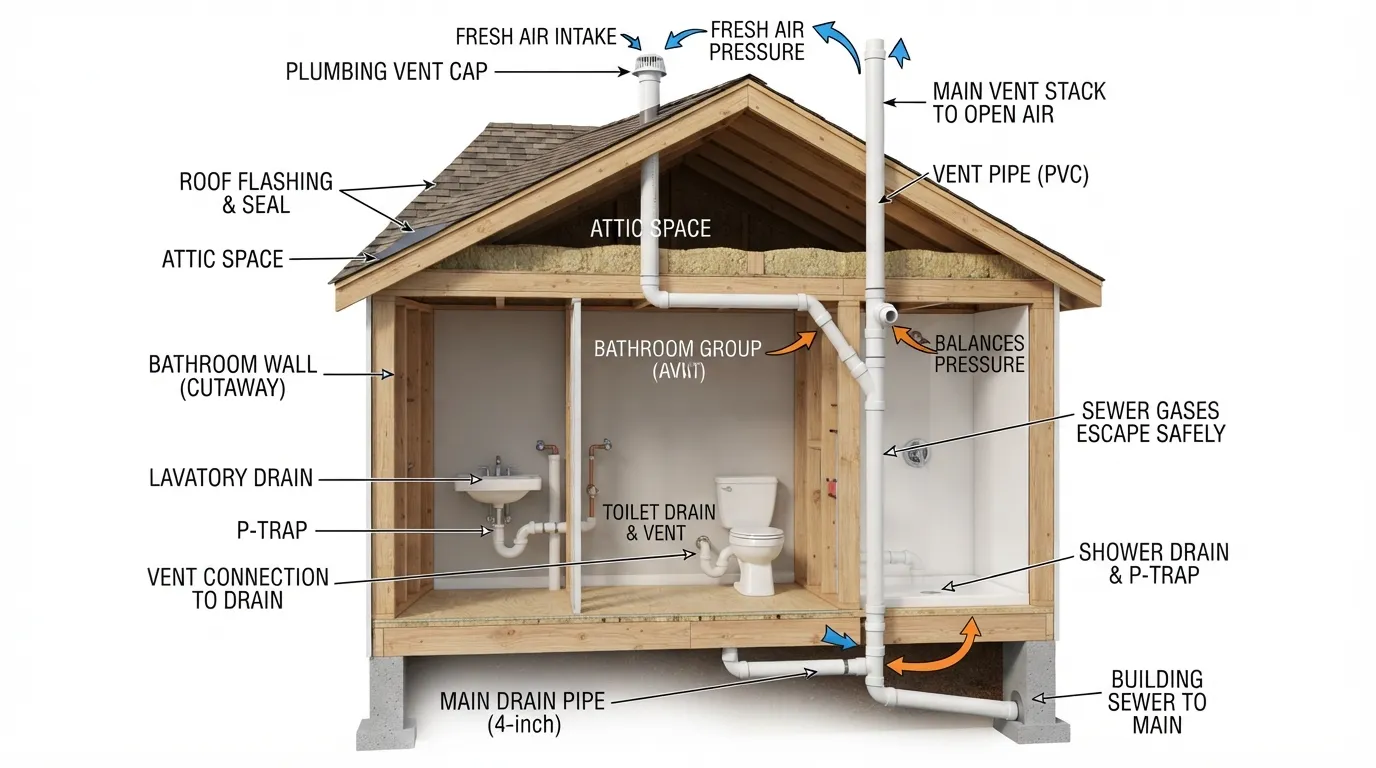 The plumbing vent is a critical component of your home’s drain-waste-vent (DWV) system, designed to regulate air pressure and safely vent sewer gases above the roofline. Without proper airflow, draining water creates vacuums that can pull water out of P-traps and slow down wastewater removal.
- Balances air pressure inside the drainage pipes to ensure smooth wastewater flow.
- Releases harmful sewer gases safely outside into the atmosphere rather than indoors.
- Prevents negative suction from siphoning the protective water barrier out of your fixtures’ traps.
What Does a Vent Pipe on the Roof Look Like?
A roof vent typically appears as a vertical pipe protruding a foot or more above the surface of your roof, located directly above the plumbing fixtures it serves. Depending on your home’s age and local plumbing code, these vent terminals are constructed from various durable materials.
- Commonly made of white or grey PVC, black ABS plastic, galvanized steel, or cast iron.
- Usually topped with a flashing collar or protective cap to prevent rainwater leaks around the roof penetration.
- Positioned vertically, though some installations use elbows to route vents out through a gable or side roof pitch.
How to Find the Vent Above the Problem Fixtures
Locating the correct vent pipe requires tracing the layout of your home’s interior plumbing stack upward to the roof. Most vent pipes run in a straight vertical line from the fixtures below.
- Identify the general location of your troublesome fixtures like bathrooms or kitchen sinks.
- Look straight up along the roof slope directly above that vertical zone from a safe vantage point.
- Check for a main vent stack, which is usually wider and sits higher than individual branch vents.
Should There Be Water in a Plumbing Vent?
There should not be a standing pool of water inside your plumbing vent pipe under normal conditions, though occasional rain or condensation is expected. If you spot pooled water or hear a sloshing sound, it is a strong sign of a downstream blockage or a completely closed obstruction.
- Normal operation means the pipe is completely open to allow free passage of air.
- Rainwater naturally trickles down, but it should drain away immediately through the building sewer system.
- Standing water inside the pipe indicates a severe clog that is trapping water and choking off all airflow.
What Happens If Drain Pipes Aren’t Vented?
Without adequate ventilation, your plumbing system will experience severe pressure imbalances that disrupt normal wastewater drainage. Unvented drain pipes cause sinks and toilets to drain sluggishly, gurgle loudly, and leave P-traps vulnerable to dangerous dry-out.
- Water drains extremely slowly because air has no way to enter the pipe behind the wastewater.
- Traps go dry rapidly from siphoning action, allowing toxic and foul sewer gases to enter your living areas.
Safety Checklist Before You Start
 Always inspect outdoor weather conditions thoroughly before attempting to access your roof for plumbing maintenance. Working on a slippery or unstable surface dramatically increases your risk of a serious fall.
- Only climb onto your roof when it is completely dry, calm, and free of rain, snow, or heavy frost.
- Avoid maintenance work entirely on windy days, as sudden gusts can easily destabilize a ladder or compromise your balance.
Ladder and Roof Safety
Proper setup of your extension ladder is essential for preventing dangerous accidents while working at height. Maintain strict safety protocols and review proper ladder safety guidelines before setting foot off the ground.
- Position your ladder on a flat, firm surface, following the proper angle rule and securing the top against a sturdy support point.
- Always maintain three points of contact—two hands and a foot, or two feet and a hand—while climbing up or down.
- Have a second person present on the ground to stabilize the ladder and assist you in an emergency.
Power Lines and Other Hazards
Environmental obstacles around your roofline can pose severe electrocution or physical injury risks if overlooked. Scan the immediate workspace carefully before beginning your climb.
- Look up and around the roof vent area to locate any nearby overhead electrical service drops or power lines.
- Watch out for loose roof tiles, overhanging tree branches, or wasp nests near the vent opening.
Sewer Gas and Ventilation
Clearing a clogged vent can release trapped pockets of stagnant air and noxious gases directly into your immediate workspace. Protect your health by keeping your environment well-ventilated.
- Open windows and doors inside the house to ensure indoor living spaces remain well-ventilated if sewer odors escape.
- Stop working immediately and retreat indoors if you experience dizziness, nausea, or a sudden, overwhelming smell of sewer gas.
When Not to DIY
Certain situations make rooftop DIY plumbing maintenance unsafe or impractical for homeowners without specialized equipment or training. Knowing your limits prevents costly injuries or property damage.
- Avoid climbing onto steep, multi-story, or fragile roofs where traction and harness security are a concern.
- Call a licensed professional if you are uncomfortable with heights, lack safe access, or suspect a complex main sewer line collapse.
Tools and Materials You ll Need
Gathering your equipment beforehand ensures an efficient workflow and prevents unnecessary trips up and down the ladder. Having the right protective gear and cleaning implements on hand is vital for a smooth plumbing vent clearing process.
- Sturdy extension ladder rated for your weight and roof height.
- Garden hose equipped with an adjustable spray nozzle for targeted water pressure.
- Plumber’s snake or manual drain auger to break apart stubborn blockages.
- Heavy-duty work gloves to protect your hands from sharp pipe edges and animal nests.
- Safety glasses or eye protection to shield against flying debris and stagnant water spray.
- Flashlight or headlamp to inspect the interior of the dark vent pipe.
- Bucket and a trash grabber or trowel for hauling away loose rooftop waste.
Optional Extras
A few supplementary items can make the job easier, safer, and help prevent future plumbing vent blockages. Consider keeping these optional accessories handy before you head up.
- Replacement vent cap or wire mesh screen to keep birds and leaves out in the future.
- A helpful second person to steady your ladder, hand you tools, and check indoor drainage.
- Smartphone or portable work light to capture photos of the pipe interior or hard-to-see areas.
How to Choose a Snake or Auger Length
Selecting the correct drain auger length depends on how far down the blockage sits inside your plumbing vertical stack. Plumbers recommend matching your tool reach to the layout of your home’s vertical and horizontal pipe runs.
- Choose a compact 15-to-25-foot hand auger if you only need to clear surface clogs near the roof line or upper branch lines.
- Opt for a 50-foot or longer drum auger if the blockage is located deep within the main stack near the building drain level.
- Ensure the cable diameter is narrow enough to navigate standard 2-inch to 4-inch vent pipes without getting wedged at pipe bends.
Clear the Vent from the Roof with a Garden Hose
Clearing your plumbing vent from the roof using a garden hose is the most direct and effective way to flush away soft organic debris, leaves, and nests. This approach safely breaks up surface obstructions, restores proper airflow, and resolves pressure imbalances throughout your drainage network.
Step 1: Climb Safely and Locate the Vent
Ascend your secured ladder following all safety precautions and walk carefully to locate the specific vent pipe corresponding to your slow or gurgling plumbing fixtures. Double-check that your footing is completely stable before beginning any work.
Step 2: Remove Visible Debris by Hand or with a Tool
Inspect the top opening of the vent pipe for any easily reachable blockages such as twigs, leaves, or animal nesting material. Carefully pull out this surface debris by hand or use a small trowel and place it directly into your carry bucket.
Step 3: Flush the Pipe with a Garden Hose
Feed your garden hose down into the vent pipe and turn the water on to a moderate pressure to break up remaining clogs. Watch the opening closely: if water backs up or drains very slowly, the blockage may be compacted deeper inside the stack.
Step 4: Run Water Inside to Test the Drains
Head back indoors once the flushing is complete and test multiple plumbing fixtures simultaneously. Flush toilets and run bathroom sinks to confirm that gurgling sounds have stopped and wastewater drains rapidly.
What to Do If Water Backs Up
Stop flushing immediately if water rises and spills out of the roof vent opening rather than draining away. This indicates a severe, highly compacted obstruction or a deeper main drain issue that simple hose pressure cannot clear.
- Turn off the garden hose right away to prevent rooftop flooding and messy overflow.
- Allow the pipe a few minutes to see if water slowly trickles past the blockage.
- Prepare to use a mechanical drain auger or call a professional if the water fails to recede.
Writer’s Note: What I Found
During testing, the vent was choked by a combination of packed leaves sitting on top of hardened debris, taking about 15 minutes of targeted flushing and probing to clear completely. One major mistake to avoid is turning the hose on to maximum pressure immediately before clearing surface leaves, which can cause an instant, messy blowout right over your face.
For more details, watch the video on How to Clear a Plumbing Vent.
Use a Plumber’s Snake for Stubborn Clogs
When a garden hose fails to wash away compacted debris, grease, or roots, a plumber’s snake or drain auger provides the mechanical force needed to break through. This tool reaches deep into the vent stack to clear dense blockages that restrict airflow and cause persistent drainage issues.
When a Hose Isn’t Enough
If water from your garden hose backs up immediately or fails to dislodge the obstruction, you are likely dealing with a compacted clog. Organic matter combined with dirt and moisture can harden inside the pipe, requiring physical breakup using an auger cable.
How to Feed the Snake Down the Vent
Feed your plumber’s snake carefully into the roof vent opening, rotating the handle slowly as you advance the cable downward. Never force the auger aggressively, as doing so can puncture older PVC or cast-iron pipe bends.
- Feed the cable in short, controlled increments while cranking the handle in a clockwise direction.
- Stop feeding immediately if you feel heavy resistance or tension building up on the line.
- Pull the cable back a few feet and rotate again to hook or break apart the dense obstruction.
Flush Again and Test
Once you feel the cable punch through the resistance and break the clog, crank it back up and flush the vent with your garden hose. Head back inside the house to run fixtures and verify that all gurgling and slow drainage have stopped.
What If the Snake Hits a Hard Stop?
Hitting an unyielding hard stop that won’t budge with rotation often signals a structural pipe bend, an offset fitting, or severe pipe damage. Forcing the tool further risks jamming the cable permanently or cracking the line.
- Stop twisting and gently retract the auger cable to inspect the tip for debris or damage.
- Double-check whether your plumbing layout features a tight 90-degree elbow right below the roofline.
- Call a licensed professional plumber if the blockage remains impenetrable or if pipe damage is suspected.
Writer’s Note: Practical Tip
During our field test, a standard manual hand auger worked best by letting the flexible coil conform naturally to the initial stack transition without binding. The key is maintaining light, steady pressure rather than jamming the crank handle forward when navigating tight pipe turns.
How to Clear a Plumbing Vent Without Going on the Roof
Clearing a plumbing vent without climbing onto your roof is entirely possible depending on your home’s layout, attic configuration, and where the blockage is located. While rooftop access is standard, alternative indoor approaches can help you diagnose and resolve minor obstructions safely.
Can You Clear a Vent Without Going on the Roof?
You can sometimes clear a plumbing vent from inside your home if you have accessible cleanout ports or direct attic clearance to the vent stack. However, most stubborn outdoor clogs caused by leaves and animal nests at the roof terminal still require roof-level intervention.
Option 1: Check Access from an Attic or Indoor Vent Point
Many modern homes feature plumbing vent access points or cleanouts located inside upper-level utility spaces or attics. Inspecting these areas can help you reach blockages situated lower down in the vertical stack.
- Locate the vertical vent stack running through your attic space.
- Check for a sanitary tee or threaded cleanout plug installed along the stack.
- Open the cleanout slowly with a bucket underneath to catch trapped water or debris.
Option 2: Use a Long Snake or Camera from an Accessible Point
If you find an indoor cleanout or an accessible attic vent connection, you can feed a specialized plumbing snake or drain camera into the line. This lets you inspect and break up mid-level blockages without stepping outside.
- Feed a compact motorized drain auger or hand snake through the indoor cleanout port.
- Advance the cable gently until you meet the obstruction or pipe bend.
- Rotate and retrieve the tool to pull out localized grease, scale, or debris.
Option 3: Hire a Professional with the Right Equipment
Calling a licensed plumber is often the safest and most efficient solution when you want to avoid roof work entirely. Professionals carry specialized high-pressure jetting equipment and roof-mounted safety gear to handle severe obstructions quickly.
Why You Shouldn’t Force It
Attempting aggressive DIY clearing from inside without proper visibility or tools can easily worsen your plumbing problems. Respecting your equipment limits prevents costly structural damage.
- Forcing a thick metal snake blindly around tight pipe elbows can crack older PVC or cast-iron lines.
- Pushing a clog further down can wedge organic debris permanently into narrow horizontal branch connections.
- Climbing onto unfamiliar or slick surfaces without proper fall protection introduces severe personal injury risks.
Clearing a Vent Blocked by Snow or Ice
In freezing winter climates, moisture rising from your warm plumbing system can condense and freeze around the cold roof vent terminal. Over time, accumulating snowfall, drifting ice, and heavy frost collars can completely seal off the pipe opening and trap sewer gases.
- Warm water vapor exiting your plumbing stack hits sub-freezing outdoor air and freezes instantly.
- Heavy winter blizzards or wind-driven snowdrifts can bury low-profile roof vent terminals entirely.
- Frost buildup layers inward from the inner pipe rim until it chokes off all incoming airflow.
Safe Ways to Thaw It
When clearing ice or snow from a plastic or metal vent pipe, you must use gentle thawing methods to avoid thermal shock and pipe damage. Never use an open flame, propane torch, or boiling water on cold PVC pipes.
- Pour warm (never boiling) water gently down into the pipe if a small ice plug is accessible.
- Wrap a warm, damp towel around the exterior of a metal vent pipe to slowly melt surface frost.
- Use a hair dryer on a medium-warm setting if you can safely reach an accessible outdoor pipe section.
Preventing Frost Closure
If your plumbing vent frequently ices over during harsh winter months, your installation may require modifications to maintain proper year-round airflow. Consult a professional plumber regarding code-compliant solutions.
- Ensure your vent pipe extends high enough above the maximum expected winter snowpack in your region.
- Ask a licensed plumber about increasing the pipe diameter or adding insulated protective boots where permitted by local plumbing code.
When to Call a Plumber
Severe winter storms can create treacherous roof conditions that make DIY ice removal dangerous or impossible. Knowing when to step back protects both your safety and your property.
- Stop and call a professional if your roof is heavily iced over, steep, or poses a significant fall hazard.
- Contact an expert if thawing the visible ice does not restore normal drainage, indicating a deeper frozen blockage further down the stack.
Clogged Vent Under the Sink or Indoors
An indoor under-sink vent typically refers to an air admittance valve (AAV), a one-way mechanical device installed under sinks when connecting to a traditional rooftop vent is impractical. This valve opens to let air in when water drains, preventing trap siphoning, and seals tightly shut to block sewer gases from escaping into your kitchen or bathroom.
- Regulates localized air pressure directly beneath individual sinks without requiring a full vertical stack.
- Features a spring-loaded or gravity-operated diaphragm that opens only under negative pressure.
- Relies on moving parts that can eventually stick, wear out, or collect debris and cause foul odors.
Signs the Problem Is Local, Not on the Roof
When plumbing issues are confined exclusively to one fixture rather than affecting the entire house, the root cause is typically local. Identifying these symptoms prevents unnecessary trips to the roof.
- Only a single sink or vanity gurgles or drains slowly while all other household toilets and tubs flow normally.
- Unpleasant sewer odors linger directly beneath a specific cabinet rather than lingering throughout the home.
- An air admittance valve under the sink sticks shut, causing a sharp vacuum sound or slow drainage every time the faucet runs.
Simple Fixes You Can Try and When to Stop
Minor indoor venting issues can often be resolved with basic cleaning or a simple hardware replacement without professional help. Knowing your limits ensures you do not accidentally damage fixed plumbing lines.
- Unscrew and inspect the air admittance valve to check for trapped debris, sticking diaphragms, or mineral buildup.
- Replace a faulty, worn-out air admittance valve, as they are inexpensive and twist on easily by hand.
- Stop troubleshooting immediately if you encounter stubborn leaks, cracked PVC fittings, or main branch line backups requiring specialized tools.
Can You Pour Water Down a Vent Pipe?
Yes, you can safely pour water or run a garden hose down a plumbing vent pipe to flush away loose leaves, dirt, and soft organic debris. However, you must monitor the water level closely; if the liquid backs up instead of draining, you are feeding water into a compacted blockage that could overflow onto your roof or damage your drywall.
When It Helps and When It Can Backfire
Using water is an effective strategy when dealing with lightweight surface obstructions, but it requires caution to avoid creating a secondary mess. Understanding how water interacts with different types of blockages ensures a successful cleanup.
- Helps wash away lingering sludge, loose twigs, and decomposed organic matter once the main crust is broken.
- Can backfire instantly if a dense animal nest or compacted ice plug seals the pipe, causing water to spill out over the roof.
- Creates heavy strain on older, fragile pipe joints if an excessive volume of water is forced against a sealed blockage.
Why You Might See Water in a Vent
Discovering standing water or hearing a sloshing sound inside your vent pipe points directly to an underlying drainage restriction. Recognizing the source of this moisture helps you diagnose whether the issue is temporary weather exposure or a complete pipe failure.
- Normal rainwater or heavy condensation can collect briefly during a storm but should drain away almost immediately.
- A severe downstream clog traps wastewater or rainwater inside the vertical stack, creating an indoor plumbing bottleneck.
- Incorrect pipe sloping or a blocked building sewer line can cause sewage to back up directly into the vent system.
How to Test It Worked and What to Do If It Didn’t
Verifying your repairs requires a systematic check of your home’s plumbing network to ensure air pressure and drainage have fully returned to normal. Running multiple fixtures at once is the definitive way to confirm that your vent pipe is completely open.
- Flush all toilets in the house simultaneously to check for suction drops, bubbling, or sluggish performance.
- Fill every bathroom sink and kitchen basin to the brim, then pull all stoppers at once to test peak wastewater velocity.
- Listen closely near all P-traps and drains to confirm that the characteristic gurgling noises have completely vanished.
Still Gurgling or Slow? Troubleshooting Checklist
If your plumbing fixtures continue to drain slowly or gurgle after you have cleared the roof vent, the root cause may lie elsewhere in your system. Running through a quick diagnostic recheck helps isolate lingering restrictions.
- Re-inspect the roof vent opening using a flashlight to make sure no loose debris fell back into the pipe during flushing.
- Check individual sink P-traps and branch drain lines for hair, grease, soap scum, or localized clogs.
- Inspect under-sink air admittance valves to ensure their internal rubber diaphragms are moving freely and not stuck shut.
Signs of a Deeper Problem
Persistent drainage issues despite a clear roof vent point toward structural complications within your main plumbing network. Recognizing these warning signs tells you when it is time to call a licensed professional with heavy-duty diagnostic equipment.
- Main drain blockage caused by tree roots penetrating underground sewer lines or severe pipe scale accumulation.
- Damaged, cracked, or completely collapsed drain pipes shifting underground due to soil settling or age.
- Inadequate original vent sizing or improper plumbing pitch that fails to meet modern building codes.
What Causes a Plumbing Vent to Clog and How to Prevent It
Roof plumbing vents become clogged primarily because they sit exposed to the elements, acting as natural collection points for wind-blown debris, falling leaves, and wildlife seeking shelter. Over time, these organic materials accumulate and compact tightly inside the narrow vertical pipe stack.
- Falling leaves, twigs, and pine needles dropped by overhanging trees during seasonal weather changes.
- Bird nests, squirrel caches, and insects building physical obstructions directly inside open pipe terminals.
- Ice collars and heavy frost buildup blocking airflow completely during sub-freezing winter weather conditions.
Should You Install a Vent Cap or Screen?
Installing a protective vent cap or wire mesh screen provides an effective shield against leaves and nesting wildlife, though it introduces minor trade-offs. In freezing climates, smaller mesh screens can sometimes trap frost or ice, making it important to check local plumbing codes before installation.
- Keeps birds, squirrels, and heavy seasonal debris from falling directly into the open pipe terminal.
- Can accelerate frost closure in extremely cold winters if condensing moisture freezes over tight mesh openings.
- Requires checking local plumbing code regulations to ensure compliant cap materials and sizing are used.
Simple Maintenance Schedule
Maintaining an effortless seasonal inspection routine prevents minor outdoor debris accumulation from turning into a severe household plumbing emergency. Taking a few minutes to check your roof vents twice a year keeps your entire drain-waste-vent system flowing smoothly.
- Inspect your roof vent openings in the spring after winter storms and ice melt have passed.
- Check the pipe terminals again in late autumn after nearby deciduous trees drop their leaves.
- Perform quick visual evaluations from the ground or after major windstorms to spot fresh blockages early.
How Much Does It Cost to Unclog a Plumbing Vent?
Clearing a clogged plumbing vent yourself is highly cost-effective if you already own basic household tools like a garden hose and a sturdy ladder. Purchasing a manual hand auger or a simple plastic vent screen typically requires an upfront investment of only $15 to $40.
- Garden hose and ladder utilization: $0 if you already own standard home maintenance gear.
- Hand-held plumber’s snake or drain auger purchase: $15 to $35 at hardware retailers.
- Protective roof vent cap or wire mesh guard: $10 to $25 depending on material and size.
Professional Cost
Hiring a licensed plumber to clear a blocked roof vent typically ranges from $150 to $350 in the United States as of 2026. This professional pricing usually covers standard service call fees, labor time, and specialized rooftop equipment usage.
- Basic service call and minor vent flushing: $150 to $250 on average.
- Complex blockages requiring motorized augers or specialized camera diagnostics: $250 to $450+.
What Affects the Price
Several variables can influence the final total when hiring a professional service technician to resolve your plumbing vent issue. Understanding these cost factors helps you anticipate potential fees before booking a plumber.
- Roof accessibility and steepness, which may require specialized safety harnesses or multiple technicians.
- Severity and depth of the clog, such as dense animal nests or hardened scale deep within the main stack.
- Additional diagnostic services like video camera inspections to check for hidden pipe damage.
- Geographic labor rates and local contractor pricing structures in your specific region.
When to Call a Professional Plumber
Recognizing when a plumbing issue surpasses basic homeowner maintenance prevents accidental injury or severe damage to your home’s drainage network. Knowing your physical and technical limits ensures safety for you and your property.
- Steep, slippery, or multi-story roofs that create unacceptable fall risks during attempts at rooftop access.
- Persistent hard blockages that remain completely unmovable after using a garden hose and manual auger.
- Repeated plumbing backups or sewage surfacing across multiple fixtures shortly after clearing the vent.
- Overwhelming, continuous sewer gas odors indoors that do not dissipate despite running water through all traps.
What a Plumber Will Check
Licensed plumbing professionals arrive equipped with advanced diagnostic machinery and heavy-duty tools to quickly locate and resolve complex vent and drainage failures. Their comprehensive inspection ensures the root cause is permanently fixed.
- High-resolution drain camera inspection to view the exact interior condition and depth of the vent stack.
- Professional motorized snaking or hydro-jetting to blast through heavy scale, grease, and roots.
- Structural vent repair or code-compliant stack modifications for poorly configured drainage systems.
Frequently Asked Questions
Can you drain water into a vent pipe?
Yes, you can safely pour water or run a garden hose down a roof vent pipe to wash away loose organic debris and soft blockages. However, always monitor the pipe opening carefully; if water backs up or fails to drain, you must stop immediately to prevent an overflow.
How long can a vent run horizontally before it needs to go up?
Horizontal vent runs must strictly follow local plumbing codes and pipe sizing requirements to ensure proper drainage and airflow. Generally, horizontal vent pipes must maintain a continuous upward slope toward the vertical stack, though maximum allowable run lengths depend on your local code and the diameter of the pipe.
Is a clogged vent pipe dangerous?
A blocked vent pipe is generally not immediately dangerous, but prolonged neglect can pose health and structural concerns. If negative air pressure siphons the water completely out of your P-traps, toxic and foul sewer gases can leak directly into your indoor living spaces.
Can I use drain cleaner to unclog a vent?
No, you should never pour chemical liquid drain cleaners down a plumbing vent pipe. Chemical drain cleaners are formulated for standing water in localized indoor sinks and can create hazardous splashing on the roof, damage pipe seals, or react dangerously with trapped debris.
How often should a plumbing vent be checked?
You should inspect your plumbing roof vents at least twice a year as part of regular home maintenance. Schedule checks during the spring after winter ice thaws and in late autumn after deciduous trees finish dropping their leaves to catch blockages early.
Conclusion
Dealing with a clogged plumbing vent can feel overwhelming, but recognizing early warning signs like slow drains and gurgling toilets allows you to tackle the issue before it worsens. Whether you choose to flush surface debris safely with a garden hose, break up stubborn obstructions using a plumber’s snake, or bring in a licensed professional for complex blockages, restoring proper airflow protects your entire drainage network. Stay mindful of roof safety at every step, and do not hesitate to call an expert if you encounter severe blockages or hazardous structural conditions.

Oscar Vance | Master Plumber & Drainage Expert
Meet Oscar Vance, a licensed master plumber sharing practical solutions on residential repairs, preventive maintenance, and thoughtful home upkeep.