Which PEX Connection Method Is Right for You?
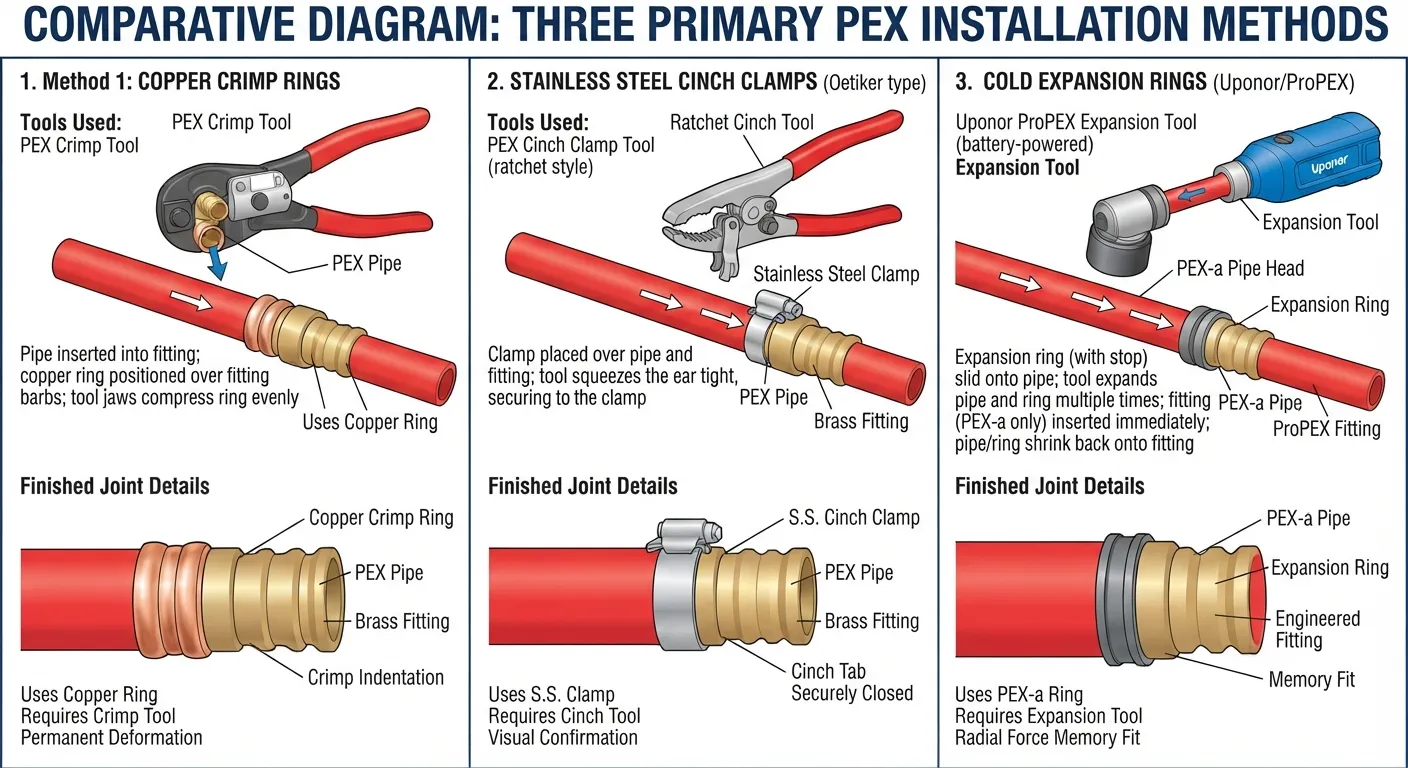
Choosing the right PEX connection method—whether crimp, clamp, or expansion—depends heavily on your specific pipe material (PEX-A or PEX-B), budget, and project scale, with expansion fittings offering maximum water flow and copper crimp rings providing traditional, cost-effective reliability.
Crimp vs Clamp vs Expansion in One Line
Every connection type utilizes distinct hardware and installation mechanics to secure your plumbing lines, directly impacting installation speed, tooling costs, and long-term water flow performance.
- Copper Crimp Rings: A budget-friendly, widely trusted standard using solid copper rings compressed with a dedicated calibration tool, ideal for PEX-B piping.
- Stainless Steel Cinch Clamps: A versatile, universal single-tool system utilizing stainless steel sleeves that clamp tightly over multiple pipe and fitting combinations.
- Expansion Fittings (ASTM F1960): The premium choice for PEX-A tubing, leveraging the pipe’s natural thermal memory to stretch over a fitting and shrink back, completely eliminating internal flow restriction.
What You’ll Learn in This Guide
Navigating modern plumbing installations requires a comprehensive comparison of hardware costs, required specialty tools, and system durability so you can select the optimal setup for your project.
- In-depth mechanical differences between PEX-A and PEX-B compatibility.
- Step-by-step installation workflows for crimping, clamping, and expanding pipes.
- Critical analysis of flow restriction and how fitting inner diameters impact household water pressure.
- Comprehensive pros, cons, and tool investment breakdowns for both DIY homeowners and professional contractors.
Comparison Chart Crimp vs Clamp vs Expansion at a Glance
Evaluating PEX connection methods side-by-side reveals that while copper crimps and stainless clamps offer budget-friendly versatility, expansion fittings deliver unmatched full-bore water flow despite requiring a higher initial tool investment and strict PEX-A compatibility.
Comparison Table Cost Tool Price Tubing Type Flow Rate Difficulty Best Use Case
Which Method Works with Which PEX Size 1/2, 3/4, 1
PEX sizing compatibility varies across methods, directly dictating how inner diameter constraints handle high-demand household water lines.
- 1/2-Inch Lines: Universally supported by crimp, clamp, and expansion systems, providing reliable flow for standard fixture supply lines.
- 3/4-Inch Lines: Commonly deployed for main trunk lines; expansion fittings maintain optimal inner diameter without pressure drops, while crimp and clamp rings fit standard inserts.
- 1-Inch Lines and Above: Heavy-duty applications where expansion systems excel by eliminating internal bottlenecks, safeguarding overall water pressure in large residential manifolds.
PEX Crimp System: How It Works Pros & Cons
The PEX crimp method relies on a traditional copper ring compressed over a barbed insert fitting using a calibrated manual tool, offering a dependable and cost-effective standard for residential plumbing installations.
How a PEX Crimp Connection Contract Works
The mechanical process binds the pipe securely by sandwiching the PEX material tightly between the outer copper ring and the inner ridges of the fitting.
- A copper crimp ring is slipped over the end of the PEX tubing before the barbed insert fitting is pushed fully inside.
- The calibrated crimp tool jaws are centered squarely over the copper ring and squeezed until the tool completely bottoms out.
- A Go/No-Go gauge is used immediately after compression to verify that the ring inner diameter has been squeezed to the exact required tolerances.
Tubing Compatibility PEX-B and Others
Understanding material compatibility ensures structural integrity and prevents catastrophic joint failures under pressure.
- PEX-B Dominance: The crimp system is predominantly engineered and optimized for rigid PEX-B tubing, which holds its shape exceptionally well under mechanical compression.
- Standard PEX Support: Works efficiently with standard cross-linked polyethylene lines but is incompatible with rigid aluminum-composite (PEX-AL-PEX) variants.
Pros of Crimp Fittings
Contractors and DIYers frequently choose this traditional setup due to its widely accessible hardware and economic pricing model.
- Low Component Costs: Both copper rings and brass fittings are widely manufactured, keeping initial material overhead to a minimum.
- Proven Longevity: Decades of field data confirm that properly installed copper crimps maintain a watertight seal for the lifetime of the building.
Cons: Flow Restriction & Tight-Space Limitations
Despite its widespread popularity, structural trade-offs exist regarding water flow dynamics and maneuverability.
- Flow Restriction: Because insert fittings sit inside the tube, the inner diameter is slightly reduced, causing minor pressure drops across high-demand fixtures.
- Tight-Space Constraints: Long-handled manual crimp tools require adequate clearance angles to fully rotate and squeeze, making cramped wall cavities difficult to navigate.
PEX Clamp Cinch System How It Works Pros & Cons
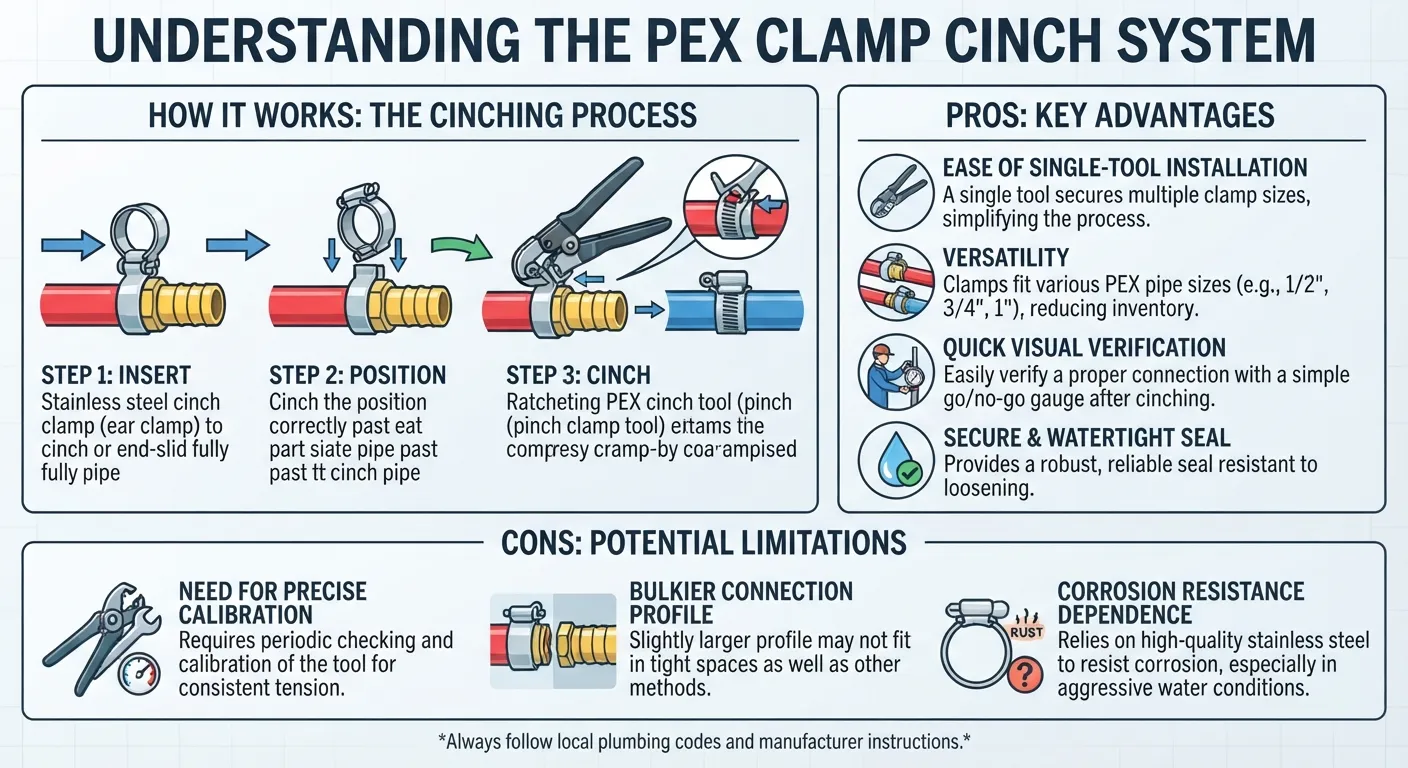
The PEX clamp, or cinch system, utilizes a universal stainless steel ear-clamp tightened with a single ratcheting tool, offering unmatched flexibility and ease of installation in tight, restricted spaces.
How a Cinch Clamp Connection Works
The cinching process secures the tubing through a mechanical interlocking stainless steel band that applies radial pressure around the fitting insert.
- A stainless steel cinch clamp is slid over the end of the PEX tubing before inserting the barbed fitting fully home.
- The ratcheting pinch-clamp tool jaws are positioned over the raised ear of the stainless steel clamp and squeezed.
- The tool continues cycling until it clicks open, confirming that the correct calibrated clamping pressure has been successfully applied.
Why One Tool Fits All Clamp Sizes
Unlike traditional crimping systems requiring separate jaw sets for different pipe dimensions, the cinch system simplifies workflow through universal engineering.
- Universal Jaw Design: A single standard ratcheting cinch tool adjusts automatically to clamp 1/2-inch, 3/4-inch, and 1-inch stainless steel rings.
- Reduced Tooling Overhead: Installers eliminate the need to carry multiple heavy jaw inserts or swap tools on busy residential jobsites.
Pros: Ease of Use in Tight Spaces
The compact design of the stainless steel ear-clamp makes it a favorite for repairs, remodels, and cramped manifold installations.
- Compact Clearance Angles: The ratcheting tool requires minimal swing clearance compared to long-handled crimping tools, fitting easily into floor joists and wall studs.
- Visual Inspection: You can visually inspect the popped ear tab instantly to verify the clamp has been fully compressed.
Cons: Slightly Higher Per-Piece Cost
While the overall tool investment remains low, ongoing material expenses present minor financial considerations.
- Elevated Component Pricing: Individual stainless steel cinch clamps typically cost slightly more upfront than standard copper crimp rings.
- Tool Calibration Care: The ratcheting mechanism must be checked periodically with a calibration gauge to prevent under-clamping due to wear.
PEX Expansion Cold-Expansion System How It Works Pros & Cons
The PEX cold-expansion method—standardized under ASTM F1960—leverages the remarkable thermal memory of PEX-A tubing to stretch the pipe and fitting ring together, contracting back with immense gripping force to deliver absolute full-bore water flow.
How Cold-Expansion Technology Works Pipe Memory Explained
This unique installation process temporarily enlarges the tubing diameter so it can slide effortlessly over a specialized full-flow fitting insert.
- An expansion ring is slid over the end of the PEX-A tubing to reinforce the connection zone.
- A manual or battery-powered expansion tool inserts expanding segments into the pipe end, stretching both the tube and ring outward in controlled increments.
- The expanded pipe and ring are immediately slipped over the fitting insert, where the material’s structural memory shrinks the PEX tightly back down to lock the connection permanently in place.
Why It’s Exclusive to PEX-A
Pex-A tubing is manufactured using the Engel method (peroxide cross-linking), which creates a uniform, highly elastic crystalline structure capable of stretching and recovering.
- High Elasticity: Only PEX-A possesses the necessary molecular flexibility to expand up to standard dimensions without cracking, splitting, or sustaining structural fatigue.
- Incompatibility with Rigid Tubing: PEX-B and PEX-C lack this high degree of thermal recovery, meaning attempting cold expansion on them will permanently deform or destroy the pipe.
Pros: Full-Bore Flow & Behind-the-Wall Reliability
Plumbing professionals favor expansion systems because they eliminate internal flow restrictions and provide maximum long-term security in hidden structural spaces.
- Maximum Water Flow: Because expansion fittings feature inner diameters equal to the pipe itself, there is zero flow restriction, preserving optimal household water pressure across all active fixtures.
- Self-Contraction Force: The gripping pressure actually increases over time as the PEX-A material attempts to return to its original unexpanded state, creating an exceptionally leak-proof seal.
Cons: High Tool Cost & Wait Time Before Pressure Testing
The primary drawbacks of the cold-expansion system involve higher initial financial overhead and necessary installation patience.
- Expensive Power Tools: Battery-powered or heavy-duty manual expansion kits require a significant initial investment, often exceeding three hundred dollars for professional-grade setups.
- Contraction Recovery Wait Times: Installers must wait for the PEX-A ring to shrink completely back onto the fitting before system water pressure can be safely turned on or tested.
Bonus Option SharkBite Push-to-Connect Fittings
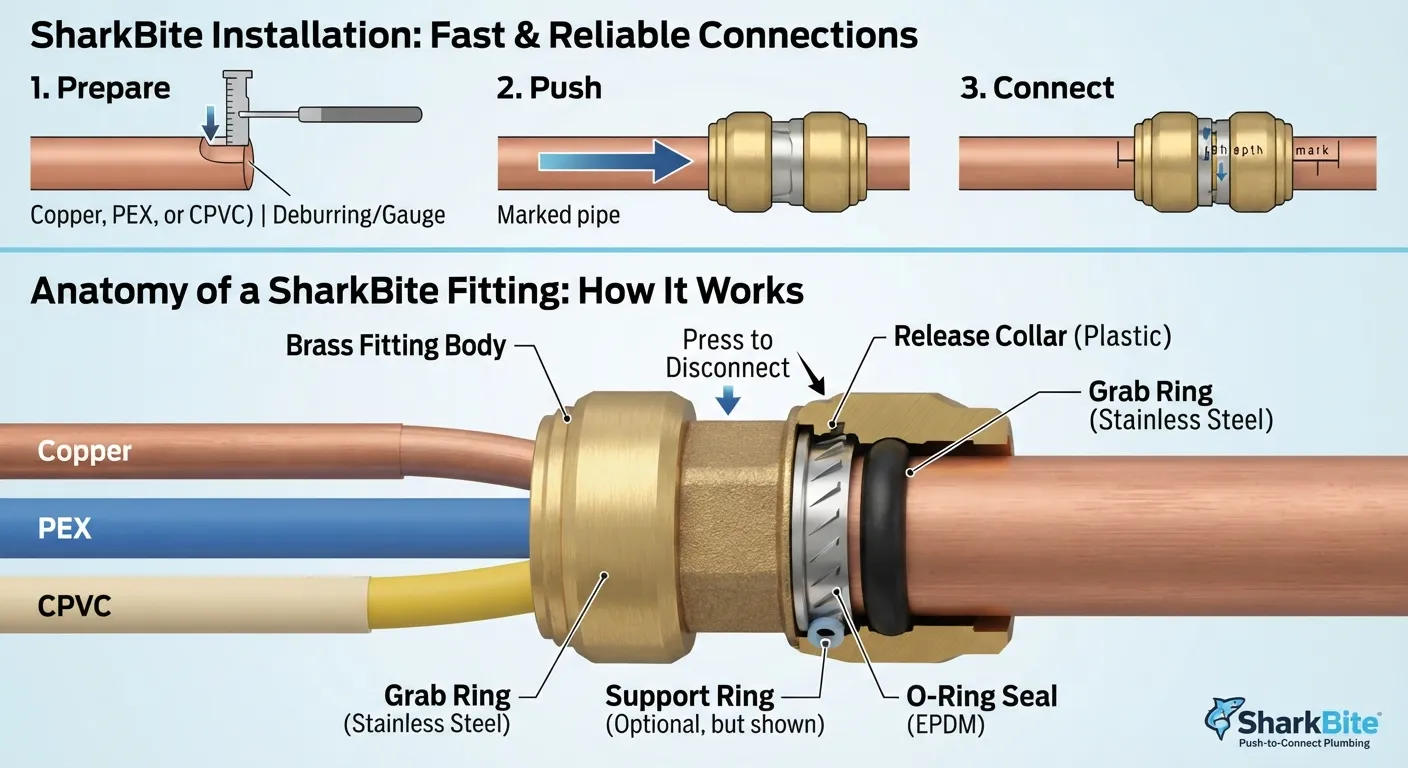
Push-to-connect fittings—widely known by the brand name SharkBite—offer a tool-free installation method that grips PEX, copper, or CPVC piping using stainless steel teeth and an O-ring seal, serving as an ideal solution for emergency repairs and accessible retrofit projects.
How Push-to-Connect Fittings Differ from Crimp Clamp Expansion
Unlike traditional mechanical methods that compress rings or expand tubing, push-to-connect fittings rely on an independent, self-contained gripping mechanism.
- Tool-Free Installation: Pipes simply push straight into the fitting body until they seat securely against an internal tube stop, requiring no specialized crimping, clamping, or expanding tools.
- Multi-Material Compatibility: A single push fitting can instantly bridge connections between PEX, copper, and CPVC pipes without changing hardware.
- Removable Design: Using a simple plastic disconnect clip or tong tool, the fitting can be unlatched and reused, setting it apart from permanent crimp or expansion systems.
Why Some Plumbers Avoid SharkBite for Permanent Installs
While licensed trade professionals appreciate the convenience for quick fixes, many hesitate to rely on push fittings for entirely concealed, behind-the-wall installations.
- O-Ring Longevity Concerns: The internal watertight seal depends heavily on a rubber O-ring that can degrade, dry out, or leak over decades if exposed to aggressive water chemistries.
- Component Cost: Individual push-to-connect fittings cost significantly more than standard brass inserts, copper rings, or cinch clamps, making whole-house installs cost-prohibitive.
- Risk of Improper Insertion: If a pipe is not deburred or pushed in completely past the O-ring seal, the joint can fail catastrophically under continuous municipal water pressure.
When Push-to-Connect Makes Sense Repairs vs Permanent Plumbing
Strategic deployment of push fittings can save hours of labor, provided they are utilized in appropriate, accessible applications.
- Emergency Leak Repairs: Excellent for quickly capping a broken line or patching wet pipes where soldering or crimping is physically impossible.
- Accessible Retrofits: Ideal for adding new shut-off valves or water lines in open crawlspaces, mechanical rooms, and utility closets where visual inspections remain easy.
- Permanent Walls: Professional best practices dictate avoiding buried push fittings inside closed drywall or concrete slabs, reserving permanent zones for crimp, clamp, or expansion methods.
Head-to-Head Comparisons
Comparing PEX connection methods directly helps clarify the trade-offs between hardware costs, installation speed, and long-term water flow performance for your plumbing project.
Crimp vs Clamp: Key Differences
Both copper crimps and stainless steel clamps are budget-friendly options designed primarily for PEX-B tubing, but they differ significantly in hardware design and tool versatility.
- Tool Versatility: A single ratcheting cinch tool adjusts automatically across multiple sizes of stainless steel clamps, whereas copper crimp tools require dedicated jaw sets for each pipe diameter.
- Space Requirements: Long-handled manual crimp tools need wider clearance angles, making stainless steel cinch clamps much easier to install in cramped wall studs and tight floor joists.
- Cost & Availability: Copper rings typically offer a slightly lower component cost, but stainless steel clamps provide greater forgiveness when working with mixed-brand PEX fittings.
Crimp vs Expansion: Key Differences
Choosing between traditional copper crimps and cold-expansion systems involves balancing initial tool investments against long-term water flow efficiency.
- Tubing Compatibility: Crimp fittings are engineered for rigid PEX-B lines, whereas expansion fittings are strictly exclusive to PEX-A tubing due to its superior thermal memory.
- Flow Dynamics: Crimp insert fittings reduce the internal pipe diameter and restrict water flow, while expansion fittings maintain a full-bore opening with zero pressure loss.
- Tool Investment: Manual crimping tools cost a fraction of the price of heavy-duty manual or battery-powered expansion tool kits required for ASTM F1960 installations.
Clamp vs Expansion: Key Differences
Contrasting stainless steel clamps with cold-expansion highlights the divide between economical DIY flexibility and professional-grade performance.
- Installation Mechanics: Clamps compress the outside of the tubing over a barbed insert, whereas expansion systems stretch both the pipe and ring outward before shrinking them back tightly over a full-flow fitting.
- Speed and Holding Power: Expansion joints utilize the natural elasticity of PEX-A to create an exceptionally secure, permanent grip that actually tightens over time under pressure.
- Project Suitability: Clamps excel in small-scale remodels and budget-conscious repairs, while expansion systems dominate whole-home professional builds where maximum water delivery is critical.
Cost Comparison Which Method Is Cheapest Long-Term?
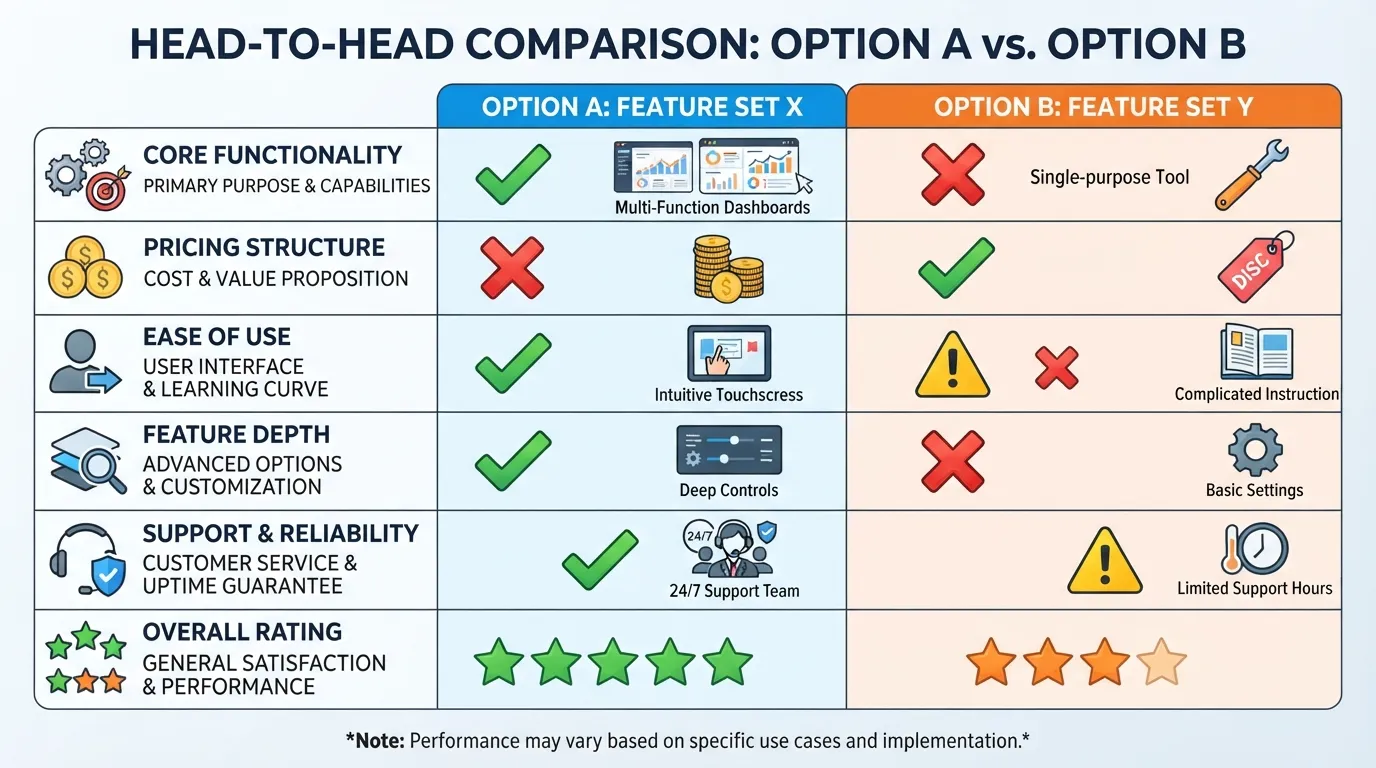
Evaluating the true expenses of PEX plumbing requires looking beyond initial hardware store receipts to balance upfront tool investments, per-fitting material costs, and long-term system reliability.
Upfront Tool Cost Breakdown
The initial investment for specialty installation gear varies dramatically depending on whether you choose a manual setup or a powered professional system.
- Crimp and Clamp Tools: Manual copper crimp tools and universal stainless steel cinch tools generally range between $30 and $100, making them highly accessible for DIY homeowners.
- Expansion Tools: Professional battery-powered or heavy-duty manual cold-expansion tool kits (ASTM F1960) typically start around $300 and can easily exceed $500 for elite contractor bundles.
Per-Fitting Material Cost
Once you own the necessary tool, the recurring expense of individual rings, clamps, and brass or poly inserts dictates your ongoing project budget.
- Copper Crimp Rings: Consistently offer the lowest per-piece material cost, making them ideal for large-scale production housing on tight budgets.
- Stainless Steel Clamps: Carry a slightly higher per-piece price tag than copper rings, offset by the convenience of a single universal tool.
- Expansion Rings & Fittings: Feature higher individual material costs due to the specialized manufacturing required for full-bore structural PEX-A components.
Long-Term Value: Cheapest Isn’t Always Best
While selecting the lowest-priced components saves money on day one, hidden long-term costs like flow restriction and repair labor warrant careful consideration.
- Labor and Efficiency: Faster installation times with cinch clamps or expansion systems can dramatically reduce contractor labor hours on large commercial or residential builds.
- Flow Performance Value: Avoiding flow restriction with full-bore expansion fittings prevents pressure drops, ensuring high-end fixtures operate at peak efficiency for decades without performance bottlenecks.
Life Expectancy & Long Term Reliability
A properly installed PEX plumbing system is engineered to achieve a 40 to 50-year service life under standard operating conditions, though long-term durability depends heavily on correct connection mechanics, water chemistry, and protection from UV radiation.
Expected Lifespan of Each Connection Type
While cross-linked polyethylene tubing itself boasts decades of endurance, the lifespan of the overall joint relies entirely on the hardware design and installation precision.
- Copper Crimp & Stainless Clamp Joints: Standard mechanical compression joints typically last 40+ years when calibrated correctly, matching the lifecycle of the PEX-B tubing unless stressed by aggressive municipal water chlorination.
- Cold-Expansion Connections (ASTM F1960): Backed by strict manufacturing frameworks such as ASTM F1960 standards, expansion connections form a continuous molecular seal that routinely achieves maximum structural longevity without losing radial gripping pressure.
Real-World Failure Points First-Hand Practical Insight Angle
Field data indicates that premature plumbing failures rarely originate from the PEX pipe wall itself; instead, they stem from specific installation errors and environmental stressors.
- Over-Cramped or Off-Center Rings: Misaligned crimping jaws or poorly calibrated tools can over-stress copper rings or stainless steel ears, creating micro-fractures prone to slow leaks over time.
- UV Degradation: Exposing PEX lines or connection rings to direct sunlight during open-framing construction can cause brittleness within months, drastically reducing system service life.
- Water Chemistry Impact: Consistently high levels of chlorine or chloramine disinfectants can accelerate oxidative aging inside the piping network, emphasizing the need for proper filtration and compliant hardware materials.
Insurance & Liability Considerations
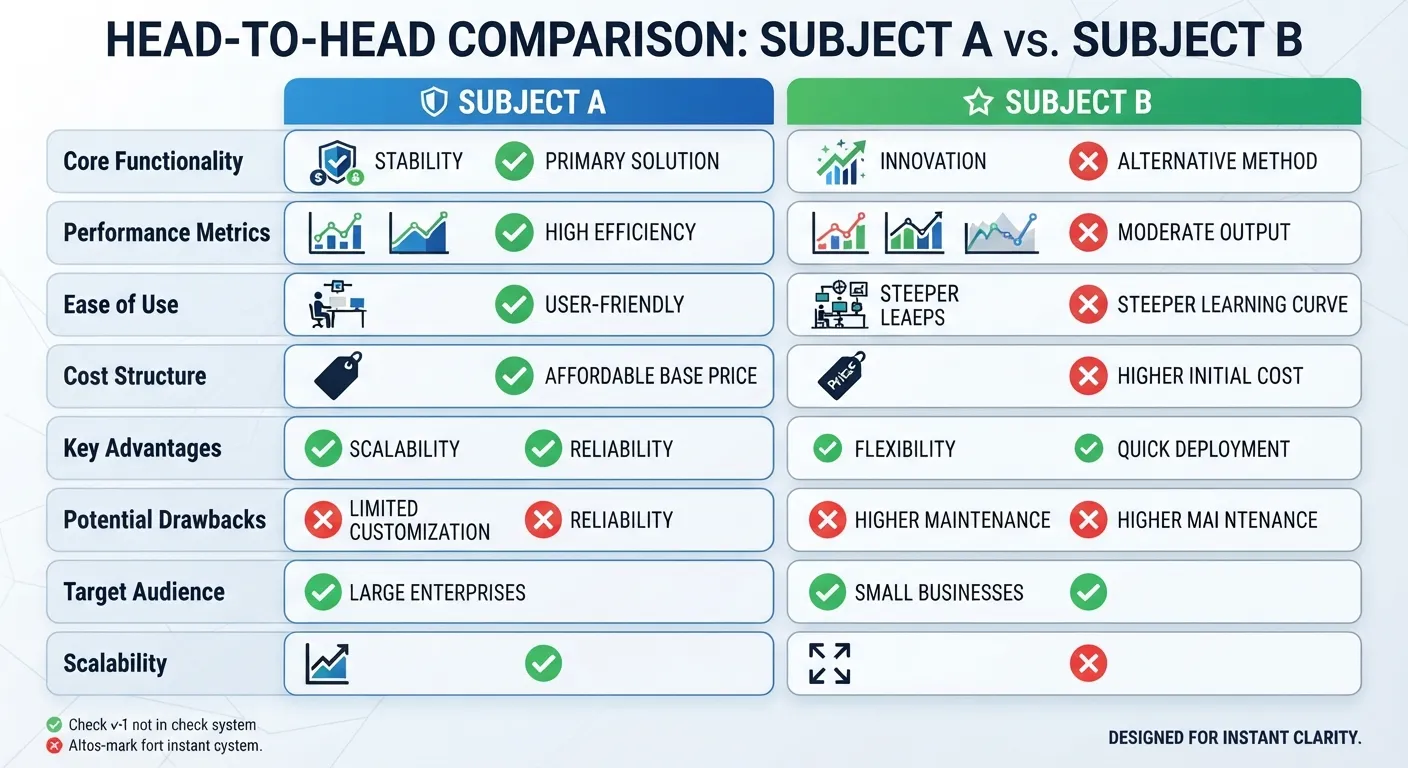
Navigating home insurance underwriting requires careful attention to how plumbing materials and connection methods are installed, as water damage claims remain one of the most frequent and costly categories for residential property insurers.
Why Some Insurers Flag PEX Installations
Insurance companies and underwriters occasionally scrutinize flexible piping networks due to historical claims associated with early-generation fitting defects and sloppy workmanship.
- Historical Product Defects: Past industry class-action lawsuits involving certain early brass insert fittings or faulty yellow brass components created lingering risk assessments among cautious insurance providers.
- Improper DIY Installation: Unpermitted or amateur plumbing work lacking professional inspection reports can raise flags regarding potential behind-the-wall joint blowouts.
How Proper Installation Method Reduces Risk
Mitigating insurance concerns and protecting your property value depends heavily on adhering to strict building codes and utilizing certified connection techniques.
- Certified Code Compliance: Utilizing standardized connection methods—such as ASTM F1960 expansion fittings or properly gauged crimp rings—ensures full compliance with municipal plumbing codes.
- Professional Documentation: Keeping detailed receipts, permit approvals, and contractor records proves that your plumbing system was installed to elite industry standards, satisfying modern insurance underwriting requirements.
Common Problems & Troubleshooting
Troubleshooting PEX connection failures quickly resolves leaks and prevents structural water damage, with most issues tracing directly back to uncalibrated tools, improper ring placement, or installation oversights.
Common Crimp Tool Failures
Using manual copper crimp tools without routine maintenance often leads to distorted compression rings and compromised joint integrity.
- Improper Crimp Depth: Worn-out jaw hinges can squeeze copper rings unevenly, failing the mandatory go/no-go gauge test.
- Misaligned Ring Placement: Positioning a crimp ring too close to the edge or too far up the barb can warp the PEX tubing and create slow leak points under pressure.
Common Clamp Issues
Stainless steel cinch clamps are generally foolproof, but careless handling during high-speed installations can trigger specific mechanical failures.
- Incomplete Cinch Action: Stopping the ratcheting tool before it clicks completely open leaves the stainless steel ear under-tensioned.
- Incorrect Ear Positioning: Squeezing the clamp ear at an angle can prevent the interlocking band from sealing flush around the circumference of the fitting insert.
Common Expansion Fitting Mistakes
Cold-expansion systems depend entirely on proper tool rotation and complete ring recovery before introducing water pressure.
- Under-Expansion and Tool Slippage: Failing to rotate the expansion tool head slightly between pulls creates uneven ring expansion, making it difficult to slide the fitting home cleanly.
- Premature Pressurization: Turning on system water before the PEX-A material has fully shrunk back onto the insert can cause the tubing to slip off the fitting entirely.
DIY vs Professional Which Method Should You Choose?
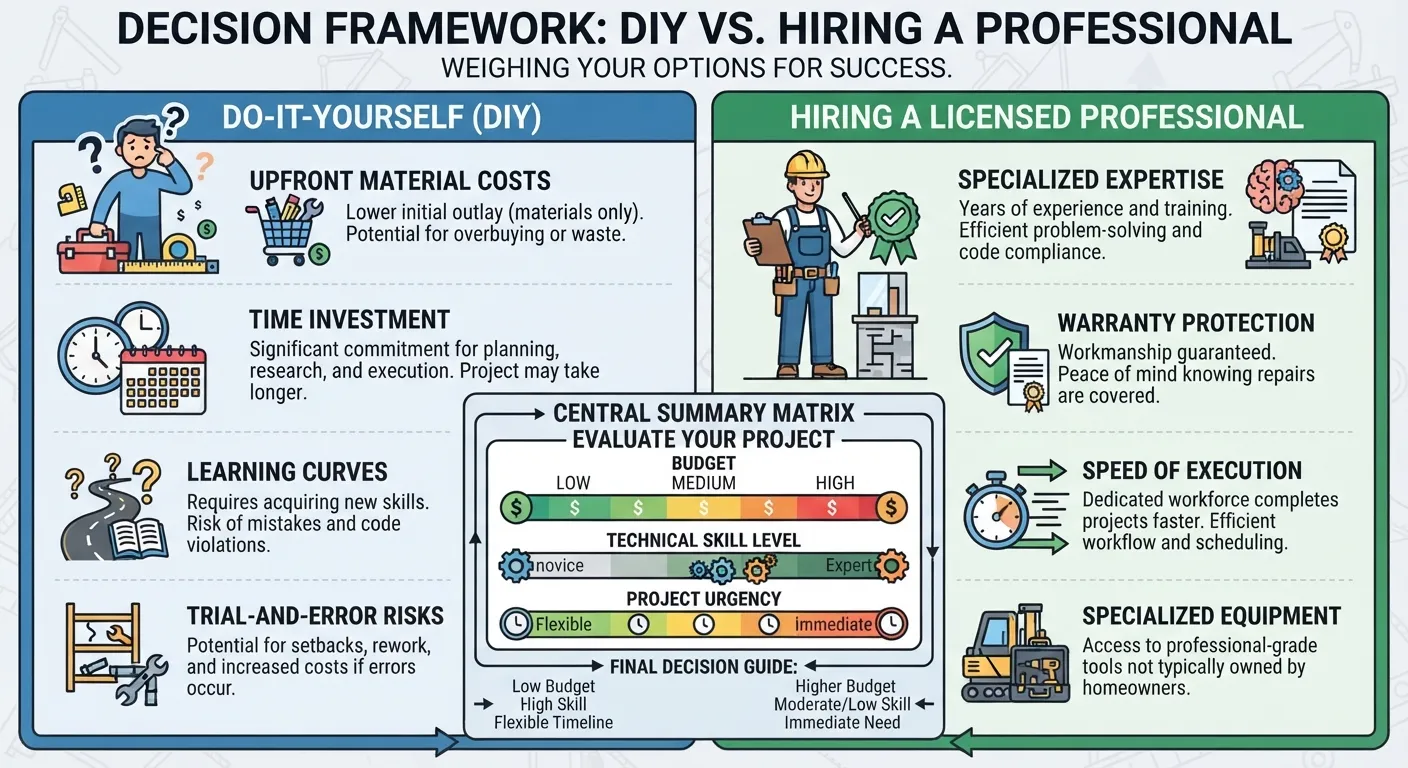
Choosing the ideal PEX connection method requires weighing your personal skill level, project scope, and available budget against the distinct installation advantages of DIY-friendly clamps versus professional expansion systems.
If You’re a DIYer Best Method for You
Homeowners tackling weekend plumbing upgrades or emergency repairs benefit most from tools that minimize upfront expenses and simplify awkward workspace angles.
- Stainless Steel Clamps: The universal ratcheting cinch tool is widely considered the most forgiving and user-friendly system for DIYers working in tight floor joists.
- Copper Crimps: A traditional, highly predictable alternative that delivers secure results when paired with a reliable Go/No-Go calibration gauge.
If You’re Hiring a Professional What to Ask For
When contracting a licensed plumber for a whole-house installation or major renovation, specifying high-end modern materials ensures optimal long-term system performance.
- Request PEX-A Expansion (ASTM F1960): Insist on professional cold-expansion piping to guarantee maximum water flow, zero internal restrictions, and superior behind-the-wall reliability.
- Verify Warranty & Code Compliance: Confirm that your contractor pulls all required municipal permits and provides written warranty coverage on all concealed fittings.
New Construction vs Repipe vs Small Repair Method Recommendation
Matching your connection method directly to the scale and nature of your specific plumbing project prevents wasted spending and installation delays.
- New Construction / Full Repipe: PEX-A cold-expansion is the undisputed gold standard, offering unmatched water delivery and rapid professional installation speeds.
- Small Repairs / Remodels: Stainless steel cinch clamps or tool-free push fittings shine when modifying existing lines or working in restricted spaces.
Frequently Asked Questions
Find direct answers to the most common questions regarding PEX plumbing connection methods, tool selections, insurance policies, and system reliability.
Is It Better to Crimp or Expand PEX?
Cold-expansion is generally considered superior for professional whole-home installations because it maintains a full-bore inner diameter with zero water flow restriction and utilizes the natural thermal memory of PEX-A tubing. However, crimping remains popular for budget-conscious projects and traditional PEX-B repairs.
Are Crimps or Clamps Better for PEX?
Stainless steel clamps are often preferred by DIYers because a single ratcheting tool adjusts automatically across multiple pipe sizes and easily fits into tight spaces where long-handled crimping tools cannot maneuver. Both methods offer comparable 40+ year durability when installed correctly.
Why Don’t Insurance Companies Like PEX Plumbing?
Insurance underwriters occasionally flag flexible plumbing systems due to historical claims associated with early-generation brass fitting defects or unpermitted, improper DIY installations. Modern systems installed with certified ASTM standards and professional oversight easily satisfy current insurance requirements.
Is It Better to Crimp PEX or Use SharkBite?
Crimping is far better and more cost-effective for permanent, behind-the-wall plumbing installations. Push-to-connect fittings like SharkBite are best reserved for emergency repairs, temporary lines, or fully accessible retrofit locations due to their higher component cost and reliance on rubber O-rings.
Final Verdict Conclusion
Selecting the ideal PEX connection method ultimately comes down to balancing your project scope, budget, and personal preference for installation speed versus long-term water flow performance.
Our Recommendation by Project Type
Matching your specific plumbing scenario to the right connection system ensures maximum durability, cost efficiency, and peace of mind.
- Whole-House Builds & Major Repipes: Go with PEX-A cold-expansion fittings to secure maximum water pressure, full-bore flow, and elite professional reliability.
- DIY Remodels & Tight Spaces: Choose stainless steel cinch clamps for their universal single-tool convenience and superior maneuverability in cramped wall cavities.
- Budget-Conscious Repairs: Utilize traditional copper crimp rings for a tried-and-true, cost-effective solution on standard PEX-B lines.
- Emergency Fixes: Keep push-to-connect fittings on hand for quick, accessible temporary patches where tools cannot reach.
Final Takeaway
While hardware costs and tool investments vary across methods, proper installation technique remains the single most critical factor determining whether your plumbing system will deliver trouble-free performance for decades to come.
- Always verify your tubing type (PEX-A vs. PEX-B) before purchasing fittings and tools.
- Check every completed mechanical joint with proper calibration gauges or visual inspection tabs to eliminate leaks before closing up walls.

Oscar Vance | Master Plumber & Drainage Expert
Meet Oscar Vance, a licensed master plumber sharing practical solutions on residential repairs, preventive maintenance, and thoughtful home upkeep.
Pingback: Is It Better to Use PVC or PEX? See Which Fits Your Job
Pingback: How Do I Know If I Have PVC or PEX? 5 Easy Ways to Tell