Septic Tank Pumping Cost & Frequency
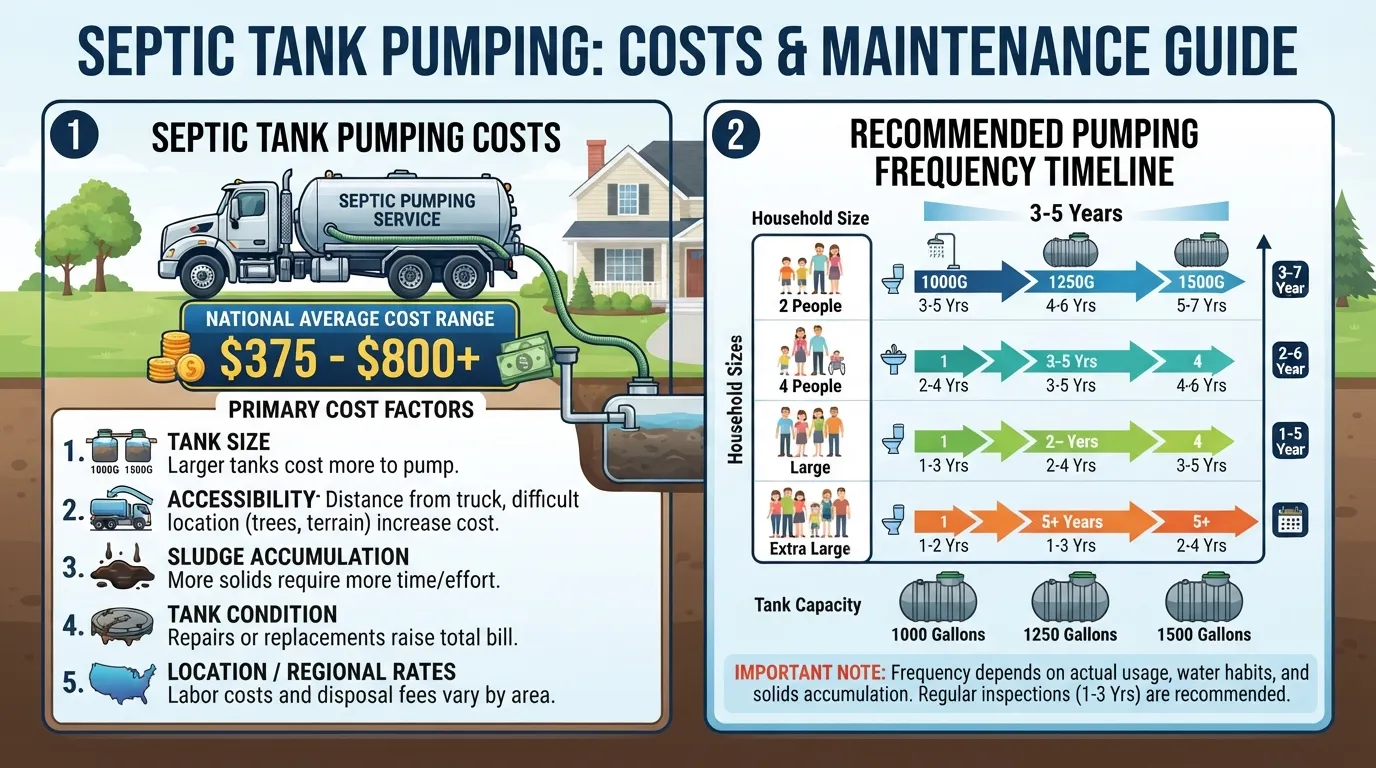
The average cost to pump a septic tank is $428, with most homeowners spending between $292 and $565 depending on tank dimensions, geographic location, and accessibility. For standard residential properties featuring a typical 1,000 to 1,500-gallon tank, professional maintenance is generally required every 3 to 5 years.
Average Septic Tank Pumping Cost
Total expenses fluctuate based on the physical capacity of your subterranean holding container and heavy-solids accumulation levels. Standard pricing tiers scale directly with liquid volume:
- Lid Accessibility: Digging through soil or landscaping to locate buried access ports typically adds $50 to $200.
- Sludge Accumulation: Overdue cleanouts with hardened scum layers may require extra agitation time or hydro-jetting.
- Geographic Market: Urban or remote rural locations often incur minor travel surcharges or elevated regional labor costs.
How Often Should You Pump a Septic Tank?
The exact schedule for waste extraction depends primarily on total liquid volume relative to your active household size and daily water consumption habits. Leaving a system past its designated window risks pushing solid waste straight into your drain field.
- Every 3 to 5 Years: Standard timeframe for a typical 1,000–1,500 gallon tank supporting a 3 to 4 person family.
- Every 1 to 2 Years: Recommended accelerated schedule for larger families, high water-usage homes, or smaller 750-gallon configurations.
- Annual Inspections: Certified professionals should visually check sludge and scum layers every year to prevent catastrophic system backups.
Septic Tank Pumping Cost by Tank Size
Understanding how tank gallon sizes directly influence waste removal pricing helps homeowners anticipate maintenance expenses accurately. Larger residential configurations require more time, capacity, and disposal volume, which scales total service charges accordingly.
500 to 750 Gallon Tank Cost Breakdown
Compact systems designed for small cabins or 1-to-2 bedroom houses typically represent the lowest tier of maintenance expenses. Because of their limited volume, labor requirements remain minimal.
- Average Cost Range: $250 to $550
- Ideal Household Scale: 1 to 2 occupants
- Service Note: These smaller tanks often require more frequent pumping cycles (every 1 to 2 years) due to rapid sludge accumulation.
1,000 Gallon Tank Cost Breakdown
The standard tank capacity for most traditional single-family suburban homes balances volume and service frequency effectively. It is the most common size serviced by plumbing contractors nationwide.
- Average Cost Range: $325 to $700
- Ideal Household Scale: 3-bedroom residences (3 to 4 occupants)
- Service Note: Typically cleaned every 3 to 5 years under standard residential water usage conditions.
1,500 Gallon Tank Cost Breakdown
Larger multi-family properties or sprawling suburban houses utilize mid-to-high capacity storage units to manage heavier wastewater output. Higher disposal volume marginally increases service costs.
- Average Cost Range: $450 to $1,100
- Ideal Household Scale: 4 to 5 bedrooms
- Service Note: Requires specialized vacuum trucks with higher holding capacities to complete the extraction in a single pass.
2,000 Gallon Tank Cost Breakdown
Large estate properties or multi-generational households rely on heavy-duty underground vessels. Pumping expenses reflect the extended runtime and heavy solid management required.
- Average Cost Range: $600 to $1,400
- Ideal Household Scale: 6+ bedrooms or heavy daily water usage
- Service Note: Essential to check for dual-compartment layouts, which may incur separate pumping fees per chamber.
3,000+ Gallon Tank Cost Breakdown
Commercial-scale residential installations or massive custom compounds demand industrial-grade pumper trucks. Costs scale heavily with specialized municipal disposal fees.
- Average Cost Range: $900 to $2,500+
- Ideal Household Scale: Large commercial properties or massive luxury compounds
- Service Note: Frequently requires multiple disposal truck loads or commercial waste processing permits.
Full Cost Comparison Table All Sizes Side-by-Side
Hidden & Additional Cost Factors

Base quotes for septic tank pumping rarely cover every job site variable, often resulting in unexpected service additions on your final invoice. Understanding these common pricing modifiers prevents sticker shock and helps you prepare your property before the technician arrives.
Buried Lid Access Cost
Most modern underground tanks feature access manhole covers buried beneath several inches or feet of earth, lawn, or concrete paving. If technicians must dig to uncover these lids, expect additional service charges.
- Standard Digging Fees: Contractors typically charge between $50 and $200 depending on the depth of the soil cover.
- Riser Installation: Installing permanent plastic risers brings access lids flush to ground level, eliminating future digging fees for a one-time cost of $300 to $600.
- Paved Overlays: Tanks located beneath asphalt or concrete patios can require specialized core drilling, driving costs up significantly.
Heavy Solids Neglected Tank Surcharge
Tanks that have gone far past their recommended pumping window develop thick, hardened sludge and compacted scum layers that resist standard vacuum extraction. Breaking down this material requires extra labor and equipment time.
- Scum Breakup Fees: Extra manual agitation or mechanical breaking can add $100 to $300 to your bill.
- Hydro-Jetting: Severely neglected tanks requiring high-pressure water wall scrubbing may incur charges between $300 and $800.
- Effluent Filter Cleaning: Clogged outlet filters require specialized washing, usually adding a modest $50 handling fee.
Emergency or After-Hours Pumping Cost
Scheduling service during standard weekday business hours ensures baseline pricing, whereas urgent callouts during nights, weekends, or holidays carry steep surcharges.
- Emergency Callout Surcharges: Urgent after-hours dispatches usually add a $150 to $400 priority fee on top of standard pumping rates.
- Holiday Rates: Service requested on major holidays can double the standard labor cost due to premium technician wages.
Septic Inspection Costs Routine vs Real Estate
A standard pumping visit involves waste removal, but formal system evaluations are billed as separate line items or comprehensive package upgrades.
- Routine Visual Inspection: Basic checks performed during pumping generally cost $50 to $150.
- Real Estate Certification Inspections: Detailed operational evaluations required during property sales range from $300 to $600, often including camera scoping of drain field lines and formal written reports.
Septic Tank Pumping Cost Near You
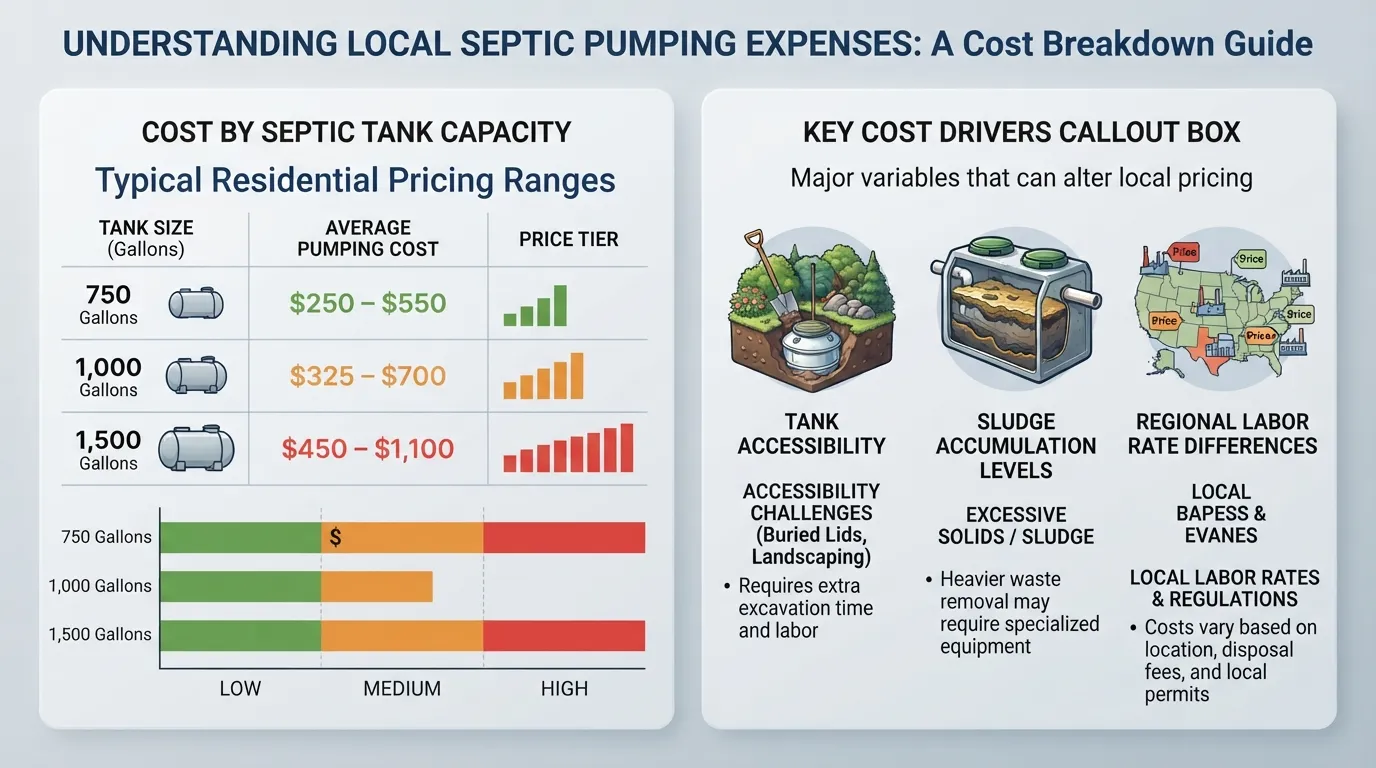
Searching for septic pumping near me reveals that geographic location plays a major role in final service pricing. Regional operating costs, local disposal facility fees, and provider availability dictate minor rate variations across different states and municipalities.
Why Location Affects Septic Pumping Cost
Service providers must factor distinct operational overheads into every regional quote they issue to local homeowners. These underlying variables dictate why neighbor states or nearby counties often see different base rates.
- Disposal Site Fees: Local municipal wastewater treatment plants charge haulers varying tipping fees to dump raw septage waste.
- Fuel and Transit Costs: Properties located far outside suburban centers incur longer driving times, which companies offset with distance surcharges.
- Regional Labor Rates: Prevailing wages and the concentration of licensed sanitation contractors in a specific market directly influence pricing.
Urban vs Rural Pricing Differences
Market density creates a distinct dichotomy between how city-adjacent properties and remote rural homesteads are billed for standard waste removal.
- Rural Properties: Often require longer transit distances from the nearest sanitation provider, sometimes adding a nominal trip charge.
- Urban Fringe Suburbs: Benefit from higher provider competition, which frequently drives base pricing down or encourages promotional discounts.
- Remote Mountain or Desert Regions: May experience elevated pricing due to restricted access tracks and limited local competition.
How to Get an Accurate Local Quote
Securing a reliable estimate from local providers requires gathering precise property details before placing a call. Providing exact specs ensures your service quote has zero hidden surprises upon completion.
- Know Your Tank Capacity: Mention your exact tank gallon size (e.g., 1,000 or 1,500 gallons) to receive an exact baseline quote.
- Identify Lid Depth: Clarify whether your access ports are exposed at ground level or buried deep underground beneath topsoil.
- Compare Multiple Providers: Contact at least two or three local sanitation companies to compare disposal fees and verify licensing credentials.
Recommended Pumping Frequency by Household Size
Establishing an appropriate tank pump out frequency depends heavily on your daily water usage and overall household size. Matching your maintenance schedule to your occupancy volume ensures solid waste never escapes into your subterranean drain field.
1–2 People Household Every 5 Years
Homes with minimal daily water discharge accumulate solid sludge and floating scum at a much slower rate. This extended timeline allows smaller occupancy properties to safely space out service intervals.
- Pumping Interval: Every 5 years for standard 1,000-gallon tanks.
- Operational Benefit: Low daily wastewater volume minimizes strain on internal baffles and outlet filters.
- Maintenance Tip: Even with low usage, perform a visual sludge check every 3 years to ensure unexpected buildup isn’t occurring.
Average 4-Person Household Every 3–5 Years
The standard suburban family environment generates consistent daily greywater and blackwater output. Sticking to a strict 3 to 5 year pumping interval protects the biological balance of your underground vessel.
- Pumping Interval: Every 3 to 5 years.
- Operational Benefit: Prevents solid waste overflow from clogging distribution pipes and saturating the drain field soil.
- Maintenance Tip: Monitor water-saving habits and reduce garbage disposal usage to extend the life between pump-outs.
7+ Person Household Annually
Large multi-generational households or high-occupancy properties push extreme volumes of water through their plumbing daily. Heavy usage drastically accelerates solid accumulation, requiring aggressive maintenance.
- Pumping Interval: Every 1 to 2 years (or annually for heavy multi-family compounds).
- Operational Benefit: Keeps massive organic loads from bypassing the tank chambers entirely.
- Maintenance Tip: Consider upgrading to a larger 1,500 to 2,000-gallon tank capacity to provide extra breathing room between scheduled services.
Frequency Chart by Household Size
What Affects Your Septic Pumping Schedule
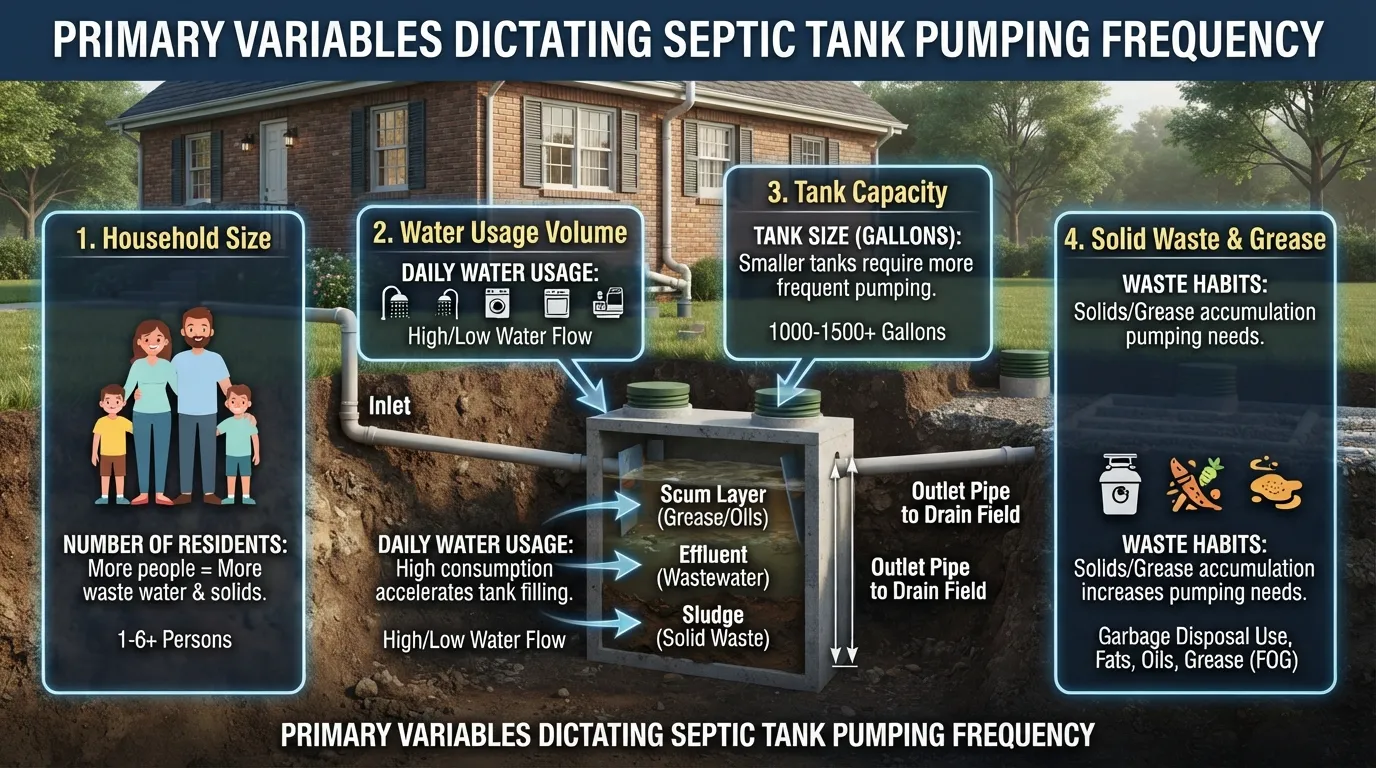
Relying solely on standard occupant counts can leave your system vulnerable if daily habits accelerate sludge buildup. Everyday household appliances and cleaning products directly alter how frequently your underground tank requires professional waste extraction.
Garbage Disposal Usage Impact
Operating an in-sink garbage disposal introduces massive amounts of pulverized food waste into your wastewater stream. This organic debris bypasses easy breakdown and accumulates rapidly inside the tank.
- Increased Solid Load: Using a garbage disposal can double the accumulation of sludge, often requiring a 20% interval reduction in your standard pumping schedule.
- Debris Buildup: Food particles sink to the bottom or float into the scum layer, increasing the risk of outlet baffle clogs.
- Operational Tip: Composting food scraps instead of grinding them down the drain significantly extends the life of your septic system.
Water Softener Effect on Tank Load
Modern water softeners flush backwash brine solution directly into household wastewater lines during regeneration cycles. While treated soft water feels great, high mineral-flush volumes alter internal tank dynamics.
- Bacterial Disruption: High concentrations of sodium or potassium brine can occasionally disrupt the delicate anaerobic bacteria colonies needed to break down waste.
- Hydraulic Overload: Frequent backwash cycles dump extra gallons of water into the tank, stirring settled solids and pushing them toward the drain field.
- Maintenance Tip: Ensure your softener is calibrated correctly and consider routing backwash lines to an approved separate discharge point if permitted by local code.
Heavy Laundry Loads & Water Usage
Washing multiple loads of laundry consecutively floods the system with a sudden surge of water. This hydraulic shock stirs up bottom sludge and can flush suspended solids out into the absorption area.
- Staggered Washing: Spreading out laundry loads over the course of the week prevents overloading the tank’s liquid capacity.
- High-Efficiency Upgrades: Modern HE washing machines use significantly less water, reducing daily stress on your drain field.
- Lint Traps: Installing external lint filters catches synthetic fibers before they enter and clog your septic lines.
Is Dawn Dish Soap Safe for Septic Systems?
Standard dish soaps like Dawn are generally safe for occasional use in moderate amounts, but they should not be dumped indiscriminately into your plumbing. Excessive surfactants can interfere with the biological breakdown inside your tank.
- Bacterial Balance: Normal kitchen use poses little threat, but pouring large quantities of concentrated soap down drains can harm beneficial anaerobic bacteria.
- Grease Emulsification: While it cuts grease in the sink, heavy chemical usage can sometimes force oils further down into the drain field before they naturally decompose.
- Best Practice: Look for certified septic-safe, biodegradable dish and laundry soaps to maintain optimal microbial health in your tank.
Warning Signs Your Septic Tank Needs Pumping
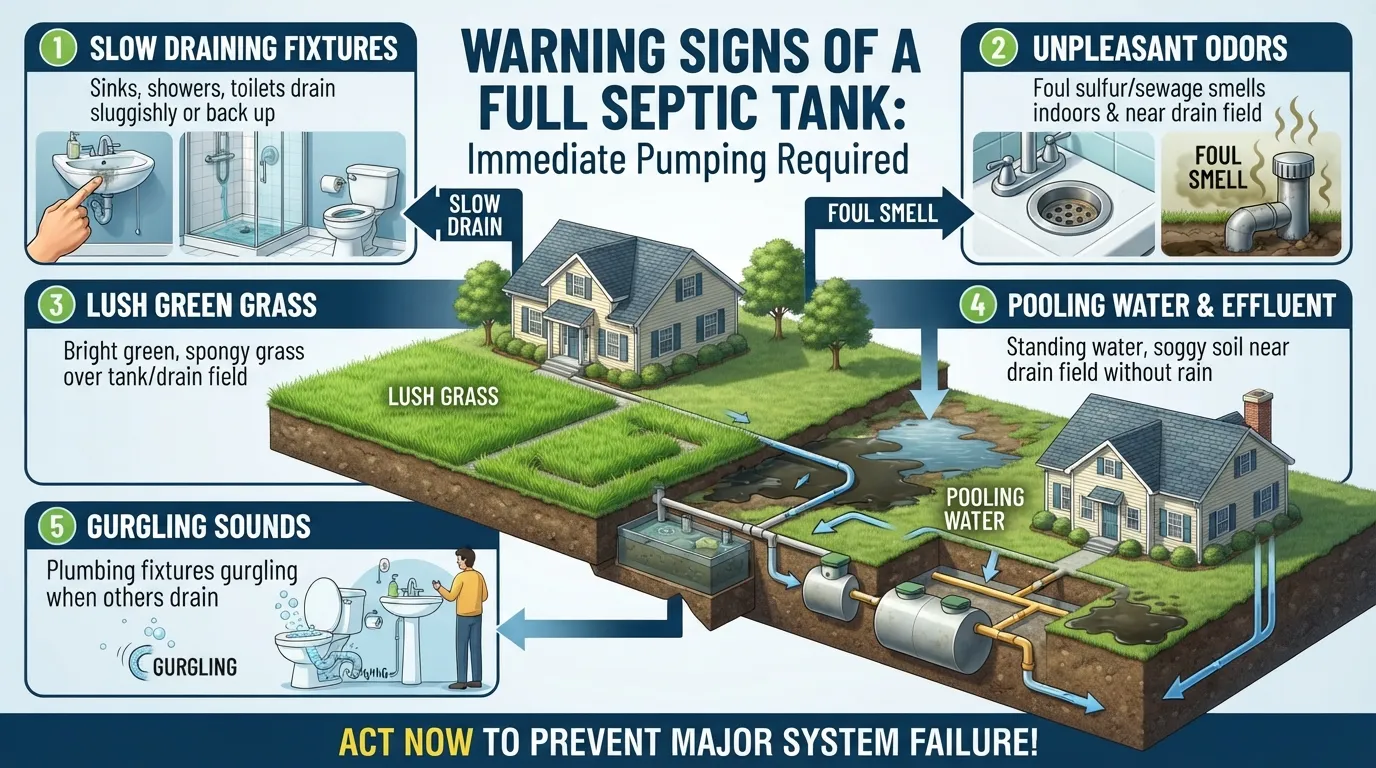
Recognizing full septic tank signs early protects your home from costly plumbing disasters. When underground storage reaches maximum capacity, distinct physical indicators appear across your property.
Sewage Odor Indoors or Outdoors
A properly sealed system should never emit sulfur or raw sewage odors around your plumbing fixtures or yard.
- Indoor Smells: Foul odors near drains signal that gases are pushing backward through vents.
- Yard Odors: Strong sulfur smells above the absorption field indicate heavy sludge saturation.
Standing Water or Pooling Near Drain Field
Puddles forming over your absorption bed without recent rain mean leach lines are completely overwhelmed by liquid.
- Saturated Soil: Unfiltered wastewater rises because absorption beds can no longer process incoming volumes.
- Drain Field Pooling: This creates a severe biohazard requiring immediate professional service.
Unusually Lush Green Grass Patches
Vibrant emerald turf growing directly over your underground tank or distribution lines points to sub-surface saturation.
- Nutrient Boost: Escaping liquid effluent acts as a potent fertilizer for surface grass roots.
- Leaking Baffles: Accelerated turf growth often flags an over-capacity tank leaking nutrient-rich water upward.
Gurgling Pipes
Hearing strange bubbling sounds when flushing toilets points to trapped air pockets caused by restricted tank space.
- Air Displacement: Incoming water forces air backward up through home drain pipes.
- Early Indicator: Gurgling is typically one of the first auditory warnings that a pump-out is due.
Sewage Backup in Home
The most severe symptom of a neglected system is raw sewage pushing backward into floor drains or low-level toilets.
- Critical Failure: This represents total capacity exhaustion blocking all outgoing waste channels.
- Immediate Action: Stop using all indoor water and contact an emergency sanitation provider right away.
Septic Alarm Activation
Modern advanced setups feature electronic control panels designed to alert homeowners before a major overflow occurs.
- Panel Warnings: A flashing red light or loud buzzer means liquid levels have exceeded safe limits.
- Prompt Response: Addressing alarms immediately prevents pump burnout and expensive property damage.
What Happens If You Don’t Pump Your Septic Tank
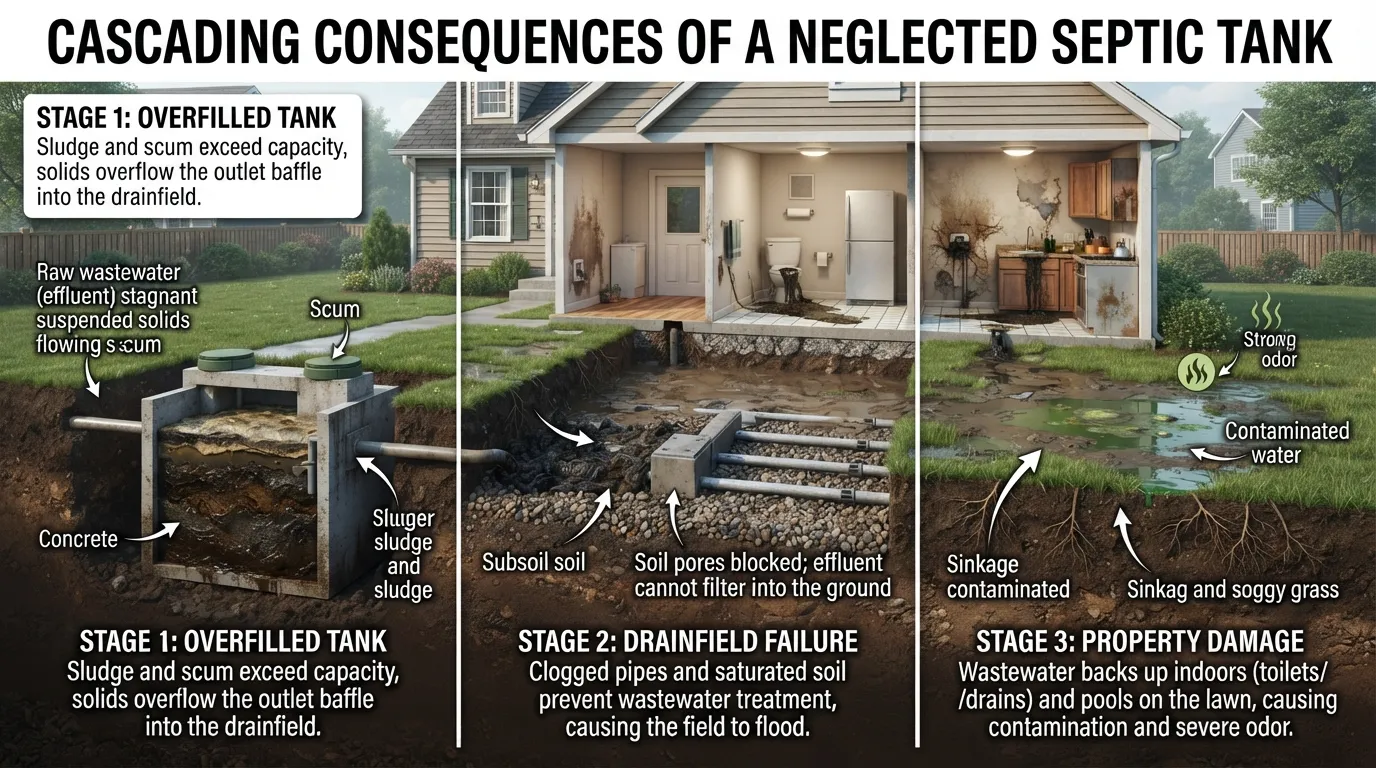
Neglecting routine waste removal leads to catastrophic system failures that threaten your property and finances. Understanding the real-world consequences of skipped maintenance highlights why regular upkeep matters for long-term household safety.
Can a Septic Tank Go 20 Years Without Being Pumped?
Skipping maintenance for two decades is a recipe for complete system destruction. While an extremely small household with exceptionally low water usage might stretch limits slightly, a standard tank will fail long before reaching the 20-year mark.
- Complete Solid Hardening: Over 20 years, organic sludge compacts into a concrete-like mass that standard vacuum trucks cannot easily break up.
- Baffle Destruction: Accumulated debris crushes internal plastic or concrete baffles, allowing raw solids to flow directly into your absorption bed.
- Total Replacement Costs: Neglecting a tank for two decades almost always forces a full drain field and tank replacement costing upwards of $10,000 to $20,000.
Real Case 18 Years 3 People 2 Feet of Solids Was It Okay?
Homeowner case studies on long-term neglect reveal severe structural and operational consequences. In one documented instance where a three-person household went 18 years without service, technicians discovered over two feet of hardened sludge packed inside a 1,000-gallon tank.
- Severe Capacity Loss: The tank retained less than 15% of its original liquid holding capacity, causing immediate backups every time laundry was run.
- Drain Field Rupture: Fine suspended particles had already migrated into the lateral leach lines, clogging the surrounding gravel bed permanently.
- Costly Resolution: The owners faced thousands in emergency jetting fees followed by a complete absorption field excavation.
Risks of Long-Term Septic Neglect
Allowing solid waste to bypass your holding tank creates compounding hazards that impact your home’s habitability and structural integrity. For comprehensive guidance on why regular maintenance matters, consult official resources like the EPA Septic System Guide.
- Biomaterial Clogging: Escaping sludge forms a thick biological mat (known as a biomat) that seals off soil pores in the drain field, stopping liquid absorption forever.
- Groundwater Contamination: Unfiltered blackwater seaks into shallow water tables, creating severe environmental and health hazards.
- Structural Cracking: The immense weight of compacted dry solids can exert uneven pressure, causing older concrete tanks to crack or collapse underground.
Emergency Overflow & System Failure Scenarios
When an unmaintained system finally reaches its absolute breaking point, the resulting failures disrupt daily life and require urgent professional intervention.
- Indoor Raw Sewage Surges: Bathtubs and basement drains become the lowest exit points, bubbling up raw wastewater during heavy rain or water use.
- Yard Sinkholes: Severely degraded tanks can cause localized soil collapses or sinkholes around the access lids, creating dangerous safety hazards.
- Emergency Replacement Delays: Waiting for total failure often means enduring weeks without indoor plumbing while waiting for municipal permits and excavation crews.
Holding Tank vs Septic Tank Key Differences
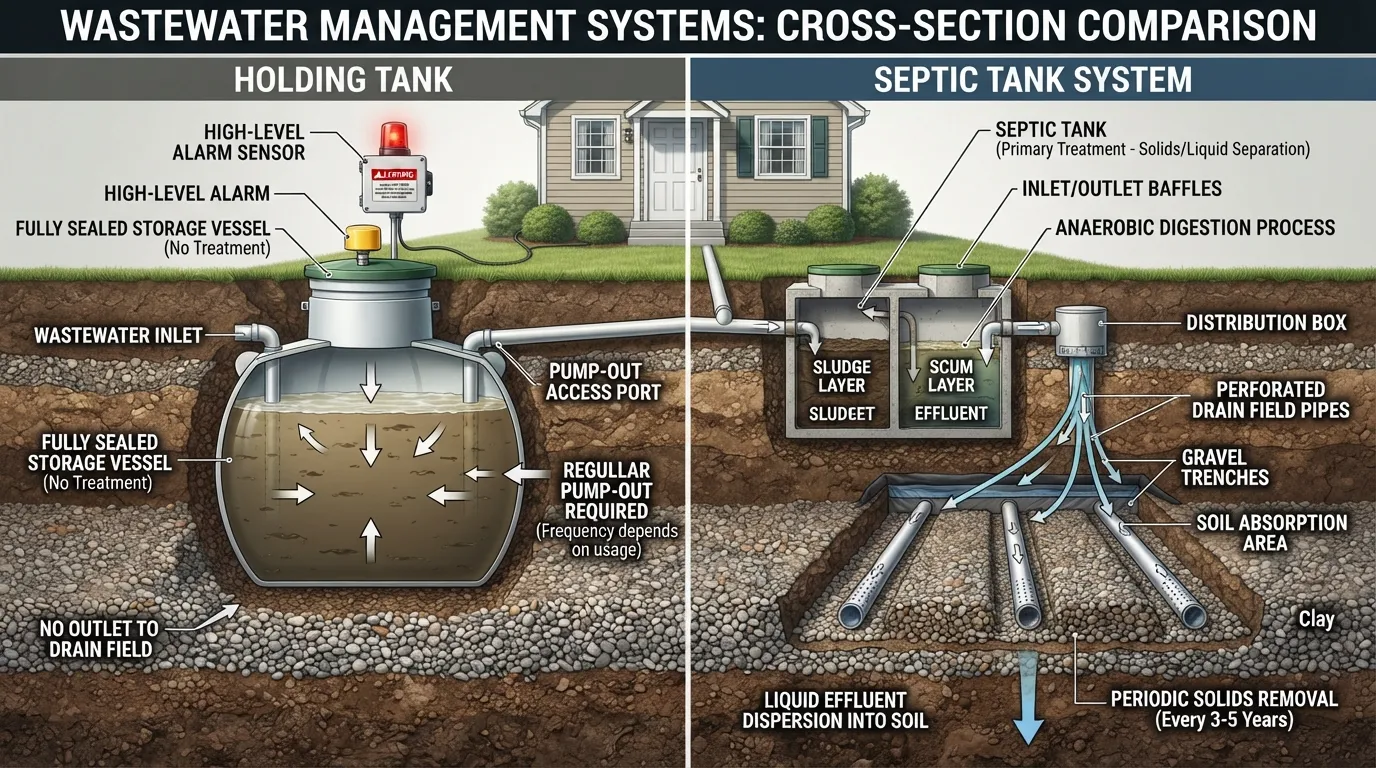
Confusing a standard septic system with a non-discharge holding tank can lead to severe overflow emergencies and unexpected budgeting errors. While both store residential wastewater underground, their internal mechanics and maintenance requirements differ entirely.
What Is a Holding Tank? vs Septic Tank
Understanding structural differences clarifies why these two wastewater setups require completely separate operational approaches and pump-out schedules.
- Holding Tanks: Completely sealed underground vessels that collect all household wastewater without treating it or discharging it. They feature no outlet pipes or drain fields.
- Septic Tanks: Active biological treatment units that separate solids from liquids, holding heavy sludge while releasing treated effluent into an underground absorption field.
- Application Scenarios: Holding tanks are typically installed on remote properties with poor soil conditions, strict environmental protection zones, or seasonal cabins.
How Often Does a Holding Tank Need Pumping?
Because holding tanks store 100% of incoming greywater and blackwater without any natural soil discharge, they fill up at an exceptionally fast rate.
- Frequent Service Intervals: Most holding tanks require professional pumping every 1 to 4 weeks depending entirely on household water consumption.
- Strict Monitoring: Neglecting schedule tracking leads to instant indoor plumbing backups because zero liquid escapes the vessel naturally.
- Alarm Systems: Reliable high-water electronic alarms are mandatory to warn homeowners before the sealed container reaches maximum capacity.
2,000 Gallon Holding Tank Pumping Schedule
Larger properties frequently utilize high-capacity 2,000-gallon holding tanks to extend the window between mandatory service visits, though occupancy still dictates the exact timeline.
- Average Household Pace: A standard 4-person family filling a 2,000-gallon holding tank will typically need a pumper truck every 2 to 3 weeks.
- Service Cost Impact: Pumping larger sealed tanks often incurs higher hauling fees because trucks must transport massive volumes of untreated water to municipal treatment facilities.
- Water Conservation Priority: Practicing strict water-saving habits (such as low-flow fixtures and minimal laundry loads) is essential to keep holding tank pumping frequencies manageable.
Septic Pump & Alarm Troubleshooting
Mechanical components inside advanced septic systems require careful monitoring to prevent unexpected system shutdowns. Understanding basic troubleshooting steps helps homeowners identify whether a failing float switch or pump requires professional intervention.
How to Know If Your Septic Pump or Float Is Bad
When an effluent pump stops clearing liquid from your pump chamber, mechanical or electrical faults are usually to blame. Testing individual components reveals the source of the failure.
- Stuck Float Switch: Debris or grease buildup can trap a float tether, preventing it from signaling the pump to turn on even when water levels rise.
- Tripped Circuit Breaker: Electrical surges or internal motor shorts frequently trip dedicated panel breakers, cutting power entirely to the unit.
- Audible Hum Without Pumping: If the pump motor hums loudly but fails to move water, the impeller is likely jammed or seized by solid debris.
Why Does the Septic Alarm Go Off After Pumping?
Hearing your control panel buzzer sound shortly after a professional pump-out can be alarming, but it is usually caused by minor residual shifts in the tank.
- Unsettled Float Switches: High-water floats can sometimes get stuck in an upward position against the tank wall while technicians wash down the interior walls.
- Rapid Re-filling: Running multiple household appliances immediately after a cleanout can quickly fill the lower chamber before floats recalibrate.
- Electrical Reset Needed: Control panel systems occasionally require a manual power reset to clear error codes following maintenance work.
How Long Should a Septic Pump Run?
Normal effluent and sewage pump cycles are designed to be relatively short and efficient depending on incoming liquid volume.
- Standard Run Duration: A healthy pump typically runs for 1 to 3 minutes to evacuate accumulated liquid from the dosing chamber.
- Continuous Running Warning: If your pump runs continuously without shutting off, it indicates a stuck switch, a sheared impeller, or a massive surge in household water usage.
- Thermal Overload Protection: Running continuously will cause the motor to overheat and trip its internal thermal protection switch to prevent permanent burnout.
How to Extend Time Between Pumpings
Adopting proactive maintenance habits and smart water conservation practices significantly lengthens the lifespan of your underground storage vessel. Implementing these preventative strategies minimizes sludge accumulation and reduces the frequency of professional pump-outs.
Do Homemade Septic Tank Treatments Actually Work?
DIY yeast mixtures, commercial bacterial additives, and home remedy potions often promise miracle results, but their actual impact on long-term tank health is minimal.
- Limited Effectiveness: Healthy septic tanks naturally cultivate their own robust colonies of anaerobic bacteria through normal human waste input.
- Additive Risks: Pouring unverified chemical mixtures or excessive yeast packets down your drains can disrupt the natural biological balance and harm internal plumbing components.
- Physical Removal Only: No chemical treatment can dissolve accumulated inorganic sludge or hair; physical vacuum pumping remains the only effective extraction method.
What Eats Sludge in a Septic Tank?
The biological breakdown of organic waste inside a sealed underground tank relies entirely on specialized microorganisms.
- Anaerobic Bacteria: These oxygen-free microorganisms thrive within the lower liquid layers, consuming and breaking down complex organic solids into liquid effluent and gases.
- Natural Enzymes: Natural digestive enzymes secreted by these bacteria liquefy grease, fats, and solid waste particles so they can safely flow out into the drain field.
- Protecting Microbes: Avoiding harsh antibacterial cleaners, bleach, and chemical drain openers is vital to keeping these beneficial sludge-eating bacteria alive.
Water Usage Best Practices to Reduce Load
Spreading out your daily water consumption prevents hydraulic surges that stir up bottom sediment and push suspended solids into your absorption lines.
- Staggered Appliance Use: Avoid running the dishwasher, washing machine, and multiple showers simultaneously to keep daily flow rates steady.
- Fix Leaking Fixtures: A single running toilet or dripping faucet can dump hundreds of gallons of wasted water into your tank daily, accelerating fill rates.
- Water-Saving Fixtures: Installing low-flow showerheads and dual-flush toilets dramatically cuts down total household wastewater volume.
Products & Chemicals Safe for Septic Systems
Choosing the right household cleaning agents protects your tank’s internal bacterial ecosystem from toxic disruption.
- Biodegradable Cleaners: Use plant-based, phosphate-free detergents and soaps that naturally break down without harming micro-organisms.
- Avoid Harsh Bleach: Limit heavy chlorine bleach use and harsh chemical drain cleaners, which instantly kill off beneficial sludge-digesting bacteria.
- Toilet Paper Choice: Opt for rapid-dissolving, septic-safe toilet paper to prevent heavy fibrous buildup on the bottom of your waste tank.
Septic Tank Lifespan & Long-Term Maintenance
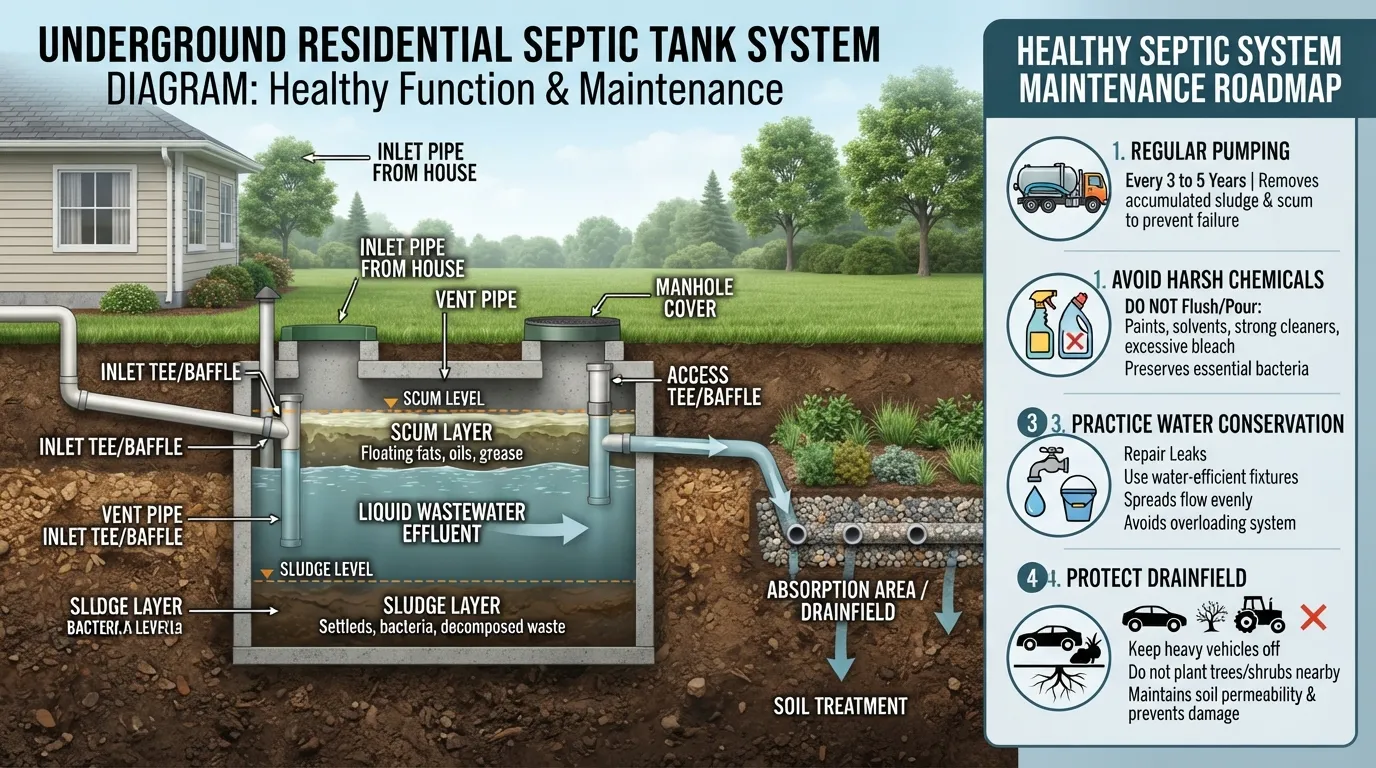
Investing in consistent preventative care dramatically extends the operational lifespan of your subterranean waste system. Understanding how long different materials last and following a strict upkeep routine protects your property investment for decades.
Average Lifespan of a Septic Tank
The total operating lifespan of a septic installation depends heavily on structural material quality, surrounding soil conditions, and adherence to routine pumping schedules.
- Concrete Tanks: The industry standard for durability, lasting anywhere from 30 to 40 years or more when properly maintained and protected from soil shifts.
- Plastic / Polyethylene Tanks: Lightweight and corrosion-resistant units that typically provide 25 to 30 years of reliable service.
- Steel Tanks: Highly prone to underground rust and structural collapse, rarely lasting beyond 15 to 20 years in modern installations.
Maintenance Checklist to Maximize System Life
Following a disciplined upkeep schedule prevents premature component failure and safeguards your entire wastewater network against catastrophic damage.
- Pump On Schedule: Schedule professional waste extraction every 3 to 5 years depending on your exact household occupancy.
- Protect the Drain Field: Never park vehicles, build structures, or plant large trees over your absorption bed to avoid crushing distribution lines.
- Conserve Water: Spread out laundry loads and repair leaking plumbing fixtures promptly to prevent hydraulic overloads.
- Mind Your Drains: Keep grease, paper towels, wipes, and harsh chemical cleaners out of your plumbing to preserve internal bacterial health.
How to Save Money on Septic Tank Pumping
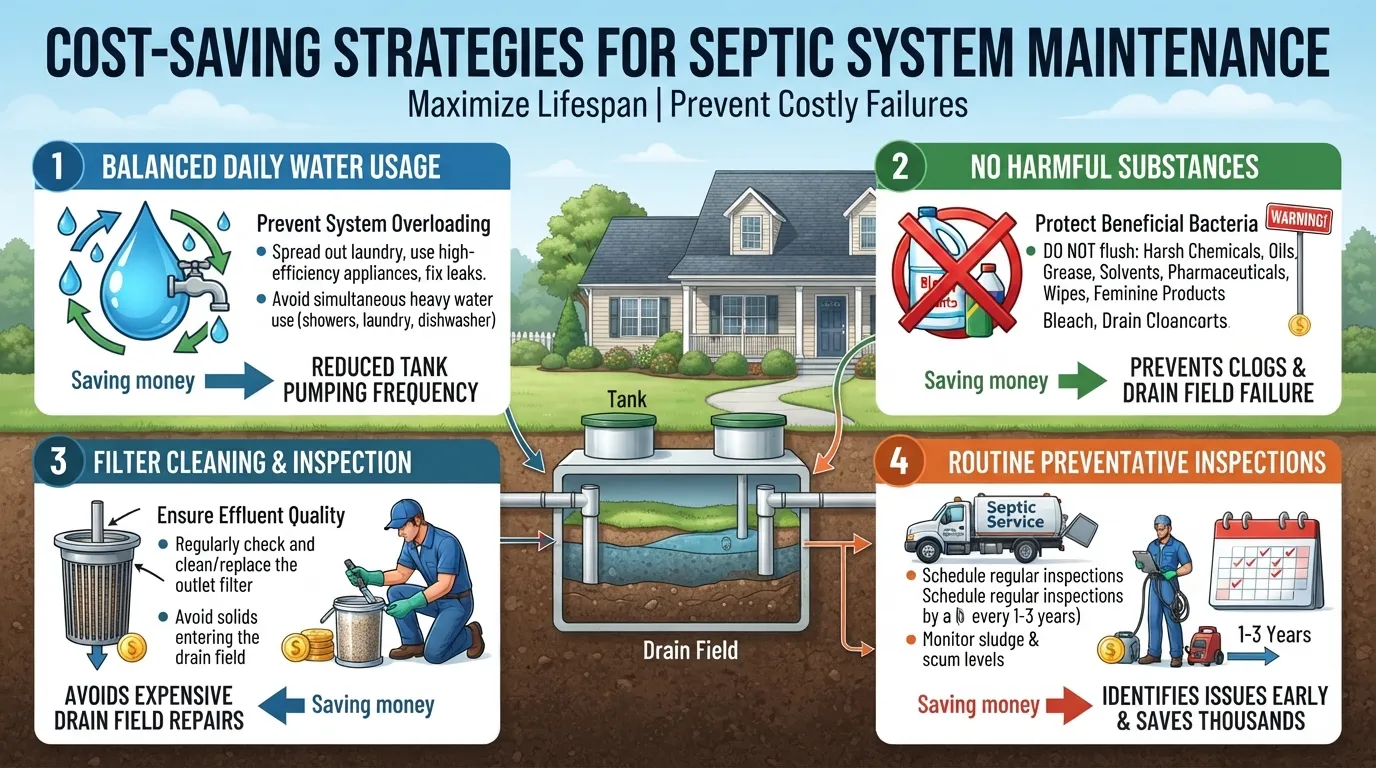
Managing wastewater maintenance expenses requires smart planning and strategic contractor selection to avoid inflated service bills. Implementing practical cost-saving tips ensures you secure top-tier professional service without overpaying for your routine cleanout.
Bundle Inspection + Pumping to Save Cost
Sanitation companies frequently offer discounted package rates when combining multiple routine services into a single visit.
- Combined Service Discounts: Requesting a comprehensive system evaluation alongside your standard waste extraction often reduces total labor fees compared to booking them separately.
- Effluent Filter Cleaning: Having technicians wash your outlet filter during the pumping run prevents separate service call charges later.
- Upfront Coordination: Clarify package inclusions before booking to ensure your quote covers full chamber agitation and safety checks.
Best Timing for Scheduling Service
Strategic scheduling helps you avoid premium emergency rates and capitalize on off-peak contractor pricing schedules.
- Off-Peak Seasons: Scheduling maintenance during late spring or early autumn avoids winter freeze rushes and peak summer real estate inspection crunches.
- Mid-Week Bookings: Reserving appointments on Tuesdays or Wednesdays typically secures standard baseline rates compared to weekend priority dispatches.
- Coordinated Neighborhood Services: Organizing simultaneous pump-outs with nearby neighbors can sometimes earn group discount rates from local hauling companies.
Questions to Ask Before Hiring a Provider
Evaluating potential contractors with a targeted hiring checklist protects you from hidden fees and guarantees licensed, reliable workmanship.
- Disposal Licensing: Confirm that the company holds valid state or municipal permits for legal waste disposal at certified treatment facilities.
- All-Inclusive Pricing: Ask whether quoted rates cover lid uncovering, waste disposal tipping fees, and basic filter rinsing.
- Truck Capacity: Verify that their vacuum truck size matches your specific tank volume to ensure complete extraction in a single pass.
Red Flags of an Unreliable Septic Company
Spotting unprofessional contractor behaviors early saves you from poor workmanship, property damage, and predatory billing practices.
- Vague Over-the-Phone Estimates: Companies that refuse to provide transparent pricing guidelines or demand cash upfront without assessing specs should be avoided.
- Incomplete Pumping: Unprofessional operators who rush the job and leave behind compacted bottom sludge defeat the entire purpose of maintenance.
- Unlicensed Operators: Hiring uninsured or uncertified haulers leaves you legally liable if environmental dumping violations occur on your property.
Frequently Asked Questions
Reviewing common homeowner inquiries provides quick, definitive answers to finalize your understanding of septic system maintenance, pricing, and operational timelines.
How Often Does a 1,000 Gallon Septic Need to Be Pumped?
A standard 1,000-gallon septic tank generally requires professional pumping every 3 to 5 years for a typical family of three to four occupants.
- Occupancy Scaling: Smaller one-to-two person households can often stretch this interval to 5 years safely.
- Heavy Usage Factors: Homes with garbage disposals or heavy water output may need cleanouts closer to every 2 to 3 years.
How Much Should It Cost to Pump a 1,500 Gallon Septic Tank?
Pumping a larger 1,500-gallon subterranean tank typically ranges between $450 and $1,100 depending on regional labor rates, disposal fees, and accessibility.
- Volume Scaling: Increased liquid volume requires more hauling time and higher municipal tipping fees at wastewater treatment sites.
- Accessibility Surcharges: Buried access lids or compacted sludge layers can add extra labor fees to the base quote.
What’s the Worst Thing for a Septic Tank?
Non-biodegradable synthetic items, harsh chemicals, and grease represent the most destructive elements you can introduce into your plumbing system.
- Wipes & Hygiene Products: Flushable wipes, paper towels, and feminine hygiene products do not dissolve and quickly clog internal baffles.
- Chemical Cleaners: Pouring strong bleach, antibacterial agents, and chemical drain openers down your drains instantly kills beneficial sludge-eating bacteria.
Can I Take a Shower If My Septic Tank Is Full?
Running showers or using indoor plumbing while your tank is already at maximum capacity is strongly discouraged because it accelerates imminent backups.
- Hydraulic Overload: Adding gallons of greywater to an overwhelmed vessel forces raw waste straight up into your lowest household drains.
- Emergency Action: Limit all indoor water usage immediately and schedule an urgent professional pump-out to prevent property damage.
How Long Does It Take for a Flooded Septic Tank to Drain?
A flooded system can take anywhere from several days to a couple of weeks to fully recover, depending heavily on surrounding soil saturation and weather conditions.
- Soil Absorption Limits: If your drain field soil remains waterlogged from heavy rain or high groundwater tables, effluent cannot drain away.
- Professional Assessment: Technicians must inspect the absorption bed to ensure mechanical blockages or biomats aren’t preventing normal drainage.
How Long Do You Wait Between Septic Tank Pumpings?
Standard residential maintenance intervals generally range between 3 to 5 years, though individual timelines vary based on tank capacity and household size.
- Active Monitoring: Routine annual visual checks of sludge and scum layers help determine the exact right moment for your next service.
- Usage Habits: Garbage disposals and high laundry volumes require shortened maintenance cycles to prevent overflows.
How Can You Clean Your Septic Tank Without Pumpings?
Physical vacuum extraction by a licensed professional is the only effective method to remove accumulated solid sludge and scum layers.
- Myth of Chemical Dissolving: Commercial additives or homemade yeast mixtures cannot dissolve inorganic solid waste, hair, or grease mats.
- Mandatory Upkeep: Skipping physical pump-outs inevitably leads to catastrophic drain field failure and expensive system replacements.
Final Takeaway Protect Your Home & Budget
Maintaining a proactive septic maintenance routine safeguards your property against catastrophic plumbing failures and protects your long-term financial investment. Balancing proper household water habits with scheduled professional cleanouts ensures your wastewater system operates efficiently for decades.
Key Takeaways Recap
Staying informed about core maintenance requirements allows you to anticipate service intervals and avoid expensive emergency repairs.
- Pumping Schedule: Standard residential tanks require professional waste extraction every 3 to 5 years depending on household size.
- Cost Transparency: Expect to spend between $292 and $565 for standard tank sizes, keeping in mind potential surcharges for buried access lids or neglected sludge.
- Proactive Care: Limiting harsh chemical cleaners, avoiding garbage disposals, and spreading out laundry loads preserves vital internal bacterial ecosystems.
When to Call a Professional
Recognizing early warning signs and knowing when to schedule licensed contractor intervention prevents minor plumbing issues from escalating into full system replacements.
- Immediate Emergency Calls: Contact a licensed sanitation provider instantly if you experience slow drains throughout the house, gurgling pipes, foul sulfur odors, or raw sewage backups.
- Routine Inspections: Schedule annual visual checks or combine filter maintenance with your scheduled pump-out to ensure optimal hydraulic flow.
- Verified Credentials: Always hire licensed, insured local professionals equipped with appropriate vacuum truck capacities to handle your exact tank volume safely.

Oscar Vance | Master Plumber & Drainage Expert
Meet Oscar Vance, a licensed master plumber sharing practical solutions on residential repairs, preventive maintenance, and thoughtful home upkeep.