Can You Use Electrical Tape on Exposed Wires?
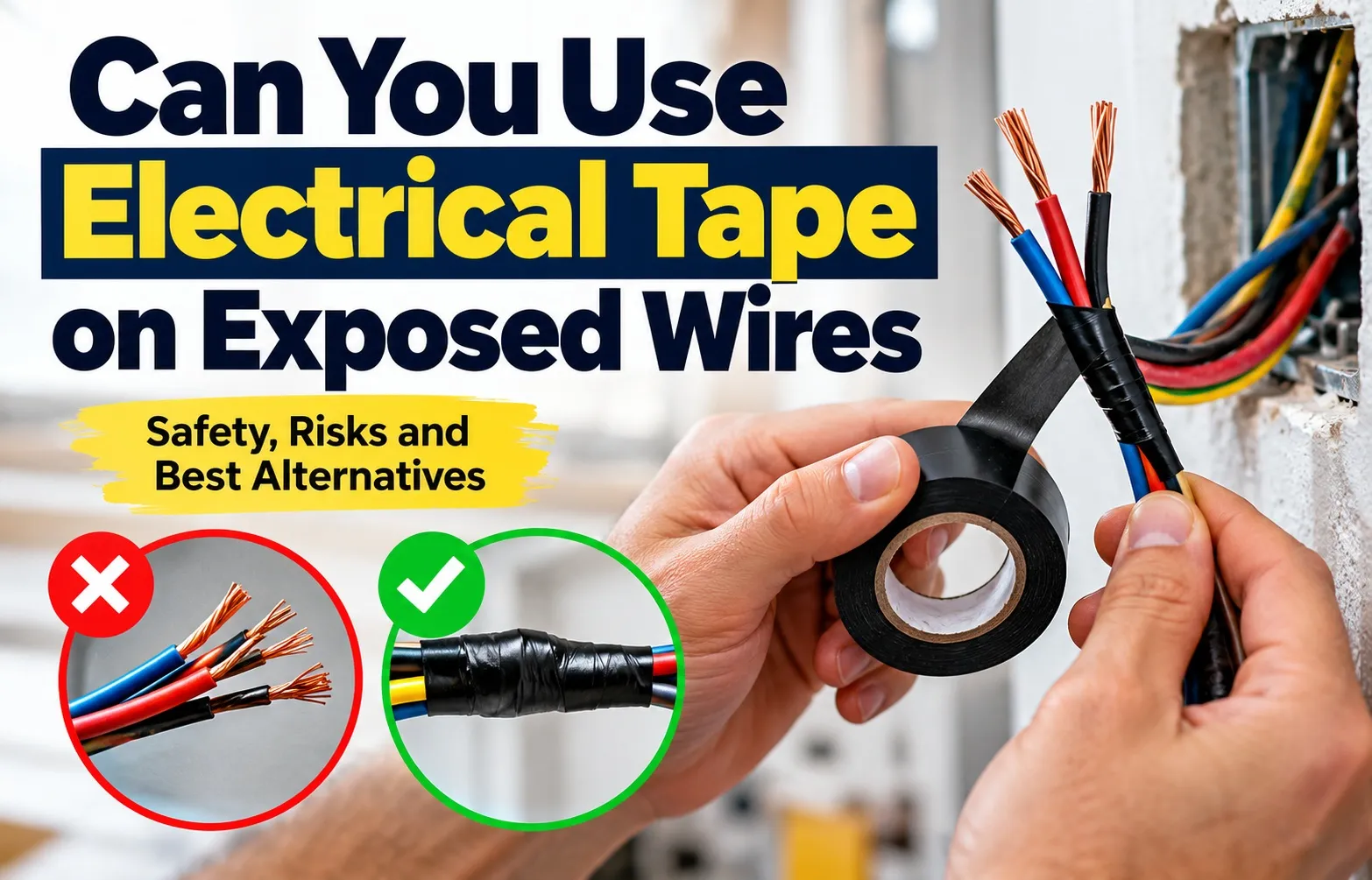 Yes, you can use electrical tape on exposed wires, but only as a temporary fix for minor outer jacket scuffs or low-voltage wiring under 24V. Electrical tape must never be used as a permanent repair for exposed bare copper conductors or high-voltage AC house lines.
When applied correctly, high-grade vinyl electrical tape restores basic dielectric protection to damaged insulation and prevents accidental short circuit conditions. However, tape lacks mechanical strength and degrades over time due to ambient heat, adhesive breakdown, and environmental exposure.
- Safe for Electrical Tape: Superficial nicks on the outer jacket, minor insulation scuffs where bare copper is unexposed, and low-voltage lines like USB cables or speaker wires.
- Unsafe for Electrical Tape: Exposed bare copper strands carrying 120V/240V, frayed appliance cords, spliced wires inside walls, or connections exposed to severe moisture.
Emergency Safety Checklist: Is Your Wire Safe to Tape Right Now?
Before touching or wrapping any damaged line, evaluate the hazard level to prevent electrical shock or fire hazards. Always shut off power at the main circuit breaker before conducting an inspection or applying any temporary insulation.
Use this triage decision matrix to determine whether electrical tape is an acceptable temporary measure or if immediate professional repair is required:
When Is It Safe vs. Dangerous to Use Electrical Tape?
Electrical tape provides an effective, temporary protective barrier only when applied to superficial outer jacket scuffs where the internal wire insulation remains completely intact. It is designed to shield low-energy circuits from minor environmental friction rather than structurally repair compromised high-energy conductors.
Low-voltage DC systems operating under 24 volts tolerate temporary tape wrapping much better than high-voltage alternatives. Common acceptable low-voltage applications include:
- USB or low-voltage charging cables with minor outer fraying where internal wires are not severed.
- Audio and speaker wires running low-current signals.
- Low-voltage landscape lighting wire jackets showing superficial weather scuffs.
Hazardous Scenarios: Where Electrical Tape Fails & Violates Building Code
Applying electrical tape to high-voltage lines or structural splices creates severe safety hazards and direct violations of the National Electrical Code (NEC). Tape can never substitute for code-compliant mechanical connectors or proper housing enclosures.
Never use electrical tape in the following hazardous situations:
- Exposed Bare Copper: Line voltage conductors (120V/240V) with visible copper strands require proper wire connectors and professional evaluation, not just surface tape.
- Hidden Wall Splices: The National Electrical Code (NEC) mandates that all electrical splices remain accessible inside an approved junction box; taping a wire hidden behind drywall is illegal and hazardous.
- Damaged Appliance Power Cords: Frayed extension cords or appliance cords must be fully replaced rather than patched over with tape.
- Wet or Damp Locations: Standard vinyl tape loses adhesive integrity and fails rapidly when exposed to moisture or standing water.
Can Electrical Tape Catch Fire or Cause Electric Shock?
Poorly taped high-voltage connections present a major electrical fire risk due to physical degradation over time. As electrical current flows through a wire, normal operational resistance causes thermal expansion and contraction of the metal conductors.
Standard adhesive tape dries out, hardens, and loses tension under continuous heat cycling, leading to critical failure mechanisms:
- Insulation Degradation: Dried adhesive eventually releases its grip, causing the tape to peel away and expose live metal components.
- Arc Faults: Loose connections or degraded insulation create microscopic air gaps, triggering dangerous arc faults that can instantly ignite nearby dust or building materials.
- Short Circuits: When adjacent live conductors make contact due to failed insulation protection, a severe short circuit occurs, instantly overwhelming circuits and risking thermal runaway.
How to Properly Apply Electrical Tape on Exposed Wires
Complete circuit isolation is mandatory before touching or inspecting any electrical wire. Always switch off the circuit breaker supplying power to the line, and use a reliable non-contact voltage tester to confirm zero electrical current at the repair site.
Inspect the damage closely once power is safely disconnected. Ensure the exposed area consists only of minor insulation damage rather than cut copper strands or high-voltage structural splices.
- Verify that the breaker is switched off and tagged if working near shared electrical panels.
- Test all conductors using a calibrated non-contact voltage tool to ensure zero potential.
- Confirm that the underlying copper is structurally sound, untwisted, and free of deep nicks.
Step 2: Surface Preparation & Debris Removal
Electrical tape requires a clean, dry surface to achieve maximum adhesion and maintaining its rated dielectric strength. Dust, oil, grease, or moisture breaks down tape adhesive and prevents a proper air-tight seal.
Wipe down the wire section with a dry cloth or isopropyl alcohol pad, allowing it to dry completely before applying any insulation wrap.
- Remove oil, grease, or dirt deposits around the damaged wire jacket.
- Ensure the surrounding insulation is completely dry to prevent trapped moisture inside the wrap.
- Smooth out any sharp plastic edges on the damaged jacket that could puncture the tape layer.
Step 3: The Half-Lap Wrapping Method (Tension & Overlap)
To create a durable moisture-resistant seal using vinyl tape, utilize the professional half-lap wrapping technique. Apply steady tape tension by stretching the tape to approximately 75% of its original width during application, which activates the vinyl’s mechanical memory and ensures a tight, continuous grip.
Follow the standard electrician rule of thumb: start wrapping at least 1 to 2 inches prior to the damaged spot and continue 1 to 2 inches past it on the opposite end, building up a minimum of 3 overlapping layers.
- First Layer: Begin 1 to 2 inches before the damaged insulation, anchoring the tape securely on undamaged jacket material.
- Half-Lap Technique: Wrap at an angle, ensuring every new turn overlaps the previous pass by 50% of the tape width.
- Build-up: Complete at least 3 full half-lapped layers over the repair area to guarantee sufficient insulation thickness.
Step 4: Sealing and Stress Relief
The final pass must terminate on intact wire insulation past the damaged zone. Cut the tape clean with scissors or a knife rather than pulling or snapping it, as stretching the tail end causes the adhesive to creep and peel over time.
Press the end tab firmly against the underlying tape layer without stretching the last half-inch, smoothing down the edges to create a seamless, weatherproof seal.
- Cut the tape end cleanly using cutting tools; do not stretch or tear the tail.
- Press the final unwrapped edge flat against the wire bundle to prevent flag-peeling.
- Verify that only high-quality, UL Listed electrical tape is used for safe, reliable temporary performance.
Tape Types Ratings and Material Science
Selecting the correct tape material is essential for electrical safety, as different compounds manage moisture, voltage stress, and thermal expansion uniquely. Standard vinyl works for basic indoor bundling, whereas specialized rubber or silicone tapes are mandatory for severe environments and high-stress splices.
Understanding the specific structural properties of each material ensures that your temporary insulation holds up under operational electrical loads without compromising dielectric integrity:
- Standard Vinyl Tape (e.g., Scotch 33+): Engineered with a polyvinyl chloride backing and high-tack adhesive, offering excellent resistance to abrasion, moisture, and ultraviolet light for general low-voltage tasks.
- Rubber Splicing Tape: A heavy-duty, highly conformable compound used for primary insulation build-up on thick conductors, providing superior moisture sealing and voltage stress relief.
- Self-Fusing Silicone Tape: Amalgamates into a solid, seamless rubber mass without relying on sticky adhesive, making it exceptional for extreme temperatures, marine environments, and high-vibration automotive wiring.
Understanding UL Listings and Temperature Ratings (80°C vs. 105°C)
Certified electrical tapes must comply with rigorous industrial benchmarks like the UL Safety Certification Standards to guarantee flame retardancy and mechanical durability. Temperature ratings indicate the maximum continuous heat threshold the tape can endure before adhesive degradation and melting occur.
Using unrated or non-certified tapes under high thermal loads accelerates breakdown, leading to exposed conductors and arcing faults. Premium electrical tapes carry explicit temperature classifications to match specific operational demands:
- UL 510 Standard: The definitive benchmark for electrical insulating tapes, ensuring strict flame-retardant properties and resistance to flagging.
- 80°C Temperature Rating: Suitable for standard household appliances and low-heat indoor electrical environments.
- 105°C Temperature Rating: Required for high-draw circuits, automotive engine bays, and enclosed spaces subject to elevated ambient temperatures.
Why Common Household Tapes (Duct Tape, Scotch Tape) Must Never Be Used
General household tapes such as ordinary cellophane tape and standard fabric duct tape are severe electrical hazards and must never be applied to live wiring. Their chemical composition lacks dielectric strength, leading to rapid adhesive breakdown and catastrophic fire risks.
Applying non-electrical tapes to exposed wires creates a false sense of security while actively inviting short circuits and thermal runaway:
- Duct Tape Hazards: The cloth mesh and rubber-based adhesive absorb moisture, conduct electricity under damp conditions, and readily ignite when exposed to overheating wires.
- Scotch / Cellophane Tape Failure: Extremely thin film backing offers near-zero dielectric breakdown voltage, allowing electrical current to pierce the barrier instantly.
- Rapid Adhesive Degradation: General adhesives dry out, liquefy under minor heat, and slip away from the wire surface, leaving bare copper exposed to surrounding conductive materials.
Better & Permanent Alternatives to Electrical Tape
Dual-wall adhesive-lined heat shrink tubing provides a superior, permanent weatherproof seal compared to standard electrical tape. When exposed to controlled heat from a heat gun, the outer polymer sleeve shrinks tightly while internal thermoplastic adhesive melts to encase the wire, locking out moisture and preventing corrosion permanently.
This method delivers exceptional mechanical durability and tensile strain relief for vulnerable cable joints, making it the preferred choice for automotive, marine, and outdoor electrical repairs.
- Adhesive Lining: Melts uniformly during heating to form a waterproof, airtight bond around the wire insulation.
- Strain Relief: Reinforces the physical connection point to prevent wire fatigue from bending or pulling.
- Permanent Protection: Unlike vinyl tape adhesives that dry out and peel over time, heat shrink maintains its seal indefinitely.
Lever Connectors (WAGO) & Wire Nuts: Proper Splicing Solutions
Electrical tape has zero mechanical strength and cannot securely hold severed or spliced wires together. Approved mechanical connectors like WAGO lever connectors and twist-on wire nuts are legally and structurally mandatory before any insulation wrap is applied inside an approved junction box installation.
Relying on tape alone to join copper conductors creates a high-resistance joint that generates dangerous heat loads under electrical current flow.
- Mechanical Security: Wire nuts and lever connectors clamp conductors tightly together to ensure uninterrupted electrical continuity.
- Code Compliance: Building regulations require all structural splices to be mechanically secured and housed within accessible junction boxes.
- Arc Prevention: Secure mechanical clamping eliminates loose micro-gaps that cause arcing and electrical fires.
Liquid Electrical Tape: Ideal for Irregular Shapes and Low-Voltage Repair
Liquid electrical tape is a specialized brush-on synthetic rubber coating designed to conform to awkward, irregular shapes, tight terminal blocks, and complex splices where standard tape rolls fail to wrap evenly. It dries into a flexible, protective, waterproof barrier ideal for low-voltage connections and circuit board repairs.
While useful for waterproofing tight spots, it should be reserved for low-voltage applications and never used as a structural replacement for mechanical wire connectors.
- Conformability: Brushes easily into tight crevices and uneven wire geometries that standard tape cannot seal.
- Moisture Barrier: Forms a seamless rubberized coating that resists water immersion and chemical corrosion.
- Low-Voltage Utility: Best applied on circuit board terminals, battery connections, and multi-wire junction bundles.
Complete Cable Replacement: When Taping Is Unsafe
When appliance power cords, heavy extension lines, or interior building cables suffer deep cuts exposing internal copper strands, patching with tape is completely unsafe. Complete cable replacement is the only reliable solution to restore proper current capacity and eliminate catastrophic fire risks.
Attempting to patch heavily damaged high-voltage cords compromises the inner conductor gauge, leading to overheating and severe electrical shock hazards.
- Compromised Amperage: Severed inner wire strands reduce the carrying capacity of the cord, causing localized overheating.
- Insulation Integrity: Frayed appliance cords lack the structural integrity required for safe daily operation under load.
- Definitive Safety: Replacing damaged cords entirely removes any risk of hidden tape failure, short circuits, or property damage.
Frequently Asked Questions
How to Fix an Exposed Wire Without Electrical Tape in an Emergency?
To safely manage an exposed wire without electrical tape during an emergency, turn off the circuit breaker immediately. Cap bare conductors using a wire nut or lever connector. Alternatively, temporarily slide a non-conductive plastic sleeve over the exposed line and isolate it inside a dry box until proper repairs can be made.
Will an Exposed Wire Trip a Circuit Breaker?
Yes, an exposed wire will trip a circuit breaker if the bare conductor touches a grounded metal box, a neutral wire, or another live wire. This contact creates an immediate high-current short circuit or an arc fault, causing standard or arc fault breaker systems to trip to prevent fires.
Can Exposed Wires Start a Fire Behind Walls?
Yes, exposed wires behind drywall are a primary cause of an electrical fire. Unprotected live conductors can spark against wood studs, insulation, or metal framing when current surges. Building codes mandate that all splices and exposed wire connections remain enclosed inside an accessible junction box to contain potential electrical arcing.
How Long Does Electrical Tape Last Before Degrading?
High-quality vinyl electrical tape typically lasts 3 to 5 years under normal indoor conditions before wire degradation and adhesive failure occur. However, heat, moisture, UV light, and continuous electrical loads accelerate wear, causing the adhesive to dry out, unwind, and expose live wire conductors much sooner.
Is It Safe to Put Electrical Tape Over Bare Copper Wire?
No, wrapping electrical tape directly over exposed bare copper carrying 120V/240V line voltage is not safe as a permanent fix. Tape lacks mechanical strength and degrades over time. Bare copper splices require secure mechanical fasteners, such as wire nuts or lever connectors, before adding insulation protection.
Can You Use Electrical Tape on Automotive or Outdoor Wires?
Standard indoor electrical tape fails quickly on automotive wiring and outdoor lines due to engine heat, oil exposure, vibration, and rain. For vehicle engine bays or exterior wiring, use self-fusing silicone tape, rubber splicing tape, or marine-grade heat shrink tubing to ensure a long-lasting, weatherproof seal.

Oscar Vance | Master Plumber & Drainage Expert
Meet Oscar Vance, a licensed master plumber sharing practical solutions on residential repairs, preventive maintenance, and thoughtful home upkeep.