Emergency Action & Fast Answer
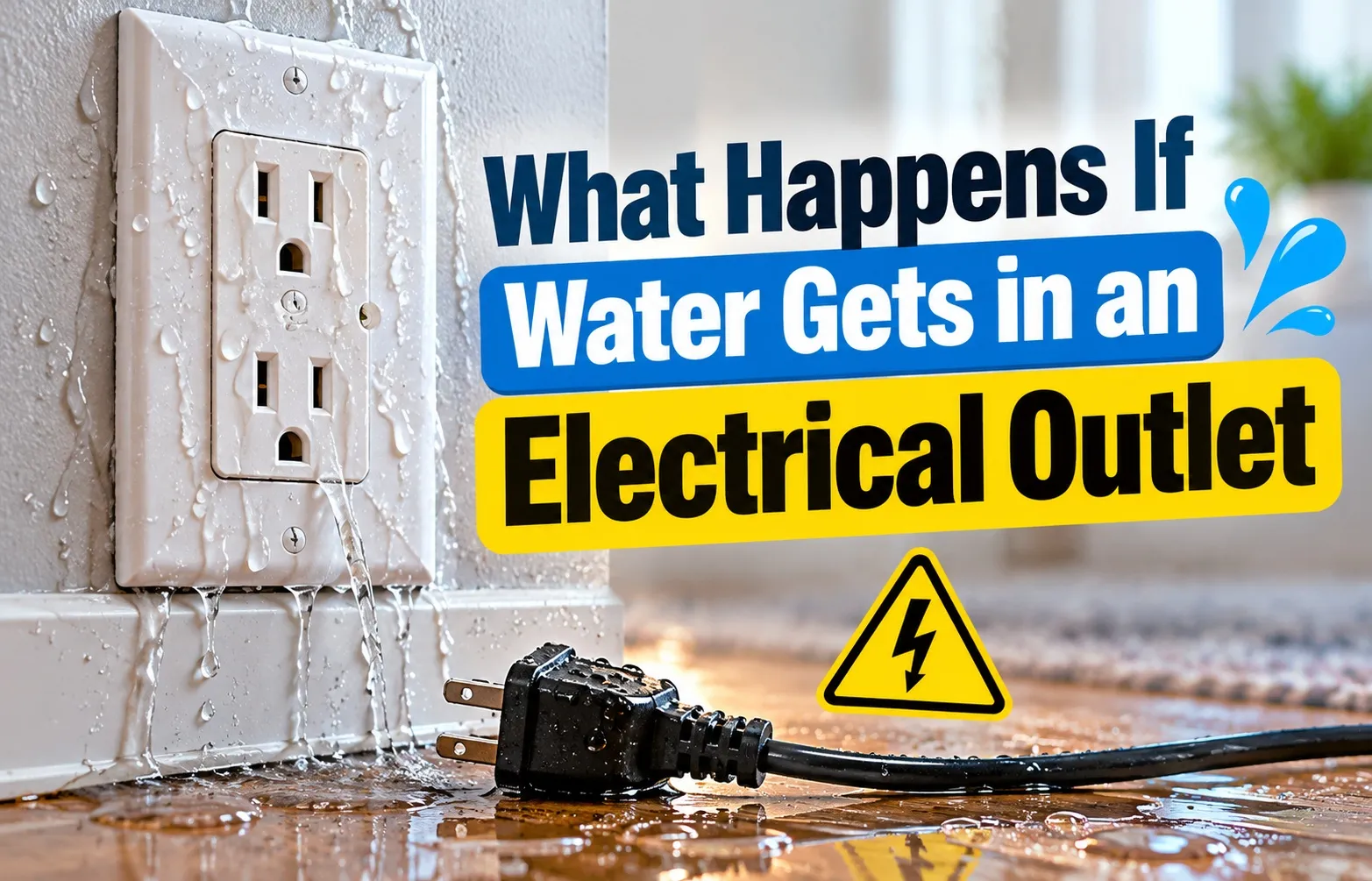 When water enters an electrical outlet, it bridges the gap between hot and neutral terminals, instantly triggering a short circuit. This sudden flow of uncontrolled live current creates severe electrocution hazards, sparks, potential electrical fires, and typically trips the circuit breaker or Ground Fault Circuit Interrupter (GFCI).
Because water acts as a highly effective electrical conductor, moisture inside the electrical box reduces normal circuit resistance. Without immediate power disconnection, electrical arcing can ignite surrounding wall insulation and drywall framing within seconds.
4-Step Emergency Protocol (Do This Right Now)
If water has entered a receptacle, follow this emergency protocol immediately to secure the area and eliminate immediate shock hazards:
- Do Not Touch the Outlet or Connected Cords: Avoid touching the wall plate, plugged-in appliances, or nearby wet surfaces while the circuit remains live to prevent lethal electric shock.
- Cut Power at the Main Electrical Panel: Locate your main breaker box and immediately switch off the circuit breaker controlling that specific room or main area.
- Unplug Devices Safely: Once you have verified that the power is completely shut off at the panel, safely disconnect all cords and appliances from the affected receptacle.
- Assess and Document Moisture Exposure: Check the surrounding area for hidden leaks or structural moisture, following established SERVPRO Water Damage Restoration Guidelines to determine if professional remediation is necessary.
What Happens Inside the Outlet? (The Science & Risks)
When water enters a wall receptacle, it bridges the physical gap between the brass hot terminal and the steel or silver neutral terminal. Tap water contains dissolved minerals and ions that drastically reduce electrical resistance, creating an unintended, high-conductive pathway for electric current.
This sudden collapse of normal circuit impedance forces a surge of current across the terminal contacts inside the receptacle box. The high-volume current flow instantly overloads the wiring, generating extreme thermal energy that can weld internal contacts or instantly blow protective fuses.
Arc Faults, Overheating, and Electrical Fire Risks
If an older panel or faulty breaker fails to trip during moisture ingress, current continues flowing through the water-filled box. This sustained electricity creates an arc fault—a high-power discharge of electricity jumping across air gaps between damaged conductors.
Arc faults generate intense heat reaching several thousand degrees Fahrenheit, leading to rapid insulation melting along the connected copper wiring. As the protective plastic sheathing ignites, sparks can spread to adjacent wooden wall studs and paper-backed insulation inside the wall cavity.
Corrosion, Rust, and Long-Term Metal Degradation
An outlet that appears to function after drying out often conceals severe internal damage. Water triggers rapid copper wire oxidation and rust on metal spring contacts, leaving behind a layer of high-resistance galvanic corrosion.
Corroded contacts lose their tension and physical conductivity, creating localized hot spots when appliances are plugged in months later. This hidden metal degradation leads to voltage drops, flickering power, melting faceplates, and delayed electrical fires long after the initial spill.
Moisture Traps Behind Drywall and Mold Risks
Electrical outlet boxes act as sealed pockets that trap moisture behind non-breathable drywall surfaces. Water pooling at the base of the plastic or metallic enclosure cannot evaporate quickly without complete disassembling and mechanical ventilation.
Persistent drywall moisture retention around the electrical junction box creates an ideal microclimate for fungal growth within 24 to 48 hours. Structural mold can quietly colonize framing timber, degrade drywall integrity, and compromise indoor air quality long before surface stains become visible.
Scenario-Based Analysis: How Much Water and What Type?
Scenario A: A Single Drop, Light Splash, or High Humidity
A single isolated water drop or light splash on a faceplate rarely causes a catastrophic short circuit unless moisture seeps deep into the internal terminal contacts. Surface tension usually keeps minor droplets on the exterior plastic, but high bathroom humidity can cause gradual condensation inside the receptacle box.
- Exterior vs. Interior Moisture: External condensation or a solitary drop often evaporates safely if it stays on the plastic faceplate without bridging live contacts.
- Bathroom and Kitchen Steam: Persistent vapor from showers or boiling water creates micro-condensation that slowly accumulates inside unsealed boxes, gradually increasing short-circuit risks over time.
Scenario B: Cleaning Sprays, Bleach, and Soapy Solutions
Accidentally spraying chemical cleaning solutions, soapy mixtures, or a bleach mixture directly onto a light switch or power outlet creates an immediate and severe electrical hazard. These chemical liquids contain dissolved ionic compounds that drastically increase electrical conductivity compared to pure water.
- Accelerated Metal Corrosion: Chemical residues leave corrosive salts on brass and copper terminals, causing rapid oxidation and permanent damage long after the liquid dries.
- Higher Ionic Conductivity: Soapy water and bleach mixtures lower electrical resistance far more aggressively than clean tap water, accelerating arcing and shock potential.
- Cleaning Mist Hazards: Fine spray mists from household cleaning bottles can easily bypass faceplate gaps and enter the receptacle housing unseen.
Scenario C: Pipe Leaks, Wall Seepage, or Major Flooding
Hidden wall seepage from slow plumbing leaks, roof water intrusion, or major room flooding introduces continuous moisture directly behind the drywall enclosure. This prolonged moisture ingress creates a persistent threat of delayed arc faults and structural decay within the receptacle box.
- Plumbing Leaks Behind Walls: Slow pipe drips running down framing studs frequently infiltrate electrical boxes from behind, bypassing external safety covers entirely.
- Severe Flooding: Standing water reaching outlet level forces high-volume contamination throughout the lower circuit wiring, requiring complete rewiring and professional inspection.
- Continuous Moisture Ingress: Unaddressed structural moisture keeps internal components damp, preventing natural evaporation and sustaining high short-circuit risks.
GFCI vs. Standard Outlets: Key Differences Under Exposure
A Ground Fault Circuit Interrupter (GFCI receptacle) continuously measures the electrical current flowing between the hot and neutral conductors. When water enters the outlet and creates a path to ground or bridges internal terminals, it causes a current imbalance as electricity leaks out of its intended circuit path.
The internal micro-sensor in a GFCI outlet detects drops in return current as small as 4 to 6 milliamperes. Within 25 to 30 milliseconds, the internal sensor trip mechanism activates, cutting live power directly at the face of the outlet before the surge can reach the main panel or cause severe electric shock.
Standard Outlets in Bedrooms and Living Rooms
Unlike GFCI units, a standard dual-receptacle found in bedrooms, hallways, and living rooms lacks built-in current sensing technology. These basic outlets cannot detect small current leaks caused by minor moisture ingress or water splashes.
A standard outlet will continue supplying electricity while wet until a massive short circuit occurs. Power is only cut when current draw spikes high enough to trigger a magnetic or thermal overload at the main breaker box, leaving a significant time window for arcing, severe heat buildup, and electrical fires.
Why a GFCI Outlet Won’t Reset After Getting Wet
When water contaminates a GFCI receptacle, pressing the faceplate reset button will fail, or the button will instantly pop back out. This protective lockout behavior occurs for two primary reasons:
- Active Ground Fault Detection: As long as moisture remains inside the terminal housing, the internal sensor continues detecting a current leakage path and refuses to re-energize the circuit.
- Internal Component Damage: Water can short out the GFCI’s delicate internal printed circuit board (PCB) or corrode the latching solenoid, permanently locking the outlet in a tripped state even after the unit dries completely.
The 24–48 Hour Drying & Safe Testing Protocol
How Long Does an Electrical Outlet Take to Dry?
A completely soaked electrical outlet typically requires a standard drying interval of 24 to 48 hours to evaporate moisture trapped inside the junction box and wall cavity. Environmental conditions such as ambient room humidity, indoor temperature, and airflow directly influence how quickly internal water disperses.
Safe Drying Techniques (And What NEVER to Do)
Allowing natural evaporation through passive air circulation is the safest method to clear moisture from an affected receptacle housing. Homeowners can safely remove the plastic faceplate once main power is cut to accelerate airflow around the internal metal yoke and terminal screws.
- Never Use Heat Guns or Hair Dryers: Directing high-heat drying tools into the socket can melt plastic components, warp the housing, and push moisture deeper into the wall cavity.
- Never Insert Objects into Wet Slots: Sticking cloths, cotton swabs, or cleaning tools into a damp outlet creates severe electrocution and short-circuit hazards.
- Promote Natural Ventilation: Open nearby windows and position portable room fans to encourage steady air circulation around the affected wall section.
Step-by-Step Re-Energization & Voltage Meter Testing
Before flipping the main circuit breaker back on, you must verify that internal components are completely free of moisture using appropriate testing gear.
- Inspect After Faceplate Removal: Unscrew and remove the outer cover plate after confirming power is cut to examine the inner wiring and terminal blocks.
- Conduct Multimeter Testing: Use a digital voltage meter to test AC voltage across the terminals, ensuring no erratic resistance or residual electrical leakage remains.
- Restore Main Breaker Power Cautiously: Switch the circuit breaker back on only after the full drying interval has elapsed and diagnostic tests show normal baseline readings.
- Test GFCI Functionality: Press the test and reset buttons on GFCI receptacles to verify that the internal sensor mechanism trips and resets properly.
Warning Signs You Must Replace the Outlet Immediately
If you observe any physical abnormalities or performance failures after the drying period, do not attempt to use the receptacle. Immediate replacement by a professional following a licensed electrician inspection is mandatory if you encounter:
- Burning Smells: A distinct chemical or electrical burning odor indicates melted internal wire insulation or damaged terminal contacts.
- Soot Deposits and Discoloration: Black soot deposit marks or dark discoloration on the plastic faceplate signal dangerous electrical arcing.
- Charred Wiring: Charred wiring or blackened copper conductors mean the electrical harness has suffered permanent thermal degradation.
- Persistent Breaker Tripping: If the circuit breaker trips again immediately upon re-energizing, an internal short circuit is still active.
Wet Power Strips, Extension Cords, and Outdoor Sockets
When liquid spills onto a power strip or surge protector, moisture immediately penetrates the multi-outlet housing, pooling along internal bus bars and sensitive circuit boards. Although many surge protectors feature built-in rocker switches or thermal breakers, these mechanisms are designed for current overloads—not liquid intrusion.
- Immediate Disconnection: Unplug the power strip directly from the wall outlet immediately. Do not touch attached appliance plugs while the unit remains connected to live power.
- Disposable Strip Replacement: Unlike fixed wall receptacles, power strips contain compact electronic surge components (MOVs) that degrade rapidly when exposed to moisture. Attempting to dry and reuse a wet surge protector carries a high risk of internal short circuits and fires; replacing the unit is always the safest choice.
Outdoor Outlets and Rain Exposure
Exterior receptacles face continuous exposure to rain, wind-driven moisture, and ambient humidity. Building codes require outdoor GFCI installations to feature specialized weather-resistant (WR) construction paired with protective enclosures to prevent moisture ingress.
- In-Use Weatherproof Cover Requirements: Outdoor receptacles must be shielded by an “in-use” weatherproof box cover that maintains a tight moisture seal even when cords are plugged in.
- Inspecting Gaskets and Seals: Periodically check the rubber gasket seal surrounding the exterior wall plate. Cracked, brittle, or missing gaskets allow rainwater to seep directly into the electrical box behind the wall.
- Outdoor GFCI Maintenance: Test exterior GFCI outlets monthly by pressing the test and reset buttons to ensure moisture has not corroded the internal sensing mechanism.
Wet Extension Cord Connectors
Connecting wet extension cord plugs creates an immediate short-circuit hazard and accelerates metal terminal corrosion. Water trapped inside the female receptacle coupling bridges the live plug prongs the moment power is applied.
- Shock Hazards During Coupling: Never join wet heavy-duty extension cord ends together. Moisture inside the connection housing can shock the operator or instantly trip upstream breakers.
- Drying and Inspection Protocol: Disconnect the extension cord from the wall outlet, shake out trapped water from both ends, and allow the connectors to air-dry completely for 24 hours. Inspect the prongs for green corrosion or copper oxidation before reuse.
Frequently Asked Questions
Will an electrical outlet still work if it gets wet?
An electrical outlet may temporarily conduct power while wet, but using it is extremely dangerous. Moisture inside the socket creates a persistent short circuit that can shock users, damage connected electronics, overheat internal wiring, or cause sudden arcing. Always turn off power at the main panel and let the outlet dry completely before testing or using it again.
Will water in an outlet always trip the breaker?
No, water in an outlet does not always trip the breaker immediately. While a major short circuit usually causes a breaker reset at the main panel, minor moisture or slow leaks may not draw enough initial amperage to trigger older standard breakers. In these cases, current continues flowing through the damp box, creating severe arc faults and fire risks without tripping the breaker.
Can a wet outlet cause a fire after it dries out?
Yes, a wet outlet can cause a delayed ignition electrical fire days or months after drying out. Water causes rapid copper oxidation and terminal corrosion on metal contacts inside the receptacle box. This persistent metal degradation creates high-resistance connection points that generate localized heat spikes, melt wire insulation, and ignite nearby wall studs long after the water is gone.
How do you know if water is leaking behind the wall into an outlet?
Signs of a hidden wall cavity leak reaching an electrical outlet include damp or discolored drywall, peeling paint around the faceplate, persistent buzzing or clicking noises, and unexpected breaker trips. For definitive moisture detection, professionals use thermal imaging cameras and moisture meters to locate water pooling behind the wall before severe electrical damage occurs.

Oscar Vance | Master Plumber & Drainage Expert
Meet Oscar Vance, a licensed master plumber sharing practical solutions on residential repairs, preventive maintenance, and thoughtful home upkeep.